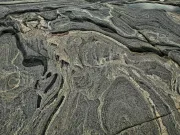
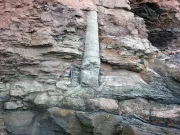
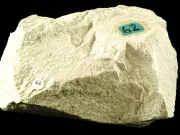
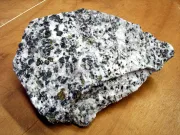
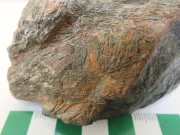
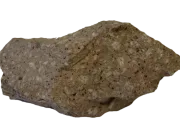
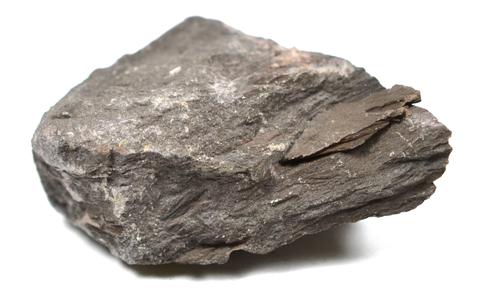
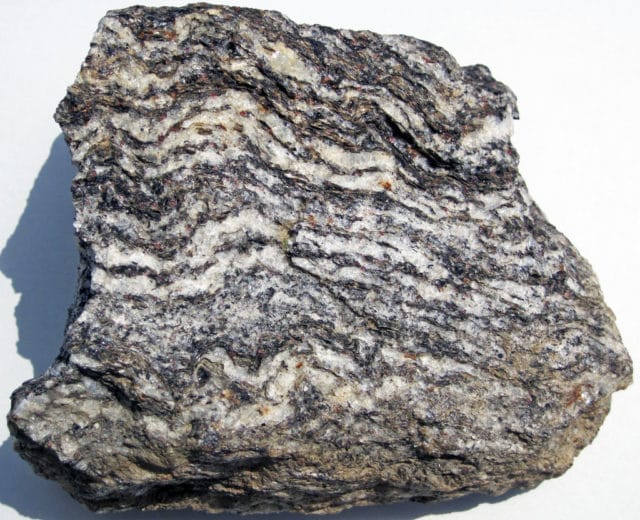
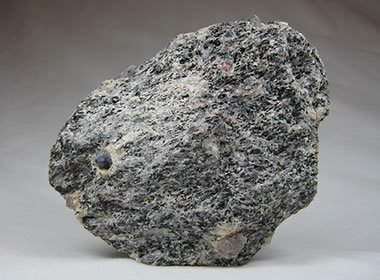
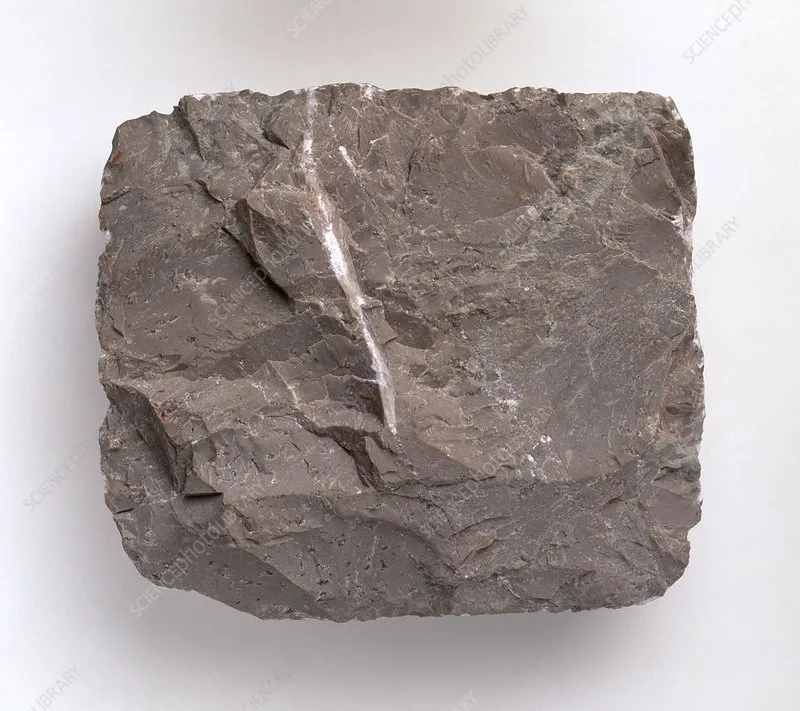
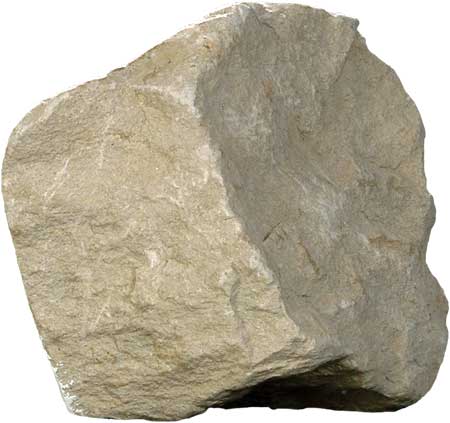
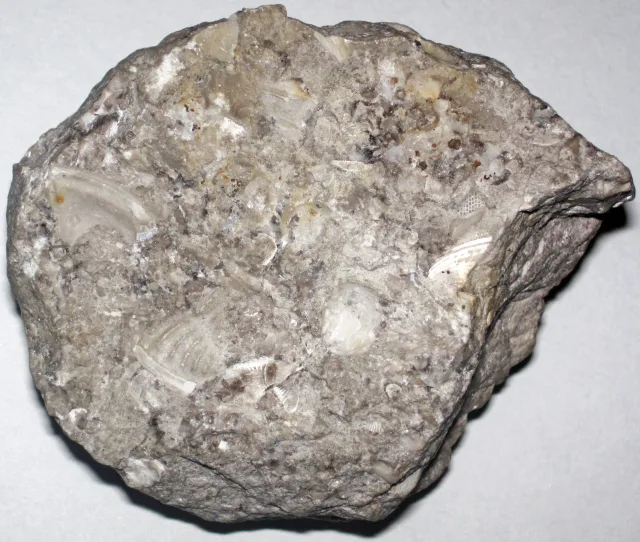
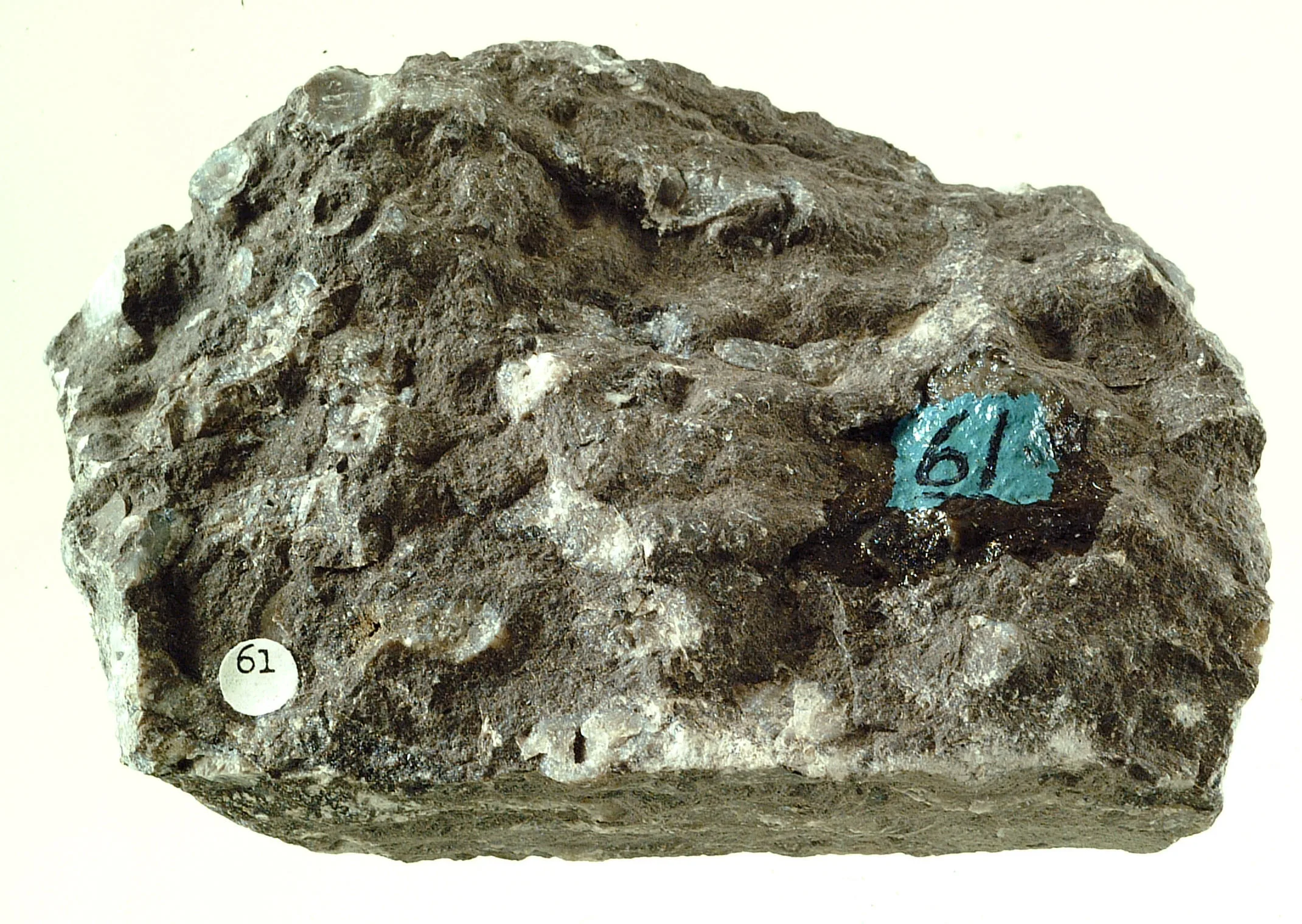
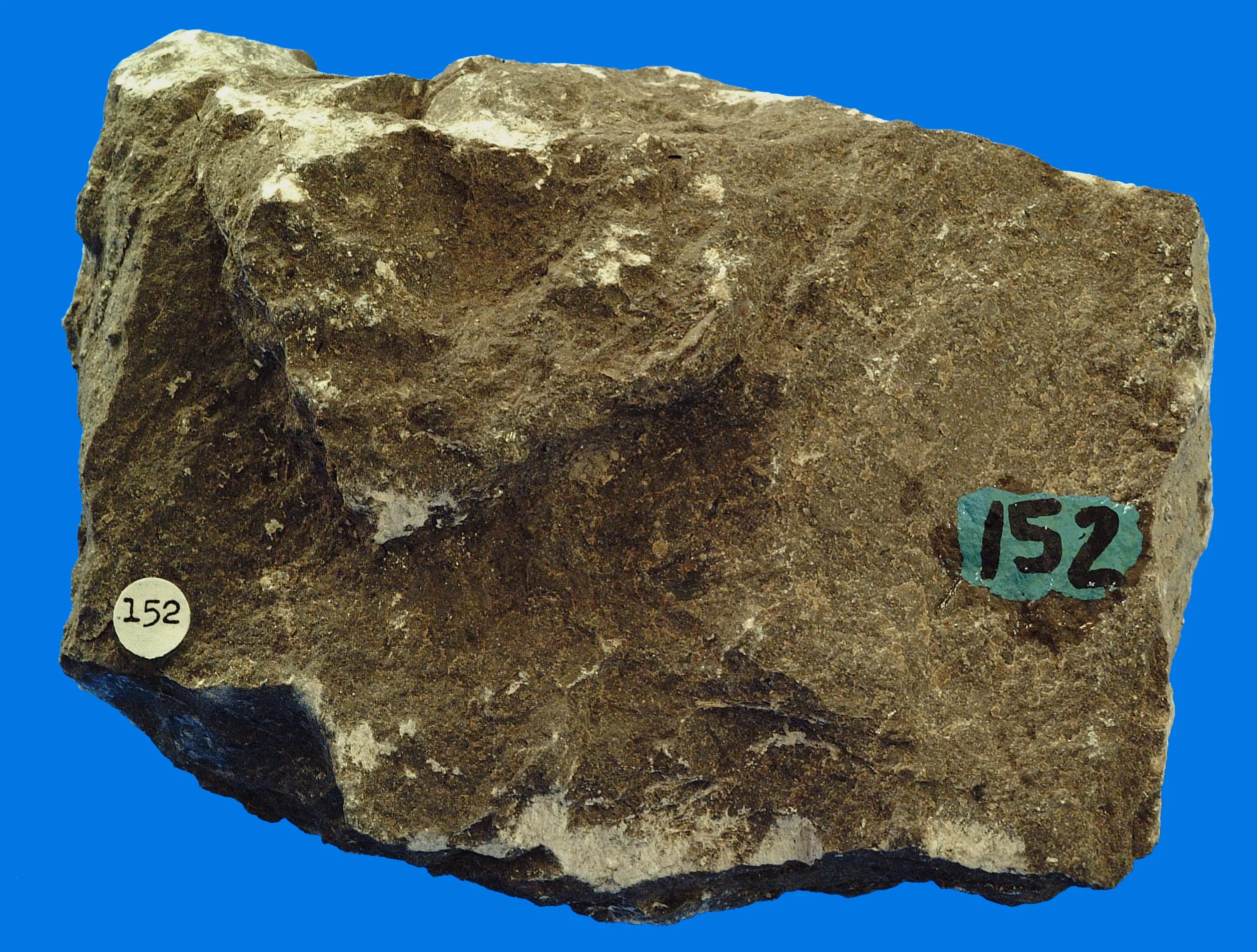
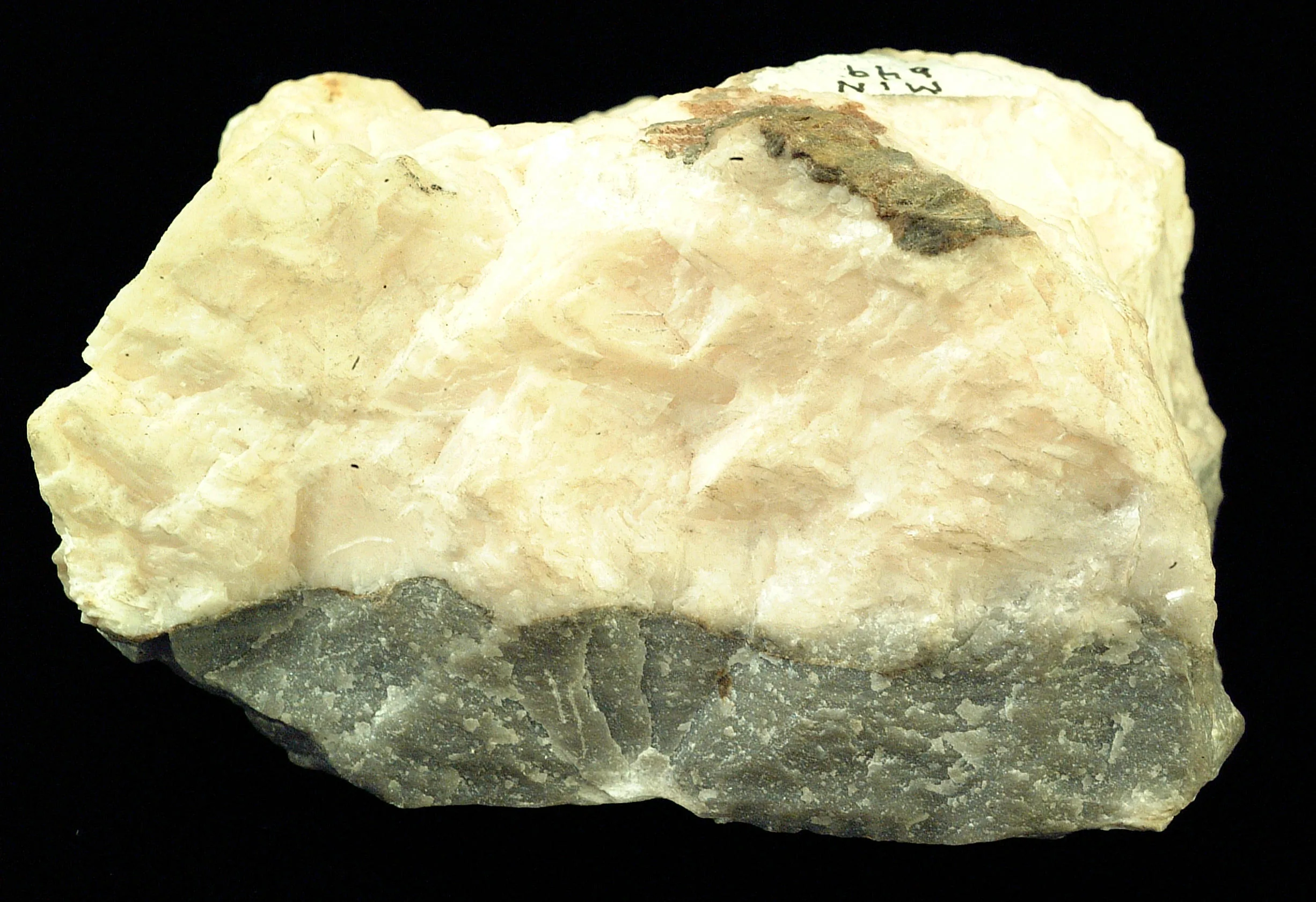
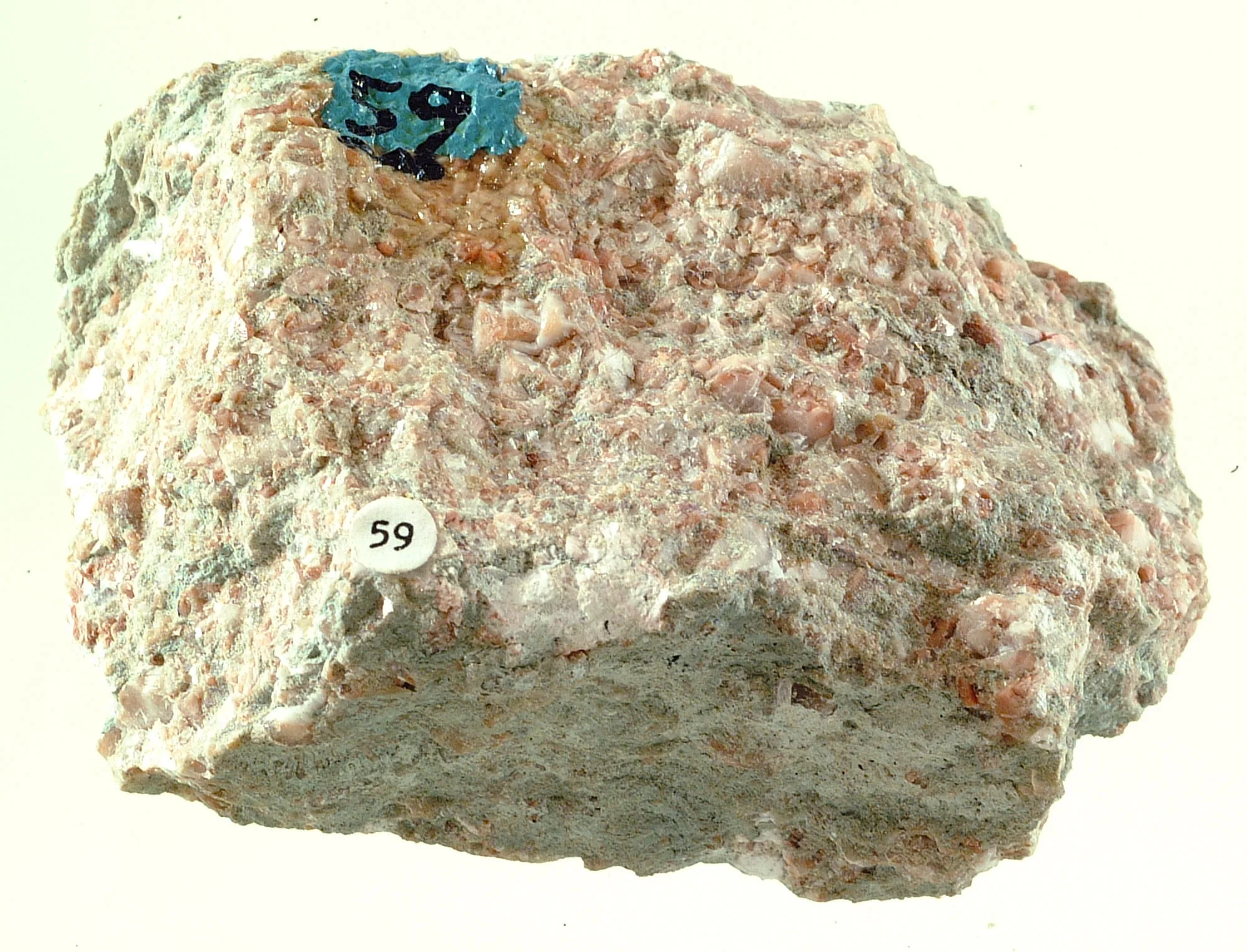
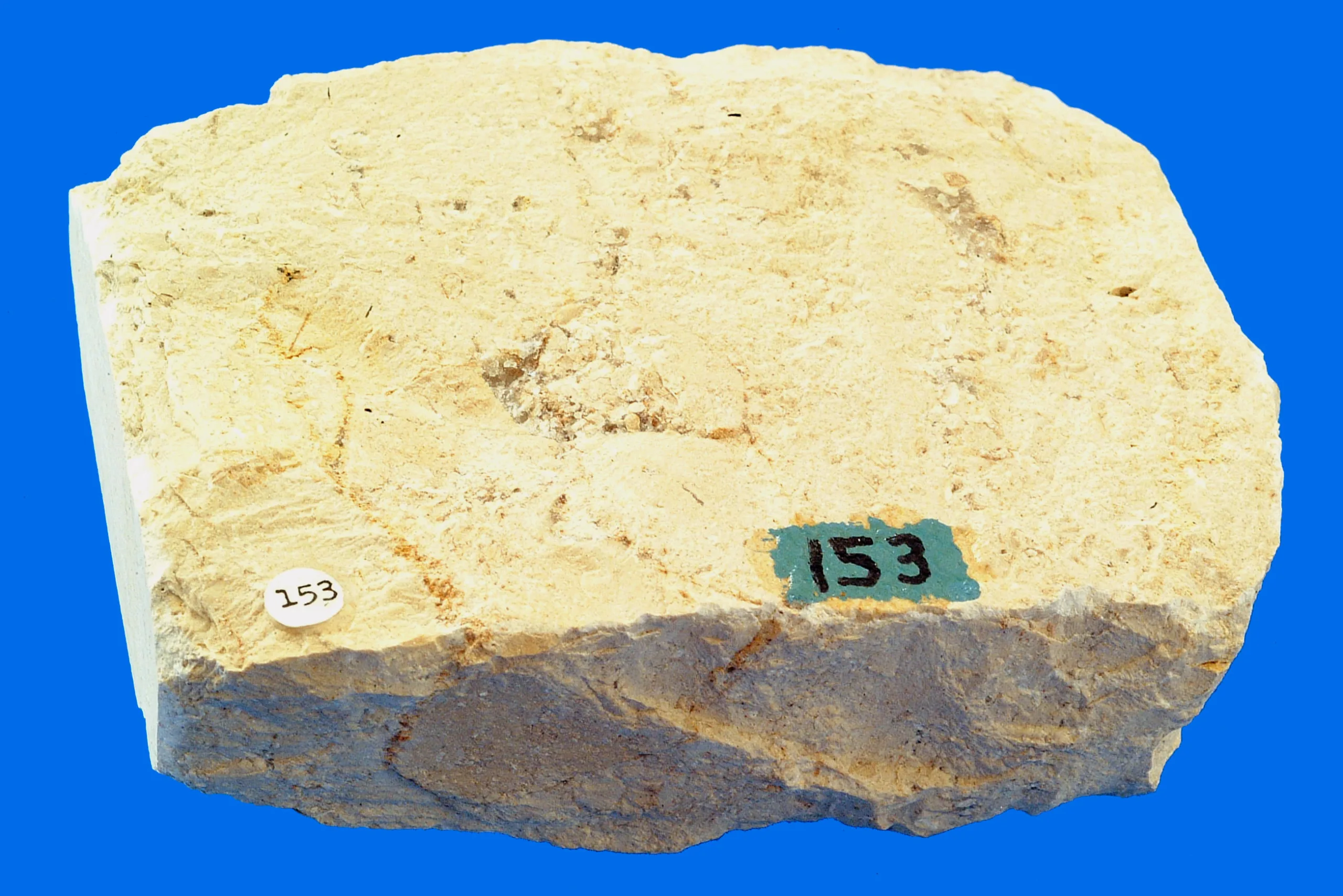
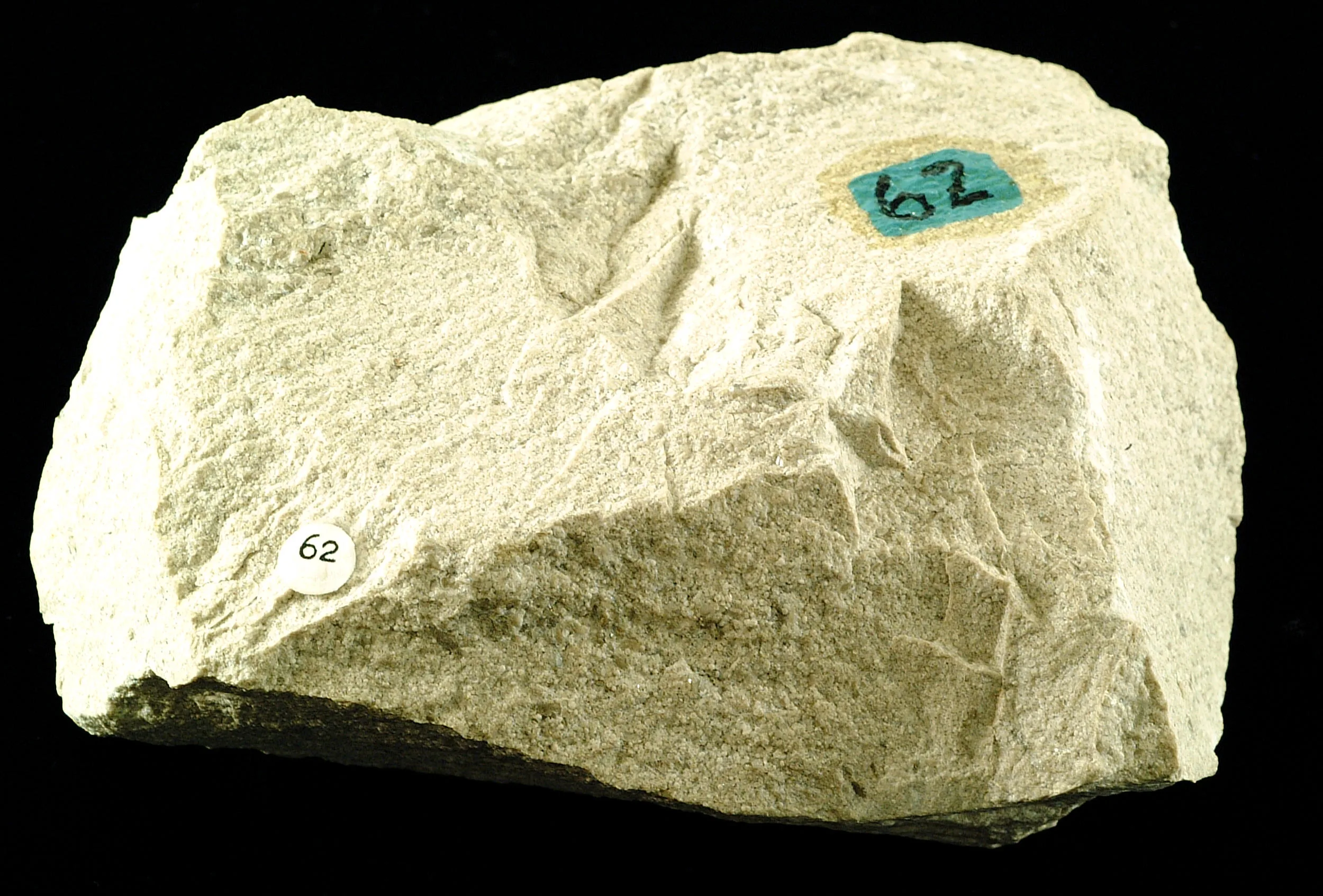
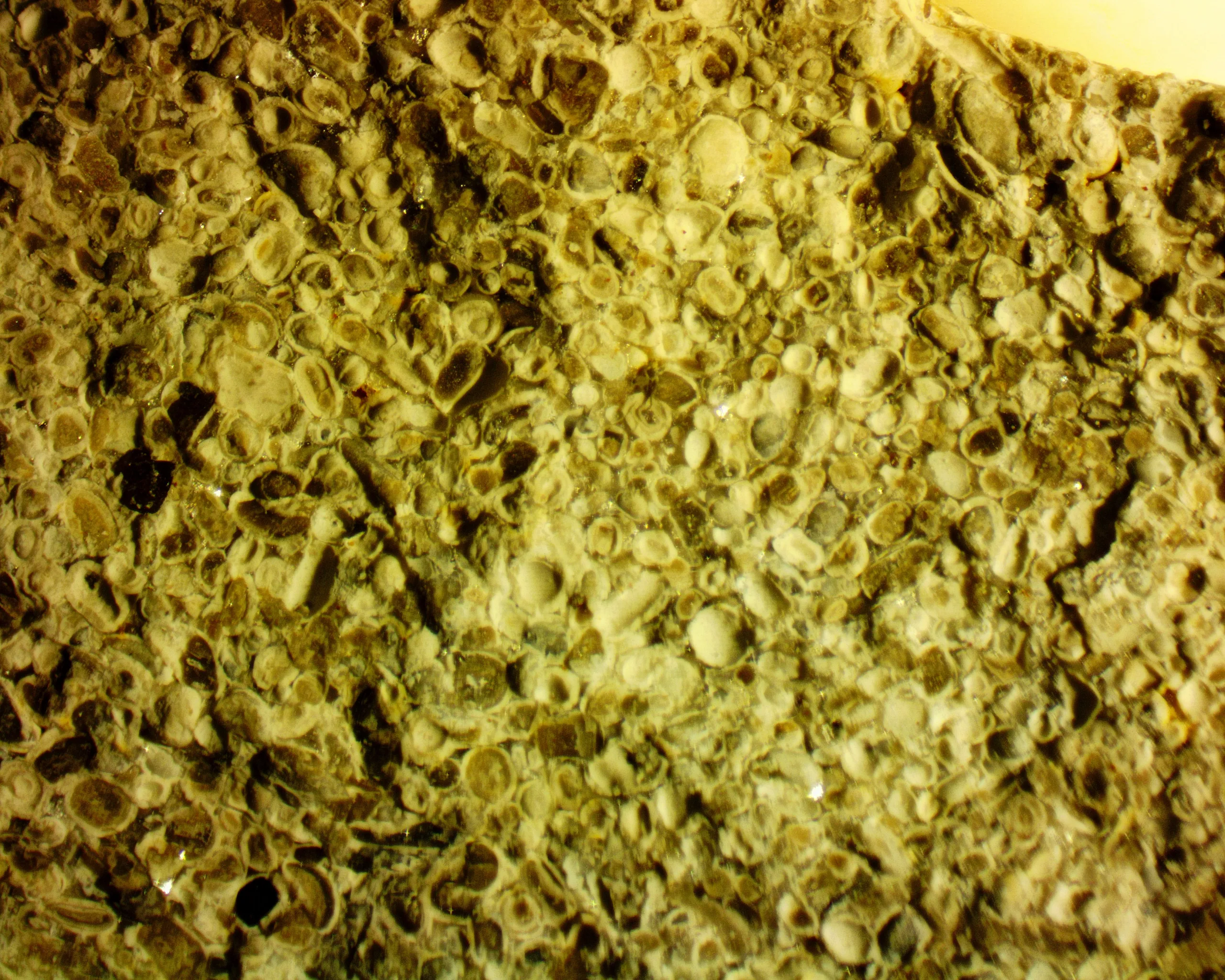
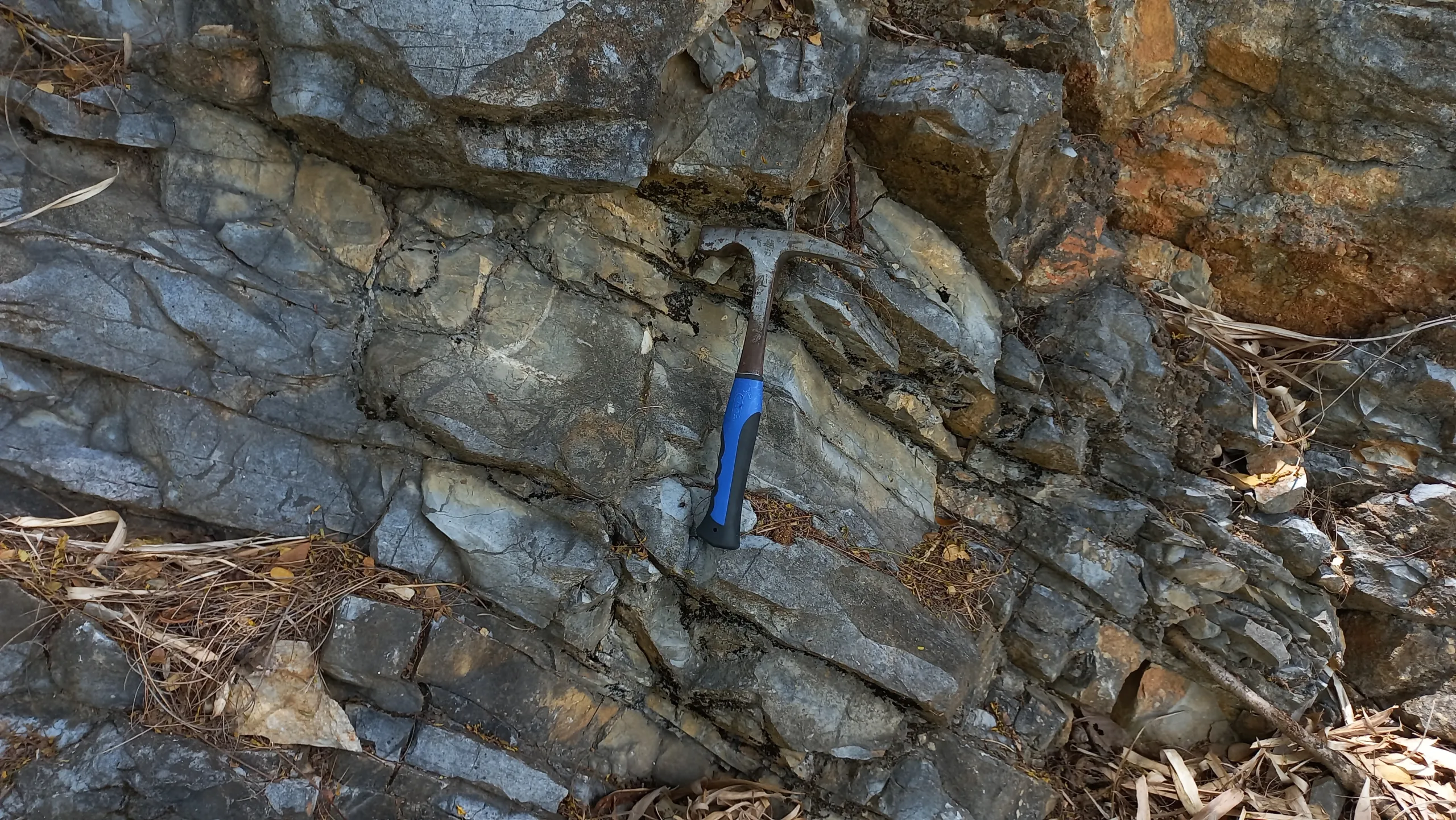
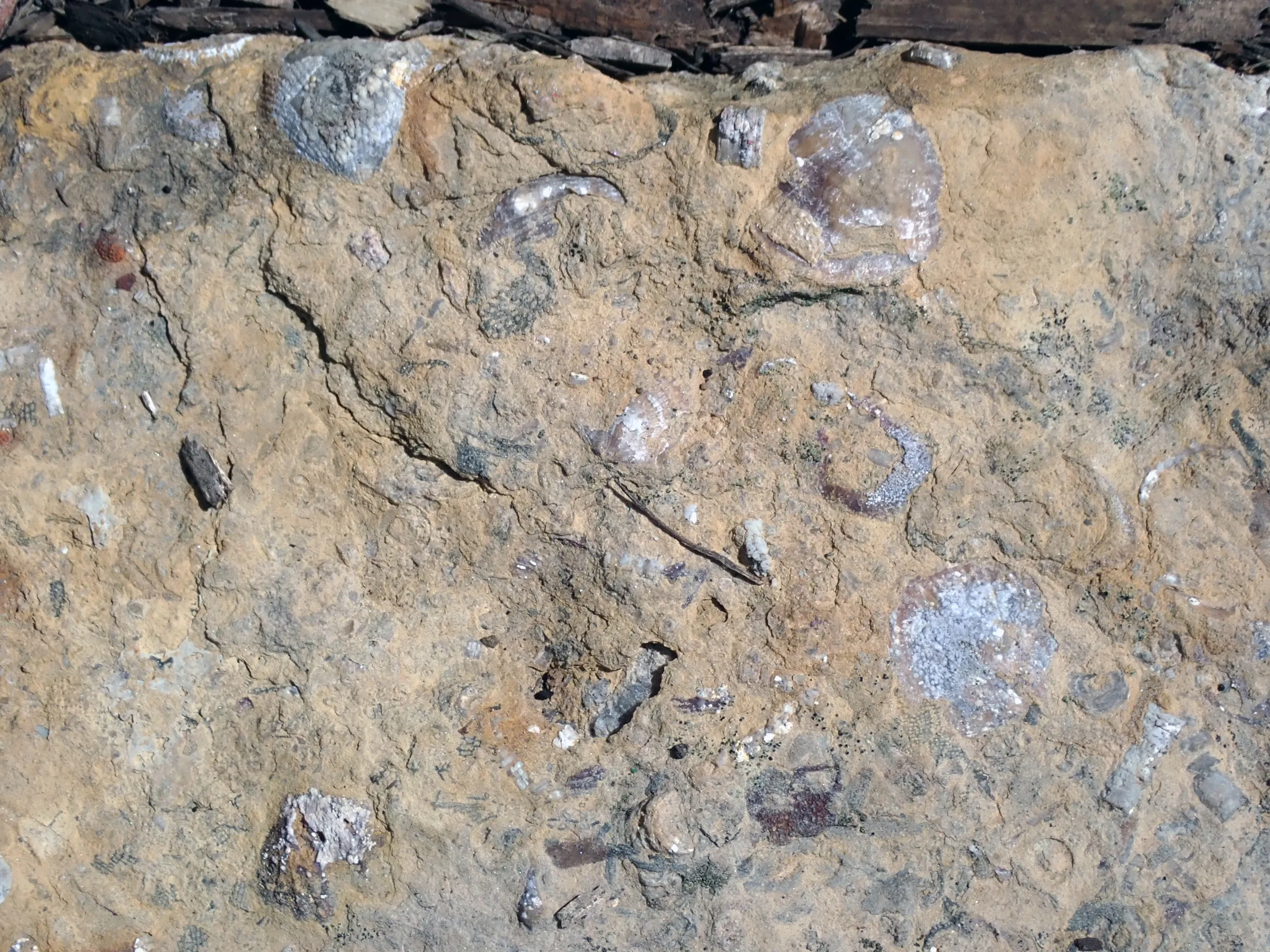
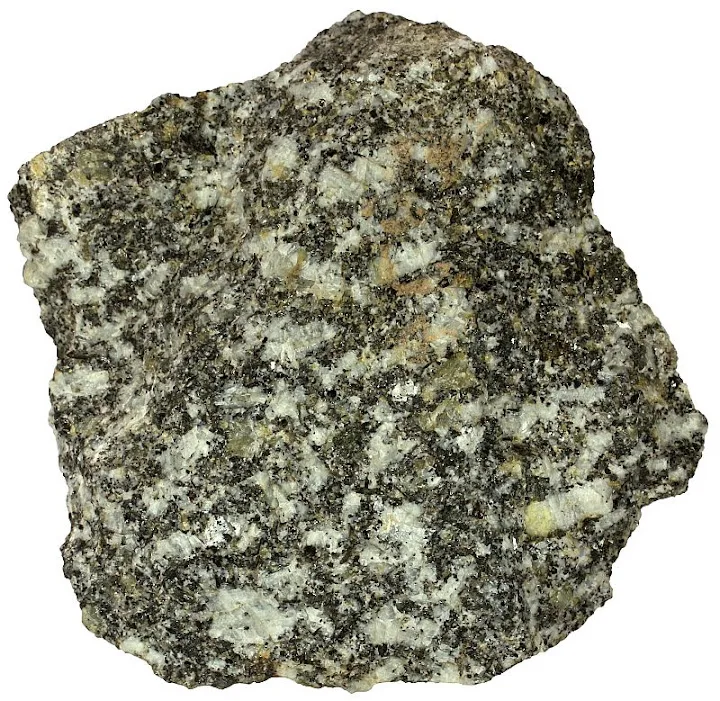
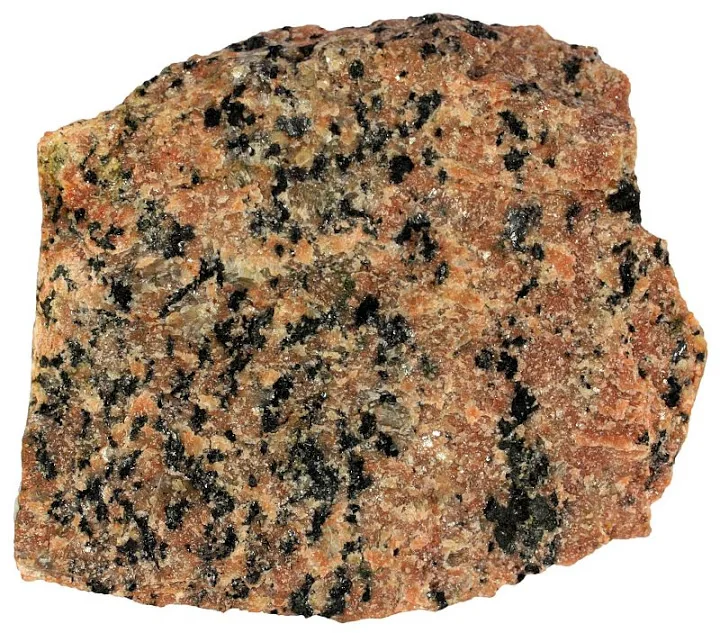
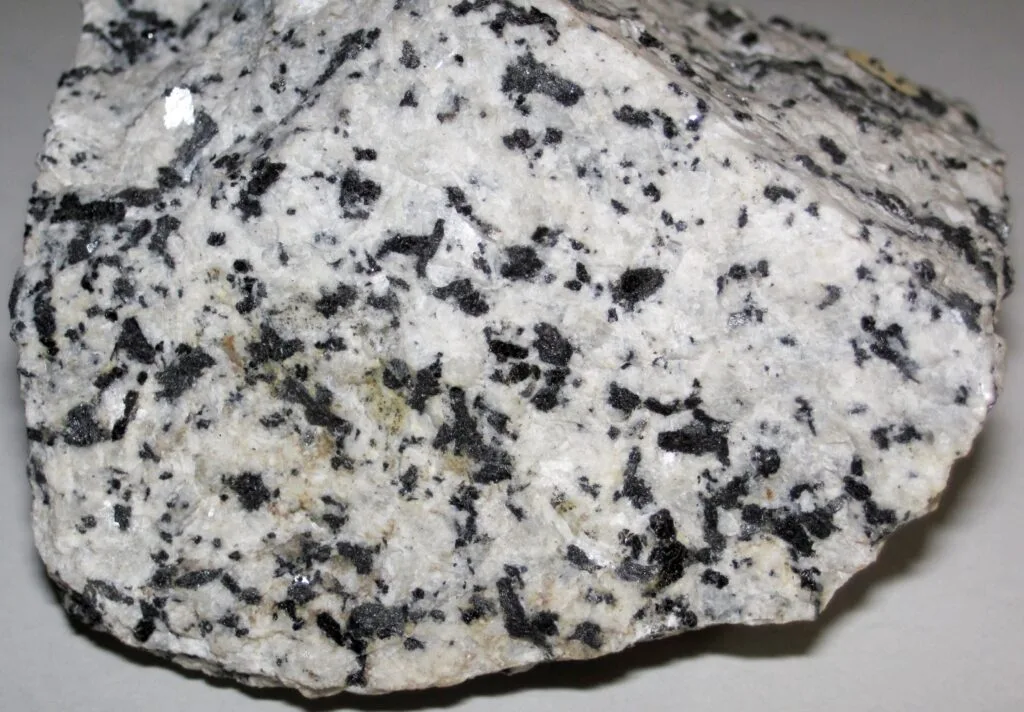
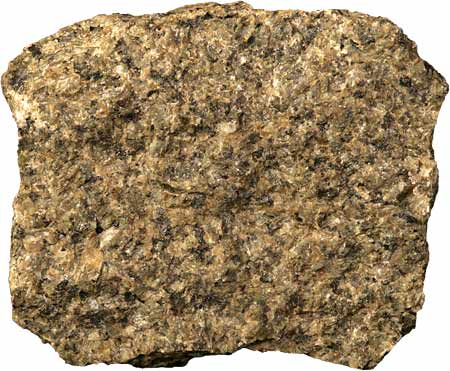
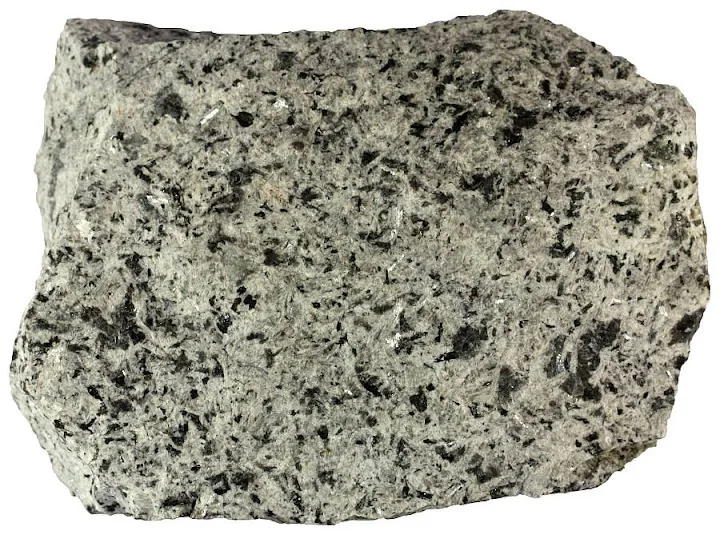
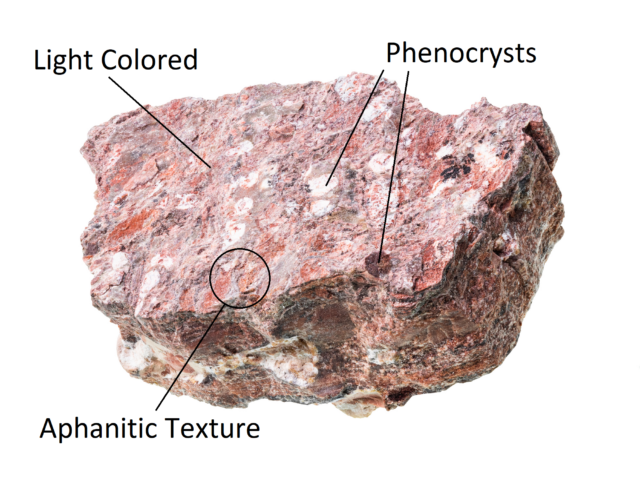
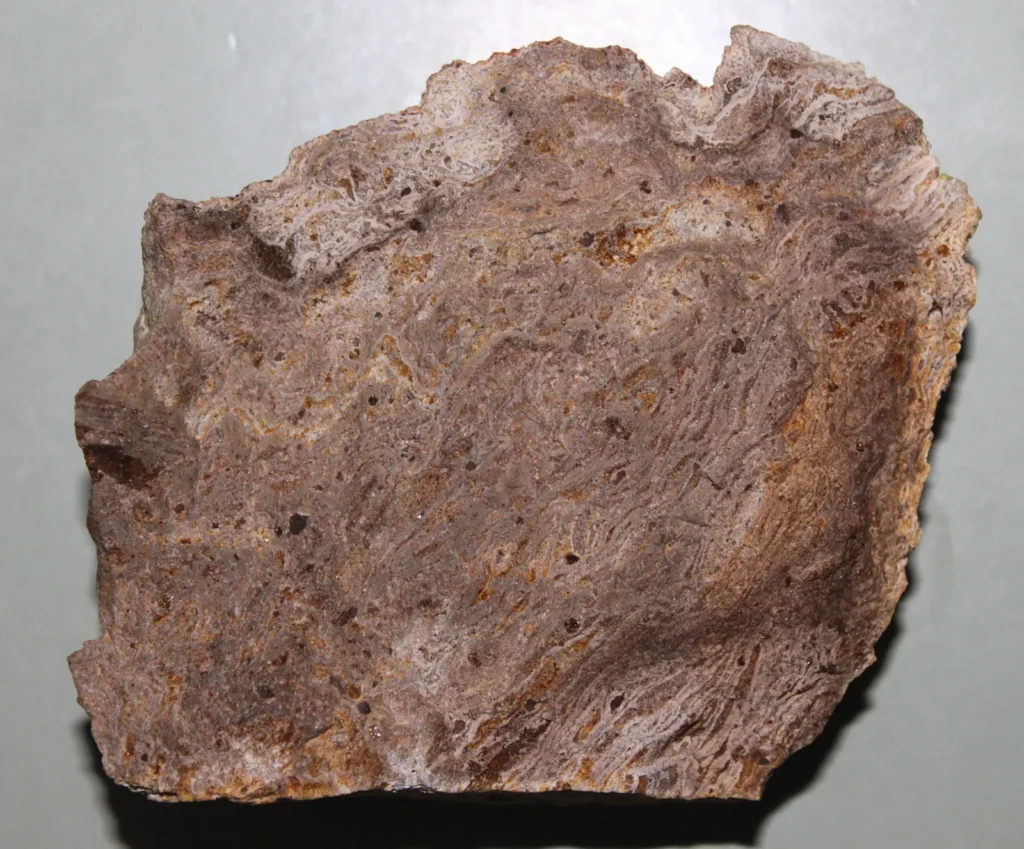
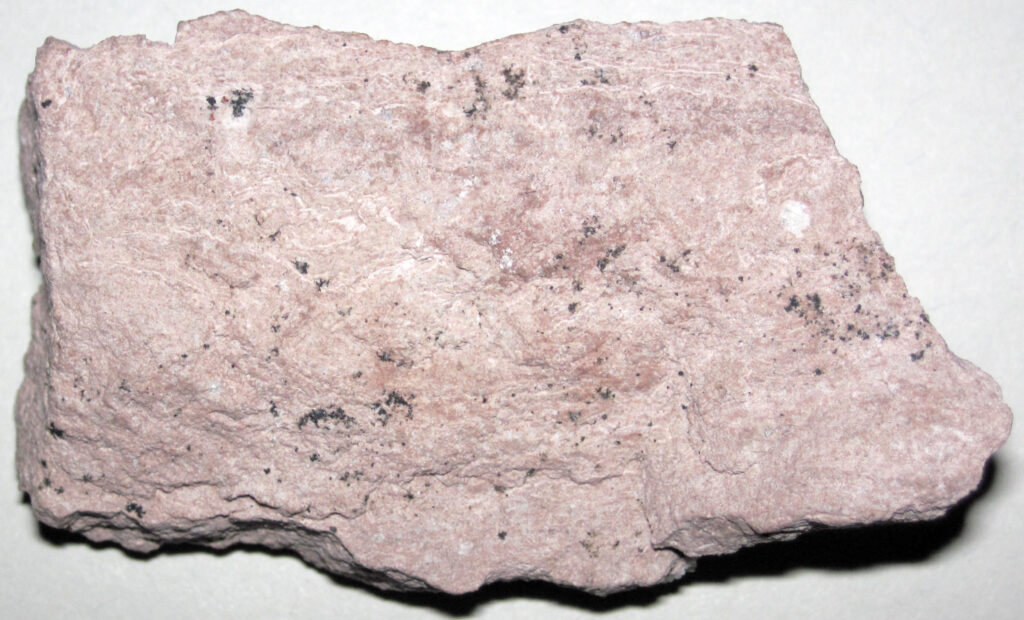
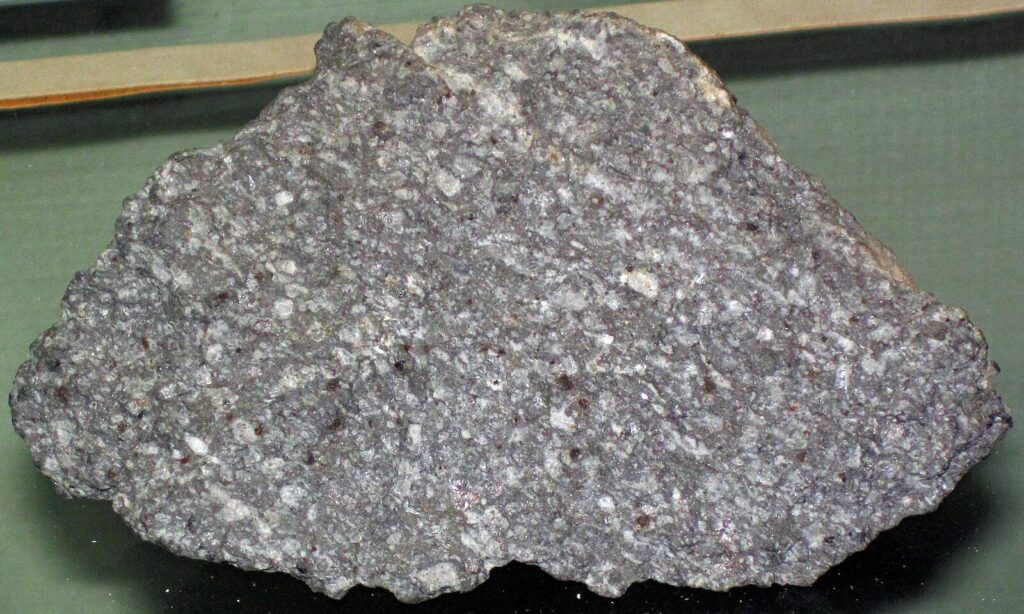
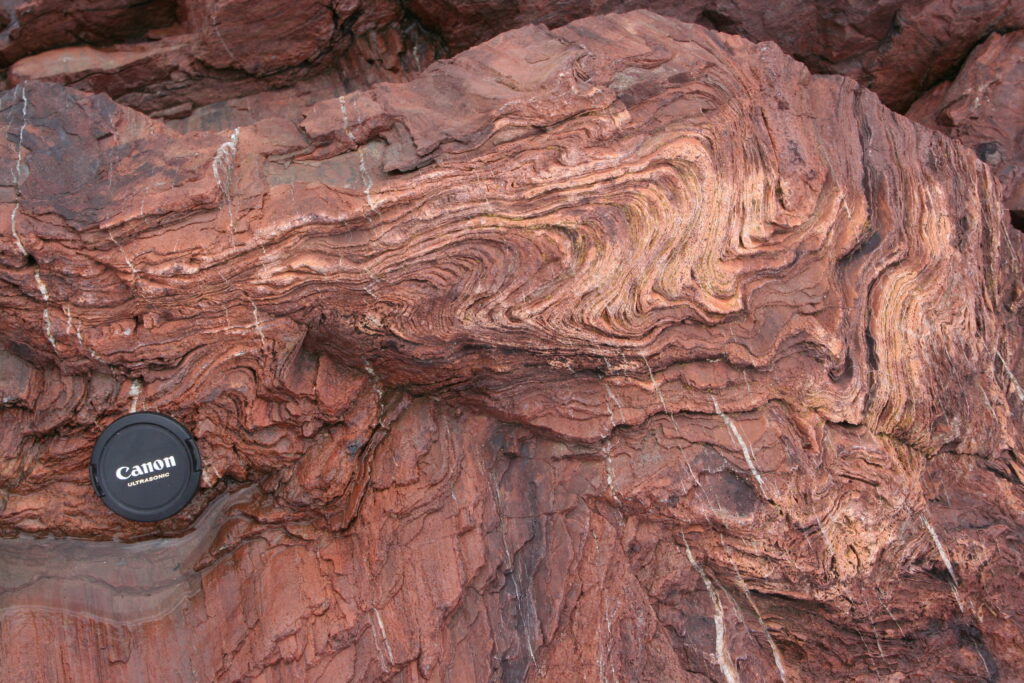
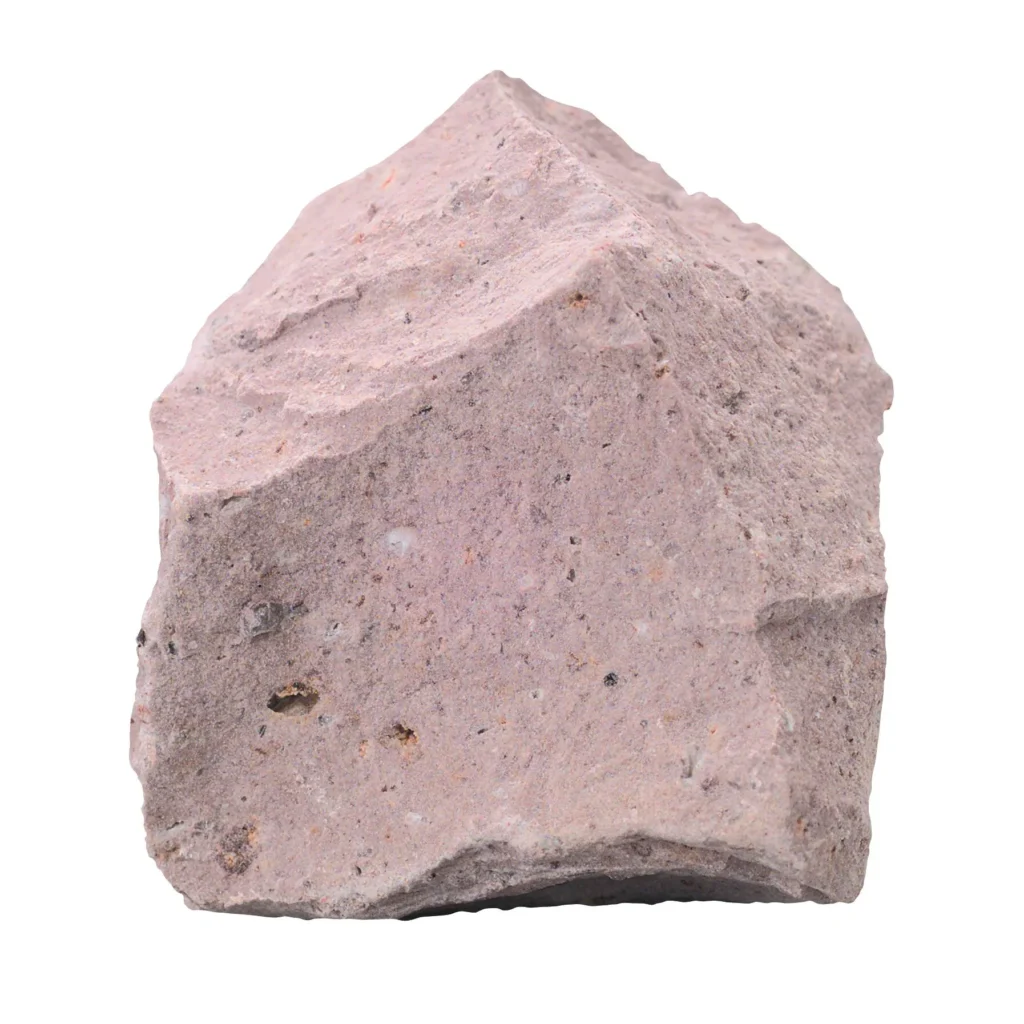
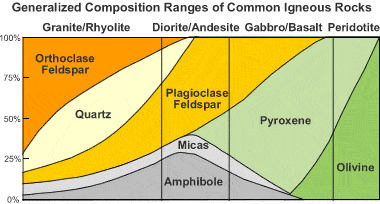
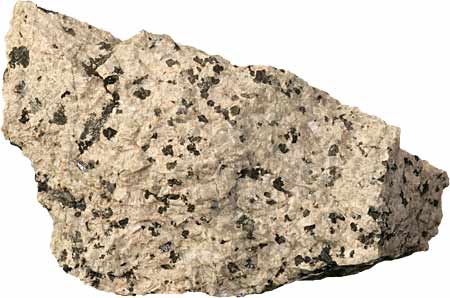
Hornfels is a fine grained metamorphic rock and It is the group for a series of contact metamorphic rocks that have been baked under high temperatures by the heat of igneous intrusions and as a result, have become massive, splintery, extremely hard, and in some cases exceedingly tough and durable. The generally of hornfels are fine-grainded and dark colour. Biotite hornfels is most common that are dark-brown to black with a velvety luster.There are also lime hornfels that are commonly white, yellow, brown, pale-green and other colors. The green and dark-green color tint of the hornfels is established by the alteration of igneous rocks.
The shape of the Hornfels can be multifunctional. Most of
the time, none of the minerals show a crystalline form, but small grains are
very close to each other, such as parts of a mosaic; they are usually almost
the same size. Similar to hard coating images, pflaster or pavement structure
is called. Each mineral may also contain debris of others; In addition, small
crystals of quartz, for example graphite, biotite, iron oxides, sillimanite or
feldspar, may appear in great numbers. Generally all of the grains are rendered
semi-opaque. The smallest crystals may also indicate strains of crystalline
outlines; certainly, they are in new formations and are in situ. This has
allowed us to agree that the mineral rock is recrystallized at an extreme
temperature and in the powerful kingdom so that the mineral molecules have
little freedom to accumulate beautifully individualized crystals. The
regeneration of the rock has been enough to influence most of the original
systems and to update the previous minerals with more or less than ever.
However, crystallization has been hampered by the strong state of mass and the
new minerals are amorphous and unable to reject the impurities, but have grown
around them.
Texture – Granular,
platy or elongate crystals randomly oriented so no foliation evident.
Grain size: Very
fine grained; grains need to be observed under a microscope; can contain
roundedporphyroblasts.
Hardness: hard
(commonly displays conchoidal fracture).
Colour: variable,
generally grey to black, but can form in a variety of colours dependent on
parent rock composition.
Mineralogy: Extremely variable, dependent on the original composition of the parent rock; generally contains minerals only formed under high temperature conditions, e.g. andalusite (Al 2SiO5), cordierite ((Mg, Fe) 2Al 4Si 5O 18).
Other features: Generally
smooth to touch.
Parent Rocks and Protoliths: Hornfels is not a rock that is “deposited”. Instead it is a rock type that forms when an existing rock is metamorphosed. The original rock that was metamorphosed is usually referred to as the “parent rock” or “protolith”. A variety of sedimentary, igneous, and metamorphic rocks can be the protolith of hornfels. Common protoliths of hornfels include sedimentary rocks such as shale, siltstone, sandstone, limestone and dolomite; igneous rocks such as basalt, gabbro, rhyolite, granite, andesite and diabase; or, metamorphic rocks such as schist and gneiss.
Name origin: German,
meaning “hornstone”
Classification of Hornfels
The Hornfels classification of mineral composition that can
be seperate into one of three general group
Pelitic Hornfels
is derived from shale, slate, and schist
Carbonate Hornfels
is derived from limestone, dolomite or marble
Mafic Hornfels is
derived from mafic igneous rocks
Chemical Composition of Hornfels
Pelitic
Biotite hornfels yield of clay, sedimentary slates and shales, the small scales of transparent under the microscope and have a dark reddish-brown color and strong dichroism. There is also quartz, and often a considerable amount of feldspar, while graphite, tourmaline and iron oxides frequently occur in lesser quantity. In these biotite hornfels the minerals, which consist of aluminiun silicates, are commonly found; they are usually andalusite and sillimanite
Carbonate
The Calc-Silicate Hornfels is a second great group of hornfels. That arise from the thermal alteration of impure limestone.The purer beds recrystallize as marbles, but where there has been originally an admixture of sand or clay lime-bearing silicates are formed, such as diopside, epidote, garnet, sphene, vesuvianite and scapolite; with these phlogopite, various feldspars, pyrites, quartz and actinolite often occur. These rocks are fine-grained, and though often banded, are tough and much harder than the original limestones.
Mafic
Third biggest group in hornfels is produced from diabases, basalts, andesites and other igneous rocks. The consist minerals are feldspar with hornblende (generally of brown color) and pale pyroxene. Sphene, biotite and iron oxides are the other common constituents, but these rocks show much variety of composition and structure. Where the original mass was decomposed and contained calcite, zeolites, chlorite and other secondary minerals either in veins or in cavities, there are usually rounded areas or irregular streaks containing a suite of new minerals, which may resemble those of the calcium-silicate hornfelses above described.
Formation of the Hornfels
The Hornfels formed is a is a group designated for a series
of contact metamorphism that have been baked and by the heat of magma chamber
or from the intrusive igneous masses and are made into massive, hard,
splintery, and in some cases exceedingly tough and durable. As of the contact
metamorphism, pressure is not a factor in the formation of hornfels, it lacks the
foliation as seen in many metamorphic rocks formed under high pressure and
temperature. Pre-existing bedding and structure of the parent rock is generally
destroyed in hornfels.
Where is Hornfels Located
Hornfels occurs worldwide. In Europe, the largest reserves are in the United Kingdom. In North America, hornfels occurs in primarily in Canada. South American countries with large reserves include Bolivia, Brazil, Ecuador, and Colombia. Asian reserves are found in China, Russia, India, North Korea, South Korea, and Thailand. In Africa, hornfels is found in Tanzania, Cameroon, East Africa, and Western Africa. The rock is found in Australia and New Zealand, as well.
Characteristics and Properties of Rock
Hornfels often retains the stratification, large-scale
geometry, and also some textural characteristics of the protolith. The changes
of contact metamorphism that convert rocks to hornfels can include
recrystallization, cementation, silicification, partial melting, and more.
The result is often a dense, hard, fine-grained rock that is
generally homogenous and exhibits a semi-conchoidal fracture. Hornfels can be
almost any color, but black, gray, brown, reddish and greenish rocks are
common.
It is a type of metamorphic rock that gets its name from its resemblance to animal horn.
It forms when magma heats other rock, which may be igneous, metamorphic, or sedimentary.
The most common colors of hornfels are black and dark brown. It may be banded or occur in other colors. The colors depend on the composition of the original rock.
Key properties of the rock include velvety texture and appearance, conchoidal fracture, and fine grain. It may be very hard and tough.
It is a contact metamorphic rock, formed when magma bakes its source material.
Uses of Rock
Uses of hornfels are
as an aggregate in the construction and road building.
The primary use of
hornfels is in architecture. The hard, interesting-looking stone may be used to
make interior flooring and decorations as well as exterior facing, paving,
curbing, and decorations.
The rock is used in
the construction industry to make road aggregate. Historically, hornels has
been used to construct monuments, cemetery markers, whetstones, artworks, and
artifacts.
One noteworthy use of
hornfels is to construct lithophones or stone bells. In South Africa, the rock
may be called “ring stones.” The “Musical Stones of
Skiddaw” refers to a series of lithophones made using hornfels mined from
Skiddaw mountain, near the town of Keswick in England. In 1840, stonemason and
musician Joseph Richardson built an eight-octave lithophone, which he played on
tour. The lithophone is played like a xylophone.
Facts About Rock
The structure of the hornfels is characterized by the small-grained mosaic make-up.
Thye are used in a number of applications like in the field of construction and landscaping. It is used as a decorative rock in gardens. In the olden times, it is used as a tool like scrapers and knives.
It is used as a road base and in concrete and is most often dark blue or almost a black color.
The interior use of hornfels is found in homes and businesses in the decorative aggregates, flooring, countertops, and bathrooms.
The exterior use of hornfels is viewed in building construction, paving stones, and a variety of gardening decorations.
In prehistoric times, hornfels was used to make simple tools such as knives, scrapers, and arrowheads.
Thye are defined by the physical properties such as hardness, strength, grain size, fracture, porosity, and streak. It is these physical properties that determine usage.
Because pressure is not a main factor in the formation of hornfels, and the texture is granular, platy or elongated crystals, there is a lack of foliation as often seen in many metamorphic rocks formed under high pressure.
During the formation of hornfels, the pre-existing rock is destroyed.
They are typically found only by microscopic observation and not witnessed by eye alone. However, under a microscope the structure becomes very distinctive revealing the small-grained mosaic design.
There is a second group of hornfels are called the calc-silicate hornfels which originate from the thermal alteration of impure limestone. These rocks are fine-grained, and even though they are often banded, they are tough and much harder than the original limestone.
It have the ability to resonate when struck. The stones in South Africa are called “ring-stones” due to their ability to ring like a bell after being struck with an object.
References
Bonewitz, R. (2012). Rocks and minerals. 2nd ed.
London: DK Publishing.
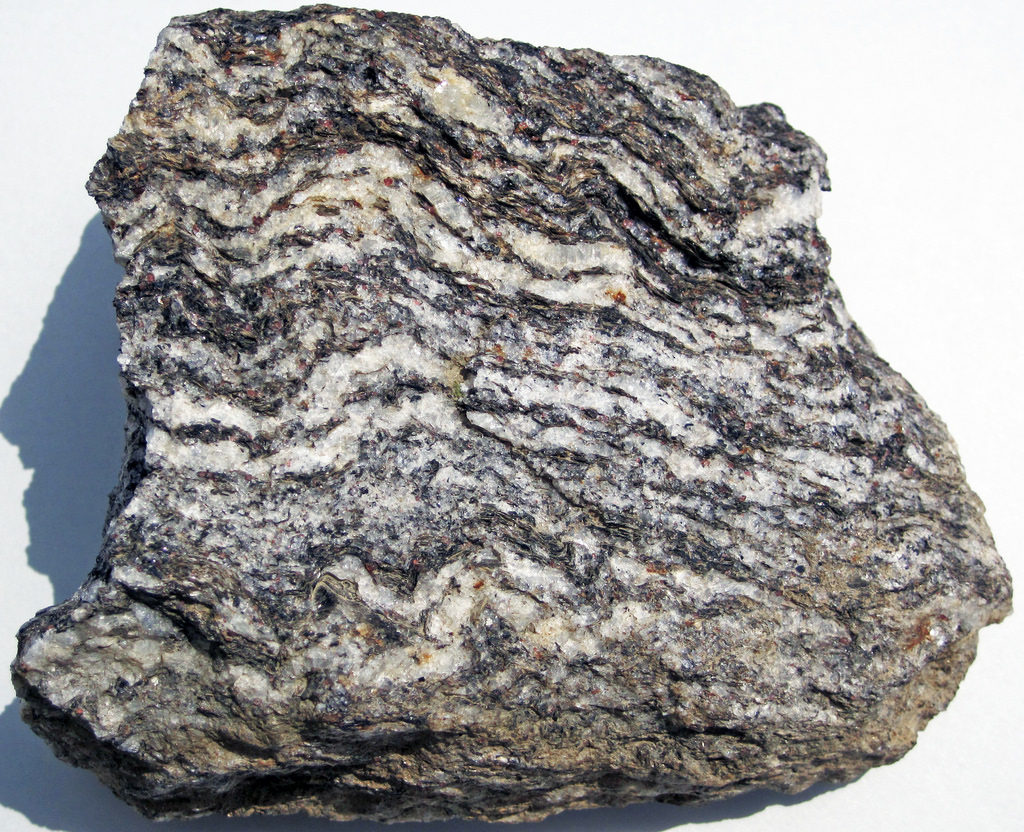
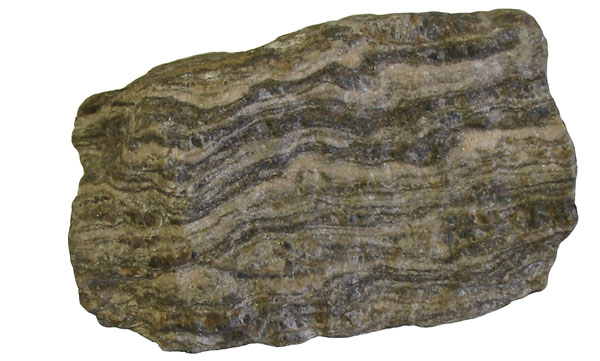
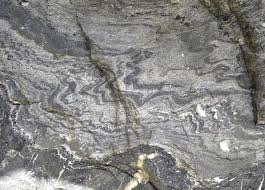
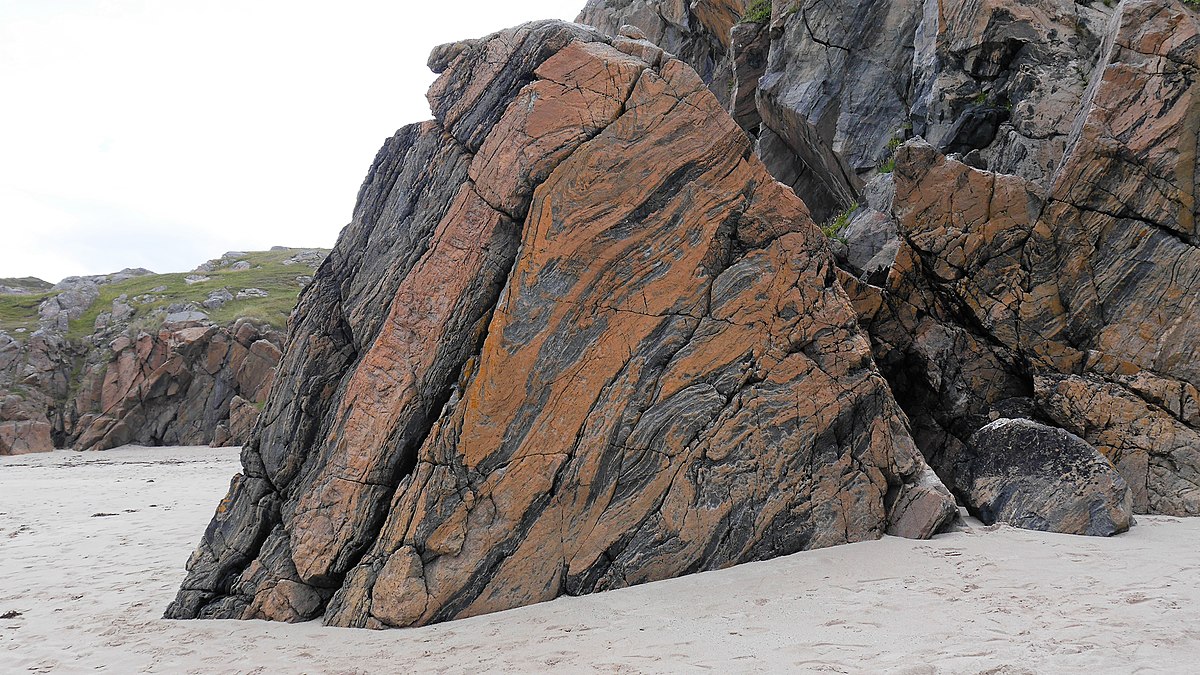
Gneiss is a foliated metamorphic rock that is a common distribute type of rock high-grade regional metamorphic approaches from pre-current formations that have been initially both igneous or sedimentary rocks. It has a glorious banding which is apparent on microscopic scale and hand specimen. It usually is prominent from schist by its foliation and schistosity; displays a properly-advanced foliation and a poorly advanced schistosity and cleavage
Name origin: Gneiss
word first has been used English since at least 1757. Probably origin is german
word Gneis that mean “spark” (rock glitters).
Structure: In
addition to the gneissose texture described above, gneisses tend to be banded
on a large scale with layers and streaks of darker and lighter coloured gneiss.
Granite and quartz veins and pegmatites are common. May be folded.
Classification and Types of Gneiss
The Gneiss minerals are order into layer that seeing as
band. Those layers are compositional banding, happens due to the fact the
layers, or bands, are of different composition. The darker bands have
incredibly extra mafic minerals (the ones containing more magnesium and iron).
The lighter bands incorporate fantastically extra felsic minerals (silicate
minerals, containing more of the lighter elements, which include silicon,
oxygen, aluminium, sodium, and potassium).
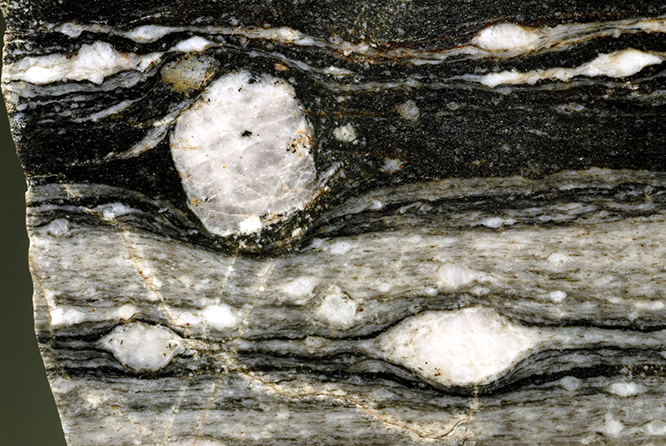
Augen gneiss
Augen gneiss
Augen gneiss, from the German: Augen , which means “eyes”,
is a coarse-grained gneiss because of metamorphism of granite, which
incorporates characteristic elliptic or lenticular shear-bound feldspar
porphyroclasts, typically microcline, within the layering of the quartz,
biotite and magnetite bands.
Henderson gneiss
Henderson gneiss
Henderson gneiss is found in North Carolina and South
Carolina, US, east of the Brevard Shear Zone. It has deformed into two
sequential forms. The second, more warped, form is associated with the Brevard
Fault, and the first deformation results from displacement to the southwest.
Lewisian gneiss
Lewisian gneiss
Most of the Outer Hebrides of Scotland have a bedrock formed
from Lewisian gneiss. In addition to the Outer Hebrides, they form basement
deposits on the Scottish mainland west of the Moine Thrust and on the islands
of Coll and Tiree. These rocks are largely igneous in origin, mixed with
metamorphosed marble, quartzite and mica schist with later intrusions of
basaltic dikes and granite magma.
Archean and Proterozoic gneiss
Gneisses of Archean and Proterozoic age occur in the Baltic
Shield.
Chemical Composition of Gneiss
Gneissic rocks are usually medium- to coarse-foliated; they are largely recrystallized but do no longer deliver large quantities of micas, chlorite or different platy minerals. Gneisses which can be metamorphosed igneous rocks or their equivalent are termed granite gneisses, diorite gneisses, and so on. Rhey can also be named after a characteristic component inclusive of garnet gneiss, biotite gneiss, albite gneiss, and many others. Orthogneiss designates a gneiss derived from an igneous rock, and paragneiss is one from a sedimentary rock.
Gneiss Formation
All gneiss forms as a result of high-grade, regional metamorphic conditions. High grade means that the metamorphism occurs at high pressures and at temperatures at or above 320 degrees Celsius. Any water that is present in the minerals pre-metamorphism is frequently lost as the temperature increases, resulting in hard metamorphic rocks that are generally resistant to dissolution in water. Regional means that the metamorphic conditions occur over large geographic areas and include differential (or shearing) stresses, which help to form the layered structure known as foliation. Gneiss rocks exhibit a unique form of foliation known as gneissic banding, which are thicker bands of foliation than most metamorphic rocks display. It is one of the features that helps differentiate gneiss from other foliated rocks. Mineralogically, tends to include quartz, feldspar, mica, chlorite, and other clay minerals. Some also contain larger crystals imbedded in the rock matrix, most frequently garnet, topaz, and beryl minerals.
Where is it found
Gneiss, being a highly deformed crystalline metamorphic rock, is commonly found in the cores of mountain ranges and in Precambrian crystalline terranes. The rock itself is formed at crustal depths of 10 to 20 km, at pressures of 10kb or more, and temperatures between about 500-700°K, so at depths where rock becomes quasi-viscous, high-grade minerals such as biotite and garnet form that lend a characteristic foliation or banding, but just below temperatures where quartz and feldspar and muscovite begin to melt and/or break down and form veins of granite. There are many varieties of it, depending on mineral composition and texture, but all gneiss is evidence of deep crustal deformation. Study of gneiss is an important part of metamorphic petrology.
Gneiss Uses
Gneiss usually does not break up alongside planes of weak point like maximum other metamorphic rocks. This allows contractors to apply as a overwhelmed stone in road production, building web site guidance, and landscaping tasks
It is long lasting sufficient to carry out properly as a size stone. These rocks are sawn or sheared into blocks and slabs utilized in a ramification of constructing, paving, and curbing initiatives.
Some of it accepts a vibrant polish and is appealing sufficient to be used as an architectural stone. Beautiful floor tiles, facing stone, stair treads, window sills, counter tops, and cemetery monuments are regularly crafted from polished gneiss.
Conclusion
It is distinctive among other rocks that have bands because its minerals are not evenly distributed so the bands are various widths.
Under appropriate conditions, it can be recrystallized into granite.
There is gneiss in Canada that date back 4 billion years.
It is so abundant on the lower level of the Earth’s crust that if you drill anywhere on the surface, you will eventually strike gneiss.
It is said to be a German word meaning sparkling or bright.
The rock is further characterized by its alternating light and dark bands of minerals.
It forms from volcanic rock, shale, or granitic.
Quartz is typically abundantly found in gneiss.
The bands that form on gneiss rock are due to the various rocks that are a part of its make-up.
The use of the word gneiss dates back to the mid-1700s.
It rocks that originate as sedimentary rock are called paragneiss and those originating as igneous rock are called orthogneiss.
Limestone can change into calcareous gneiss which contains calcium carbonate.
Gneiss and schist are often confused but gneiss has more of a coarse texture and does not cleave.
Some of the oldest rocks found on Earth are gneisses.
It has also been used to construct buildings and gravestones.
References
Bonewitz, R. (2012). Rocks and minerals. 2nd ed. London: DK Publishing.
Atlas-hornin.sk. (2019). Atlas of magmatic rocks. [online] Available at: http://www.atlas-hornin.sk/en/home [Accessed 13 Mar. 2019].
“Gneiss.” World of Earth Science. . Retrieved April 06, 2019 from Encyclopedia.com: https://www.encyclopedia.com/science/encyclopedias-almanacs-transcripts-and-maps/gneiss
Amphibolite is a coarse-grained metamorphic rock, predominantly composed of mineral amphibole and plagioclase feldspar. It can also contain minor amounts of other metamorphic minerals such as biotite, epidote, garnet, wollastonite, andalusite, staurolite, kyanite, and sillimanite. Amphibolite is found around metamorphic and igneous rock intrusions that solidify between other rocks that are located within the Earth. Also, amphibolite has significant components found in both volcanic and plutonic rocks that range in composition from granitic to gabbroic. The formation of amphibolite took place millions of years ago and is found in various countries around the world today.
Name: Amphibole,
originates from the Greek word amphibolos, meaning “ambiguous,” and
was named by the famous French crystallographer and mineralogist Rene’-Just
Hauy (1801)
Colour: Mainly of green, brown, or black
Group:
Metamorphic rock
Texture: Coarse
grain,gneissose or granofelsic
metamorphic rock
Major minerals: Amphibole and plagioclase feldspar
The Amphibolite classification is based on the following
statements:
1) The modal compositions of amphibolites show that most of
them contain more than 50% of amphibole, but those with 50 to 30% are not
unusual. The content of amphibole and plagioclase together is mostly higher
than 90%, and may be as low as 75%.
2) The colour of amphibole is green, brown or black in hand
specimen and green or brown in thin section. The common varieties are tschermakitic
and magnesio- and ferro-hornblende.
3) Plagioclase is the prevalent light-coloured constituent,
the quantity of quartz or epidote or scapolite should be lower than that of
plagioclase.
4) Clinopyroxene, where present, should be less abundant
than amphibole (hornblende). When pyroxene prevails, the rock should be named
hornblende-pyroxene rock or calc-silicate rock, depending on its composition
and on the composition of the clinopyroxene.
5) The presence of other major mineral constituents (>5%)
is expressed by the corresponding prefix according to general SCMR rules (e.g.
garnet amphibolite, pyroxene amphibolite, quartz amphibolite, etc.).
6) The amphibolite is characterised by the presence of
hydroxyl-bearing minerals (amphibole, biotite), which prevail over the
hydroxyl-free ones (garnet, diopside). The boundary with the higher grade,
granulite-facies metamorphic rocks, is determined by the appearance of
orthopyroxene.
Chemical Composition of Amphibolite
Amphibolites define a particular set of temperature and
pressure conditions known as the amphibolite facies, with temperature of 500 to
750 °C and pressures of 8-7 kbar. Changes in mineralogy depends very much on
protolith, however, production of abundant garnet and hornblende are most
characteristic. Sodic feldspars are oligoclase rather than the albite that
dominates at lower T. Biotite and muscovite are both abundant in pelitic rocks
of amphibolite facies. Kyanite and sillimanite are often produced by reaction
of muscovite and quartz.
Typical assemblages for different protoliths include:
Amphibolite is a rock associated with the convergent plate
boundaries where heat and pressure cause regional metamorphism of mafic igneous
rocks such as basalt and gabbro or from the clay rich sedimentary rocks that
can be either marl or greywacke. The metamorphism sometimes also flattens and
elongates the mineral grains which produces schistocity in the rock.
Ortho-amphibolites vs. para-amphibolites
Metamorphic rocks composed primarily of amphibole, albite,
with subordinate epidote, zoisite, chlorite, quartz, sphene, and accessory
leucoxene, ilmenite and magnetite which have a protolith of an igneous rock are
known as Orthoamphibolites.
Para-amphibolites
will generally have the same equilibrium mineral assemblage as
orthoamphibolites, with more biotite, and may include more quartz, albite, and
depending on the protolith, more calcite/aragonite and wollastonite.
Uralite
Uralites are particular hydrothermally altered pyroxenites;
during autogenic hydrothermal circulation their primary mineralogy of pyroxene
and plagioclase, etc. has altered to actinolite and saussurite (albite +
epidote). The texture is distinctive, the pyroxene altered to fuzzy, radially
arranged actinolite pseudomorphically after pyroxene, and saussuritised
plagioclase.
Epidiorite
The archaic term epidiorite is sometimes used to refer to a
metamorphosed ortho-amphibolite with a protolith of diorite, gabbro or other
mafic intrusive rock. In epidiorite the original clinopyroxene (most often
augite) has been replaced by the fibrous amphibole uralite.
Where is It Located
This common metamorphic rock is found around the world, with
variable chemical makeups from deposit to deposit. It originally begins as an
igneous rock such as basalt, although all original materials cannot be
determined due to the metamorphic process. During this process, the base
material is exposed to water-borne minerals, which combine to form the new
rock.
Amphibolite (or hornblende) can also be found as inclusions
in moss agate, dendritic agate and zoisite. Amphibolite is commonly found in
areas where mountains have formed. Deposits have been found on every continent
except Antarctica.
Uses of The Rock
Amphibolite was a fave
material for the production of adzes (shoe-ultimate-celts) in the imperative
European early Neolithic (Linearbandkeramic and Rössen cultures).
Amphibolite is a not
unusual size stone utilized in production, paving, dealing with of homes,
specially due to its appealing textures, darkish coloration, hardness and
polishability and its equipped availability
Amphibolite has a
variety of uses in the construction industry. It is harder than limestone and
heavier than granite. These properties make it desirable for certain uses.
Amphibolite is quarried and crushed for use as an aggregate in highway
construction and as a ballast stone in railroad construction. It is also
quarried and cut for use as a dimension stone.
Higher quality stone
is quarried, cut, and polished for architectural use. It is used as facing
stone on the exterior of buildings, and used as floor tile and panels indoors.
Some of the most attractive pieces are cut for use as countertops. In these
architectural uses, amphibolite is one of the many types of stone sold as
“black granite.”
Gemologists and
lapidary workers have discovered that some amphibolite rock produces a shimmer
effect when it is polished. They use rounded and polished pieces of amphibolite
for various pieces of jewelry.
There are many options
to amphibolite as dimension stone. Marble, granite, and quartzite, for
instance, can all be polished and used as facing on the interior and exterior
of buildings. In some environments even sandstone can be used for building
construction. In the end, amphibolite is chosen for the particular color,
texture and overall look it gives to a building. Substitutes that provide a
similar look include plastics and some varieties of other dark rock like dark
granite.
Facts About The Rock
Metamorphic
rocks are formed by the heating of pre-existing rocks. The heat provided to a
rock changes the mineralogical and physical changes which are called
metamorphic rocks.
Amphibolite
erodes over a long period of time. Wind erosion, sea erosion, glacier erosion
and chemical erosion are all types of erosion that effect amphiboles.
The
highest quality of amphibolite is quarried for specific uses in architectural
design
Amphibolite
often has features that are smooth to the touch, matrix variable, and shiny
looking.
Because
amphibolite is harder than limestone and heavier than granite, it is quarried
and crushed and used for highway and railroad construction.
According
to a variety of features like texture, appearance, hardness, streak, toughness,
and resistance, an amphibolite is used for various antiquity uses such as
artifacts, sculpture and small figurines.
Amphibolite
is often used commercially in cemetery markers, commemorative tablets, and
creating artwork
Amphibolite
is used for exterior building stones, facing stones, curbing, and paving stone.
Amphibolite
is used for interior countertops, entryways, floor tiles, and in hotels and
kitchens.
When the
presence of hydroxyl groups is found in the structure of amphiboles, it
decreases their thermal stability relative to the more refractory
(heat-resistant) pyroxenes.
Amphiboles
have hydroxyl groups in their structure and are considered to be hydrous
silicates that are stable only in hydrous environments where water can be found
and incorporated into the structure
Most
often, amphiboles form as asbestiform (fibrous) aggregates, radiating sprays,
and long prismatic crystals.
Amphibolite
can crystallize in igneous and metamorphic rocks with a wide range of bulk
chemistries because of the large range of chemical substitutions allowed in the
crystal structure.
According
to the British mineralogist Bernard E. Leake, there are 5 major groups of
amphibole that leads to 76 chemically defined compositions.
References
Bonewitz, R. (2012). Rocks and minerals. 2nd ed. London: DK Publishing.
Wikipedia contributors. (2019, January 9). Amphibolite. In Wikipedia, The Free Encyclopedia. Retrieved 00:29, April 12, 2019, from https://en.wikipedia.org/w/index.php?title=Amphibolite&oldid=877577634
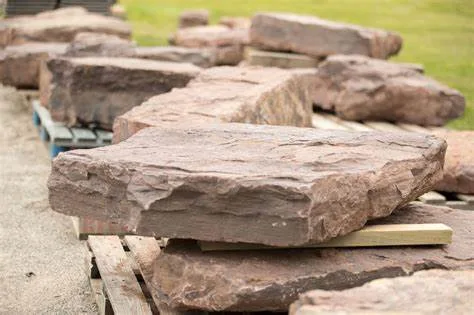
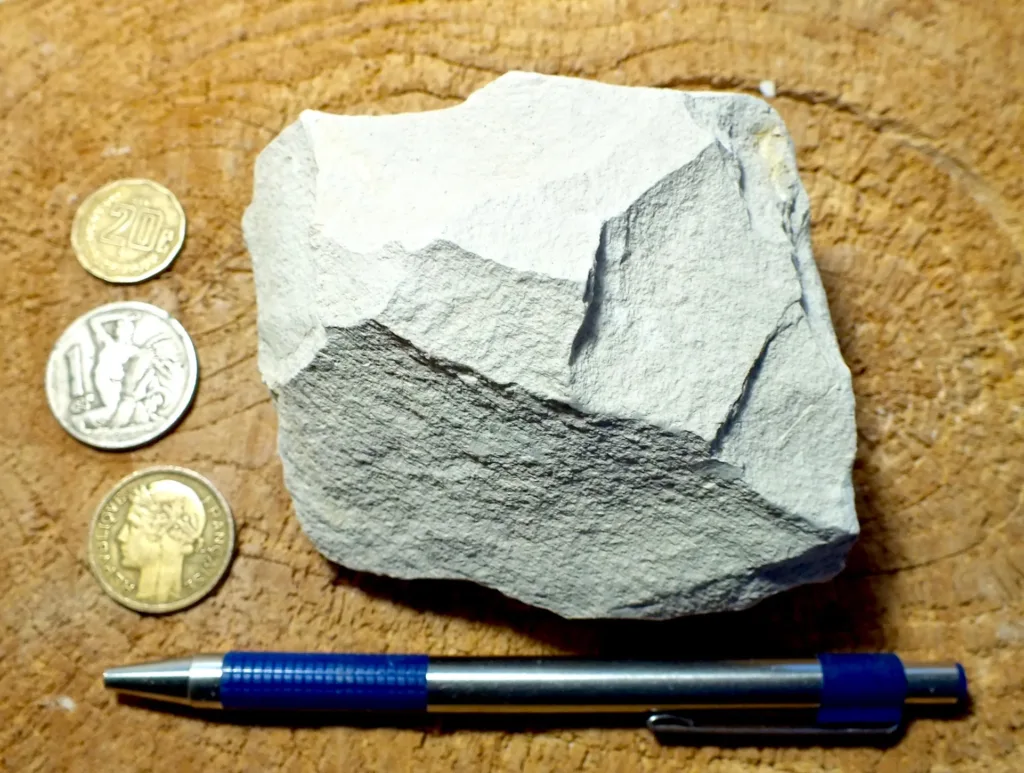
Mudstone is a type of sedimentary rock that is characterized by its fine-grained nature and is composed primarily of silt- and clay-sized particles. It is one of the most common sedimentary rocks and plays a significant role in the field of geology.
Mudstone is a sedimentary rock that forms from the consolidation of mud, which is composed of a mixture of clay minerals, silt-sized particles, and other organic material. The particles in mudstone are typically too small to be individually seen with the naked eye, and the rock often has a smooth, dense appearance. Mudstone differs from shale in that it lacks the fissility (ability to split into thin layers) that is characteristic of shale.
Importance in Geology
Sedimentary Record: Mudstone is a crucial component of the sedimentary record, preserving information about past environmental conditions, climate changes, and the evolution of life on Earth. The fine-grained nature of mudstone allows it to capture and retain detailed sedimentary structures and microfossils, making it a valuable archive for geologists studying Earth’s history.
Source of Natural Resources: Mudstones can be associated with the formation of important natural resources. For example, certain mudstone deposits may be rich in organic material and contribute to the formation of hydrocarbons like oil and natural gas. Understanding the composition and structure of mudstone is essential for the exploration and extraction of these valuable resources.
Geotechnical Considerations: Mudstone can have important geotechnical implications, especially in construction and civil engineering projects. Understanding the properties of mudstone, such as its strength, porosity, and compaction characteristics, is vital for assessing the stability of the ground and designing foundations for structures.
Environmental Indicators: Mudstone can serve as an environmental indicator. Changes in the composition and structure of mudstone layers can provide insights into past environmental conditions, such as variations in sea level, sedimentation rates, and the presence of specific types of organisms.
Research in Paleoclimatology: Mudstone deposits often contain isotopic and geochemical signals that can be used to reconstruct past climates. By studying mudstone formations, geologists can gain insights into ancient climate patterns, helping to refine our understanding of Earth’s climatic history.
In summary, mudstone is a fundamental component of the Earth’s geological processes, acting as a recorder of Earth’s history and providing valuable information for various scientific disciplines, including paleontology, paleoclimatology, and resource exploration.
Composition of Mudstone
Mudstone is composed primarily of fine-grained particles, with clay minerals and silt-sized particles being the dominant constituents. The specific composition of mudstone can vary, but the following components are commonly found:
Clay Minerals:
Kaolinite: A common clay mineral that forms from the weathering of aluminum-rich minerals.
Illite: A clay mineral belonging to the mica group.
Smectite: Includes minerals like montmorillonite and beidellite, known for their expandable properties.
Silt-sized Particles:
Silt: Fine-grained sedimentary particles, larger than clay but smaller than sand.
Organic Material:
Decomposed organic matter, including plant debris and microorganisms, can be present in mudstone.
Hematite and goethite are examples of iron oxides that can impart color to mudstone, giving it a red or brown hue.
Phyllosilicates:
Minerals with a sheet-like structure, including chlorite and serpentine, may be present.
Trace Minerals:
Various trace minerals may be found, depending on the geological context of the mudstone.
The precise composition of mudstone can vary based on factors such as the source rock, depositional environment, and diagenetic processes (changes that occur after sediment deposition). Mudstone often undergoes compaction and cementation over time, leading to the formation of a solid rock with a fine-grained texture. The presence of specific minerals and the overall composition of mudstone can provide important clues about the geological history and conditions in which it formed.
Characteristics of Mudstone
Calcareous mudstone
Mudstone exhibits several characteristics that distinguish it as a type of sedimentary rock. These characteristics are a result of its fine-grained composition and the processes that lead to its formation. Here are some key characteristics of mudstone:
Fine-Grained Texture:
Mudstone has a fine-grained texture, with particles that are smaller than 0.0625 mm (classified as clay and silt-sized). The fine nature of the particles contributes to a smooth and often dense appearance.
Lack of Fissility:
Unlike shale, another fine-grained sedimentary rock, mudstone typically lacks fissility. Fissility refers to the ability of a rock to split into thin layers along closely spaced planes. Mudstone tends to break into irregular or blocky fragments rather than thin, flat layers.
Smooth Surface:
The surface of mudstone is often smooth, and the rock may have a slightly shiny appearance due to the presence of clay minerals.
Color Variability:
Mudstone can exhibit a range of colors, including gray, brown, red, green, and black. The color is influenced by the mineral composition, the presence of organic material, and diagenetic processes.
Compacted Structure:
Mudstone forms through the compaction and cementation of fine-grained sediment. The particles are closely packed together, and over time, pressure and mineral cementation transform the loose sediment into a solid rock.
Preservation of Sedimentary Structures:
Mudstone is known for preserving sedimentary structures and features, such as ripple marks, mud cracks, and bedding. These structures provide valuable information about the depositional environment and processes.
Source of Microfossils:
Mudstone is often rich in microfossils and other microscopic remains of organisms. The fine-grained matrix preserves these delicate structures, making mudstone a valuable resource for paleontologists studying ancient life forms.
Water Absorption:
Mudstone has a tendency to absorb water, and its physical properties can be influenced by changes in moisture content. This can have geotechnical implications, particularly in construction and engineering.
Commonly Associated with Shale:
Mudstone is closely related to shale, another fine-grained sedimentary rock. The distinction between the two lies in the lack of fissility in mudstone compared to the pronounced layering of shale.
Environmental Indicators:
Mudstone layers often provide clues about past environmental conditions, including variations in sea level, climate changes, and the nature of the depositional basin.
Understanding these characteristics helps geologists interpret the geological history, depositional conditions, and environmental changes recorded in mudstone formations. The rock’s fine-grained nature and its ability to preserve detailed features make it a valuable tool for reconstructing Earth’s past.
Formation of Mudstone
The formation of mudstone involves a series of geological processes that transform loose sediment into a solid rock. The following steps outline the typical sequence of events in the formation of mudstone:
Weathering and Erosion:
The process begins with the weathering of pre-existing rocks. Weathering breaks down rocks into smaller particles through physical, chemical, and biological processes. These particles, including clay minerals, silt, and other fine-grained materials, are then transported by wind, water, or ice.
Transportation:
The weathered particles are transported by agents such as rivers, wind, or ocean currents. During transportation, the finer particles, including clay and silt, are carried over longer distances, while coarser particles may settle more quickly.
Deposition:
As the transporting agents lose their energy, the suspended particles settle out of the fluid and accumulate in a depositional basin. This can occur in environments such as river deltas, lakes, coastal areas, or deep marine settings. The accumulation of fine-grained sediment forms a layer known as mud.
Compaction:
Over time, the weight of overlying sediment and the process of compaction squeeze the mud, reducing the pore spaces between particles. This compaction is a key factor in transforming loose sediment into a more solid form.
Cementation:
As sediment becomes compacted, minerals dissolved in pore water can precipitate and act as cement, binding the particles together. Common cementing minerals in mudstone include silica, calcite, or iron minerals. Cementation further solidifies the sediment, turning it into a coherent rock.
Diagenesis:
Mudstone undergoes diagenesis, which refers to all the physical, chemical, and biological changes that occur after sediment is deposited but before it undergoes metamorphism. Diagenetic processes can include mineral alteration, the formation of new minerals, and the development of sedimentary structures.
Preservation of Sedimentary Structures:
Mudstone has the ability to preserve sedimentary structures and features, such as bedding, ripple marks, and mud cracks. These structures provide valuable information about the conditions at the time of deposition.
Organic Matter Accumulation:
In some cases, mudstone may accumulate organic matter, such as plant debris or microorganisms. This organic material can become incorporated into the rock, contributing to its composition.
The specific characteristics of mudstone, including its color, texture, and mineral composition, depend on factors such as the source rock, the nature of the depositional environment, and subsequent diagenetic processes. Mudstone is a common sedimentary rock that plays a significant role in preserving Earth’s geological history and environmental conditions.
Types of Mudstones
Mudstone encompasses various types and classifications based on specific characteristics, depositional environments, and mineral compositions. Some common types of mudstones include:
Shale:
Shale is a type of mudstone that exhibits fissility, meaning it can easily split into thin layers. It is characterized by its laminated appearance and is often rich in clay minerals. Shale is commonly found in marine environments but can also form in lakes and other depositional settings.
Claystone is a type of mudstone dominated by clay minerals. It lacks the fissility of shale and tends to break into blocky or irregular fragments. The term “claystone” is often used when the rock has a higher clay content compared to silt.
Siltstone is a fine-grained sedimentary rock with a higher proportion of silt-sized particles compared to clay. It is coarser than mudstone and typically lacks the plasticity associated with clay-rich rocks. Siltstone may also contain some clay and other minerals.
Argillite:
Argillite is a low-grade metamorphic rock that forms from the metamorphism of mudstone or shale. It retains a fine-grained texture and often displays a slaty cleavage. The term “argillite” is sometimes used interchangeably with mudstone or shale.
Marl is a type of mudstone that contains a significant proportion of calcium carbonate (calcite or dolomite). It forms in environments where carbonate minerals accumulate, such as shallow marine or lacustrine settings. Marl can have a variable composition, ranging from clay-rich to carbonate-rich.
Black Shale:
Black shale is a type of shale that has a dark color due to the presence of organic material, typically derived from the remains of marine plankton. The organic content can contribute to the formation of hydrocarbons, making black shale of interest in petroleum source rock studies.
Green Claystone:
Green claystone gets its color from the presence of minerals like chlorite or other green-colored clay minerals. The green hue can be indicative of reducing conditions during deposition.
Red Mudstone:
Red mudstone gets its color from the presence of iron oxide minerals, such as hematite or goethite. The red color suggests oxidizing conditions during deposition and may indicate a terrestrial or well-aerated marine environment.
Calcilutite:
Calcilutite is a fine-grained limestone composed mainly of carbonate mud. It can be considered a carbonate equivalent of mudstone, with a significant proportion of mud-sized carbonate particles.
The classification of mudstones can sometimes be challenging due to the overlapping nature of these categories. The specific type of mudstone encountered in a particular location depends on factors such as the depositional environment, source rock, and diagenetic processes. Researchers and geologists use these classifications to better understand the characteristics, origins, and geological significance of different mudstone types.
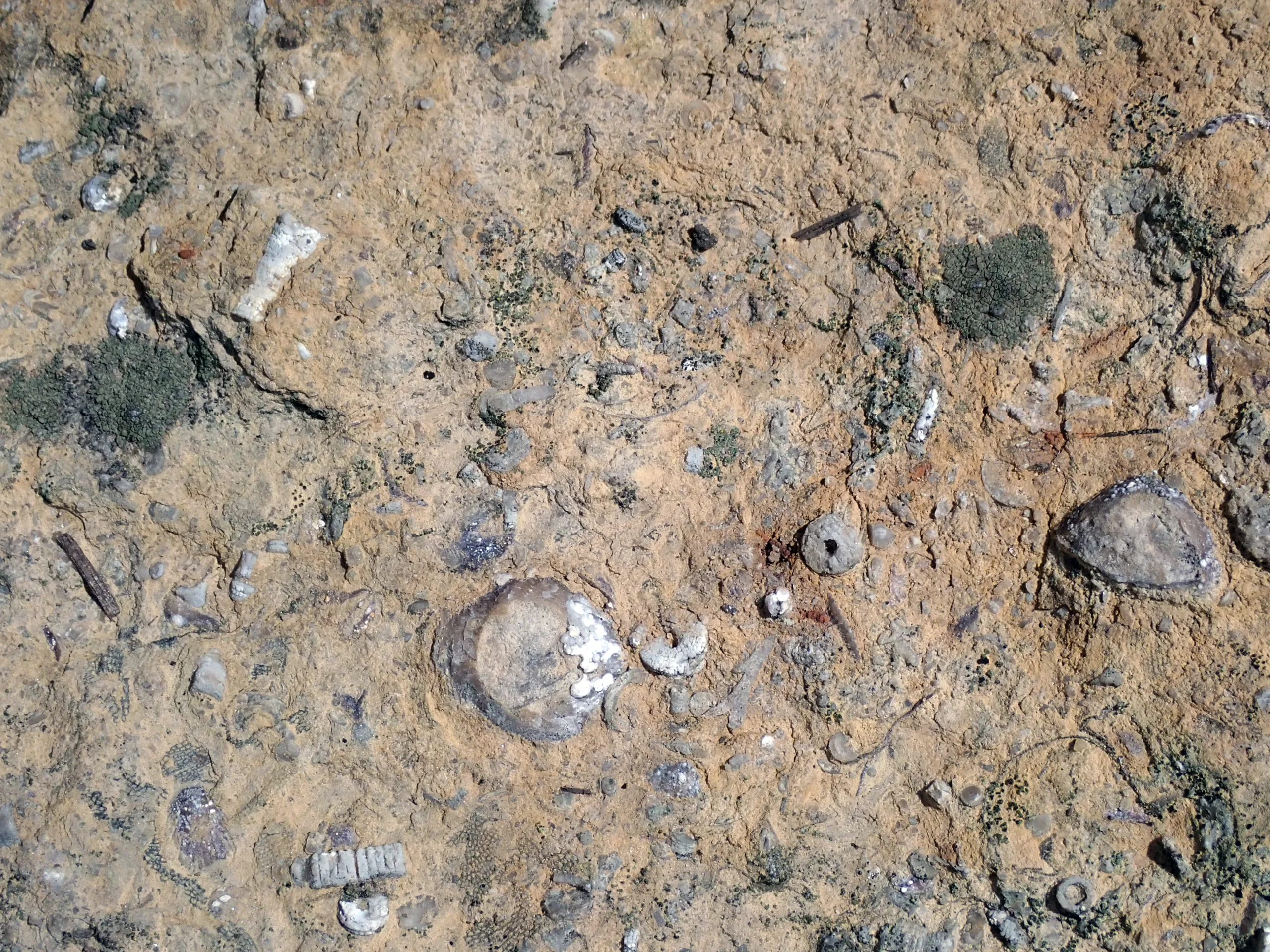
Fossiliferous limestone specimen containing marine fossils in a gray carbonate matrix. Photo: James St. John. CC BY 2.0; https://creativecommons.org/licenses/by/2.0/. Original: https://commons.wikimedia.org/wiki/File:Fossiliferous%20limestone.jpg. Re-encoded WebP.
Limestone is a sedimentary carbonate rock made mainly of calcium carbonate (CaCO₃), usually the mineral calcite. It forms largely from marine shells, fossil fragments and carbonate mud, but it can also precipitate directly from mineral-rich water. Limestone is recognised by its calcite-rich composition, variable fossil and grain textures, and its characteristic reaction with dilute acid.
From carbonate platforms to caves and construction quarries, limestone records ancient environments and influences groundwater systems and human infrastructure. Its grain size, porosity, composition and fracture structure vary widely, so a geological identification should examine a fresh specimen, not rely on color alone.
What Is Limestone?
Cherty limestone from the Devonian Onondaga Limestone near LeRoy, New York, USA. Pale irregular patches consist of silica-rich chert. Photo: Mike Davis / GeoDIL; original image, CC0 1.0. Converted to WebP.
Limestone is a common sedimentary rock formed when carbonate sediment is deposited and converted into rock. The sediment may be composed of whole shells, broken skeletons, fine lime mud or carbonate grains produced in shallow-water conditions. Some limestones form in freshwater lakes, springs and caves, not only in the sea.
Limestone layers may be only centimeters thick or extend over vast regions as carbonate formations. Their fossils and sedimentary structures record ancient sea level, water energy, biological communities and chemical environments. The terms ‘limestone’ and ‘calcite’ are not interchangeable: limestone is a rock; calcite is a mineral.
What Does Limestone Look Like?
Gray limestone, largely fine-grained calcite with small fossil fragments. Photo: GeoDIL; Wikimedia Commons original, CC0 1.0. Converted to WebP.
Limestone is commonly white, gray, beige, buff, brown or dark gray. It can be earthy, granular, fossil-rich, finely crystalline or massive. A freshly broken surface often reveals a fine carbonate matrix, fragments of shells, tiny rounded ooids or shiny calcite cement. Weathering may produce yellowish iron-oxide stains and etched or rough surfaces.
Some carbonate rocks display conspicuous bedding, burrows, fractures or calcite veins. Pale appearance by itself is insufficient to identify limestone: dolostone, sandstone and marble may look similar. A hand lens, controlled carbonate reaction and sedimentary context provide stronger evidence.
Limestone Mineral Composition and Properties
Calcite crystals on limestone illustrating the principal CaCO3 mineral. Photo: GeoDIL; Wikimedia Commons original, CC0 1.0. Converted to WebP.
Property
Typical characteristic
Rock group
Sedimentary carbonate
Dominant mineral
Calcite (CaCO₃), sometimes aragonite in younger deposits
Additional minerals
Dolomite, quartz, clay, iron oxides, organic matter and chert
Color
White to dark gray; impurities produce red, brown or yellow tones
Grain size
From microscopic carbonate mud to coarse skeletal fragments
Mineral Mohs hardness
Calcite 3; whole-rock hardness depends on individual minerals
Specific gravity
Calcite approximately 2.71; bulk limestone density varies with pore space
Cleavage
Calcite has rhombohedral cleavage; bulk rock breakage follows bedding and fractures
Acid response
Calcite-rich fresh limestone typically effervesces in dilute HCl
Porosity
Highly variable; dense limestone differs markedly from chalk or vuggy limestone
Most marine limestones begin with calcite and aragonite contributed by organisms or precipitated from water. Aragonite can recrystallize to calcite during burial. Dissolution may create secondary pores, while new calcite cement can close original pore spaces. These processes strongly affect permeability and rock strength.
How Limestone Forms
Encrinal or crinoidal limestone formed from the skeletal debris of marine crinoids. Photo: GeoDIL; Wikimedia Commons original, CC0 1.0. Converted to WebP.
Biochemical accumulation
Organisms such as corals, mollusks, algae, foraminifera and crinoids build calcium-carbonate structures. When they die, their skeletal debris accumulates on the seabed, where it mixes with lime mud and other carbonate grains. Compaction and mineral cementation transform this material into limestone. Encrinal or crinoidal limestone is a clear example of skeletal sediment.
Chemical precipitation
Calcium carbonate can precipitate from water when dissolved CO₂, temperature, saturation state or biological activity changes. Travertine terraces, speleothems, some carbonate mud and marine coated grains demonstrate different precipitation pathways. Ooids commonly grow as carbonate coats around small nuclei in agitated water.
Diagenesis
After deposition, carbonate sediment may be compacted, cemented, dissolved, recrystallized or partly replaced by dolomite. Biogenic structures can remain recognisable or become obscured by sparry calcite crystals. Early and late diagenesis therefore change texture without necessarily changing the rock’s overall sedimentary origin.
Types of Limestone
Lithographic limestone showing a very fine-grained carbonate matrix. Photo: GeoDIL; Wikimedia Commons original, CC0 1.0. Converted to WebP.
Variety
Typical appearance and geological origin
Fossiliferous limestone
Visible shells and skeletal fragments in calcite mud or cement
Types can overlap. For example, an oolitic rock may also contain fossil fragments or a micritic matrix. Some sedimentary limestones become crystalline through diagenesis, while marble requires a metamorphic history. A geological name should reflect the evidence visible in the rock or thin section.
Bedding in limestone records changes in water conditions and sediment supply. Horizontal layers, cross-stratification, storm beds and burrows help reconstruct marine currents and seafloor environments. Stylolites are irregular seams often produced by pressure solution during burial, and open joints may form much later.
Bioclasts are skeletal fragments; ooids are rounded coated grains; peloids are rounded carbonate particles without clear internal structures; intraclasts are fragments of previously deposited carbonate sediment. Micrite is fine carbonate mud; sparite commonly refers to coarse crystalline calcite cement.
These constituents reveal how a rock was deposited. Grain-supported fabrics generally reflect different transport or depositional conditions from mud-supported fabrics, but later cementation can modify the pore system and appearance.
Limestone Fossils and Geological Time
Marine fossils in limestone include crinoids, brachiopods and bryozoans. Photo: James St. John; Wikimedia Commons original, CC BY 2.0. Converted to WebP.
Fossiliferous limestone can preserve brachiopods, mollusks, echinoderms, corals, bryozoans, foraminifera and calcareous algae. The identity, size and preservation of fossils help interpret ancient habitats and the age of sedimentary layers, especially when combined with stratigraphic data.
Circular crinoid stem fragments in a fossiliferous limestone specimen. Photo: James St. John; Wikimedia Commons original, CC BY 2.0. Converted to WebP.
Crinoid stem fragments commonly appear as circular discs or cylinders, sometimes with a central hole. Fossils can be fragmented by waves and currents, transported from their original habitat or preserved intact in quieter settings. Their presence does not automatically mean that the deposit formed in a tropical reef.
Carbonate rocks preserve evidence of mass extinctions, ocean chemistry and changes in sea level. Fossil assemblages, stable isotopes and sedimentological structures are all useful, but interpreting a formation requires multiple lines of evidence.
Dunham uses mud content, grain support and biological binding. Mudstone contains fewer than 10% grains in a mud-supported fabric; wackestone is mud-supported with more than 10% grains; packstone is grain-supported but retains mud; grainstone is grain-supported with little or no lime mud; boundstone represents carbonate bound during deposition.
Folk composition-based classification
Folk distinguishes carbonate grains, fine micrite and sparry calcite cement. Names such as biomicrite, oomicrite, biosparite and oosparite describe the relative importance of skeletal or coated grains and the surrounding cement or mud. Petrographic thin sections are usually essential.
How to Identify Limestone: Acid Test and Field Clues
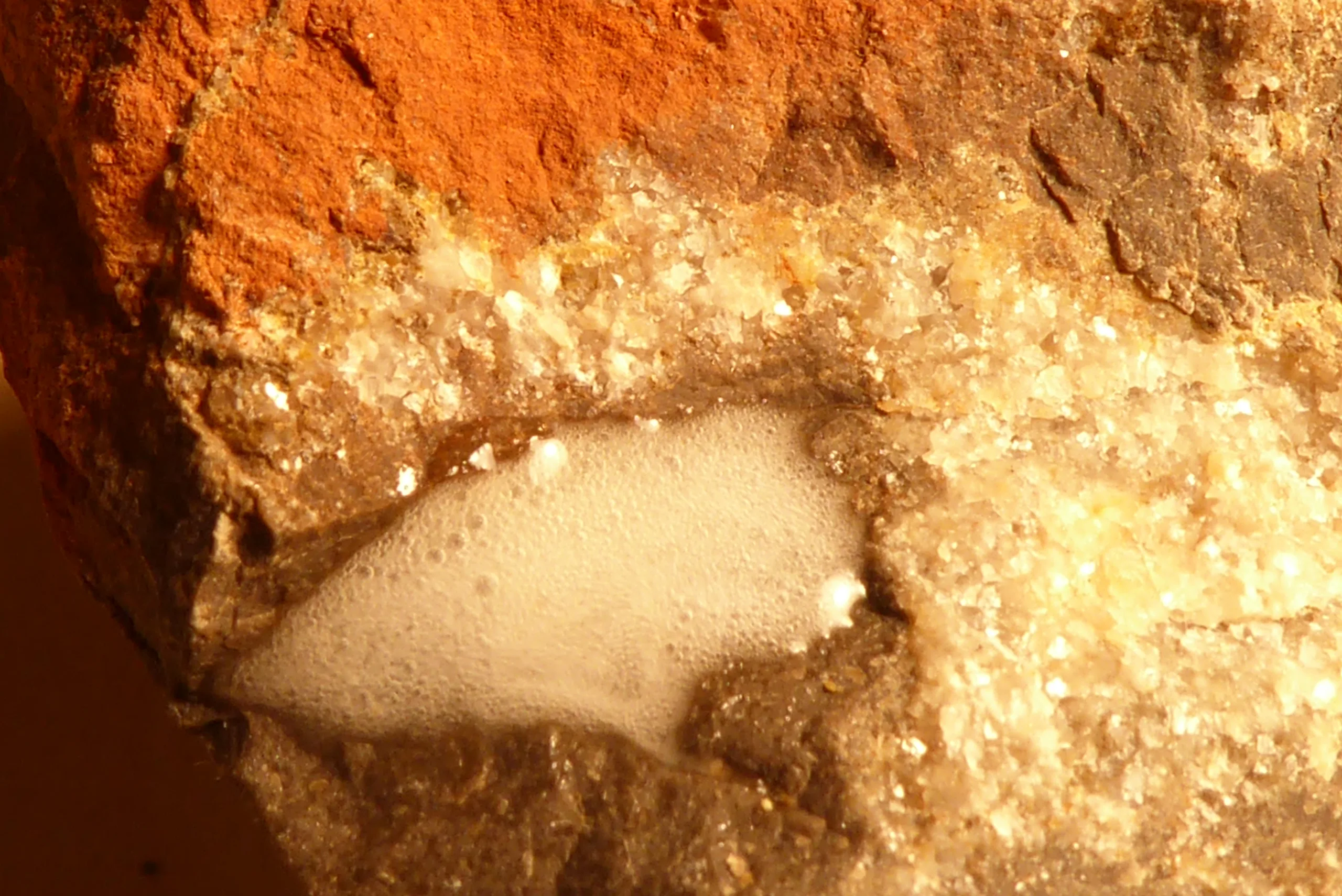
Effervescence of calcite-rich limestone in contact with hydrochloric acid. Photo: Rhetos; Wikimedia Commons original, CC0 1.0. Converted to WebP.
1. Examine a fresh surface. Look for fossils, calcite cement, fine lime mud, ooids or bedding. Weathering can conceal carbonate textures.
2. Use a controlled carbonate test where appropriate. Fresh calcite-rich limestone typically produces visible CO₂ bubbles when contacted with dilute hydrochloric acid. Vinegar may react too weakly for a reliable field result. Chemical tests require trained handling and suitable eye and skin protection; do not taste rocks or acids.
3. Observe mineral grains. A hand lens may reveal shell fragments and calcite crystals. A true rock classification may require thin-section microscopy.
4. Check the outcrop. Limestone may be associated with marine fossils, carbonate platforms, calcite-filled veins and karst weathering. None of these observations is individually conclusive.
5. Compare similar rocks. Marble also fizzes if calcitic; dolostone usually reacts less strongly on intact surfaces; calcite-cemented sandstone may react only in the cement.
Limestone vs Dolostone, Marble and Chalk
Dolomitic limestone has carbonate mineralogy enriched in dolomite. Photo: GeoDIL; Wikimedia Commons original, CC0 1.0. Converted to WebP.
Soft biogenic limestone with microscopic coccoliths
A porous variety of limestone, not an unrelated rock
Sandstone
Sedimentary rock mainly of sand-size detrital grains
Quartz-rich framework; any carbonate cement may fizz
A dolomitic limestone contains both calcite and dolomite in significant proportions. Carbonate rocks form a compositional continuum, so some hand specimens cannot be confidently separated without petrography and chemical or X-ray analysis.
Slightly acidic water can dissolve carbonate minerals along fractures, bedding planes and pores. Over long periods these pathways enlarge into underground conduits and cave networks. Karst landscapes commonly include limestone pavements, caves, sinkholes (dolines), disappearing streams and springs.
Karst doline developed in Muschelkalk limestone, Thuringia, Germany. Photo: Wikimedia Commons contributor; Wikimedia Commons original, CC BY-SA 4.0. Converted to WebP.
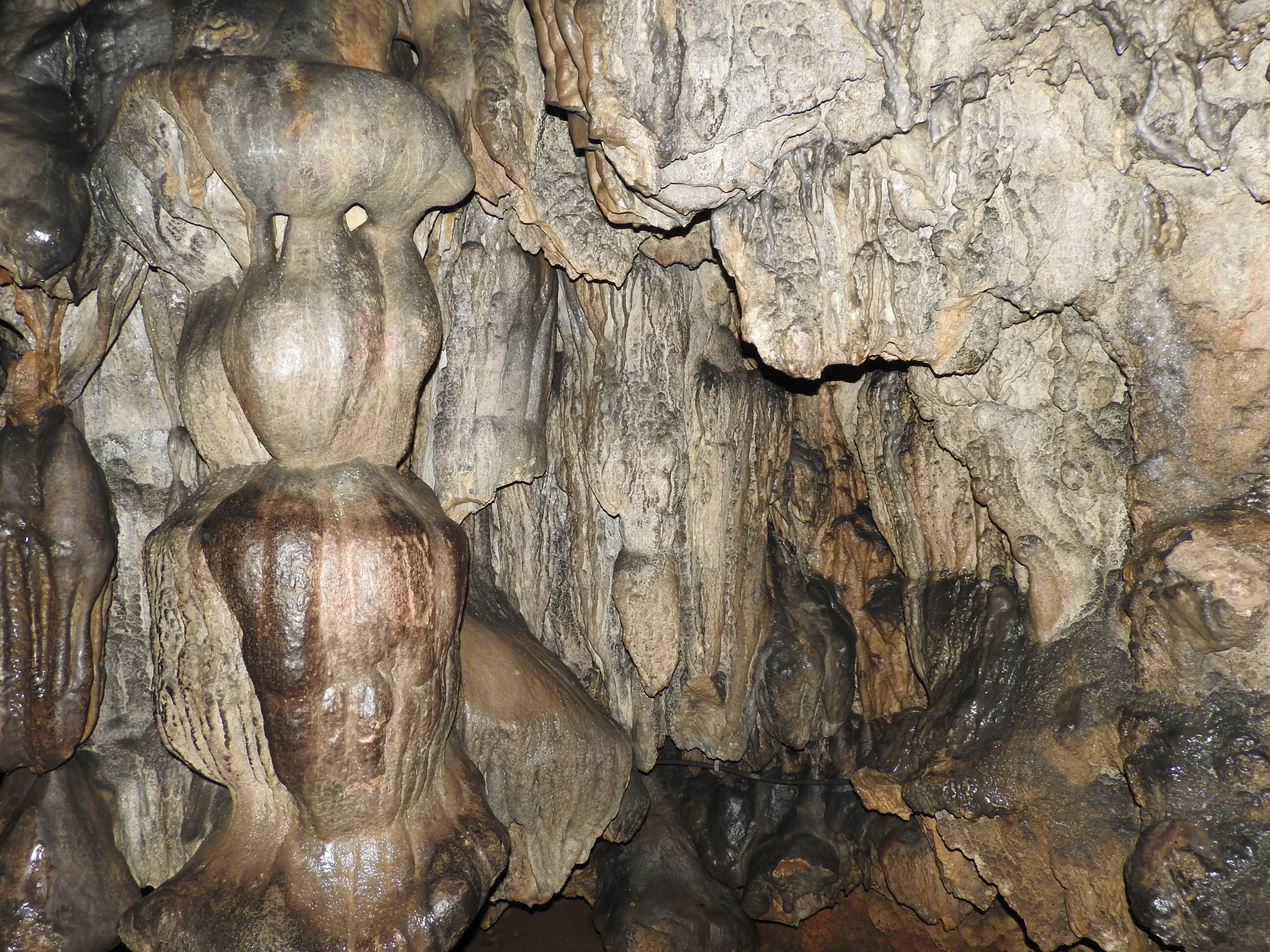
Cave stalactites and stalagmites grow when calcite precipitates from mineral-bearing drip water, commonly as CO₂ escapes. Sinkholes may form by gradual surface dissolution, subsidence or collapse of cavities. Karst groundwater may move rapidly through conduits, so some limestone aquifers are especially sensitive to contamination.
Karst risk is important for infrastructure: hidden cavities and irregular bedrock can affect foundations, roads and tunnels. Site-specific geological and geotechnical investigation is essential where dissolution hazards are suspected.
Limestone Occurrence and Famous Geological Formations
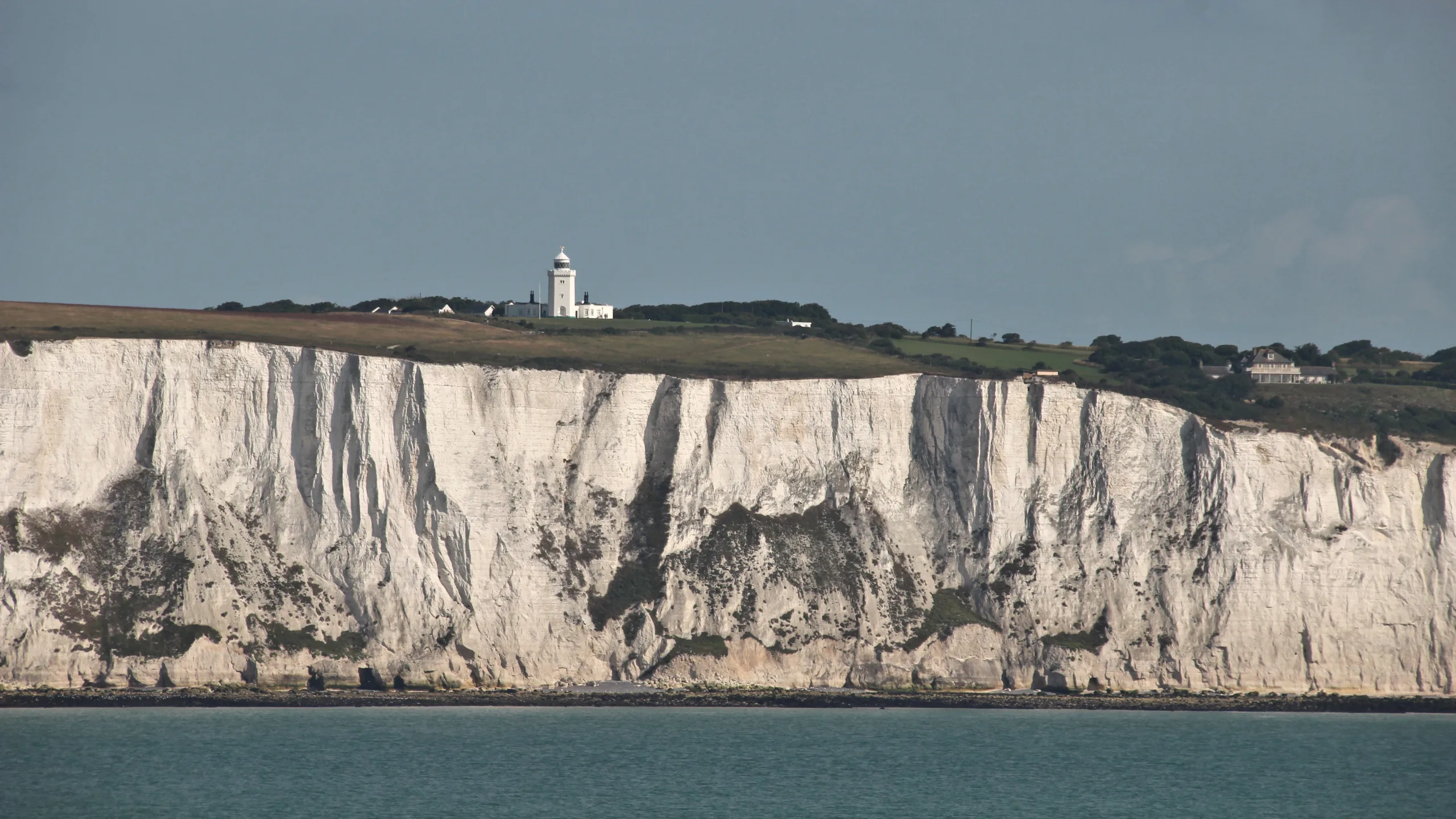
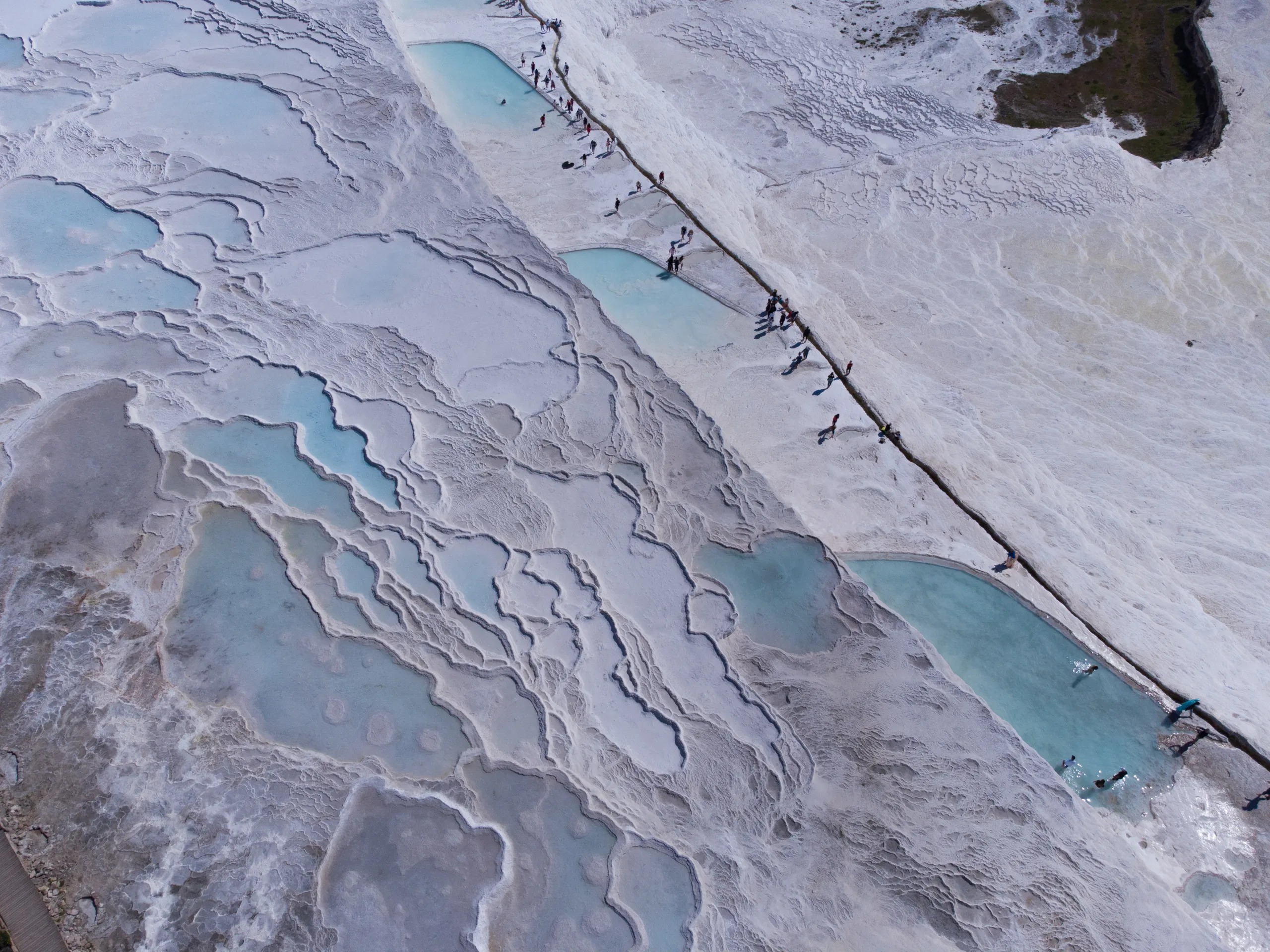
White Cliffs of Dover, England, where chalk is a biogenic limestone. Photo: Stefan Oemisch. Wikimedia Commons source; CC BY-SA 4.0. Converted to WebP.Calcium carbonate precipitated as travertine terraces at Pamukkale, Türkiye. Photo: Bilovitskiy; Wikimedia Commons original, CC BY 4.0. Converted to WebP.
Limestone occurs in marine sedimentary basins worldwide, including parts of Europe, the Middle East, North America, South Asia and many mountain belts containing uplifted carbonate platforms. Thick marine successions record millions of years of sedimentation and environmental change.
The White Cliffs of Dover expose chalk, a form of limestone rich in microscopic marine remains. Karst limestone hills and caves are prominent in Southeast Asia and the Dinaric Alps. Pamukkale in Türkiye demonstrates a different pathway: precipitation of travertine from mineral-rich water.
Because carbonate depositional environments range from quiet marine basins to reefs and springs, local geology is needed to interpret an individual limestone formation.
Limestone Weathering and the Carbon Cycle
Chemically weathered limestone surface in Gorges du Guil, French Alps. Photo: Philipendula. Wikimedia Commons source; CC BY-SA 3.0. Converted to WebP.
Limestone is a major long-term store of carbon in the Earth’s crust. Carbonic acid in rainwater and soils dissolves calcite, transporting calcium and bicarbonate in solution. The simplified reversible reaction is CaCO₃ + CO₂ + H₂O ⇌ Ca²⁺ + 2HCO₃⁻. Carbonate may later precipitate as calcite when water chemistry changes.
Carbonate dissolution, marine precipitation, biological processes and gas exchange operate together. Limestone weathering should not automatically be treated as equivalent to silicate weathering for long-term atmospheric CO₂ removal.
Carbonate isotopes, trace elements and fossils help reconstruct past ocean conditions and changes in the global carbon cycle. Travertine and cave speleothems can also preserve environmental information, though interpretation requires careful dating and geochemical analysis.
Engineering Properties and Groundwater
Limestone breccia with angular limestone and sandy shale clasts from the Lykins Formation, Colorado. Photo: Mike Davis / GeoDIL; Wikimedia Commons original, CC0 1.0. Converted to WebP.
Limestone can be a competent foundation rock, but its engineering behavior depends on fractures, bedding, degree of weathering, marl or clay layers, solution cavities and groundwater. The compressive strength of a small intact specimen is not the same as the strength and deformation behavior of a jointed rock mass.
Dense limestone may have low matrix permeability, while highly fractured or karstified limestone can transmit groundwater rapidly. Dissolution voids may lead to differential settlement or collapse hazards, particularly where the cover material bridges an unknown cavity.
Site investigation should examine discontinuity orientation, rock quality, borehole cores, groundwater conditions, voids, and the suitability of representative laboratory or in situ testing. Thin weak seams, clay fillings and variable rockhead depth can control design more strongly than the color or apparent hardness of intact limestone.
Uses of Limestone: Construction, Cement and Agriculture
Cement and quicklime: Limestone supplies calcium carbonate for Portland cement clinker and quicklime manufacture. Calcination produces CaO and releases CO₂, so industrial processing must be assessed for its energy use and carbon emissions.
Construction: Limestone may be cut as building stone, paving and cladding, or crushed as aggregate and road base. Durability, strength, weathering and impurities must meet the intended standards.
Agriculture: Ground agricultural limestone neutralizes overly acidic soil and adds calcium. Dolomitic lime may provide magnesium as well. Application rates should follow soil tests rather than a fixed universal recommendation.
Other industrial applications: Limestone is used in glass production, steelmaking fluxes, water treatment, chemical neutralization, fillers and some environmental systems. Required purity and particle size depend on the application.
Frequently Asked Questions
What type of rock is limestone? It is a sedimentary carbonate rock composed predominantly of calcium carbonate, usually calcite.
How does limestone form? Mainly by accumulation and lithification of marine carbonate sediments, or precipitation of calcium carbonate from water.
Is limestone a mineral? No. Limestone is a rock composed of minerals, especially calcite.
Why does limestone fizz with acid? Calcite reacts with dilute hydrochloric acid and releases carbon dioxide bubbles.
What is the difference between limestone and dolostone? Limestone is predominantly calcite, whereas dolostone is predominantly dolomite; the acid reaction and mineral tests can distinguish them.
Is chalk limestone? Yes. Chalk is a soft, porous, fine-grained biogenic variety of limestone.
Can limestone turn into marble? Yes. Metamorphism may recrystallize limestone to calcitic marble.
Does limestone always have fossils? No. Some limestones are mainly carbonate mud or chemically precipitated calcite with no visible fossils.
Why do caves form in limestone? Weakly acidic groundwater dissolves carbonate rock and may enlarge fractures into conduits and caves.
Is limestone suitable for foundations? It can be, but fractures, groundwater, weathering and karst cavities must be evaluated through a site-specific investigation.
Each photograph is a real specimen, thin section, cave, outcrop or quarry scene. Captions give the subject, photographer, link to the original Wikimedia Commons image and license information. The photographs were converted to WebP during upload.
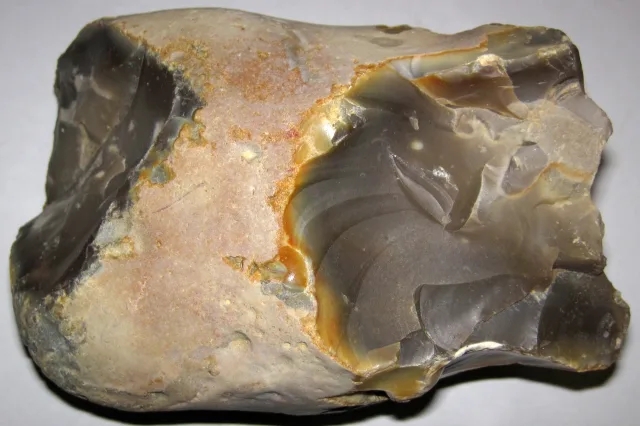
Chert is a dense, fine-grained sedimentary rock composed mainly of microcrystalline or cryptocrystalline quartz (SiO₂). It occurs as nodules in limestone and chalk, as thin layers, and as extensive bedded deposits. Its high hardness, extremely fine grain size and commonly conchoidal fracture help distinguish it from many other sedimentary rocks.
Chert Properties and Identification
Chert may look smooth, waxy or dull, with colors controlled by iron oxides, organic matter and other impurities. Its grains are normally too small to distinguish without microscopy. Fresh broken surfaces commonly show curved, shell-like fractures, but fracture alone is not conclusive.
Property
Typical chert
Identification significance
Composition
Mostly SiO₂ (microcrystalline quartz)
Silica-rich, not carbonate-rich
Mohs hardness
Approximately 6.5–7
Usually scratches glass; avoid destructive tests on valuable pieces
Grain size
Cryptocrystalline to microcrystalline
Individual crystals usually invisible to the naked eye
Fracture
Conchoidal to uneven
Curved breaks and sharp edges are common
Luster
Dull to waxy, sometimes vitreous on fresh fractures
Variable with surface and weathering
Acid response
No typical effervescence with dilute HCl
Calcite-rich limestone fizzes; carbonate coatings can mislead
Color
Gray, white, black, brown, red, green and others
Not diagnostic alone
Field identification: First examine the surrounding rock and any bedding or nodules. Look for a compact, non-granular texture and curved fracture. Chert commonly scratches glass, unlike many carbonate rocks, but hardness tests can damage specimens and should be avoided on collectible or polished material. A geologist can distinguish silica-rich chert from carbonate with controlled acid testing on an inconspicuous area; do not use acid on valuable specimens.
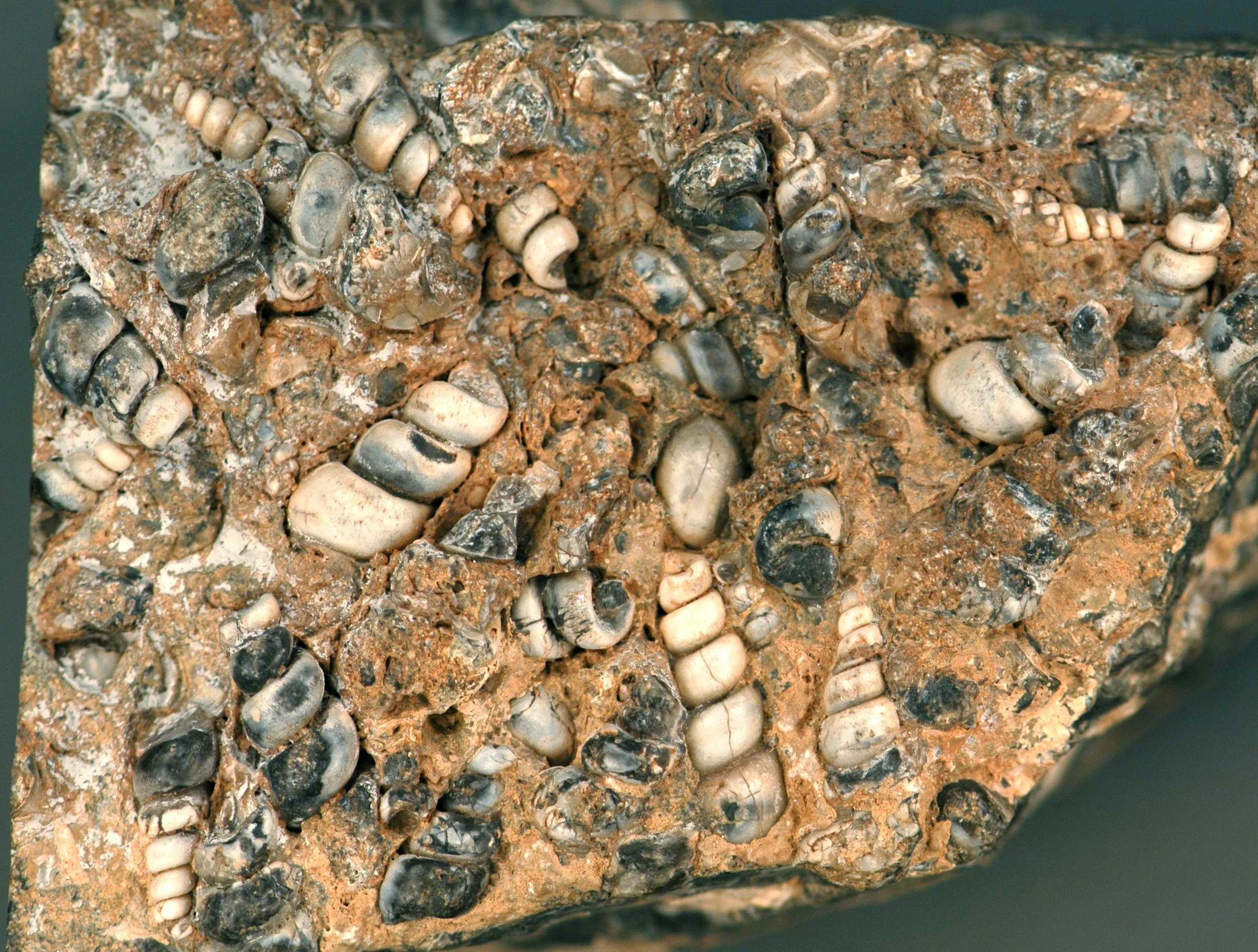
Radiolarians, diatoms and siliceous sponges produce skeletons or spicules of biogenic silica. After burial, dissolution and reprecipitation during diagenesis can transform initially opaline silica through opal-CT toward microcrystalline quartz. The resulting rock may preserve microfossils, lamination or a bedded appearance. The precise pathway depends on sediment chemistry, temperature, time and silica availability.
Replacement nodules in limestone and chalk
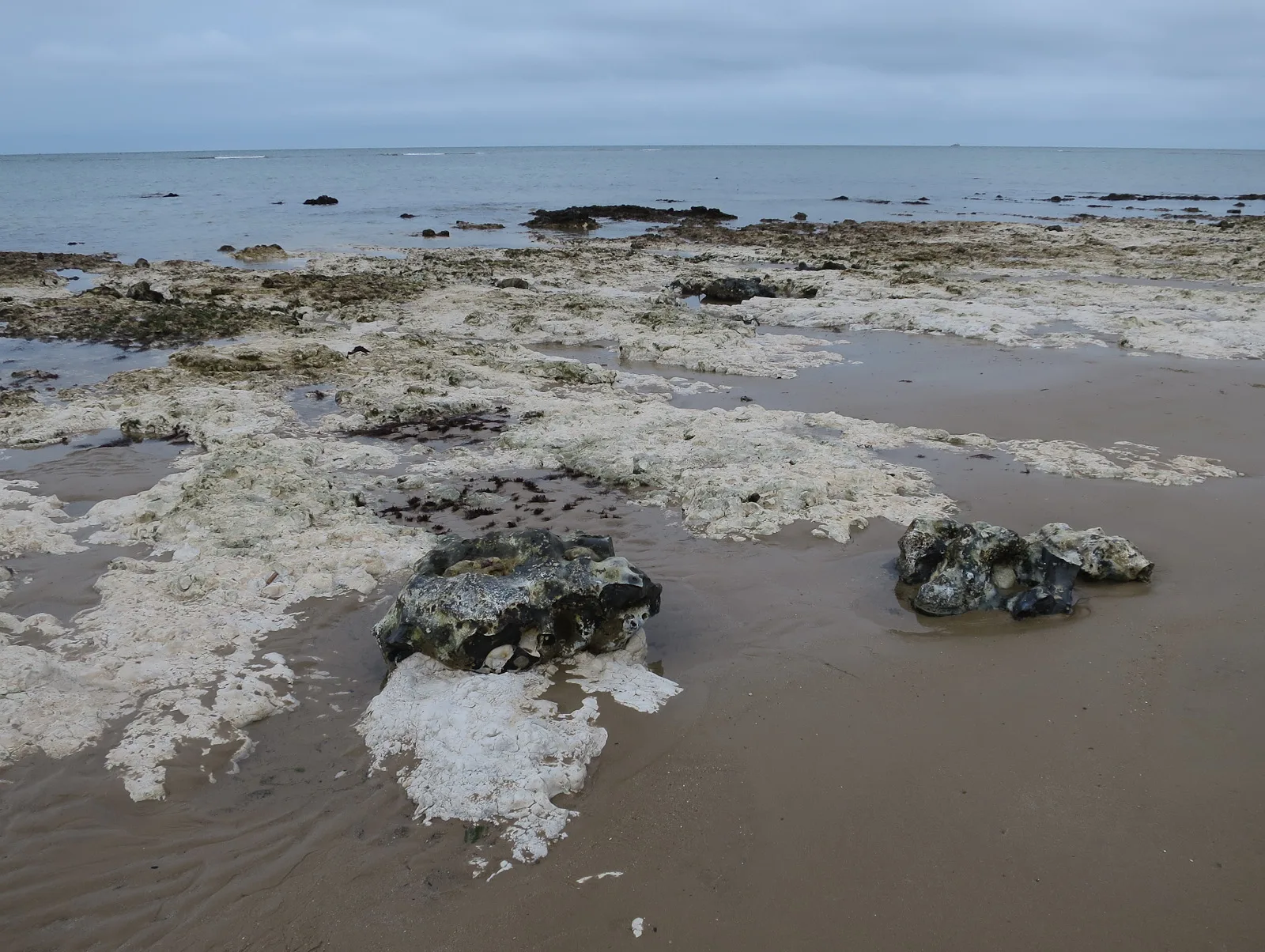
Dissolved silica can migrate through carbonate sediment and replace calcium carbonate, producing irregular nodules, lenses and discontinuous layers. This explains the common association of flint nodules with chalk and chert with limestone or dolostone. The surrounding carbonate may retain its original sedimentary textures even as parts are silicified.
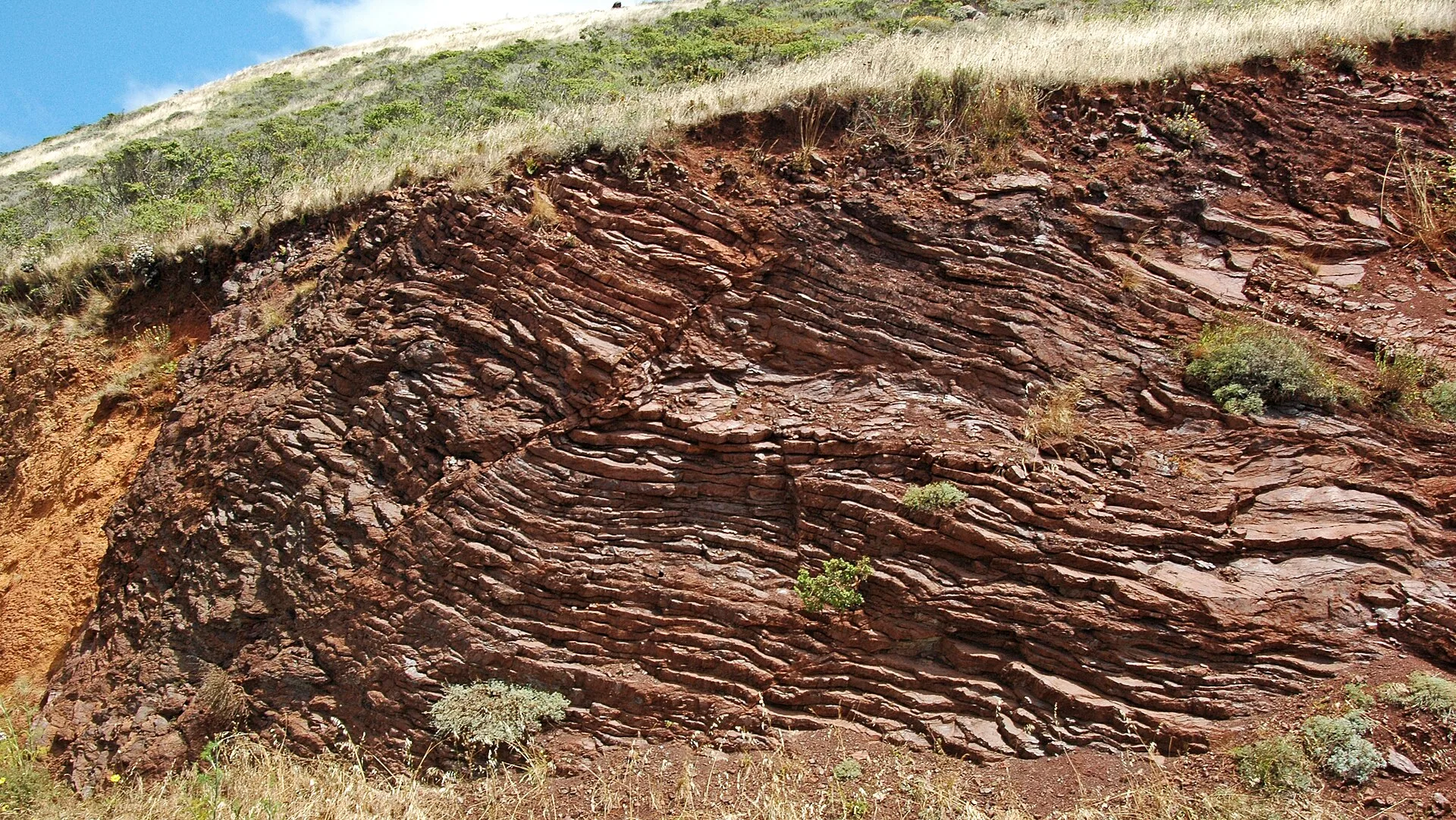
Not all chert is directly derived from skeletal remains. Silica can also precipitate from pore waters or hydrothermal fluids, and volcaniclastic material can supply dissolved silica. Some ancient banded iron formations contain alternating silica-rich and iron-rich layers; their origins reflect changing early-Earth ocean chemistry and complex depositional histories.
Where Chert Occurs
Chert occurs in marine and lacustrine sedimentary successions worldwide. Common settings include chalk and limestone sequences, deep-marine radiolarian deposits, diatom-rich sediments, some lake deposits and Precambrian iron formations. Chert can also occur as resistant pebbles and cobbles in stream gravels because it survives weathering and transport.
Flint is a traditional name commonly used for dark, compact chert, especially nodules associated with chalk. Geological naming conventions vary by region; flint and chert overlap substantially rather than representing two sharply separated compositions.
Radiolarite
Radiolarite is bedded siliceous sedimentary rock formed largely from radiolarian skeletal material. It may be red, green or gray and can preserve microscopic radiolarian remains.
Jasper
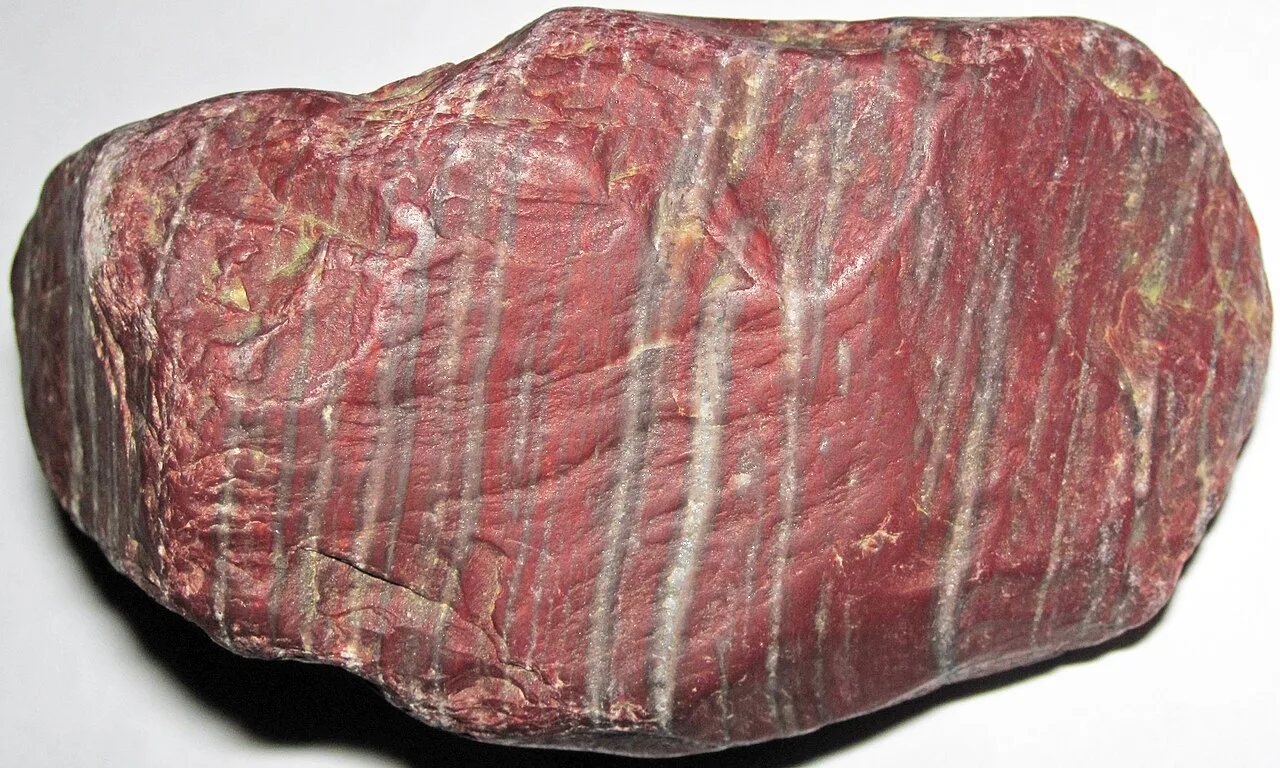
Jasper generally refers to opaque, commonly colored microcrystalline silica. Red varieties typically owe their color to finely dispersed iron oxides, particularly hematite. The term is used widely in lapidary contexts and is not a unique depositional environment.
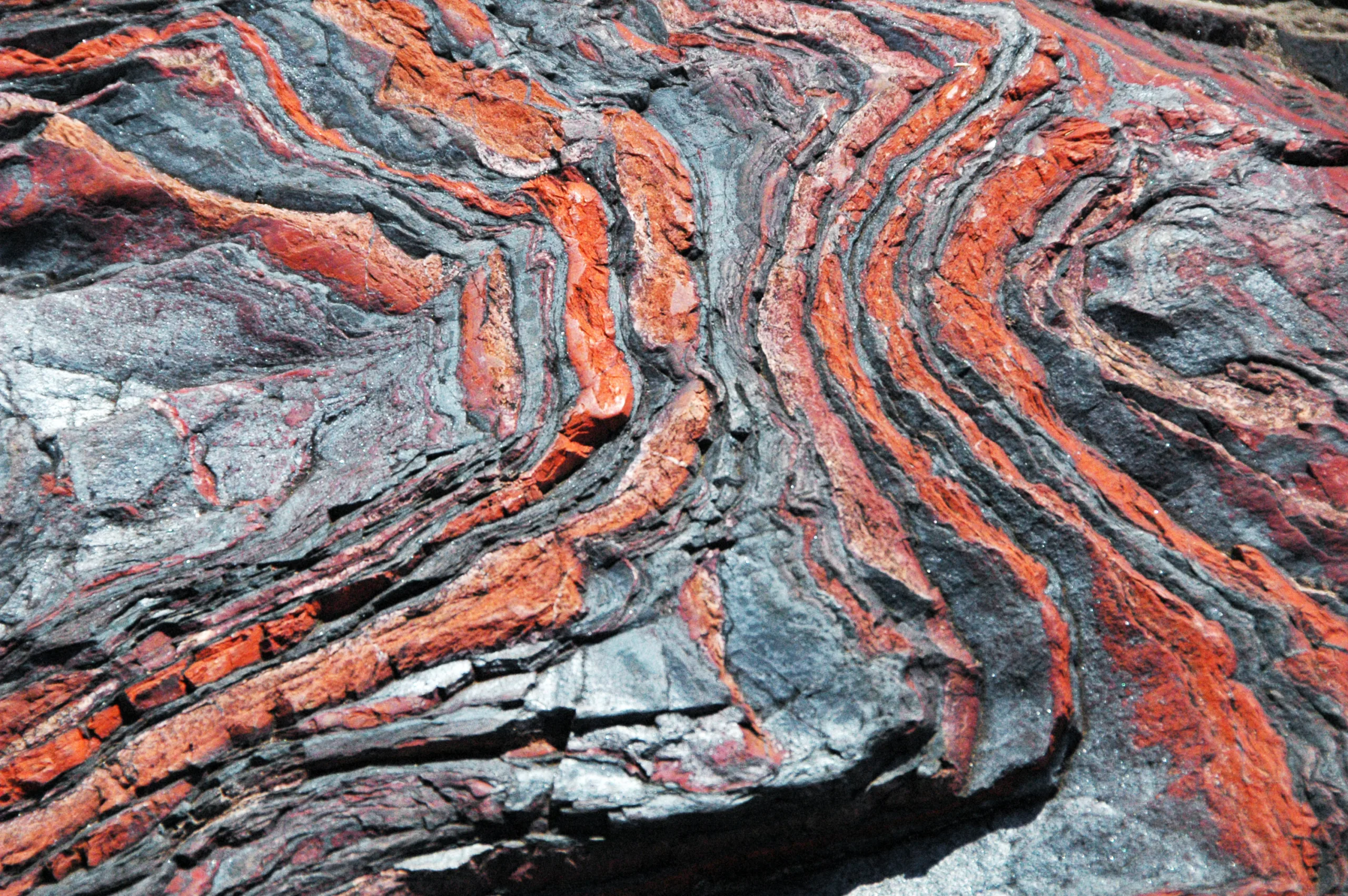
Jaspilite contains alternating iron-rich and silica-rich bands, commonly including red jasper and dark iron minerals. It should not be confused with ordinary nodular chert in chalk.
Chalcedony is microfibrous silica; agate is a commonly banded variety of chalcedony. They are closely related silica materials but should not all be indiscriminately classified as chert. Opal is hydrated amorphous to poorly crystalline silica and is not simply another name for quartz-rich chert.
Chert vs. Flint, Limestone and Quartzite
Material
Texture / composition
Useful distinction
Chert
Very fine-grained quartz-rich sedimentary rock
Commonly nodular or bedded, conchoidal fracture
Flint
Typically compact chert, often dark
Frequently associated with chalk; names overlap
Limestone
Mostly calcite (CaCO₃)
Usually softer; fresh calcite effervesces with dilute acid
Quartzite
Metamorphosed quartz-rich sandstone
Often shows interlocking recrystallized quartz grains
Jasper
Opaque colored microcrystalline silica
Commonly red/yellow/brown from impurities
A hand specimen may not permit a definitive distinction. Thin-section petrography, X-ray diffraction and other laboratory methods can resolve ambiguous silica-rich rocks.
Microscopic Characteristics
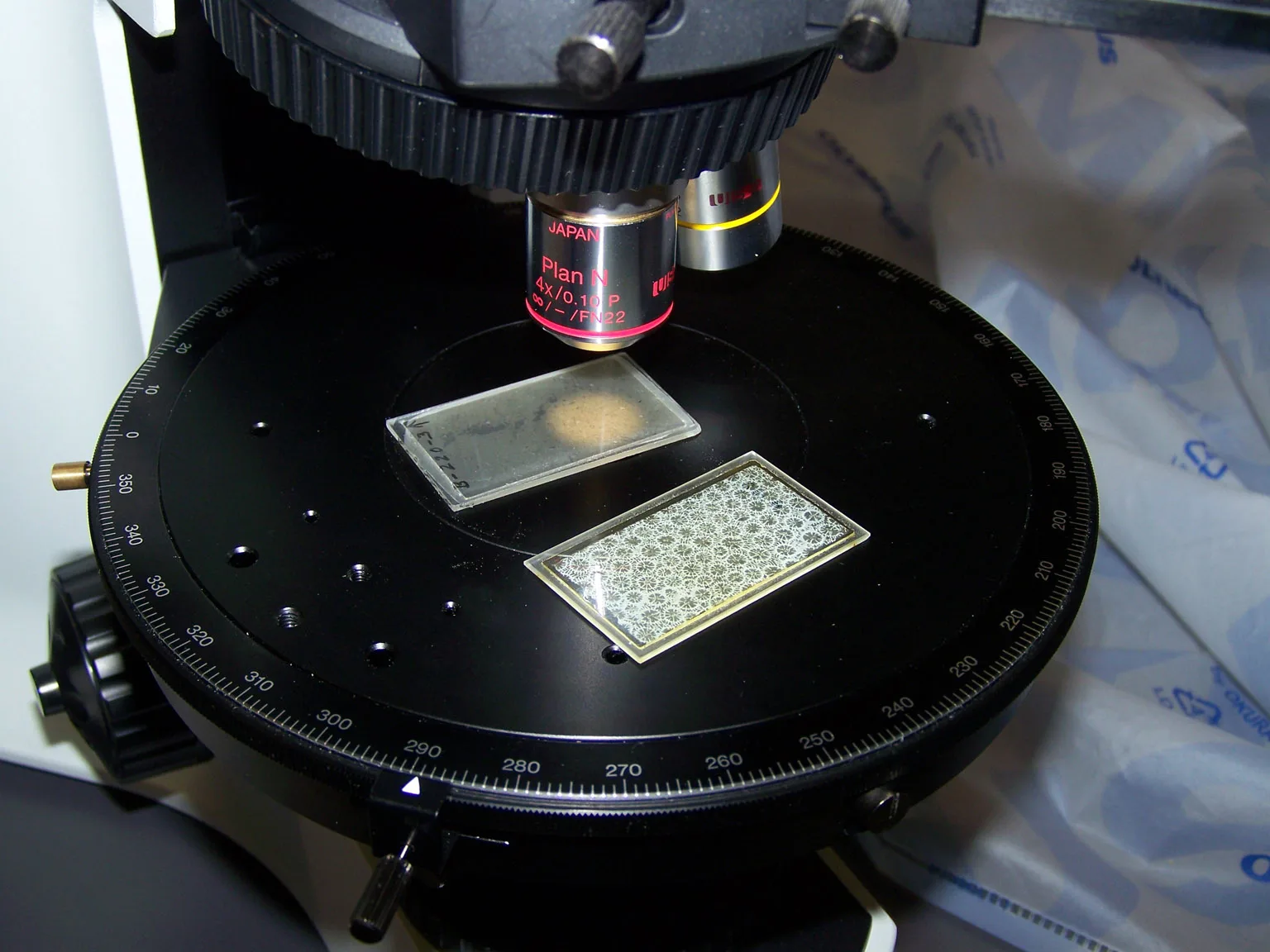
Under transmitted light, very fine quartz mosaics may be difficult to resolve at low magnification. In crossed polarized light (XPL), quartz commonly shows low first-order interference colors, while chalcedonic fibrous aggregates may show distinctive textures. Relict radiolarian tests, sponge spicules and replacement fabrics can be diagnostic. Photographs labeled PPL or XPL should only be used when their provenance and optical mode are verified.
Uses and Geological Significance
Chert and flint were important raw materials for prehistoric cutting tools, scrapers and projectile points because they can break into sharp edges. They have also been used in fire-starting systems and as local aggregate, although suitability for concrete depends on petrographic and durability testing. Geologists use bedded chert, microfossils and silica replacement textures to reconstruct depositional environments and diagenetic histories.
Ancient chert-bearing sequences can preserve evidence of early marine environments. However, identifying possible microscopic fossils in very old chert requires careful independent tests to distinguish biological structures from mineral or alteration textures.
Frequently Asked Questions
Is chert a mineral or a rock?
Chert is a rock, usually made predominantly of extremely fine quartz crystals rather than one large mineral crystal.
Is chert the same as flint?
Flint is a commonly used name for a compact variety of chert, especially in chalk; the distinction is largely conventional.
Does chert contain fossils?
Some chert contains preserved radiolarians, sponge spicules or other fossils. Other chert forms by replacement or precipitation and may contain few recognizable fossils.
How hard is chert?
Chert is typically close to quartz in hardness, about 6.5–7 on the Mohs scale, although impurities and weathering can affect the result.
Does chert react with acid?
Quartz-rich chert does not ordinarily fizz with dilute hydrochloric acid, but attached limestone or carbonate-filled fractures can react.
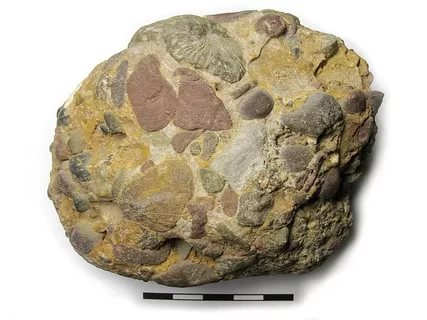
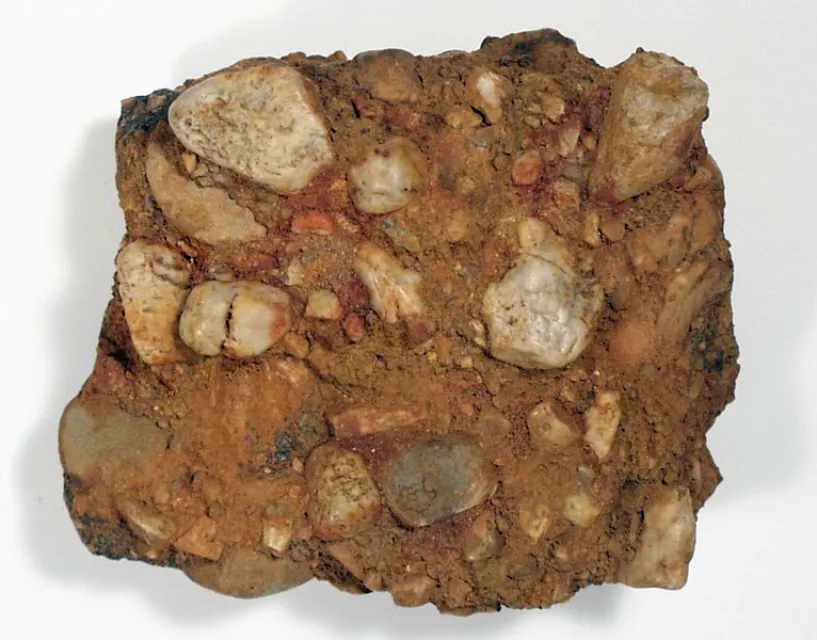
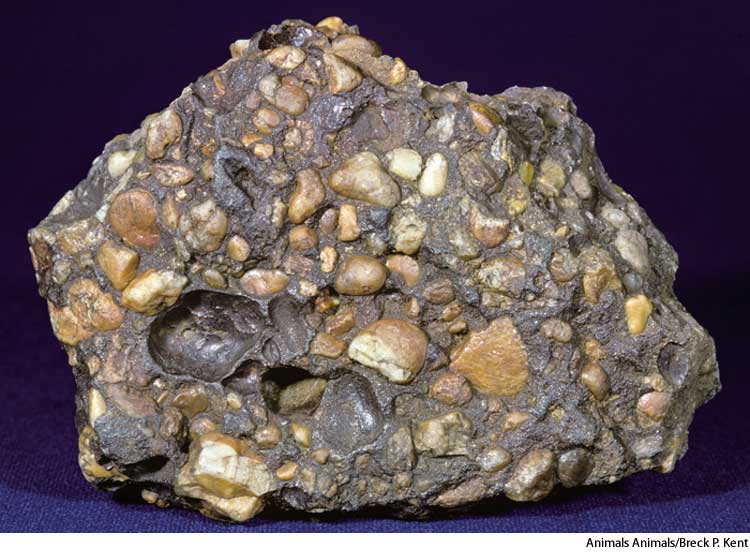
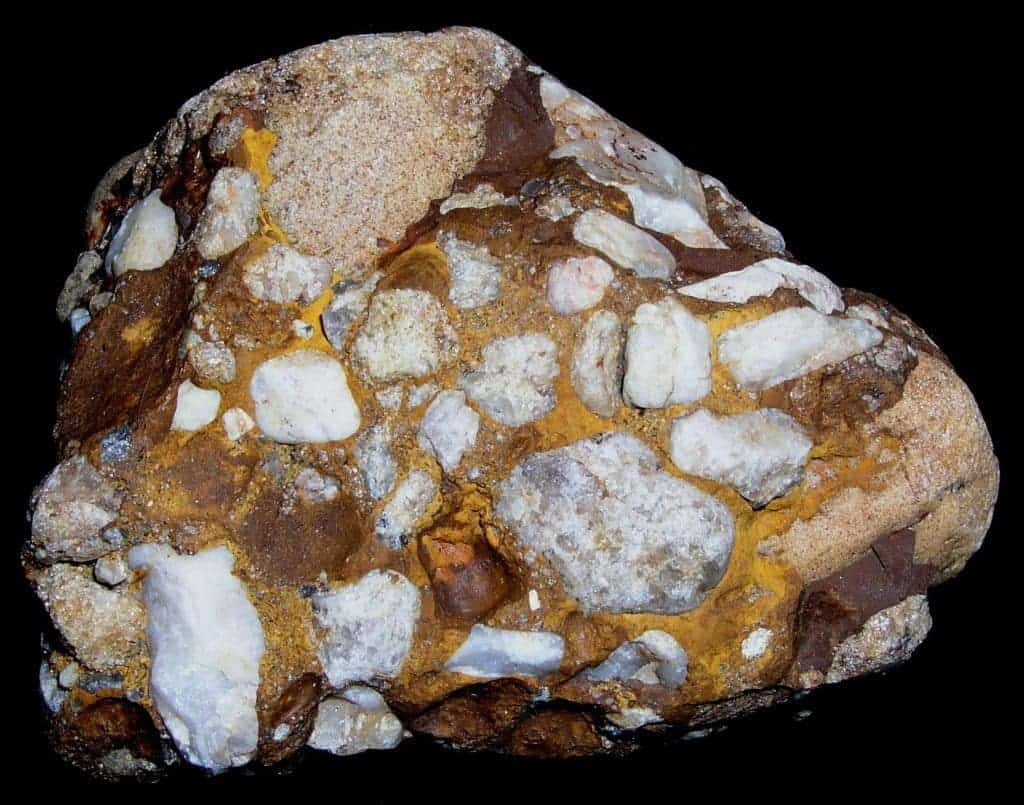
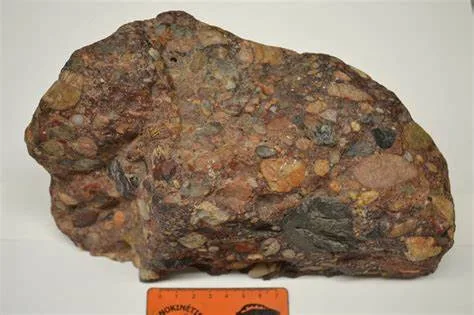
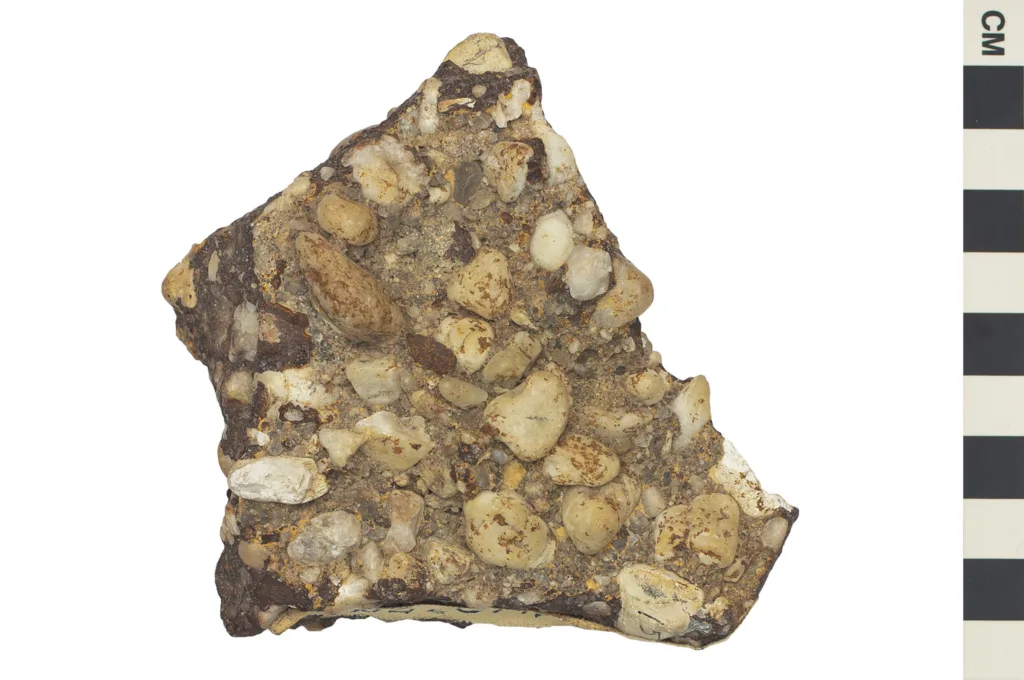
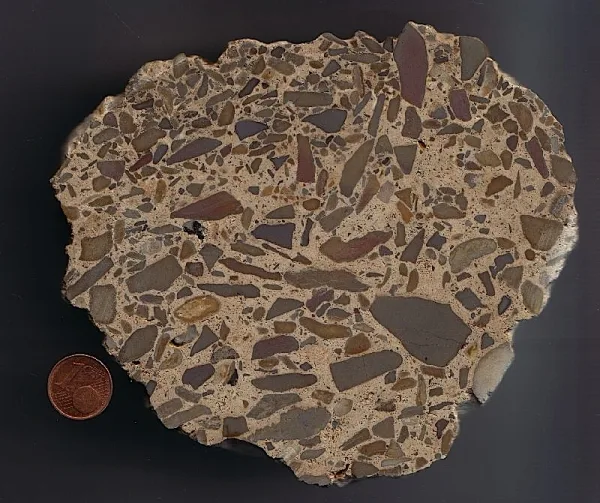
Conglomerate is a clastic sedimentary rock that shaped from rounded gravel and boulder sized clasts cemented or in a matrix supperted. The rounding of the clasts show that rocks have been transported a long way from their source or on a seaside tide to wave movement. The clast cement is usually calcite, silica or iron oxide but the matrix can consist only of the cementing cloth, however can also include sand and / or silt sized clasts cemented together the various coarser clasts.
Class: Conglomerate
may be divided into large lessons:
Texture: Clastic
(coarse-grained).
Grain size: >
2mm; Clasts easily visible to the naked eye, should be identifiable.
Hardness: Soft to
hard, dependent on clast composition and strength of cement.
Colour: variable,
dependent on clast and matrix composition.
Clasts: variable,
but generally harder rock types and / or minerals dominate.
Other features: Clasts
generally smooth to touch, matrix variable.
Classification of Conglomerate
Conglomerate Rock well-rounded clasts
Conglomerates named and classifield by the
Type and amount of matrix present
Composition of gravel-size clasts they contain
Size range of gravel-size clasts present
A sedimentary rock consisting mainly of gravel is first named according to the roundness of the gravel. If the gravel clasts that form it are well-rounded to subrounded, to a large extent, it is a conglomerate. If the pebble clips forming it are largely angular, it is a breccia. Such breccias may be called sedimentary breccias to distinguish them from other breccia types.
The amount and chemical composition of the matrix.
If the clasts do not touch each other (lots of matrix), the rock is
paraconglomerate. Rock in which the clasts touch each other is called
orthoconglomerate.
The composition of the clasts. If all the clasts
are the same type of rock or mineral), the rock is categorized as monomictic
conglomerate. If the clasts are made up of two or more rocks or minerals, the
rock is a polymictic conglomerate.
The size of the clasts. Rock comprised of large
clasts is cobble conglomerate. If the clasts are pebble-sized, the rock is
called pebble conglomerate. If the clasts are small granules, the rock is
called granule conglomerate.
The environment that deposited the material. Conglomerates
may form from glacial, alluvial, fluvial, deepwater marine, or shallow marine
environments.
Conglomerate Composition
Conglomerate is a type of sedimentary rock that is composed primarily of rounded or water-worn pebbles, cobbles, and boulders, which are known as clasts. These clasts are typically cemented together by a matrix of finer-grained sedimentary material, such as sand, silt, or clay. The composition of conglomerate can vary widely depending on the source of the clasts and the type of cementing material, but here are the main components:
Clasts: The clasts in conglomerate rocks can be made up of a variety of materials, including:
Rock fragments: These can include pebbles, cobbles, and boulders of different types of rocks, such as granite, limestone, sandstone, shale, or even volcanic rocks like basalt.
Mineral fragments: In addition to rock fragments, conglomerates may contain mineral fragments that have been transported and rounded by water or other agents.
Matrix: The matrix is the fine-grained material that fills the spaces between the clasts and cements them together. The matrix can consist of:
Sand: When the matrix is primarily composed of sand-sized particles, the rock is sometimes called a “sandstone conglomerate.”
Silt: If the matrix is dominated by silt-sized particles, it may be referred to as a “siltstone conglomerate.”
Clay: In some cases, the matrix can be clay-rich, leading to a “claystone conglomerate.”
Cement: The cementing material is responsible for binding the clasts together and hardening the rock. Common cementing agents in conglomerate include:
Silica (silica cement): Silica, in the form of minerals like quartz, can precipitate from pore fluids and bind the clasts together.
Calcium carbonate (calcite cement): In some cases, calcium carbonate can act as the cementing material, especially in areas with abundant limestone.
Iron oxide (hematite or limonite cement): Iron oxides can also cement clasts together, giving the rock a reddish or yellowish hue.
The specific composition of conglomerate rocks can vary widely based on the geological history of the area where they formed and the type of sediments available for deposition. Conglomerates are typically associated with high-energy environments like rivers, alluvial fans, or coastal areas where the clasts are transported and deposited by water or gravity. Over time, the sediments are compacted and cemented together to form conglomerate rock.
Formation and Occurrence
Conglomerate rocks form through a specific process of sedimentary deposition and lithification (the process of turning sediments into solid rock). They are typically associated with high-energy environments and can be found in various geological settings. Here’s how conglomerates form and where they commonly occur:
Formation Process:
Transportation: The formation of conglomerate begins with the transportation of large clasts (pebbles, cobbles, and boulders) by agents like rivers, streams, alluvial fans, or glaciers. These agents have the energy to move and round the clasts over long distances.
Deposition: When the transporting agents lose their energy (e.g., when a river slows down or a glacier melts), they deposit the clasts along with finer-grained sedimentary material like sand, silt, or clay.
Sorting: Conglomerates often exhibit poor sorting, meaning the clasts can vary in size and composition. This is because the energy of the transporting agent may not be sufficient to sort the clasts by size or type.
Cementation: Over time, as the sediment accumulates, the clasts become buried under additional layers of sediment. The weight and pressure from overlying sediments force the water out of the pore spaces between the clasts.
Cementing: As the pore spaces are squeezed out, minerals like silica, calcium carbonate, or iron oxides can precipitate from groundwater and fill the gaps between the clasts. This cementing process binds the clasts together, hardening the sediment into rock.
Common Occurrences of Conglomerates:
Riverbeds and Alluvial Fans: Conglomerates are frequently found in riverbeds, where the high-energy flow of water can transport and deposit a variety of clasts. Alluvial fans, which form at the base of mountain ranges and result from the rapid deposition of sediment by flowing water, are also common locations for conglomerates.
Coastal Environments: Coastal areas with strong wave action and tides can lead to the accumulation of conglomerate deposits. The clasts in coastal conglomerates are often rounded and well-polished due to the abrasive action of the sea.
Glacial Environments: Glaciers can transport and deposit large amounts of rock and sediment, including conglomerates, as they move and retreat.
Fault Zones: In some cases, fault zones can create conditions for the formation of conglomerates. Faulting can bring together rocks of different types and sizes, leading to the deposition of conglomerate material along fault lines.
Ancient Alluvial Plains: In the geological record, conglomerates are often found in ancient alluvial plains where rivers once flowed, deposited sediments, and eventually turned them into rock.
Mountainous Regions: Conglomerates can be exposed in mountainous regions through erosion and uplift processes. They may be found in sedimentary layers that were once buried but have since been exposed by tectonic forces.
Conglomerate rocks provide valuable information to geologists about the geological history and environmental conditions of the past. They can contain clues about the type and origin of the clasts, the energy of the depositional environment, and the age of the rock layer in which they are found.
Conglomerate Localities
Conglomerates are deposited in various sedimentary
environments.
Deepwater marine
In turbidites, the basal part of a bed is typically
coarse-grained and sometimes conglomeratic. In this setting, conglomerates are
normally very well sorted, well-rounded and often with a strong A-axis type
imbrication of the clasts.
Shallow marine
Conglomerates are normally present at the base of sequences
laid down during marine transgressions above an unconformity, and are known as
basal conglomerates. They represent the position of the shoreline at a
particular time and are diachronous.
Fluvial
Conglomerates deposited in fluvial environments are
typically well rounded and well sorted. Clasts of this size are carried as
bedload and only at times of high flow-rate. The maximum clast size decreases
as the clasts are transported further due to attrition, so conglomerates are
more characteristic of immature river systems. In the sediments deposited by
mature rivers, conglomerates are generally confined to the basal part of a
channel fill where they are known as pebble lags. Conglomerates deposited in a
fluvial environment often have an AB-plane type imbrication.
Alluvial
Alluvial deposits form in areas of high relief and are
typically coarse-grained. At mountain fronts individual alluvial fans merge to
form braidplains and these two environments are associated with the thickest
deposits of conglomerates. The bulk of conglomerates deposited in this setting
are clast-supported with a strong AB-plane imbrication. Matrix-supported
conglomerates, as a result of debris-flow deposition, are quite commonly associated
with many alluvial fans. When such conglomerates accumulate within an alluvial
fan, in rapidly eroding (e.g., desert) environments, the resulting rock unit is
often called a fanglomerate.
Glacial
Glaciers carry a lot of coarse-grained material and many
glacial deposits are conglomeratic. Tillites, the sediments deposited directly
by a glacier, are typically poorly sorted, matrix-supported conglomerates. The
matrix is generally fine-grained, consisting of finely milled rock fragments.
Waterlaid deposits associated with glaciers are often conglomeratic, forming
structures such as eskers.
Characteristics and Properties
Conglomerate is a distinctive sedimentary rock with several characteristic features and properties that help geologists identify and understand it. Here are the main characteristics and properties of conglomerate:
Clastic Texture: Conglomerate has a clastic texture, which means it is composed of fragments or clasts that have been transported and deposited. These clasts are typically rounded and well-worn, although angular clasts can also be present, especially in immature conglomerates.
Clast Composition: The composition of the clasts within conglomerate can vary widely. They may be made of different types of rocks, minerals, or even fossils, depending on the geological history of the area. Common clast types include granite, limestone, sandstone, shale, and volcanic rocks.
Poor Sorting: Conglomerates often exhibit poor sorting, meaning that the clasts vary in size and may not be well-sorted by size or type. This is due to the variable energy levels of the transporting agents.
Matrix: Conglomerate typically contains a matrix, which is a finer-grained material that fills the spaces between the clasts and cements them together. The matrix can consist of sand, silt, or clay, depending on the specific type of conglomerate.
Cementation: The clasts in conglomerate are held together by a cementing material, which can include minerals like silica (quartz), calcium carbonate (calcite), or iron oxides (hematite or limonite). The cement helps harden the rock over time.
Color: Conglomerate can come in a variety of colors, depending on the types of clasts and matrix materials present. It can range from red or brown to gray, green, or even black.
Strength: Conglomerate is generally a strong and durable rock due to the cementation of clasts. It can resist weathering and erosion better than unconsolidated sediments.
Fossil Preservation: In some cases, conglomerate can preserve fossils. Fossils may be found within the clasts or in the matrix material. Fossil-bearing conglomerates can provide valuable information about ancient ecosystems and environments.
Stratification: Conglomerate layers often display a stratified appearance. This stratification results from the deposition of sediments in distinct layers or beds, with variations in clast size, sorting, or composition between layers.
High Energy Environments: Conglomerate is typically associated with high-energy environments, such as riverbeds, alluvial fans, coastal areas, or glacial deposits. These environments have the energy to transport and deposit coarse clasts.
Sedimentary Structures: Conglomerates may exhibit various sedimentary structures, including cross-bedding, imbrication (overlapping of clasts in a specific direction), and graded bedding. These structures provide insights into the flow dynamics and depositional history of the sediment.
Age Indicators: Conglomerate layers in the geological record can be used as age indicators. They may contain fossils or be found in stratigraphic sequences that help date the rock and determine the geological history of an area.
Overall, conglomerate is a fascinating sedimentary rock that reflects the dynamic processes of sediment transport, deposition, and lithification. Its varied characteristics and properties provide valuable information to geologists about the geological history and environmental conditions of the past.
Conglomerate Uses and Application
Conglomerate has very
few uses because of it not clean breakage and fine particles are unreliable. It
can only be used as a crush where low performance material is wanted.
Conglomerate has very few commercial uses. Its inability to break cleanly makes
it a poor candidate for dimension stone, and its variable composition makes it
a rock of unreliable physical strength and durability. Conglomerate can be
crushed to make a fine aggregate that can be used where a low-performance
material is suitable. Many conglomerates are colorful and attractive rocks, but
they are only rarely used as an ornamental stone for interior use.
Analysis of conglomerate can sometimes be used as a prospecting tool. For example, most diamond deposits are hosted in kimberlite. If a conglomerate contains clasts of kimberlite, then the source of that kimberlite must be somewhere upstream.
Conglomerate and Breccia
Conglomerates and breccias are two sedimentary rocks close to each other, but differ significantly in the form of clasts. Clasts in the conglomerate are rounded or at least partially rounded, whereas the clast in the breccias have sharp corners. Sometimes sedimentary rocks contain a mixture of round and angled buckles. This type of rock can be called breccio-conglomerate.
Facts
Conglomerate is closely related to sandstone and displays many of the same types of sedimentary structures. Sandstone is a notably popular building material, used for things like flagstones and tile.
Conglomerate rocks are colorful and attractive; however, it is rarely used as ornamental stone for interior use because of its unreliable physical strength and durability.
Conglomerate has very few commercial uses, though it can be crushed to make a fine aggregate that can be used when a low-performance material is needed.
Conglomerate forms where sediments of rounded clasts at least two millimeters in diameter accumulate. Because of the large size of the clasts, it takes a very strong water current to transport and shape the rocks. As they tumble through the running water or moving waves, they form their rounded shape.
These rocks can be found in sedimentary rock sequences of all ages. They probably make up less than one percent by weight of all sedimentary rocks.
When the gravel clasts in a conglomerate are separated from each other and contain more matrix than clasts, it is called a paraconglomerate. When they are in contact with each other, it is called a orthoconglomerate.
Similar sedimentary rocks that are composed of large angular clasts are referred to as breccia. While a conglomerate is composed of rounded clasts, breccia is composed of broken rocks or minerals.
NASA’s Mars rover Curiosity discovered an outcrop of conglomerate on the surface of Mars in September 2012. This provided evidence to scientists that a stream once ran across the area where the rover was driving. The shape and sizes of the stones can offer clues to the distance and speed of the stream’s flow.
References
Bonewitz, R. (2012). Rocks and minerals. 2nd ed. London: DK Publishing.
Helmenstine, Anne Marie, Ph.D. (2018, October 19). Conglomerate Rock: Geology, Composition, Uses. Retrieved from https://www.thoughtco.com/conglomerate-rock-4169696
Breccia is a type of sedimentary rock that plays a significant role in the field of geology. It is characterized by its distinctive appearance, which consists of angular rock fragments and clasts that are cemented together. These rock fragments can vary in size from small pebbles to large boulders, and they are typically surrounded by a fine-grained matrix that serves as the cementing material. Breccia forms through a process known as brecciation, which involves the fracturing and reassembly of rocks.
Overview: Breccia is a common rock type found in a variety of geological settings, including fault zones, impact craters, and alluvial fan deposits. Its formation can result from a range of geological processes, and it often preserves valuable information about the history and conditions of its formation. There are several different types of breccia, including fault breccia, impact breccia, and volcanic breccia, each with its unique characteristics and formation processes.
Importance in Geology: Breccia is important in the field of geology for several reasons:
Structural Analysis: The angular fragments within breccia can provide valuable information about the forces and stresses that caused the rocks to fracture and break apart. Geologists can study the orientation and arrangement of clasts to gain insights into the history of deformation and faulting in an area.
Impact Events: Impact breccia is often associated with meteorite or asteroid impact sites. By studying impact breccia, geologists can learn about the size, velocity, and angle of impact, as well as the environmental consequences of such events.
Mineral Deposits: Breccia can serve as a host rock for mineral deposits. Ore minerals may be concentrated within the fractures and pore spaces of brecciated rocks, making it an important target for mineral exploration.
Paleontology: In some cases, fossils or ancient organisms can become incorporated into breccia during its formation. The study of fossil-bearing breccia can provide insights into past ecosystems and environmental conditions.
Hydrogeology: Breccia can influence groundwater flow and aquifer characteristics. The porosity and permeability of brecciated rocks can vary, affecting the movement of water and the potential for groundwater contamination or resource extraction.
Geological History: Breccia can serve as a geological record, preserving evidence of past geological events and processes. By analyzing brecciated rocks, geologists can reconstruct the history of an area, including faulting, erosion, and sedimentation.
In summary, breccia is a diverse and informative rock type that holds important clues about geological processes, structural geology, impact events, mineral resources, and environmental conditions. Its study and analysis contribute significantly to our understanding of Earth’s history and the processes that have shaped our planet.
Texture: clastic
(coarse-grained).
Grain size: >
2mm; clasts easily visible to the naked eye, should be identifiable.
Hardness: Soft to
hard, dependent on clast composition and strength of cement.
Colour: Dependent
on clast and matrix composition.
Clasts: variable,
but generally harder rock types and / or minerals dominate.
Other features: Rough
to touch due to angular clasts.
Classification of Breccia
Breccia
Breccia can be further divided according to:
Class – may be divided into two huge lessons:
Clast supported – in which the clasts contact
each different and the matrix fills the voids; and
Matrix supported – where the clasts are not in
contact and the matrix surrounds each clast;
Clast size – quality (2 – 6mm), medium (6 – 20mm), coarse (20 – 60mm), very coarse (> 60mm);
Sorting – a comprising a mixture of clast sizes is poorly taken care of, at the same time as one comprising mainly clasts of the equal size is well sorted;
Lithology – wherein the clasts constitute a couple of rock kind is named polymictic (or petromictic), while one where the clasts are of a single rock type are monomictic (or oligomictic).
There are many different names of breccias. It given names
to common used when referring to a rock or rock debris made up of angular
fragments. Although it is mainly used for rocks of sedimentary origin, it can
be used for other types of rocks.
Collapse Breccia:
Crushed rock that reason from a cavern or magma chamber collapse.
Fault Breccia or
Tectonic Breccia: Crushed rock found in the contact area between two fault
blocks and produced by movement of the fault.
Flow Breccia: A
lava texture produced when the crust of a lava flow is broken and jumbled
during movement.
Fold Breccia: formed by the folding and breakage of thin, brittle rock layers which are interlayered with incompetent, ductile layers.
Igneous Breccia or
Volcanic Breccia: A term used for a rock composed of angular fragments of
igneous rocks. “Flow breccia” and “pyroclastic breccia”
could be called “igneous breccia.”
Impact Breccia: A
deposit of angular rock debris produced by the impact of an asteroid or other
cosmic body. See an article about “impactites.”
Monomict Breccia: whose clasts are composed of a single rock type, possibly all from a single rock unit.
Polymict Breccia:
A breccia whose clasts are composed of many different rock types.
Pyroclastic Breccia:
A term used for a deposit of igneous rock debris that was ejected by a volcanic
blast or pyroclastic flow.
When you hear the word “breccia” used in reference
to a rock or rock material, it is fairly safe to assume that it means
angular-shaped pieces.
Chemical Composition of Breccia
It is the accumulation of rock fragments, so consequently the lithic fragments will describe the sort of breccia. As the composition of breccia is of different sorts this influence on sort of rock fragments inclusive of, sandstone breccia, limestone breccia, granite breccia and so forth. Other breccia which contains one-of-a-kind rock fragments are referred to as polymictic breccia.
Colour of Breccia:
Breccia can be of different colour depending at the sort of angular fragments
coloration. The coloration of the matrix and rock fragments determine the color
of the breccia.
Difference Between Breccia and Conglomerate
Both the breccia and conglomerate are clastic sedimentary rock which have fragments over 2 millimetre length. The distinction among them lies in the shape of the fragments. The particles of breccia would be angular and people of the conglomerate could be round. If any of those rock is but some distance from the source rock it could usually be differentiated by the particle form.
Formation of the Rock
Sedimentary Breccia
Sedimentary breccia is a type of clastic sedimentary rock which is fabricated from angular to subangular, randomly orientated clasts of different sedimentary rocks. A conglomerate, by using evaluation, is a sedimentary rock composed of rounded fragments or clasts of pre-existing rocks. Both breccia and conglomerate are composed of fragments averaging greater than 2 millimetres (0.079 in) in length.
It consists of angular, poorly sorted, immature fragments of rocks in a finer grained groundmass which can be produced by way of mass wasting. Thick sequences of sedimentary (colluvial) breccia are typically shaped subsequent to fault scarps in grabens. It can also arise along a buried flow channel wherein it shows accumulation alongside a juvenile or hastily flowing move.
It can be shaped via submarine debris flows. Turbidites occur as fine-grained peripheral deposits to sedimentary breccia flows.
In a karst terrain, a collapse breccia can also form due to
disintegrate of rock right into a sinkhole or in cave development.
Fault Breccia
Fault breccia consequences from the grinding movement of
fault blocks as they slide past every other. Subsequent cementation of those
damaged fragments may arise by means of the creation of mineral remember in
groundwater.
Igneous
Igneous clastic (detrital) rocks can be divided into two
instructions:
Broken, fragmental rocks related to volcanic
eruptions, both of the lava and pyroclastic kind;
Broken, fragmental rocks produced by intrusive
approaches, typically associated with plutons or porphyry shares.
Volcanic pyroclastic rocks are fashioned by means of
explosive eruption of lava and any rocks which might be entrained within the
eruptive column. This may additionally consist of rocks plucked off the wall of
the magma conduit, or bodily picked up by the following pyroclastic surge.
Lavas, especially rhyolite and dacite flows, have a tendency to form clastic
volcanic rocks by a method called autobrecciation. This occurs while the thick,
nearly strong lava breaks up into blocks and those blocks are then
reincorporated into the lava flow again and jumbled together with the ultimate
liquid magma. The ensuing breccia is uniform in rock kind and chemical
composition.
Within the volcanic conduits of explosive volcanoes the
volcanic breccia surroundings merges into the intrusive breccia environment.
There the upwelling lava tends to solidify at some point of quiescent durations
handiest to be shattered via ensuing eruptions.
Impact
Impact breccias are notion to be diagnostic of an impact occasion consisting of an asteroid or comet placing the Earth and are typically located at impact craters. Impact breccia, a type of impactite, forms throughout the technique of effect cratering whilst big meteorites or comets impact with the Earth or other rocky planets or asteroids. Breccia of this kind can be gift on or below the ground of the crater, in the rim, or inside the ejecta expelled beyond the crater. Impact breccia can be diagnosed by its prevalence in or around a regarded impact crater, and/or an affiliation with different products of impact cratering including shatter cones, impact glass, bowled over minerals, and chemical and isotopic evidence of contamination with extraterrestrial cloth (e.G. Iridium and osmium anomalies).
Hydrothermal
Hydrothermal breccias generally form at shallow crustal
levels (<1 km) among one hundred fifty and 350 °C, whilst seismic or
volcanic interest causes a void to open along a fault deep underground. The
void draws in hot water, and as pressure within the cavity drops, the water
violently boils. In addition, the sudden beginning of a cavity causes rock at
the perimeters of the fault to destabilise and implode inwards, and the broken
rock receives caught up in a churning combination of rock, steam and boiling
water. Rock fragments collide with every other and the perimeters of the void,
and the angular fragments become greater rounded. Volatile gases are lost to
the steam section as boiling continues, specifically carbon dioxide. As a end
result, the chemistry of the fluids adjustments and ore minerals unexpectedly
precipitate. Breccia-hosted ore deposits are quite commonplace.
The morphology of breccias associated with ore deposits varies from tabular sheeted veins and clastic dikes associated with overpressured sedimentary strata, to massive-scale intrusive diatreme breccias (breccia pipes), or maybe a few synsedimentary diatremes fashioned solely by way of the overpressure of pore fluid within sedimentary basins. Hydrothermal breccias are usually formed through hydrofracturing of rocks by way of highly compelled hydrothermal fluids. They are ordinary of the epithermal ore environment and are intimately associated with intrusive-related ore deposits which include skarns, greisens and porphyry-related mineralisation. Epithermal deposits are mined for copper, silver and gold.
Breccia Locatilies
Breccia can be found in various geological settings around the world. Its presence in a specific location depends on the geological processes that have occurred there. Here are some common locations where breccia can be found:
Fault Zones: Fault breccia forms along fault lines where rocks fracture and displace due to tectonic forces. These angular rock fragments are often cemented together by minerals like quartz, calcite, or clay. Fault breccia can be observed along active and inactive fault lines.
Impact Craters: Impact breccia is commonly associated with meteorite or asteroid impact craters. These craters are created when celestial objects collide with the Earth’s surface, causing intense shockwaves and fracturing of rocks. The resulting impact breccia preserves evidence of the impact event and is often found in and around the crater rim.
Volcanic Environments: Volcanic breccia can form in volcanic settings when explosive eruptions fragment and mix various types of volcanic rocks. These brecciated deposits can be found near volcanoes, in volcanic calderas, and within volcanic ash layers.
Alluvial Fans: Alluvial fan breccia forms in arid regions where fast-flowing water carries rock fragments and sediments downhill. These deposits accumulate at the base of mountains or hills and can be cemented over time, forming alluvial fan breccia.
Submarine Environments: In underwater settings, sedimentary rocks called turbidites can contain brecciated layers. Turbidites are formed by underwater landslides or sediment gravity flows, which can lead to the creation of breccia layers within the sedimentary sequence.
Cave Environments: Cave breccia can develop within caves through a combination of processes, including cave collapses, erosion, and sedimentation. It often consists of broken cave formations, rock fragments, and sediment.
Mineral Deposits: Breccia can be associated with ore deposits, especially in hydrothermal and vein systems. Ores, along with their associated minerals, can fill fractures and openings within brecciated rocks.
Subduction Zones: In subduction zones, where one tectonic plate is forced beneath another, intense pressure and deformation can create breccia within the subducting plate or along the plate boundary.
Sedimentary Basins: In sedimentary basins, tectonic activity, such as uplift and folding, can result in the formation of brecciated layers within sedimentary sequences.
Historical and Cultural Sites: In some cases, breccia formations may be used in architectural and construction applications. Breccia stones have been used historically in the construction of buildings and monuments.
These are just a few examples of the many geological settings where breccia can be found. The specific type of breccia and its characteristics can vary widely depending on the geological history and processes at each location. Geologists study these breccia formations to gain insights into the Earth’s geological history and the processes that have shaped various regions.
Characteristics and Properties of Breccia
The identifying feature of breccia is that it consists of visible angular clasts cemented together with another mineral. The clasts should be easily visible to the naked eye. Otherwise, the properties of the rock are highly variable. It can occur in any color, and may be either hard or soft. The rock may be rough to the touch because of the angular clasts. Whether it polishes to a smooth surface depends on the similarity of clast and matrix composition.
It is a clastic sedimentary rock. The clasts are irregularly shaped particles greater than two millimeters in diameter. The cement binding the clasts is a matrix made of smaller particles.
Breccia and conglomerate rock are similar. The clasts in breccia are angular, while the clasts in conglomerate rock are rounded.
It comes in many colors and compositions.
It is mainly used to make decorative architectural elements. It may be polished to make decorative features or gemstones. It can be used as a road base or fill.
Uses and Application
Because of its
variable composition, breccia has an interesting appearance. The rock is mainly
used to make sculptures, gems, and architectural elements. The Minoan palace of
Knossos on Crete, constructed around 1800 BC, includes columns made of breccia.
The ancient Egyptians used breccia to make statues. The Romans regarded breccia
as a precious stone and used it to construct public buildings, columns, and
walls. The Pantheon in Rome features columns made of pavonazzetto, a type of
breccia with a pattern resembling peacock feathers. In modern culture, breccia
is used for decorative elements, jewelry, and sometimes as a fill material for
roads.
Facts About The Rock
It is very similar to conglomerate. The main difference is the fragments in breccia have not been rounded by the action of moving water as in a conglomerate.
Silica, calcite and iron oxides are the most common cementing minerals.
There are many compositions of Breccia. The composition is determined by the mineral material and rock that the angular fragments were produced from.
The composition of breccia can be influenced by the climate.
The type of rock that the fragments were produced from is often used as an adjective in the name of the rock. For example: granite breccia, sandstone breccia, granite breccia, basalt breccia and chert breccia.
When a breccia contains many types of rock fragments, they are known as polymict breccias or polymictic breccias. For example, a breccia that contains clasts of multiple types of limestone is referred to as a limestone breccia.
Breccia can be a colorful rock. The colors of the matrix or cement, along with the color of the rock fragments, determine its color.
This rock is used as architectural stones for paving stone, building stone, tiles, window sills, and interior building veneers.
The word breccia originated from the Italian language which means “loose gravel”.
Sedimentary breccia may be formed by the debris flow of a submarine.
Fault breccia is produced by fracture and grinding during faulting and found within the fault plane.
When lavas pick up rock fragments, they can form volcanic breccia, also referred to as pillow breccias. When the crust of a lava flow is broken up during movement, it is called flow breccia.
An impact breccia is rocks composed of angular rock fragments from the impact of an android.
References
Bonewitz, R. (2012). Rocks and minerals. 2nd ed. London: DK Publishing.
Trachyte is a type of volcanic rock that falls within the category of extrusive igneous rocks. It is characterized by its unique composition and texture, which make it distinct from other volcanic rocks like basalt, andesite, and rhyolite. Trachyte gets its name from the Greek word “trachys,” which means rough, reflecting the rock’s typically rough texture.
Composition: Trachyte is primarily composed of alkali feldspar minerals, especially sanidine or orthoclase, along with smaller amounts of other minerals like quartz, biotite, and hornblende. The dominance of alkali feldspar gives trachyte its distinctive pink, light gray, or white coloration.
Texture: Trachyte has a fine-grained to porphyritic texture, with the presence of phenocrysts (large mineral crystals) embedded within a groundmass of smaller crystals. The groundmass often appears fine-grained and may have a glassy appearance due to rapid cooling.
Formation: Trachyte is formed through volcanic processes when magma with a specific composition, rich in alkali feldspar and low in silica, rises to the surface and solidifies. The exact conditions under which trachyte forms can vary, but it often occurs in volcanic domes, lava flows, and pyroclastic deposits.
Properties: Trachyte is known for its relatively low density, making it lighter than other volcanic rocks like basalt. It also tends to be less dense than granite, which is another common felsic igneous rock.
Uses: Trachyte is not as widely used in construction or ornamentation as some other rocks like granite or marble. However, it has been used in the past for building materials, including in ancient architectural structures and sculptures. Its unique appearance makes it suitable for decorative purposes.
Geological Significance: The presence of trachyte in a region can provide insights into the geological history and the type of volcanic activity that occurred there. It is often associated with caldera-forming eruptions and is used by geologists to understand the volcanic history of an area.
Trachyte is associated with other lavas in volcanic regions
and it have been formed by the crystallization and abstraction of iron,
magnesium, and calcium minerals from a parent basaltic lava.
Colour: Variable but often light coloured, generally light coloured phenocrysts.
Texture: Usually
porphyritic (can be trachytic), sometimes aphanitic.
Mineral Content: Orthoclase phenocrysts in a groundmass of orthoclase with minor plagioclase,biotite, hornblende, augite etc..
Silica (SiO 2) content – 60%-65%.
Trachytic Texture
Trachytic texture, also known as trachytic structure or trachytic fabric, is a specific type of texture found in certain volcanic rocks, particularly in trachyte, which is an extrusive igneous rock. This texture is characterized by a specific arrangement of mineral crystals and can be identified by several key features:
Fine-Grained Groundmass: Trachytic rocks typically have a fine-grained groundmass, which means that the majority of the rock consists of small mineral crystals that are too small to be seen with the naked eye. This groundmass forms the background or matrix of the rock.
Phenocrysts: One of the distinguishing features of trachytic texture is the presence of larger mineral crystals known as phenocrysts within the fine-grained groundmass. These phenocrysts are often well-formed and visible to the naked eye. In trachyte, the most common phenocrysts are alkali feldspar minerals, such as sanidine or orthoclase.
Orientation and Alignment: The phenocrysts in trachytic texture are often oriented and aligned in a preferred direction. This alignment is a result of the flow or movement of the magma during the rock’s formation. It can give the rock a somewhat banded or foliated appearance, with the phenocrysts arranged in a preferred orientation within the fine-grained matrix.
Porphyritic Texture: Trachytic rocks often exhibit a porphyritic texture, where the phenocrysts stand out as distinct, larger crystals within the finer-grained background. The contrast between the phenocrysts and the groundmass is a notable feature of this texture.
Trachytic texture is not unique to trachyte; it can also be found in other volcanic rocks of similar composition and formation conditions. The presence of phenocrysts and their orientation within the fine-grained matrix is a result of the cooling and crystallization of magma under specific conditions, often related to slower cooling and crystallization compared to some other volcanic rocks like basalt.
The orientation and alignment of the phenocrysts in trachytic texture can provide insights into the geological history and conditions of the volcanic eruption that produced the rock. The combination of fine-grained matrix and well-defined phenocrysts contributes to the distinctive appearance of trachytic rocks.
Types and Varieties of Trachyte
Trachyte is a relatively homogenous rock type in terms of its composition, consisting primarily of alkali feldspar minerals, with smaller amounts of other minerals like quartz, biotite, and hornblende. While it doesn’t exhibit the same wide variety of types and varieties as, for example, granite or basalt, it can still be classified into specific types based on geological and geographic factors. Some of these types and varieties of trachyte include:
Sanidine Trachyte: Sanidine trachyte is characterized by the prevalence of sanidine, a type of alkali feldspar, in its composition. Sanidine is a high-temperature form of potassium feldspar and is often the dominant mineral in trachyte. This variety is named after its dominant mineral.
Orthoclase Trachyte: Orthoclase is another common alkali feldspar found in trachyte. In orthoclase trachyte, orthoclase feldspar is the primary feldspar mineral, giving the rock its characteristic appearance. This variety is named after its dominant mineral.
Porphyritic Trachyte: Porphyritic trachyte contains phenocrysts, which are relatively large crystals of minerals, embedded in a finer-grained groundmass. These phenocrysts can include sanidine or orthoclase feldspar, quartz, and other minerals. The porphyritic texture adds to the visual appeal of trachyte.
Bluish Trachyte: In some cases, trachyte can have a bluish tint, which is often due to the presence of blue amphibole minerals like arfvedsonite or riebeckite. These blue amphiboles are less common but can give the rock a distinctive appearance.
Rough Trachyte: The term “rough trachyte” is often used to describe the texture of this rock. Trachyte typically has a rough, slightly abrasive feel due to its fine-grained groundmass.
Altered or Weathered Trachyte: Trachyte can undergo alteration due to weathering processes or the infiltration of fluids. This alteration can change the color, texture, and mineral composition of the rock, resulting in various altered forms.
Geological Varieties: Trachyte deposits can vary depending on the geological settings in which they form. For instance, trachyte domes, which are conical volcanic features, may exhibit variations in mineral composition and texture.
It’s important to note that while these types and varieties of trachyte are recognized, they are typically based on the dominant minerals or geological context and may not represent completely distinct rock types. The specific characteristics of trachyte can vary widely from one location to another, and geologists often categorize them based on their distinguishing features.
Chemical Composition of Trachyte
The composition of trachyte is characterized by specific minerals and their relative proportions. Trachyte is classified as a felsic or intermediate volcanic rock, and its composition can vary somewhat from one geological location to another. However, the following minerals are typically found in trachyte, along with their approximate relative proportions:
Alkali Feldspar (Sanidine or Orthoclase): Alkali feldspar is the dominant mineral in trachyte, making up a significant portion of its composition. Sanidine and orthoclase are the two most common varieties of alkali feldspar found in trachyte. They give trachyte its characteristic pink, light gray, or white color.
Quartz: Trachyte may contain small amounts of quartz, which is a common mineral in many igneous rocks. The presence of quartz in trachyte is typically limited, as trachyte is not as silica-rich as rocks like granite.
Biotite: Biotite is a mica mineral and can be found in trachyte in smaller quantities. It often appears as dark, flaky crystals and contributes to the rock’s overall mineral composition.
Hornblende: Hornblende is another mineral that can be present in trachyte in varying amounts. It is a dark-colored amphibole mineral and is generally found in smaller proportions compared to alkali feldspar.
Accessory Minerals: Trachyte may also contain other accessory minerals, such as pyroxenes, magnetite, apatite, and zircon. The presence and proportions of these minerals can vary depending on the specific geologic environment where the trachyte is formed.
Trachyte’s composition is characterized by its relatively low silica content compared to felsic rocks like granite. This lower silica content, along with the dominance of alkali feldspar, sets trachyte apart from other types of volcanic rocks. It results in a unique combination of minerals that give trachyte its distinctive appearance and properties.
Formation of Trachyte
The formation of trachyte is closely linked to specific geological processes and the composition of magma. Here’s an overview of how trachyte is formed and some common locations where it is found:
Formation of Trachyte:
Magma Composition: Trachyte is formed from magma that is characterized by a specific chemical composition. This magma is typically rich in alkali feldspar minerals, such as sanidine or orthoclase, and relatively low in silica. This results in a felsic or intermediate composition, making trachyte different from other volcanic rocks.
Magma Ascent: Trachyte magma forms deep within the Earth’s crust, and it rises toward the surface due to various geological processes. The exact mechanism of ascent can vary, but it often involves the movement of molten rock through fractures or conduits within the Earth’s crust.
Pressure and Temperature Changes: As the magma ascends, it experiences changes in pressure and temperature. These changes can lead to crystallization of the minerals within the magma, including the growth of alkali feldspar crystals.
Cooling and Solidification: Trachyte magma cools and solidifies relatively quickly after reaching the surface. This rapid cooling results in the fine-grained to porphyritic texture of trachyte, with phenocrysts (large crystals) embedded in a groundmass of smaller crystals.
Locations where Trachyte is Commonly Found: Trachyte can be found in various geological settings, and its presence is often associated with specific types of volcanic activity:
Volcanic Domes: Trachyte is commonly found in the form of volcanic domes or lava domes. These are conical or dome-shaped volcanic features created by the slow extrusion of viscous trachyte lava. Examples of trachyte domes can be found in volcanic regions worldwide, including some in the United States, Italy, and New Zealand.
Calderas: Trachyte can also be associated with calderas, which are large, collapsed volcanic craters. The remnants of trachyte eruptions can be found within or around calderas. For instance, the Taupo Volcanic Zone in New Zealand contains trachyte deposits associated with caldera-forming eruptions.
Pyroclastic Deposits: Trachyte may occur as pyroclastic deposits, such as ashfall and pyroclastic flow deposits. These deposits can be found in regions where trachyte eruptions have produced explosive volcanic activity.
Ancient Architecture: In some regions, trachyte has been quarried and used as a building material in ancient architecture. For example, some historical structures in Rome, Italy, were constructed using trachyte.
It’s important to note that the specific locations where trachyte is found can vary widely, and the presence of trachyte in a region provides valuable insights into its geological history and the types of volcanic activity that have occurred there.
Uses of Trachyte
Trachyte, a volcanic rock with unique characteristics, has been used for various purposes throughout history. While it is not as widely utilized as some other types of stone, its distinctive appearance and properties make it suitable for specific applications. Here are some common uses of trachyte:
Construction Material: Trachyte has been used as a construction material in the past. Its durability and resistance to weathering, along with its fine-grained texture, made it a suitable choice for building structures, such as walls, foundations, and architectural details. Historical buildings in regions with trachyte deposits have used this rock as a construction material.
Decorative Stone: Trachyte’s unique appearance, which includes its pink, light gray, or white coloration, makes it a desirable choice for decorative purposes. It has been used in the creation of sculptures, monuments, and decorative stonework.
Paving Stones: Trachyte can be cut into uniform, flat blocks and used as paving stones or cobblestones. Its durability and textured surface can make it suitable for walkways, patios, and streetscaping projects.
Crushed Stone and Aggregates: Trachyte can be crushed and used as a component in the production of aggregates for use in concrete and road construction. It can add texture and durability to concrete mixes when used as an aggregate.
Landscaping and Garden Design: Trachyte’s decorative properties make it a popular choice for landscaping and garden design. It can be used for features like garden walls, rockeries, and decorative elements in outdoor spaces.
Kitchen Countertops and Tiles: In some cases, trachyte has been used as a material for kitchen countertops and tiles. Its resistance to heat and its unique appearance can make it a choice for those seeking a distinctive look in their kitchen.
Geological and Educational Uses: Trachyte samples are often collected for educational and geological purposes. They are studied by geologists and earth science enthusiasts to understand volcanic processes and the history of a particular geological area.
Historical Preservation: Trachyte has historical significance in regions where it has been used in architectural and decorative elements. Preservation efforts may involve the careful restoration or maintenance of trachyte structures and features.
It’s important to note that the utilization of trachyte can be regional and may depend on its availability in specific areas. Additionally, as architectural and construction preferences evolve, the use of trachyte may change over time, with some traditional uses being replaced by more modern materials.
Examples of Trachyte Landforms
Trachyte landforms are geological features and landscapes that are primarily composed of or influenced by trachyte, a type of volcanic rock. Trachyte landforms can take various shapes and forms depending on the geological processes that shaped them. Here are a few examples of trachyte landforms:
Trachyte Domes: Trachyte domes are conical or dome-shaped volcanic landforms created by the slow extrusion of highly viscous trachyte lava. These domes can be found in volcanic regions and are typically characterized by their steep sides and the presence of trachyte rock. Examples of trachyte domes include Mount Meager in British Columbia, Canada, and the Cerro El Condor in Argentina.
Trachyte Plateaus: Trachyte can contribute to the formation of elevated plateaus when large volumes of trachyte lava accumulate and solidify over time. These plateaus may have a flat or gently sloping top surface and are often surrounded by steep cliffs. An example of a trachyte plateau is the Atherton Tableland in Queensland, Australia.
Trachyte Tuff Rings: Trachyte tuff rings are volcanic landforms created by explosive eruptions of trachyte magma. These eruptions produce a circular or horseshoe-shaped ring of volcanic material that can include trachyte, ash, and other volcanic debris. These formations can be found in volcanic fields and often have a central crater or depression. One example of a trachyte tuff ring is the Maungarei (Mount Wellington) in New Zealand.
Trachyte Pyroclastic Deposits: Trachyte eruptions can produce pyroclastic deposits, including ashfall and pyroclastic flow deposits. These deposits are often found in volcanic regions where trachyte volcanic activity has been explosive. Pyroclastic deposits can cover large areas and influence the local topography.
Trachyte Intrusions: Trachyte can also form intrusive landforms when it intrudes into existing rock formations, such as sedimentary rock. These intrusions can create distinctive geological features in the landscape, including dikes, sills, and laccoliths.
Trachyte Caves and Underground Features: Trachyte, with its relatively high resistance to weathering, can contribute to the formation of caves and underground features when it is exposed to erosion and dissolution processes. Trachyte caves may contain unique mineral formations.
These are just a few examples of trachyte landforms, and the specific characteristics and appearance of these landforms can vary depending on the geological history of the region and the specific properties of the trachyte involved. Trachyte landforms are often of interest to geologists and can provide valuable insights into past volcanic activity and geological processes.
Comparison with Other Volcanic Rocks
Trachyte is a type of volcanic rock, and it can be compared and contrasted with other common volcanic rocks like basalt, andesite, and rhyolite based on various properties and characteristics. Here is a comparison of trachyte with these other volcanic rocks:
Composition:
Trachyte: Trachyte is a felsic to intermediate volcanic rock, meaning it has a relatively low silica content (typically around 60-65%) and is rich in alkali feldspar minerals, such as sanidine or orthoclase.
Basalt: Basalt is a mafic volcanic rock with a low silica content (typically around 45-50%) and is primarily composed of plagioclase feldspar, pyroxenes, and olivine.
Andesite: Andesite is an intermediate volcanic rock with a silica content intermediate between basalt and rhyolite (around 55-60%) and contains plagioclase feldspar, pyroxenes, and amphibole.
Rhyolite: Rhyolite is a felsic volcanic rock with a high silica content (typically over 70%) and is composed primarily of quartz, alkali feldspar, and plagioclase feldspar.
Color and Texture:
Trachyte: Trachyte is often pink, light gray, or white in color and typically has a fine-grained to porphyritic texture with embedded phenocrysts.
Basalt: Basalt is usually dark gray to black in color and has a fine-grained, aphanitic texture, lacking visible phenocrysts.
Andesite: Andesite is typically gray to brown and exhibits a fine-grained to porphyritic texture with phenocrysts, often plagioclase feldspar.
Rhyolite: Rhyolite is usually light gray to pink or reddish and has a fine-grained to glassy texture with minimal phenocrysts.
Density and Weight:
Trachyte: Trachyte is less dense and lighter in weight compared to basalt.
Basalt: Basalt is denser and heavier due to its higher iron and magnesium content.
Andesite: Andesite falls between trachyte and basalt in terms of density and weight.
Rhyolite: Rhyolite is similar in density to trachyte due to its felsic composition.
Eruption Style:
Trachyte: Trachyte eruptions are generally less explosive than rhyolite but more explosive than basalt. They often produce lava domes.
Basalt: Basaltic eruptions are typically non-explosive and produce low-viscosity lava flows.
Andesite: Andesitic eruptions can vary but are often associated with stratovolcanoes and intermediate explosivity.
Rhyolite: Rhyolitic eruptions tend to be highly explosive, producing volcanic ash clouds and pyroclastic flows.
Geological Settings:
Trachyte: Trachyte is commonly found in volcanic domes, calderas, and pyroclastic deposits.
Basalt: Basalt is found in shield volcanoes, rift zones, and oceanic plate boundaries.
Andesite: Andesite is often associated with subduction zones and stratovolcanoes.
Rhyolite: Rhyolite is found in continental volcanic settings and calderas.
These comparisons highlight the differences in composition, appearance, eruption style, and geological settings of trachyte, basalt, andesite, and rhyolite, which are four distinct categories of volcanic rocks. Each of these rocks has its own unique characteristics and plays a role in our understanding of the Earth’s geological history.
References
Bonewitz, R. (2012). Rocks and minerals. 2nd ed.
London: DK Publishing.
Syenite is a coarse-grained, plutonic (intrusive) igneous rock that primarily consists of the mineralsfeldspar, typically orthoclase feldspar, and often includes smaller amounts of other minerals such as hornblende, mica, or amphibole. Unlike granite, which is another common intrusive igneous rock, syenite contains minimal to no quartz. The dominant presence of feldspar, especially orthoclase, gives syenite its distinctive composition and appearance.
SyeniteKipawa Syenite Complex
Syenite typically has a salt-and-pepper appearance due to the contrasting colors of its mineral components, with feldspar being light-colored and other minerals appearing darker. This rock type is known for its durability and is often used as a dimension stone in construction and decorative applications.
Syenite is associated with plutonic rock formations and is found in various geological settings, often in the cores of mountain ranges or within the Earth’s crust. It forms through the slow cooling and solidification of molten magma deep beneath the Earth’s surface.
Syenite is an essential part of the broader classification of igneous rocks and is one of the many rock types that make up the Earth’s crust. Its unique mineral composition and characteristics have made it a subject of interest for geologists, mineralogists, and those involved in the construction and decorative stone industries.
Name origin: The name of syenite originally Syene that comes from in Egypt
Classification of Syenite
Syenite is classified as an intrusive igneous rock, and it is further categorized within the plutonic rock classification. Its classification is based on its mineral composition, texture, and the presence or absence of certain minerals. Here’s a breakdown of the classification of syenite:
Igneous Rock: Syenite is fundamentally an igneous rock, which means it forms from the solidification and cooling of molten magma. This sets it apart from sedimentary and metamorphic rocks.
Plutonic (Intrusive) Rock: Syenite is a plutonic rock, also known as intrusive rock. It forms deep within the Earth’s crust from slowly cooling magma. It’s characterized by its coarse-grained texture, as the slow cooling process allows larger mineral crystals to develop.
Mineral Composition: The key feature of syenite’s classification is its mineral composition. It is primarily composed of the following minerals:
Feldspar: Syenite contains a significant amount of feldspar, with orthoclase feldspar being the most common variety. This feldspar imparts the rock’s light color.
Mafic Minerals: In addition to feldspar, syenite may contain smaller amounts of dark-colored minerals such as hornblende, mica, or amphibole. These minerals provide the contrasting dark spots in the rock’s appearance.
Quartz Absence: One of the distinguishing features of syenite is the absence or minimal presence of quartz. Unlike granite, another intrusive igneous rock, which contains a significant amount of quartz, syenite is devoid of this mineral.
Texture: Syenite exhibits a coarse-grained texture due to the slow cooling process that occurs deep within the Earth’s crust. This texture allows for the development of relatively large mineral crystals, making them visible to the naked eye.
Coloration: Syenite often has a salt-and-pepper appearance due to the contrast between its light-colored feldspar and dark mafic minerals.
Geological Setting: Syenite is typically found in plutonic rock formations, often in the cores of mountain ranges or other geological settings where deep-seated magma has cooled and solidified.
In summary, the classification of syenite is based on its mineral composition, texture, and the absence of quartz. It is a type of plutonic, igneous rock primarily composed of feldspar, along with dark mafic minerals, and it is known for its coarse-grained texture and distinctive coloration.
The classification on the QAPF diagram
The classification on the QAPF diagram
The QAPF (Quartz, Alkali feldspar, Plagioclase feldspar, and Feldspathoid) diagram is a widely used classification scheme for igneous rocks, which helps classify them based on their mineral composition. Syenite falls within this classification scheme, and its position on the QAPF diagram can be defined as follows:
Quartz (Q): Syenite typically contains minimal to no quartz. Therefore, it falls within the Q = 0-5% range on the QAPF diagram.
Alkali Feldspar (A): Syenite is primarily composed of alkali feldspar, with orthoclase feldspar being the most common variety. It falls within the A = 65-95% range on the diagram.
Plagioclase Feldspar (P): Syenite may contain plagioclase feldspar, but its presence is usually in smaller quantities compared to alkali feldspar. It falls within the P = 0-35% range on the diagram.
Feldspathoid (F): Feldspathoids are typically absent in syenite. It is rare to find significant amounts of feldspathoid minerals in syenite. Therefore, it falls within the F = 0-10% range on the QAPF diagram.
To summarize, syenite’s position on the QAPF diagram is generally characterized by low to no quartz content, a dominant presence of alkali feldspar, lesser amounts of plagioclase feldspar, and minimal to no feldspathoid minerals. This mineral composition places it within the syenitic field on the QAPF diagram, which is a subset of the alkaline rocks category.
Chemical Composition
The chemical composition of syenite can vary somewhat depending on the specific geological conditions and location where it forms. However, in general, syenite primarily consists of the following major mineral constituents:
Feldspar (Orthoclase Feldspar): Feldspar is the dominant mineral in syenite. The most common type of feldspar found in syenite is orthoclase feldspar. This mineral contributes to the light color of the rock.
Mafic Minerals: Syenite may contain smaller amounts of dark-colored mafic minerals, which provide contrast to the light-colored feldspar. These mafic minerals can include hornblende, mica (such as biotite), or amphibole.
Minor and Accessory Minerals: In addition to the major constituents mentioned above, syenite may contain other minor and accessory minerals, such as apatite, zircon, titanite, or magnetite. The presence and quantity of these minerals can vary from one syenite formation to another.
Quartz (Optional): While syenite is typically characterized by its absence of quartz, some varieties may contain very small amounts of quartz, but this is not a major component of the rock.
The exact chemical composition of syenite can vary due to the specific mineral proportions, but in broad terms, syenite is categorized as a feldspathic igneous rock, with feldspar being the predominant mineral. The absence or minimal presence of quartz is one of the defining features that distinguish syenite from other similar igneous rocks like granite.
The chemical composition of syenite reflects its classification as a plutonic igneous rock formed from the slow cooling and solidification of magma deep within the Earth’s crust. It is this unique mineral composition that gives syenite its characteristic appearance and properties.
Formation of the Syenite
The formation of syenite, like other igneous rocks, is a result of the cooling and solidification of molten magma deep within the Earth’s crust. The specific processes that lead to the formation of syenite are as follows:
Magma Formation: Syenite begins its formation with the generation of magma. Magma is a molten mixture of minerals and rock materials that forms within the Earth’s mantle. It is typically generated through various processes, including partial melting of existing rock materials, which can be triggered by increased heat or the introduction of volatiles (such as water).
Intrusion: The molten magma, which contains the necessary minerals, slowly rises through the Earth’s crust due to its lower density compared to the surrounding solid rocks. As it ascends, it may encounter and assimilate other rocks along the way. The intrusion of magma into the Earth’s crust is the beginning of the formation of an intrusive igneous rock like syenite.
Slow Cooling: Once the magma has intruded into the Earth’s crust, it begins to cool slowly. The slow cooling rate is a critical factor in the formation of syenite’s characteristic coarse-grained texture. When cooling occurs over an extended period, mineral crystals have time to grow relatively large, resulting in the rock’s coarse appearance.
Crystallization: During the slow cooling process, minerals in the magma begin to crystallize and solidify. Orthoclase feldspar, the dominant mineral in syenite, is one of the first minerals to crystallize. Other minerals, including mafic minerals like hornblende or mica, may also crystallize as the magma cools.
Differentiation: The formation of syenite is related to a process known as magmatic differentiation. As the magma cools, various minerals crystallize at different temperatures. This process leads to the separation and concentration of certain minerals, including orthoclase feldspar, in the resulting rock.
Intrusive Environment: Syenite is primarily found in intrusive environments, such as batholiths or plutons. These are large underground rock formations where the slowly cooling magma eventually solidifies, creating a body of syenite surrounded by other rocks. These formations can be exposed at the Earth’s surface through erosion, uplift, and geological processes.
Geological Time: The entire formation process of syenite takes place over geological time scales, often millions of years. It is a result of complex geological processes involving the movement of the Earth’s crust, tectonic activity, and the cooling and solidification of molten material deep within the Earth.
In summary, syenite is formed through the slow cooling and solidification of magma deep within the Earth’s crust. The specific mineral composition and texture of syenite are a consequence of this process, with orthoclase feldspar being the dominant mineral. The rock is typically found in intrusive geological settings and is a product of complex geological and tectonic processes.
Types of Syenite
Syenite can come in several different types or varieties, often distinguished by their mineral compositions, textures, and geological settings. Some of the notable types of syenite include:
True Syenite: This is the classic variety of syenite and is primarily composed of orthoclase feldspar, along with smaller amounts of mafic minerals. It typically lacks quartz and is characterized by a coarse-grained texture. True syenite is the most common and widely recognized type.
Nepheline Syenite: This variety contains the mineral nepheline, which is a feldspathoid mineral, in addition to orthoclase feldspar and mafic minerals. Nepheline syenite is often lighter in color and can be used as a raw material in the ceramics and glass industry.
Alkaline Syenite: Alkaline syenite is characterized by its high content of alkali metals such as potassium and sodium. It contains a significant proportion of alkali feldspar, and sometimes it may have a high proportion of feldspathoid minerals. Alkaline syenites are typically associated with alkaline rock complexes.
Hornblende Syenite: This type of syenite contains a higher concentration of hornblende, a dark-colored amphibole mineral. The presence of hornblende gives this syenite variety a darker appearance and distinct mineralogy.
Biotite Syenite: Biotite syenite contains a notable amount of biotite mica, which is a dark-colored mineral. This type of syenite can have a distinct texture and appearance due to the prevalence of biotite.
Fayalite Syenite: Fayalite syenite is characterized by the presence of the mineral fayalite, which is an iron-rich olivine. This mineral imparts a greenish color to the rock.
Microsyenite: Microsyenite is a fine-grained variety of syenite, in contrast to the typical coarse-grained texture. It forms under different cooling conditions and may have a more uniform appearance.
Ijolite: Ijolite is a rare variety of syenite that contains significant proportions of nepheline and other feldspathoid minerals. It is typically found in alkaline rock complexes and is associated with some igneous intrusions.
These various types of syenite can be found in different geological settings and regions, depending on the specific mineral compositions and cooling conditions. The presence of specific minerals, such as nepheline, hornblende, biotite, or fayalite, distinguishes these syenite varieties from one another. Each type may have unique uses or significance in geology and industry based on its mineral composition and characteristics.
Geological Occurrence
Syenite is an intrusive igneous rock that occurs in a variety of geological settings. Its geological occurrence is associated with the formation of plutonic rock bodies, and it is often found in specific types of geological features. Here are some common geological occurrences of syenite:
Plutons: Syenite is often found as part of large igneous plutons or batholiths. Plutons are massive bodies of intrusive igneous rocks that form when molten magma slowly cools and solidifies beneath the Earth’s surface. Syenite can make up a significant portion of these plutons, which may encompass many square kilometers in area.
Mountain Cores: Syenite is frequently located at the core or central parts of mountain ranges. As tectonic forces cause the Earth’s crust to thicken and uplift, the underlying igneous rocks, including syenite, can be exposed through erosion.
Alkaline Rock Complexes: Syenite is commonly associated with alkaline rock complexes. These complexes consist of a variety of alkaline igneous rocks and can be found in rift zones, continental rifts, and intraplate settings. Alkaline rocks are characterized by their high content of alkali metals, such as potassium and sodium.
Sills and Dikes: While syenite primarily forms in plutonic settings, it can also occur as sills and dikes. Sills are horizontal intrusions of magma between existing rock layers, and dikes are vertical intrusions. These occurrences are usually smaller in scale compared to the massive plutons.
Intrusions in Continental Shields: Continental shields, which are stable portions of continental crust, may contain intrusions of syenite and other igneous rocks. These ancient rocks can provide valuable insights into the geological history of a region.
Orogenic Belts: Syenite can be found in orogenic belts, which are regions where tectonic forces have led to the formation of mountain ranges and geological deformation. Syenite often forms in the cores of these mountain ranges.
Island Arcs: In some geological settings, especially near convergent plate boundaries, syenite can be associated with island arcs. Island arcs are curved chains of volcanic islands and underwater volcanoes, and they often have complex geological features that include a variety of igneous rocks.
Other Geological Environments: Syenite can also occur in other geological settings, such as in association with gneiss, schist, and other metamorphic rocks. It can be found in the cores of complex geological formations and in places where deep-seated magmatic activity has occurred.
The specific geological occurrence of syenite can vary depending on the region, tectonic setting, and geological history of an area. Syenite’s presence in these settings is a result of the slow cooling and solidification of magma deep within the Earth’s crust and its subsequent exposure through geological processes.
Uses of Syenite
Syenite is a versatile rock that finds various applications in construction, decorative arts, and geological studies. Its unique properties, including durability and attractive appearance, make it suitable for a range of uses. Here are some of the primary applications of syenite:
Dimension Stone: Syenite is often used as a dimension stone in construction. Its durability and resistance to weathering, along with its appealing salt-and-pepper appearance, make it suitable for architectural elements, such as building facades, cladding, and ornamental features.
Countertops: Syenite’s hardness and resistance to staining make it an excellent choice for kitchen and bathroom countertops. Its polished surface provides a visually appealing and functional work surface.
Flooring: Syenite can be used as a flooring material in residential and commercial buildings. Its durability ensures that it can withstand heavy foot traffic without wearing down quickly.
Monuments and Sculptures: Syenite’s ability to retain its shape and finish over time makes it a popular choice for monuments, gravestones, and sculptures. Many historic and artistic sculptures have been carved from syenite.
Decorative Stones: Syenite is utilized in decorative stonework and landscaping projects. It can be used to create attractive pathways, garden features, and outdoor spaces.
Cemetery Markers: Due to its durability and resistance to weathering, syenite is commonly used for cemetery markers and headstones.
Crushed Stone: Syenite can be crushed into smaller pieces and used as a construction aggregate in road building, concrete production, and railroad ballast.
Geological Research: Geologists and mineralogists study syenite to better understand its mineral composition and its role in the Earth’s geological history. It serves as an important rock type in the field of geology and earth sciences.
Ornamental Uses: Syenite is valued for its ornamental purposes, including the creation of decorative objects and artistic carvings.
Stone Restoration: Syenite restoration is a specialized field where experts repair and restore old or damaged syenite surfaces, preserving their aesthetic and functional qualities.
It’s worth noting that while syenite has many practical applications, it is a relatively niche rock type compared to more commonly used stones like granite or marble. Its use may vary by region and be influenced by factors like local availability and cultural preferences. Nonetheless, syenite remains an important and valuable rock in the fields of construction, art, and geology.
Similar Rocks and Comparisons
Several rocks are similar to syenite in terms of being intrusive igneous rocks with coarse-grained textures. Here are some of the closest counterparts to syenite, along with comparisons:
Granite:
Composition: Granite is primarily composed of quartz, feldspar (orthoclase or plagioclase), and mica or amphibole.
Quartz Content: Granite contains a significant amount of quartz, unlike syenite, which lacks or has minimal quartz.
Coloration: Granite can have a salt-and-pepper appearance similar to syenite, but it often appears lighter due to the presence of quartz.
Usage: Granite is widely used in construction, countertops, and monuments, like syenite, but it is more common due to its availability and broad range of colors.
Composition: Monzonite is a rock that falls between syenite and diorite in composition, containing plagioclase feldspar and both alkali feldspar and mafic minerals.
Coloration: Monzonite can have a similar salt-and-pepper appearance to syenite, with a mixture of light and dark minerals.
Usage: Monzonite has been used in construction and decorative stonework, although it is less common compared to granite.
These rocks are all part of the broader category of intrusive igneous rocks and share certain characteristics with syenite. However, their specific mineral compositions and textures distinguish them from one another and make each rock type suitable for various applications in construction, industry, and geology.
References
Le Maitre, R. W., Streckeisen, A., Zanettin, B., Le Bas, M. J., Bonin, B., Bateman, P., … & Lameyre, J. (2002). Igneous Rocks: A Classification and Glossary of Terms: Recommendations of the International Union of Geological Sciences Subcommission on the Systematics of Igneous Rocks. Cambridge University Press.
Deer, W. A., Howie, R. A., & Zussman, J. (2013). An Introduction to the Rock-Forming Minerals. Mineralogical Society of Great Britain and Ireland.
Blatt, H., Tracy, R. J., & Owens, B. E. (2006). Petrology: Igneous, Sedimentary, and Metamorphic. W. H. Freeman.
Winter, J. D. (2010). Principles of Igneous and Metamorphic Petrology. Prentice Hall.
Philpotts, A. R., & Ague, J. J. (2009). Principles of Igneous and Metamorphic Petrology. Cambridge University Press.
Proctor, D. M., & Billington, S. (2018). Dimension Stone Use in Building Construction. Geological Society, London, Special Publications.
Pitcher, W. S. (1997). The Nature and Origin of Granite. Geological Society of London.
Rhyolite volcanic rock showing fine-grained texture and flow banding formed from silica-rich magma
Rhyolite: High-Silica Magma’s Race Against Time on Earth’s Surface
Volcanic rocks are often put into a single mold: lava flows, cools, becomes rock. But in reality, volcanism tells a much more complex story. There are some magmas that are not fluid enough to flow. They reach the surface but freeze without spreading. Gas cannot escape, crystals cannot grow, the structure remains incomplete.
Rhyolite is precisely the record of this incompleteness.
Rhyolite is not just a “lava stone.” It is the geological trace of the shock experienced by high-silica magma at the moment of first contact with the surface. A magma that could have matured as granite at depth, when it reaches the surface, now races against time. And it often loses this race.
The resulting rock is:
Light-colored
Fine-grained
Sometimes glassy
Sometimes porous
Always part of an explosive volcanic system
What is Rhyolite? Understanding the Reality Beyond the Definition
Rhyolite is an acidic (felsic) composition, extrusive igneous rock. This definition is correct but incomplete.
More accurately, rhyolite is:
A rock that has the same chemical origin as granite
But formed under completely different conditions
And therefore developed completely different textures
The difference between granite and rhyolite is not “what it is” but where and how quickly it formed.
Granite vs Rhyolite Formation
Granite forms:
At depth
Slowly
By growing crystals
Rhyolite forms:
At the surface
Very quickly
Without being able to grow crystals
This is why rhyolite is often difficult to recognize by eye, but tells a lot when its geological context is read.
The Origin of Rhyolitic Magma: Where Does This Magma Come From?
Rhyolitic magma is not a magma that erupts directly from the mantle. It is often a magma that has interacted with the continental crust for a long time and has evolved.
Three Main Processes in Magma Formation
1. Partial Melting of Continental Crust
Continental crust is rich in silica. When heated, the resulting melt is naturally felsic. Such magmas constitute the main source of rhyolite.
2. Fractional Crystallization
A magma that is initially more mafic, as it waits in the magma chamber:
Crystallizes minerals like olivine and pyroxene early
The magma gradually becomes enriched in silica
Reaches rhyolitic composition in the final stage
3. Magma Mixing and Crustal Assimilation
Some rhyolites form through the mixing of different magmas or by the magma taking material from the crust as it rises. This also increases chemical diversity.
The resulting magma becomes a system with:
High silica content
High viscosity
High gas retention capacity
Why is Silica So Important?
If you want to understand rhyolite, you must first understand silica.
Silica (SiO₂) forms network structures within magma. As silica increases:
Magma polymerizes
Fluidity decreases
Gas escape becomes difficult
Silica Content in Rhyolitic Magmas
In rhyolitic magmas, the silica ratio is generally: 65% – 75% SiO₂
These values are:
Much higher than basalt
Significantly more than andesite
Volcanic Behavior
Therefore rhyolite:
Does not produce quiet lava flows
Is usually associated with explosive eruptions
Is found together with products like ash, pumice, tuff
Rhyolite is often not a rock standing alone in the field, but part of a larger volcanic event.
How Does Rhyolite Form? Process Step by Step
The formation of rhyolite is usually sudden and violent, but the process behind it is long-term.
Formation Process
Felsic magma accumulates within the crust
Volatile components (H₂O, CO₂) increase in the magma chamber
When magma begins to rise, pressure drops rapidly
Gases expand suddenly
The magma either:
Fragments by exploding
Or freezes very quickly
In both cases, crystals cannot grow.
Result
This is why rhyolite:
Is fine-grained
Often appears homogeneous
But is quite complex at the microscopic scale
Textural Features of Rhyolite: Not a Uniform Rock
Banded rhyolite showing volcanic flow textures
The most difficult but most instructive aspect of rhyolite is its textural diversity. Rhyolites with the same chemical composition can show different textures.
Main Texture Types
Aphanitic Texture
Crystals are microscopic
The rock appears smooth and homogeneous
Porphyritic Texture
A small number of large crystals (phenocrysts) are located within a fine-grained groundmass
This shows that the magma cooled in two stages
Glassy (Vitrified) Texture
Crystallization is almost absent
Forms a transition with obsidian
Flow Banding
Mineral and glass bands form as the magma flows
These bands can even show the direction of lava movement
Each of these textures provides information about the physical conditions at the moment of rhyolite’s formation.
Physical Properties of Rhyolite
Rhyolite is typically light-colored, fine-grained, and brittle.
The physical properties of rhyolite are critically important in distinguishing it from other volcanic rocks.
General Physical Properties
Property
Value / Description
Color
White, light gray, cream, light pink
Texture
Aphanitic, porphyritic, glassy
Density
Low – medium
Hardness
Relatively hard, brittle
Fracture
Irregular, conchoidal in glassy regions
Porosity
Low (may be high in pyroclastic associates)
Crystal Size
Mostly microscopic
General Appearance
Light-colored, fine-grained
These properties make it easy to distinguish rhyolite from:
Mafic rocks (like basalt)
Intermediate composition rocks (like andesite)
Chemical Composition of Rhyolite: What Do the Numbers Say?
Rhyolite contains quartz and feldspar crystals within a fine matrix.
The main factor determining rhyolite’s behavior is its chemical composition. No matter how variable the physical appearance, rhyolite’s chemistry puts it in a clear place: the felsic end.
Result: rhyolite is the product of a magma that doesn’t like to flow; that traps gas and explodes.
Mineralogical Structure of Rhyolite: Fine But Meaningful
Rhyolite contains minerals; but they are often invisible. Rapid cooling does not allow crystals to grow. This is why rhyolite is petrographically a “fine but rich” rock.
Dominant Minerals
Quartz – Free or microcrystalline
Alkali feldspar – Sanidine, orthoclase
Plagioclase – Generally sodium-rich
Accessory Minerals
Biotite
Hornblende
Zircon
Apatite
Magnetite
Mineral Characteristics
Most of these minerals are:
Microscopic in size
Identified under thin section
Can be distinguished as phenocrysts in porphyritic rhyolites
Rhyolite’s mineralogy is perfectly consistent with its chemical composition; it doesn’t surprise. The surprise is in the texture.
Distinctive Features: How is Rhyolite Recognized in the Field?
Rhyolite can be confused especially with andesite and dacite. A single clue is not enough for correct identification in the field; they need to be evaluated together.
Keys to Distinguishing Rhyolite
Color
Generally light: white, light gray, cream, light pink
Dark-colored rhyolite is rare (dependent on accessory minerals)
Texture
Fine-grained (aphanitic)
Glassy areas can be seen
Flow bands are frequently encountered
Crystals
Little or not visible to the naked eye
Sparse phenocrysts may occur in porphyritic types
Geological Context
Caldera systems
Widespread tuff and ash covers
Co-occurrence with pumice and obsidian
Simple Field Comparison
Basalt: Very dark → eliminated
Andesite: Darker and more “balanced” → not as glassy as rhyolite
Dacite: Middle ground → chemistry and context checked
Rhyolite is often a “context rock”: where it’s found says more than its appearance alone.
Rhyolite – Granite – Dacite Comparison
These three rocks are the most useful comparison for placing rhyolite correctly.
Granite
Same chemistry
At depth, slow cooling
Large crystals
Plutonic
Rhyolite
Same chemistry
At surface, rapid cooling
Small crystals / glass
Extrusive
Dacite
Chemistry slightly less silicic
Intermediate colors
Between andesite and rhyolite
Key Lesson: Even if composition remains constant, the formation environment changes the rock’s identity.
Where is Rhyolite Found? Geological Settings
Rhyolite is not seen randomly in every volcanic area. Seeing it is generally a sign of long-term magmatic evolution.
Typical Settings
Continental volcanic areas on crust
Large caldera systems
Long-lived magma chambers
Continental arcs
In thin-crust and rapid basalt production environments such as mid-ocean ridges, rhyolite is rare. Because there the magma cannot find time to evolve.
Rhyolite’s Relationship with Explosive Volcanism
In geological records, rhyolite is often mentioned together with disaster-scale explosions. The reason is simple:
The Explosion Chain
High silica → high viscosity
High viscosity → gas trapping
Gas trapping → sudden pressure release
This chain turns rhyolitic explosions into events that are:
Violent
Wide-area
Caldera-forming
The presence of rhyolite suggests that very large volcanic energy releases occurred in a region in the past.
Uses of Rhyolite
Rhyolite is not as widespread an industrial rock as basalt; but it is not completely functionless either.
Construction and Decorative Stone
Types that can be cut and polished are used for decorative purposes
Color variety is an advantage
Industrial and Historical Uses
Historically in tool making together with obsidian (indirect)
Grinding stones and building blocks (local use)
Scientific Importance
The real value of rhyolite is not economic, but scientific:
Magma evolution
Explosive volcanism
Continental crust processes
Rhyolite is a key rock in understanding these topics.
Common Misconceptions About Rhyolite
❌ Not every light-colored volcanic rock is rhyolite
❌ Rhyolite is not rare; it depends on context
❌ Rhyolite is not only lava (it is intertwined with pyroclastic products)
Conclusion: Magma’s Race Against Time
Rhyolite forms at the point where magma loses its race against time. Crystals want to grow, but there is no time. Gas wants to escape, but cannot find a way.
The resulting rock is the record of this tension.
Rhyolite reminds us: In geology, some rocks are not “done and finished”; they are products of incomplete processes.
And rhyolite is one of the clearest examples of this incompleteness.
Peridotite is a type of ultramafic igneous rock that is composed primarily of the mineral olivine, along with smaller amounts of other minerals such as pyroxenes and amphiboles. It is typically dark green in color and has a coarse-grained texture.
Peridotite from the upper reaches of Del Puerto CanyonIgneous Rock-Peridotite « Sandatlas- DuniteDunite – a peridotite here composed ~exclusively of olivine
Peridotite is an important rock in the Earth’s mantle, which is the layer of the Earth that lies below the crust. It is believed to be one of the main rock types that make up the upper mantle, which extends from the base of the crust down to a depth of about 400 kilometers (250 miles) or more. Peridotite is thought to be a residue left behind after partial melting of the mantle, with the molten portion of the mantle rising to form basaltic crust, leaving behind the denser peridotite.
Peridotite is named after the mineral peridot, which is a gem-quality variety of olivine that is often found in peridotite rocks. Peridot is known for its distinctive green color, which is due to the presence of iron in its crystal structure. Peridotite is also an important rock in the study of plate tectonics, as it is believed to be the source of the material that makes up oceanic lithosphere, which is the rigid outer layer of the Earth’s surface that forms the oceanic crust and the uppermost part of the mantle. When peridotite is brought to the Earth’s surface through processes such as uplift and erosion, it can provide valuable insights into the composition and behavior of the Earth’s mantle.
Group: Plutonic. Colour: Generally dark greenish-grey. Texture: Phaneritic (coarse grained). Mineral content: Generally olivine with lesser pyroxene ( augite) (dunite is dominantly olivine), always contains some metallic minerals, e.g. chromite, magnetite. Silica (SiO 2) content – < 45%.
Definition and composition of peridotite
Peridotite is a type of ultramafic igneous rock that is primarily composed of the mineral olivine, along with smaller amounts of other minerals such as pyroxenes and amphiboles. It is one of the main rock types found in the Earth’s mantle, which is the layer of the Earth that lies below the crust.
The composition of peridotite typically consists of the following minerals:
Olivine: Olivine is the dominant mineral in peridotite and can make up more than 90% of its composition. Olivine is a silicate mineral with a chemical formula of (Mg,Fe)_2SiO_4, where Mg represents magnesium and Fe represents iron. Olivine is typically green in color and has a glassy or granular texture.
Pyroxene: Pyroxenes are another important group of minerals in peridotite. They are silicate minerals that can have a range of chemical compositions, but in peridotite, they are typically rich in iron and/or magnesium. Common pyroxenes found in peridotite include orthopyroxene (Mg,Fe)_2Si_2O_6 and clinopyroxene (Ca,Mg,Fe)(Si,Al)_2O_6.
Amphibole: Amphiboles are another group of silicate minerals that can be found in peridotite, although they are typically present in smaller amounts compared to olivine and pyroxenes. Amphiboles are complex minerals with varying chemical compositions, but they often contain calcium, magnesium, and iron. Common amphiboles found in peridotite include tremolite Ca_2Mg_5Si_8O_22(OH)_2 and actinolite Ca_2(Mg,Fe)_5Si_8O_22(OH)_2.
In addition to these primary minerals, peridotite can also contain minor amounts of other minerals such as spinel (MgAl_2O_4), garnet (a group of silicate minerals with varying compositions), and chromite (FeCr_2O_4), among others, depending on the specific composition and conditions of formation. Peridotite is typically coarse-grained, meaning that its individual mineral crystals are visible to the naked eye, and it can have a variety of textures ranging from granular to massive.
Peridotite (Dunite)
Occurrence and distribution of peridotite in the Earth’s mantle
Peridotite is one of the main rock types that make up the Earth’s mantle, which is the solid layer of the Earth that lies below the crust and extends to a depth of about 2,900 kilometers (1,800 miles). The occurrence and distribution of peridotite in the Earth’s mantle are fundamental to our understanding of the Earth’s interior and its geodynamic processes.
Peridotite is believed to be a residue left behind after partial melting of the mantle, with the molten portion of the mantle rising to form basaltic crust, leaving behind the denser peridotite. This process is known as partial melting or partial melting differentiation. The peridotite that remains in the mantle is then subjected to various geodynamic processes, such as convection, which is the movement of material within the mantle due to heat transfer, and upwelling or downwelling of mantle material due to mantle plumes or subduction.
Peridotite is found in various parts of the Earth’s mantle, and its occurrence and distribution are complex and dynamic. Some of the main occurrences of peridotite in the Earth’s mantle include:
Upper Mantle: Peridotite is believed to make up a significant portion of the upper mantle, which extends from the base of the crust down to a depth of about 400 kilometers (250 miles) or more. This is the region where most of the mantle melting is thought to occur, leading to the formation of basaltic crust and leaving behind peridotite residue.
Transition Zone: The transition zone is a region in the mantle that lies between the upper and lower mantle, typically between depths of about 400 to 660 kilometers (250 to 410 miles). Peridotite is also thought to occur in this region, although its composition and properties may differ from those in the upper mantle due to changes in pressure and temperature.
Lower Mantle: The lower mantle is the region of the mantle that extends from the bottom of the transition zone to the core-mantle boundary, which is about 2,900 kilometers (1,800 miles) below the Earth’s surface. The composition and properties of peridotite in the lower mantle are not well known due to the extreme conditions at these depths, but it is believed to be more enriched in iron and other elements compared to peridotite in the upper mantle.
Mantle Plumes: Mantle plumes are believed to be hot upwellings of material from the deep mantle that can rise to the Earth’s surface and create hotspots, such as the Hawaiian Islands and Iceland. Peridotite is thought to be a major component of mantle plumes, and the melting of peridotite in these regions is believed to be responsible for the formation of large volumes of basaltic magma.
The distribution and composition of peridotite in the Earth’s mantle are still topics of ongoing research and study, and scientists use various techniques, such as seismic studies, geochemical analyses, and experimental petrology, to gain insights into the nature and behavior of peridotite in the Earth’s interior.
Dunite – a peridotite here composed ~exclusively of olivine
Importance of peridotite in geology and geophysics
Peridotite plays a significant role in geology and geophysics due to its importance in understanding the Earth’s interior, geodynamic processes, and the formation of igneous rocks. Some of the key importance of peridotite in these fields includes:
Mantle Composition: Peridotite is a major component of the Earth’s mantle, which constitutes a significant portion of the Earth’s volume. Studying the composition, structure, and properties of peridotite provides valuable insights into the overall composition and behavior of the Earth’s mantle, including its mineralogy, melting processes, and geothermal properties.
Mantle Melting: Peridotite is a residue left behind after partial melting of the mantle, and the melting of peridotite is believed to be a fundamental process in the formation of basaltic crust and the generation of magma. Understanding the melting behavior of peridotite, including its melting temperatures, melt compositions, and melt generation processes, is crucial for understanding the formation of igneous rocks, such as basalts and other volcanic rocks, and the origin of magmas in different tectonic settings.
Geodynamic Processes: Peridotite is involved in various geodynamic processes, such as mantle convection, which is the process of material movement within the mantle due to heat transfer. The properties of peridotite, such as its density, viscosity, and rheology, influence the behavior of mantle convection, and studying peridotite helps us understand the dynamics of mantle convection and its role in plate tectonics, volcanism, and other geological phenomena.
Geophysical Studies: Peridotite has unique physical properties that can be studied using geophysical techniques, such as seismic studies, electromagnetic surveys, and gravity measurements. These studies provide important information about the composition, structure, and dynamics of the Earth’s mantle and can help us better understand the subsurface geology, seismicity, and geophysical anomalies associated with peridotite-rich regions, such as mantle plumes, subduction zones, and mid-ocean ridges.
Economic Importance: Peridotite can also have economic importance as a source of valuable minerals, such as chromite, which is used in the production of stainless steel, and platinum-group elements, which are used in various industrial applications. Peridotite-hosted mineral deposits can be studied to understand their formation processes and economic potential, and peridotite can also serve as a target for mineral exploration.
In summary, peridotite is a key rock type in geology and geophysics, providing valuable insights into the composition, structure, properties, and dynamics of the Earth’s mantle, as well as the formation of igneous rocks and the economic potential of mineral deposits. Studies of peridotite contribute to our understanding of the Earth’s interior and its geodynamic processes, and have broad implications in various fields of geoscience.
Hand specimen and photomicrograph (ppl) of harzburgite 0913-2B (a, b), hand specimens of partially serpentinized harzburgite 100231-3 (c), and serpentinized harzburgite 100231-5 intruded by leucogabbro dike (d). Abbreviations: Ol, olivine; Opx, orthopyroxene; Cpx, clinopyroxene; Sp, spinel; Pl, plagioclase. Geochemistry and petrogenesis of mafic-ultramafic rocks from the Central Indian Ridge, latitude 8°-17° S: Denudation of mantle harzburgites and gabbroic rocks and compositional variation of basalts – Scientific Figure on ResearchGate. Available from: https://www.researchgate.net/figure/Hand-specimen-and-photomicrograph-ppl-of-harzburgite-0913-2B-a-b-hand-specimens-of_fig3_266505633 [accessed 18 Apr, 2023]
Petrology of Peridotite
The petrology of peridotite involves the study of its mineralogy, texture, and composition, as well as its formation and evolution processes. Peridotite is an ultramafic rock composed predominantly of the minerals olivine and pyroxene, with minor amounts of other minerals such as spinel, garnet, and plagioclase.
Mineralogy: Peridotite is typically composed of the mineral olivine (Mg2SiO4-Fe2SiO4), which makes up the majority of the rock. Pyroxenes, such as clinopyroxene (Ca-Mg-Fe silicate) and orthopyroxene (Mg-Fe silicate), are also common minerals in peridotite. Other minor minerals may include spinel, garnet, and plagioclase, depending on the composition and conditions of formation of the peridotite.
Texture: Peridotite can have a variety of textures, depending on its formation and subsequent processes. It can have a granular texture (known as equigranular or poikilitic texture) where olivine and pyroxene grains are roughly equal in size and well-mixed. Alternatively, it can have a layered texture (known as cumulate texture) where different mineral layers are formed due to crystal settling during solidification. Peridotite can also show foliation, which is a preferred orientation of mineral grains resulting from deformation and recrystallization processes.
Composition: Peridotite typically has a high magnesium (Mg) and iron (Fe) content, and low silica (SiO2) content, making it an ultramafic rock. The specific composition of peridotite can vary depending on its origin, and may have different trace element and isotopic signatures. Peridotite can also contain small amounts of water in the form of hydrous minerals, such as serpentine, which can affect its properties and behavior.
Formation and Evolution: Peridotite forms through various processes, including partial melting of the mantle, crystal fractionation, and metasomatism. Partial melting of the mantle can generate basaltic magmas, leaving behind peridotite residues that can be exposed at the Earth’s surface through tectonic uplift and erosion. Peridotite can also form through crystal fractionation, where minerals crystallize and settle out from a melt, leading to the formation of layered intrusions or cumulate rocks. Metasomatism, which involves the alteration of rock compositions by fluids or melts, can also lead to the formation of peridotite through chemical reactions.
The petrology of peridotite provides important information about the origin, evolution, and properties of this rock type, and helps us understand the processes that shape the Earth’s mantle, the formation of igneous rocks, and the behavior of ultramafic rocks in different geologic settings. Studying the mineralogy, texture, composition, and formation processes of peridotite contributes to our understanding of the Earth’s geology, geodynamics, and petrological processes.
Types of peridotite
There are several types of peridotite based on their mineralogy, texture, and composition. Some of the commonly recognized types of peridotite include:
Harzburgite: Harzburgite is a type of peridotite that is composed predominantly of olivine and orthopyroxene, with minor amounts of clinopyroxene and/or spinel. It is a coarse-grained rock with a granular texture and is often found in the Earth’s mantle.
Dunite: Dunite is a type of peridotite that is composed almost entirely of olivine, with little or no pyroxene or other minerals. It is an ultramafic rock with a high olivine content, and it often occurs as lenses or pockets within other peridotite rocks. Dunite is typically light green in color due to its high olivine content.
Wehrlite: Wehrlite is a type of peridotite that contains both olivine and clinopyroxene, typically with olivine being more abundant than pyroxene. It is a coarse-grained rock with a granular texture and may also contain minor amounts of other minerals such as spinel or plagioclase.
Lherzolite: Lherzolite is a type of peridotite that contains both olivine and pyroxene, with clinopyroxene being more abundant than orthopyroxene. It has a characteristic spotted appearance due to the presence of rounded or elongated pyroxene grains within the olivine matrix.
Pyroxenite: Pyroxenite is a type of peridotite that is composed predominantly of pyroxene minerals, such as clinopyroxene or orthopyroxene, with minor amounts of other minerals. It is typically dark-colored and can occur as intrusive rocks, xenoliths in other rocks, or as part of mantle rock assemblages.
These are some of the main types of peridotite, and their characteristics can vary depending on their mineralogy, texture, and composition. The types of peridotite can provide important information about the conditions and processes of their formation, as well as their geologic significance in various tectonic settings.
Wehrlite is a mixture of olivine and clinopyroxene.
Geochemistry of Peridotite
The geochemistry of peridotite is an important aspect of studying this rock type, as it provides insights into its composition, origin, and evolution. Peridotite is an ultramafic rock that typically has a high content of magnesium (Mg) and iron (Fe), and low silica (SiO2) content. The geochemistry of peridotite involves the study of its major element, trace element, and isotopic compositions, which can reveal information about its source, melting processes, and alteration history.
Major element composition: The major element composition of peridotite is dominated by the abundance of olivine and pyroxene minerals. Olivine is a magnesium-rich silicate mineral (Mg2SiO4-Fe2SiO4), and its abundance in peridotite can influence the overall composition of the rock. Pyroxenes, such as clinopyroxene and orthopyroxene, are also important minerals in peridotite, and their composition can vary depending on the conditions of formation. The major element composition of peridotite can be determined using techniques such as X-ray fluorescence (XRF) or electron probe microanalysis (EPMA).
Trace element composition: The trace element composition of peridotite can provide important information about the source and melting processes that have affected the rock. For example, the abundance of trace elements such as chromium (Cr), nickel (Ni), and platinum-group elements (PGEs) in peridotite can provide insights into the processes of partial melting and melt extraction in the mantle. The trace element composition of peridotite can be analyzed using techniques such as inductively coupled plasma mass spectrometry (ICP-MS) or laser ablation ICP-MS (LA-ICP-MS).
Isotopic composition: The isotopic composition of peridotite can provide clues about its origin and evolution. Isotopes are variants of an element that have the same number of protons but different numbers of neutrons, and their ratios can be used to track the sources and processes that have affected the rock. For example, isotopes of elements such as oxygen (O), strontium (Sr), neodymium (Nd), and osmium (Os) can provide insights into the sources and ages of peridotite rocks. Isotopic analysis of peridotite can be done using techniques such as radiogenic isotope analysis or stable isotope analysis.
Alteration and weathering: Peridotite can undergo various types of alteration and weathering processes, which can affect its geochemical composition. For example, peridotite can be altered by hydrothermal fluids, leading to the formation of serpentine minerals, such as antigorite or lizardite. This alteration can result in changes in the major and trace element compositions of peridotite. Weathering processes at the Earth’s surface, such as chemical weathering or leaching by water, can also affect the geochemical composition of peridotite.
The geochemistry of peridotite is an important tool for understanding its origin, evolution, and behavior in different geologic settings. It provides insights into the processes that shape the Earth’s mantle, the formation of igneous rocks, and the alteration of ultramafic rocks. Geochemical studies of peridotite contribute to our understanding of the Earth’s geology, geodynamics, and petrological processes.
Wehrlite from near Hope, British Columbia, Canada
Petrogenesis of Peridotite
The petrogenesis of peridotite involves the processes of its formation, evolution, and modification in the Earth’s mantle. Peridotite is believed to originate from the upper mantle, specifically the asthenosphere, which is a partially molten and highly viscous region beneath the Earth’s lithosphere. The exact petrogenesis of peridotite is complex and can involve multiple processes, including partial melting, melt-rock interaction, metasomatism, and recrystallization.
Partial melting: Partial melting is one of the key processes in the petrogenesis of peridotite. Under high temperatures and pressures in the mantle, peridotite can undergo partial melting, resulting in the formation of melt pockets or channels. The composition of the melt can vary depending on the source peridotite, the degree of melting, and other factors. The residual peridotite that does not melt becomes more enriched in minerals such as olivine and pyroxene.
Melt-rock interaction: Melt-rock interaction can occur when the partial melts generated from peridotite interact with the surrounding peridotite rocks. The melts can migrate through the peridotite, reacting with the solid minerals and exchanging chemical components. This process can result in the formation of different types of peridotite with varying mineralogical and geochemical compositions.
Metasomatism: Metasomatism is the process by which peridotite is altered by the introduction of new chemical components from an external source. This can occur through the infiltration of fluids, such as water, carbon dioxide, or melts, into the peridotite. Metasomatic processes can lead to the formation of different types of peridotite, such as serpentinite, which is peridotite altered by the addition of water, resulting in the formation of serpentine minerals.
Recrystallization: Recrystallization is the process by which peridotite undergoes mineralogical changes due to changes in temperature, pressure, or other conditions. This process can result in the formation of new minerals or the transformation of existing minerals in the peridotite. For example, olivine in peridotite can recrystallize to form spinel or pyroxene minerals under certain conditions.
Other processes: Other processes such as deformation, melting and solidification, and chemical reactions can also play a role in the petrogenesis of peridotite. Deformation can lead to the formation of different types of peridotite, such as harzburgite, which is a type of peridotite that has undergone plastic deformation. Melting and solidification can result in the formation of igneous rocks, such as basalt or gabbro, which can have peridotite as their source material. Chemical reactions, such as redox reactions or phase transformations, can also influence the petrogenesis of peridotite.
The petrogenesis of peridotite is a complex and dynamic process that involves various geologic and geophysical factors. Studying the petrogenesis of peridotite provides insights into the origin, evolution, and behavior of this important rock type in the Earth’s mantle, and contributes to our understanding of the geology and geophysics of the Earth’s interior.
Lherzolite
Economic Importance of Peridotite
Peridotite is not generally considered to have significant economic importance in its natural state, as it is a relatively rare rock type and lacks economically valuable minerals. However, there are some specific contexts where peridotite can be of economic interest due to its unique properties and occurrences.
Gemstone industry: Peridotite is the primary source of the gemstone peridot, which is a green gemstone that is used in jewelry. Peridot is a variety of olivine, a mineral commonly found in peridotite rocks. Peridot gemstones are highly valued for their unique color and are used in various types of jewelry, including rings, earrings, necklaces, and bracelets.
Industrial applications: Peridotite has high melting points and is highly refractory, meaning it can withstand high temperatures and is resistant to heat and chemical corrosion. As such, peridotite has been investigated for potential industrial applications, such as in the production of refractory materials used in furnaces, kilns, and other high-temperature processes.
Carbon capture and storage (CCS): Peridotite has been studied as a potential rock type for carbon capture and storage (CCS), which is a technology aimed at reducing greenhouse gas emissions from power plants and other industrial processes. Peridotite has the ability to react with carbon dioxide (CO2) and form stable minerals through a process called mineral carbonation, which can potentially store CO2 in a solid, stable form for long-term sequestration.
Geothermal energy: Peridotite rocks can be associated with geothermal energy resources. Geothermal energy is harnessed by tapping into the heat stored in the Earth’s crust, and peridotite-rich areas can be associated with high-temperature geothermal systems. In these areas, peridotite can act as a potential heat source for generating electricity through geothermal power plants.
Exploration indicator: Peridotite can also serve as an indicator rock in mineral exploration. In some cases, the presence of peridotite at the Earth’s surface or in the subsurface can indicate the potential for valuable mineral deposits associated with the rock, such as nickel, chromium, or platinum group elements (PGEs). Peridotite can serve as a guide for exploration efforts to locate economically viable mineral deposits.
While peridotite itself may not be economically valuable in most cases, it can have indirect economic importance through its association with other valuable minerals or its potential use in industrial applications, carbon capture and storage, geothermal energy, and as an exploration indicator. Further research and exploration may uncover additional economic uses for peridotite in the future.
Summary of key points of Peridotite
Peridotite is a type of ultramafic rock that is composed predominantly of the minerals olivine and pyroxene, and it is an important rock type in geology and geophysics due to its unique properties and occurrences. Here are the key points about peridotite:
Definition and composition: Peridotite is a coarse-grained rock composed mainly of olivine and pyroxene minerals, and it typically has a greenish color due to the high iron content of olivine. It is classified as an ultramafic rock because it contains very low levels of silica, making it chemically distinct from other common rock types.
Occurrence and distribution: Peridotite is abundant in the Earth’s mantle, where it is believed to be a major constituent of the upper mantle. It is also found in smaller quantities at the Earth’s surface, primarily in ophiolite complexes, which are sections of oceanic crust that have been uplifted and exposed on land through tectonic processes.
Petrology: Peridotite can be further classified into different types based on its mineralogy, texture, and geochemical characteristics. Common types of peridotite include harzburgite, dunite, and lherzolite, which differ in their mineral assemblages and textures.
Geochemistry: Peridotite has a unique geochemical composition with low silica (SiO2) content, high levels of iron (Fe) and magnesium (Mg), and relatively low levels of other elements. Peridotite is an important source rock for mantle-derived magmas, such as basaltic magma, and it is believed to play a key role in the composition and evolution of the Earth’s crust and mantle.
Petrogenesis: The formation of peridotite is complex and can occur through various processes, including partial melting of the mantle, mantle metasomatism, and solid-state transformation of other rock types. Peridotite is believed to be a key rock type in the formation of oceanic crust, and it is also associated with the formation of kimberlite pipes, which are the primary source of diamonds.
Economic importance: While peridotite itself is not typically considered economically valuable, it can have indirect economic importance. Peridotite is the primary source of the gemstone peridot and can also be associated with valuable mineral deposits, such as nickel, chromium, and platinum group elements (PGEs). Peridotite has also been investigated for potential industrial applications, carbon capture and storage, and geothermal energy.
In summary, peridotite is an important rock type in geology and geophysics due to its unique properties, occurrences, and petrogenesis. It is abundant in the Earth’s mantle, has a distinct geochemical composition, and can have economic importance through its association with gemstones, valuable minerals, and potential industrial applications.
Peridotite FAQ
Q: What is peridotite?
A: Peridotite is a type of ultramafic rock composed mainly of the minerals olivine and pyroxene. It is characterized by its low silica content, high iron and magnesium content, and greenish color.
Q: Where is peridotite found?
A: Peridotite is abundant in the Earth’s mantle, where it is believed to be a major constituent of the upper mantle. It is also found in smaller quantities at the Earth’s surface, primarily in ophiolite complexes, which are sections of oceanic crust that have been uplifted and exposed on land.
Q: What are the different types of peridotite?
A: Common types of peridotite include harzburgite, dunite, and lherzolite, which differ in their mineral assemblages and textures. Harzburgite is composed mostly of olivine and pyroxene, dunite is almost entirely made of olivine, and lherzolite is a mix of olivine, pyroxene, and other minerals.
Q: What is the geochemistry of peridotite?
A: Peridotite has a unique geochemical composition with low silica (SiO2) content, high levels of iron (Fe) and magnesium (Mg), and relatively low levels of other elements. It is an important source rock for mantle-derived magmas, and its geochemistry plays a key role in the composition and evolution of the Earth’s crust and mantle.
Q: How is peridotite formed?
A: Peridotite can be formed through various processes, including partial melting of the mantle, mantle metasomatism (chemical alteration), and solid-state transformation of other rock types. It is believed to be a key rock type in the formation of oceanic crust and is also associated with the formation of kimberlite pipes, which are the primary source of diamonds.
Q: What is the economic importance of peridotite?
A: While peridotite itself is not typically considered economically valuable, it can have indirect economic importance. Peridotite is the primary source of the gemstone peridot and can also be associated with valuable mineral deposits, such as nickel, chromium, and platinum group elements (PGEs). Peridotite has also been investigated for potential industrial applications, carbon capture and storage, and geothermal energy.
Q: What are some uses of peridotite?
A: Peridotite has various uses, including as a gemstone (peridot), a potential source of valuable minerals (nickel, chromium, PGEs), and in potential industrial applications, such as in the production of iron and steel. It has also been studied for its potential in carbon capture and storage, as well as geothermal energy production.