




PALEONTOLOGY
A Deep Look Into Fossils, Lost Worlds, and Earth’s Ancient Life
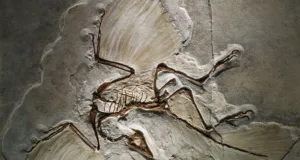
Paleontology isn’t just the science of “old bones.” It’s a slow, careful way of reading Earth’s memory. Every fossil — a shell trapped in limestone, a leaf crushed into a thin black film, the footprint of something that walked through wet mud 200 million years ago — is basically a message sent from the past. Some are loud, like a complete dinosaur skeleton. Some are barely a whisper, like a single grain of fossil pollen. But together they tell the full story of how life on Earth began, evolved, struggled, exploded into diversity, and sometimes disappeared.
The charm of paleontology is in its mix of disciplines. You need geology to understand the rocks, biology to understand the organisms, chemistry to decode minerals and isotopes, and even physics if you’re dealing with CT imaging or synchrotron scans. A fossil is never just a fossil; it’s a piece of a much larger puzzle. A dark band inside a rock might look like nothing special, but maybe it marks an ocean anoxia event. A tiny shell fragment might reveal the temperature of a prehistoric sea. A layer of ash might represent a volcanic eruption that reset an entire ecosystem.
What Is Paleontology?
Paleontology is the study of ancient life through fossils. These fossils can be bones, shells, leaves, insects trapped in amber, microscopic organisms preserved in sediments, chemical traces of organic molecules — anything that carries evidence of past life.
The goal is simple: understand how life evolved over time, how ecosystems changed, and how Earth itself shifted and reshaped those ecosystems.
People often think paleontology is only about dinosaurs. In reality:
- A 50-million-year-old leaf showing insect bite marks is paleontology.
- A foraminifera shell recording ocean chemistry is paleontology.
- A mammal tooth revealing migration patterns through oxygen isotopes is paleontology.
You’re not just studying fossils — you’re reading the stories behind them.
How Fossils Form (Fossilization)
The fossilization process is rare. When an organism dies, almost everything works against preservation: scavengers, bacteria, oxygen, weathering. For a fossil to form, several lucky conditions must come together:
- Rapid burial (e.g., mudflows, floods, volcanic ash)
- Low oxygen environments
- Mineral-rich groundwater
- Stable geological setting over millions of years
The main fossilization pathways include:
Permineralization
Minerals carried by groundwater fill the tiny pores of bones, shells, or wood, hardening them over time.
Carbonization
Thin organic materials (leaves, soft plants, insects) lose volatile elements under heat and pressure, leaving behind a carbon film.
Molds and Casts
An organism leaves a hollow imprint (mold). Later, that cavity fills with different minerals forming a cast.
Amber Preservation
Tree resin traps insects, feathers, plant fragments, and even tiny vertebrates — preserving remarkable detail.
Trace Fossils
Footprints, burrows, feeding marks, trails, nests, and coprolites reveal behavior, not anatomy.
Major Fossil Types
Body Fossils
Bones, shells, teeth, wood, leaves, corals — the physical remains themselves.
Trace Fossils
Tracks, burrows, resting marks, bite marks, and feces showing how organisms lived.
Chemical Fossils
Biomarkers and organic molecules preserved within rocks.
Microfossils
Foraminifera, diatoms, radiolarians, pollen, spores — tiny but extremely valuable for dating rocks and reconstructing climates.
Why Paleontology Matters
Fossils aren’t just curiosities. They help us understand:
- How species evolved and diversified
- How global climate changed over millions of years
- How oceans, deserts, and forests formed and vanished
- How ecosystems collapsed during mass extinctions
- Where certain natural resources (coal, petroleum, phosphorites) originate
A paleontologist might read millions of years of environmental change from just a few centimeters of rock.
Evolution and Mass Extinctions
Life didn’t evolve steadily. It rose and fell in dramatic cycles. The fossil record shows bursts of innovation and catastrophic crashes.
The Cambrian Explosion (~540 Ma)
Life suddenly diversified into complex forms — probably influenced by rising oxygen levels, genetic innovations, and environmental stability.
The Permian–Triassic Extinction
The largest extinction ever recorded: around 90% of species vanished. Likely triggered by massive volcanic activity, warming oceans, and chemical changes.
The Cretaceous–Paleogene Extinction
An asteroid impact changed Earth forever. Most dinosaurs disappeared, opening ecological space for mammals.
Paleontology is the only field that can reconstruct these events with real evidence.
What Paleontologists Actually Do
A paleontologist’s job is not endless dinosaur digs. The real work involves:
- Mapping sedimentary layers
- Describing stratigraphic sequences
- Preparing thin sections
- Running CT scans
- Analyzing isotopes
- Reconstructing environments
- Identifying species
- Dating rock units
Fieldwork includes long days under the sun, carefully brushing sediment away grain by grain. In the lab, it’s slow analysis, microscopes, databases, and 3D models. But each piece builds the timeline of Earth.
Paleoenvironment Reconstruction
Reconstructing a past environment means determining where and how an organism lived. This requires combining many lines of evidence:
- Sedimentary structures
- Grain sizes and composition
- Associated fossil communities
- Carbon and oxygen isotope ratios
- Trace fossil patterns
- Color and mineralogy of rock units
From these, scientists can infer whether an ancient setting was a shallow sea, a river delta, a tidal flat, a desert dune field, or a deep ocean basin.
Subfields of Paleontology
Vertebrate Paleontology
Fish, reptiles, birds, mammals, dinosaurs — the entire history of backboned animals.
Invertebrate Paleontology
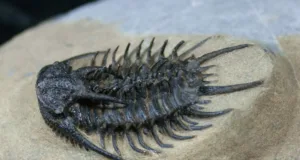
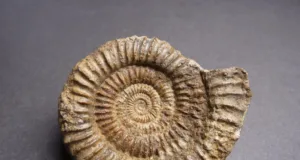
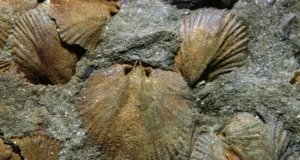
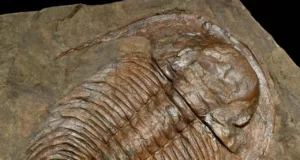
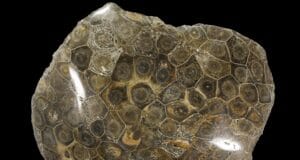
Trilobites, brachiopods, cephalopods, corals — the most abundant fossils on Earth.
Paleobotany
Leaves, seeds, pollen, wood — excellent indicators of climate and atmospheric conditions.
Micropaleontology
Microfossils that help date rocks, track ocean circulation, and reconstruct global climates.
Palynology
Spores, pollen, and microscopic plant structures that reveal environments and ecological change.
Taphonomy
The journey from death to preservation — decay, burial, mineralization.
Paleontology and Geology Are Interconnected
You cannot separate fossil science from earth science:
- Fossils help date rock layers (biostratigraphy).
- Rocks reveal the environments fossils lived in.
- Fossils confirm tectonic and climatic changes.
- Sediments and fossils together tell the environmental story.
A rock without fossils can still say a lot, but with fossils it becomes a complete archive.
Why Dinosaurs Still Attract So Much Attention
Because they’re both real and unbelievable.
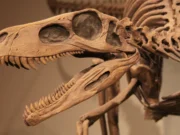
A towering sauropod, a razor-clawed theropod, a horned ceratopsian — all remind us that Earth once hosted creatures far beyond anything alive today. They represent an entire world that vanished, yet left enough evidence for us to piece together.
Modern Techniques in Paleontology
Today’s paleontology uses advanced tools:
- CT and micro-CT scanning for internal structures
- Synchrotron imaging for ultra-fine details
- Stable isotope analysis for climate and diet studies
- 3D modeling to reconstruct movement and anatomy
- Cathodoluminescence for mineral structures
The field blends old-school digging with cutting-edge technology.
Conclusion
Paleontology is the art of reading Earth’s deepest archive — fossils and rocks. They don’t speak, but with the right tools they reveal ancient oceans, vanished forests, extinct species, catastrophic events, and slow transformations that shaped our world. From microscopic plankton to giant dinosaurs, every fossil captures a moment in life’s long story. And together, they give us the only real timeline of how Earth became the planet we know today.