





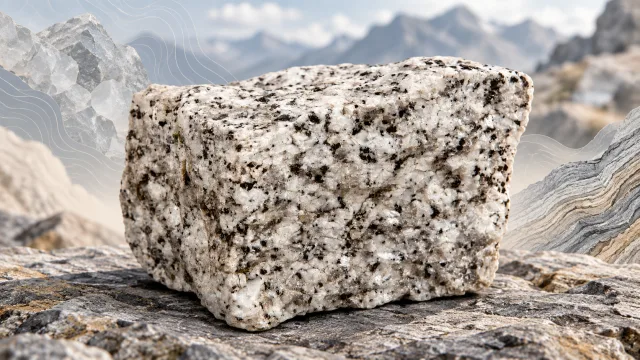
Granite is one of the most recognizable and widely used igneous rocks on Earth. Known for its coarse-grained texture, durability, and distinctive mixture of light and dark minerals, granite forms deep beneath the surface when magma cools slowly over long periods of time. This slow crystallization allows visible grains of quartz, feldspar, mica, and other minerals to develop, giving granite its characteristic speckled appearance.
Beyond its familiar use in buildings, countertops, monuments, and decorative stone, granite is also an important rock for understanding the geology of continental crust. Its mineral composition, texture, and formation history can reveal valuable information about magma evolution, tectonic environments, and the processes that shape Earth’s interior. In this guide, we’ll explore how granite forms, what it is made of, its different types, properties, uses, and where it is commonly found.
Granite: The Rock That Built Continents
Entire mountain ranges, giant cliffs, famous monuments, and even modern cities are connected to this ancient igneous rock.
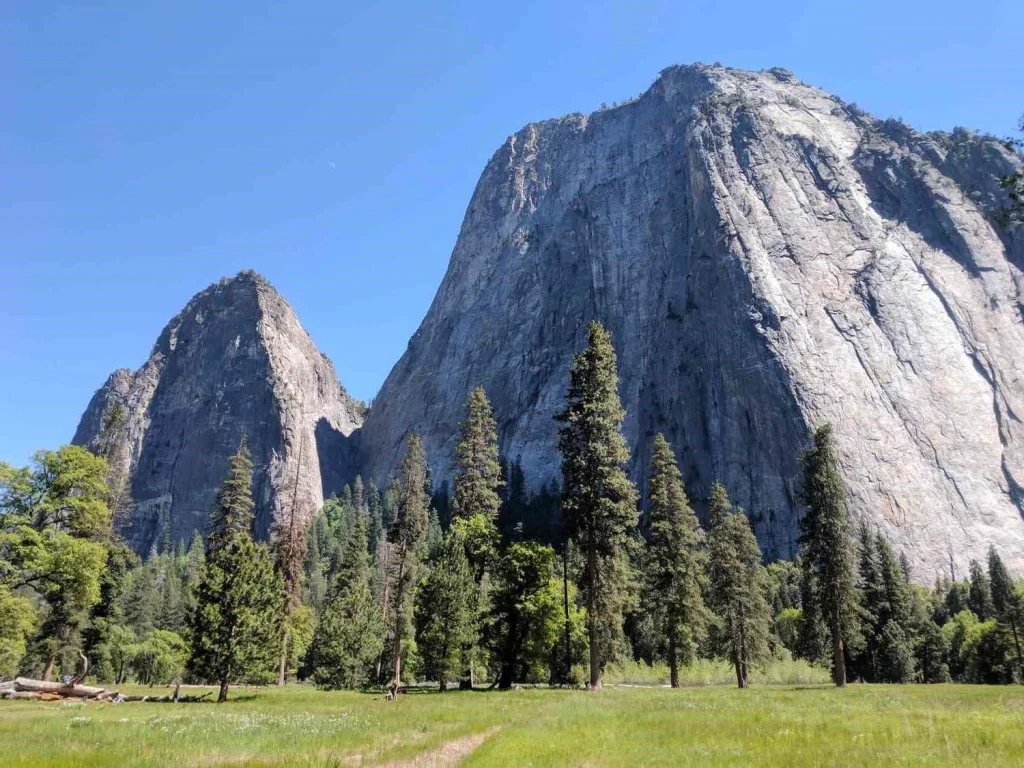
From the towering granite walls of Yosemite to polished kitchen countertops found in homes around the world, granite appears almost everywhere in human life. Yet its real story begins far below the surface of Earth, deep underground where massive bodies of magma cool slowly over millions of years.
That incredibly slow cooling process allows large mineral crystals to form. Quartz, feldspar, and mica gradually grow inside the magma chamber, creating the speckled texture granite is famous for.
To geologists, granite is much more than a construction material. It is one of the key rocks for understanding continental crust, mountain building, tectonic activity, and the long geological evolution of Earth itself.
What is Granite?
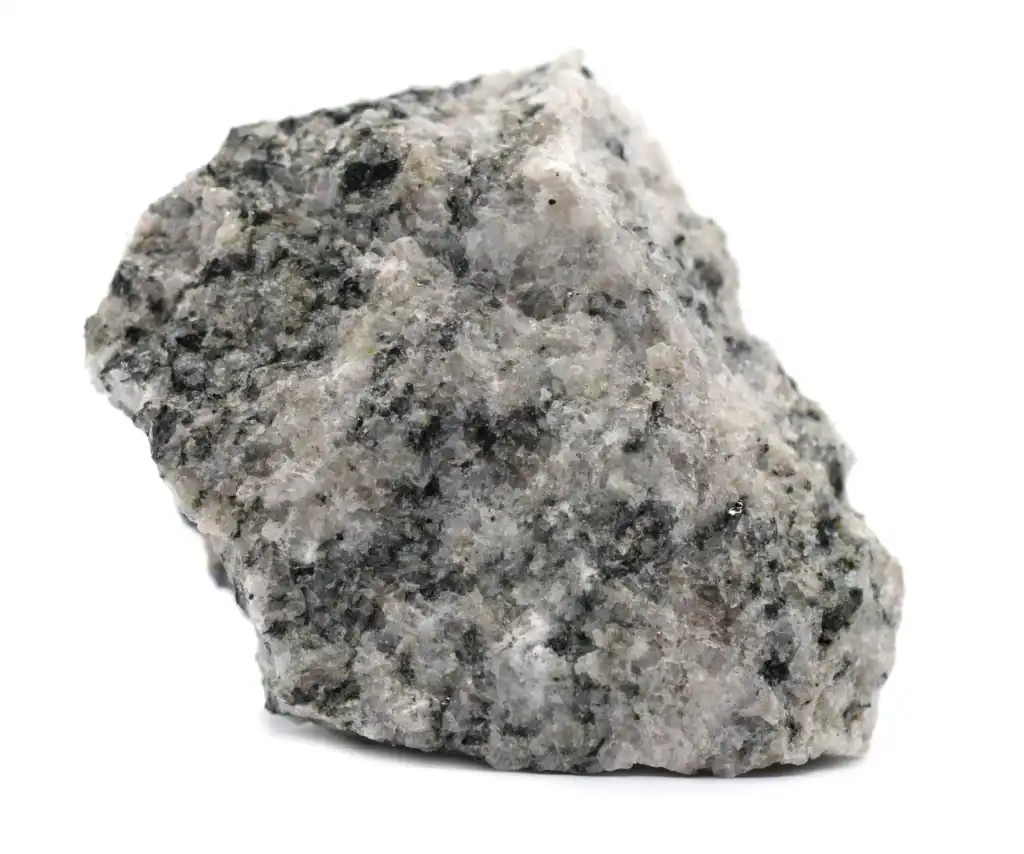
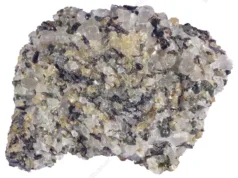
Granite is a coarse-grained intrusive igneous rock composed mainly of quartz, feldspar, and mica. It forms when silica-rich magma cools slowly beneath Earth’s surface.
Because the magma cools very slowly underground, mineral crystals have enough time to grow large enough to be visible with the naked eye. This gives granite its characteristic crystalline appearance.
Most granite contains:
- Quartz
- Feldspar
- Biotite mica
- Muscovite mica
- Amphibole minerals
The exact mineral proportions can vary depending on the magma composition and geological environment where the granite formed.
Granite is usually light-colored compared to darker igneous rocks such as basalt because it contains higher amounts of silica and feldspar minerals.
Why is Granite So Important in the Earth’s Crust?
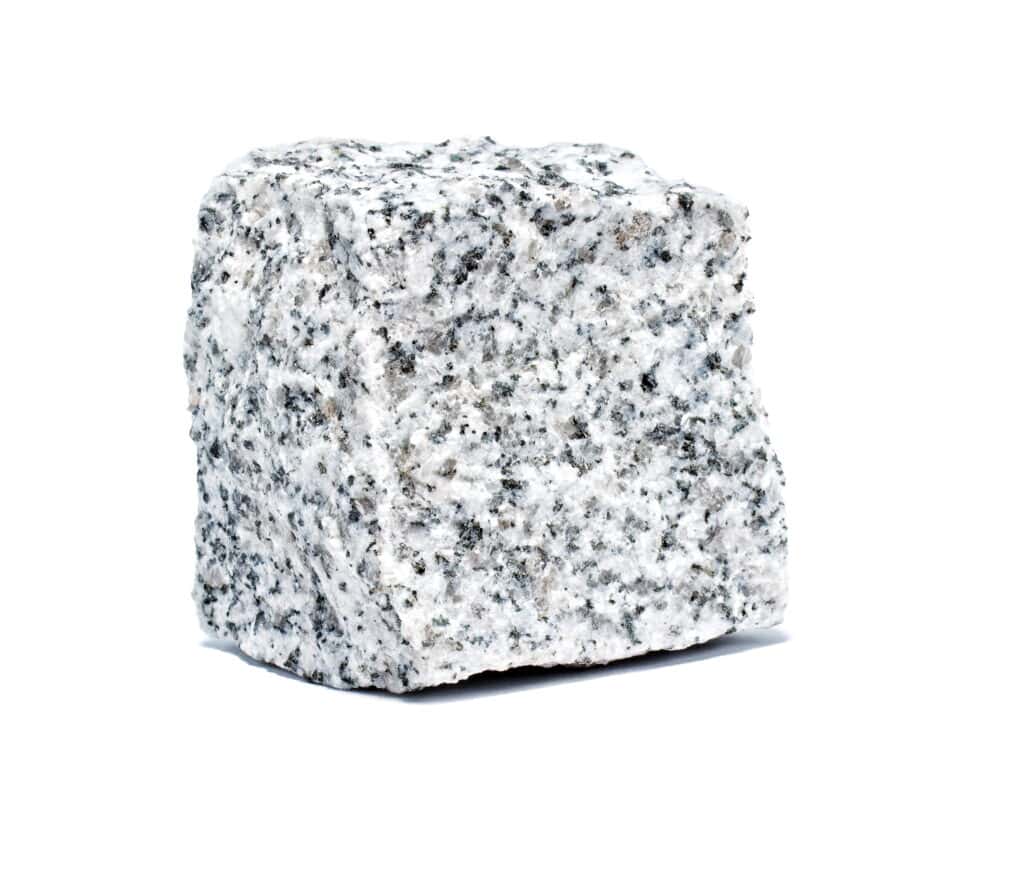
Granite is one of the dominant rock types of the continental crust. While basalt represents oceanic crust, granite represents continents. This distinction is not a coincidence.
Continental crust tends to be:
- More light
- More silica-rich
- More thick
Granite fits exactly these characteristics. For this reason, many geologists see granite not just as a rock, but as the identity of the continental crust.
Another important point is this: Granite is usually found in very large masses. These are called pluton or if much larger, batholith. These masses sometimes extend over hundreds of square kilometers.
How Granite Forms Deep Underground
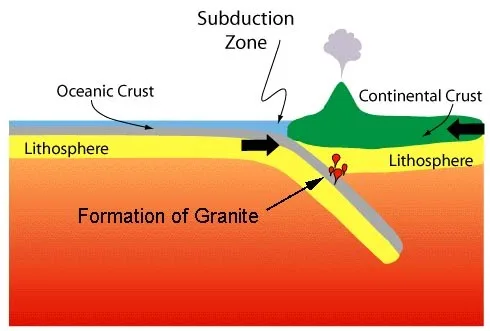
Granite forms deep within Earth’s crust from slowly cooling magma chambers. These underground bodies of magma are often associated with tectonic plate collisions, continental crust melting, and mountain-building events.
As magma rises upward through the crust, it may become trapped beneath the surface instead of erupting as lava. Over extremely long periods of time, sometimes millions of years, the magma slowly loses heat and begins to crystallize.
This slow cooling process is one of the most important reasons granite looks the way it does.
Small crystals form quickly. Large crystals require time.
Because granite cools underground at a very slow rate, minerals like quartz and feldspar have enough time to grow into visible crystals. This is why granite has a rough, grainy texture instead of the smooth appearance seen in volcanic rocks like obsidian.
Some granite bodies are enormous. Giant underground masses called batholiths can extend for hundreds of kilometers beneath mountain ranges.
Why Granite Has Visible Crystals
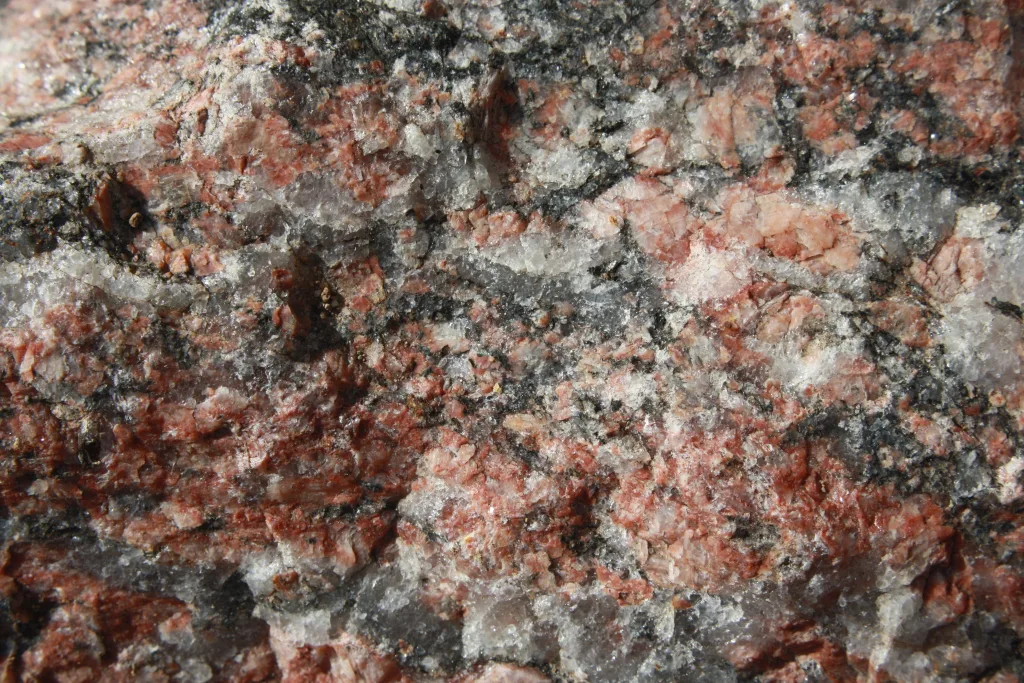
One of the easiest ways to identify granite is by its visible mineral grains.
Unlike volcanic rocks that cool rapidly on the surface, granite forms underground where cooling happens slowly. The slower the cooling process, the larger the crystals can become.
The main visible minerals are usually:
- Glassy gray quartz
- White or pink feldspar
- Black mica flakes
Each crystal grows separately inside the cooling magma chamber. Over time, the minerals lock together into a strong interlocking structure.
This crystal texture is one reason granite is highly durable and resistant to weathering.
Granite and Continental Crust
Granite is deeply connected to Earth’s continents.
Much of the continental crust is composed of granitic rocks or rocks with similar compositions. In many ways, granite helps define the structure of continents themselves.
Oceanic crust is dominated by darker basaltic rocks, while continental crust contains more silica-rich rocks like granite.
This difference is extremely important in geology because granitic continental crust is generally:
- thicker
- less dense
- older
- more chemically evolved
Without granite and related rocks, Earth’s continents would look completely different.
Granite vs Basalt
Granite and basalt are both igneous rocks, but they form in very different environments.
| Granite | Basalt |
|---|---|
| Intrusive igneous rock | Extrusive igneous rock |
| Forms underground | Forms at the surface |
| Slow cooling | Rapid cooling |
| Large visible crystals | Very small crystals |
| Light-colored | Dark-colored |
| High silica content | Lower silica content |
Granite is associated mainly with continental crust, while basalt dominates the ocean floor and volcanic islands.
This contrast is one of the fundamental concepts in igneous petrology.
Colors and Appearance of Granite
Granite can appear in many different colors depending on its mineral composition.
Common colors include:
- white
- gray
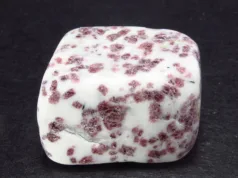
- pink
- black
- red
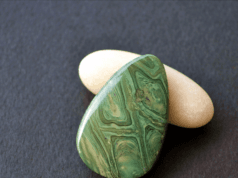
- green
Pink granite usually contains potassium feldspar, while darker varieties may contain larger amounts of biotite or amphibole minerals.
Some granites display striking crystal patterns that become especially visible when polished.
Because every granite body forms under slightly different geological conditions, no two granite slabs look exactly the same.
Why Granite Is So Durable
Granite is famous for its hardness and durability.
Its interlocking crystal structure makes it highly resistant to:
- scratching
- weathering
- heat
- pressure
This is why granite has been used for thousands of years in monuments, buildings, bridges, and sculptures.
Ancient civilizations used granite in temples, statues, and tombs because it could survive erosion for very long periods of time.
Even today, many modern cities continue using granite for construction and decorative stone.
Granite and Time
Perhaps the most impressive aspect of granite is this: When you touch a granite surface, you are actually touching a magma that froze millions of years ago.
That surface:
- Was once fluid
- Then slowly cooled
- Then was buried
- Then rose again
- And finally was exposed on the Earth’s surface
This journey is incomparably longer than a human lifetime.
Physical and Mechanical Properties of Granite
The fundamental reason granite is so valuable both geologically and from an engineering perspective is its predictable and balanced physical behavior. The crystal structure developed with slow cooling largely prevents the formation of weak planes within the rock.
Basic Physical and Mechanical Properties
| Property | Typical Value Range | Geological / Engineering Importance |
|---|---|---|
| Density | 2.60 – 2.75 g/cm³ | High load-bearing and stability |
| Mohs Hardness | 6 – 7 | Resistance to wear and scratching |
| Compressive Strength | 100 – 250 MPa (300 MPa in some types) | Ideal for foundations and heavy structural elements |
| Flexural Strength | 10 – 25 MPa | Safe in slabs and cladding stones |
| Porosity | 0.4% – 2% | Long-lasting exterior facade performance |
| Water Absorption | <0.5% | Freeze-thaw resistance |
| Heat Resistance | High | Thermal stability |
Thanks to its low porosity, granite largely prevents water, salt and frost effects from penetrating into the rock. This is why granite bridges, monuments and historic structures can stand for centuries.
Chemical Properties of Granite
Granite is a chemically quite stable rock. The main reason for this is that most of its main components consist of resistant minerals such as quartz and feldspar.
- High resistance to acids
- Does not react chemically in daily use
- Maintains its structure even at high temperatures
- Slowly weathers in the long term
These properties enable granite to have a wide range of uses from kitchen countertops to exterior cladding.
Mineralogical Composition and Variations
Granite is not a uniform rock. Mineral ratios, crystal sizes and accessory minerals determine the character of granite.
Main Minerals
- Feldspar (50–60%) Potassium feldspar and plagioclase form the main skeleton of granite.
- Quartz (20–35%) Provides hardness and chemical resistance.
- Mica (5–10%) Biotite and/or muscovite give dark-colored contrast to the rock texture.
Accessory Minerals
- Zircon
- Apatite
- Magnetite
- Titanite
- Pyrite
These minerals are usually found in small amounts but are extremely valuable for geological interpretation.
Texture and Grain Size
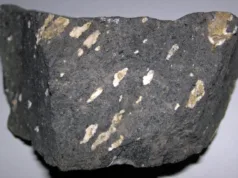
Granite’s texture is phaneritic; that is, crystals are visible to the naked eye. Grain size is a direct indicator of the magma’s cooling rate.
- Very slow cooling → large crystals
- Relatively faster cooling → finer grains
In some granites:
- Porphyritic texture (large feldspar crystals)
- Holocrystalline structure
- Massive structure
can be observed.
Color Diversity in Granite and Their Causes
Granite’s color carries geological information as much as it is aesthetic.
- Pink / Red: Potassium feldspar abundance
- Light gray / White: Quartz + plagioclase dominance
- Dark gray / Black: Biotite and hornblende excess
- Greenish tones: Chlorite, epidote
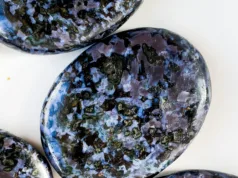
- Blue tones: Rare minerals like sodalite
These colors give clues about the chemistry of the magma from which granite formed.
Classification of Granite: QAPF Diagram
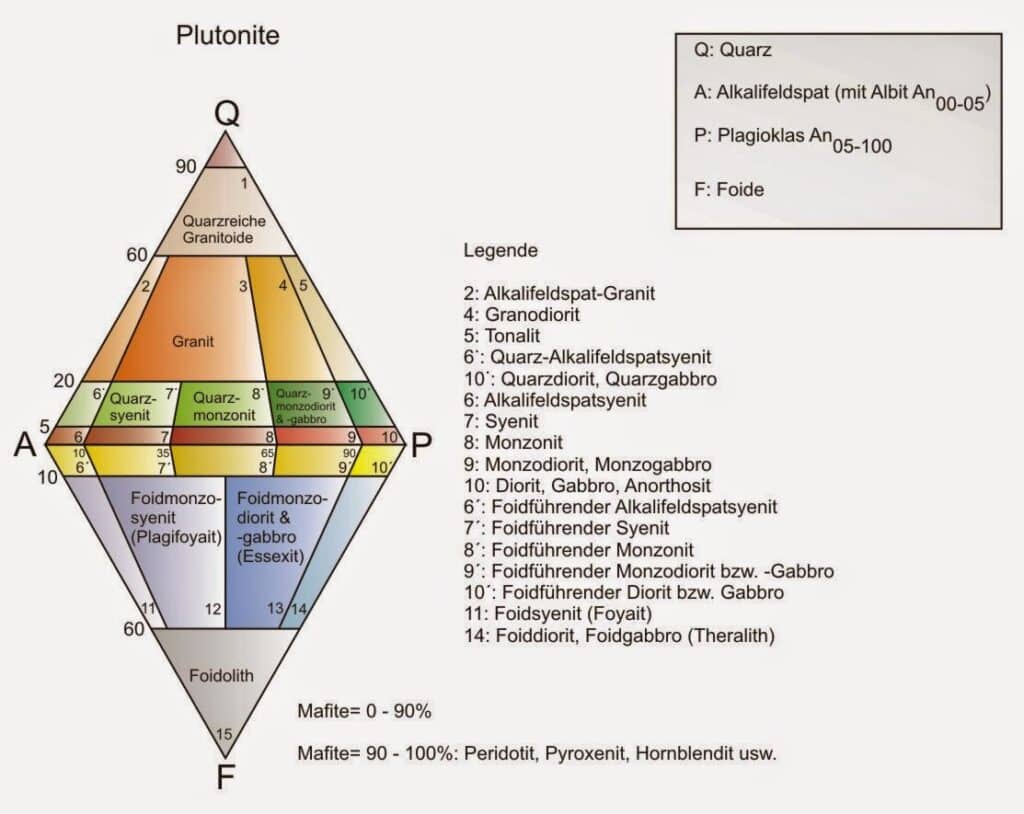
The geological definition of granite contains clear boundaries. These boundaries are determined by the QAPF diagram.
- Quartz (Q): 20–60%
- P/(P + A): 10–65%
Rocks that fall within this area are defined as granite.
Subtypes:
- Syenogranite
- Monzogranite
Old terms like “adamellite” are no longer used in geological literature. This distinction also clarifies the difference between commercial use and scientific definition.
Granite – Gabbro – Diorite Comparison
| Property | Granite | Diorite | Gabbro |
|---|---|---|---|
| Magma Type | Felsic | Intermediate | Mafic |
| Color | Light | Intermediate | Dark |
| Quartz | Present | Little / none | None |
| Density | Medium | Medium–high | High |
| Commercial Confusion | Very common | Medium | Very common |
Most of the stones sold commercially as “black granite” are gabbro.
Famous Granite Landscapes Around the World
Some of the world’s most iconic geological landscapes are made of granite.
Examples include:
- Yosemite National Park, USA
- Half Dome, California
- Mount Rushmore, USA
- The Sierra Nevada Batholith
- Pink granite coastlines in Europe
These landscapes formed through a combination of tectonic uplift, erosion, and glacial activity that gradually exposed massive granite bodies once buried deep underground.
Many granite cliffs seen today were once part of ancient magma chambers hidden beneath mountains.
Granite in Engineering and Architecture
Granite is used for:
- Foundations
- Bridge piers
- Facade cladding
- Monuments
- Interior design
Compared to marble, granite is:
- Harder
- More scratch resistant
- More resistant to acids
For this reason, in modern architecture, granite stands out as both an aesthetic and functional material.
Weathering of Granite
Although granite is durable, it still slowly breaks down over time through weathering.
Water, temperature changes, plant roots, and chemical reactions gradually weaken the minerals inside the rock.
Feldspar minerals often alter into clay minerals during chemical weathering, while quartz tends to remain more resistant.
Over millions of years, weathering can transform granite mountains into rounded hills, sandy sediments, and soil-rich landscapes.
Granite weathering also plays an important role in Earth’s long-term geochemical cycles.
Granite in Human History
Granite has played a major role in architecture and engineering for thousands of years.
Ancient Egyptians used granite to build monuments and obelisks. Modern cities use it in:
- buildings
- flooring
- bridges
- monuments
- kitchen countertops
- decorative stonework
Its combination of strength, beauty, and resistance to erosion makes it one of the most valued natural stones in the world.
Polished granite also became popular because the crystal patterns create visually striking surfaces.
Scientific Importance of Granite
For geologists, granite is more than just a rock.
Granite preserves evidence of:
- magma evolution
- tectonic activity
- crustal melting
- continental growth
- mountain formation
Studying granite helps scientists reconstruct the geological history of continents and understand how Earth’s crust evolved through time.
Some granite bodies are hundreds of millions of years old, preserving ancient tectonic events that shaped modern continents.
In many ways, granite records the deep magmatic history of Earth itself.
Conclusion: The Power of Slowness
Granite is the product of slowness, not fast processes. A magma that cooled over millions of years eventually becomes one of the most durable building blocks of human civilization.
When you look at a granite surface, you are actually seeing frozen time from the depths of the Earth’s crust.