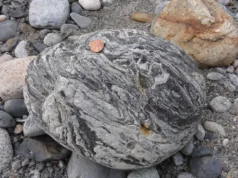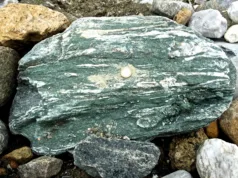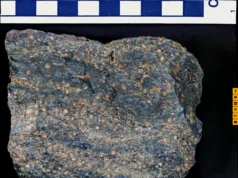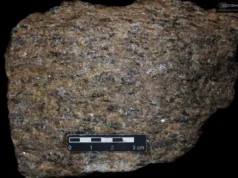




The Metamorphic Rock Shaped by Heat, Pressure and Time
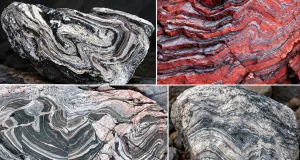
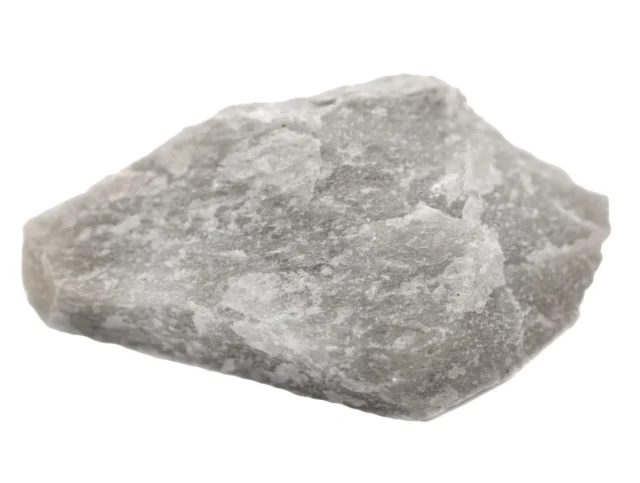
Quartzite is one of the hardest and most durable metamorphic rocks on Earth. Its origin is a simple sandstone; however, the high temperature and pressure it experiences transforms it into a completely different rock. During this transformation, the rock does not melt, but its internal structure is reorganized from top to bottom. This is exactly what makes quartzite special.
Many people may confuse quartzite with marble or hard sandstone at first glance. However, when viewed at a microscopic scale, quartzite’s story is much deeper: grain boundaries have disappeared, crystals have fused together, and the rock has become almost a single piece. This feature makes quartzite extremely important both geologically and in terms of engineering applications.
What is Quartzite?
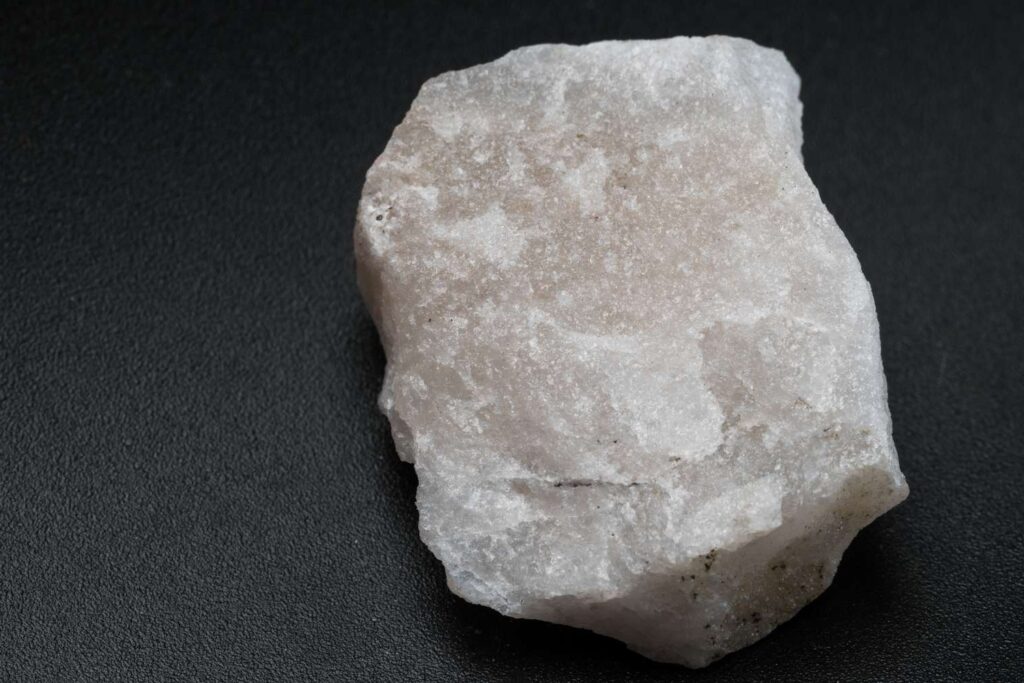
Quartzite is a non-foliated metamorphic rock and consists almost entirely of quartz (SiO₂) mineral. It is derived from quartz-rich sandstones as the parent rock (protolith).
In sedimentary sandstone, sand grains are held together by cement. In quartzite, however, these grains are no longer separate; quartz crystals have interlocked as a result of recrystallization. Therefore, when quartzite breaks, cracks pass not through grain boundaries but directly through the crystals. This is one of the most reliable ways to identify quartzite in the field.
Parent Rock (Protolith) and Metamorphic Transformation Process
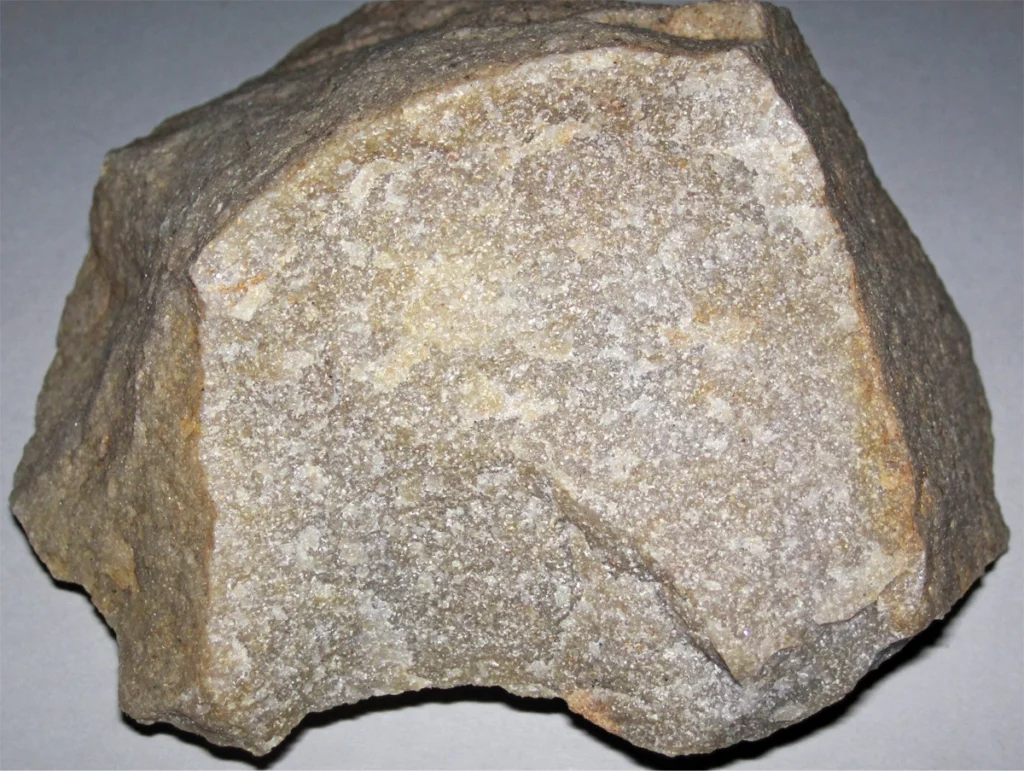
Quartzite’s parent rock is sandstone, but not every sandstone forms quartzite. Sandstones with high clay, feldspar or mica content can transform into different rocks during metamorphism.
Basic Factors in Metamorphic Transformation
- Heat: Allows quartz crystals to regrow
- Pressure: Eliminates spaces between grains
- Chemical stability: Quartz chemistry is preserved, only its texture changes
This process usually occurs during regional metamorphism, that is, during continental collisions and mountain-building phases. Orogenic belts such as the Himalayas, Alps or Appalachian Mountains contain classic examples of such transformations.
Physical Properties of Quartzite
| Property | Value / Description |
|---|---|
| Rock Type | Metamorphic (non-foliated) |
| Parent Rock | Sandstone |
| Main Mineral | Quartz (SiO₂) |
| Mohs Hardness | ~7 |
| Density | 2.6 – 2.8 g/cm³ |
| Texture | Crystalline, interlocked |
| Color | White, gray, pink, red, green |
| Acid Reaction | None |
| Weathering Resistance | Very high |
These properties make it easy to distinguish quartzite from carbonate rocks such as marble and limestone.
Texture and Structural Features
Quartzite typically exhibits granoblastic texture. This means that the crystals are close in size and tightly interlocked. In low-grade metamorphosed quartzites:
- Old bedding traces
- Cross-bedding
- Wave marks
can be partially preserved. However, as the degree of metamorphism increases, these sedimentary structures are completely erased.
High-grade quartzites acquire a massive, homogeneous and extremely compact structure.
Color Variations and Impurities
Pure quartzite is usually white or light gray. However, this purity is rare in nature. Color differences mostly result from trace amounts of impurities:
- Red / Pink: Hematite, iron oxide
- Green: Chlorite, fuchsite
- Yellow / Brown: Limonite
- Purple: Manganese minerals
These minerals do not significantly affect quartzite’s hardness, but determine its aesthetic and commercial value.
Geological Setting and Distribution
Quartzite is especially common in orogenic belts. Because these regions provide both high pressure and high temperature conditions.
Common settings:
- Continental collision zones
- Metamorphic core complexes
- Ancient continental shields
Due to quartzite’s hardness, when the weaker rocks around it erode, it forms topographic ridges and sharp ridge lines.
Quartzite – Sandstone – Marble Comparison
| Property | Sandstone | Quartzite | Marble |
|---|---|---|---|
| Rock Type | Sedimentary | Metamorphic | Metamorphic |
| Main Mineral | Quartz | Quartz | Calcite |
| Hardness | Medium | Very high | Low–medium |
| Acid Reaction | None | None | Yes |
| Fracture | Through grain boundaries | Through grains | Flat surface |
This table is critically important to prevent misidentifications in the field.
Uses of Quartzite
Construction and Cladding Stone
Quartzite is used in areas requiring high wear resistance such as:
- Flooring
- Facade cladding
- Stair steps
Crushed Stone and Aggregate
Thanks to its hardness, it is ideal for:
- Road infrastructure
- Railway ballast
- Soils under heavy loads
Industrial Use
High purity quartzite is used as raw material for:
- Glass production
- Silicon and ferrosilicon
- Refractory materials
Weathering and Impact on Landscape
Quartzite is extremely resistant to chemical weathering. Therefore:
- Surrounding rocks erode
- Quartzite remains in place
- High topographic features form
This is called differential erosion and explains why quartzite forms prominent ridges in mountain ranges.
Quartzite’s Geological Time Record
Quartzites are initially the product of sands accumulated in surface environments such as:
- Coastal dunes
- Beach environments
- Shallow marine shelves
They were later buried deep, underwent metamorphism and were brought back to the surface.
In this respect, quartzites are rocks that connect surface processes with deep crustal processes.
Educational and Scientific Importance
In geology education, quartzite is an ideal example for explaining concepts such as:
- Metamorphism
- Recrystallization
- Rock cycle
In thin sections, the mosaic-like interlocking of quartz crystals clearly shows its difference from sandstone.
Conclusion: Durability in Rock Form
Quartzite was born from simple sand and transformed into one of the most durable rocks through millions of years of geological processes. It does not melt, does not dissolve, does not break easily. Heat and pressure do not destroy it; on the contrary, they strengthen it.
This is why quartzite is not just a rock; it is a concrete record of geological durability.