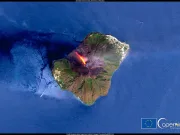

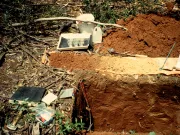
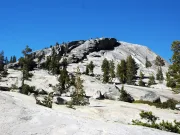
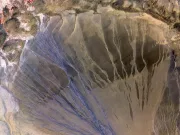























Metamorphic petrology is the branch of geology that investigates the mineralogical, chemical and textural transformation of existing rocks under changing pressure, temperature, deformation and fluid conditions. It uses metamorphic minerals, rock fabrics and equilibrium relationships to reconstruct the geological history of Earth’s crust and mantle.
Metamorphism predominantly involves solid-state processes. At sufficiently high temperatures, partial melting may accompany metamorphism and produce migmatites. The original rock, known as the protolith, may be igneous, sedimentary or previously metamorphosed.
Factors Controlling Metamorphism
| Factor | Role in rock transformation |
|---|---|
| Temperature | Controls mineral stability, reaction kinetics and recrystallization |
| Pressure | Influences mineral stability, density and reaction equilibria |
| Differential stress | Promotes deformation, preferred mineral orientation and fabric development |
| Fluid composition | Affects reaction equilibria, mass transport and mineral alteration |
| Protolith composition | Limits the mineral assemblages that can develop |
| Time | Influences reaction progress and preservation of earlier assemblages |
Metamorphic reactions may proceed without major changes in bulk chemistry, or they may involve chemical exchange with externally derived fluids. The latter process is known as metasomatism. Reaction rates can be slow, and natural rocks may preserve minerals formed under earlier conditions.
Types of Metamorphism
Regional Metamorphism

Regional metamorphism affects extensive rock volumes during processes such as mountain building, crustal thickening, burial and subduction. Temperature, pressure and deformation differ among tectonic environments. Slate, schist and gneiss are common regional metamorphic rock types, although none uniquely identifies a particular tectonic setting.
Contact Metamorphism
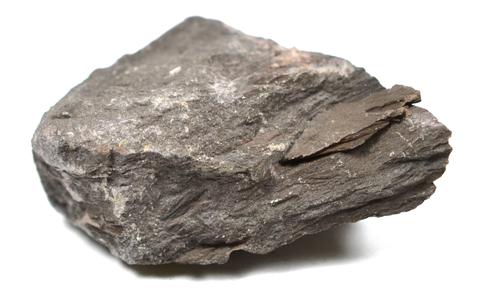
Contact metamorphism occurs around hot igneous bodies, where heat alters surrounding country rocks. A metamorphic aureole develops with mineral changes controlled by temperature, pressure, original composition and fluids. Hornfels is a typical product of thermal metamorphism; carbonate rocks may recrystallize into marble or react to produce calc-silicate minerals.
Burial, Hydrothermal and Dynamic Metamorphism
Burial metamorphism affects deeply buried rocks and may produce low-temperature mineral assemblages. Hydrothermal metamorphism involves fluid-mediated reactions, common in oceanic crust and other fluid-rich environments. Dynamic metamorphism and fault-related deformation can produce cataclastic rocks or mylonites through brittle or crystal-plastic mechanisms. Shock metamorphism results from exceptionally high strain rates and pressures, such as during large meteorite impacts.
Metamorphic Grade and Index Minerals
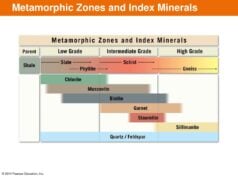
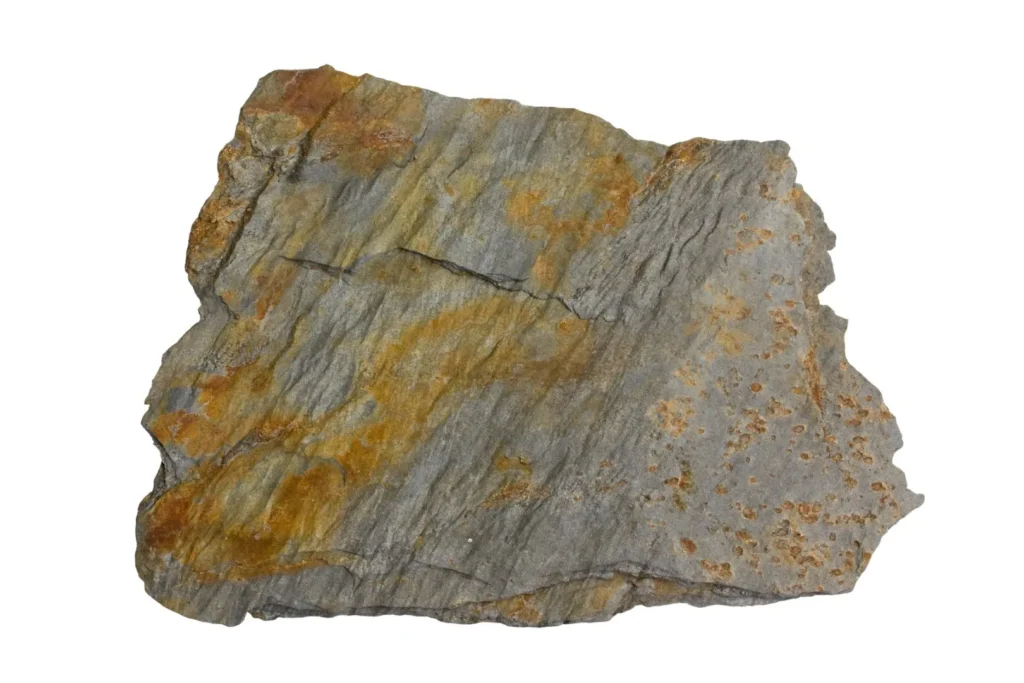
Metamorphic grade describes the relative intensity of metamorphism, commonly emphasizing temperature. It is not a complete description of pressure–temperature conditions. In suitable pelitic rocks, characteristic index minerals can define metamorphic zones.
| Barrovian index mineral zone | General interpretation |
|---|---|
| Chlorite | Relatively low metamorphic grade |
| Biotite | Increasing temperature and recrystallization |
| Garnet | Intermediate-grade conditions in suitable pelites |
| Staurolite | Intermediate to higher grade in suitable compositions |
| Kyanite | Aluminosilicate assemblages favored by appropriate pressures |
| Sillimanite | Higher-temperature aluminosilicate assemblages |
This sequence is characteristic of classical Barrovian regional metamorphism, not a universal sequence for all rocks. Different bulk compositions and pressure–temperature histories produce different mineral assemblages. An isograd marks the mapped appearance or disappearance of a mineral or a specific reaction in appropriate rocks.
Metamorphic Facies
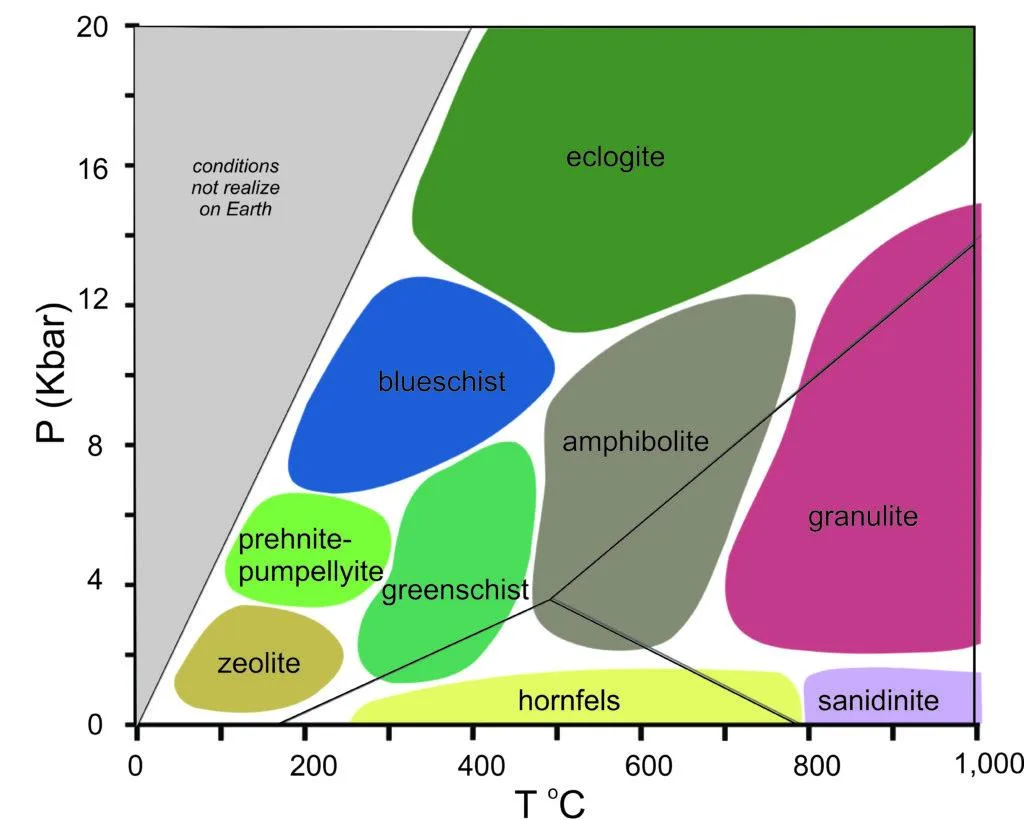
The metamorphic facies concept was developed by Finnish petrologist Pentti Eskola in the early twentieth century. A facies represents a range of conditions characterized by equilibrium mineral assemblages for specified bulk compositions. Mafic protoliths are particularly useful for illustrating the major facies.
| Facies | Indicative condition | Characteristic minerals in suitable mafic rocks |
|---|---|---|
| Zeolite | Very low temperature | Zeolites, albite |
| Prehnite–pumpellyite | Low temperature | Prehnite, pumpellyite, chlorite |
| Greenschist | Low to moderate temperature | Chlorite, actinolite, epidote, albite |
| Amphibolite | Moderate to high temperature | Hornblende, plagioclase |
| Granulite | High temperature | Pyroxenes, plagioclase, sometimes garnet |
| Blueschist | High pressure relative to temperature | Glaucophane, lawsonite or epidote |
| Eclogite | High pressure | Garnet, omphacite; stable assemblage lacks plagioclase |
| Hornfels facies series | Relatively low pressure, increasing temperature | Assemblages vary across the thermal facies |
Facies boundaries are not fixed temperature or pressure limits applicable to every rock. As broad teaching estimates, greenschist conditions commonly occur around 300–500°C, amphibolite around 500–750°C, and granulite commonly above approximately 700°C. Blueschist and eclogite require particular pressure–temperature combinations; their fields overlap the temperature ranges of other facies.
High-Pressure Metamorphism: Blueschist and Eclogite
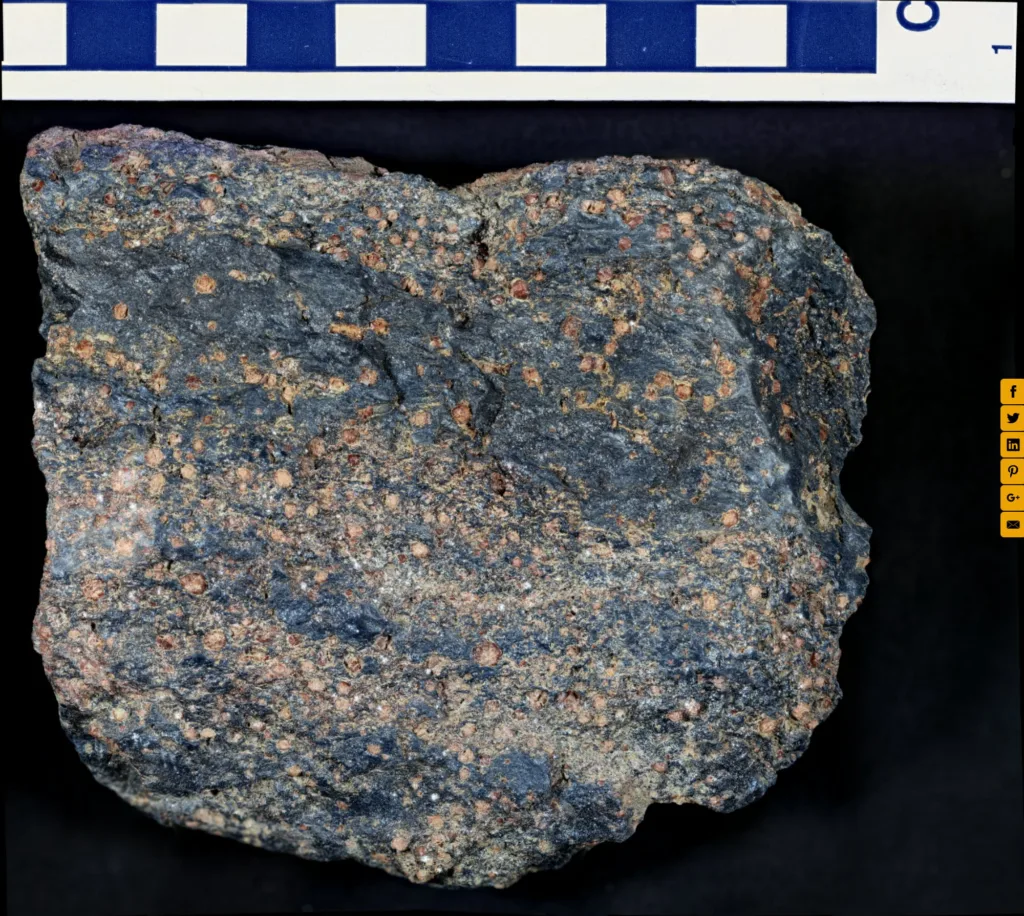
Cold subducting lithosphere can reach high pressure while remaining relatively cool, stabilizing minerals such as glaucophane and lawsonite in suitable rocks. At greater pressures, mafic compositions may develop garnet–omphacite assemblages characteristic of eclogite.

The preservation of these rocks at Earth’s surface requires exhumation. Their mineral assemblages, reaction textures and ages constrain aspects of subduction and return pathways. Related guides: Blueschist and Eclogite.
Metamorphic Minerals and Mineral Reactions
| Mineral | Petrological significance |
|---|---|
| Chlorite | Common in many low-grade assemblages |
| Garnet | Composition and zoning can record mineral growth conditions |
| Epidote | Common in suitable low- to intermediate-temperature assemblages |
| Kyanite, andalusite, sillimanite | Al₂SiO₅ polymorphs with different stability fields |
| Glaucophane | Sodic amphibole associated with many blueschist assemblages |
| Omphacite | Sodic-calcic clinopyroxene characteristic of many eclogites |
| Amphibole | Diverse mineral group sensitive to composition and fluid conditions |
A mineral alone rarely determines exact pressure and temperature. Equilibrium assemblages, mineral chemistry, zoning, textures and bulk composition must be considered together. Reactant–product relationships may record changes in conditions; dehydration reactions release water, while hydration reactions consume it.
Metamorphic Textures and Fabrics
| Texture or fabric | Diagnostic characteristic |
|---|---|
| Slaty cleavage | Closely spaced planar fabric in fine-grained rocks |
| Phyllitic foliation | Fine sheet silicates producing a silky sheen |
| Schistosity | Preferred alignment of visible platy or elongate minerals |
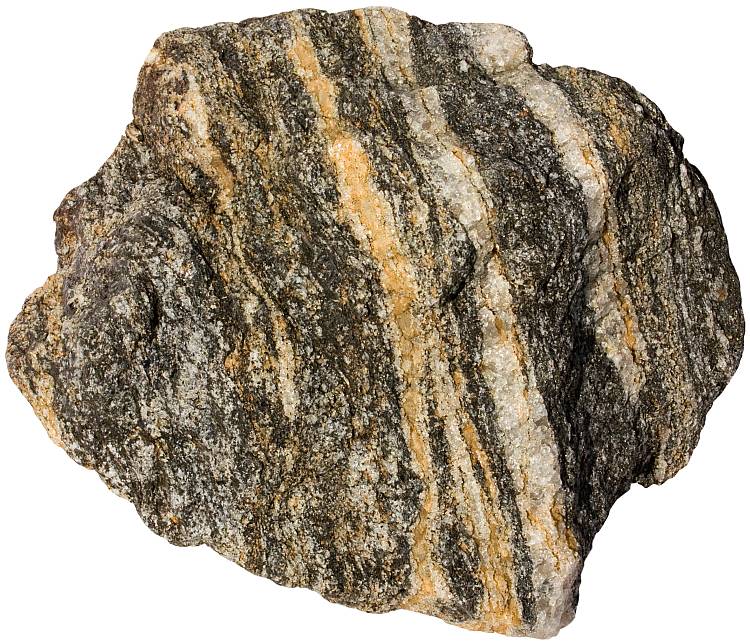
| Gneissic banding | Compositional segregation into contrasting mineral-rich domains |
| Granoblastic texture | Equant recrystallized grains, often with polygonal boundaries |
| Porphyroblastic texture | Large metamorphic crystals growing within a finer matrix |
| Mylonitic fabric | Grain-size reduction and crystal-plastic deformation in shear zones |
Foliation describes a planar fabric; lineation describes a linear fabric. Mineral alignment, flattening, recrystallization and compositional differentiation contribute to their development. Foliated and non-foliated textures are descriptive, not strict indicators of metamorphic grade. See Metamorphic Textures and Fabrics and Foliation, Lineation and Metamorphic Grades.
Classification and Protoliths of Metamorphic Rocks
| Protolith | Representative metamorphic products |
|---|---|
| Mudstone or shale | Slate → phyllite → schist → gneiss in some progressive regional sequences |
| Quartz-rich sandstone | Quartzite |
| Limestone or dolostone | Marble or calc-silicate rocks, depending on composition |
| Basalt or gabbro | Metabasalt, greenschist, amphibolite, blueschist or eclogite |
| Granite and similar felsic intrusions | Metagranite or orthogneiss |
| Various country rocks near intrusions | Hornfels and other contact metamorphic products |
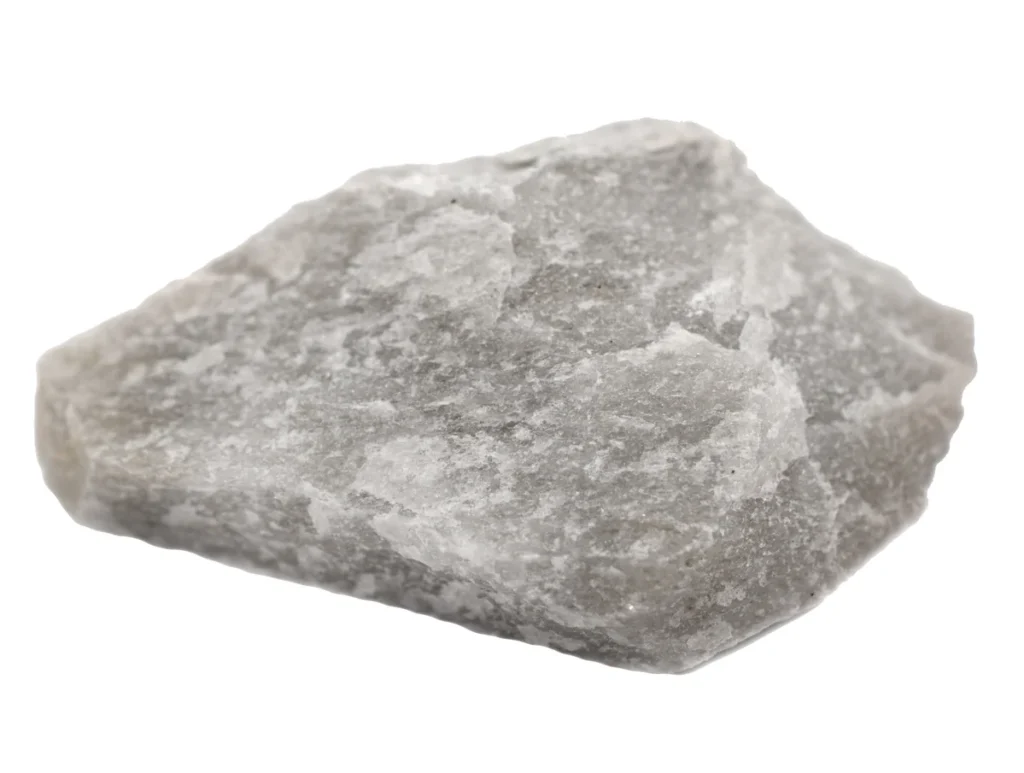
Paragneiss has a sedimentary protolith, whereas orthogneiss has an igneous protolith. Rock names may emphasize texture, mineralogy or protolith. The progressive sequence from slate to gneiss is useful for some pelitic rocks, but it is not an obligatory pathway for every rock. Read the Metamorphic Rocks guide.
Pressure–Temperature–Time Paths and Metamorphic History
Pressure–temperature–time (P–T–t) paths describe how a rock’s conditions change during burial, heating, deformation, cooling and exhumation. Prograde metamorphism generally involves increasing metamorphic conditions, while retrograde metamorphism records reactions during cooling or decompression. These changes need not be monotonic.
Inclusion trails, mineral zoning, reaction rims and preserved earlier assemblages help establish a sequence of events. A pressure estimate can be converted to an approximate depth under a lithostatic assumption: P ≈ ρgh. For a mean density of 2,800 kg/m³, 1 GPa corresponds to roughly 36 km. This estimate depends on density and stress conditions and is not a direct depth measurement.
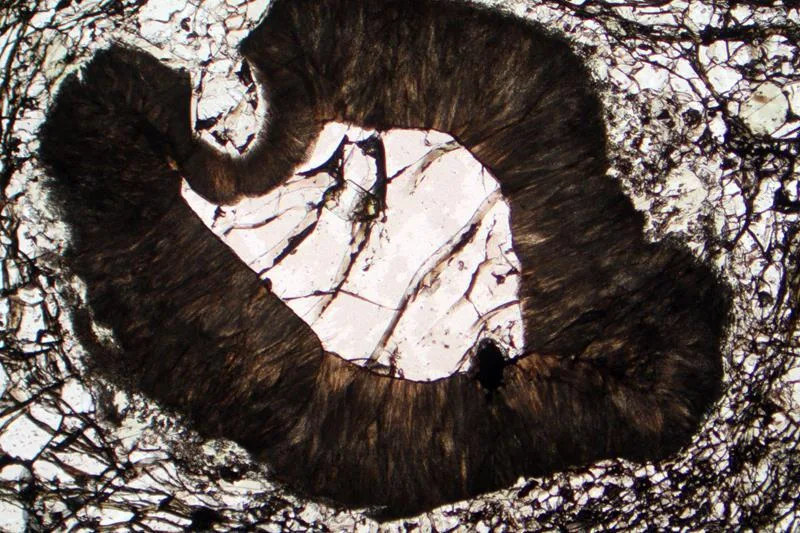
Reaction rims may develop during changing pressure, temperature or fluid conditions. See Reaction Rims in Minerals.
Partial Melting and the Transition to Migmatites
At high temperatures, some fertile metamorphic rocks begin to partially melt. Migmatites may contain light-colored melt-related domains (leucosomes) and darker residual domains (melanosomes), together with less modified material. Their structures are interpreted using evidence for melting, segregation, deformation and crystallization.
Partial melting links metamorphic and igneous petrology and contributes to crustal differentiation. Read Migmatite and Igneous Petrology.
Analytical Methods in Metamorphic Petrology
| Method | Purpose |
|---|---|
| Field mapping | Establish protolith, structures, contacts and metamorphic zones |
| Optical petrography | Identify minerals, fabrics and reaction textures |
| Electron microprobe | Determine quantitative mineral chemistry and zoning |
| X-ray diffraction | Identify crystalline phases |
| Geothermobarometry | Estimate equilibration temperatures and pressures from calibrated mineral equilibria |
| Phase equilibrium modeling | Calculate mineral stability fields for a specified bulk composition |
| Geochronology | Date mineral growth, recrystallization or cooling where appropriate |
A pseudosection is a calculated phase-equilibrium diagram for a particular bulk composition. Its interpretation requires appropriate thermodynamic data, assumptions about fluid activity and evidence that the modeled assemblage corresponds to the observed rock. Combining methods helps distinguish peak metamorphism from earlier or later overprints.
Applications of Metamorphic Petrology
Metamorphic petrology constrains mountain-building histories, subduction processes, crustal evolution, heat transfer and fluid circulation. It also contributes to mineral exploration and engineering geology. Metamorphic fabrics and mineralogy can influence strength, anisotropy and weathering, although engineering behavior must be evaluated using site-specific measurements and rock-mass characteristics.
Frequently Asked Questions
What is the difference between metamorphism and melting?
Metamorphism mainly involves changes in solid rocks; melting produces a liquid phase and may occur during high-temperature metamorphism.
What is a metamorphic protolith?
The rock that existed before a particular metamorphic transformation.
What is the difference between grade and facies?
Grade expresses relative metamorphic intensity, while facies describes characteristic equilibrium assemblages associated with pressure–temperature conditions.
Why are blueschist and eclogite common indicators of subduction?
Their characteristic assemblages can record high pressures reached in buried or subducted rocks. Blueschist also indicates relatively low temperatures for its pressure.
Are all metamorphic rocks foliated?
No. Marble, quartzite and many hornfelses are commonly non-foliated, although deformation can give them fabrics.
Can one mineral determine metamorphic conditions?
Usually not. Mineral assemblages, chemistry, textures and bulk composition are needed for reliable interpretation.
Scientific References
- Philpotts, A. R. and Ague, J. J. (2022). Principles of Igneous and Metamorphic Petrology, 3rd edition. Cambridge University Press.
- Smith College — Metamorphic Facies and Facies Series
- Earle, S. Physical Geology, 2nd edition. BCcampus Open Education.