

























Sapphire is a gemstone variety of corundum (Al₂O₃), the aluminum oxide mineral also represented by red ruby. Blue sapphire owes its characteristic color mainly to interactions involving iron and titanium in the crystal structure, while other trace elements produce yellow, pink, purple, green and even colorless sapphires. Corundum has a Mohs hardness of 9, trigonal crystal symmetry and high resistance to scratching.
Natural sapphire forms in several metamorphic and magmatic geological environments and may later accumulate in river gravels. It is prized for jewelry, while synthetic sapphire is important in optical and industrial applications. Sapphire identification requires more than blue color: mineral properties, inclusions, growth features and any treatments must be considered together.
What Does Natural Sapphire Look Like?
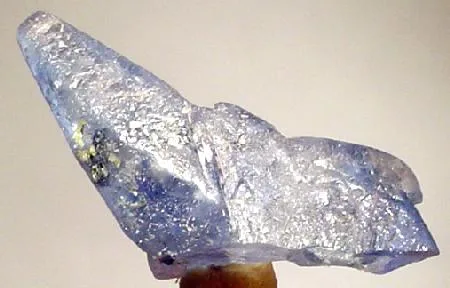
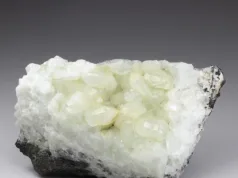
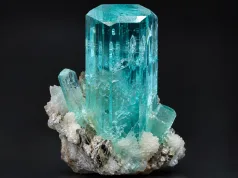
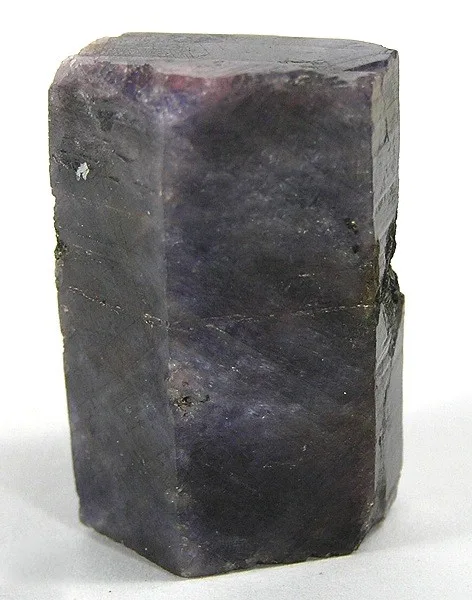
Uncut sapphire can occur as stout six-sided crystals, barrel-shaped prisms, tabular crystals or rounded grains. Fine surface striations, growth zoning and color variations may be visible in rough specimens. The classic blue is only one part of the spectrum: some corundum is pale lavender, pink, greenish, yellow, nearly colorless or multicolored.
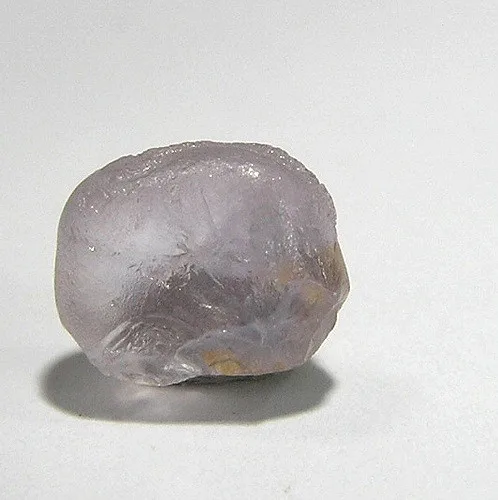
Water-worn crystals from alluvial deposits may be smooth and irregular compared with sharply defined crystals found in the host rock. Some transparent crystals look dull until polished. A dark sapphire may appear almost black in reflected light but reveal a rich blue when held to a light source. The absence of strong color is not a reason to exclude sapphire.
Sapphire Mineral Properties
| Property | Description |
|---|---|
| Mineral | Corundum — non-red gem variety |
| Chemical formula | Al₂O₃ (aluminum oxide) |
| Mineral class | Oxide |
| Crystal system | Trigonal; frequently six-sided external crystals |
| Mohs hardness | 9 |
| Specific gravity | Approximately 3.95–4.05 |
| Refractive index | Approximately 1.762–1.770 |
| Birefringence | Around 0.008 |
| Luster | Vitreous to subadamantine |
| Cleavage | No prominent true cleavage; parting can occur |
| Fracture | Uneven to conchoidal |
| Streak | White |
| Transparency | Transparent to opaque |
| Typical color | Blue, pink, yellow, purple, green, orange, colorless and combinations |
Sapphire and ruby have essentially the same corundum structure and physical properties. Their gem names depend mainly on color. Both are harder than quartz (Mohs 7), but neither is immune to chipping or fracture. Specific gravity around 4 helps distinguish sapphire from many common glassy-looking minerals when measured appropriately.
Crystal Structure, Crystal Habit and Inclusions
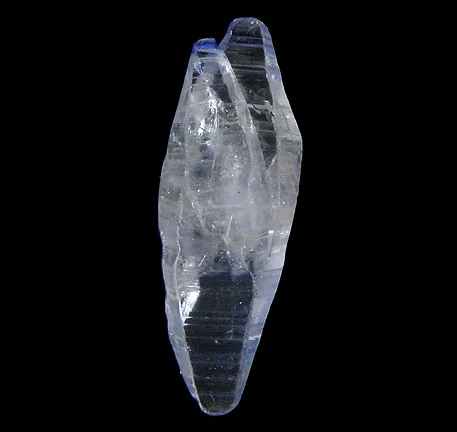
Corundum crystallizes in the trigonal system. Its crystals commonly display six-sided outlines, which reflect external growth habit rather than making the mineral hexagonal in crystal classification. Some crystals show growth striations, twinning, changes in thickness and termination forms.
Inclusions such as fine rutile needles, healed fractures, growth zoning and small trapped minerals can record the conditions during sapphire growth. Under suitable cutting orientations, arranged microscopic inclusions may cause asterism, seen as a six-rayed or occasionally more complex star in polished cabochons. Not all sapphires contain detectable silk or exhibit a star.
Why Are Most Sapphires Blue?
Blue sapphire color usually results from intervalence charge transfer involving iron and titanium ions in the corundum lattice. The exact color also depends on the concentrations and distribution of trace elements, crystal defects and light path through the gem. Blue hue alone cannot determine the specimen’s geographic origin or whether it has been heat treated.
Chromium can cause pink or reddish coloration. Iron can contribute yellow and greenish appearances, while combinations of chromophores and growth conditions yield other colors. Some sapphires are color-zoned, with distinct bands or patches that reflect changes in the crystal-forming environment.
Color variety is a fundamental sapphire feature. GIA’s Sapphire Description discusses the role of trace elements and explains why corundum occurs in many colors.
Sapphire Color Varieties
| Variety | Characteristic appearance |
|---|---|
| Blue sapphire | Light to intense blue; sometimes violetish or greenish modifiers |
| Pink sapphire | Pink corundum, with a trade boundary against ruby |
| Yellow sapphire | Yellow to golden hues |
| Purple sapphire | Purple or violet corundum |
| Green sapphire | Greenish corundum, sometimes blue-green color zoning |
| White sapphire | Colorless or nearly colorless gem corundum |
| Padparadscha sapphire | A narrowly defined pinkish orange to orangy pink trade category, with laboratory-specific criteria |
| Parti-colored sapphire | Two or more obvious color areas within a gem |
| Star sapphire | Chatoyant/asteriated variety showing an optical star, often cut as a cabochon |
Trade variety names do not automatically identify a geographic source or treatment status. ‘Padparadscha’ is used inconsistently in commercial listings; laboratories may apply strict hue and saturation rules, and unstable color-change behavior may affect classification. Gemological descriptions should report what is observed rather than rely on an unverified marketing label.
How Does Sapphire Form?
Metamorphic and metasomatic deposits
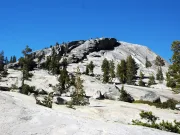
Many sapphires form during metamorphism or metasomatic alteration of aluminum-bearing rocks where silica availability is sufficiently low to favor corundum. The introduction or redistribution of iron, titanium and other elements can affect color. Corundum may occur in gneisses, schists, marble-related reaction zones and other metamorphic assemblages, depending on the local geochemistry.
Some sapphires are associated with alkaline igneous and basalt-related geological provinces. Crystals can originate in deeper rocks or related processes and later reach the surface in volcanic systems. A basalt-hosted alluvial sapphire should not automatically be interpreted as having crystallized directly from the surface lava.
Secondary alluvial deposits
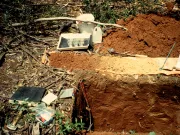
Sapphire’s hardness and chemical durability allow crystals to persist during weathering. Erosion can release corundum into streams, where dense grains accumulate with other resistant minerals in gravel deposits. Such concentrations have long supplied gem markets and can contain rounded or abraded rough stones.
Important Sapphire Localities
Sri Lanka: The Ratnapura gem district is famous for a broad range of blue and fancy sapphires occurring in gem gravels. Mineral specimen collections also document well-formed sapphire crystals.
Madagascar: Several regions have produced major quantities of sapphire, including Ilakaka-related alluvial areas. Colors and associated host histories differ by deposit.
Kashmir: Historic Himalayan deposits are highly valued in the gem trade. A Kashmir origin cannot be proven by ‘velvety blue’ appearance alone.
Myanmar: Mogok and neighboring gem areas contain sapphires in several geological settings.
Australia: Important sapphire-bearing regions include Queensland and New South Wales, with geological links to eastern Australian basalt provinces.
United States: Montana deposits such as Yogo and Missouri River-area gravels are well known; their formation and deposit histories are not identical.
Thailand, Cambodia and other locations: Gem-quality corundum occurs in multiple geological environments. Current production estimates should be checked against contemporary trade or geological survey data.
Sapphire vs Ruby, Spinel, Tanzanite and Blue Glass
| Gem | Typical hardness | How to distinguish |
|---|---|---|
| Sapphire | 9 | Trigonal corundum; characteristic refractive and spectroscopic properties |
| Ruby | 9 | Same mineral, red color designation |
| Blue spinel | 8 | Cubic; singly refractive and different optical behavior |
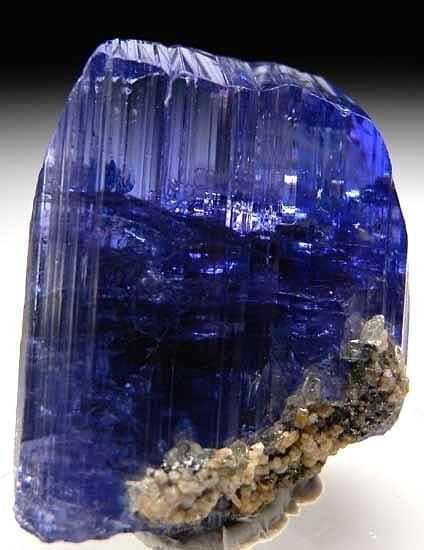
| Tanzanite | 6–7 | Zoisite; generally softer and strongly pleochroic |
| Blue glass | Variable, generally lower | Amorphous; bubbles and different optical properties may occur |
Scratch testing a valuable gem is not recommended. Professional identification often uses refractometry, microscopy, spectroscopy, UV observations and, where needed, advanced chemical analysis. Asterism, fluorescence and blue color are supporting characteristics, not stand-alone proof.
Treatments and Laboratory-Grown Sapphire
Heat treatment: Heating is widely used to modify color or clarity and can alter rutile inclusions or growth features. Some sapphires are unheated; the absence of treatment should not be assumed without appropriate examination.
Diffusion treatment: Surface-related or lattice diffusion processes may modify sapphire color. The depth and method of treatment can vary, making disclosure important. Stones should not simply be labeled ‘natural, untreated’ based on appearance.
Fracture filling and other enhancement: Certain stones may contain fillers or coatings. Treatments affect durability, maintenance and value in different ways.
Synthetic sapphire: Laboratory-grown corundum has the same basic chemical composition and hardness as natural sapphire. Flame-fusion, flux and other crystal-growth methods create material for gemstones and industrial optics. Microscopic growth features and laboratory testing are used to assess origin.
The GIA sapphire quality guide discusses effects of color, clarity, cutting and other factors on gem value.
Color, Clarity, Cut and Value
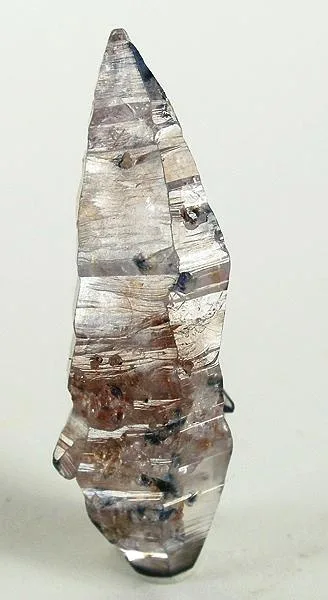
The most important visual factor for many blue sapphires is a pleasing, well-balanced combination of hue, tone and saturation. Stones that are too dark may lose visible detail, while very pale material may be less desired in particular markets. Preferences vary and should not be reduced to one universal ‘best blue’.
Clarity, cut quality and size are also important, but transparent gems with natural inclusions can still be desirable. When present, well-defined asterism may increase the attractiveness of a cabochon. Gem weight is measured in carats (1 ct = 0.2 g); a larger stone is not automatically more valuable than a smaller, finer-quality stone.
Natural origin, absence of treatment, laboratory documentation, exceptional quality and credible geographic origin opinions can affect price greatly. Price-per-carat averages are not meaningful without specifying actual material and market conditions. For substantial purchases, request a reputable independent gemological report and treatment disclosure.
Uses of Sapphire
Natural sapphires are used in rings, earrings, pendants and collector specimens. Sapphire’s hardness makes it suitable for everyday jewelry, although cut quality, mountings and existing fractures affect its performance.
Synthetic sapphire has substantial industrial roles, including precision watch crystals, transparent optical components, certain semiconductor substrates, windows and scientific instruments. These uses rely on manufactured corundum of controlled purity and size; they should not be confused with the value of a natural gemstone.
Mining, Sourcing and Environmental Considerations
Sapphire extraction ranges from small-scale washing of gem gravels to hard-rock mining and mechanized alluvial operations. Challenges can include sediment disturbance, landscape alteration, water management, worker protection and supply-chain traceability. Conditions vary between mining regions and enterprises. Responsible sourcing requires documentation rather than assumptions about a gemstone’s country of origin.
Care and Cleaning
Untreated or simply heated sapphire is often suitable for gentle cleaning with lukewarm water, mild soap and a soft brush. Avoid harsh impacts and abrupt temperature changes. Stones with fractures, fillings, coatings or uncertain treatment histories should not be exposed to steam or ultrasonic cleaning without expert assessment. Have a jeweler inspect the setting if a stone has become loose.
Frequently Asked Questions
Is sapphire the same mineral as ruby? Yes. Both are gem varieties of corundum (Al₂O₃), differentiated primarily by color designation.
What gives blue sapphire its color? Blue commonly results from interactions involving iron and titanium within the corundum crystal lattice.
How hard is sapphire? Sapphire is Mohs 9 and is more scratch-resistant than most common minerals, but it can still fracture.
Can sapphire be green or colorless? Yes. Non-red gem corundum can be blue, pink, yellow, purple, green, colorless and other shades.
Does every sapphire come from Sri Lanka? No. Gem corundum occurs in many regions, including Madagascar, Myanmar, Australia, Montana and others.
Are all blue sapphires natural and untreated? No. Heated, diffusion-treated, filled and synthetic sapphires exist; disclosure and gemological testing matter.
Is a star sapphire a separate mineral? No. A star is an optical effect usually caused by oriented inclusions and suitable cutting.
Scientific References and Image Credits
GIA — Sapphire Description. Mineral identity, colors and optical properties.
GIA — Sapphire Quality Factors. Color, cutting, treatments and valuation considerations.
GIA — Sapphire Gemstone Overview. General gemological reference.
Mindat — Corundum. Mineral structure and locality background; verify taxonomic page as database may change.
Gem-A — Sapphire Origins and Varieties. Locality context.
Featured photograph: the existing GeologyScience sapphire crystal image. Original photo attribution was not available in the retrieved article. Newly added specimen images are credited individually beneath the corresponding photographs.