

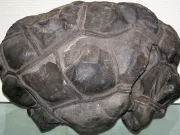
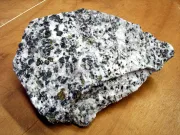
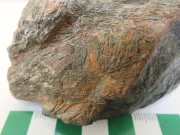
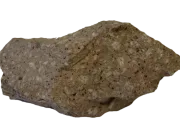





Oolitic limestone is a sedimentary carbonate rock composed largely of ooids: small, rounded grains with concentric carbonate coatings surrounding a nucleus. Its granular, fish-roe-like texture distinguishes it from many other limestones. Most ooids form in shallow, agitated, carbonate-saturated water, and the grains become rock when carbonate cement binds them together.
Oolitic limestone occurs in marine shoals and some saline or alkaline lake deposits. The rock records grain growth, transport, deposition and later diagenesis; the visible ooids provide evidence about these processes but do not, by themselves, establish an exact water depth or temperature.
What Does Oolitic Limestone Look Like?
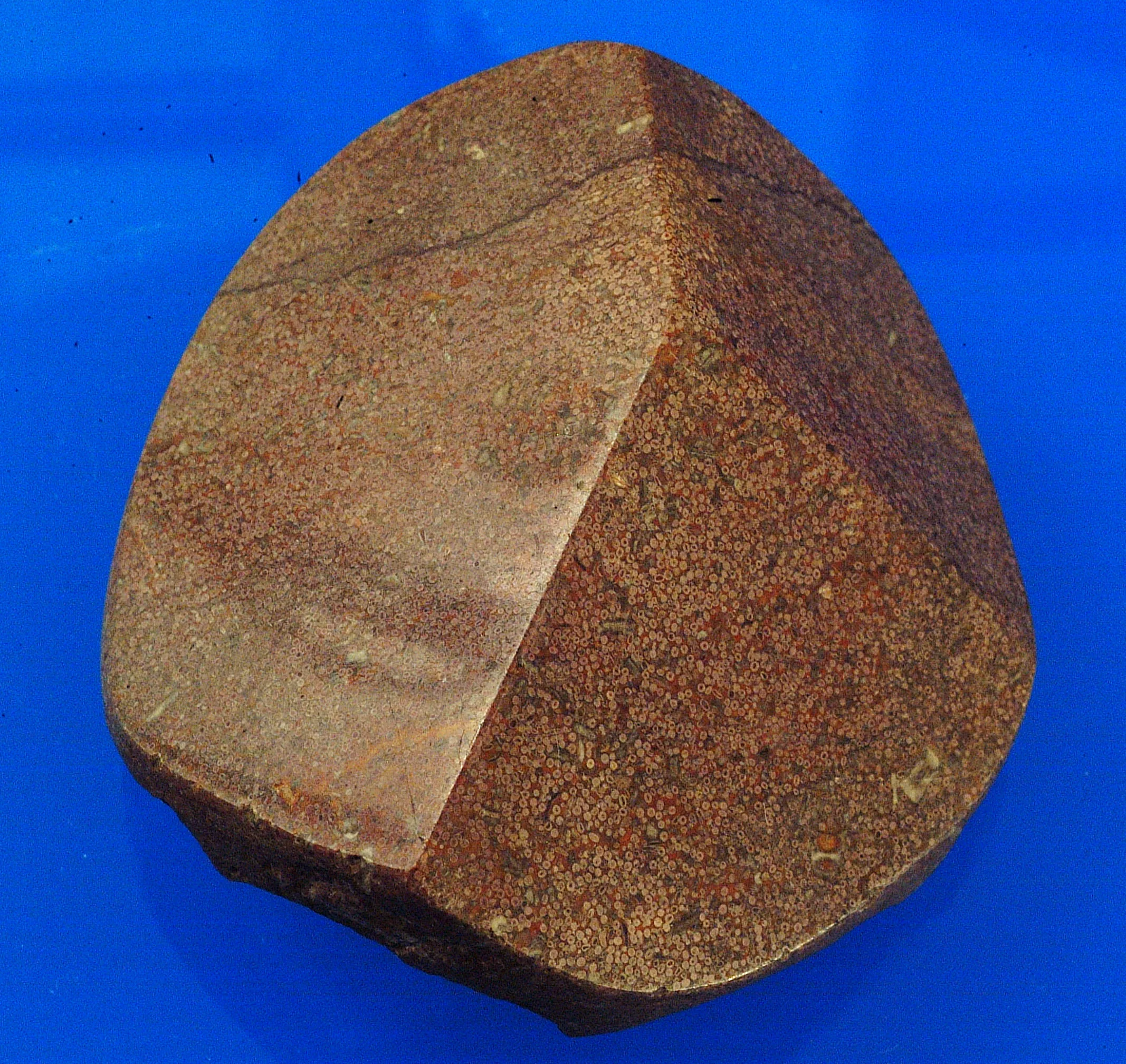
Fresh surfaces are commonly cream, tan, white, gray or reddish. Many specimens resemble compacted fish eggs or fine rounded sand. Individual grains are typically about 0.2–2 mm across, although coated carbonate grains vary in size and nomenclature. A hand lens can reveal tightly packed spheres; a polished or cut surface often shows them more clearly than a weathered fracture.
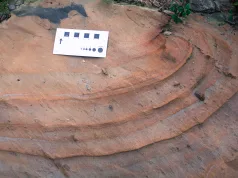
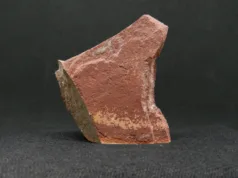
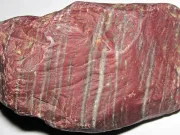
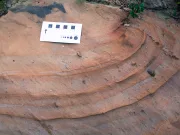
The red specimen above contains iron oxide coloring and is not the standard color of every oolitic limestone. Ooids may be closely packed with sparry calcite between them, or they may be embedded in fine carbonate mud. Some beds contain skeletal debris, peloids and intraclasts alongside ooids.
Ooids: Nucleus, Cortex and Internal Structure
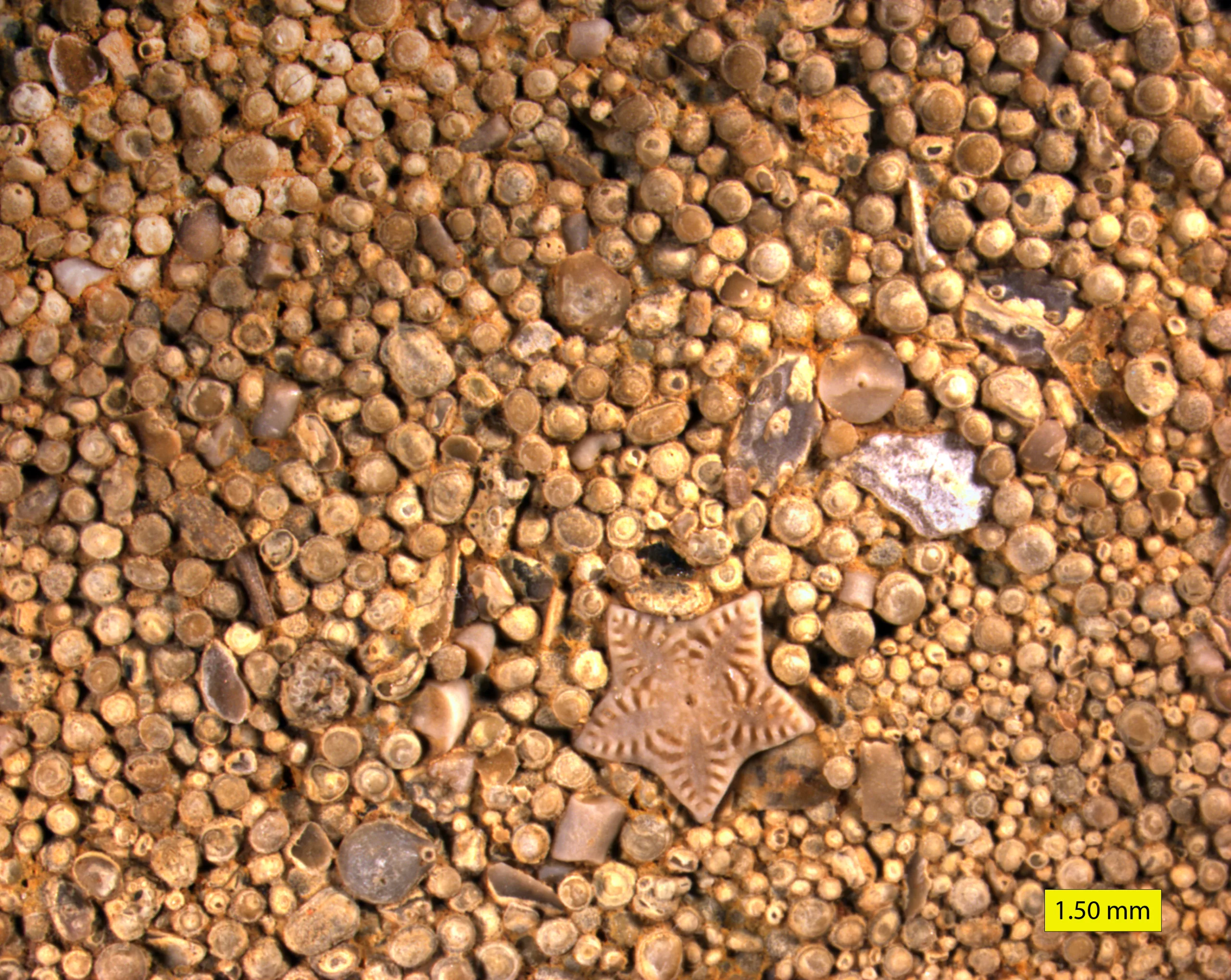
An ooid consists of a nucleus and a surrounding cortex. The nucleus can be a quartz grain, tiny shell fragment, peloid or older carbonate particle. The cortex contains concentric or radially arranged carbonate crystals. The cortex can be formed of aragonite, calcite or other carbonate phases depending on the depositional setting and later alteration.
Ooids are not the same as peloids, which lack a clearly layered cortex. They also differ from larger coated grains such as oncoids, commonly influenced by microbial growth and frequently irregular in outline. A rounded quartz grain can look similar to an ooid in a hand specimen but does not display the same carbonate coating.
How Oolitic Limestone Forms
The first stage is ooid growth. In water favorable for calcium carbonate precipitation, successive coatings develop around a moving or intermittently resting nucleus. Waves and currents can repeatedly transport grains through shallow shoals. Microbial films and organic matter can influence carbonate precipitation; the balance between biological and physicochemical controls differs among settings. A modern study of Great Salt Lake and ancient Germanic Basin ooids illustrates this complexity (Sedimentology research).
The second stage is deposition. Currents concentrate ooids into bars, ripples and cross-bedded sand bodies. The third stage is lithification: burial, compaction and precipitation of calcite cement reduce pore space and bind the grains. Dissolution, recrystallization and dolomitization can later change original mineralogy and pore structure. Therefore an ancient calcite ooid may originally have been aragonitic.
Sedimentary Environments
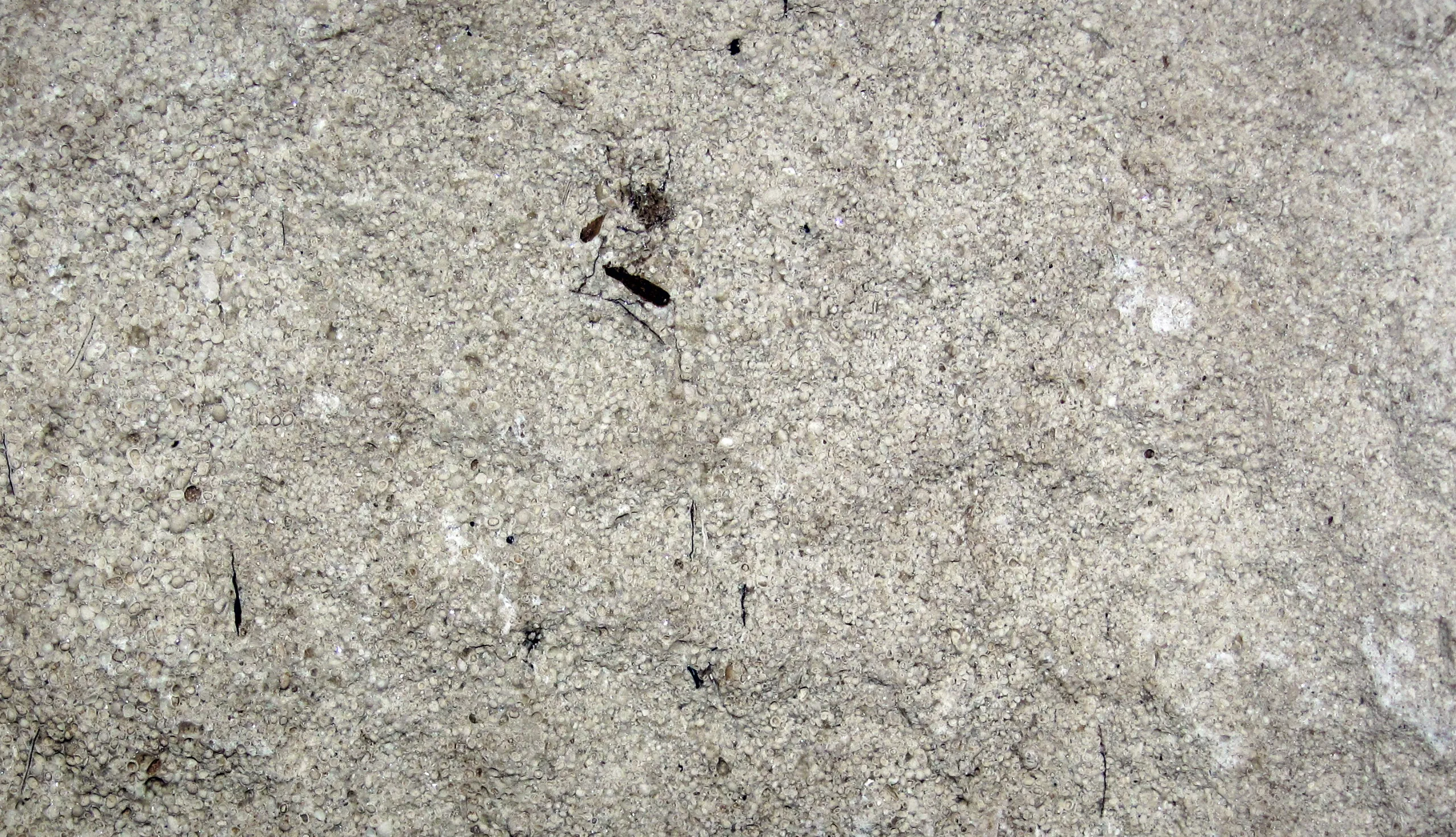
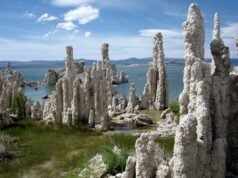
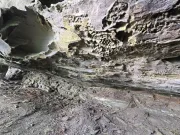
Many well-known ooid shoals develop on shallow carbonate platforms such as the Bahamas. Currents and waves rework carbonate sand into bars and tidal channels. Ancient marine ooid grainstones may preserve cross-bedding, ripple lamination and sharp erosional contacts. However, ooids also occur in lakes: the Green River Formation specimen above is an Eocene example, and modern ooids are known from Great Salt Lake, Utah.
The presence of ooids supports a depositional environment capable of carbonate coating and grain transport. It does not mean every ooid grew continuously while rolling, nor does it prove that every deposit formed in tropical seawater. Geologists use fossils, associated facies, evaporites, sedimentary structures and geochemistry to refine environmental interpretations.
Mineral Composition and Physical Properties
| Feature | Typical characteristics |
|---|---|
| Rock group | Sedimentary; carbonate limestone |
| Dominant components | Ooids with calcite or aragonite composition; many ancient examples are calcitic |
| Grain size | Ooids commonly around 0.2–2 mm |
| Texture | Rounded coated grains; grain-supported or mud-supported fabrics |
| Color | Cream, white, tan, gray, reddish or brown |
| Acid reaction | Calcite-rich specimens effervesce in cold dilute hydrochloric acid |
| Hardness | Calcite approximately Mohs 3; bulk rock response varies |
| Porosity | Intergranular, moldic and vuggy pores may occur; cementation may occlude pores |
Bulk hardness, porosity and density are not single fixed values for oolitic limestone. The proportions of grains, micrite, cement and pores vary. Iron oxides can color the rock red or brown, while dolomitization can weaken the acid reaction. A white granular appearance alone is not diagnostic.
Classification: Grainstone, Packstone and Folk Terms
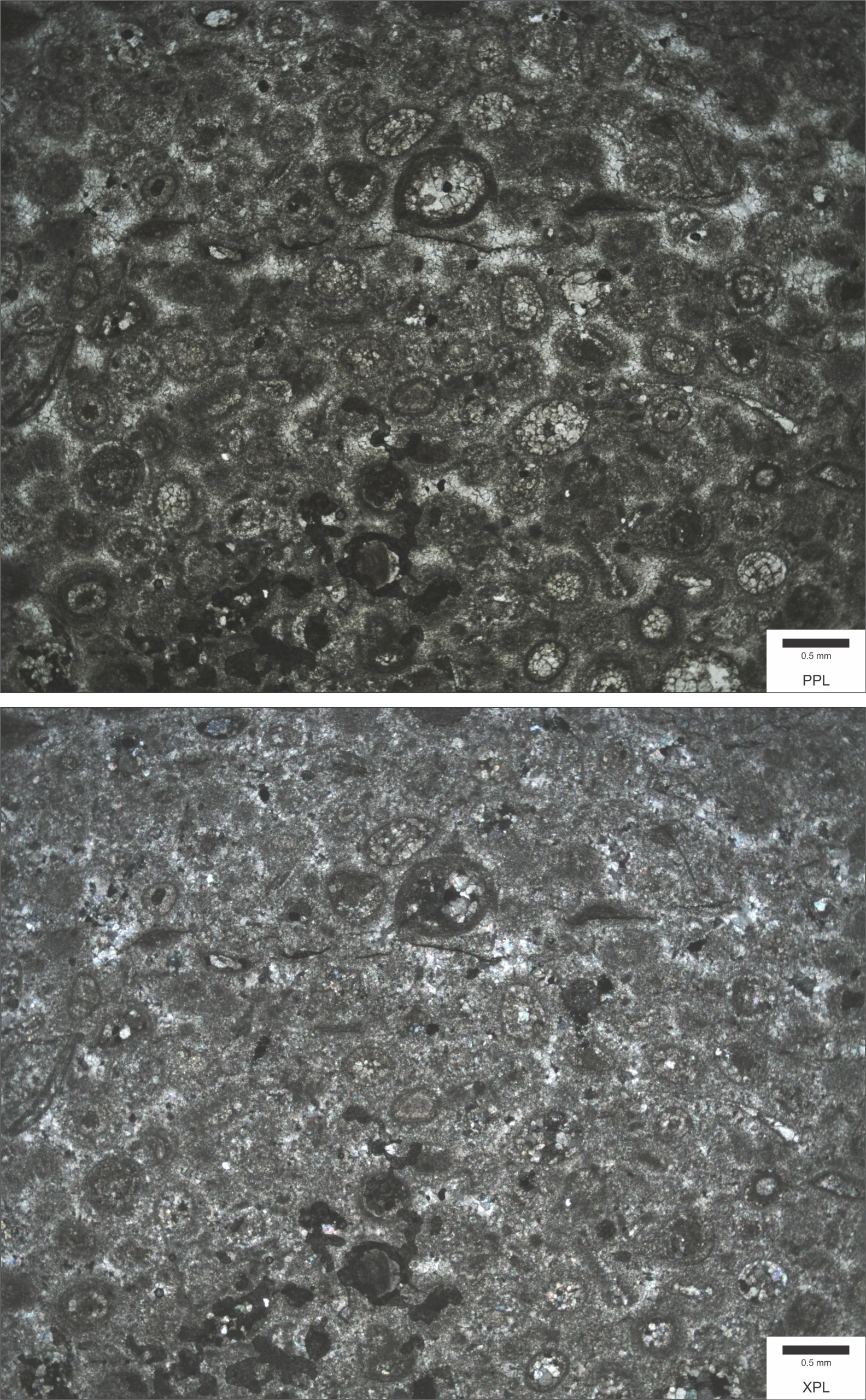
Oolitic limestone describes grain type, while the Dunham classification describes depositional texture. A grain-supported limestone without lime mud is an ooid grainstone; a grain-supported limestone containing micrite is an ooid packstone. If carbonate mud supports scattered ooids, the rock can be described as an ooid-bearing wackestone. These terms are not interchangeable.
In Folk terminology, an ooid-rich limestone with sparry calcite cement may be termed oosparite, whereas one with a micrite matrix may be called oomicrite. The photographed thin section illustrates oomicrite. Thin sections are particularly useful for recognizing nuclei, concentric laminae, micritization, broken ooids and cement generations.
Field Identification: Practical Steps
1. Inspect a fresh face. Look for many rounded grains of similar sand-size diameter. Record grain size, sorting, color and whether the rock is grain-supported or muddy.
2. Use a 10× hand lens. Seek coated grains and, if visible, faint concentric layers. A polished slab or thin section is more reliable than a rough surface for verifying cortex structure.
3. Confirm carbonate composition. Calcite-rich areas typically fizz with dilute hydrochloric acid. Use appropriate laboratory safety procedures. A positive acid reaction identifies carbonate, not specifically ooids.
4. Record structures and associated beds. Cross-bedding, ripples, skeletal debris, evaporites and stratigraphic position help distinguish a marine shoal from a lake or reworked deposit.
5. Examine thin section when uncertain. Separate true ooids from rounded skeletal grains, peloids, pisoliths and quartz sand. Determine whether intergranular material is micrite, sparry cement or both.
Oolitic Limestone vs Similar Rocks
| Rock | Key difference |
|---|---|
| Oolitic limestone | Numerous small, rounded carbonate grains with coated cortices |
| General limestone | Broad rock family; may be micritic, skeletal, crystalline or oolitic |
| Coquina | Dominated by visible shell fragments rather than coated spheres |
| Sandstone | Detrital sand grains, often quartz; no characteristic carbonate cortices |
| Pisolite / pisolitic limestone | Dominated by larger coated grains, commonly exceeding about 2 mm |
| Oncolitic limestone | Contains microbial coated grains, commonly irregular or larger |
| Dolostone | Dolomite-dominated rock; may preserve ghost ooid textures after replacement |
The crucial distinction is between the grain type and the rock’s overall composition. Some ooid-bearing rocks have been extensively dolomitized, and a grain may retain its coated appearance after replacement. A sandstone containing a small number of carbonate ooids is not automatically an oolitic limestone.
Examples from the Geological Record
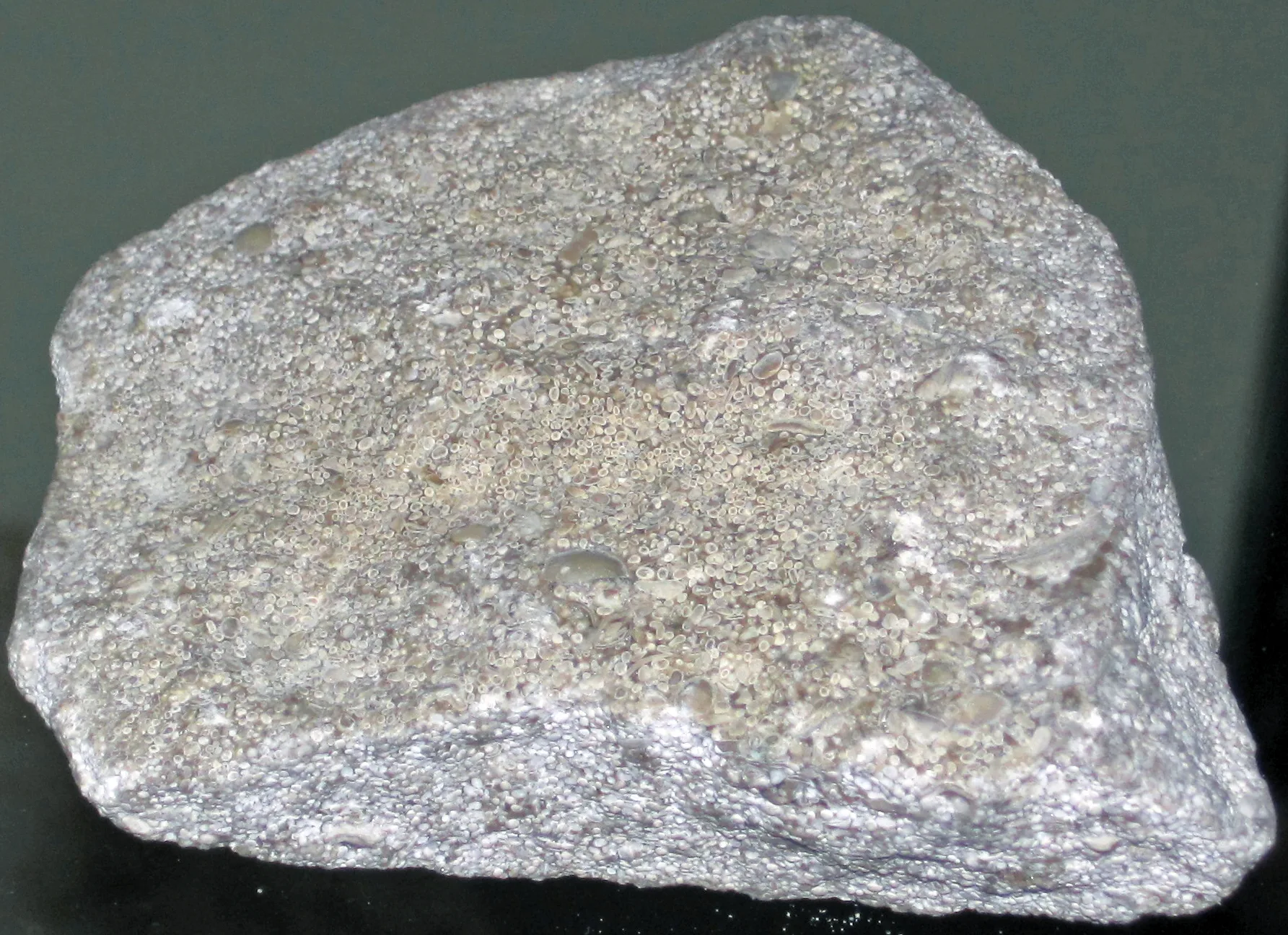
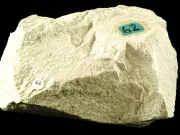
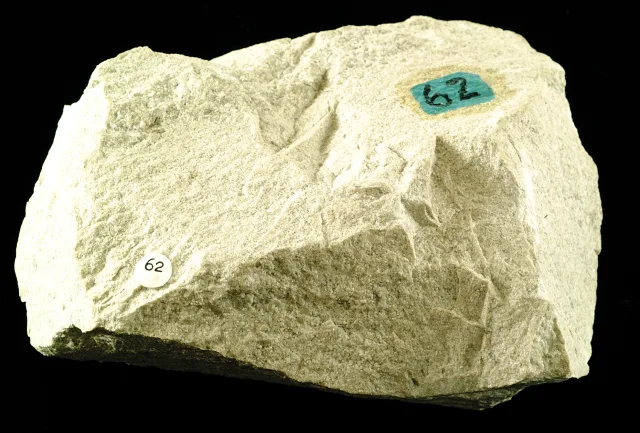
Salem Limestone, Indiana. This Mississippian carbonate unit is widely known as a building stone. Its sedimentary composition varies spatially and includes ooids and bioclastic grains; not every bed is uniformly oolitic. The image shows a documented specimen from Bedford.
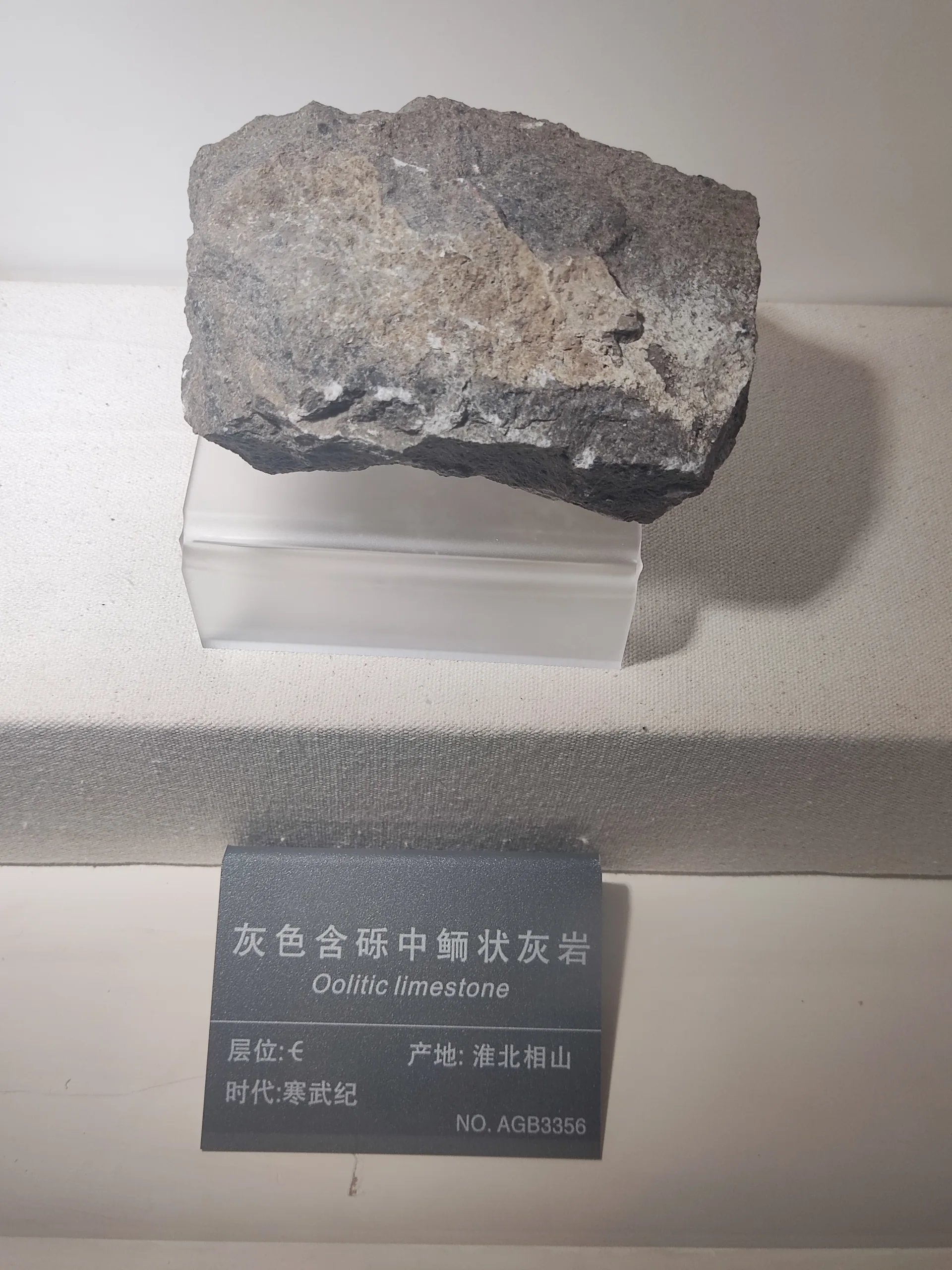
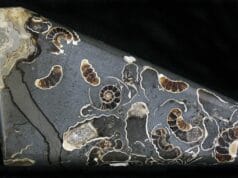
Cambrian limestone, China. The museum specimen demonstrates that ooid-bearing carbonate rocks occur in much older strata than the modern Bahamas shoals. Carbonate mineralogy and fabric can change substantially through geological time.
Green River Formation, Wyoming. The Eocene lacustrine example shown earlier emphasizes that ooids are not exclusive to marine deposits. Its setting must be interpreted using the surrounding lake sediments rather than assuming a tropical ocean.
Porosity, Groundwater and Building Stone
Ooid grainstones may initially contain substantial intergranular pore space. Early marine cement can stabilize grains, while burial cement reduces porosity. Dissolution can create moldic pores where grains or shells were removed; fractures may provide later pathways for fluids. Consequently, two oolitic limestones of similar appearance may have very different permeability.
Oolitic limestones can be quarried for dimension stone and aggregate. Their suitability depends on cementation, pore structure, durability, bedding orientation, freeze–thaw exposure and engineering test results. The well-known Indiana building-stone industry uses selected Salem Limestone beds, not all oolitic rocks indiscriminately.
Frequently Asked Questions
Is oolitic limestone chemical or sedimentary? It is sedimentary carbonate rock. The ooid coatings form by carbonate precipitation, while currents transport and deposit the grains before lithification.
Can ooids form in lakes? Yes. Great Salt Lake and the Green River Formation illustrate nonmarine ooid systems.
How can I distinguish ooids from quartz sand? Check for carbonate reaction and concentric coatings in a cut surface or thin section; rounded appearance alone is insufficient.
Does oolitic limestone always have high porosity? No. Cementation, compaction, dissolution and recrystallization can greatly modify porosity.
Is every oolitic limestone a grainstone? No. Ooids can occur in packstone and wackestone fabrics when lime mud is present.
References and Image Credits
South Carolina Geological Survey: Sedimentary Rocks educational guide; Organic matter influence on ooid formation, Sedimentology; Wikimedia Commons oolitic limestone photographs. Each photograph is individually attributed beneath its placement. Featured photograph: Geoscience Digital Image Library, Indiana specimen, CC0.