



Rhyolite: High-Silica Magma’s Race Against Time on Earth’s Surface
Volcanic rocks are often put into a single mold: lava flows, cools, becomes rock. But in reality, volcanism tells a much more complex story. There are some magmas that are not fluid enough to flow. They reach the surface but freeze without spreading. Gas cannot escape, crystals cannot grow, the structure remains incomplete.
Rhyolite is precisely the record of this incompleteness.
Rhyolite is not just a “lava stone.” It is the geological trace of the shock experienced by high-silica magma at the moment of first contact with the surface. A magma that could have matured as granite at depth, when it reaches the surface, now races against time. And it often loses this race.
The resulting rock is:
- Light-colored
- Fine-grained
- Sometimes glassy
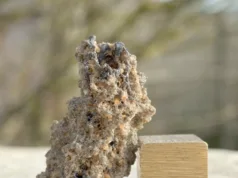
- Sometimes porous
- Always part of an explosive volcanic system
What is Rhyolite? Understanding the Reality Beyond the Definition
Rhyolite is an acidic (felsic) composition, extrusive igneous rock. This definition is correct but incomplete.
More accurately, rhyolite is:
- A rock that has the same chemical origin as granite
- But formed under completely different conditions
- And therefore developed completely different textures
The difference between granite and rhyolite is not “what it is” but where and how quickly it formed.
Granite vs Rhyolite Formation
Granite forms:
- At depth
- Slowly
- By growing crystals
Rhyolite forms:
- At the surface
- Very quickly
- Without being able to grow crystals
This is why rhyolite is often difficult to recognize by eye, but tells a lot when its geological context is read.
The Origin of Rhyolitic Magma: Where Does This Magma Come From?
Rhyolitic magma is not a magma that erupts directly from the mantle. It is often a magma that has interacted with the continental crust for a long time and has evolved.
Three Main Processes in Magma Formation
1. Partial Melting of Continental Crust
Continental crust is rich in silica. When heated, the resulting melt is naturally felsic. Such magmas constitute the main source of rhyolite.
2. Fractional Crystallization
A magma that is initially more mafic, as it waits in the magma chamber:
- Crystallizes minerals like olivine and pyroxene early
- The magma gradually becomes enriched in silica
- Reaches rhyolitic composition in the final stage
3. Magma Mixing and Crustal Assimilation
Some rhyolites form through the mixing of different magmas or by the magma taking material from the crust as it rises. This also increases chemical diversity.
The resulting magma becomes a system with:
- High silica content
- High viscosity
- High gas retention capacity
Why is Silica So Important?
If you want to understand rhyolite, you must first understand silica.
Silica (SiO₂) forms network structures within magma. As silica increases:
- Magma polymerizes
- Fluidity decreases
- Gas escape becomes difficult
Silica Content in Rhyolitic Magmas
In rhyolitic magmas, the silica ratio is generally: 65% – 75% SiO₂
These values are:
- Much higher than basalt
- Significantly more than andesite
Volcanic Behavior
Therefore rhyolite:
- Does not produce quiet lava flows
- Is usually associated with explosive eruptions
- Is found together with products like ash, pumice, tuff
Rhyolite is often not a rock standing alone in the field, but part of a larger volcanic event.
How Does Rhyolite Form? Process Step by Step
The formation of rhyolite is usually sudden and violent, but the process behind it is long-term.
Formation Process
- Felsic magma accumulates within the crust
- Volatile components (H₂O, CO₂) increase in the magma chamber
- When magma begins to rise, pressure drops rapidly
- Gases expand suddenly
- The magma either:
- Fragments by exploding
- Or freezes very quickly
In both cases, crystals cannot grow.
Result
This is why rhyolite:
- Is fine-grained
- Often appears homogeneous
- But is quite complex at the microscopic scale
Textural Features of Rhyolite: Not a Uniform Rock
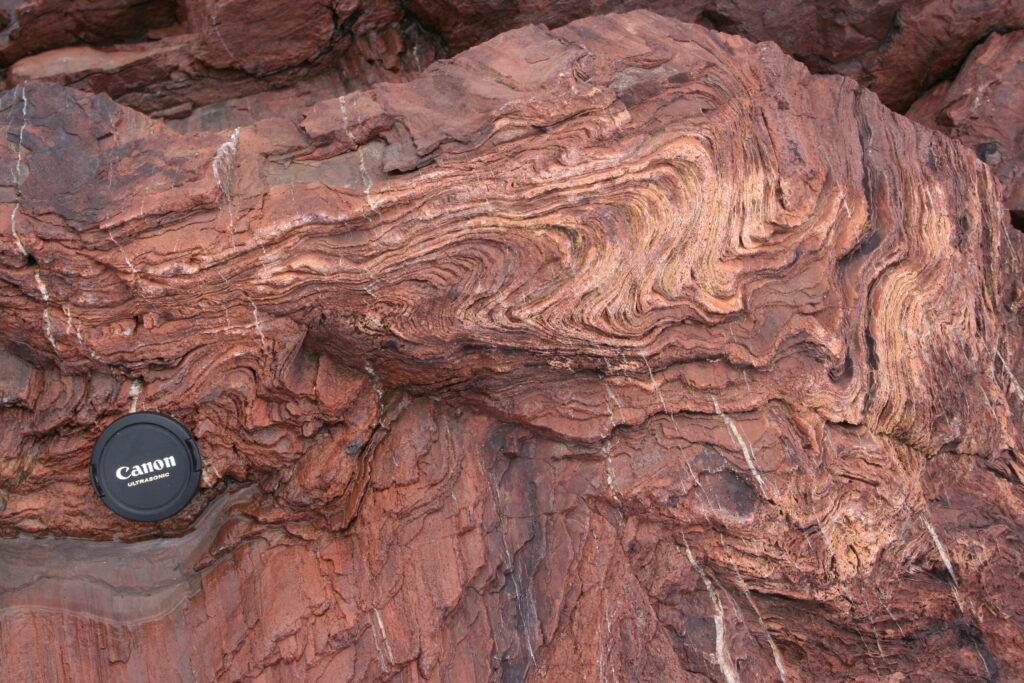
The most difficult but most instructive aspect of rhyolite is its textural diversity. Rhyolites with the same chemical composition can show different textures.
Main Texture Types
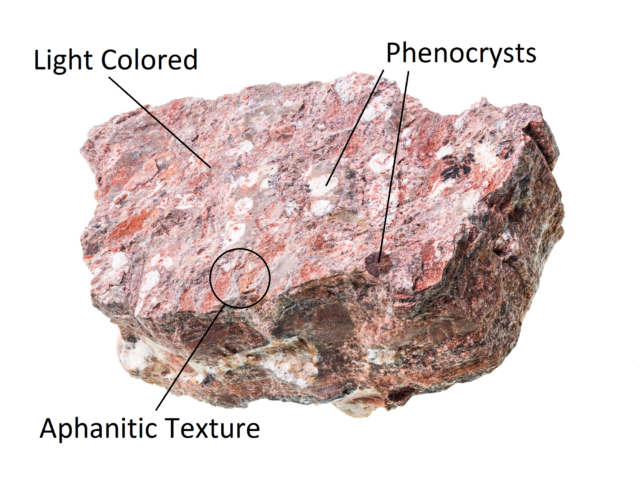
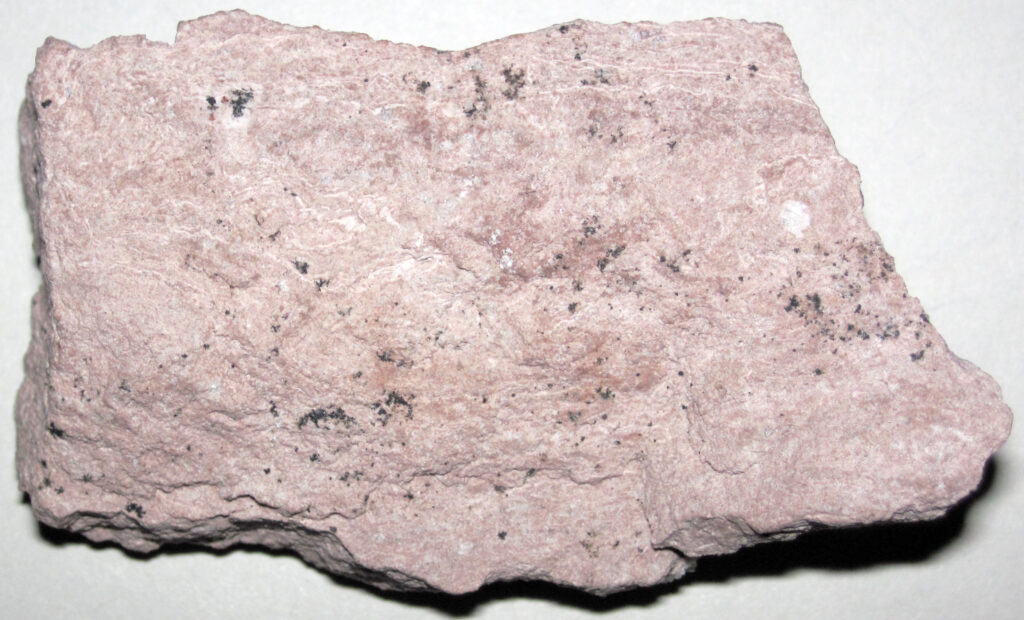
Aphanitic Texture
- Crystals are microscopic
- The rock appears smooth and homogeneous
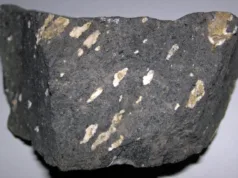
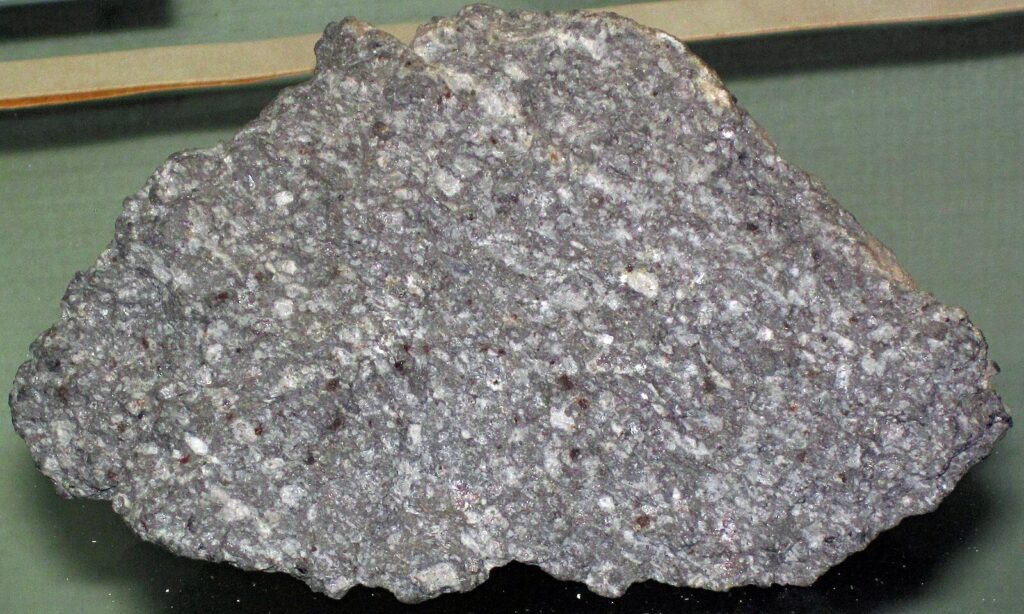
Porphyritic Texture
- A small number of large crystals (phenocrysts) are located within a fine-grained groundmass
- This shows that the magma cooled in two stages
Glassy (Vitrified) Texture
- Crystallization is almost absent
- Forms a transition with obsidian
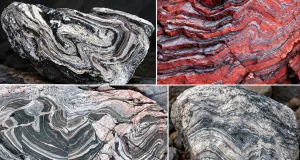
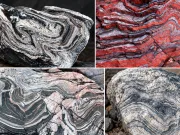
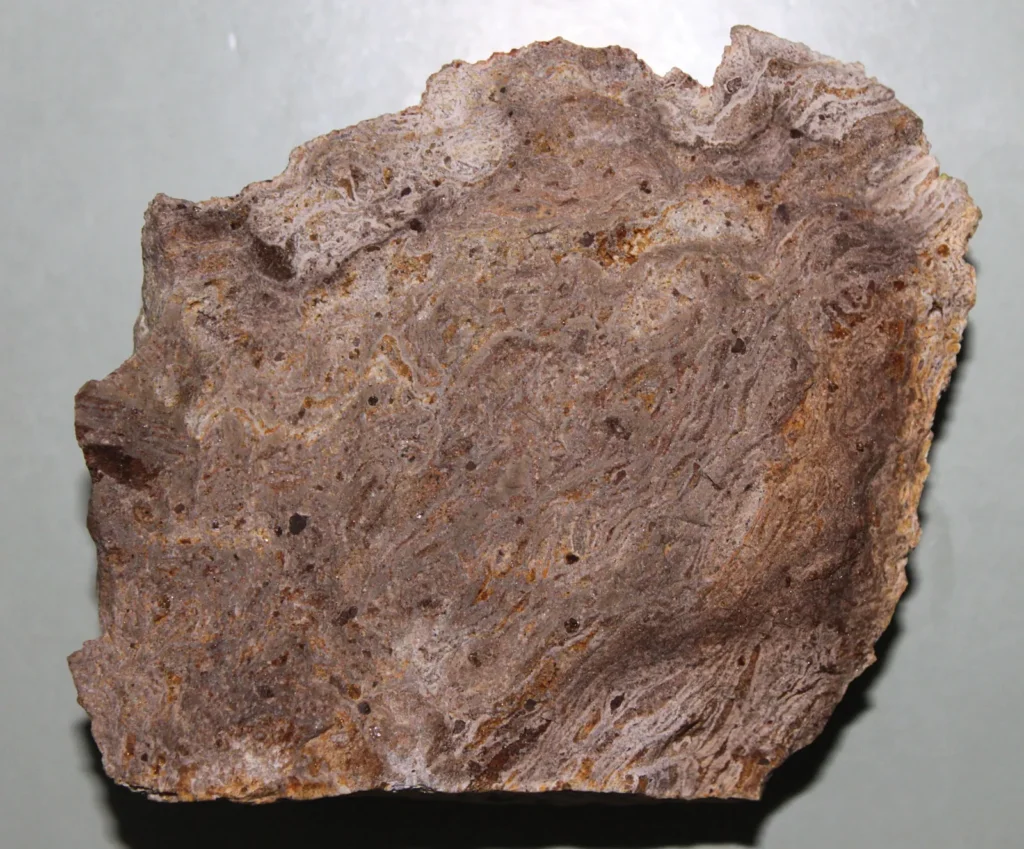
Flow Banding
- Mineral and glass bands form as the magma flows
- These bands can even show the direction of lava movement
Each of these textures provides information about the physical conditions at the moment of rhyolite’s formation.
Physical Properties of Rhyolite
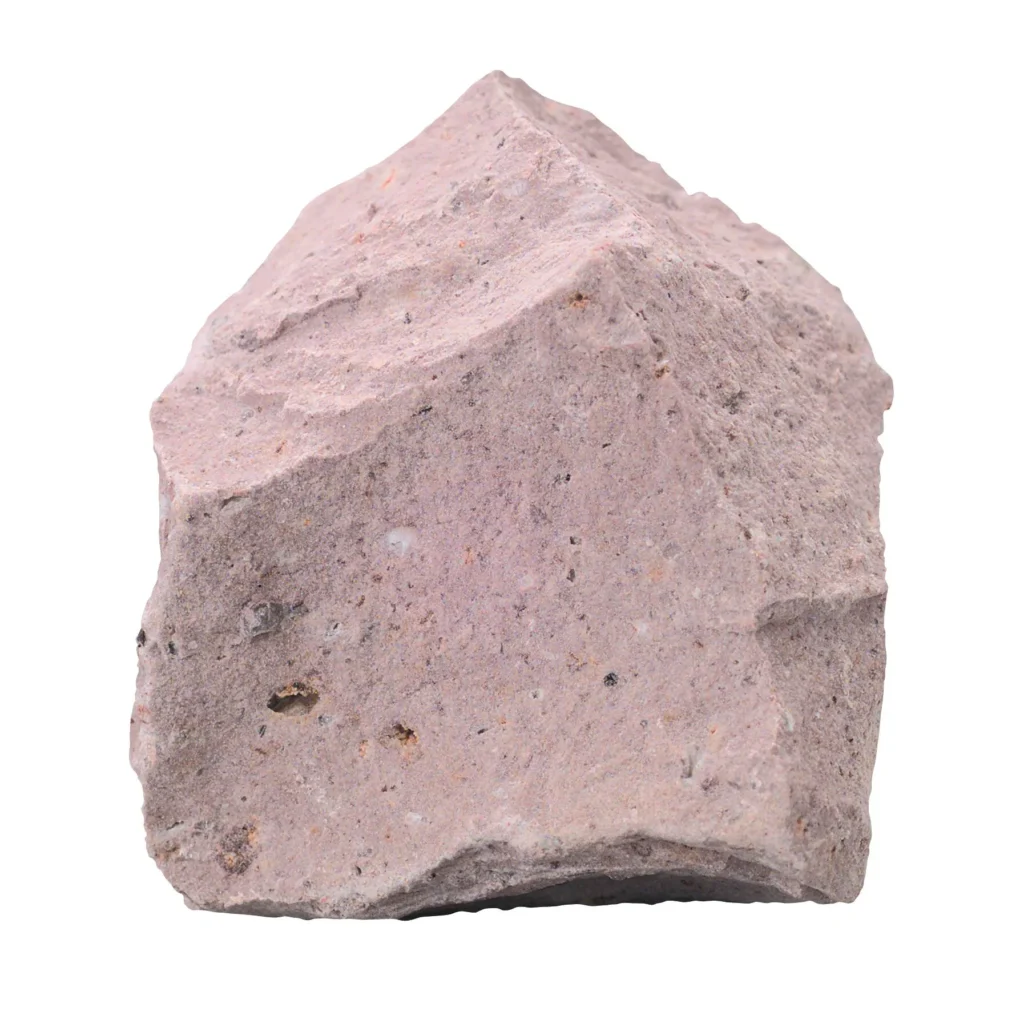
The physical properties of rhyolite are critically important in distinguishing it from other volcanic rocks.
General Physical Properties
| Property | Value / Description |
|---|---|
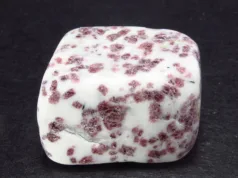
| Color | White, light gray, cream, light pink |
| Texture | Aphanitic, porphyritic, glassy |
| Density | Low – medium |
| Hardness | Relatively hard, brittle |
| Fracture | Irregular, conchoidal in glassy regions |
| Porosity | Low (may be high in pyroclastic associates) |
| Crystal Size | Mostly microscopic |
| General Appearance | Light-colored, fine-grained |
These properties make it easy to distinguish rhyolite from:
- Mafic rocks (like basalt)
- Intermediate composition rocks (like andesite)
Chemical Composition of Rhyolite: What Do the Numbers Say?
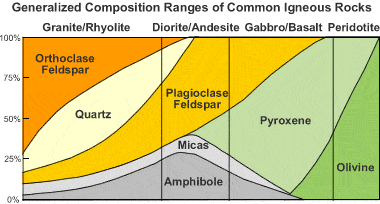
The main factor determining rhyolite’s behavior is its chemical composition. No matter how variable the physical appearance, rhyolite’s chemistry puts it in a clear place: the felsic end.
General Chemical Composition (Approximate)
| Oxide | Ratio (%) | Comment |
|---|---|---|
| SiO₂ | 65 – 75 | High silica → high viscosity |
| Al₂O₃ | 12 – 15 | Feldspar abundance |
| Na₂O + K₂O | 6 – 8 | Alkali feldspar and plagioclase |
| FeO + Fe₂O₃ | 1 – 3 | Low iron → light color |
| CaO | < 3 | Low mafic contribution |
| MgO | < 1 | Mafic minerals limited |
Reading the Chemical Data
This table should be read as follows:
- High silica → magma behaves “thick”
- Low iron–magnesium → few dark-colored minerals
- Prominent alkali oxides → feldspar-dominated mineralogical structure
Result: rhyolite is the product of a magma that doesn’t like to flow; that traps gas and explodes.
Mineralogical Structure of Rhyolite: Fine But Meaningful
Rhyolite contains minerals; but they are often invisible. Rapid cooling does not allow crystals to grow. This is why rhyolite is petrographically a “fine but rich” rock.
Dominant Minerals
- Quartz – Free or microcrystalline
- Alkali feldspar – Sanidine, orthoclase
- Plagioclase – Generally sodium-rich
Accessory Minerals
- Biotite
- Hornblende
- Zircon
- Apatite
- Magnetite
Mineral Characteristics
Most of these minerals are:
- Microscopic in size
- Identified under thin section
- Can be distinguished as phenocrysts in porphyritic rhyolites
Rhyolite’s mineralogy is perfectly consistent with its chemical composition; it doesn’t surprise. The surprise is in the texture.
Distinctive Features: How is Rhyolite Recognized in the Field?
Rhyolite can be confused especially with andesite and dacite. A single clue is not enough for correct identification in the field; they need to be evaluated together.
Keys to Distinguishing Rhyolite
Color
- Generally light: white, light gray, cream, light pink
- Dark-colored rhyolite is rare (dependent on accessory minerals)
Texture
- Fine-grained (aphanitic)
- Glassy areas can be seen
- Flow bands are frequently encountered
Crystals
- Little or not visible to the naked eye
- Sparse phenocrysts may occur in porphyritic types
Geological Context
- Caldera systems
- Widespread tuff and ash covers
- Co-occurrence with pumice and obsidian
Simple Field Comparison
- Basalt: Very dark → eliminated
- Andesite: Darker and more “balanced” → not as glassy as rhyolite
- Dacite: Middle ground → chemistry and context checked
Rhyolite is often a “context rock”: where it’s found says more than its appearance alone.
Rhyolite – Granite – Dacite Comparison
These three rocks are the most useful comparison for placing rhyolite correctly.
Granite
- Same chemistry
- At depth, slow cooling
- Large crystals
- Plutonic
Rhyolite
- Same chemistry
- At surface, rapid cooling
- Small crystals / glass
- Extrusive
Dacite
- Chemistry slightly less silicic
- Intermediate colors
- Between andesite and rhyolite
Key Lesson: Even if composition remains constant, the formation environment changes the rock’s identity.
Where is Rhyolite Found? Geological Settings
Rhyolite is not seen randomly in every volcanic area. Seeing it is generally a sign of long-term magmatic evolution.
Typical Settings
- Continental volcanic areas on crust
- Large caldera systems
- Long-lived magma chambers
- Continental arcs
In thin-crust and rapid basalt production environments such as mid-ocean ridges, rhyolite is rare. Because there the magma cannot find time to evolve.
Rhyolite’s Relationship with Explosive Volcanism
In geological records, rhyolite is often mentioned together with disaster-scale explosions. The reason is simple:
The Explosion Chain
- High silica → high viscosity
- High viscosity → gas trapping
- Gas trapping → sudden pressure release
This chain turns rhyolitic explosions into events that are:
- Violent
- Wide-area
- Caldera-forming
The presence of rhyolite suggests that very large volcanic energy releases occurred in a region in the past.
Uses of Rhyolite
Rhyolite is not as widespread an industrial rock as basalt; but it is not completely functionless either.
Construction and Decorative Stone
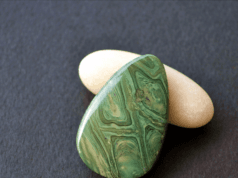
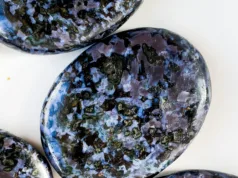
- Types that can be cut and polished are used for decorative purposes
- Color variety is an advantage
Industrial and Historical Uses
- Historically in tool making together with obsidian (indirect)
- Grinding stones and building blocks (local use)
Scientific Importance
The real value of rhyolite is not economic, but scientific:
- Magma evolution
- Explosive volcanism
- Continental crust processes
Rhyolite is a key rock in understanding these topics.
Common Misconceptions About Rhyolite
❌ Not every light-colored volcanic rock is rhyolite
❌ Rhyolite is not rare; it depends on context
❌ Rhyolite is not only lava (it is intertwined with pyroclastic products)
Conclusion: Magma’s Race Against Time
Rhyolite forms at the point where magma loses its race against time. Crystals want to grow, but there is no time. Gas wants to escape, but cannot find a way.
The resulting rock is the record of this tension.
Rhyolite reminds us: In geology, some rocks are not “done and finished”; they are products of incomplete processes.
And rhyolite is one of the clearest examples of this incompleteness.