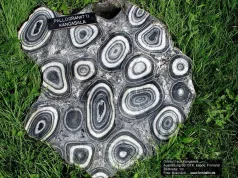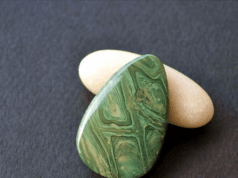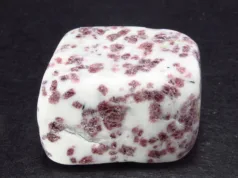


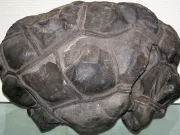
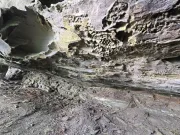
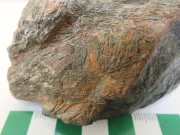
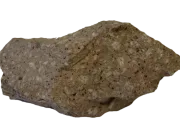
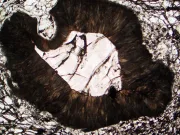
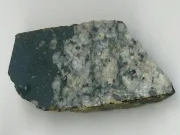
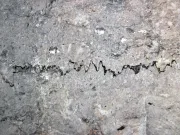

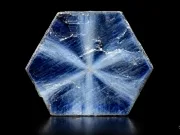



Some ancient volcanic rocks contain networks of long, blade-shaped crystals that look almost like leaves frozen into stone. These unusual patterns are among the most recognizable features of komatiite, a rare magnesium-rich volcanic rock that carries evidence of the Earth’s early thermal history.
Komatiite is an ultramafic igneous rock formed from unusually magnesium-rich lava. Most well-known occurrences belong to the Archean Eon. Although many komatiites preserve a characteristic spinifex texture, others are massive, granular or extensively altered, making their identification a combination of field observations, mineralogy and geochemistry.
What Does Komatiite Look Like?
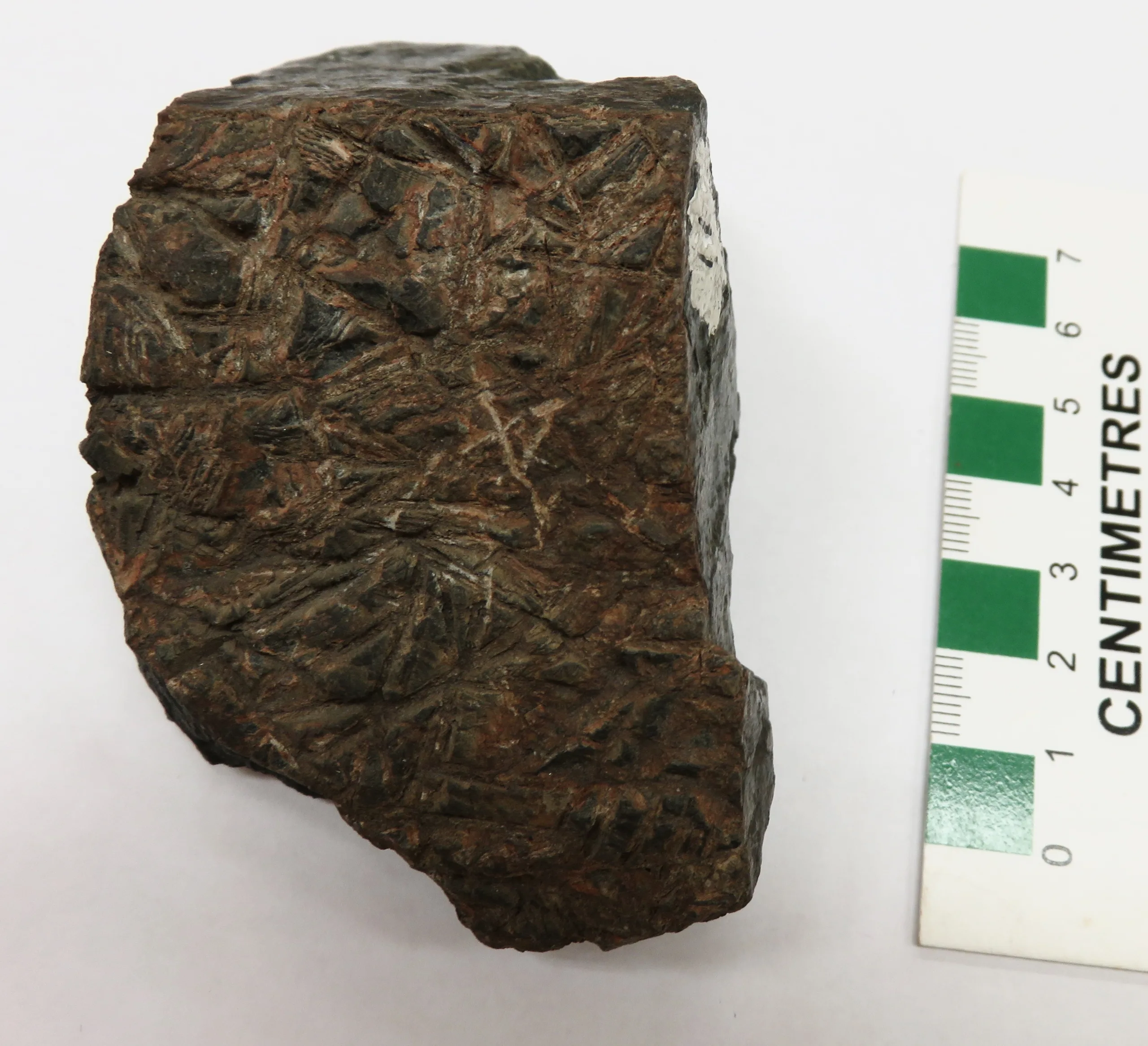
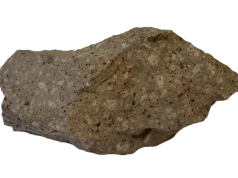
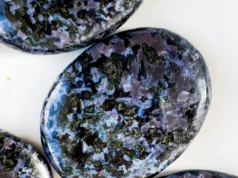
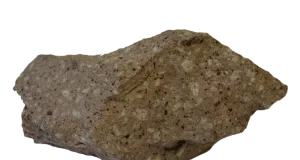
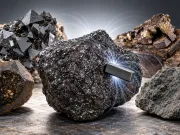
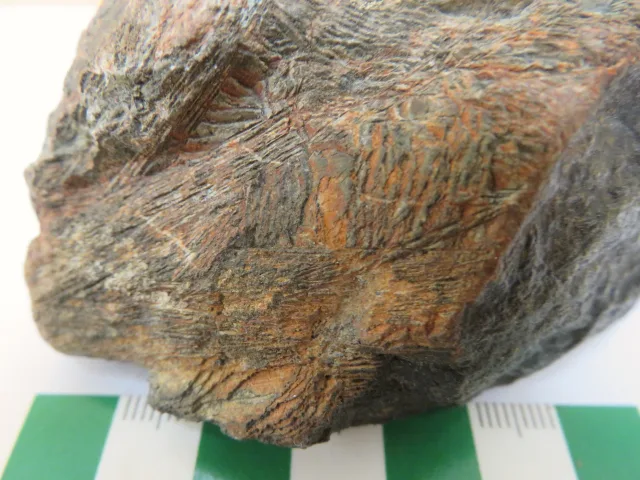
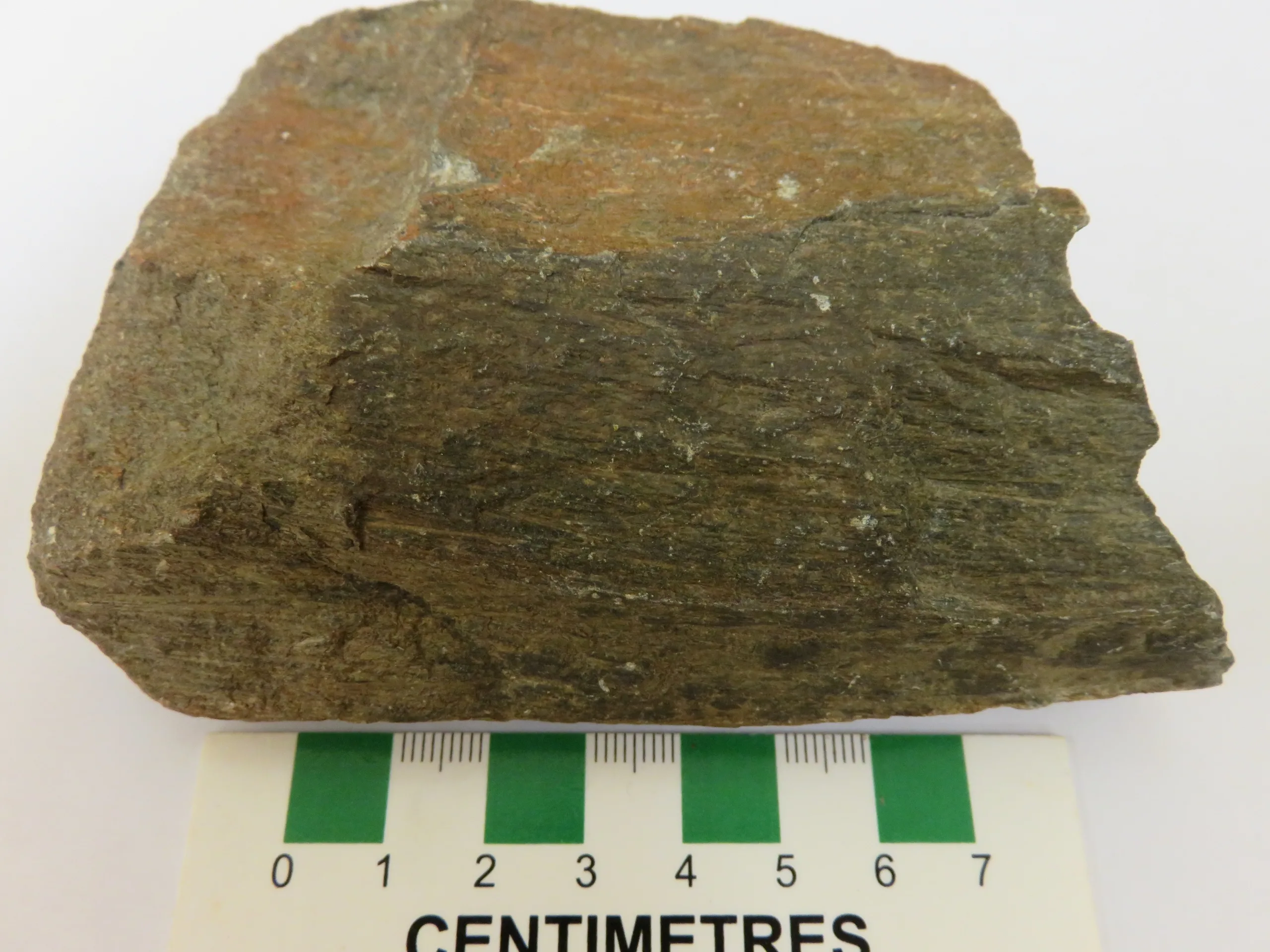
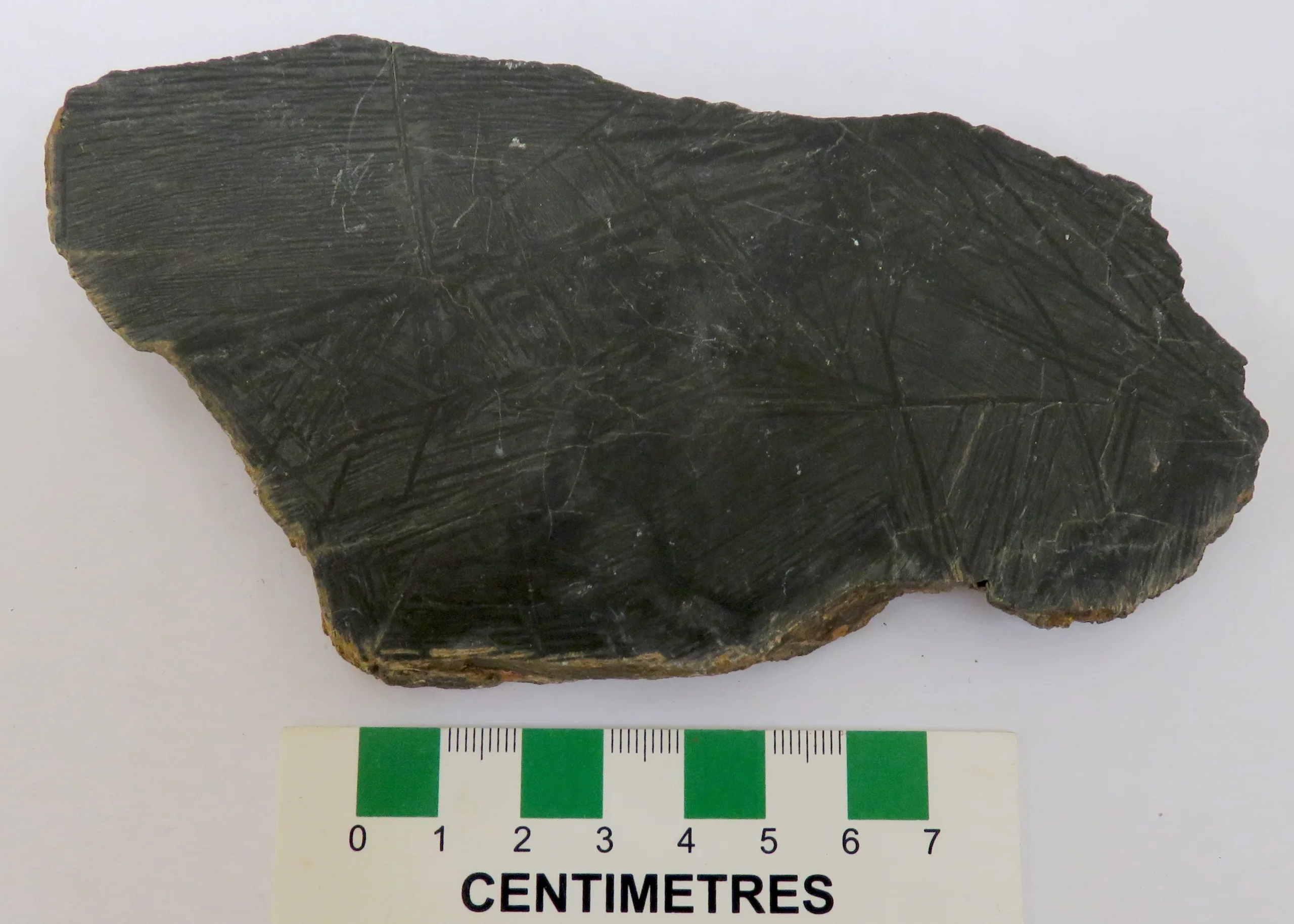
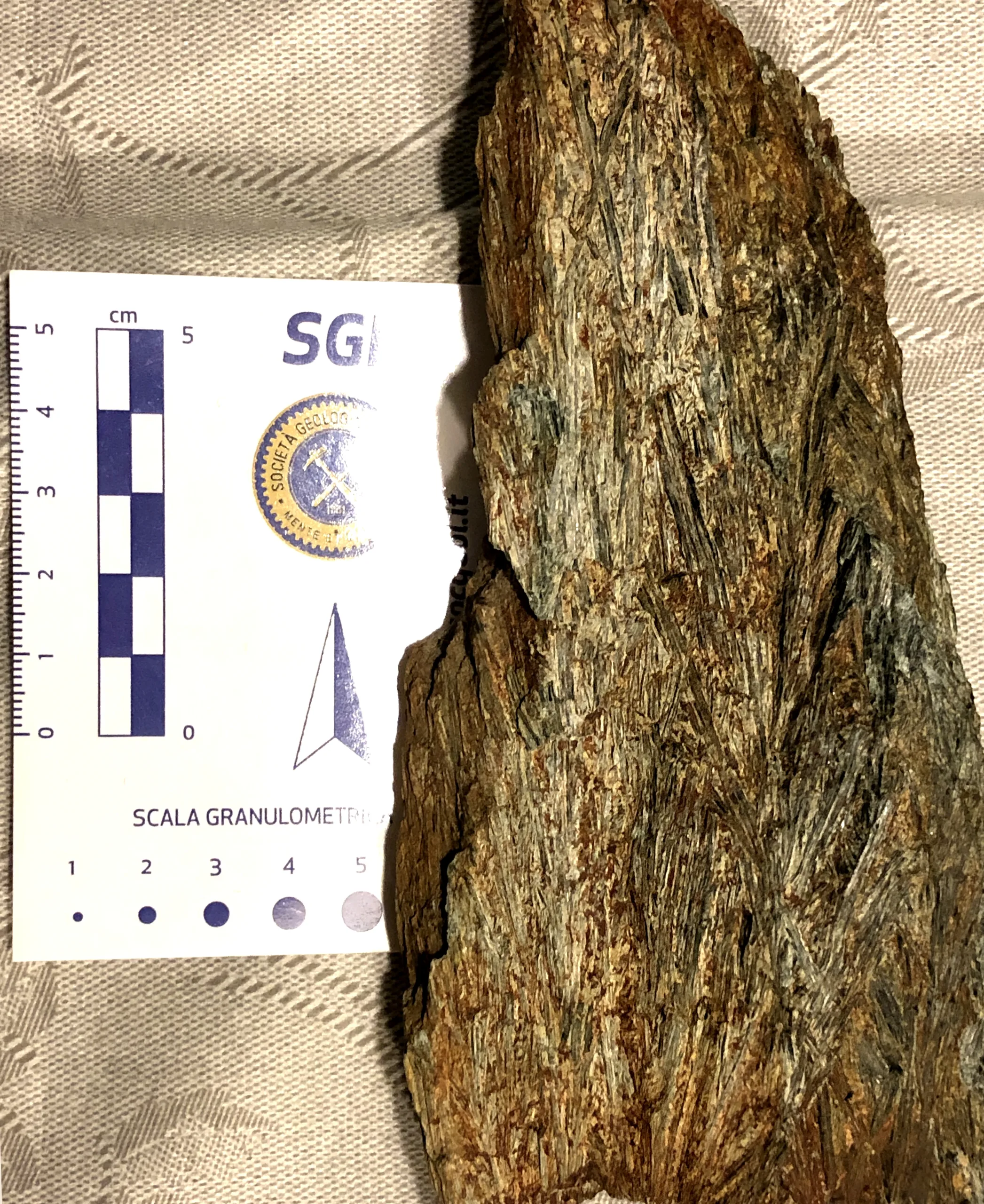
In hand specimen, komatiite may be gray-green, dark green, gray or nearly black. Weathered surfaces can become brown or rusty. Some samples display conspicuous intersecting elongated crystals or their mineral replacements; others have an evenly granular appearance. Because most accessible examples have experienced great geological changes since eruption, the present color is often controlled by secondary minerals rather than the original lava.
| Property | Typical character |
|---|---|
| Rock group | Igneous; mainly ultramafic volcanic rock |
| Original magma | Unusually magnesium-rich; commonly at least 18 wt% MgO on a volatile-free basis |
| Primary minerals | Olivine, pyroxene, chromian spinel |
| Secondary minerals | Serpentine, chlorite, talc, amphibole, carbonate or magnetite |
| Texture | Spinifex, olivine-phyric, massive, granular or cumulate |
| Color | Variable: greenish gray, dark gray, green or weathered brown |
| Geologic age | Predominantly Archean; younger occurrences also known |
| Field setting | Ancient volcanic sequences in greenstone belts |
| Identification | Texture and flow relationships plus chemical and petrographic evidence |
Mineral Composition and Chemical Classification
The characteristic primary mineral is olivine, particularly its magnesium-rich compositions. Pyroxenes and chromium-bearing spinel are also important. Interstitial melt may originally have become glass or a fine crystalline matrix. Feldspar is uncommon in the most magnesian rocks but can occur in related basaltic compositions. Quartz is not a characteristic primary mineral of ordinary komatiite.
| Mineral or component | Geological meaning |
|---|---|
| Olivine | Early crystals; may grow as equant grains or elongate skeletal plates |
| Clinopyroxene | Groundmass crystallization and, in some rocks, elongate skeletal crystals |
| Chromian spinel | Accessory phase recording the chemistry of the melt |
| Serpentine | Frequent replacement of original olivine |
| Talc and carbonate | May indicate alteration by fluids carrying dissolved components |
| Magnetite | Can form during hydration and oxidation of iron-bearing minerals |
How geologists distinguish high-magnesium volcanic rocks
The British Geological Survey rock classification gives a chemical thumbnail definition using SiO₂ below 53 wt%, combined Na₂O and K₂O below 1 wt%, MgO above 18 wt%, and TiO₂ below 1 wt%. These are useful screening criteria, not a substitute for establishing a volcanic origin. In modern petrological usage the composition of the liquid that produced the rock also matters.
An olivine-rich cumulate may contain more MgO than the magma because crystals accumulated before complete solidification. Conversely, alteration and metamorphism can change bulk composition. This distinction prevents an olivine-rich intrusive rock or a crystal-loaded basalt from being called komatiite solely because of one chemical result.
For example, a sample with 24 wt% MgO, 45 wt% SiO₂, low alkalis and low titanium is chemically compatible with a komatiitic parent. The inference becomes much stronger if it belongs to a mapped lava flow with chilled margins and primary igneous textures. A chemical analysis of an isolated serpentinite fragment is insufficient to reconstruct its original rock type.
Spinifex Texture and Other Komatiite Textures
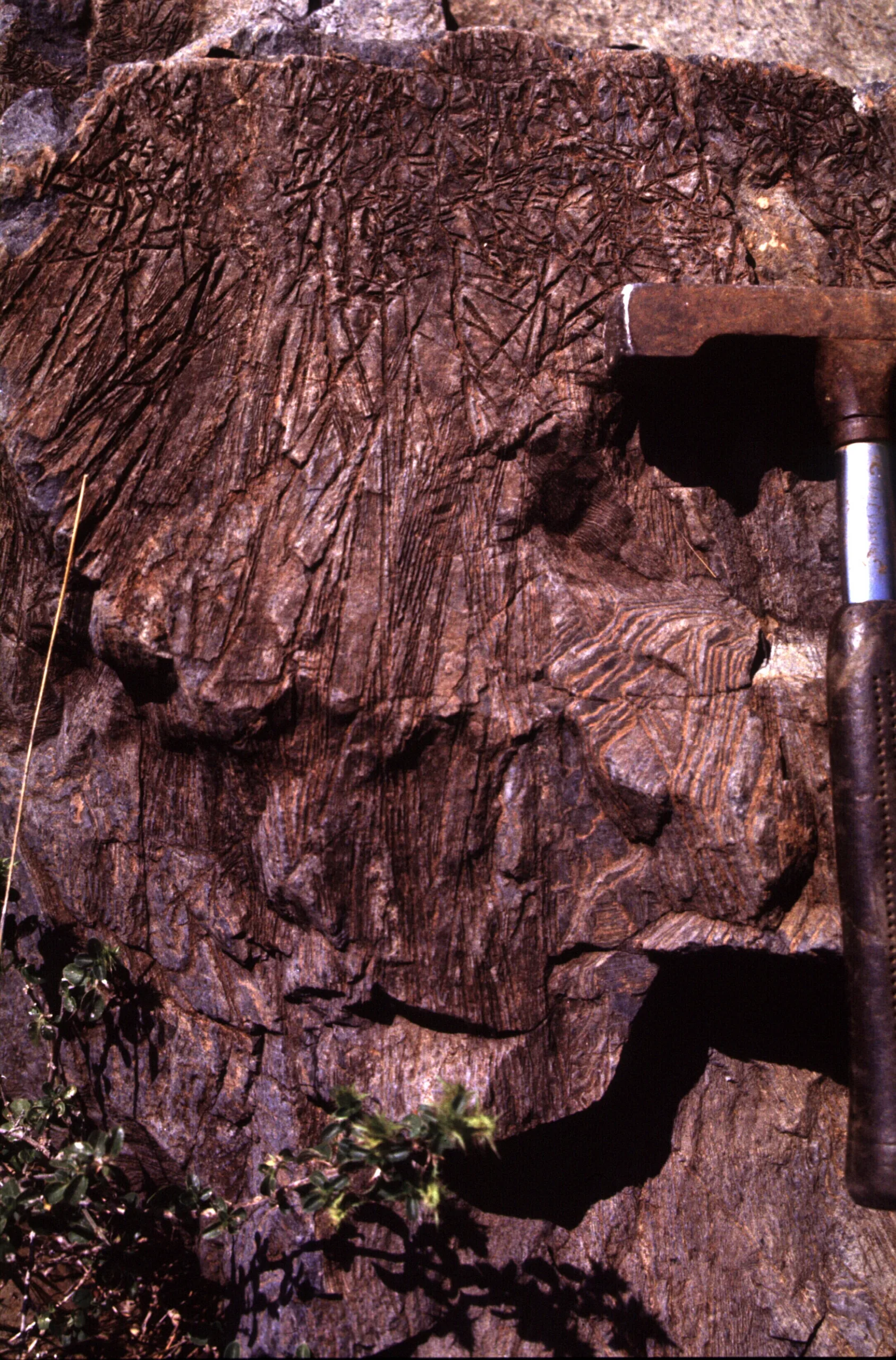
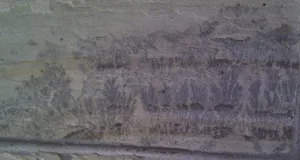
Spinifex describes elongate skeletal crystals that grow in branching, bladed or plate-like forms during crystallization. In a cut surface, large three-dimensional plates can appear as narrow needles. Intersecting plates may give the rock a fern-like or grass-like pattern. Some spinifex is dominated by olivine; some is dominated by pyroxene. The texture is unusually distinctive, but not exclusive to komatiite.
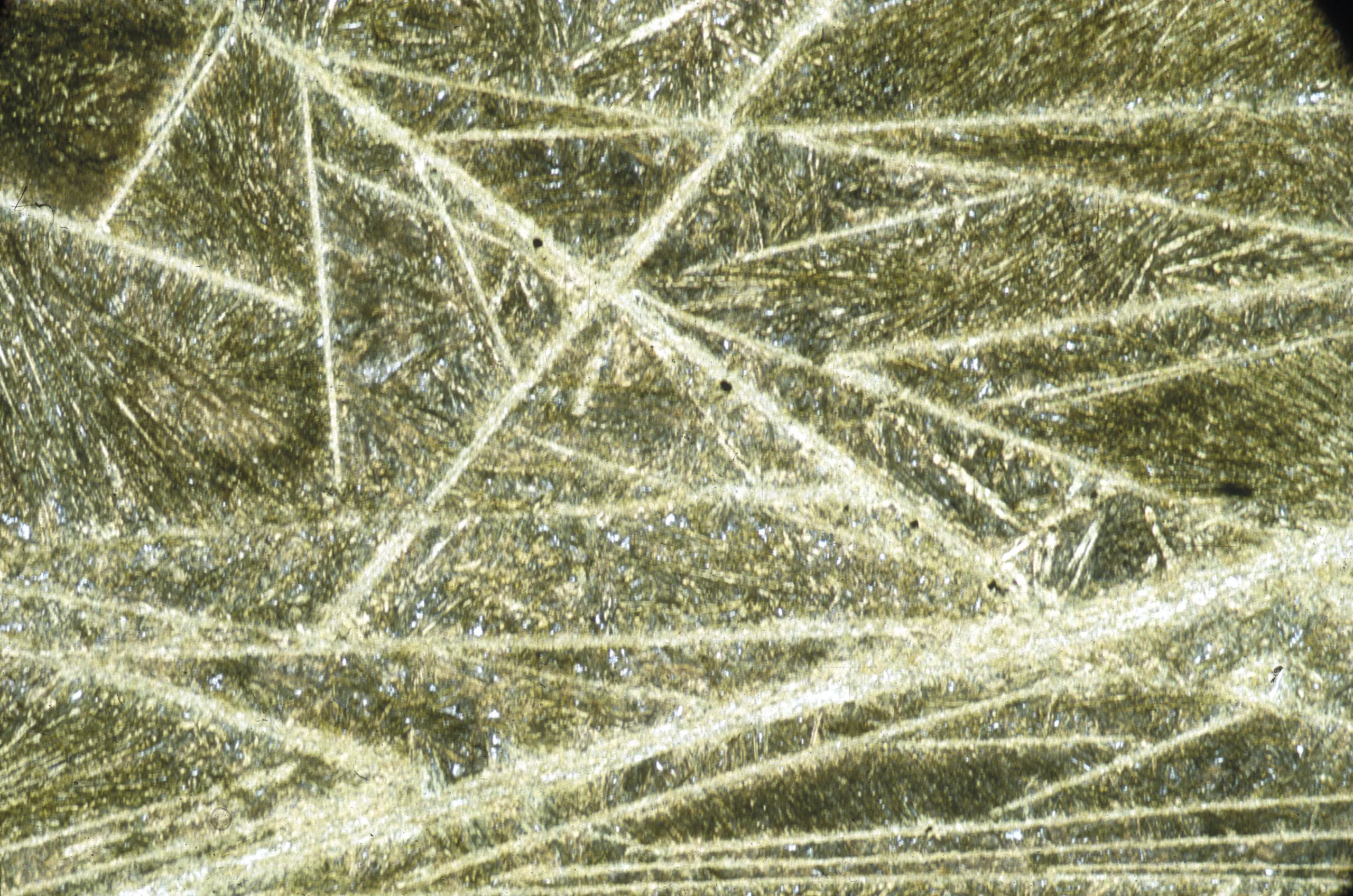
Large skeletal crystals do not necessarily imply that the entire body cooled slowly like a granite intrusion. The growth habit reflects how crystals develop in a cooling liquid, including undercooling, the direction of heat loss, chemical diffusion, and competition between crystal growth and nucleation. The upper crust of a flow insulates liquid below, allowing conspicuous oriented crystals to develop at depth. Their surfaces can later be replaced by metamorphic minerals while the original outlines remain.
The olivine-cumulate texture
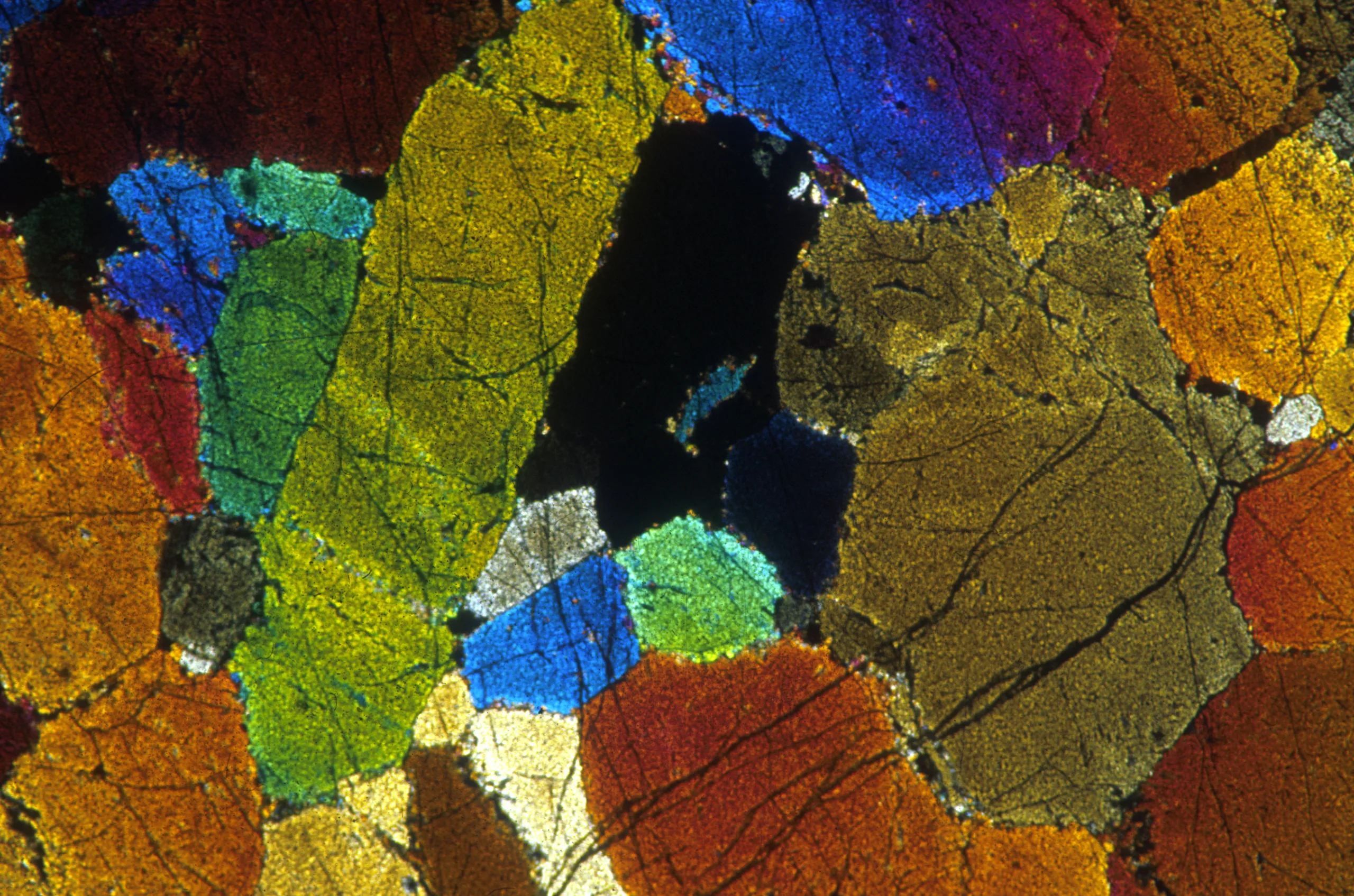
In cumulate zones, abundant olivine grains form a crystal-rich framework with relatively little material between them. Their appearance differs markedly from the characteristic elongate upper-flow texture. These rocks may resemble coarse-grained peridotite even though they occur within a volcanic sequence. Thin sections reveal grain shapes and interstitial relationships that cannot always be resolved in a hand specimen. See also our guide to igneous rock textures.
Internal Structure of a Komatiite Lava Flow
Many, but not all, differentiated komatiite flows have an upper zone (A zone) and a lower cumulate zone (B zone). Details vary with flow volume, duration of supply, emplacement geometry and the chemistry of the parental magma. The sequence can be read from top to bottom in a well-exposed, relatively undeformed outcrop or drill core.
| Approximate position | Characteristic feature | Field interpretation |
|---|---|---|
| Flow top | Chilled or brecciated surface, locally fragmented material | Upper contact; rapid initial cooling or interaction with water |
| Upper spinifex zone | Randomly oriented skeletal crystals | Crystallization early in formation of the solid crust |
| Deeper spinifex zone | Organized plates or blade bundles | Directional cooling inside the flow |
| Lower cumulate zone | Closely packed, commonly equant olivine grains or replacements | Crystal accumulation and growth in a crystal-rich layer |
| Flow base | Basal contact, sometimes channelized geometry | Relationship to underlying rocks; possible exploration target |
This generalized arrangement is a teaching model rather than a universal stratigraphy. Some flows lack an obvious spinifex layer, and tectonic overturning can reverse the apparent vertical order. Before deciding which direction is stratigraphically upward, check multiple primary structures and regional mapping.
How Does Komatiite Form?
Komatiitic magmas originate from partial melting of the mantle under conditions that can generate unusually magnesium-rich liquids. High-temperature, relatively high-degree mantle melting is a leading explanation for many examples. Pressure, source mineralogy, water content and the amount of melting all influence the resulting composition.
In the early Earth, greater internal heat is consistent with the more widespread occurrence of these lavas. Petrological models for certain very magnesian Archean liquids yield eruption temperatures around 1,550–1,600°C or higher. These values are model-dependent and must not be applied to every komatiite: the liquidus, actual eruption temperature and inferred mantle potential temperature are distinct quantities.
Many komatiitic suites are interpreted as products of especially hot mantle upwellings. Other interpretations emphasize the influence of water, mantle heterogeneity and particular tectonic environments. For ancient volcanic successions, the tectonic setting should be evaluated with regional associations and geochemical data rather than inferred from the rock name alone.
Alteration and Metakomatiite
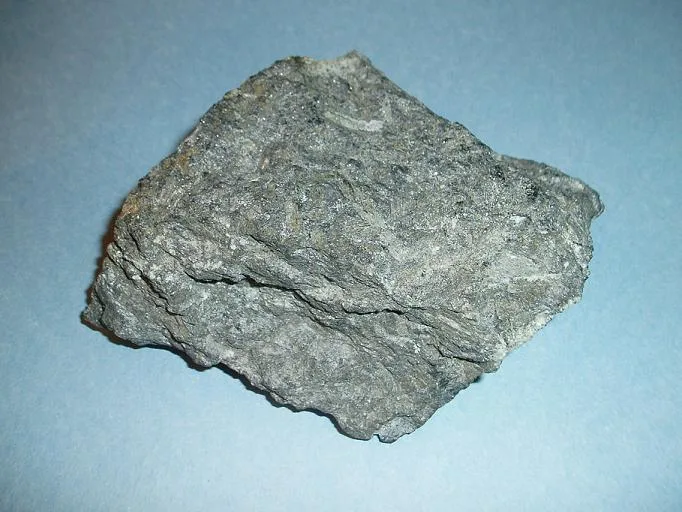
Fresh primary mineralogy is rarely completely preserved in ancient greenstone belts. Water reacting with magnesium-rich minerals can lead to serpentinization. Other fluid–rock reactions and metamorphic events may produce talc, chlorite, amphibole and carbonate. A metamorphosed komatiite is commonly described as metakomatiite when its volcanic protolith can be established.
A key observation is whether secondary minerals preserve the geometry of older crystals. If fine serpentine replaces a large skeletal olivine plate, the original texture can survive even though the original olivine is gone. Where deformation has destroyed primary structures, relationships to adjacent volcanic units and relatively immobile trace elements become especially valuable.
How to Identify Komatiite in the Field
Begin with the geological setting, rather than assuming that any green or dark rock is ultramafic. Apply the same basic observational sequence described in our rock identification guide, then assess the special characteristics of high-magnesium volcanic rocks.
- Examine the rock surface: look for long intersecting plates, granular crystal accumulations and differences between weathered and exposed surfaces.
- Examine the matrix: a finer matrix around skeletal or equant crystals can suggest an igneous cooling history.
- Observe contacts: map flow tops, basal contacts, pillows, breccias and changes in texture across the unit.
- Record alteration: distinguish serpentine, carbonate and other replacement minerals from relict primary igneous phases.
- Check petrography: a thin section can reveal preserved crystal shapes, cumulate fabrics, spinel and replacement relationships.
- Confirm chemistry: use a representative rock analysis, normally including MgO, silica, alkalis, titanium and selected trace elements. Interpret it with field evidence.
A hand magnet may detect magnetite in altered examples, but magnetism is neither necessary nor sufficient for identification. Hardness is equally variable because the rock can contain both hard primary olivine and softer replacement minerals. A carbonate reaction, where present, identifies part of the secondary mineral assemblage, not the volcanic protolith. Avoid cutting, grinding or breaking potentially asbestos-bearing altered ultramafic specimens without professional assessment and appropriate controls.
Komatiite vs Similar Rocks
| Rock | Typical distinguishing feature | What resolves the ambiguity |
|---|---|---|
| Basalt | Generally less Mg-rich; commonly plagioclase and pyroxene | Whole-rock chemistry and mineralogy |
| Peridotite | Usually a coarse olivine-bearing ultramafic rock | Volcanic flow relationships versus intrusive or mantle origin |
| Picrite | May contain abundant olivine phenocrysts | Estimate parent-liquid composition and distinguish accumulated crystals |
| Komatiitic basalt | Related but less magnesian lava; spinifex may occur | Chemical data and volcanic stratigraphic relationships |
| Serpentinite | Dominated by secondary serpentine minerals | Identify protolith through relict fabric and geological context |
An altered komatiite cumulate and a serpentinized intrusive peridotite may look very similar. A specimen with spinifex is a more useful field clue, particularly within a high-Mg volcanic sequence, but the most defensible rock name integrates textural and compositional evidence.
Where Is Komatiite Found?
Barberton greenstone belt, South Africa: the type region, where well-known approximately 3.5-billion-year-old volcanic successions preserve the rock’s original geological context. The name refers to the Komati River.
Yilgarn Craton, Western Australia: extensive Archean volcanic sequences contain differentiated flows and thick olivine-rich units. Kambalda and Agnew–Wiluna are also important in the history of nickel sulfide exploration.
Abitibi greenstone belt, Canada: the Ontario–Quebec region preserves diverse Archean volcanic rocks, including classic komatiitic units around Munro Township.
Komatiite is not restricted to the Archean. The late Cretaceous volcanic succession of Gorgona Island, Colombia, is a famous younger occurrence, broadly associated with the Caribbean large igneous province. These rocks demonstrate that unusual mantle melting conditions can occasionally develop well after early Earth history. See Serrano and colleagues’ geological study of Gorgona.
Komatiite and Nickel Sulfide Deposits
Komatiitic magmas are important in economic geology because some volcanic systems contain concentrations of nickel, copper and platinum-group elements. The association does not mean that every komatiite is ore.
Where a magma becomes saturated in sulfur, a separate sulfide liquid can form. Metals with a strong affinity for this phase enter it preferentially. Sulfide droplets may accumulate within favorable flow channels or olivine-rich parts of a volcanic system. Interaction with sulfur-bearing country rock is one possible cause of saturation, but exploration must evaluate the specific system.
Field mapping of basal contacts and thick ultramafic units, rock geochemistry, electromagnetic surveys, drill core logging and laboratory assays can help identify promising targets. Typical ore minerals may include pentlandite, pyrrhotite and chalcopyrite. A dark or metallic-looking grain alone does not establish a nickel grade. The volcanic architecture, sulfide mineralogy and assay results must agree.
Why Komatiites Matter in Geology
Komatiites are unusually informative samples of early magmatism. Their primary chemistry can help constrain the physical conditions of mantle melting, while their textures reveal crystallization behavior in very Mg-rich lavas. Their metamorphic overprints also tell a separate story about the later evolution of ancient volcanic terrains.
For students and collectors, a correctly documented komatiite specimen provides an excellent demonstration of the difference between visible texture, mineral composition and interpreted geological origin. A reliable identification records uncertainty instead of relying on an attractive crystal pattern alone.
Frequently Asked Questions
Is komatiite intrusive or extrusive? Most classic komatiites are extrusive volcanic rocks. Related shallow intrusive bodies and cumulate rocks require a more detailed description of their emplacement and composition.
Is every komatiite spinifex-textured? No. Massive, granular and olivine-cumulate varieties can lack conspicuous spinifex, and later alteration may obscure the original texture.
Why is komatiite rare today? The mantle melting conditions needed to form very Mg-rich liquids are less widespread today than in the early Earth. Younger examples nevertheless occur.
Is komatiite the same as peridotite? No. Peridotite is a mineralogically defined ultramafic rock, usually coarse-grained. Komatiite is classified in relation to high-Mg volcanic magma and its geological setting.
Does komatiite contain nickel? Nickel is often present in magnesium-rich minerals or sulfides, but only some komatiitic systems contain economically significant nickel mineralization.
Can komatiite be identified from a photograph? A distinctive spinifex pattern may suggest komatiite. A photograph alone ordinarily cannot confirm its chemical composition or volcanic origin.
Scientific References and Image Credits
British Geological Survey — Rock Classification Scheme: Komatiite. Chemical classification.
Kerr & Arndt (2001), A Note on the IUGS Reclassification of the High-Mg and Picritic Volcanic Rocks. Journal of Petrology, 42, 2169–2171.
Shore & Fowler (1999), The origin of spinifex texture in komatiites. Nature, 397, 691–694.
Geoscience Canada — Igneous Rock Associations: Komatiites. Review of mineralogy, petrology and geological significance.
Geological Survey of India — Rock Texture Atlas. Igneous textures and flow architecture.
Arndt (2003), Komatiites, kimberlites, and boninites. Journal of Geophysical Research.
Contrasting komatiite belts, associated Ni–Cu–(PGE) deposit styles and assimilation histories (2010). Australian Journal of Earth Sciences.
Serrano et al. (2011), An integrative geologic, geochronologic and geochemical study of Gorgona Island, Colombia. Earth and Planetary Science Letters.
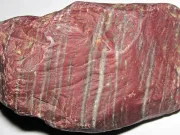
Featured image: University of Saskatchewan collection, specimen M625-52. Karla Panchuk (KarlaPanchuk), Wikimedia Commons, CC BY-SA 4.0. Image resized or converted to WebP; the stated image license applies to the displayed version. All other photographs and photomicrographs are credited individually in their captions.