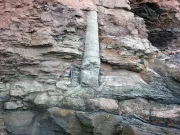
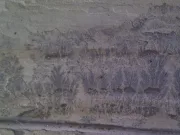
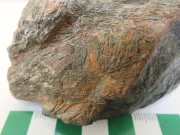
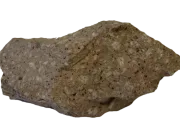
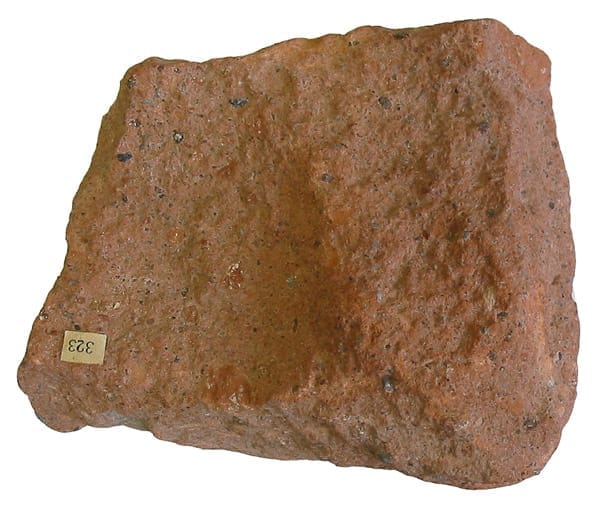
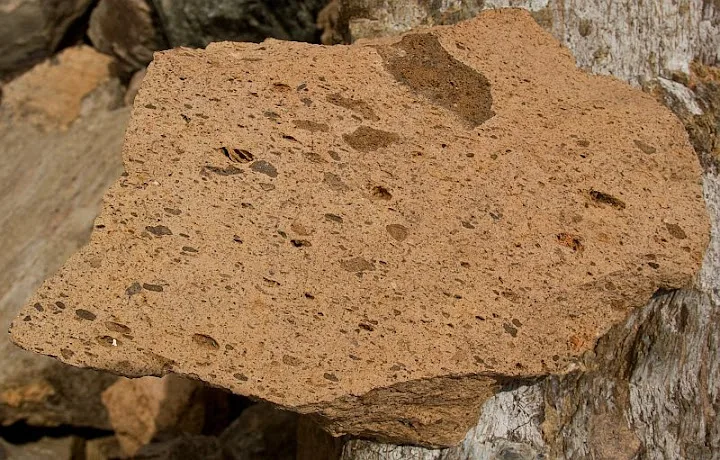
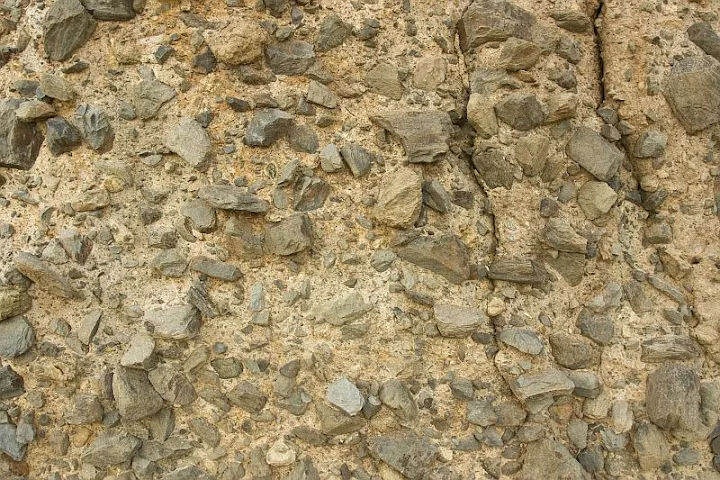
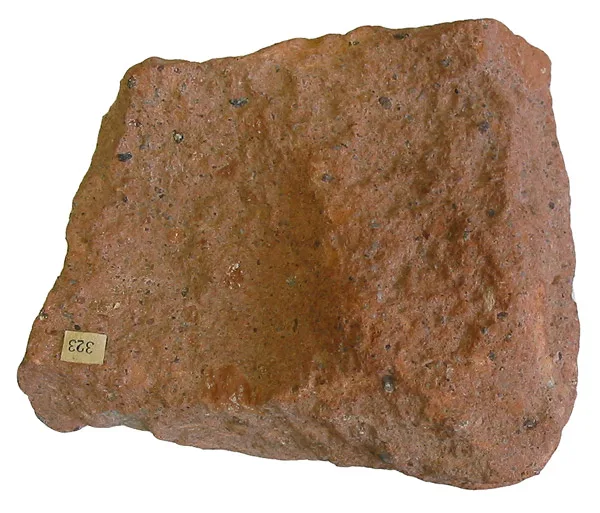
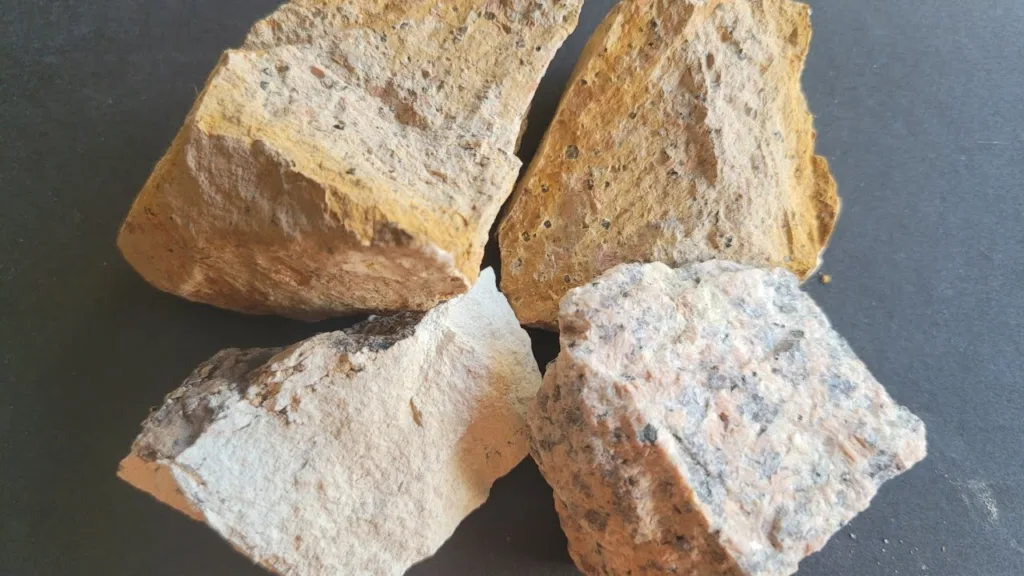
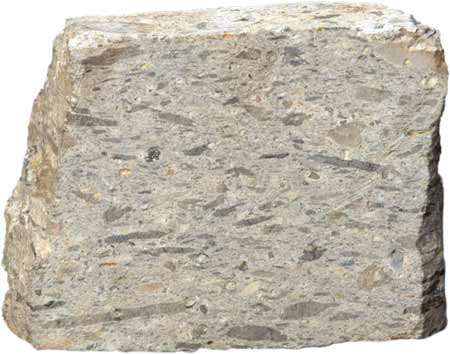
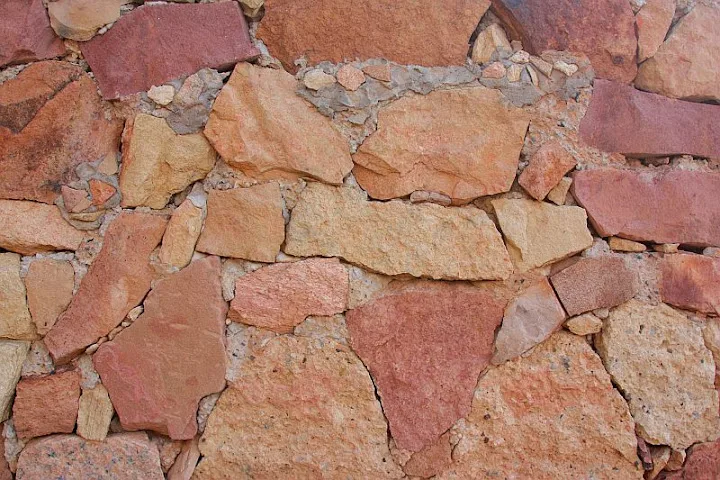
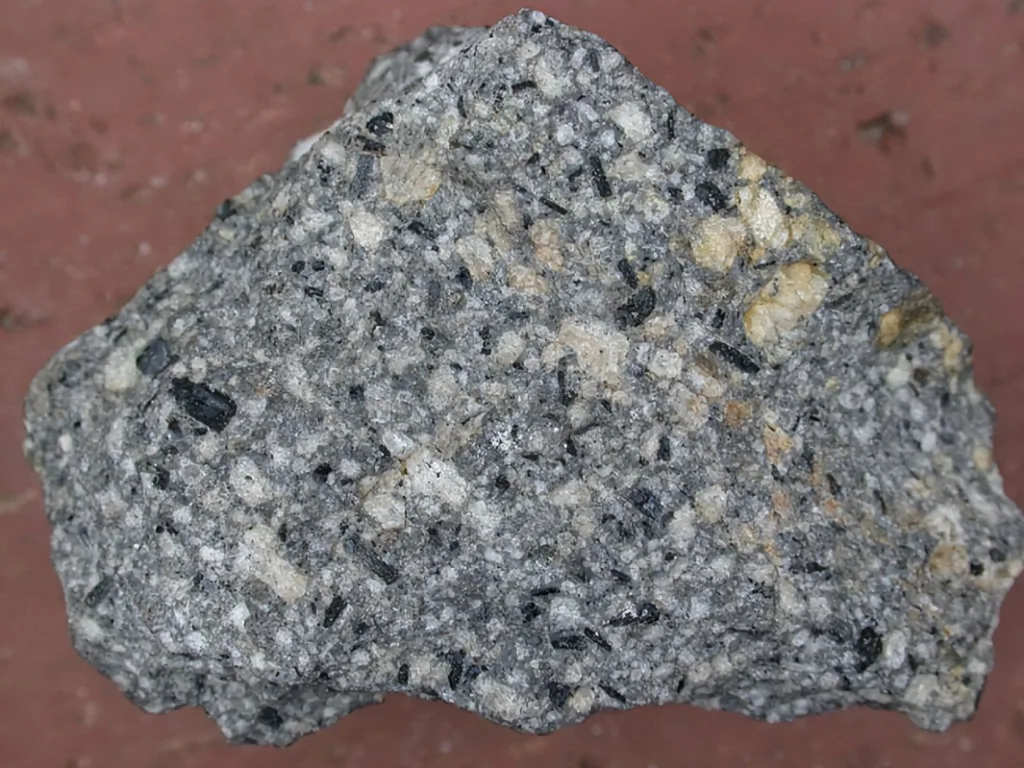
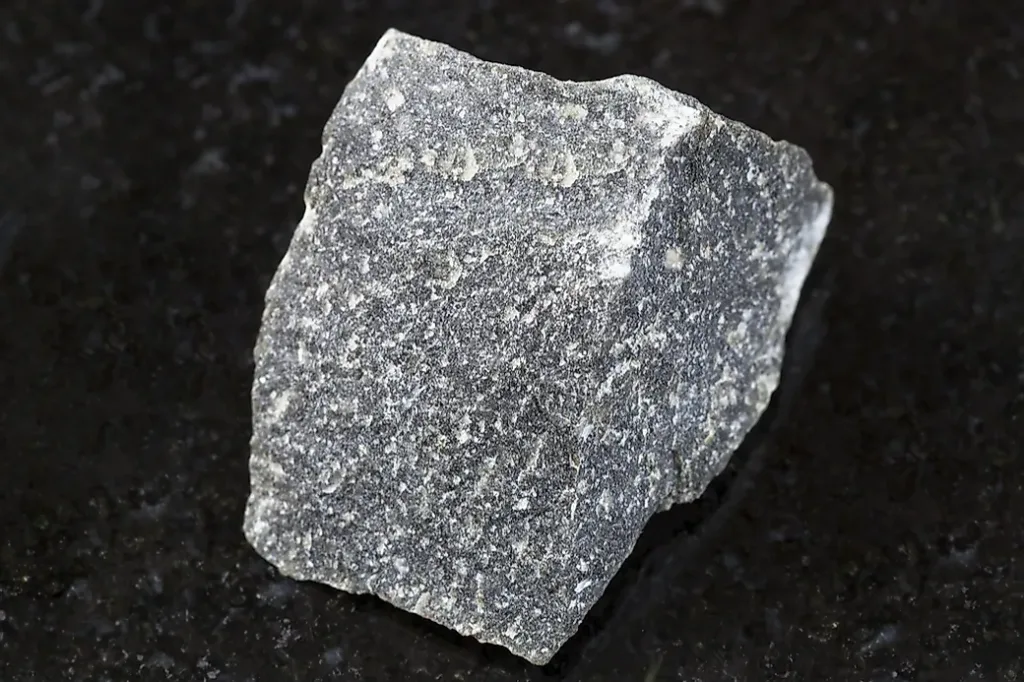
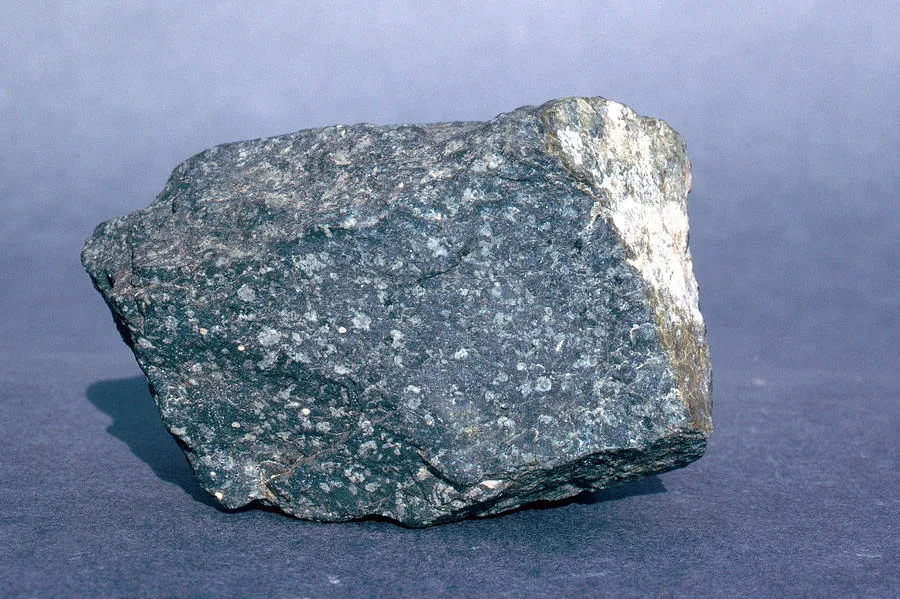
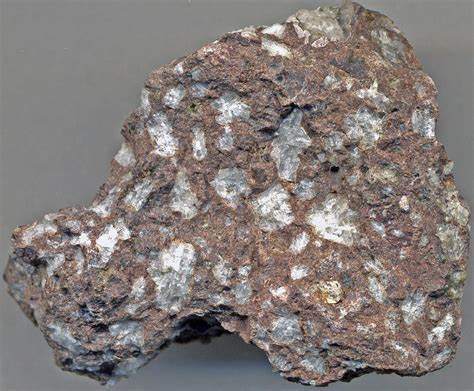
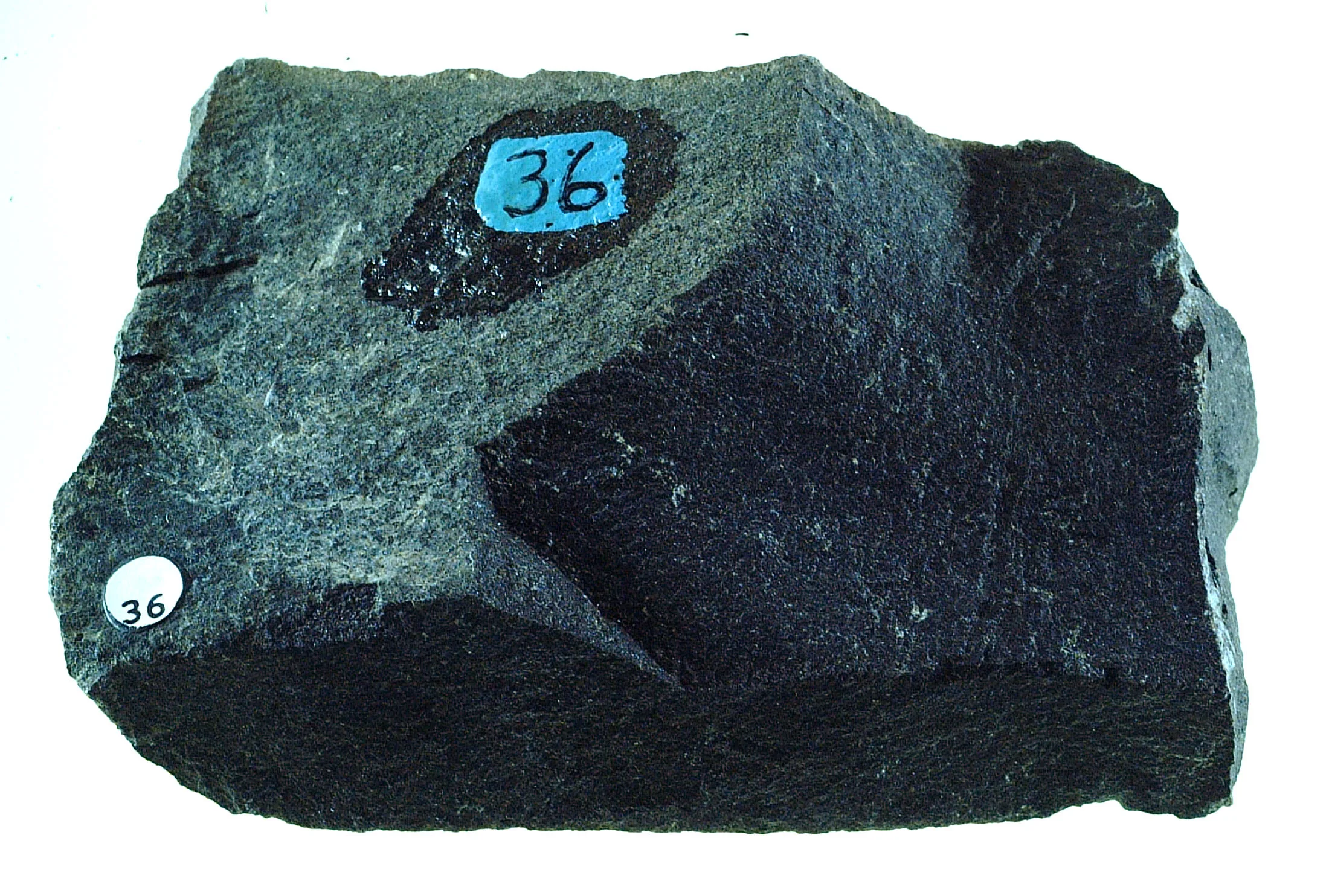
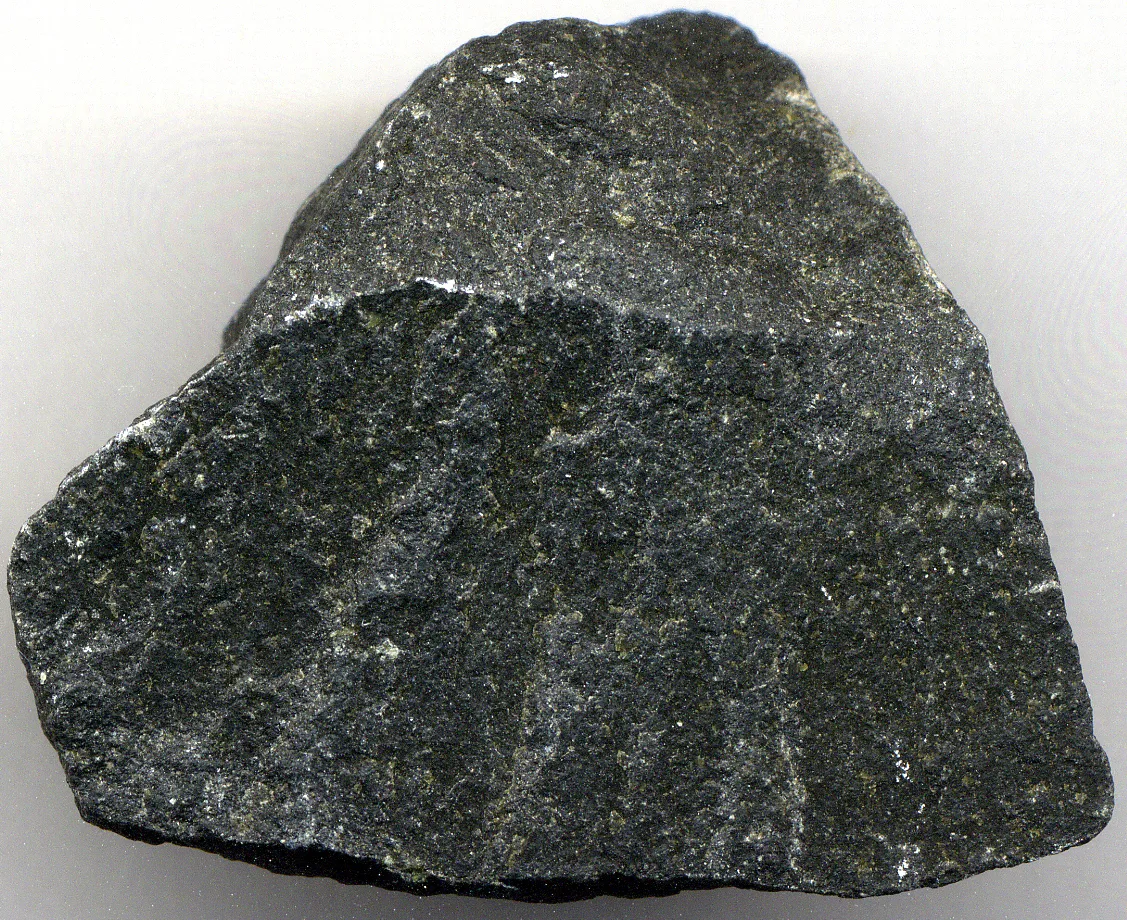
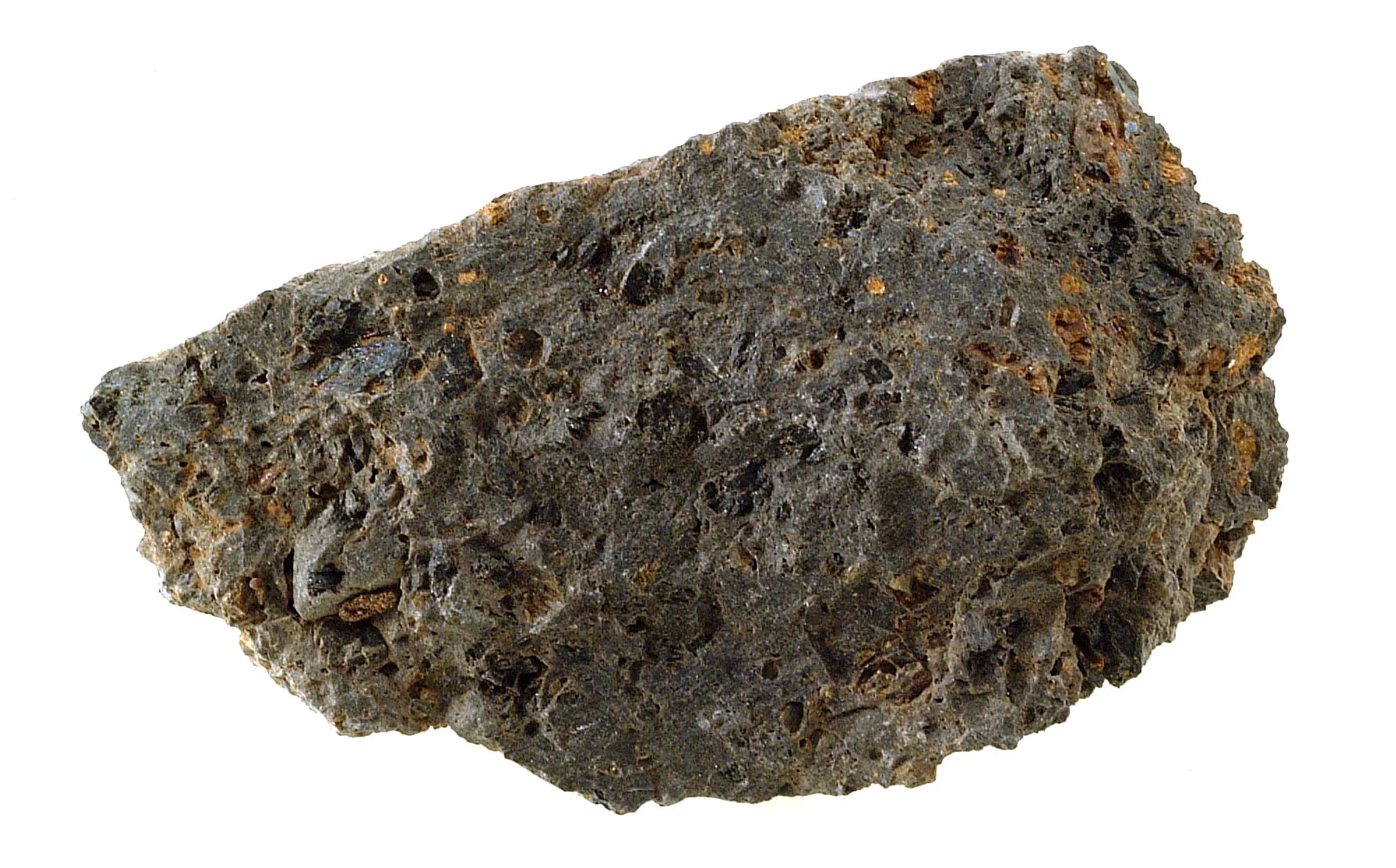
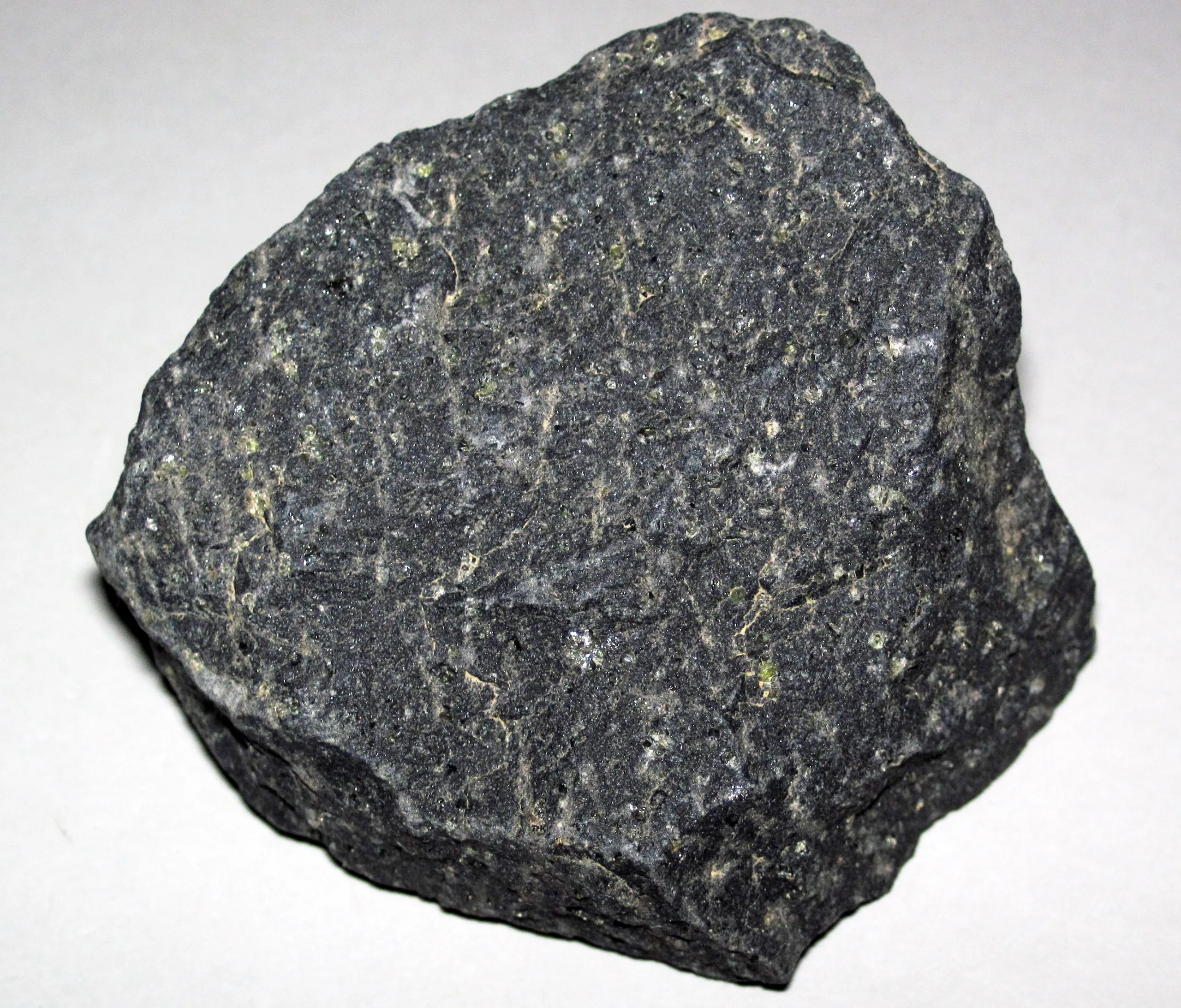
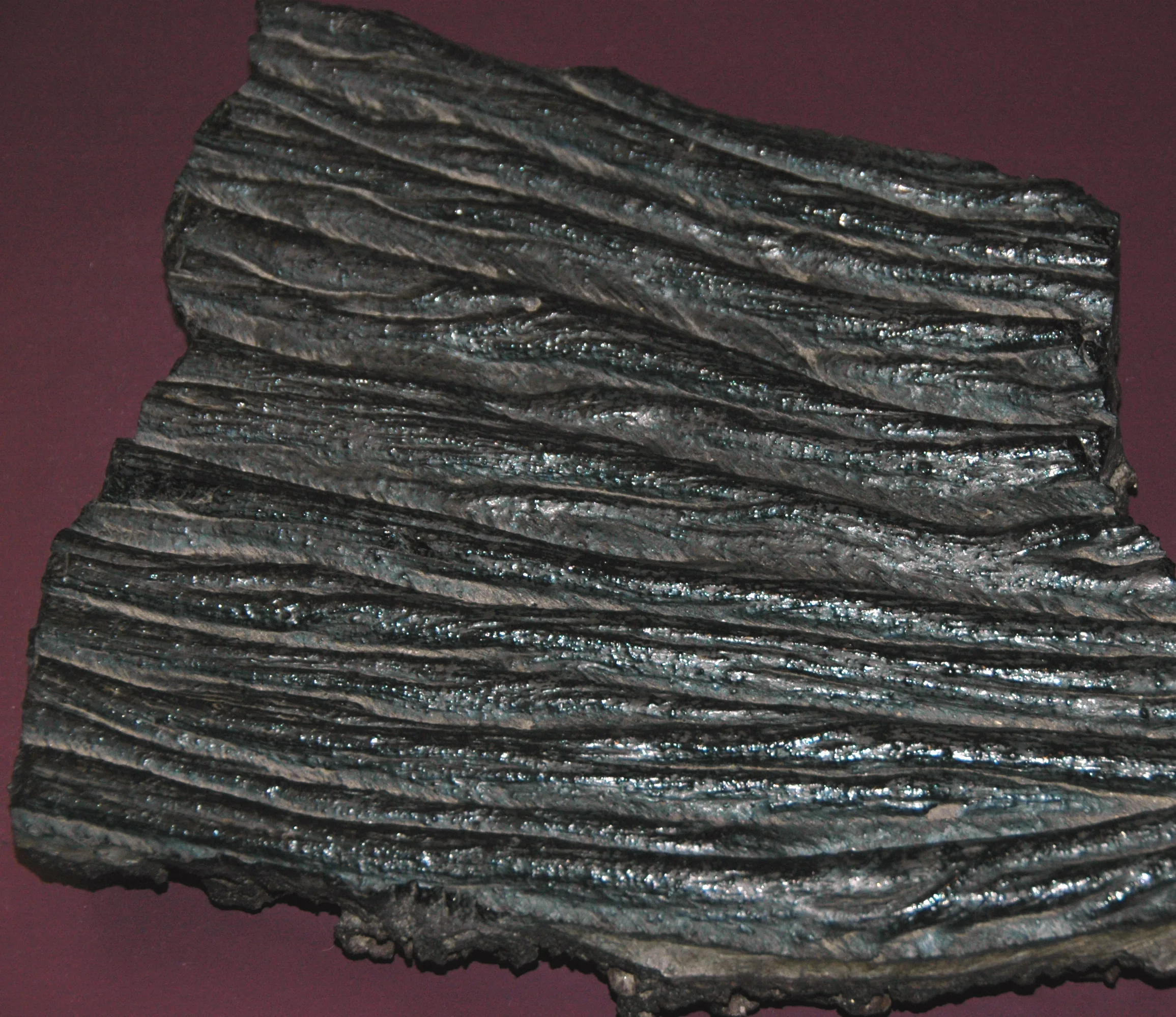
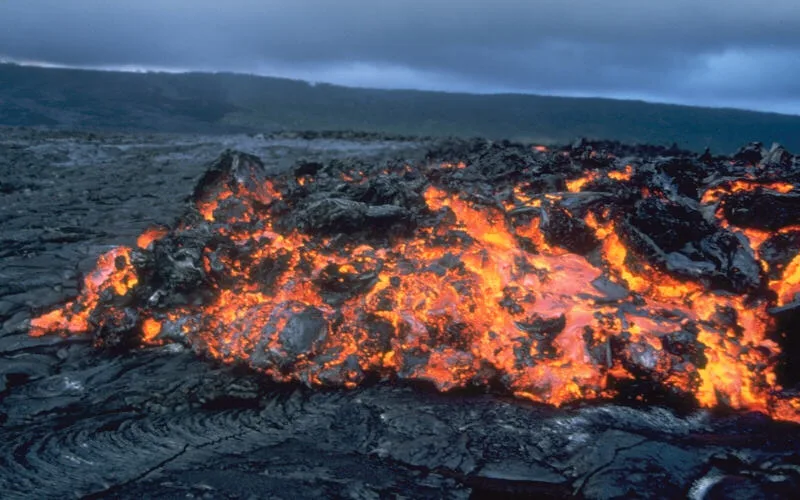
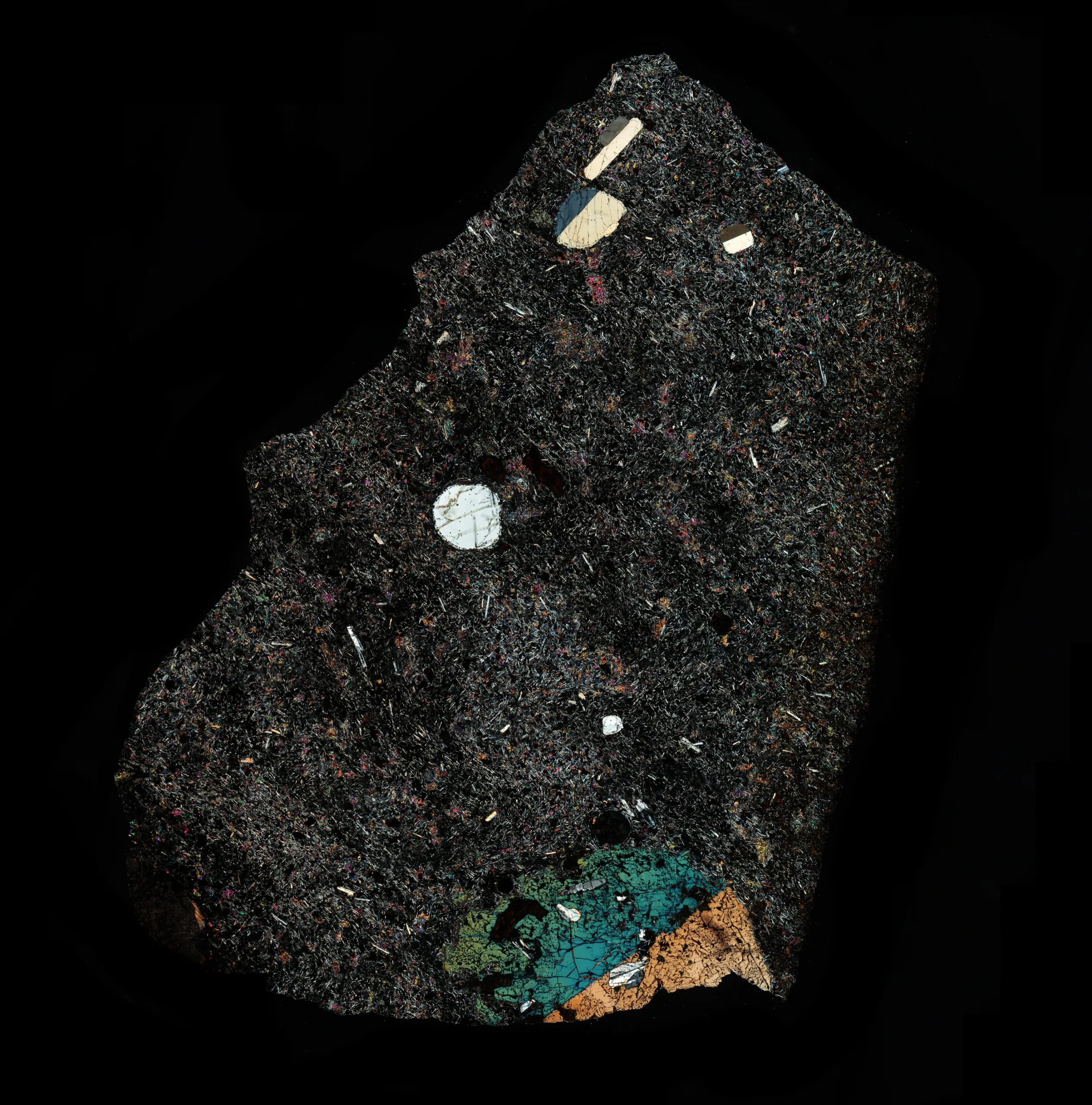
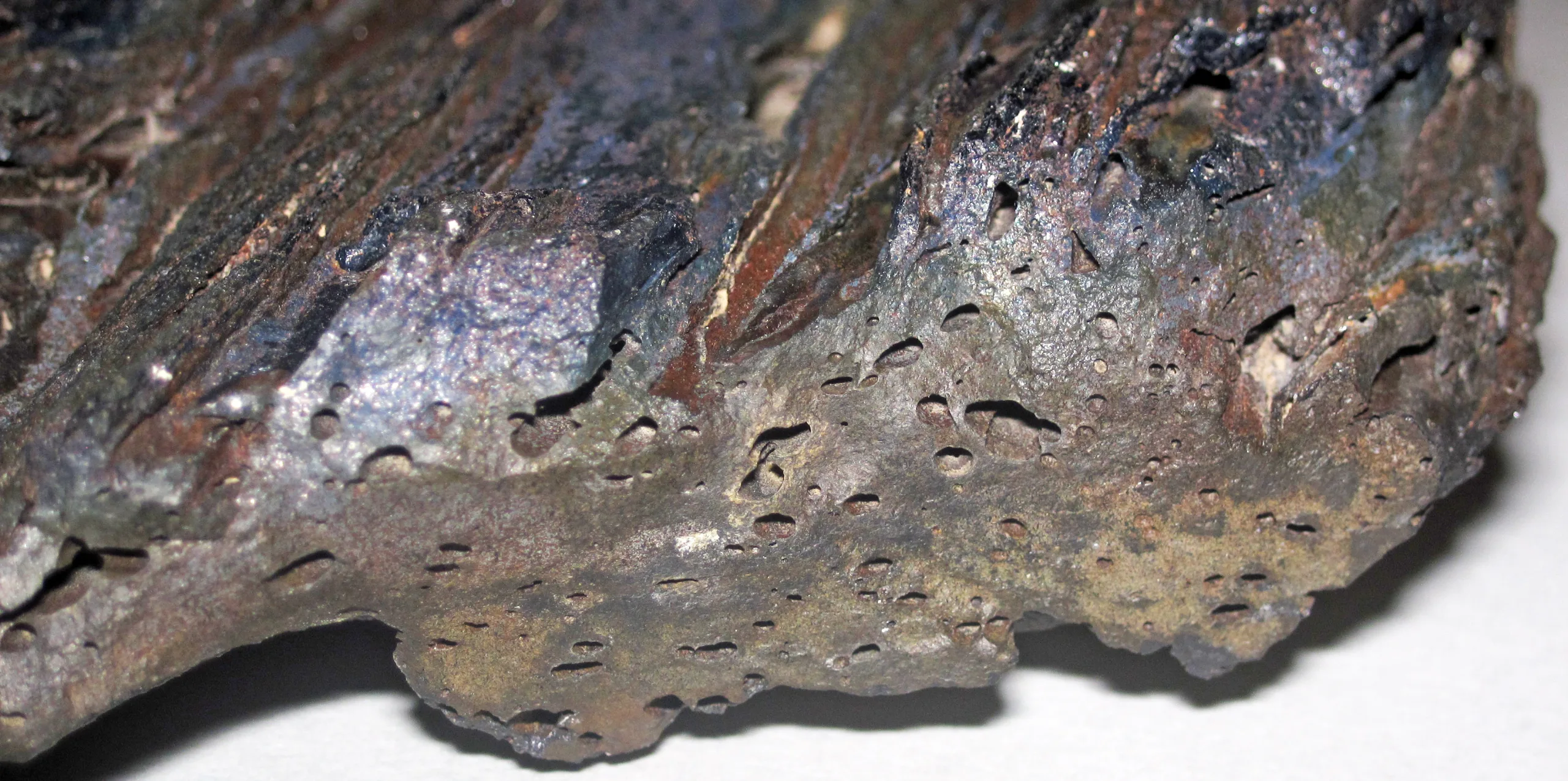
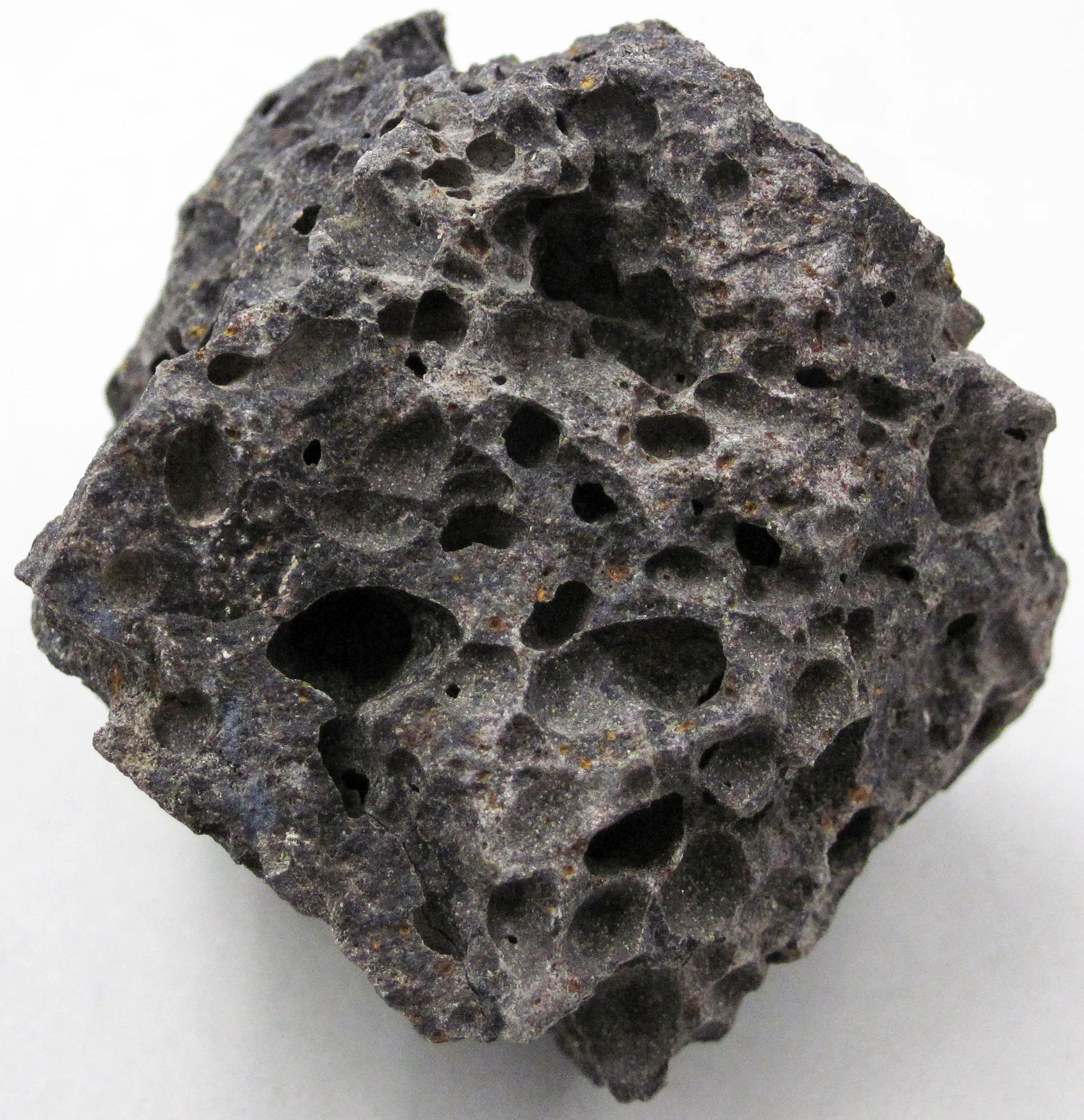
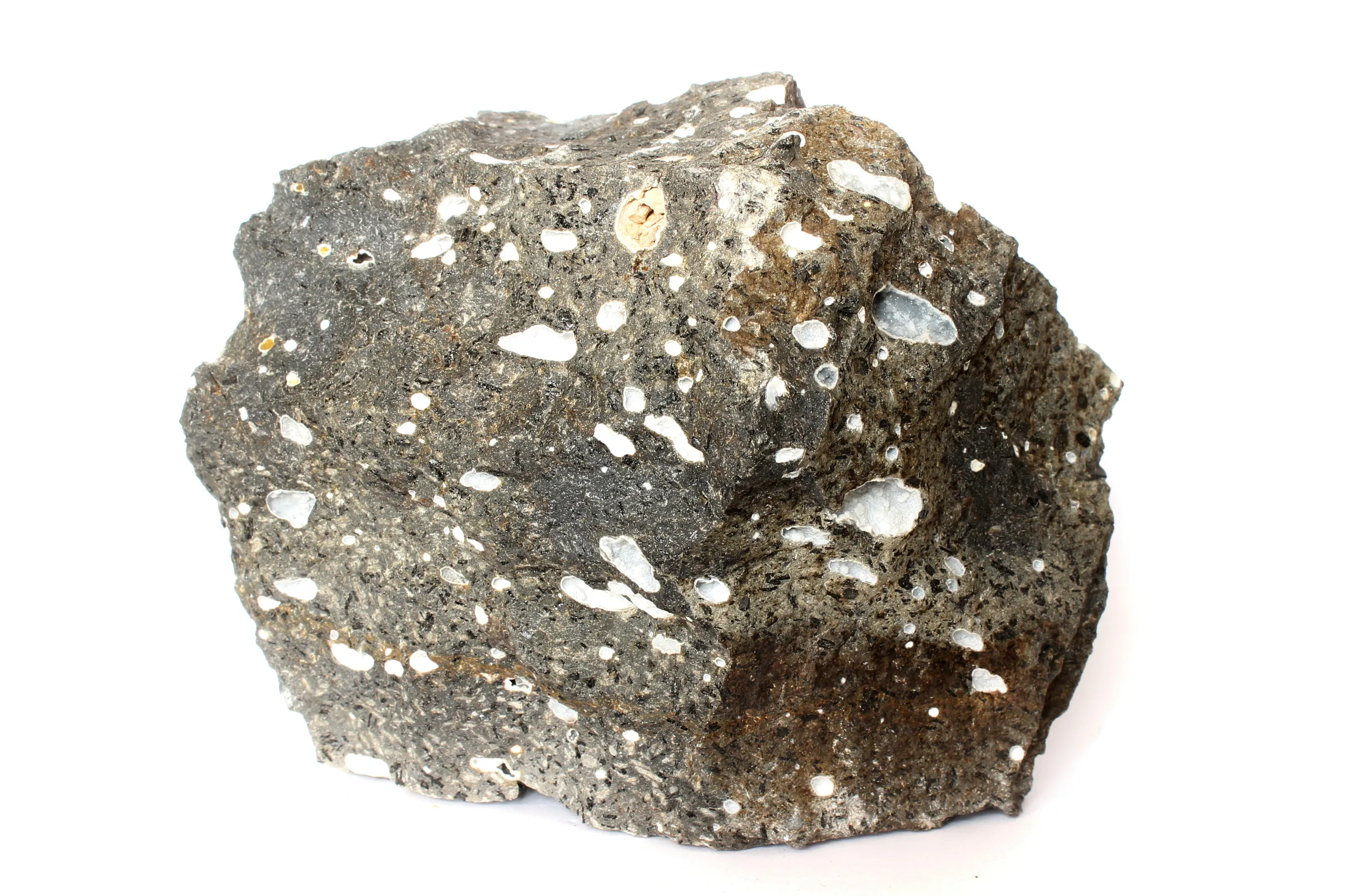
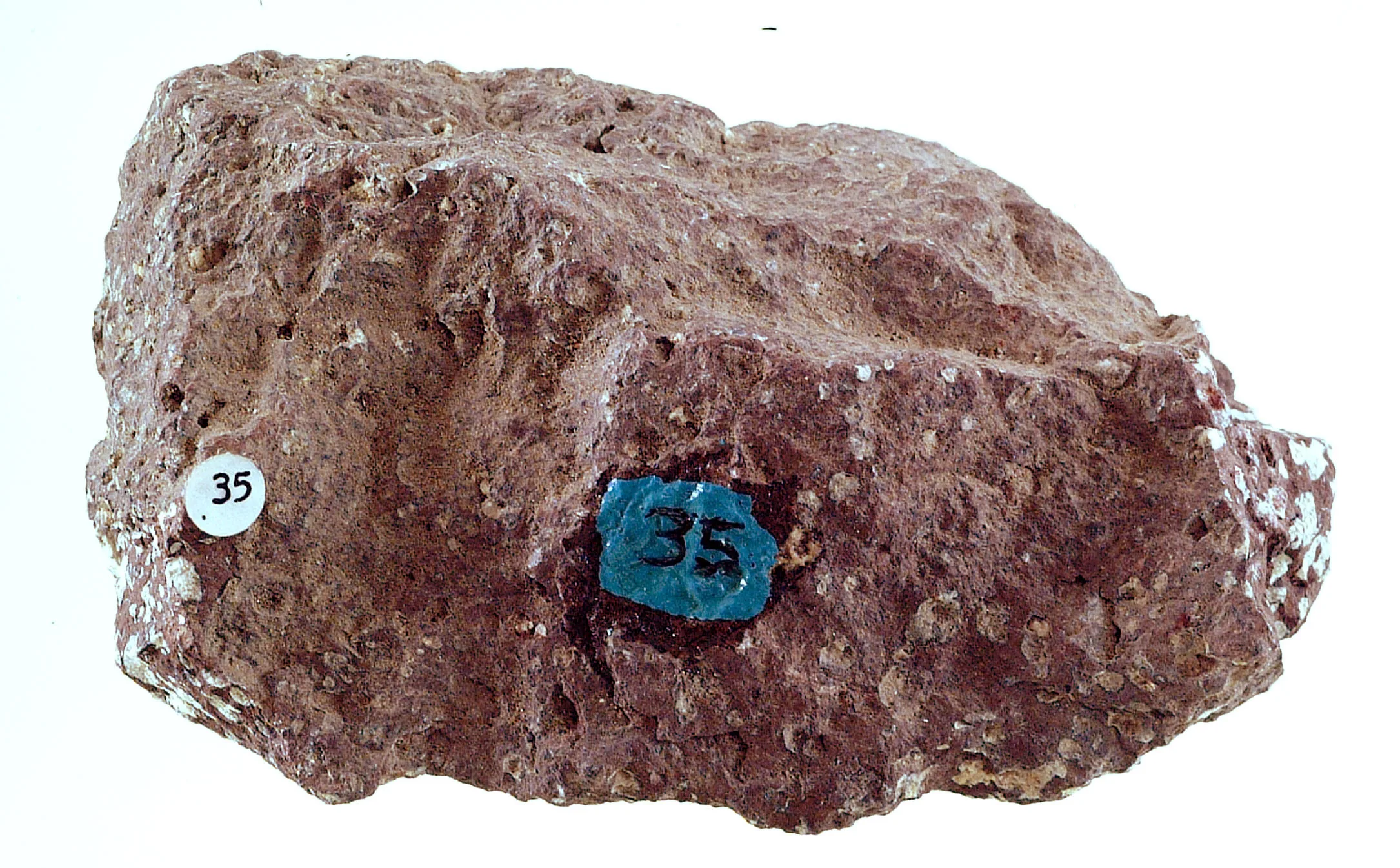
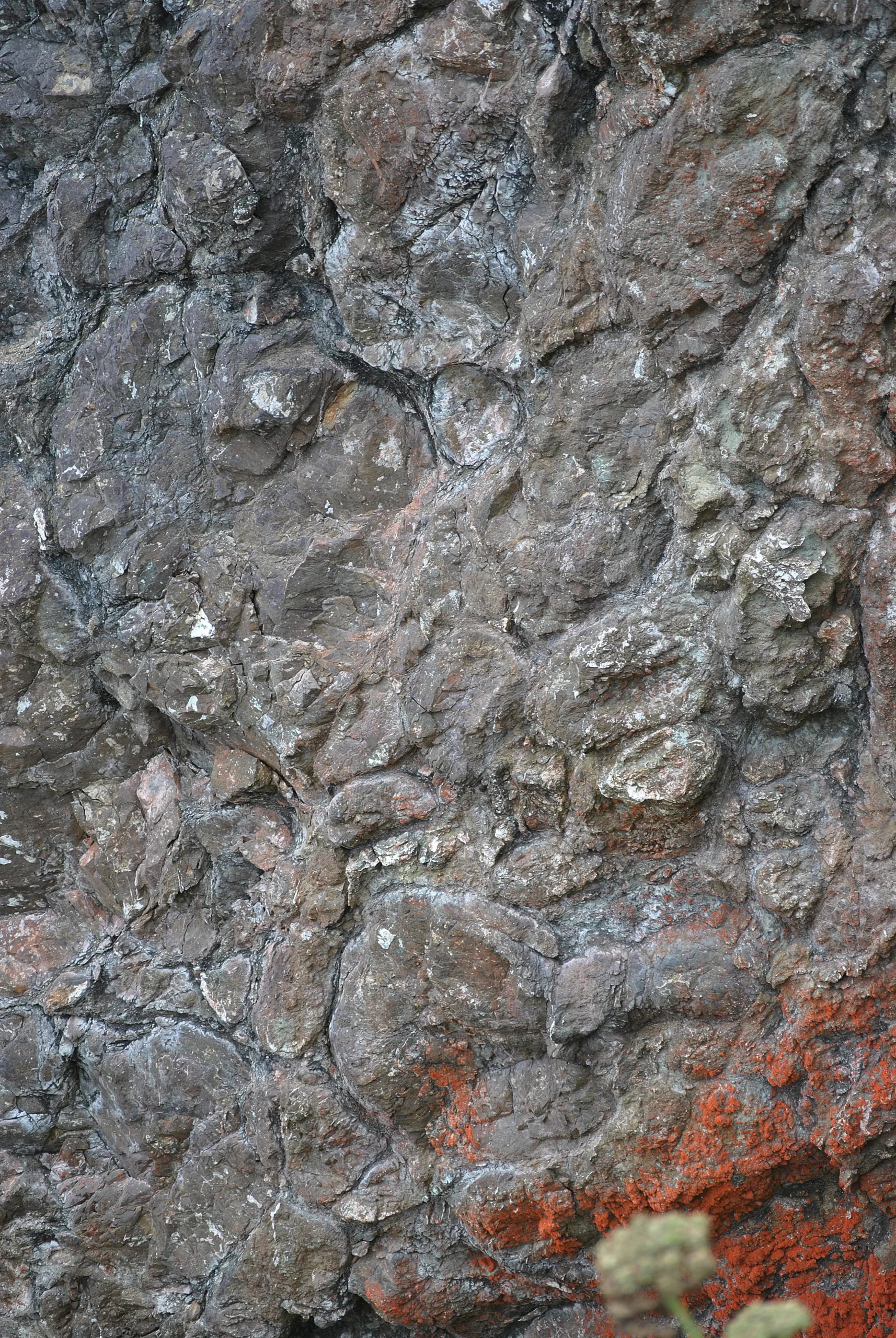
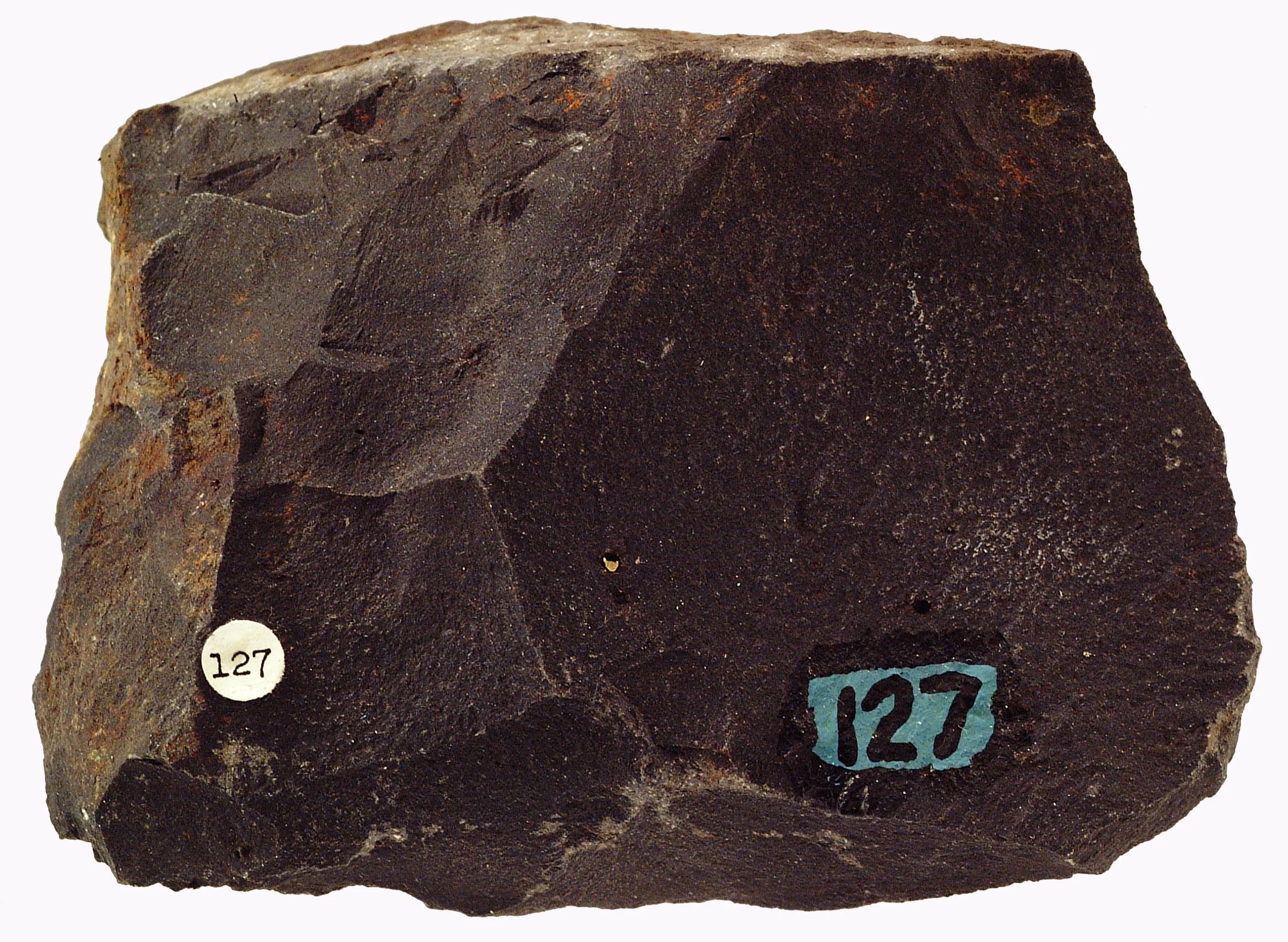
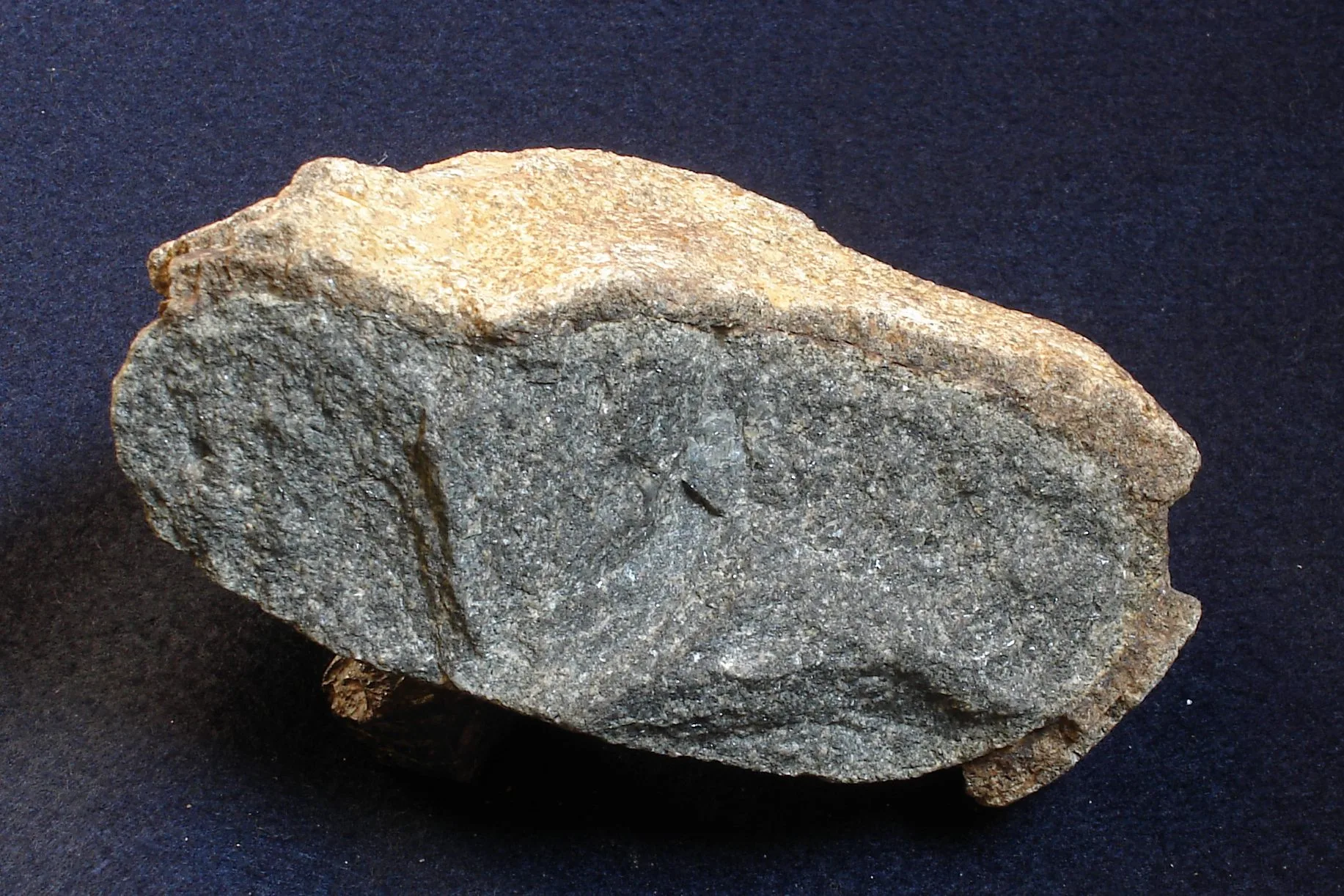
Ignimbrite is a pyroclastic igneous rock that is an expansion of hardened tuff. It is made up by crystal and rock fragments in a glass-shard groundmass, althouugh the original texture of the groundmass is probably obliterated due to high degrees of welding. Forming of Ignimbrite is very hot ground-hugging cloud of volcanic ash, blocks, and gases known as pyroclastic flow or pyroclastic density current. Ignimbrite is synonymous with flood tuff, welded tuff, ash-flow tuff and pyroclastic flow deposit
Ignimbrites are consist of a mostly sorted aggregate of
volcanic ash and and pumicelapilli, normally with scattered lithic
fragments.The ash consists of glass shards and crystal fragments.The ash
consists may be loose and unconsolidated or lithified rock known as
lapilli-tuff.Near the volcanic source, ignimbrites normally incorporate thick
accumulations of lithic blocks, and distally, many display meter-thick
accumulations of rounded cobbles of pumice.
Name origin: The
term “ignimbrite” (from the Latin igni- “fire” and imbri-
“rain”) was coined by the New Zealand geologist Peter Marshall in
1935.
Group: Volcanic
Colour: Typically
light-coloured (e.g. pinkish-white, pale grey etc).
Texture:Aphanitic if not welded, eutaxitic if welded.
Mineral Content: Pumice clasts in a fine grained glassy matrix, may contain lithic clasts and / orphenocrysts of varying composition.
Silica (SiO 2) content – NA.
Alterations: Large
hot ignimbrites can create some form of hydrothermal activity as they tend to
blanket the wet soil and bury watercourses and rivers. The water from such
substrates will exit the ignimbrite blanket in fumaroles, geysers and the like,
a process which may take several years, for example after the Novarupta tuff
eruption. In the process of boiling off this water, the ignimbrite layer may
become metasomatised (altered). This tends to form chimneys and pockets of
kaolin-altered rock.
Ignimbrite Classification and Petrology
Ignimbrite is main composed of a matrix of volcanic ash
which is composed fragments of volcanic glass, pumice fragments, and crystals.
The fragments are totally explosive eruption. Most are phenocrysts that grew in
the magma, but some may be exotic crystals such as xenocrysts, derived from other
magmas, igneous rocks, or from country rock.
The ash matrix typically contains varying amounts of pea- to
cobble-sized rock fragments called lithic inclusions. They are mostly bits of
older solidified volcanic debris entrained from conduit walls or from the land
surface. More rarely, clasts are cognate material from the magma chamber.
If sufficiently hot when deposited, the particles in an
ignimbrite may weld together, and the deposit is transformed into a ‘welded
ignimbrite’, made of eutaxitic lapilli-tuff. When this happens, the pumice
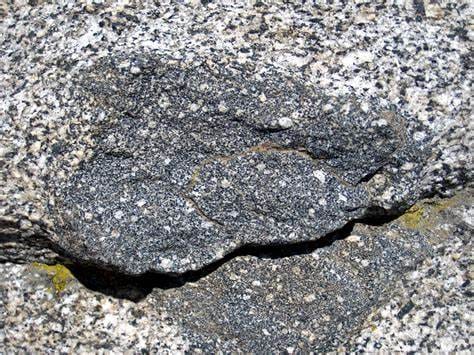
lapilli commonly flatten, and these appear on rock surfaces as dark lens
shapes, known as fiamme. Intensely welded ignimbrite may have glassy zones near
the base and top, called lower and upper ‘vitrophyres’, but central parts are
microcrystalline (‘lithoidal’).
An ignimbrite is a welded pyroclastic rock that contains
abundant flattened juvenile clasts often originally pumice. The flattened
clasts within ignimbrites are termed fiamme and range from lapilli-sized (>2
mm) to block-sized (>64 mm). The layered texture produced by fiamme is
termed a eutaxitic texture. The groundmass of ignimbrites is usually dominated
flattened vitric shards, but can contain lithic and crystal fragments. The
fine-grained groundmass of many ignimbrites has a reddish colour due to high
temperature oxidation of iron, in particular in the upper parts of a
pyroclastic flow deposit. Less welded flows tend to be white or grey, whilst
intensely welded flows are often dark grey to black. Recrystallisation and
alteration of glass within ignimbrite is common, in particular in ancient
examples
Chemical Composition of Ignimbrite
The mineralogy of an ignimbrite is controlled primarily by
the chemistry of the source magma.
Commonly in most felsic ignimbrites the quartz polymorphs
cristobalite and tridymite are usually found within the welded tuffs and
breccias. In the majority of cases, it appears that these high-temperature
polymorphs of quartz occurred post-eruption as part of an autogenic
post-eruptive alteration in some metastable form. Thus although tridymite and
cristobalite are common minerals in ignimbrites, they may not be primary
magmatic minerals.
Ignimbrite Formation
Ignimbrites form due to emplacement of high temperature
pyroclastic flows that compact under their own weight. Exsolution of volatiles
from pyroclasts after emplacement can cause alteration of the surrounding
groundmass and generate vesicles. Rheomorphic flow of ignimbrites can occur
after emplacement resulting in deformation of layering, clasts and vesicles. In
thick ignimbrites columnar jointing may occur due to contraction during slow
cooling.
Some ignimbrite deposits that are found worldwide are loose
and unconsolidated rock formations. Others have three distinct layers. The top
and bottom layers that were exposed to the ground and the air above the deposit
cooled much faster and resemble sedimentary rock layers.
Ignimbrite Localities
Ignimbrites are a type of volcanic rock formed from the consolidation of hot ash and pumice fragments ejected during explosive volcanic eruptions. They are often associated with pyroclastic flows, which are fast-moving, highly destructive mixtures of hot gas and volcanic debris. Ignimbrites can be found in various parts of the world, and some notable localities include:
Tuff Canyon, Big Bend National Park, USA: This remote area in Texas is known for its spectacular exposures of Eocene-aged ignimbrites. The Tuff Canyon Trail offers visitors a chance to see these volcanic rocks up close.
Taupo Volcanic Zone, New Zealand: The Taupo Volcanic Zone on New Zealand’s North Island is home to numerous ignimbrites, including the Oruanui and Whakamaru Ignimbrites, which were produced by some of the world’s most powerful eruptions.
Valle Grande, Argentina: Valle Grande in the Argentine Andes is famous for the enormous and well-preserved deposits of ignimbrites, including the Huanuluan Ignimbrite and the Ventana Ignimbrite.
Santorini, Greece: The island of Santorini in the Aegean Sea is composed of several layers of volcanic deposits, including ignimbrites, formed during its volcanic history.
Tenerife, Canary Islands: The island of Tenerife, part of the Canary Islands, contains ignimbrites formed during the volcanic activity associated with the Teide-Pico Viejo complex, including the Roques de García Ignimbrite.
Pantelleria, Italy: The island of Pantelleria, located in the Mediterranean Sea between Sicily and Tunisia, is known for its ignimbrite deposits, particularly the Green Tuff, which is a colorful variety.
Valles Caldera, New Mexico, USA: The Valles Caldera, a volcanic caldera in New Mexico, contains extensive ignimbrite deposits from ancient eruptions.
Lipari, Italy: The Aeolian Islands, including Lipari, feature ignimbrites in their volcanic rock formations.
Petroglyph National Monument, New Mexico, USA: Petroglyph National Monument in New Mexico is known for its petroglyphs but also has ignimbrite formations in the volcanic landscape.
Yellowstone National Park, USA: Yellowstone is famous for its geothermal features, but it also contains ignimbrite deposits from past volcanic eruptions.
These are just a few examples of places where ignimbrites can be found. Remember to check local regulations and safety guidelines when exploring volcanic terrains, as they can be hazardous due to the potential for ongoing volcanic activity or unstable terrain.
Ignimbrite Uses Area
Yucca
Mountain Repository, a U.S. Department of Energy terminal storage facility for
spent nuclear reactor and other radioactive waste, is in a deposit of
ignimbrite and tuff.
The
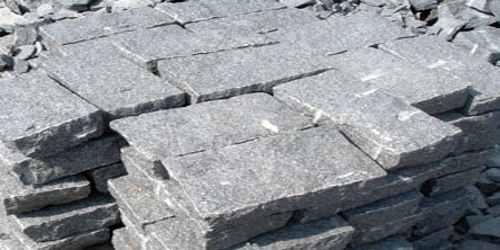
layering of ignimbrites is used when the stone is worked, as it sometimes
splits into convenient slabs, useful for flagstones and in garden edge
landscaping.
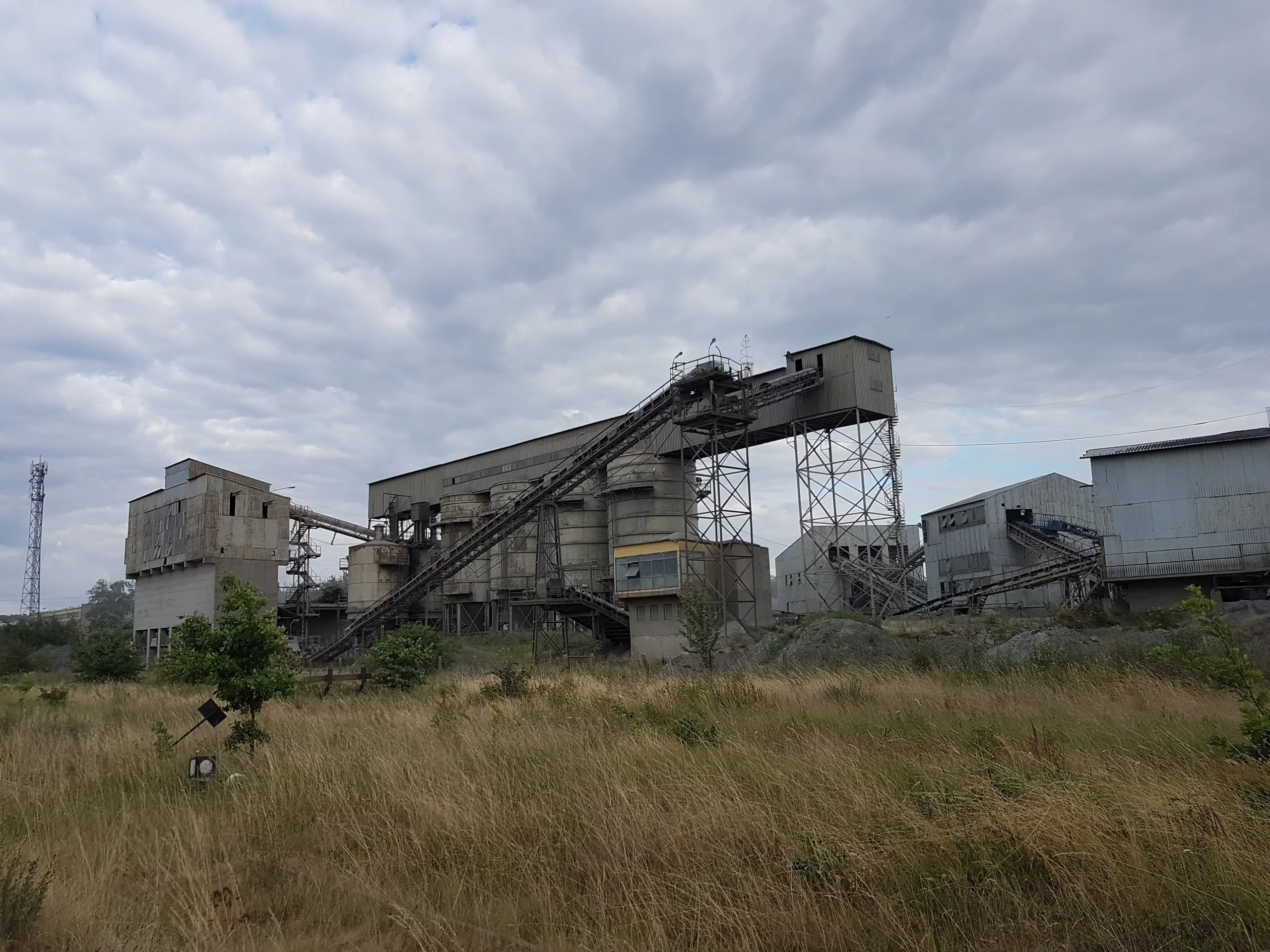
In the
Hunter region of New South Wales ignimbrite serves as an excellent aggregate or
‘blue metal’ for road surfacing and construction purposes.
References
Bonewitz, R. (2012). Rocks and minerals. 2nd ed. London: DK Publishing.
Wikipedia contributors. (2019, March 9). Ignimbrite. In Wikipedia, The Free Encyclopedia. Retrieved 14:57, April 11, 2019, from https://en.wikipedia.org/w/index.php?title=Ignimbrite&oldid=886940683
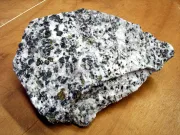
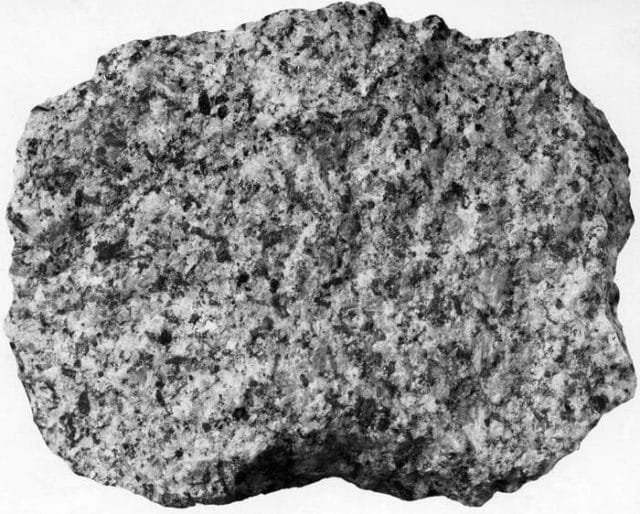
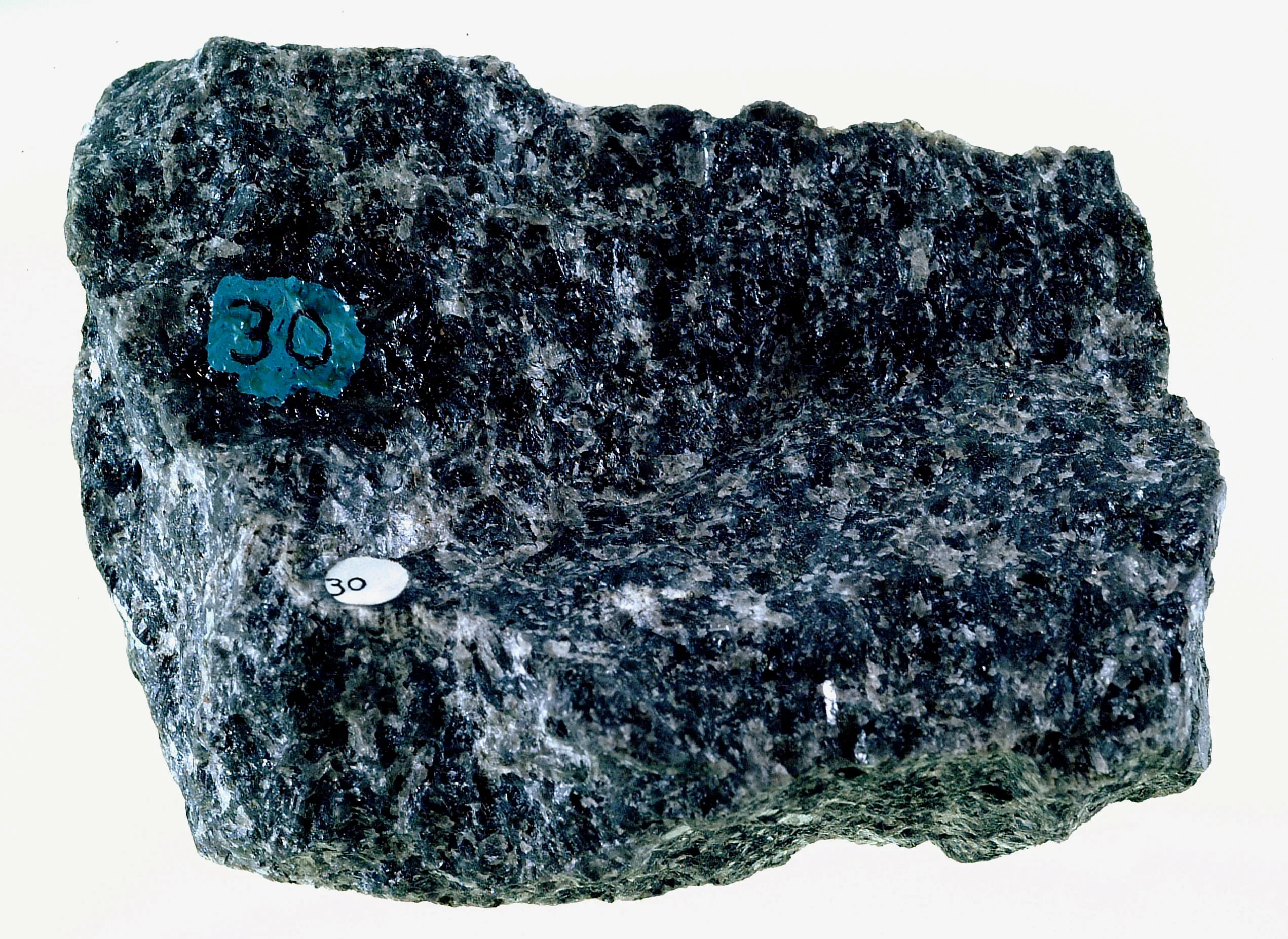
Granodiorite of Alta stock: analyzed specimen from dump of Steamboat tunnel, note conspicuous prisms of hornblende; natural size. Utah. Circa 1936. Plate 17-B, U.S.Geological Survey Professional paper 201. 1943. - ID. Calkins, F.C. 896 - cfc00896 - U.S. Geological Survey - Public domain image
Granodiorite is intrusive igneous rock that have phaneritic textured.The grain sizes are visible to the naked eye.Granodiorite formation is slow cooling crystallization below Earth’s surface. It is similar to granite and diorite, but It have more plagioclase feldspar than orthoclase feldspar.According to the QAPF diagram, granodiorite has a greater than 20% quartz by volume, and between 65% to 90% of the feldspar is plagioclase. A greater amount of plagioclase would designate the rock as tonalite.
Group: Plutonic.
Colour: Typically
light-coloured.
Texture: Phaneritic
(medium to coarse grained).
Mineral Content: Quartz, plagioclase, with lesser orthoclase, biotite (these separate it fromdiorite) and amphibole ( hornblende) (plagioclase always greater than 2/3 of total feldspar).
Silica (SiO 2) content – 63%-69%.
Name origin: The
name comes from two related rocks to which granodiorite is an intermediate:
granite and diorite. The gran- root comes from the Latin grānum for “grain”, an
English language derivative. Diorite is named after the contrasting colors of
the rock.
The mineral composition of granodiorite is a key factor that distinguishes it from other igneous rocks. Granodiorite is primarily composed of several key minerals, including plagioclase feldspar, quartz, and mafic minerals like biotite or hornblende. Here’s a detailed look at the mineral composition of granodiorite and the role of these minerals:
Plagioclase Feldspar:
Plagioclase feldspar is one of the most abundant minerals in granodiorite.
It is a group of feldspar minerals that includes a continuum of compositions ranging from sodium-rich albite to calcium-rich anorthite.
In granodiorite, plagioclase feldspar typically falls within the range of andesine to labradorite compositions.
Plagioclase feldspar is characterized by its striated appearance and can be white to light gray in color.
It plays a crucial role in determining the overall texture and appearance of granodiorite.
Quartz:
Quartz is another major mineral in granodiorite, often occurring in significant quantities.
It is a crystalline form of silica (SiO2) and is known for its hardness and glassy appearance.
Quartz can vary in color but is commonly either clear or milky white.
In granodiorite, quartz forms distinct grains or interlocks with other minerals, contributing to the rock’s hardness and resistance to weathering.
Mafic Minerals:
Granodiorite typically contains mafic minerals, which are dark-colored minerals rich in magnesium (Mg) and iron (Fe).
Common mafic minerals found in granodiorite include biotite and hornblende (amphibole minerals).
Biotite:
Biotite is a black to dark brown mica mineral found in granodiorite.
It has a layered, flaky appearance and can be easily separated into thin sheets.
Biotite contributes to the overall color of granodiorite and may impart a dark appearance to the rock.
It is also responsible for the rock’s foliated or layered texture in some cases.
Hornblende:
Hornblende is a group of dark-colored amphibole minerals commonly found in granodiorite.
It appears as elongated prismatic crystals or needle-like grains.
Hornblende can vary in color from black to green to brown, depending on its chemical composition.
It may be less abundant than biotite in some granodiorites but still contributes to the rock’s mineral diversity.
The combination of these minerals in granodiorite gives the rock its characteristic appearance, texture, and properties. The ratio of plagioclase feldspar to quartz, as well as the presence and proportion of mafic minerals, can vary in different granodiorite samples, leading to variations in color and texture. These mineral components also influence the rock’s hardness, strength, and resistance to weathering, making granodiorite suitable for various geological and construction applications.
Formation of Granodiorite
Igneous rock is formed through the cooling and solidification of magma or lava. The magma can be derived from partial melts of existing rocks in either a planet’s mantle or crust. Typically, the melting is caused by one or more of three processes: an increase in temperature, a decrease in pressure, or a change in composition. Solidification into rock occurs either below the surface as intrusive rocks or on the surface as extrusive rocks. Igneous rock may form with crystallization to form granular, crystalline rocks, or without crystallization to form natural glasses.
Intrusive igneous rocks are formed from magma that cools and
solidifies within the crust of a planet, surrounded by pre-existing rock
(called country rock); the magma cools slowly and, as a result, these rocks are
coarse-grained. The mineral grains in such rocks can generally be identified
with the naked eye. Intrusive rocks can also be classified according to the
shape and size of the intrusive body and its relation to the other formations
into which it intrudes. Typical intrusive formations are batholiths, stocks,
laccoliths, sills and dikes. When the magma solidifies within the earth’s
crust, it cools slowly forming coarse textured rocks, such as granite, gabbro,
or diorite.
The central cores of major mountain ranges consist of intrusive igneous rocks, usually granite. When exposed by erosion, these cores (called batholiths) may occupy huge areas of the Earth’s surface.
Texture and Appearance
The texture and appearance of granodiorite are important aspects that help geologists and researchers identify and classify this igneous rock. These characteristics are influenced by its mineral composition and the conditions under which it formed. Here’s an overview of the physical appearance, texture, grain size, and crystal structure of granodiorite:
Physical Appearance:
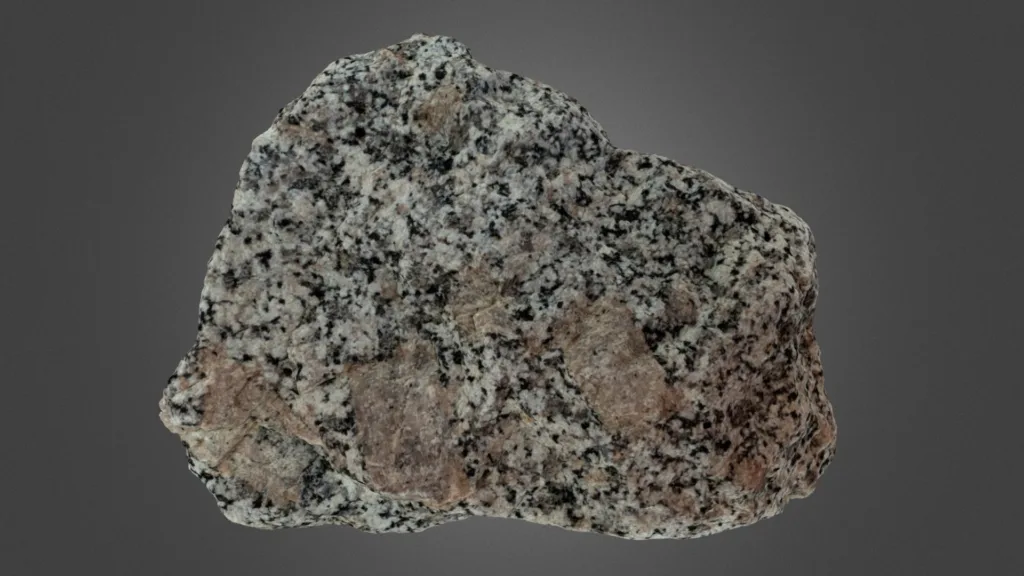
Granodiorite is typically medium to coarse-grained, which means that the individual mineral grains are relatively large and visible to the naked eye.
It often appears as a speckled or salt-and-pepper-like rock due to the interlocking crystals of different mineral colors.
The overall color of granodiorite can vary, but it commonly ranges from light gray to light brown or pinkish-gray.
The specific coloration depends on factors like the proportions of plagioclase feldspar, quartz, and mafic minerals like biotite or hornblende.
Texture:
The texture of granodiorite is described as “phantic,” indicating a coarse-grained appearance.
Individual mineral grains are usually distinguishable with the naked eye, and their sizes can range from a few millimeters to several centimeters.
The minerals within granodiorite are tightly interlocked, creating a solid and durable rock.
Some granodiorite samples may exhibit a foliated texture if they contain significant amounts of biotite, resulting in a layered appearance.
Grain Size:
Granodiorite typically has a medium to coarse grain size. The term “granodiorite” itself suggests a composition that is intermediate between granite (which has a coarse grain size) and diorite (which has a finer grain size).
The grain size can vary somewhat depending on the specific geological setting and the rate of cooling during its formation. Rapid cooling may result in slightly finer grains, while slower cooling can produce coarser grains.
Crystal Structure:
Granodiorite has a crystalline structure, meaning that it is composed of interlocking mineral crystals.
The primary minerals in granodiorite, such as plagioclase feldspar and quartz, often exhibit well-defined crystal faces.
The crystal structure contributes to the rock’s hardness and durability, making it suitable for various construction and architectural purposes.
In summary, granodiorite is characterized by its medium to coarse-grained texture, interlocking mineral grains, and a speckled appearance due to the different mineral colors. Its physical attributes make it a valuable rock for various applications, including construction, monuments, and sculptures. The specific appearance and texture of granodiorite can vary slightly depending on the specific geological conditions in which it forms.
What is the difference between Granite and Granodiorite
Granite and granodiorite are both types of intrusive igneous rocks, which means they form from the cooling and solidification of molten magma beneath the Earth’s surface. While they share some similarities, they also have key differences in terms of mineral composition and appearance:
Mineral Composition:
Granite: Granite is primarily composed of three main minerals: quartz, feldspar (both potassium and plagioclase feldspar), and mica (usually biotite or muscovite). Quartz gives granite its characteristic hardness and often appears as clear or white crystals. The feldspar minerals can vary in color, typically ranging from pink to gray. Mica minerals impart a shiny appearance to the rock.
Granodiorite: Granodiorite, on the other hand, has a mineral composition that is similar to granite but with a higher proportion of plagioclase feldspar relative to potassium feldspar. This difference in feldspar composition gives granodiorite a different color and texture compared to granite. Granodiorite often has a speckled appearance with light-colored plagioclase feldspar and darker minerals.
Color and Texture:
Granite: Granite tends to have a more varied color palette, with options ranging from light gray to pink, red, brown, or even black, depending on the specific minerals present. It has a coarse-grained texture, which means that the individual mineral grains are easily visible to the naked eye.
Granodiorite: Granodiorite is typically lighter in color compared to granite due to the dominance of plagioclase feldspar. It often appears as light gray, light brown, or beige. Granodiorite also has a coarse-grained texture, but the overall appearance is usually less colorful and more uniform compared to granite.
Composition and Classification:
Granite: Granite is classified as a felsic igneous rock because it contains a high proportion of felsic minerals (quartz and feldspar). It is also considered an acidic rock due to its high silica content. Granite is commonly found in continental crust and is associated with continental landmasses.
Granodiorite: Granodiorite is also a felsic igneous rock but contains a higher proportion of plagioclase feldspar compared to granite. It is classified as an intermediate rock due to its composition falling between the felsic and mafic categories. Granodiorite is commonly found in subduction zones and volcanic island arcs.
In summary, while granite and granodiorite are both coarse-grained, felsic intrusive rocks, their differences lie in their mineral composition, color, and texture. Granite has a more balanced mix of quartz, potassium feldspar, and plagioclase feldspar, resulting in a more colorful appearance, while granodiorite has a higher proportion of plagioclase feldspar and tends to be lighter in color and less colorful.
Granodiorite is found in various geological formations and regions around the world. It plays a significant role in shaping the Earth’s crust and can be associated with notable geological features. Here are some specific locations and geological features where granodiorite is prominent:
1. Sierra Nevada Batholith, California, USA:
The Sierra Nevada Batholith in California is a massive and well-known granitic rock formation. It contains large volumes of granodiorite, granite, and related igneous rocks. This formation is famous for its role in shaping the landscape of the Sierra Nevada mountain range.
2. Yosemite National Park, California, USA:
Yosemite National Park, located within the Sierra Nevada Batholith, features iconic granitic cliffs, domes, and rock formations composed mainly of granodiorite. El Capitan and Half Dome are prominent examples of granodiorite features in the park.
3. Tuolumne Meadows, California, USA:
Within Yosemite National Park, Tuolumne Meadows is characterized by exposed granodiorite outcrops and picturesque alpine landscapes.
4. Enchanted Rock, Texas, USA:
Enchanted Rock is a massive pink granite and granodiorite batholith located in Texas. It’s a popular recreational area and a significant geological feature in the region.
5. Adirondack Mountains, New York, USA:
The Adirondack Mountains in New York are known for their granitic and granodioritic rocks, which are part of the Adirondack Batholith. These rocks have played a crucial role in shaping the Adirondack landscape.
6. Isle Royale, Lake Superior, USA and Canada:
Isle Royale, located in Lake Superior, is composed of a granitic and granodioritic core. The island’s geology is characterized by its Precambrian-age igneous rocks.
7. White Mountains, California, USA:
The White Mountains in California contain extensive granodiorite formations, contributing to the region’s unique geological and scenic features.
8. Harney Peak, South Dakota, USA:
Harney Peak in South Dakota’s Black Hills is composed of granodiorite and is the highest point in the United States east of the Rocky Mountains.
9. Rocky Mountains, USA and Canada:
Granodiorite can be found in various parts of the Rocky Mountains, contributing to the geology and landscape of this extensive mountain range.
10. Stone Mountain, Georgia, USA: – Stone Mountain is a well-known granite dome composed primarily of granodiorite and quartz monzonite. It’s a prominent geological feature and a popular tourist destination.
11. El Capitan, Yosemite National Park, California, USA: – El Capitan is an iconic rock formation in Yosemite National Park, primarily composed of El Capitan Granodiorite. It is renowned among rock climbers and outdoor enthusiasts.
12. Mount Rushmore, South Dakota, USA: – Mount Rushmore National Memorial features the carved faces of four U.S. presidents on a granite mountain, including granodiorite and related rocks.
These notable locations and geological features showcase the widespread distribution and geological significance of granodiorite in various regions, from mountain ranges to national parks and monuments. The rock’s durability and resistance to weathering have contributed to its enduring presence in these landscapes.
Uses and Applications
Granodiorite, with its durability and aesthetic qualities, finds various practical applications in construction and industry, as well as historical and architectural uses:
Practical Applications in Construction and Industry:
Dimension Stone: Granodiorite is commonly quarried for use as dimension stone. Its coarse-grained texture and attractive appearance make it a popular choice for countertops, flooring tiles, and wall cladding in residential and commercial buildings.
Paving Stones: Due to its robustness and resistance to wear and tear, granodiorite is used in the construction of paving stones and outdoor pathways. It can withstand heavy foot traffic and adverse weather conditions.
Monuments and Memorials: Many monuments and memorials, especially in cemeteries and public spaces, are made from granodiorite. Its ability to hold intricate carvings and inscriptions makes it a suitable material for commemorating historical figures and events.
Construction Aggregates: Crushed granodiorite is used as construction aggregates in the production of concrete and asphalt. It adds strength and durability to these materials, making them suitable for infrastructure projects like roads and bridges.
Water Features: The natural appearance of granodiorite, along with its resistance to water damage, makes it a preferred choice for constructing fountains, waterfalls, and other water features in landscaping and urban design.
Historical and Architectural Uses:
Historical Buildings: Granodiorite has been used in the construction of historical buildings, particularly during periods when stone masonry was prevalent in architecture. It can be found in various architectural elements such as columns, facades, and decorative carvings.
Sculptures: Many sculptures, statues, and artistic creations have been carved from granodiorite due to its workability and ability to hold fine details. Famous examples include ancient Egyptian statues and modern sculptures.
Ancient Monuments: Historical civilizations, such as the Egyptians and the Mayans, used granodiorite to create iconic monuments and structures. The durability of granodiorite has allowed these monuments to stand the test of time.
Cemetery Headstones: Granodiorite is a common choice for cemetery headstones and grave markers. Its long-lasting nature ensures that memorials remain intact for generations.
Architectural Accents: In modern architecture, granodiorite may be used as an accent material for facades, stairs, and decorative elements, adding a touch of elegance and longevity to buildings.
Restoration Projects: In restoration efforts aimed at preserving historical buildings and landmarks, granodiorite is often used to replicate or replace damaged or deteriorated original stone elements.
Landmarks and Civic Structures: Granodiorite may be employed in the construction of landmarks, government buildings, and civic structures to imbue them with a sense of permanence and grandeur.
The enduring appeal and practicality of granodiorite in construction, art, and historical preservation have ensured its continued use in various applications over the centuries. Its combination of strength, durability, and aesthetic qualities makes it a valuable material in both traditional and contemporary contexts.
Facts About The Rock
One of the
most abundant igneous rocks is granodiorite.
This rock
has some features of the acidic granites and some features of the intermediate
rocks.
Granodiorite
is an attractive, coarse-grained rock. The crystals making up the mass of the
rock can easily be seen with the naked eye.
The main
minerals in granodiorite are feldspar, quartz, hornblende, augite and mica.
There are
two main color varieties of granodiorite. One is pink because of the color of
most of the feldspar in the rock. White granodiorite contains pale-colored
feldspar.
This rock looks
similar to granite. When its minerals are examined and the total silica content
worked out, it can be seen that it is an intermediate, not an acid rock.
In many
types of igneous intrusions, granodiorite can be found, especially those formed
at some depth below the surface of the Earth.
The vast
batholith in southern California covers a surface area of more than 7700 sq
km. Much of it is made of granodiorite.
Because of
its coloring and crystalline appearance, granodiorite is used for ornamental
purposes.
References
Bonewitz, R. (2012). Rocks and minerals. 2nd ed. London: DK Publishing.
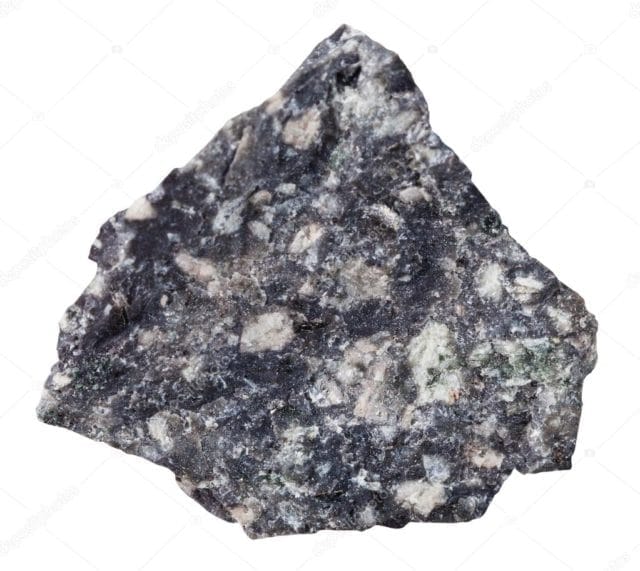
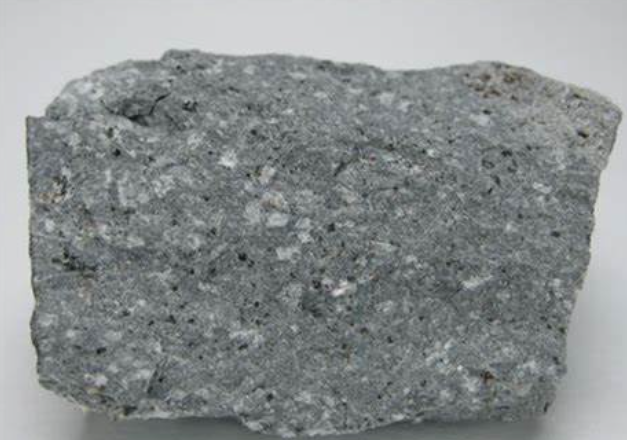
Andesite is volcanic rock named after the Andes Mountains. Intermediate in silica content, it is usually gray in color and may be fine-grained or porphyritic. Andesite is the volcanic equivalent of diorite. It consists of the plagioclase feldsparmineralsandesine and oligoclase, together with one or more dark, ferromagnesian minerals such as pyroxene and biotite. Amygdaloidal andesite occurs when the voids left by gas bubbles in the solidifying magma are later filled in, often with zeolite minerals. Andesite erupts from volcanoes and is commonly found interbedded with volcanic ash and tuff. Ancient andesites are used to map ancient subduction zones because andesitic volcanoes form on continental or ocean crust above these zones.
Name origin: Rock
name is after Andes – the mountain chain extending along the western coast of
the southern America.
Colour: Variable,
but typically bluish-grey or grey (lighter coloured than basalt).
Structure: Compact
Group – volcanic.
Texture: Aphanitic
to porphyric with redish phenocrysts of garnet and plagioclase.
Alterations: Plagioclases
are in places transformed to clay minerals.
Accessory minerals of Andesite:Ilmenite, apatite and orthopyroxene.
Classification
According to modal composition projected within the QAPF
discrimination diagram for volcanic rock (Streckeisen, 1978), the andesite
project within basalt field. However, the andezit has higher SiO2 content (>
52 wt. %) compared to that in basalt with less than 52 wt. % SiO2.
Modal composition projected within the QAPF discrimination diagram for volcanic rock (Streckeisen, 1978)
Chemical Composition of Andesite
Andesite is an intermediate sub-alkalic rock with SiO2 contents ranging between 57 and 63 wt. %, and Na2O + K2O contents around 5 wt. %. Intermediate rocks are also characterized by an increased CaO content compared to that in acidic rocks. Similar CaO contents (6 – 7 wt. %) are also typical for diorite – the plutonic equivalent of andesite. The andesite from Šiatorska Bukovinka is metaluminous, medium-potassic rock with A/CNK = 0.95 and A/NK = 2.38. The Mg/(Mg + Fe2+) ratio was recalculated after the conversion of all Fe2O3 to FeO. Trace element contents in andesites with garnets are similar to those without garnets. They only show a moderate enrichment in large lithophile elements (LILE – K, Rb, Cs, Sr, Ba), negative Nb anomaly and positive Pb anomaly pronounced in normalized records of trace elements. Such trends are typical for the magmas originating in subduction zones. Contents of rare earth elements La-Eu in garnet-bearing andesites are similar to those in garnet-free andesites. However, the garnet-bearing andesites are little depleted in heavy rare earth elements compared to the garnet-free andesites what probably reflects the garnet fractionation (Harangi et al., 2001).
Formationof Andesite
Andesite generally occurs in convergent plate cages.
Contains some processes in its formation.
Fractional crystallization of a mafic parent
magma.
Partial melting of crustal material.
Magma mixing between the magmas in a magma reservoir
For the formation of andesite, a basaltic magma must then
crystallize certain minerals removed from the melt. The first minerals that
crystallize and emerge from a basaltic base material are olivine and
amphiboles. These mafic minerals are separated from the magma and form mafic
cumulates. Once these mafic minerals have been removed, the melt has no
residual basaltic composition. The silica content of the melt is now enriched
with respect to the starting composition. As this process continues, the melt
gradually develops and eventually becomes andesitic.
In the mantle wedge section, the molten basalt moves upwards
until it reaches the base of the dominant shell. Once there, the basaltic melt
can underline in its shell, there may be a layer of molten material, or it may
go into the top plate in the form of dams. Together, the basalt melts the
material of the pelitic upper crust. It is the result of melting in the crust
of island arches and andesitic magmas.
In the continental springs such as the Andes, magma is pooled in the shallow shell and forms magma chambers. As cristalization continues and the system loses heat, these reservoirs cool down in time. In order to remain active, magma chambers should have continued to reload the hot basaltic solution into the system. When this basaltic material is mixed with advanced riolitic magma, the composition is returned to the intermediate phase andesite.
Distribution
Andesite is a type of volcanic rock that is commonly found in association with volcanic activity, particularly in subduction zone environments. Here are some of the locations where andesite can be found:
The Andes Mountains (South America): Andesite is named after the Andes Mountains, which run along the western edge of South America. This region is a prime example of a volcanic arc formed by the subduction of the Nazca Plate beneath the South American Plate. Andesitic volcanoes are abundant in the Andes, and they erupt andesitic lava flows and volcanic ash.
Cascade Range (North America): The Cascade Range in the western United States, including states like Washington, Oregon, and northern California, is another well-known location for andesitic volcanism. These volcanoes are part of the Pacific Ring of Fire, and they erupt andesitic and dacitic lavas.
Java and Indonesia: Indonesia, particularly the island of Java, has numerous andesitic volcanoes due to its location along the Pacific Ring of Fire. The explosive eruption of these volcanoes can pose significant hazards to nearby populations.
Japan: Japan, like Indonesia, is part of the Pacific Ring of Fire and has several andesitic volcanoes. Mount Fuji, for example, is a well-known andesitic volcano in Japan.
Central America: Countries in Central America, such as Guatemala, Nicaragua, and Costa Rica, have andesitic volcanoes along their volcanic arcs. The subduction of the Cocos Plate beneath the Caribbean Plate creates the conditions for andesitic magma formation and eruptions in this region.
New Zealand: Both the North Island and South Island of New Zealand have andesitic volcanoes. The Taupo Volcanic Zone on the North Island is particularly active and features numerous andesitic eruptions.
The Philippines: The Philippines, located in the western Pacific Ocean, has several andesitic volcanoes due to its location within the Ring of Fire. Mount Mayon, in the Bicol Region of the Philippines, is a famous andesitic volcano.
These are just a few examples of regions where andesite is commonly found. Andesitic volcanoes are associated with convergent plate boundaries, where one tectonic plate is subducting beneath another, leading to the generation of andesitic magma through partial melting of the subducting oceanic crust and overlying mantle.
Characteristics and Properties of Andesite Rock
Andesite, together with pyroxene, consists of
plagioclase feldspar. In addition, it may contain hornblende.
The minerals that this rock can contain are
apatite, garbet, ilmenite, biotite, magnetite, zircon. It may also contain trace
amounts of alkali feldspar.
Silica content is moderate. In other words, this
mineral is neither rich nor deficient. The silica content is 50-65%.
The density of such rocks is 2.11 – 2.36 g /
cm3.
It has a porphyritic structure. The term
‘porphyric’ refers to the incorporation of large crystals into a fine-grained
rock.
The specific gravity of this rock is 2,5 – 2,8.
It usually occurs in shades of gray. However, it
is lighter in color than basalt.
It is said that thicker or dome-shaped
structures are formed.
The hardness of andesite rocks on the Moh scale is 7.
Andesite Application and Uses Areas
Andesite, as an igneous rock, has several applications and uses in various industries and areas. Its properties, including hardness, durability, and ability to hold a polish, make it valuable for several purposes. Here are some of the primary application areas and uses of andesite:
Construction Materials:
Andesite is used as a construction material for both interior and exterior applications due to its durability and resistance to weathering. It is often used as dimension stone for building facades, walls, and flooring.
Pavement and Road Construction:
Crushed andesite is used as an aggregate in the construction of roads, highways, and pavements. Its hardness and wear resistance make it an excellent choice for road base and surface material.
Monuments and Sculptures:
Because of its ability to hold a polish and its attractive appearance, andesite is sometimes used for monuments, statues, and sculptures. It can be carved into intricate designs and maintains its appearance over time.
Countertops and Tiles:
Andesite is utilized in the production of countertops, tiles, and other decorative surfaces for kitchens and bathrooms. Its hardness and resistance to staining and scratching make it a popular choice.
Cemetery Markers:
Due to its durability and resistance to weathering, andesite is used for cemetery markers, headstones, and memorial plaques.
Gravestones and Grave Markers:
The ability of andesite to hold inscriptions and engravings makes it suitable for gravestones and grave markers.
Water Features:
Andesite is sometimes used in the construction of fountains, water features, and decorative garden elements due to its aesthetics and resistance to water erosion.
Decorative Landscaping:
In landscaping, andesite can be used for decorative purposes such as garden pathways, retaining walls, and rock gardens.
Fireplace Surrounds:
Andesite can be used for fireplace surrounds and mantels due to its heat resistance and appearance.
Aquariums and Terrariums:
Its ability to withstand moisture and its attractive appearance make andesite a suitable choice for the construction of aquariums and terrariums.
Scientific Research:
Andesite is used in scientific research and education as a representative rock for studying the properties and behavior of volcanic rocks.
Jewelry:
While not as commonly used as other stones like granite or marble, andesite can be used in jewelry, typically as beads or cabochons.
It’s important to note that the specific uses of andesite may vary depending on its quality, appearance, and availability in a particular region. Additionally, the suitability of andesite for a particular application may be influenced by factors such as local geological conditions and the intended purpose of the material.
References
Bonewitz, R. (2012). Rocks and minerals. 2nd ed. London: DK Publishing.
Harangi, S. (2001). Neogene to Quaternary volcanism of the Carpathian-Pannonian region; a review. Acta Geologica Hungarica, 44(2), 223-258.
Atlas-hornin.sk. (2019). Atlas of magmatic rocks. [online] Available at: http://www.atlas-hornin.sk/en/home [Accessed 13 Mar. 2019].
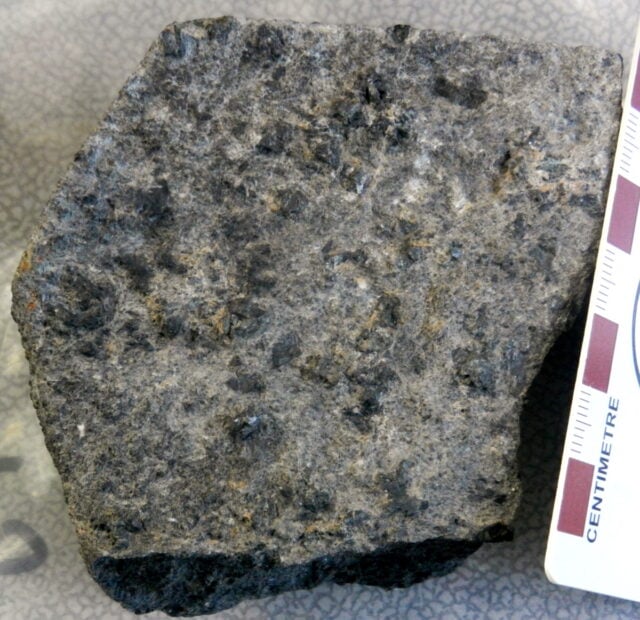
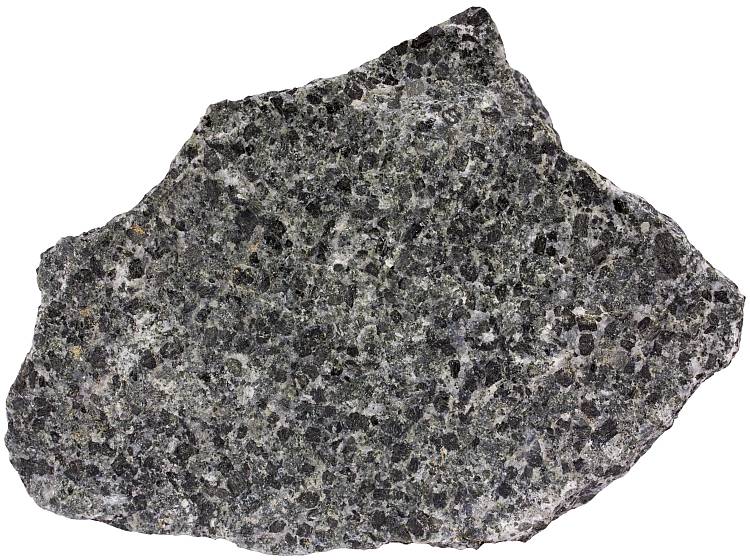
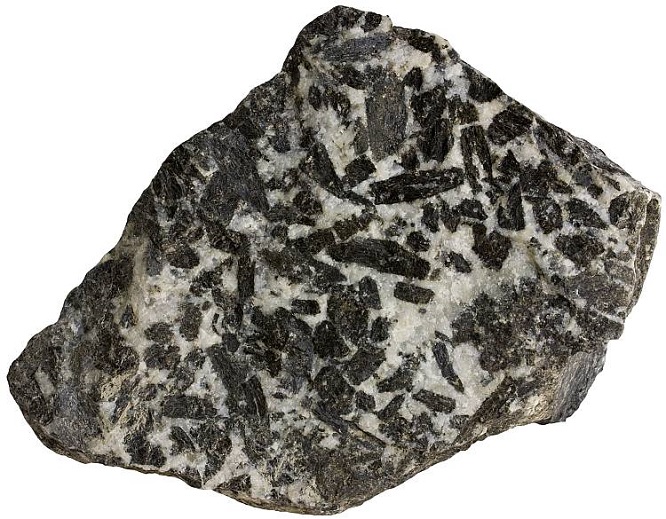
Gabbro is a type of intrusive igneous rock that is coarse-grained and dark-colored, typically composed of calcium-rich plagioclase feldspar, pyroxene, and sometimes olivine. It is similar in composition to basalt, which is its extrusive equivalent. Gabbro is typically found in plutonic bodies, such as batholiths and dikes, and is often associated with other mafic and ultramafic rocks.
Group: Plutonic Igneous Rock Colour: Dark grey to black. Texture: Phaneritic (medium to coarse grained). Mineral content: Predominantly plagioclaseand pyroxene ( augite) with lesser olivine. Silica (SiO 2) content – 45%-52%.
Composition and Classification
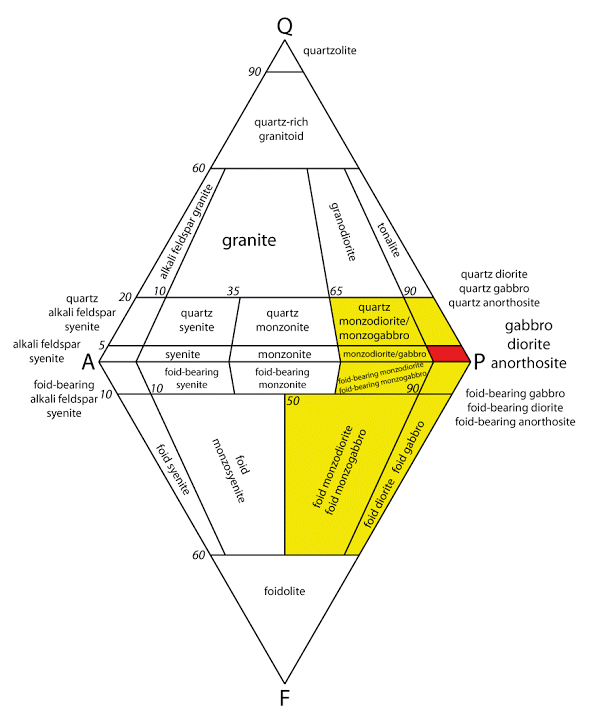
QAPF modal classification of plutonic rocks (based on Streckeisen, 1976, Fig. 1a).
The most important minerals in the gabbron are plagioclase and pyroxene. plagioclase often appear more. It is a small amount of olivine and amphibole. Plagioclase is sodium-calcium feldspar. Gabrobro contains more calcium than sodium. If there is more sodium in the plagioclase, then the rock type is called diorite. Gabbro is greenish and dark.
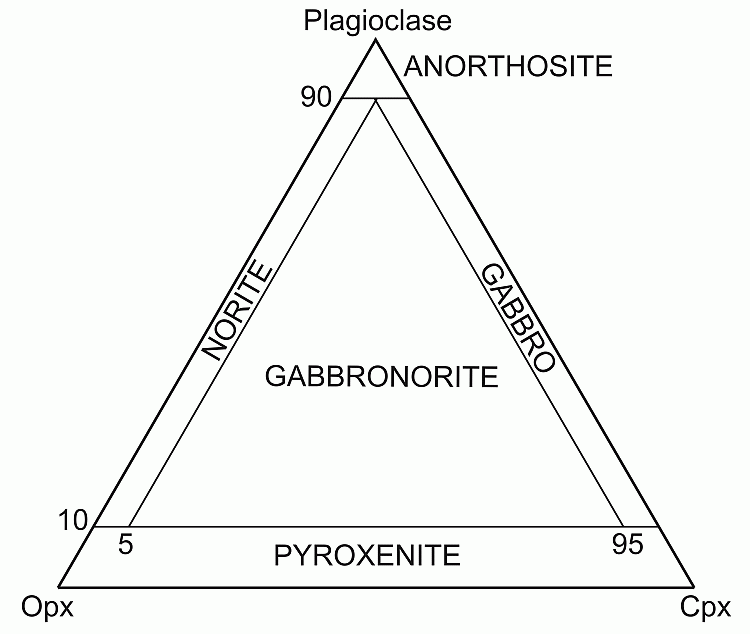
The classification scheme for gabbroic rocks without taking into account olivine and feldspathoids.
Diorite, gabbro, anorthosite — the three root names in this field are separated according to the colour index and the average composition of their plagioclase – anorthosite (M < 10%), diorite (M > 10%, plagioclase An0 – An50), gabbro (M > 10%, plagioclase An50 –An100). Gabbros may be further subdivided. Either of the two synonymous terms dolerite or diabase may be used for medium-grained gabbros rather than the term microgabbro, if required.
Gabbroic rocks— the gabbros (sensu lato) of QAPF field 10, may be further subdivided according to the relative abundances of their orthopyroxene, clinopyroxene, olivine and hornblende as shown in Fig. Some of the special terms used are: Gabbro (sensu stricto) = plagioclase and clinopyroxene Norite = plagioclase and orthopyroxene Troctolite = plagioclase and olivine Gabbronorite = plagioclase with almost equal amounts of clinopyroxene and orthopyroxene Orthopyroxene gabbro = plagioclase and clinopyroxene with minor amounts of orthopyroxene
Clinopyroxene norite = plagioclase and orthopyroxene with minor amounts of clinopyroxene Hornblende gabbro = plagioclase and hornblende with pyroxene < 5%.
Gabbro Formation
Gabbro forms through the process of solidification of mafic magma, which is rich in iron and magnesium, and typically occurs at relatively deep levels within the Earth’s crust or upper mantle. The formation of gabbro involves several key stages:
Magma generation: Gabbro forms from the partial melting of the mantle or lower crust, typically in association with tectonic processes such as mantle upwelling, subduction, or continental rifting. Mafic magma, which has a composition rich in iron and magnesium, is generated through the melting of mantle rocks or crustal rocks that have been previously enriched in mafic minerals.
Magma migration: Once formed, the mafic magma tends to be less dense than the surrounding rocks, and it tends to rise towards the Earth’s surface due to buoyancy. The magma may travel through fractures, faults, or other pathways in the crust, moving towards the surface or getting trapped at intermediate depths.
Magma emplacement: As the mafic magma rises and reaches its final destination, it can either intrude into existing rocks or erupt onto the Earth’s surface as lava. In the case of gabbro, the magma typically intrudes into the crust, forming intrusive bodies. These bodies can take various shapes, such as dikes, sills, laccoliths, or larger bodies called plutons.
Solidification: Once the mafic magma is emplaced into the crust, it begins to cool and solidify. Gabbro forms as the magma cools slowly, allowing for the crystallization of minerals such as pyroxene, plagioclase feldspar, and sometimes olivine. The slow cooling of the magma results in the formation of coarse-grained crystals, which are characteristic of gabbro.
Post-emplacement processes: After solidification, gabbroic bodies may undergo various post-emplacement processes such as deformation, metamorphism, and weathering, depending on the geologic conditions and tectonic history of the region. These processes can further modify the composition and texture of gabbroic rocks.
Overall, gabbro forms through the solidification of mafic magma, which originates from partial melting of the mantle or lower crust, and it is typically emplaced into the crust as intrusive bodies that cool and crystallize slowly to form coarse-grained rocks with a characteristic mineral composition.
Gabbro Occurrence and Distribution
Gabbro is a common rock type that occurs in various geologic settings around the world. Here are some details about its occurrence and distribution:
Oceanic crust: Gabbro is a major rock type in the oceanic crust, which makes up a significant portion of the Earth’s surface. It forms as part of the slow cooling and solidification of mafic magma that is erupted at mid-ocean ridges and intrudes into the surrounding oceanic crust. Gabbroic rocks are typically found in the lower part of the oceanic crust, underlying the basaltic rocks that make up the upper part.
Layered Intrusions: Gabbro is a common rock type in layered intrusions, which are large bodies of igneous rock that form when magma solidifies in horizontal layers over an extended period of time. Examples of layered intrusions with significant gabbroic components include the Bushveld Complex in South Africa, the Stillwater Complex in Montana, USA, and the Skaergaard Intrusion in Greenland.
Continental crust: Gabbro can also be found in the continental crust, usually associated with other mafic and ultramafic rocks. In some cases, gabbro bodies may be exposed at the surface due to erosion and weathering, or they may be buried beneath sedimentary rocks.
Mountain belts: Gabbroic rocks can be found in mountain belts and areas of tectonic activity where magmatic intrusions have occurred. For example, gabbroic rocks are found in the Appalachian Mountains in eastern North America, the Alps in Europe, and the Andes in South America.
Island arcs: Gabbroic rocks can also occur in island arcs, which are curved chains of volcanic islands formed at subduction zones. In these settings, gabbroic rocks can form as intrusive bodies beneath the volcanic arc.
Overall, gabbro is a widespread rock type that occurs in various geologic settings, including oceanic crust, layered intrusions, continental crust, mountain belts, and island arcs. Its distribution is influenced by the tectonic processes and geologic history of the region where it is found.
Gabbro and Basalt Difference
The rocks are very common in the world. The reason why they are so widespread is that they are formed of magma or lava, which are cooled directly as they approach the surface of the earth. Although both are magmatic rocks with almost the same composition, the main difference between these two rocks is the formation process or the cooling rate of the liquid rock that they initiate.
Gabbro occurs when the liquid rock is cooled very slowly over a long period of time in the underground. This is an intrusive magmatic rock and is close to the very hot core of the world, which is why it takes longer to cool, and therefore the rock is visibly very different from the opposite of the basalt. The crystals are very large and clear to the naked eye and the texture is very coarse. This coarse grained texture can be labeled porphyric or a mixture of large and finer grained crystals, which are very large crystals. The time required for the liquid rock to cool will determine the texture. On the other hand, the basalt is an extrusive magmatic rock. The surface is much closer to the surface of the earth and therefore the cooling process is much faster than the gabbone. The fact that the cooling rate is much higher gives the basal what it calls aphanitic texture, or it is so finely grained that it is not seen by the helpless human eye.
Uses of Gabbro
Gabbro can be polished to a bright black glow. Bright polished gabbro cemetery signs are used in kitchen stalls, floor tiles, facade stone and other size stone products. It is a highly desirable rock based on weather and wear. In the stone industry size gabbro is sold under the name “black granite”. Gabbro is also used to make a large number of rough cut products, such as borders, stones, paving stones and other products. The most common use of gabbro is like crushed stone or aggregate. The crushed gabbro is used as a basic material in construction projects, as a crushed stone for road construction, as a railway ballast and as a filler where a resistant crushed stone is needed.
Key points about Gabbro
Composition: Gabbro is composed mainly of calcium-rich plagioclase feldspar, usually labradorite or bytownite, and pyroxene, typically clinopyroxene (such as augite) or orthopyroxene (such as hypersthene). It may also contain small amounts of olivine, amphibole, and other minerals.
Texture: Gabbro has a coarse-grained texture, with individual mineral grains visible to the naked eye. The grains are typically interlocking, giving the rock its characteristic appearance.
Color: Gabbro is typically dark-colored, ranging from dark gray to black, due to the presence of dark-colored minerals such as pyroxene and olivine.
Occurrence: Gabbro is commonly found in large plutonic bodies, such as batholiths, which are large intrusive rock formations, and dikes, which are tabular intrusions that cut across other rocks. It can also be found in layered intrusions, such as in the Bushveld Complex in South Africa.
Petrogenesis: Gabbro is typically formed through the slow cooling and crystallization of mafic magma beneath the Earth’s surface. As the magma cools and solidifies, mineral crystals begin to form, resulting in the coarse-grained texture of gabbro.
Uses: Gabbro is used as a dimension stone for construction and architectural purposes, as it is durable and can be polished to a high sheen. It is also used as a crushed stone for road construction and aggregate in concrete. In some cases, gabbro can contain valuable minerals such as nickel, copper, and platinum group elements (PGEs), and may be mined for these resources.
Geology: Gabbro is an important rock in the geology of the Earth’s crust, as it is a common component of the oceanic crust and is also found in continental crust. It plays a role in the formation of large igneous provinces, which are massive outpourings of igneous rock that can have significant geological and environmental impacts.
Rock associations: Gabbro is often associated with other mafic and ultramafic rocks, such as basalt, peridotite, and norite, and can be part of layered intrusions where different rock types occur in distinct layers or bands.
In summary, gabbro is a coarse-grained, dark-colored intrusive igneous rock composed mainly of calcium-rich plagioclase feldspar and pyroxene. It is commonly found in large plutonic bodies, has various uses in construction and industry, and plays an important role in geology and geophysics.
Gabbro FAQ
Here are some frequently asked questions (FAQs) about gabbro:
Q: What is gabbro?
A: Gabbro is a type of intrusive igneous rock that is coarse-grained and dark-colored, composed mainly of calcium-rich plagioclase feldspar, pyroxene, and sometimes olivine.
Q: How is gabbro formed?
A: Gabbro is formed through the slow cooling and crystallization of mafic magma beneath the Earth’s surface. As the magma cools, mineral crystals begin to form, resulting in the coarse-grained texture of gabbro.
Q: What minerals are typically found in gabbro?
A: Gabbro is typically composed of calcium-rich plagioclase feldspar (such as labradorite or bytownite), pyroxene (such as augite or hypersthene), and sometimes olivine. It may also contain small amounts of other minerals, such as amphibole.
Q: What is the color of gabbro?
A: Gabbro is typically dark-colored, ranging from dark gray to black, due to the presence of dark-colored minerals such as pyroxene and olivine.
Q: Where is gabbro commonly found?
A: Gabbro is commonly found in large plutonic bodies, such as batholiths and dikes, and can also be found in layered intrusions. It is a common component of the oceanic crust and can also occur in continental crust.
Q: What are the uses of gabbro?
A: Gabbro is used as a dimension stone for construction and architectural purposes, as it is durable and can be polished to a high sheen. It is also used as a crushed stone for road construction and aggregate in concrete. In some cases, gabbro can contain valuable minerals such as nickel, copper, and platinum group elements (PGEs), and may be mined for these resources.
Q: What is the texture of gabbro?
A: Gabbro has a coarse-grained texture, with individual mineral grains visible to the naked eye. The grains are typically interlocking, giving the rock its characteristic appearance.
Q: What other rocks are associated with gabbro?
A: Gabbro is often associated with other mafic and ultramafic rocks, such as basalt, peridotite, and norite, and can be part of layered intrusions where different rock types occur in distinct layers or bands.
Q: What is the geologic significance of gabbro?
A: Gabbro is an important rock in the geology of the Earth’s crust, as it is a common component of the oceanic crust and is also found in continental crust. It plays a role in the formation of large igneous provinces, which are massive outpourings of igneous rock that can have significant geological and environmental impacts.
Q: Are there any economic resources associated with gabbro?
A: Yes, gabbro can contain valuable minerals such as nickel, copper, and platinum group elements (PGEs), and may be mined for these resources. However, such occurrences are relatively rare and not all gabbro bodies contain economic concentrations of these minerals.
These are some common questions and answers about gabbro, a type of intrusive igneous rock with important geologic, economic, and industrial significance.
References
Flexiblelearning.auckland.ac.nz. (2019). Geology – rocks and minerals. [online] Available at: https://flexiblelearning.auckland.ac.nz/rocks_minerals/rocks/gabbro.html [Accessed 2 Mar. 2019].
Sandatlas.org. (2019). Gabbro – Igneous rocks. [online] Available at: http://www.sandatlas.org/gabbro/ [Accessed 2 Mar. 2019].
Natural basalt hand specimen from New Jersey. GeoDIL mineral collection. Photograph: GeoDIL / Mike Davis. License CC0 1.0, https://creativecommons.org/publicdomain/zero/1.0/. Original: https://commons.wikimedia.org/wiki/File:Basalt%20(GeoDIL%20number%20-%20140).jpg. Converted to WebP.
Basalt is a dark-colored, fine-grained mafic volcanic rock formed when basaltic lava cools at or near Earth’s surface. It consists mainly of calcium-rich plagioclase feldspar and pyroxene, with variable amounts of olivine and iron–titanium oxides. Basalt is the dominant volcanic component of oceanic crust and is also widespread in shield volcanoes, continental lava plateaus and volcanic islands.
Most fresh basalt is dark gray to black, but it can contain pale feldspar laths, green olivine crystals, rounded gas cavities, or minerals that later filled those cavities. The rock’s appearance reflects its composition, cooling history and eruption environment. A single dark color is not enough to identify basalt; the most reliable approach combines mineralogy, grain size, texture and geological context.
What Does Basalt Look Like?
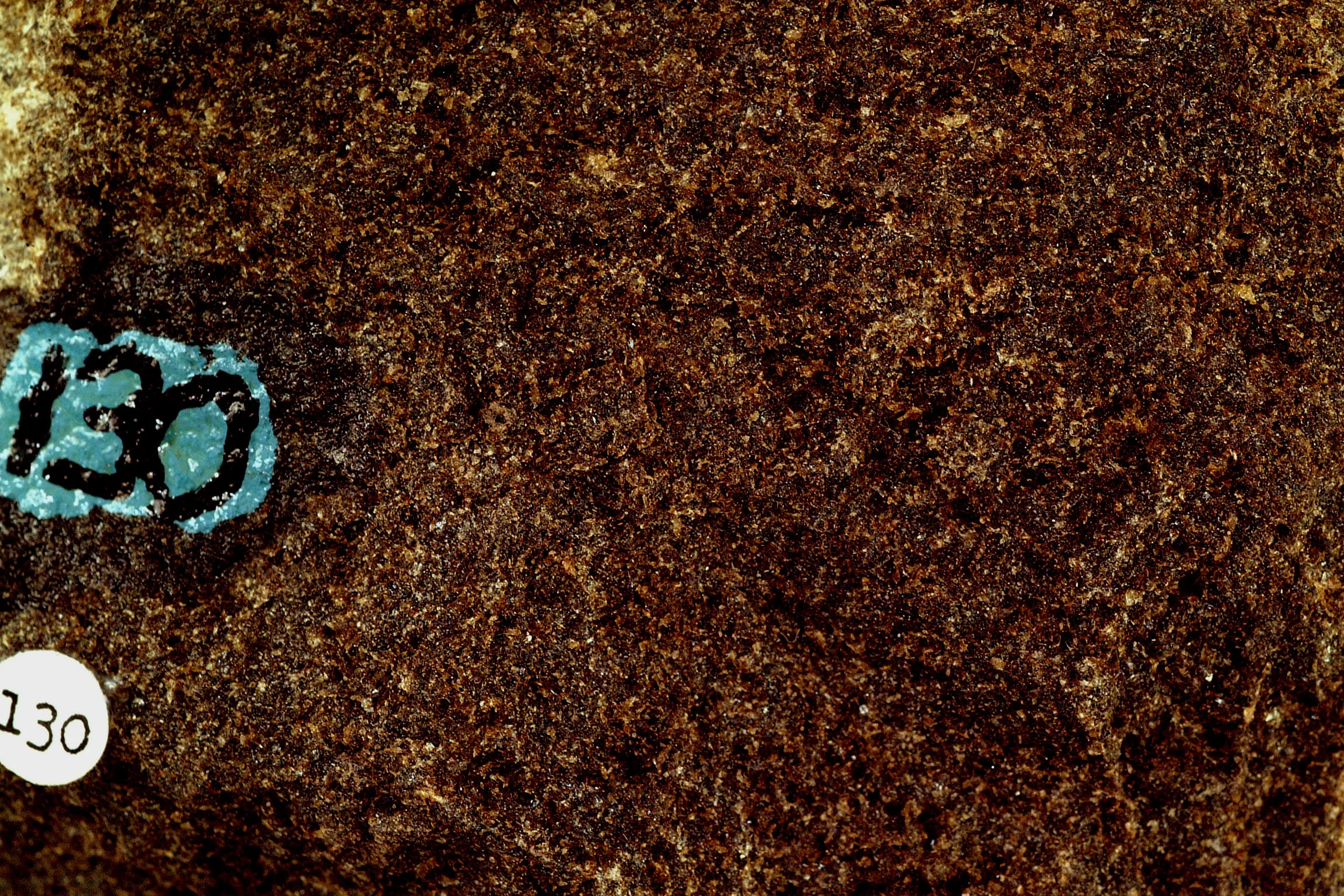
Fresh basalt hand specimen from New Jersey, showing the fine-grained appearance of a mafic volcanic rock. Photo: GeoDIL. Original photograph; CC0 1.0. Converted to WebP.
A typical hand specimen is compact and fine grained. Its individual groundmass minerals are usually too small to identify confidently without a hand lens or microscope. Fresh surfaces are commonly charcoal gray to black and may show a dull to slightly crystalline luster. Weathered surfaces can be brown, reddish or greenish as iron-bearing minerals alter.
Dark, fine-grained basalt hand specimen, illustrating a typical aphanitic appearance. Photo: James St. John. Original photograph; CC BY 2.0. Converted to WebP.
Some basalt contains visible larger crystals called phenocrysts, especially green olivine, black pyroxene or pale plagioclase. Others have open holes called vesicles, glassy chilled margins or rough lava crusts. A basalt outcrop can look completely different from a cut and polished specimen; examine a fresh broken surface wherever possible.
Basalt Mineral Composition
Basalt with pyroxene and olivine, from Hawaiʻi; larger crystals stand out from the finer matrix. Photo: Shannon Heinle / GeoDIL. Original photograph; CC0 1.0. Converted to WebP.
Basalt is mafic: it is relatively rich in magnesium and iron compared with felsic volcanic rocks. Its major rock-forming minerals are plagioclase feldspar and pyroxene, commonly accompanied by olivine. Magnetite, ilmenite and other iron–titanium oxides can occur in smaller amounts. Mineral proportions vary between tholeiitic and alkaline basalt compositions and between individual eruptions.
Transparent or greenish grains can identify olivine basalt
Iron–titanium oxides
Opaque accessory minerals such as magnetite or ilmenite
Can contribute to dark color and magnetic response
Olivine-bearing basalt from Cedar Canyon, Utah; green crystals contrast with the fine dark matrix. Photo: James St. John. Original photograph; CC BY 2.0. Converted to WebP.
Not every basalt contains visible olivine. Some are dominated by plagioclase and pyroxene, while others show obvious olivine-rich phenocrysts. If the groundmass is too fine to resolve, mineral identity should be confirmed petrographically rather than inferred solely from a black surface.
Chemical Composition and Classification
Tholeiitic basalt specimen illustrating a basalt composition from a common magma series. Photo: GeoDIL. Original photograph; CC0 1.0. Converted to WebP.
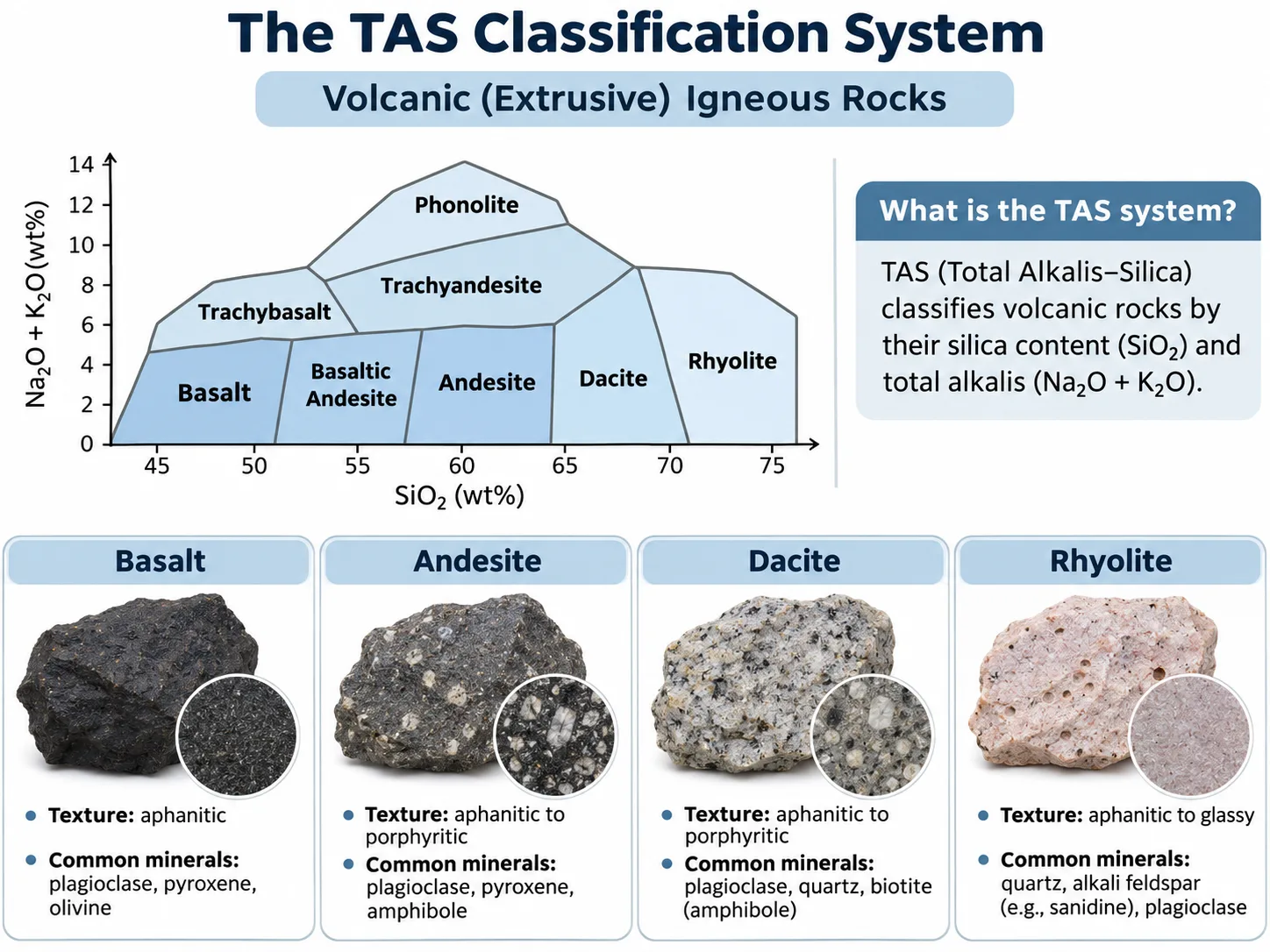
Basalt typically contains approximately 45–52 weight percent SiO₂, although the exact chemical classification depends on total alkali content and the volcanic-rock classification system used. Iron, magnesium, calcium and aluminum oxides make up significant proportions of the remainder. A dark, fine-grained rock with different chemistry may instead be basaltic andesite, trachybasalt or another volcanic type.
Volcanologists commonly use the Total Alkali–Silica (TAS) diagram, plotting SiO₂ against Na₂O + K₂O, to distinguish fine-grained volcanic rocks where modal minerals cannot readily be counted. The field name “basalt” may be used provisionally in hand specimens, but chemical analysis is needed for formal distinctions near classification boundaries.
Total Alkali–Silica (TAS) diagram: volcanic rocks are classified using SiO₂ and combined Na₂O + K₂O, rather than color alone. GeologyScience scientific illustration.
Tholeiitic basalt is widespread at mid-ocean ridges and in numerous volcanic provinces. Alkaline basalt occurs in many ocean islands and intracontinental volcanic settings. These are petrological categories reflecting magma chemistry and evolution, not visible surface textures. Some series contain transitional compositions and should not be classified from a photograph.
How Does Basalt Form?
Basalt flow exposed at the surface; cooling converts lava into solid volcanic rock. Photo: GeoDIL. Original photograph; CC0 1.0. Converted to WebP.
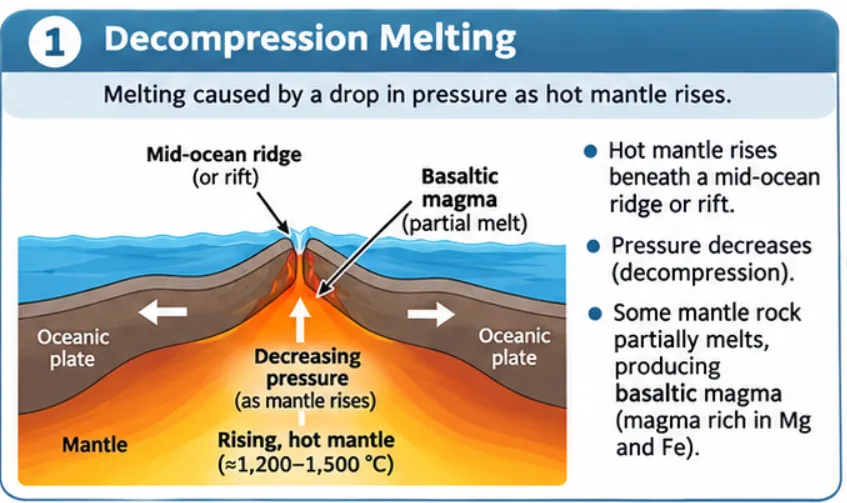
Basaltic magma commonly originates by partial melting of mantle peridotite. As hot mantle rock rises, pressure can decrease enough to trigger melting without requiring a large temperature increase. The resulting melts rise, may crystallize or mix with other melts, and eventually erupt through fractures or volcanic vents.
When lava reaches the surface, cooling produces fine-grained or partly glassy rock. Cooling can be rapid at the air–lava interface and extremely rapid underwater. Crystals that began growing earlier within the magma can remain as phenocrysts inside a finer matrix. Many basaltic lavas erupt at temperatures on the order of roughly 1,000–1,200 °C, but the range varies with chemistry and circumstances.
Decompression melting: rising mantle can partially melt as pressure falls beneath spreading ridges. GeologyScience scientific illustration.
Mid-ocean ridges are major sites of basaltic crust production as tectonic plates separate. Mantle plumes and hot spots supply magma to many ocean islands and large volcanic provinces. Continental rifts can also erupt basalt, while some subduction-related volcanic arcs generate basaltic magma among other compositions. Source, melting pressure and magma evolution all affect the final rock.
Basalt Lava Flows: Pāhoehoe and ʻAʻā
Ropy pāhoehoe surface from Mauna Iki Crater, Kīlauea, Hawaiʻi, formed by moving fluid lava. Photo: James St. John. Original photograph; CC BY 2.0. Converted to WebP.
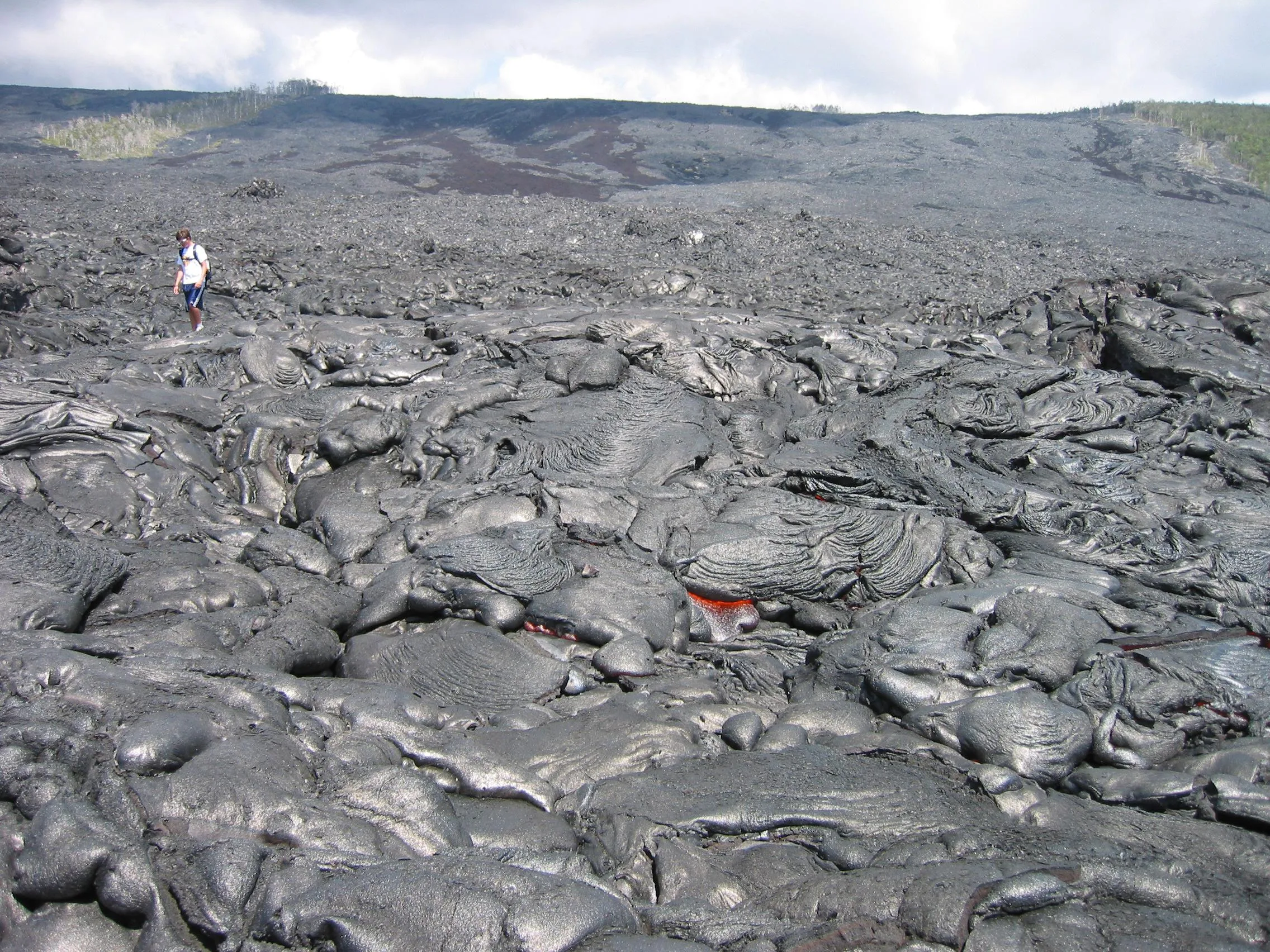
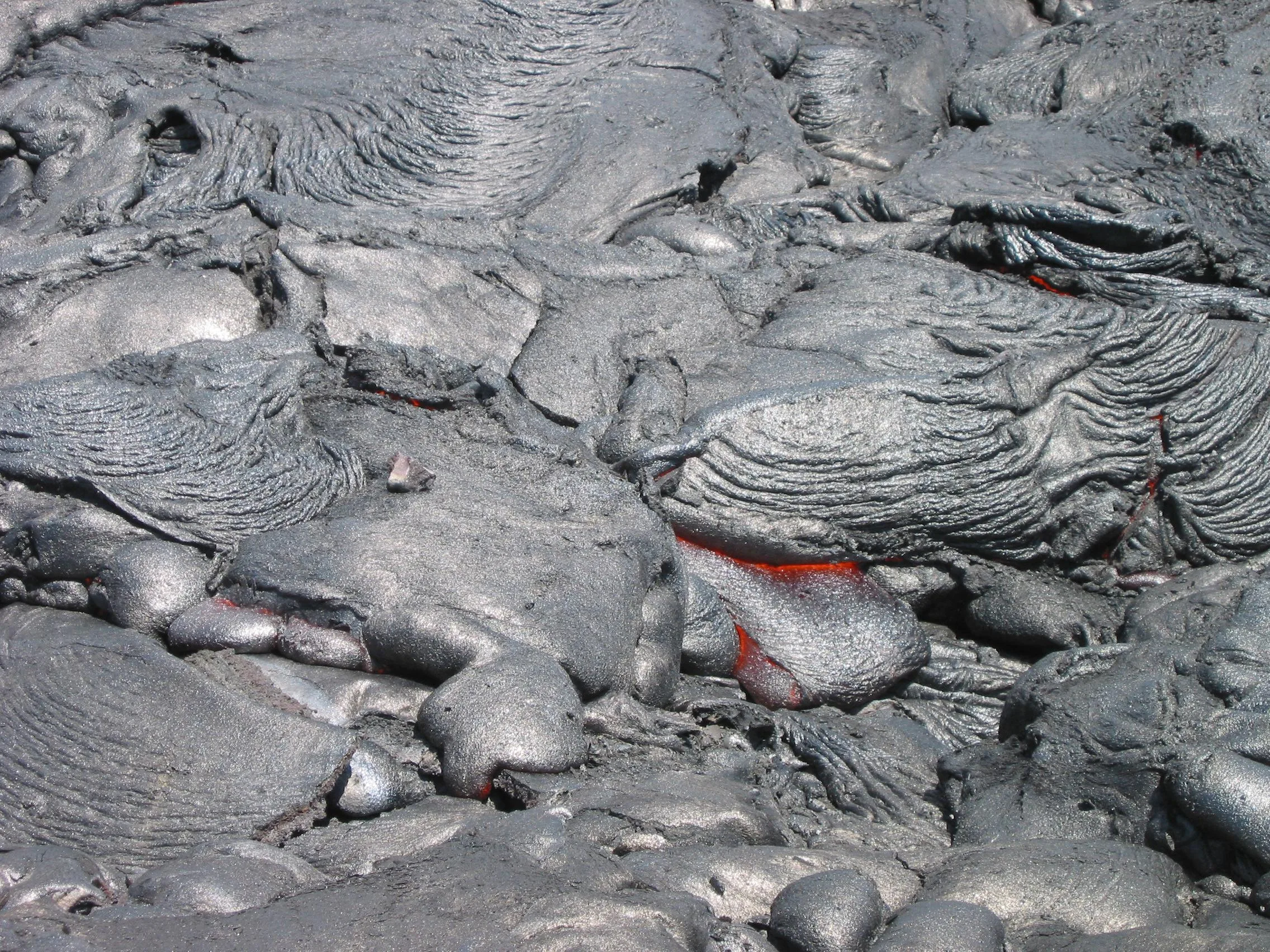
Basaltic lava commonly produces extensive flows because its silica content and melt structure can permit relatively low viscosity compared with many intermediate or felsic magmas. Flow behavior nevertheless depends on temperature, crystal abundance, gas content, eruption rate and slope. Basalt can form thin sheets, stacked flow fields, lava tubes and thick flow interiors.
Pāhoehoe lava has smooth, billowy or rope-like crusts that bend and wrinkle as still-molten lava moves beneath. Its surface may preserve delicate folds and lobes. The name describes a flow surface, not a distinct mineral composition.
An advancing ʻaʻā basalt flow at Kīlauea, Hawaiʻi, with broken clinkers at its front. Photo: U.S. Geological Survey. Original photograph; Public domain (USGS). Converted to WebP.
ʻAʻā lava has a rough, fragmental surface consisting of jagged clinker blocks. As the flow advances, fragmented crust rolls over its denser interior. A single eruption can evolve between pāhoehoe and ʻaʻā behavior as heat loss, viscosity, shear strain and discharge conditions change. These surface types are important observations in volcanic-field mapping.
Basalt Textures Under the Microscope
Basalt thin section under crossed polarizers; fine plagioclase microlites and pyroxene are visible. Photo: Boris Lobastov. Original photograph; CC BY 4.0. Converted to WebP.
The fine groundmass of basalt is often aphanitic, meaning most crystals are too small to distinguish with the naked eye. Under a polarizing microscope, long plagioclase microlites, pyroxene grains, opaque oxides and residual glass may be visible. Cooling history helps determine grain size and whether glass remains.
Porphyritic texture consists of larger early-grown crystals enclosed by finer matrix. An ophitic or subophitic texture can develop where larger pyroxene partly or completely encloses plagioclase laths. Glass-rich basaltic chilled margins may appear very dark and require microscopic or chemical tests for correct identification.
A basalt specimen is not necessarily completely crystalline. Fast quenching can produce glass, whereas slower cooling in thick flows can yield coarser interiors. The intrusive counterpart with readily visible crystals is gabbro; intermediate-grained basaltic dikes are often called dolerite or diabase.
Vesicular Basalt and Scoria
Vesicular basalt: cavities were left as gases escaped from cooling basaltic lava. Photo: James St. John. Original photograph; CC BY 2.0. Converted to WebP.
Vesicles are voids formed when dissolved gases exsolve from lava and become trapped as the rock solidifies. They may be round, elongated or irregular; their shapes can reveal flow and deformation. Vesicles are commonly concentrated near flow tops, where gas bubbles accumulated as the flow cooled.
Vesicular basalt from the Snake River Plain, Idaho; hole size and density vary with gas release. Photo: James St. John. Original photograph; CC BY 2.0. Converted to WebP.
Basalt with scattered voids is described as vesicular basalt. When bubbles are abundant enough to create a very frothy, lightweight rock, the term scoria is often appropriate. There is no single universal percentage of holes separating these descriptions. Unlike the typically silica-rich, highly frothy pumice, ordinary basaltic scoria tends to have darker, thicker bubble walls.
A highly vesicular sample may feel unexpectedly light, so bulk density by itself is not a reliable way to reject basalt. Vesicles can also reduce local strength and change permeability compared with dense, unfractured basalt.
Amygdaloidal Basalt
Amygdaloidal basalt from Pustý vrch, Czech Republic, showing thomsonite-filled cavities. Photo: Marek Novotňák. Original photograph; CC BY-SA 4.0. Converted to WebP.
An amygdale is an original gas cavity that has subsequently been filled by secondary minerals carried by circulating fluids. Amygdaloidal basalt therefore began as vesicular lava and acquired mineral-filled pockets after solidification. Common fillings include calcite, quartz, chalcedony and zeolites; the specific assemblage depends on fluid chemistry and temperature.
Amygdaloidal basalt hand specimen from Mohawk Mine, Michigan; minerals fill former gas bubbles. Photo: Mike Davis / GeoDIL. Original photograph; CC0 1.0. Converted to WebP.
The surrounding rock remains basalt even when pale amygdales stand out conspicuously from the dark groundmass. Open vesicles and filled amygdales may coexist in the same hand specimen. The distinction is useful in interpreting groundwater circulation, burial alteration and low-temperature hydrothermal activity.
Pillow Basalt: Lava Erupted Underwater
Pillow basalt exposed at the Marin Headlands, California; rounded lobes indicate subaqueous lava emplacement. Photo: Eurico Zimbres. Original photograph; CC BY-SA 3.0. Converted to WebP.
Pillow basalt consists of rounded, interconnected lava lobes that form when basaltic lava erupts under water. Water rapidly chills each exposed surface; a glassy crust develops while new magma continues pushing into the lobe. The expanding lava can rupture its crust and form a neighboring pillow.
Pillow shapes are strong indicators of subaqueous eruption, but they occur not only on the deep seafloor: suitable settings also include lakes or other water-covered environments. Geologists examine chilled margins, radial cooling fractures, interpillow sediment and pillow orientation to reconstruct ancient environments.
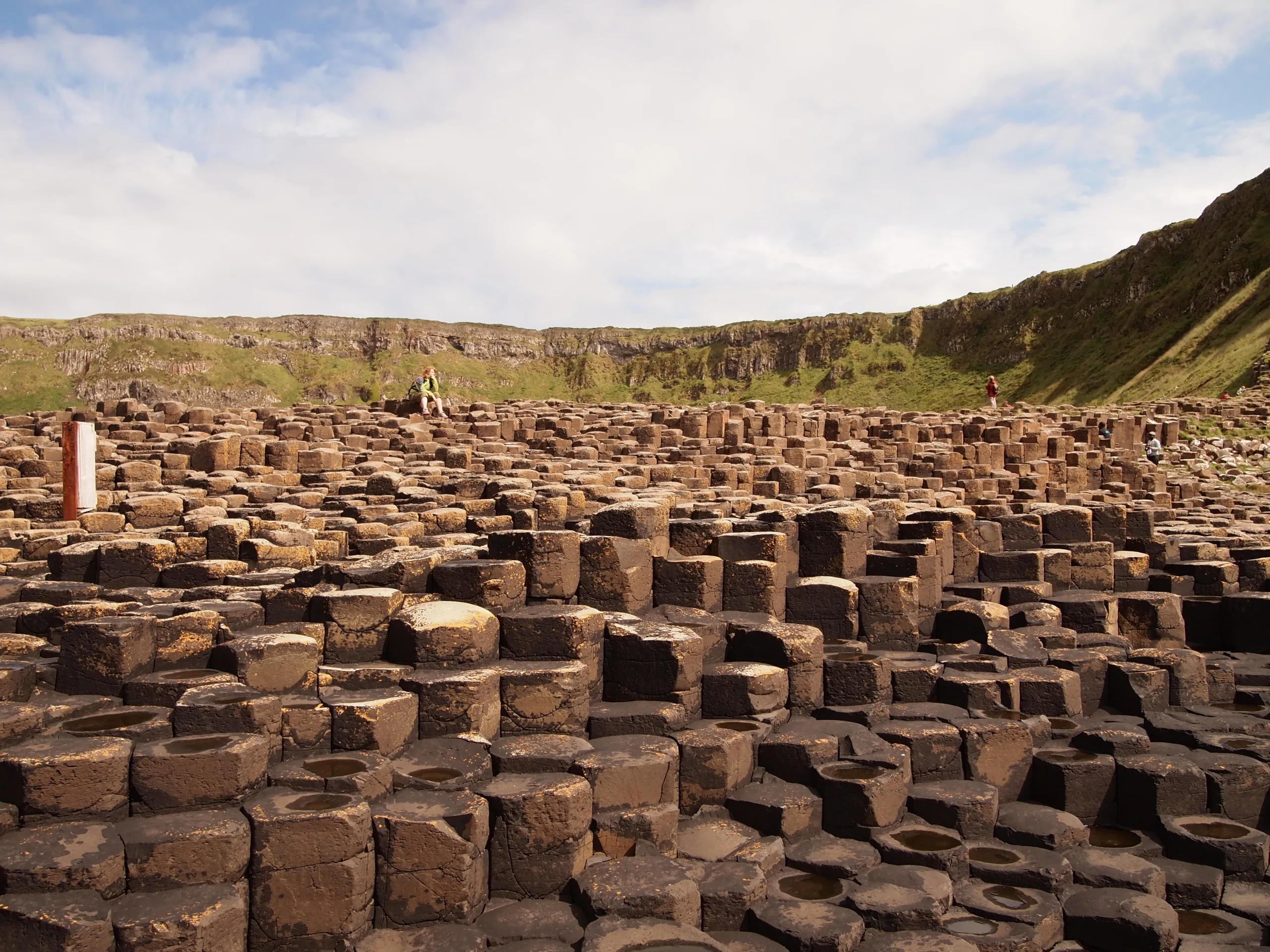
Cooling-contraction joints form the distinctive polygonal columns at the Giant’s Causeway, Northern Ireland. Photo: geolman. Original photograph; CC BY-SA 3.0. Converted to WebP.
Columnar jointing develops when a thick lava flow or other hot rock body cools and contracts. Shrinkage produces fractures that propagate through the solidifying rock, dividing it into polygonal prisms. Five-, six- and seven-sided columns occur, with hexagonal geometry common but not universal.
Columnar joints are spectacular in basalt because extensive flows can cool as thick, relatively coherent bodies. Their orientation approximately follows the direction of cooling, which is why many appear vertical in thick horizontal flows. However, columnar jointing is not unique to basalt; other volcanic and even some shallow intrusive rocks can develop similar fractures.
Dense basalt hand specimen, useful for observing intact rock texture before engineering testing. Photo: GeoDIL. Original photograph; CC0 1.0. Converted to WebP.
Characteristic
Typical observation
Engineering relevance
Color
Dark gray to black when fresh
Color does not provide a strength grade
Grain size
Usually fine grained at the surface
Texture can vary within one lava unit
Particle/mineral density
Often around 2.8–3.1 g/cm³ for dense basalt
Bulk density falls where pores or fractures are abundant
Hardness
Minerals commonly include feldspar and pyroxene, Mohs ~5–7
Mohs hardness is not the same as compressive strength
Porosity
Low in dense interiors; locally high in vesicular tops
Affects permeability, weathering and durability
Jointing
Flow boundaries, cooling joints, faults and fractures
Can dominate rock-mass behavior
Weathering
Can produce clays and oxidized surfaces
May reduce effective engineering quality
Basalt is frequently used as construction stone or aggregate because sound, dense material can be mechanically durable. However, there is no single compressive-strength or bearing-capacity value for all basalt. Strength, deformation and hydraulic behavior depend on joint spacing, fracture fill, vesicles, mineral alteration, weathering grade, anisotropy and testing method.
For a foundation or slope, geotechnical design must distinguish intact-rock properties from rock-mass properties. A strong intact basalt core can occur beside heavily fractured, weathered or vesicular layers. Site investigations use logging, core recovery, fracture mapping and laboratory tests where necessary.
How to Identify Basalt in the Field
Dark, fine-grained basalt hand specimen, illustrating a typical aphanitic appearance. Photo: James St. John. Original photograph; CC BY 2.0. Converted to WebP.
1. Inspect a fresh broken face. Basalt is typically dark gray to black and fine grained. Weathering can create red or brown coatings that obscure the true rock color.
2. Look for major minerals. A hand lens may reveal pale plagioclase laths, dark pyroxene or green olivine phenocrysts. Most crystals in the groundmass remain microscopic.
3. Check texture. Vesicles, amygdales, ropy lava crust, chilled margins, pillows or columnar joints can support a volcanic interpretation. None is individually exclusive to basalt.
4. Check the setting. Lava flows, dikes, volcanic plateaus and pillow-bearing sequences make a basaltic interpretation plausible. Contact relations and associated rocks can be decisive.
5. Avoid unreliable shortcuts. A magnet may respond to iron oxides in some basalt but not all; the acid reaction of calcite-filled vesicles does not mean the basalt itself is limestone. Dark sedimentary rocks can mimic a basalt hand specimen.
6. Confirm uncertain cases. Thin-section petrography, bulk-rock chemistry and other laboratory methods are appropriate where basalt must be distinguished precisely from andesite, trachybasalt or altered mafic rocks.
Basalt vs Gabbro, Andesite, Diabase and Obsidian
Gabbro, an intrusive mafic rock broadly similar in composition to basalt but commonly much coarser grained. Photo: GeoDIL. Original photograph; CC0 1.0. Converted to WebP.
Rock
Main difference from basalt
Practical clue
Basalt
Fine-grained, mafic volcanic rock
Dark fine matrix, possible vesicles or phenocrysts
Volcanic glass rather than a normal crystalline basaltic rock
Shiny glassy texture and conchoidal fracture; composition can vary
Basalt and gabbro are broadly compositional counterparts; cooling rate and emplacement control much of their texture difference. Basalt can be confused with andesite because both may be dark, aphanitic and porphyritic. Proper classification uses mineralogy and, when needed, whole-rock chemical data rather than color or locality alone.
Where Is Basalt Found?
Natural basalt flow exposure from the GeoDIL geological collection. Photo: GeoDIL. Original photograph; CC0 1.0. Converted to WebP.
Ocean floor: Basalt is a major volcanic component of oceanic crust. New basaltic crust is continually produced at spreading ridges, commonly with pillow lavas and sheeted dikes.
Hawaiʻi and other ocean islands: Basalt builds many shield volcanoes. Individual islands expose pāhoehoe, ʻaʻā, pyroclastic deposits and intrusive rocks as well as massive lava flows.
Iceland: Basaltic volcanism is associated with the Mid-Atlantic Ridge and a mantle upwelling system. Lava fields, fissure eruptions and columnar jointing are widespread.
Continental flood-basalt provinces: The Deccan Traps in India, the Columbia River Basalt Group in the United States and other large igneous provinces preserve vast successions of basaltic lava.
Ancient volcanic belts: Metamorphosed basalt occurs in greenstone belts and fragments of former ocean crust. Some ancient pillow structures still reveal the original underwater eruption environment.
Basaltic compositions are also common in lunar mare plains and have been documented on Mars. Planetary volcanic rocks are not always identical in chemistry to terrestrial basalt, so interpretation relies on spacecraft measurements, samples and geological context.
Weathering, Alteration and Metamorphism
Spheroidal weathering creates concentric weathering rinds around less altered basalt cores. Photo: Eurico Zimbres. Original photograph; CC BY-SA 2.5. Converted to WebP.
Basalt reacts with oxygen, water and chemical weathering agents. Olivine and pyroxene commonly alter faster than some more resistant minerals, and iron oxidation produces red or brown staining. Jointed or vesicular rock exposes more internal surface to fluids, accelerating local alteration.
Spheroidal weathering develops when chemical alteration advances inward from joints and edges, rounding blocks while preserving a firmer core. In warm, wet climates, prolonged weathering of mafic rock can generate clay-rich soils and iron-rich residual materials; soil development also depends on drainage, climate and time.
Hydrothermal fluids can fill vesicles with calcite, silica or zeolites and alter mafic minerals to chlorite, epidote or related minerals. With metamorphism, original basalt can become greenstone, greenschist or more strongly recrystallized mafic metamorphic rock. Original lava textures may remain visible, but they can also be partly destroyed.
Uses of Basalt
Basalt quarry at Gracze, Poland; basalt is extracted for hard-rock and aggregate applications. Photo: IMnext. Original photograph; CC BY-SA 4.0. Converted to WebP.
Crushed stone and aggregate: Dense, sound basalt is processed for road base, concrete aggregate, railway ballast and other civil-engineering uses. It must meet the relevant grading, abrasion, durability and chemical standards; not every basalt deposit is suitable for every application.
Dimension stone and paving: Basalt can be cut into pavers, kerbstones, cladding and landscaping blocks. Columnar structures may be exploited as natural stone, but joints, porosity and weathering affect finished-piece quality.
Mineral wool and fibers: Certain basalt compositions can be melted for rock wool and continuous basalt fiber. Product performance depends on feedstock chemistry and manufacturing conditions.
Scientific applications: Fresh basalt provides samples for studying mantle melting, volcanism, paleomagnetism and crustal evolution. Weathering of certain basaltic materials also plays a role in discussions of long-term carbon mineralization; field-scale outcomes depend on chemical kinetics and environmental conditions.
Frequently Asked Questions
Is basalt an igneous rock? Yes. Basalt is a mafic volcanic (extrusive) igneous rock formed from cooled basaltic lava.
What minerals make up basalt? Mostly plagioclase feldspar and pyroxene, with variable olivine and iron–titanium oxides.
Why is basalt black? Its mafic minerals and fine-grained groundmass absorb light and commonly give fresh basalt a dark gray or black appearance.
Is basalt intrusive or extrusive? Basalt is primarily extrusive. Gabbro is a coarse-grained intrusive counterpart, and diabase/dolerite may occur in shallow intrusions.
What is the difference between basalt and granite? Basalt is generally darker, finer-grained and mafic; granite is coarse-grained and felsic, commonly containing quartz and potassium feldspar.
Does basalt contain quartz? Typical basalt is not quartz-rich. Quartz xenocrysts or silica-rich contamination can occur locally, but a quartz-rich rock needs careful reclassification.
Can basalt have holes? Yes. Gas bubbles may be trapped during cooling, forming vesicles; secondary minerals can later fill them as amygdales.
Is all basalt magnetic? No. Magnetic response depends on the amount, grain size and state of magnetic iron-bearing minerals and cannot confirm identification alone.
How does pillow basalt form? Basaltic lava entering water rapidly chills and forms rounded lobes with glassy or fine-grained crusts.
Why does basalt form hexagonal columns? Cooling contraction can generate polygonal joints, commonly hexagonal, through thick lava and some other hot rock bodies.
Is basalt strong enough for foundations? Some intact basalt is very strong, but engineering design depends on fractures, vesicles, weathering, groundwater and measured rock-mass properties.
Where is basalt most common? It forms a major part of the upper oceanic crust and is abundant in ocean islands, rift zones, volcanic plateaus and ancient mafic successions.
All photographs in this article are actual rock specimens, outcrops or field locations. The photo author, original image and license are provided directly beneath each image. Two visual classification/process diagrams retained from GeologyScience are identified as scientific illustrations, not documentary photographs.
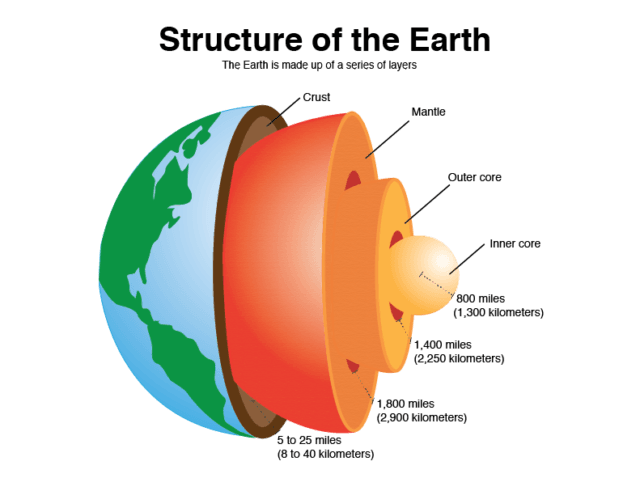
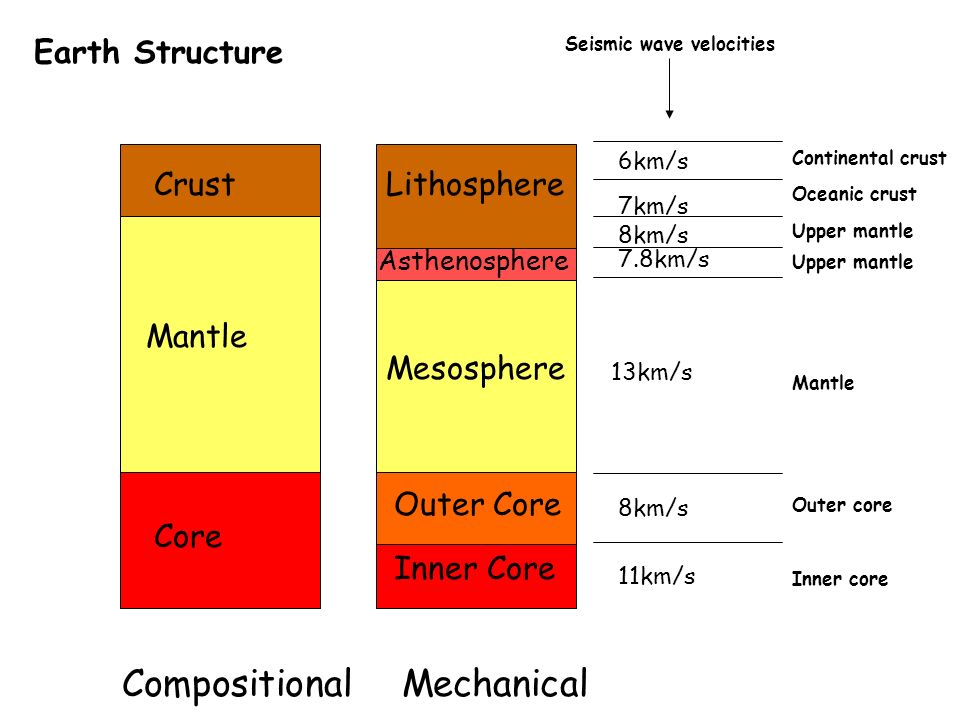
Our planet may look peaceful from space, but beneath its surface lies a restless interior filled with heat, motion, and complexity. The structure of the Earth reveals how our planet was built, how it has evolved, and why it remains geologically active. From the thin crust we live on to the molten outer core that generates Earth’s magnetic field, each layer plays a vital role in shaping the planet we call home.
Structure of Earth
Introduction: A Dynamic Planet Beneath Our Feet
The Earth is not a solid, unchanging sphere. It is a dynamic system composed of layers with different compositions, temperatures, and physical properties. These layers interact continuously through processes such as plate tectonics, volcanism, earthquakes, and mantle convection.
Understanding Earth’s internal structure helps scientists explain how continents drift, mountains form, and why some regions are prone to earthquakes and volcanoes. The study of Earth’s structure is essential not only for geology but also for engineering, mining, and natural hazard assessment.
How We Know What Lies Beneath
No one has ever traveled deeper than about 12 kilometers into the Earth’s crust — the depth of the Kola Superdeep Borehole in Russia. Yet scientists have mapped Earth’s interior using indirect evidence, primarily from seismic waves produced by earthquakes.
These waves travel at different speeds through solids, liquids, and gases. By studying how they refract or reflect, geophysicists have identified distinct internal layers with different densities and compositions.
Other sources of information include:
Meteorites, which are thought to represent the early building materials of the planet.
Earth’s magnetic field, which suggests movement of molten iron in the outer core.
Gravity measurements, which help determine density variations inside the planet.
Main Layers of the Earth (Chemical Composition)
Geologists divide the Earth into three primary layers based on chemical composition: the crust, mantle, and core.
Each layer has unique materials and density, contributing to Earth’s physical behavior and geological activity.
1. The Crust – Earth’s Outer Skin
The crust is the outermost and thinnest layer of Earth. It forms the solid surface where we live and where most geological processes — like earthquakes, mountain building, and erosion — occur.
There are two main types of crust:
Continental Crust
Thickness: 30–70 km
Composition: Mainly granite, quartz, feldspar, and silica-rich rocks
Average density: 2.7 g/cm³
Age: Up to 4 billion years old
Oceanic Crust
Thickness: 5–10 km
Composition: Mostly basalt and gabbro, rich in iron and magnesium
Density: ~3.0 g/cm³
Age: Rarely older than 200 million years due to seafloor recycling
The crust and the uppermost mantle together form the lithosphere, a rigid shell broken into tectonic plates that float on the softer asthenosphere beneath.
2. The Mantle – The Largest Layer
Beneath the crust lies the mantle, which makes up about 84% of Earth’s volume and extends to a depth of 2,900 kilometers. It is composed mainly of silicate minerals rich in magnesium and iron (like olivine and pyroxene).
Although solid, the mantle behaves like a very viscous fluid over long timescales. This slow movement — known as mantle convection — drives the motion of tectonic plates.
Upper Mantle (to ~660 km)
Includes the asthenosphere, a semi-plastic zone that allows plate movement.
Temperature: 500–900°C near the crust, increasing with depth.
Lower Mantle (660–2,900 km)
More rigid due to higher pressure.
Composed mainly of perovskite and ferropericlase minerals.
Temperature: Up to 3,000°C.
Mantle convection currents carry heat from the deep interior to the surface, fueling volcanic activity and the continuous reshaping of Earth’s crust.
3. The Core – Earth’s Engine Room
At the center lies the core, a metallic sphere primarily made of iron (Fe) and nickel (Ni). It accounts for about 15% of Earth’s volume but one-third of its mass due to high density.
Scientists divide it into two parts:
Outer Core
Depth: 2,900–5,100 km
Composition: Liquid iron and nickel with lighter elements like sulfur and oxygen.
Temperature: 4,000–5,500°C
This molten metal moves in swirling currents, creating the geomagnetic field through the dynamo effect.
Inner Core
Depth: 5,100–6,371 km (to the planet’s center)
Composition: Solid iron-nickel alloy
Temperature: Up to 6,000°C — as hot as the Sun’s surface
Despite high temperature, enormous pressure keeps it solid.
The rotation and convection of the outer core are essential to maintaining Earth’s magnetic shield, which protects the planet from harmful solar radiation.
What should you understand about the interior of the earth?
It is not possible to know about the earth’s interior by direct observations because of the huge size and the changing nature of its interior composition.
It is an almost impossible distance for the humans to reach till the centre of the earth (The earth’s radius is 6,370 km).
Through mining and drilling operations we have been able to observe the earth’s interior directly only up to a depth of few kilometers.
The rapid increase in temperature below the earth’s surface is mainly responsible for setting a limit to direct observations inside the earth.
But still, through some direct and indirect sources, the scientists have a fair idea about how the earth’s interior look like.
Mechanical (Physical) Layers of the Earth
In addition to chemical composition, geologists also classify Earth into layers based on physical properties like rigidity and flow:
Asthenosphere – Semi-fluid layer beneath the lithosphere; allows plates to move.
Mesosphere (Lower Mantle) – Strong, dense layer under the asthenosphere.
Outer Core – Liquid metallic layer generating magnetic field.
Inner Core – Solid, dense metallic center.
These physical layers explain how energy and materials move through the planet — from earthquakes and volcanic eruptions to the slow drift of continents.
Temperature, Pressure, and Density Inside Earth
All three increase with depth:
Depth (km)
Temperature (°C)
Pressure (GPa)
Density (g/cm³)
Surface
~20
0
2.6–3.0
100
1,200
3
3.3
1,000
2,500
40
4.5
2,900 (Core)
3,500–4,000
135
5.5
Center (~6,400)
6,000
360
13
These gradients drive convection, volcanic activity, and the creation of new crust at mid-ocean ridges.
CONRAD and MOHO discontinuities
How the Layers Interact: Earth’s Internal Dynamics
The interaction between these layers generates nearly every geological process on our planet:
Tectonic plate movement occurs where the rigid lithosphere rides over the plastic asthenosphere.
Subduction zones recycle old oceanic crust into the mantle.
Mantle plumes rise toward the surface, creating volcanoes and hotspots.
Outer core convection powers the magnetic field, shielding life from cosmic radiation.
Earthquakes result from stress accumulation where plates collide, separate, or slide past each other.
Together, these interactions form a living, breathing planet.
Formation and Evolution of Earth’s Layers
The Earth formed about 4.54 billion years ago from dust and gas in the early solar system. Intense bombardment and radioactive decay melted much of the planet, causing heavy elements like iron and nickel to sink toward the center, forming the core.
Lighter silicates floated upward, creating the mantle and crust. This differentiation established the basic structure that persists today.
Over geological time, cooling and plate motion have modified these layers — continents grew, oceans opened and closed, and mountains rose and eroded. Yet the internal layering remains the framework of Earth’s evolution.
Composition of Earth
Major Elements and Minerals in Earth’s Composition:
Oxygen (O): Oxygen is the most abundant element in Earth’s composition, making up approximately 46.6% of the Earth’s crust by weight. It is a crucial component of minerals and compounds, such as silicates and oxides.
Silicon (Si): Silicon is the second most abundant element in the Earth’s crust, accounting for about 27.7% of its composition. It is a key component in various silicate minerals, which are the primary building blocks of the Earth’s crust.
Aluminum (Al): Aluminum makes up around 8.1% of the Earth’s crust. It is often found in minerals like feldspar, bauxite, and various silicates.
Iron (Fe): Iron is another essential element in Earth’s composition, constituting approximately 5% of the Earth’s crust. It is found in various minerals, including hematite and magnetite.
Calcium (Ca): Calcium makes up about 3.6% of the Earth’s crust and is commonly found in minerals like calcite and gypsum.
Sodium (Na) and Potassium (K): Sodium and potassium together account for around 2.8% of the Earth’s crust. These elements are typically found in minerals like feldspar.
Magnesium (Mg): Magnesium constitutes about 2.1% of the Earth’s crust and is found in minerals such as olivine and serpentine.
Titanium (Ti): Titanium makes up approximately 0.57% of the Earth’s crust and is present in minerals like ilmenite and rutile.
Hydrogen (H): While hydrogen is not a major component of the Earth’s crust, it is a significant element in the Earth’s overall composition, mainly in the form of water (H2O).
Other Elements: Various other elements, including sulfur, carbon, phosphorus, and many trace elements, are present in smaller amounts in the Earth’s composition.
Distribution of Elements Within Earth’s Layers:
Crust: The Earth’s crust is primarily composed of silicate minerals, including quartz, feldspar, mica, and various types of rock. Silicon and oxygen are the most abundant elements in the crust, forming the backbone of these minerals.
Mantle: The mantle is composed mainly of silicate minerals, with iron and magnesium as dominant elements. Olivine, pyroxenes, and garnet are common minerals found in the mantle.
Outer Core: The outer core is primarily composed of liquid iron and nickel. This layer is responsible for generating Earth’s magnetic field, with iron being the dominant element.
Inner Core: The inner core is composed of solid iron and nickel. Despite the extremely high temperatures, the intense pressure keeps these elements in a solid state.
The distribution of elements within Earth’s layers is a result of the differentiation and separation of materials during the Earth’s early history. The layered structure of the Earth is a consequence of the physical and chemical processes that have occurred over billions of years, including planetary accretion, differentiation, and geological activity.
Interesting Facts About the Earth’s Interior
The inner core grows slowly as the planet cools, solidifying about 1 mm per year.
The magnetic field flips polarity every few hundred thousand years — north becomes south and vice versa.
Mantle plumes may reach speeds of 10 cm per year, fueling volcanic chains like Hawaii.
Seismic shadow zones prove that the outer core is liquid and the inner core is solid.
The lithosphere’s thickness ranges from 5 km beneath oceans to over 100 km under continents.
Importance of Studying Earth’s Structure
Understanding the structure of the Earth is crucial for:
Predicting earthquakes and volcanic eruptions.
Locating natural resources like oil, gas, and minerals.
Engineering and construction safety (knowing crustal stability).
Understanding planetary evolution, not just on Earth but across other rocky planets.
In short, studying Earth’s structure allows us to understand the planet’s past and prepare for its future.
Summary and Key Facts
The Earth consists of three main compositional layers: crust, mantle, and core.
Physically, it includes lithosphere, asthenosphere, mesosphere, outer core, and inner core.
Seismic data provide the main evidence for internal structure.
Heat, pressure, and density increase toward the center.
The outer core is liquid and generates Earth’s magnetic field.
The mantle drives plate tectonics through convection currents.
The structure of the Earth is key to understanding earthquakes, volcanoes, and continental drift.
Earth’s Magnetic Field
Earth’s magnetic field is a crucial and complex feature that surrounds our planet. It plays a significant role in our daily lives and has several important functions. Here’s an overview of Earth’s magnetic field:
1. Generation of Earth’s Magnetic Field:
Earth’s magnetic field is primarily generated by the movement of molten iron and nickel in the outer core of the planet. This process is known as the geodynamo.
The geodynamo is driven by the heat generated from the decay of radioactive isotopes in the Earth’s interior and the cooling of the core.
2. Magnetic Polarity:
Earth’s magnetic field has a north and south magnetic pole, similar to a bar magnet. However, these magnetic poles are not aligned with the geographic North and South Poles.
The positions and orientations of Earth’s magnetic poles can change over geological time, and these reversals in polarity are recorded in rocks as “magnetic striping.”
3. Magnetic Field Components:
Earth’s magnetic field is characterized by its strength, inclination, and declination.
Magnetic Strength: This represents the intensity of the magnetic field at a specific location on Earth’s surface.
Inclination: It refers to the angle at which the magnetic field lines intersect the Earth’s surface, varying from near-vertical at the magnetic poles to horizontal at the equator.
Declination: This is the angle between true north (geographic north) and magnetic north.
4. Magnetic Field Function and Importance:
The Earth’s magnetic field has several important functions and benefits:
It serves as a protective shield, deflecting harmful charged particles from the Sun, such as solar wind and cosmic rays. This shield is known as the magnetosphere and helps protect the atmosphere and life on Earth.
It enables navigation and orientation for migratory animals, including birds and sea turtles, that use the magnetic field as a compass.
Compasses rely on Earth’s magnetic field for navigation and orientation.
The magnetic field is used in various scientific and geological studies, including paleomagnetism (the study of ancient magnetic fields recorded in rocks) to understand Earth’s history and the movement of tectonic plates.
The magnetic field is essential for modern technology, including magnetic resonance imaging (MRI) in medicine and various applications in geophysical exploration.
5. Changes in Earth’s Magnetic Field:
The Earth’s magnetic field is not constant and can undergo changes over time, including secular variation (gradual changes) and geomagnetic reversals (flips in magnetic polarity).
Researchers monitor these changes, and recent observations have shown that the magnetic North Pole is shifting at a faster rate than in the past.
Understanding Earth’s magnetic field is essential for various scientific, technological, and environmental reasons. It is an integral part of the planet’s geology and plays a vital role in maintaining the conditions necessary for life on Earth.
References
Wikipedia. Structure of the Earth – Composition and Dynamics.
U.S. Geological Survey (USGS). Structure of the Earth – National Park Service Geology Education.
Press, F., & Siever, R. (1986). Earth: An Introduction to Physical Geology. W.H. Freeman.
British Geological Survey (BGS). Earth’s Interior and Structure.
Mindat.org. Earth Layers and Composition Data.
NASA Earth Observatory. Seismic and Magnetic Evidence of Earth’s Structure.
Polarizing petrographic microscope used for optical mineral identification in geological thin sections.
Under an ordinary microscope, many minerals appear nearly colorless or difficult to distinguish. When examined using polarized light, however, the same minerals may reveal brilliant interference colors, distinctive extinction patterns, and subtle optical features that help geologists identify them.
These characteristics form the foundation of optical mineralogy, a branch of mineralogy that studies how light interacts with minerals and their crystal structures.
By examining thin sections of rocks under a petrographic microscope, geologists can identify mineral grains, investigate crystal relationships, and interpret the geological processes responsible for rock formation.
The optical properties of minerals include refractive index, relief, pleochroism, birefringence, interference colors, extinction, and other characteristics that describe how minerals interact with light.
This guide explains these properties, the differences between plane-polarized light (PPL) and crossed-polarized light (XPL), and how they are used to identify common minerals in thin section.
What Are the Optical Properties of Minerals?
Optical properties describe how minerals transmit, absorb, reflect, refract, and modify light.
These properties depend on a mineral’s chemical composition, crystal structure, and optical orientation.
Minerals with different atomic arrangements can behave differently even when they appear similar in hand specimens.
For example, quartz and calcite can both be transparent or colorless, but their birefringence and interference colors differ substantially.
Optical properties allow geologists to examine minerals at scales too small for reliable identification with the naked eye.
Important Optical Properties
Property
What it reveals
Typical observation
Color
Absorption of visible light
PPL
Pleochroism
Direction-dependent absorption
PPL during stage rotation
Relief
Refractive-index contrast
PPL
Cleavage
Crystallographic breakage directions
PPL
Birefringence
Difference between refractive indices
XPL
Interference colors
Optical retardation
XPL
Extinction
Optical orientation of a grain
XPL
Twinning
Crystallographic relationships within a crystal
Commonly XPL
Interference figures
Optical symmetry and orientation
Conoscopic observations
Individual minerals are identified using several properties together rather than relying on one characteristic.
The Petrographic Microscope
A petrographic microscope is a specialized optical microscope used to examine minerals and rocks through polarized light.
It typically includes a light source, polarizer, rotating stage, objective lenses, analyzer, and additional optical accessories.
How a Petrographic Microscope Works
Light passes through a polarizer before entering the mineral specimen.
The polarizer restricts transmitted light to a particular vibration direction.
When the analyzer is inserted, it is usually oriented perpendicular to the lower polarizer.
Anisotropic minerals can modify the polarization of transmitted light, producing interference effects that become visible under crossed polarizers.
Rotating the microscope stage allows geologists to observe changes in color, brightness, and extinction.
What Is a Thin Section?
A petrographic thin section is a very thin slice of rock mounted on a glass slide and polished or ground to a controlled thickness.
Standard transmitted-light rock thin sections are commonly approximately 30 micrometers (0.03 mm) thick.
At this thickness, many minerals that appear dark or opaque in hand specimens become sufficiently transparent for microscopic examination.
Some minerals, such as common opaque sulfides and oxides, remain opaque under transmitted light.
The consistent thickness of thin sections is particularly important when comparing interference colors and birefringence.
Plane-Polarized Light (PPL)
Garnet-mica schist observed under plane-polarized light showing garnet, mica, and quartz grains.
Plane-polarized light, commonly abbreviated PPL, is used when the lower polarizer is inserted and the upper analyzer is removed.
PPL is especially useful for examining mineral color, pleochroism, relief, cleavage, crystal shape, and inclusions.
Color Under PPL
Minerals may appear colorless or display characteristic colors under plane-polarized light.
Quartz, feldspar, and many other minerals commonly appear colorless in standard thin sections.
Biotite frequently appears brown or greenish brown, while some amphiboles display green, brown, or blue colors.
A mineral’s thin-section color may differ substantially from its appearance in a hand specimen because the section is extremely thin.
Relief
Relief describes how strongly mineral grain boundaries and surface imperfections stand out relative to their surroundings.
It is primarily influenced by differences between the refractive index of a mineral and that of the mounting medium or neighboring minerals.
Minerals with low relief blend visually into their surroundings.
Minerals with high relief appear more sharply outlined.
For example:
Quartz: Generally low relief.
Feldspar: Generally low relief.
Pyroxene: Commonly moderate to high relief.
Garnet: Commonly high relief.
Relief can be positive or negative relative to the mounting medium, and its apparent strength may vary with optical orientation.
Cleavage and Crystal Habit
Cleavage traces may appear as parallel lines or intersecting sets within a mineral grain.
These features can help distinguish minerals with similar colors.
For example, many amphiboles display cleavage directions that intersect at approximately 56° and 124° in appropriately oriented sections.
Pyroxenes commonly show cleavage intersections close to 90°.
Crystal habit also provides useful evidence. Minerals may occur as elongated prisms, plates, irregular grains, or other recognizable forms.
However, the apparent shape of a mineral depends on how the three-dimensional crystal was cut by the thin section.
Pleochroism
Biotite mineral grains displaying brown pleochroic colors in plane-polarized light.
Pleochroism is a change in a mineral’s apparent color or color intensity as its orientation relative to polarized light changes.
It occurs because certain anisotropic minerals absorb light differently in different crystallographic directions.
To observe pleochroism, a geologist rotates the microscope stage under PPL.
A biotite crystal, for example, may change from relatively pale brown to dark brown during rotation.
Some amphiboles exhibit green, brown, or blue pleochroic colors.
Pleochroism is normally examined under PPL rather than XPL.
Cross-Polarized Light (XPL)
Side-by-side photomicrographs of a rock thin section under plane-polarized and crossed-polarized light.
Cross-polarized light, abbreviated XPL or sometimes XP, is used when the analyzer is inserted perpendicular to the lower polarizer.
With no anisotropic specimen affecting the light, the crossed polarizers produce a dark field of view.
When an anisotropic mineral is present, it may modify the polarization of transmitted light, allowing some light to pass through the analyzer.
This produces interference colors and other characteristic optical effects.
What Can Be Observed Under XPL?
XPL is particularly useful for examining:
Interference colors.
Birefringence.
Extinction behavior.
Crystal twinning.
Undulose extinction.
Some internal crystal structures and zoning patterns.
The appearance of a mineral changes as the microscope stage rotates.
Many anisotropic mineral grains become dark at regular intervals and display their strongest interference colors between extinction positions.
PPL vs. XPL
Feature
PPL
XPL
Analyzer
Removed
Inserted
Mineral body color
Usually observed clearly
May be obscured by interference effects
Relief
Easily observed
Less commonly assessed
Pleochroism
Observed by stage rotation
Not normally evaluated
Cleavage
Often clearly visible
May remain visible
Interference colors
Not produced in the usual crossed-polarizer sense
Commonly visible
Extinction
Not normally assessed
Important diagnostic feature
Twinning
Sometimes visible
Often especially clear
Geologists routinely switch between PPL and XPL to build a more complete understanding of a mineral grain.
Isotropic vs. Anisotropic Minerals
Garnet-mica schist thin section under crossed polarizers showing dark garnet crystals and colored surrounding minerals.
Minerals are optically classified as isotropic or anisotropic according to how their refractive behavior varies with direction.
Isotropic Minerals
Isotropic minerals have the same refractive index in every optical direction.
Minerals belonging to the cubic crystal system are optically isotropic under ideal conditions.
Examples include garnet, spinel, and fluorite.
Transparent isotropic minerals can transmit light under PPL.
However, under ideal crossed-polarizer conditions, they remain dark as the microscope stage rotates because they do not produce birefringence.
Strain and other internal effects may occasionally create anomalous optical behavior.
Anisotropic Minerals
Anisotropic minerals have optical properties that depend on the direction in which light travels through the crystal.
They include minerals in the trigonal, tetragonal, hexagonal, orthorhombic, monoclinic, and triclinic crystal systems.
Quartz, calcite, feldspar, mica, amphibole, and pyroxene are familiar examples.
Anisotropic minerals commonly display interference colors and extinction under XPL.
However, a section viewed along an optic axis can show little or no birefringence and may remain dark under crossed polarizers.
Isotropic vs. Anisotropic Comparison
Property
Isotropic
Anisotropic
Refractive behavior
Direction-independent
Direction-dependent
Birefringence
Ideally zero
Generally present except in special orientations
Appearance under PPL
May be transparent or colored
May be transparent or colored
Appearance under XPL
Usually remains dark
Often displays interference colors
Examples
Garnet, spinel
Quartz, calcite, biotite
Refractive Index and the Becke Line
Transparent calcite crystal showing two images of printed text due to double refraction.
The refractive index describes the relationship between the speed of light in a vacuum and its phase velocity within a material.
It is one of the fundamental optical properties used in mineral identification.
Refractive indices vary among minerals and may depend on chemical composition, wavelength, and optical direction.
The Becke Line Test
The Becke line is a bright line that may appear near a boundary between materials with different refractive indices.
It can be used to compare the refractive indices of adjacent minerals or a mineral and its mounting medium.
In the conventional Becke line test, when the microscope is focused upward by increasing the distance between the objective and specimen, the Becke line generally moves toward the material with the higher refractive index.
When the focus is moved in the opposite direction, the line moves toward the material with the lower refractive index.
Correctly interpreting this movement requires knowing the microscope’s focusing direction and using suitable illumination.
The test is especially useful when two nearly colorless minerals have similar appearances.
Birefringence and Interference Colors
Michel-Lévy interference color chart used to estimate mineral birefringence from thin-section observations.
Birefringence is the difference between the refractive indices experienced by two permitted vibration directions in an anisotropic mineral.
When polarized light enters an appropriately oriented anisotropic crystal, two wave components can travel with different phase velocities.
As they pass through the mineral, they develop a phase difference.
When these components are recombined through the analyzer, they can produce interference colors.
What Controls Interference Colors?
The observed interference colors depend mainly on:
The birefringence of the mineral in the observed orientation.
The thickness of the mineral section.
The orientation of the crystal relative to the light path.
The optical retardation can be expressed as:
Retardation = Thickness × Effective Birefringence
This relationship explains why minerals of similar thickness can display different interference colors.
Low-Order and High-Order Interference Colors
Minerals with low birefringence commonly display low-order interference colors.
Quartz and many feldspars usually exhibit gray to white first-order colors in standard thin sections.
Minerals with higher birefringence may display more vivid or higher-order colors.
Calcite, for example, commonly produces high-order interference colors.
Individual grains of the same mineral can display different colors because their crystallographic orientations differ.
The Michel-Lévy Interference Color Chart
The Michel-Lévy chart relates interference colors, optical retardation, birefringence, and section thickness.
For a standard thin section of approximately 30 µm, it helps estimate mineral birefringence from observed interference colors.
However, interference colors can be affected by crystal orientation, variations in section thickness, and the mineral’s own absorption.
The chart therefore provides estimates rather than a complete mineral identification by itself.
Extinction and Extinction Angles
Quartz grain showing nonuniform undulose extinction under crossed-polarized light.
Extinction occurs when an anisotropic mineral grain becomes dark under crossed polarizers at particular stage orientations.
During a full 360° stage rotation, a typical anisotropic grain reaches extinction four times, with successive positions separated by approximately 90°.
The relationship between extinction positions and recognizable crystal directions can help identify minerals.
Parallel Extinction
Parallel extinction occurs when a mineral becomes dark as a recognizable crystallographic direction, such as cleavage or elongation, aligns with a microscope crosshair.
It is common in suitable sections of several minerals, including many orthorhombic minerals.
The exact behavior depends on the orientation of the section.
Inclined Extinction
Inclined extinction occurs when the mineral becomes dark at an angle to a reference direction such as cleavage or crystal elongation.
Many monoclinic minerals show inclined extinction in appropriate sections.
Some amphiboles and pyroxenes exhibit distinctive extinction angles useful for petrographic identification.
Symmetrical Extinction
Symmetrical extinction describes situations where the extinction direction is symmetrically related to two equivalent crystallographic directions or cleavage traces.
It may be observed in suitably oriented sections of several minerals.
Undulose Extinction
Undulose extinction occurs when different parts of a crystal become dark at slightly different stage positions.
Instead of extinguishing uniformly, the grain shows a sweeping or wavy pattern of darkness.
This feature is common in some strained quartz crystals and may indicate crystal deformation.
However, undulose extinction alone is not sufficient to reconstruct a complete deformation history.
Crystal Twinning and Zoning
Plagioclase feldspar with polysynthetic albite twinning visible as parallel bands under crossed-polarized light.
Crystal twinning occurs when two or more domains of a crystal share a specific crystallographic relationship.
Twinning may be formed during crystal growth, transformation, or deformation.
Under XPL, twin domains can show different interference intensities or extinction positions.
Polysynthetic Twinning in Plagioclase
Plagioclase crystal in thin section displaying parallel polysynthetic twin bands under crossed-polarized light.
Under crossed polarizers, these lamellae may appear as alternating light and dark bands.
This feature is particularly useful for distinguishing plagioclase from some other colorless minerals.
The appearance of the bands changes as the microscope stage rotates.
Other Twinning Patterns
Other minerals may display simple, repeated, or cross-hatched twinning patterns.
Microcline feldspar is well known for its characteristic cross-hatched, or tartan, twinning under XPL in suitable orientations.
Crystal Zoning
Crystal zoning occurs when the chemical composition or other internal characteristics of a growing mineral change over time.
Plagioclase commonly shows compositional zoning associated with changes in magma chemistry and crystallization conditions.
Zoning may be visible through differences in optical properties, interference colors, or extinction behavior.
Twinning and zoning are different phenomena, although both can appear as internal patterns within a crystal.
Uniaxial and Biaxial Minerals
Anisotropic minerals are classified optically as uniaxial or biaxial.
Uniaxial Minerals
Diagram of positive and negative uniaxial interference figures showing dark cross patterns.
Uniaxial minerals have one optic axis.
Minerals belonging to the trigonal, tetragonal, and hexagonal crystal systems are generally optically uniaxial.
Quartz and calcite are examples.
They are also classified as optically positive or negative according to the relationship between their ordinary and extraordinary refractive indices.
Biaxial Minerals
Biaxial mineral interference figure diagrams showing curved isogyres and optical sign differences.
Biaxial minerals have two optic axes.
Minerals belonging to the orthorhombic, monoclinic, and triclinic crystal systems are generally optically biaxial.
Many feldspars, amphiboles, pyroxenes, and micas are examples.
Their optical behavior can be described using three principal refractive indices.
Interference Figures
Uniaxial and biaxial optical behavior can be examined using conoscopic illumination and suitable microscope accessories.
The resulting interference figures contain characteristic dark bands and colored patterns.
These features help determine optic-axis orientation, optical character, and optical sign.
Because interference-figure analysis requires specialized microscope settings and careful interpretation, it is generally introduced after basic PPL and XPL observations.
Optical Properties of Common Minerals
Petrographic comparison of amphibole and pyroxene grains with characteristic cleavage traces.
The following table summarizes typical features of several important rock-forming minerals.
These are general identification clues rather than absolute rules for every composition or crystal orientation.
Mineral
Typical PPL appearance
Typical XPL appearance
Useful diagnostic clue
Quartz
Colorless, low relief, no cleavage
Low first-order gray to white
Undulose extinction may occur
Plagioclase
Colorless, low relief
Low-order colors, commonly twinned
Polysynthetic twinning
K-feldspar
Colorless, low relief
Low-order colors
Microcline may show tartan twinning
Calcite
Colorless, high and variable relief
High-order interference colors
Very high birefringence
Biotite
Brown or greenish, commonly pleochroic
Moderate to high interference colors, sometimes masked by body color
One prominent cleavage
Amphibole
Green, brown, or blue in many species
Variable colors, often inclined extinction
Cleavage near 56° and 124°
Pyroxene
Colorless to pale green or brown
Commonly first- to second-order colors
Cleavage intersections close to 90°
Garnet
Commonly colorless to pale, high relief
Usually dark under XPL
Optical isotropy
Mineral chemistry, optical orientation, alteration, and section thickness may modify these appearances.
How to Identify Minerals in Thin Section
Geological thin section under polarized light showing multiple mineral grains and contrasting optical properties.
Mineral identification is most reliable when observations are made systematically.
Step 1: Begin With PPL
Granite thin section under polarized light showing interlocking quartz, feldspar, and mica crystals.
Examine the general rock texture and locate recognizable mineral grains.
Record color, crystal habit, cleavage, relief, and any visible inclusions.
Step 2: Rotate the Stage Under PPL
Look for changes in mineral color or intensity that indicate pleochroism.
This is particularly useful for colored minerals such as biotite and some amphiboles.
Step 3: Switch to XPL
Insert the analyzer and examine interference colors.
Determine whether a grain behaves as isotropic or anisotropic.
Step 4: Observe Extinction
Rotate the stage to identify extinction positions.
Compare extinction directions with cleavage traces or crystal elongation where possible.
Step 5: Examine Twinning and Zoning
Look for repeated twin lamellae, cross-hatched patterns, or compositional zoning.
These features can help distinguish feldspars and other minerals.
Step 6: Consider Mineral Associations
Examine surrounding grains and the overall rock texture.
For example, quartz and feldspar are common in granitic rocks, while amphibole and plagioclase may occur together in amphibolite.
Mineral associations provide useful geological context but do not replace optical observations.
Step 7: Confirm the Identification
Compare the observed characteristics with trusted optical mineralogy references.
When necessary, use interference figures, accessory plates, or laboratory methods such as electron microscopy and mineral chemistry.
A reliable identification should be consistent with multiple observations.
Why Optical Mineralogy Is Important
Cross-polarized thin section of hornfels containing garnet, cordierite, and orthopyroxene.
Optical mineralogy is a fundamental tool in petrology, geological mapping, and mineral research.
Igneous Petrology
Thin-section observations help identify mineral assemblages, crystal textures, and relationships between early and late crystallizing minerals.
This information supports the classification and interpretation of igneous rocks.
Metamorphic Petrology
Optical mineralogy helps recognize minerals, recrystallization, foliation, deformation features, and mineral reactions.
These observations are essential for investigating metamorphic conditions and geological history.
Sedimentary Petrology
Thin sections help geologists identify detrital grains, mineral cements, pore spaces, and diagenetic textures.
These characteristics provide evidence of sediment provenance, transport, deposition, and alteration after burial.
Economic and Engineering Geology
Petrographic examination can identify minerals and textures relevant to ore deposits, aggregate quality, rock durability, and engineering behavior.
In some applications, additional analytical techniques are needed to confirm mineral species and assess hazards.
Frequently Asked Questions About Optical Properties of Minerals
What are the optical properties of minerals?
They are characteristics describing how minerals interact with light, including refractive index, relief, pleochroism, birefringence, interference colors, and extinction.
What is the difference between PPL and XPL?
PPL uses a single polarizer and is useful for examining color, relief, pleochroism, and cleavage. XPL uses crossed polarizers and reveals interference colors, extinction, and many twinning patterns.
Why do minerals show different colors under XPL?
Anisotropic minerals change the relative phase of polarized light components, producing interference colors determined by birefringence, thickness, and crystal orientation.
Do isotropic minerals appear black under PPL?
No. Transparent isotropic minerals may transmit light under PPL. They generally remain dark under XPL in ideal conditions.
What is birefringence?
Birefringence is the difference between refractive indices for different vibration directions in an anisotropic mineral.
Why is a standard thin section about 30 µm thick?
This thickness allows transmitted light to pass through many common minerals while providing consistent optical conditions for comparing interference colors.
What is mineral relief?
Relief describes how strongly a mineral grain stands out from its surroundings, mainly because of refractive-index differences.
What is pleochroism?
Pleochroism is a change in a mineral’s apparent color or absorption when its orientation relative to polarized light changes.
What is extinction under crossed polarizers?
Extinction is the darkening of an anisotropic mineral grain at particular orientations under XPL.
Why does plagioclase show stripes under XPL?
Plagioclase commonly develops polysynthetic twins whose domains show different brightness or extinction behavior under crossed polarizers.
Which minerals remain dark under crossed polarizers?
Optically isotropic minerals such as garnet usually remain dark. Anisotropic minerals viewed along an optic axis can also appear dark.
Can every mineral be identified using optical microscopy?
No. Some minerals have overlapping optical properties, and very fine-grained or altered specimens can be difficult to identify. Additional analytical methods may be required.
Conclusion
The optical properties of minerals reveal valuable information about their crystal structures, chemical compositions, and geological histories.
Plane-polarized light provides observations of color, pleochroism, relief, and cleavage, while crossed-polarized light reveals interference colors, extinction, twinning, and other optical features.
By combining these observations, geologists can distinguish minerals that appear similar in hand specimens and investigate the textures and processes preserved within rocks.
Understanding optical mineralogy is an essential step toward interpreting igneous, sedimentary, and metamorphic rocks through petrographic microscopy.