




Minerals
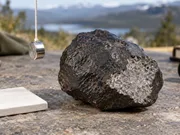
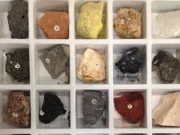
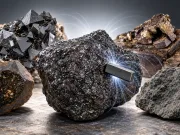
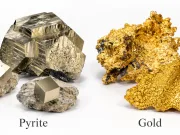
A mineral is a naturally occurring chemical compound usually of crystalline form and not produced by life processes. A mineral has one specific chemical composition, whereas a rock can be an aggregate of different minerals or mineraloids. The study of minerals is called mineralogy. To meet the definition of “mineral” used by most geologists, a substance must meet five requirements:

Apophyllite
Apophyllite is a mineral belonging to the group of phyllosilicates, specifically classified as a zeolite. It is renowned for its striking crystal formations and...

Torbernite
Torbernite is a mineral belonging to the uranyl phosphate group. Its chemical formula is (Cu,U)2(PO4)2·8-12H2O. It typically forms bright green to emerald-green crystals, often...

Titanite (Sphene)
Titanite, or sphene , which means wedge, is a calcium titanium nesosilicate mineral, CaTiSiO5. Trace impurities of iron and aluminium are generally gift. Also normally present are rare earth metals which includes cerium and yttrium; calcium can be partly replaced by thorium.
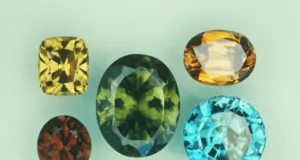
Zircon
Zircon is a zirconium silicate mineral with a chemical composition of ZrSiO4. It is common at some point of the world as a minor constituent of igneous, metamorphic, and sedimentary rocks.Zircon is a popular gemstone that has been used for almost 2000 years.
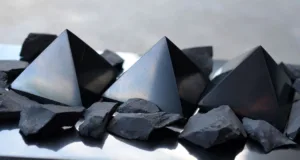
Shungite
Shungite is a rare carbon-based mineral primarily found in Russia, known for its black, lustrous appearance and unique properties, including electrical conductivity and the...

Azurite
Azurite is not a common or abundant mineral, but it is beautiful and its blue color attracts attention. It has been used by people in many parts of the world for thousands of years. Ancient people used it as an ore of copper, as a pigment, as a gemstone, and as an ornamental stone. It is still used for all of these purposes today

Arfvedsonite
Arfvedsonite is a relatively rare mineral that belongs to the amphibole group, a subgroup of silicate minerals. Arfvedsonite is a complex inosilicate mineral with...

Iridescent Rainbow Pyrite
Rainbow pyrite, also known as iridescent pyrite or peacock pyrite, is a captivating mineral known for its stunning metallic luster and a rainbow of...
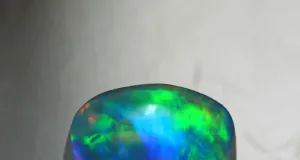
Jelly Opal (Crystal Opal)
Jelly Opal, also known as "Water Opal" or "Crystal Opal," is a unique and captivating variety of opal known for its distinctive optical properties...
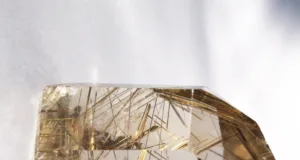
Rutilated Quartz
Rutilated quartz is a type of quartz crystal that contains needle-like inclusions of the mineral rutile (titanium dioxide). These fine, golden, or reddish-brown needle-like...
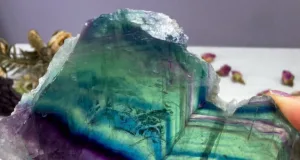
Rainbow Fluorite
Rainbow Fluorite, often simply referred to as Fluorite, is a beautiful and highly sought-after mineral known for its dazzling array of colors and unique...

Rainbow Hematite
Rainbow hematite is a form of hematite, a common iron oxide mineral with the chemical formula Fe2O3. What sets rainbow hematite apart from typical...