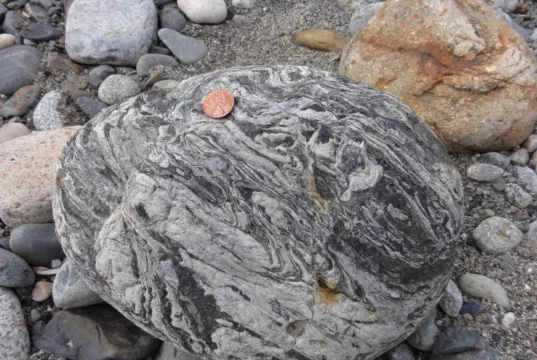
Migmatite

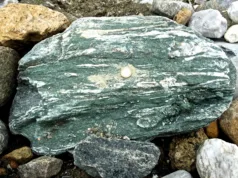
Greenschist

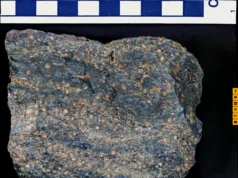
Blueschist

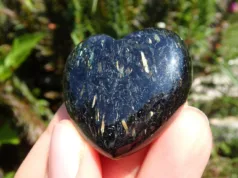
Nuummite

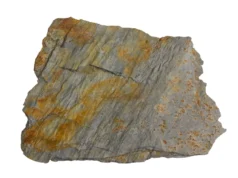
French Slate, Paleoproterozoic; Snowy Range Road roadcut, Medicine Bow Mountains, Wyoming, USA

Phyllite

Foliated Metamorphic Rocks

Home Metamorphic Rocks Foliated Metamorphic Rocks
Foliated approach the parallel association of certain mineral grains that gives the rock a striped appearance. Foliation paperwork while pressure squeezes the flat or elongate minerals within a rock so that they grow to be aligned. These rocks expand a platy or sheet-like structure that reflects the route that pressure become applied.

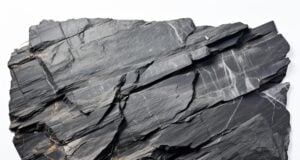
Slate

Slate is a fine-grained, foliated metamorphic rock this is created via the alteration of shale or mudstone by means of low-grade local metamorphism. It is famous for a extensive form of makes use of such as roofing, floors, and flagging due to its sturdiness and appealing look.

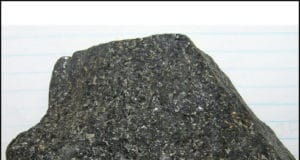
Schist

Schist is medium grade metamorphic rock, formed by means of the metamorphosis of mudstone / shale, or some forms of igneous rock, to a higher diploma than slate, i.E. It has been subjected to better temperatures and pressures.

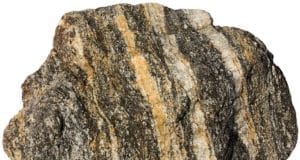
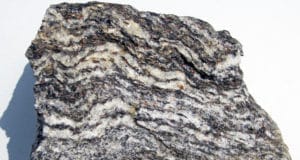
Gneiss

Gneiss is a foliated metamorphic rock ,Is a common dispensed type of rock shaped by high-grade regional metamorphic approaches from pre-current formations that have been initially both igneous or sedimentary rocks Gneiss, metamorphic rock that has a awesome banding, which is apparent in hand specimen or on a microscopic scale.

Amphibolite

Amphibolite, a rock composed in large part or dominantly of minerals of the amphibole institution. The term has been implemented to rocks of both igneous or metamorphic foundation. In igneous rocks, the term hornblendite is greater not unusual and restrictive; hornblende is the maximum not unusual amphibole and is traditional of such rocks.

READ MORE...

The Rarest Gemstones on Earth and Their Geological Origins

A Hidden World Beneath the SurfaceDeep within the Earth’s crust, where intense pressure and heat shape the minerals of our planet, nature hides some...

Granite in Engineering and Design: Composition, Properties and Modern Uses

Granite is one of the most recognizable and most used intrusive igneous rocks on Earth. It is hard, resistant to weathering, aesthetically attractive, and...

10 Fun Geology Experiments You Can Do at Home

You don’t need a laboratory or expensive equipment to explore the wonders of geology. The Earth’s secrets can be discovered right at home —...

The Use and Meaning of Natural Stones in Ancient Civilizations

Since the dawn of human civilization, natural stones have held a special place in the hearts, beliefs, and daily lives of people. Long before...

The Most Beautiful Agate Types Found Around the World

Agate has fascinated humans for thousands of years. This captivating variety of chalcedony—one of the many forms of quartz—has long been admired for its...

Volcanic Eruptions in 2025: Nature’s Power and New Developments

Volcanic eruptions are some of the most awe-inspiring and sometimes devastating displays of nature. The year 2025 has been significant in showcasing these natural...

Obsidian: Nature’s Volcanic Glass – From Arrowheads to Skincare

Obsidian is one of those rare natural wonders that instantly captures your imagination. Imagine molten lava cooling so quickly that it never gets the...

Hematite: The Bloodstone – Its Geological Origins and Ancient Ritual Significance

Hematite, with its metallic sheen and blood-red streak, has fascinated civilizations for thousands of years. Known as the "bloodstone" (not to be confused with...