








Physical Geology
Earth’s Dynamic Surface and the Processes That Shape It
Physical geology is one of the core branches of Earth science. It deals with everything visible on or near the surface of our planet — rocks, minerals, landscapes, volcanoes, mountains, rivers, glaciers, soils, earthquakes, and the physical forces that continually reshape the crust. Even though the surface of Earth looks stable on a human timescale, physical geology teaches us that the planet is constantly moving, breaking, deforming, eroding, rebuilding, and recycling itself.
This field answers fundamental questions:
Why do mountains rise? Why do rivers carve deep valleys? How do volcanoes work? How does a solid rock break down into soil? Why does Earth shake during an earthquake? Why does the crust crack in some places and melt in others?
To understand all of these, physical geology combines field observations, lab experiments, satellite data, and geophysical imaging techniques.
1. The Building Blocks of Earth: Minerals and Rocks
Every geological process eventually comes back to the materials that make up the crust. Rocks and minerals are not just “stones” — they are records of temperature, pressure, chemistry, and deep-Earth processes.
Minerals
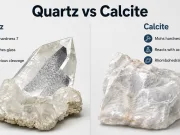
Minerals have a definite chemical composition and a crystalline structure. Their properties — hardness, cleavage, density, color, luster, refractive index — tell us how and where they formed. Quartz forms in environments ranging from volcanoes to hydrothermal veins. Olivine crystallizes deep in the mantle. Calcite grows in shallow marine settings. A thin slice under a microscope can reveal formation temperatures, cooling rates, and metamorphic history.
Rocks
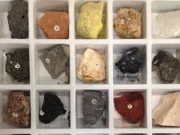
Rocks are grouped into three major families:
- Igneous rocks: crystallized from magma or lava
- Sedimentary rocks: formed from sediments or chemical precipitation
- Metamorphic rocks: altered by heat and pressure inside the crust
Physical geology examines each rock type not only as a material but as a “snapshot” of past environments.
2. The Rock Cycle: Earth’s Long-Term Recycling System
One of the defining concepts of physical geology is the rock cycle — a continuous set of processes through which any rock can be transformed into another type over geological time.
- Igneous rocks weather into sediments
- Sediments lithify into sedimentary rocks
- Sedimentary rocks metamorphose under heat and pressure
- Metamorphic rocks melt and become magma
- Magma cools and forms igneous rocks again
This cycle never stops. A granite mountain may eventually become beach sand. A coral reef can become limestone, then marble, then magma again. Physical geology looks at these transformations as a narrative of Earth’s long history.
3. Plate Tectonics: The Machine Behind Physical Geology
Modern geology cannot be understood without plate tectonics. Earth’s lithosphere is divided into rigid plates — huge slabs of crust and upper mantle — that move over the asthenosphere.
There are three boundary types:
Convergent Boundaries (Collisions)
When plates move toward each other:
oceanic crust sinks (subduction)
volcanic arcs form (Andes, Japan)
continental collision builds mountains (Himalayas)
Divergent Boundaries (Rifts & Mid-Ocean Ridges)
When plates move apart:
- new oceanic crust forms (Mid-Atlantic Ridge)
- continents split and rift valleys appear (East African Rift)
Transform Boundaries (Sliding Plates)
When plates slide past each other:
- major faults develop (San Andreas Fault)
- powerful earthquakes occur
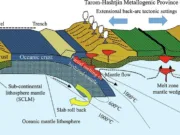
Physical geology studies the crustal deformation, magma generation, heat flow, uplift, subsidence, and seismic activity produced by these boundaries.
4. Volcanoes and Magma Systems
Volcanoes are among the most dramatic expressions of physical geology. They form where magma rises toward the surface because of subduction, rifting, or hotspots.
Magma Types
The behavior of a volcano depends heavily on magma chemistry:
- Basaltic magma: hot, fluid, low silica → gentle lava flows (Hawaii)
- Andesitic magma: intermediate → mixed eruption styles (Cascades)
- Rhyolitic magma: cool, viscous, high silica → highly explosive (Yellowstone, Taupo)
Volcanic Landforms
Physical geology categorizes volcanoes by shape and eruptive style:
- Shield volcanoes: wide, gentle slopes (Mauna Loa)
- Stratovolcanoes: steep, layered cones (Fuji, Etna)
- Calderas: collapse depressions after huge explosive eruptions
- Cinder cones: small cones of loose pyroclasts
Volcanic processes don’t just produce eruptions — they build islands, enrich soils, change climates, and create ore deposits.
5. Weathering: How Rocks Break Down
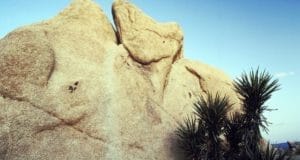
As soon as rocks are exposed to the atmosphere, they begin to weather.
Mechanical Weathering
Breaks rocks without changing their chemistry:
- frost wedging
- thermal expansion
- abrasion
- salt crystallization
- biological activity
Chemical Weathering
Alters minerals chemically:
- dissolution (limestone in rainwater)
- oxidation (rust)
- hydrolysis (feldspar → clay)
Climate strongly influences these processes: warm, wet regions encourage chemical weathering; cold regions favor mechanical breakdown.
6. Erosion, Transport, and Deposition
Weathered materials rarely stay in place. Wind, water, ice, and gravity transport sediments across landscapes.
Rivers
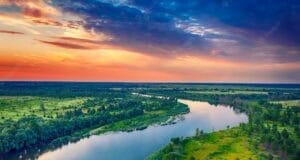
Rivers cut channels, build floodplains, produce meanders, and fill basins with sediments. River energy shapes landscapes from alpine valleys to broad deltas.
Wind
In deserts and coastal areas, wind sculpts dunes, deflates surfaces, and sorts fine sediments.
Glaciers
Glaciers carve U-shaped valleys, drag boulders for kilometers, and deposit moraines. Ice is one of the most powerful agents of erosion.
Waves and Currents
Coasts are some of the most active environments on Earth, constantly reconfigured by wave energy.
Physical geology documents all of these processes and their long-term effects on topography.
7. Soil Formation and Surface Layers
Soils are the interface between geology and biology. They form through weathering, organic activity, and climate influence.
A typical soil profile contains:
- O horizon: organic material
- A horizon: topsoil, mineral-rich
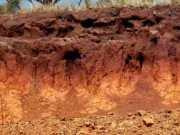
- B horizon: accumulation of clays and oxides
- C horizon: partially weathered bedrock
Physical geology examines how parent rock, rainfall, vegetation, and time shape these horizons — crucial knowledge for agriculture, engineering and environmental management.
8. Mass Wasting and Slope Stability
Gravity continuously moves material downslope in processes known as mass wasting.
Types of Mass Wasting
- rockfalls
- landslides
- slumps
- debris avalanches
- mudflows
- creep
These events depend on slope angle, water content, rock type, vegetation, and seismic activity. Understanding slope stability is essential for infrastructure planning, especially in mountainous regions.
9. Earthquakes and Fault Mechanics
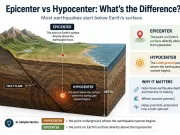
Earthquakes occur when stress accumulated along faults is suddenly released.
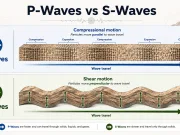
Seismic Waves
- P-waves: fastest, compressional
- S-waves: slower, shear
- Surface waves: cause most damage
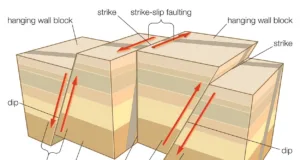
Physical geology analyzes fault types (normal, reverse, strike-slip), rupture propagation, aftershocks, and ground deformation. Local geology is critical — certain soils amplify shaking dramatically.
10. Rivers, Glaciers, Deserts and Coastal Systems
Physical geology also explains entire landscapes:
Rivers & Drainage Systems
Meanders, braided channels, alluvial fans, deltas — all indicate water-energy changes and sediment load.
Glaciers
Carve rugged peaks and deep valleys, shape fjords, and leave behind massive sediment deposits.
Deserts
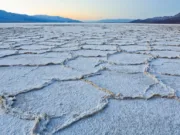
Produce dunes, yardangs, desert pavements, and evaporite basins.
Coasts
Barrier islands, sea cliffs, lagoons, and tidal flats constantly shift under wave action.
These systems show that Earth’s surface is never static.
11. Earth’s Interior: Heat, Density, and Deep Structure
Physical geologists also study Earth’s internal structure:
- crust, mantle, core
- mantle convection
- isostasy (why continents “float”)
- heat flow
- lithosphere–asthenosphere dynamics
Seismic imaging and gravity anomalies reveal mountains’ deep roots, subducting slabs, and mantle plumes.
12. Applied Physical Geology: Real-World Importance
Physical geology affects almost every aspect of human life:
- building foundations
- tunnel and dam safety
- landslide risk mapping
- earthquake hazard zonation
- volcanic risk monitoring
- groundwater management
- mineral and energy exploration
- environmental assessments
It is the core scientific tool behind engineering geology, hydrogeology, environmental geology, volcanology and seismology.
Conclusion
Physical geology is the study of Earth as a dynamic machine — a planet that constantly reshapes itself through heat, gravity, chemistry, tectonics, erosion, and time. Mountains rise and decay, rivers carve new valleys, oceans open and close, volcanoes build new land, and earthquakes break old faults. Nothing on Earth is permanent. Every landscape, every grain of sand, every cliff and canyon is a record of processes still ongoing today.
This field combines the big picture and the tiny details: the movement of continents and the grain size of a single sediment layer. It’s the science that helps us understand the world we live on — and how to live safely on it.
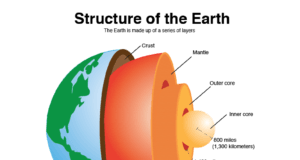
Structure of Earth
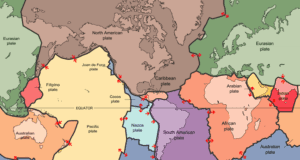
Plate Tectonics: How Earth’s Moving Plates Shape Continents, Mountains, and Oceans
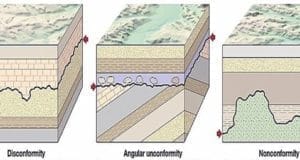
Unconformities

The Rock Cycle
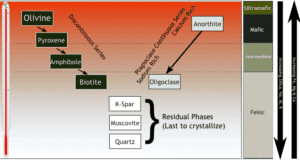
Bowen’s Reaction Series
Weathering Types
Fault and Types of Faults

Economically Important Metal Concentrations in Earth’s Crust
River and Stream
The Formation and Evolution of Oceans

Uniformitarianism
