











Igneous Rocks
Formation, Textures, Types, and Geological Significance
Igneous rocks are the most fundamental products of Earth’s internal processes. They come straight from molten material—either magma deep underground or lava at the surface—and they preserve a snapshot of geological conditions that existed during cooling and crystallization. In other words, every igneous rock is a frozen moment in Earth’s interior history.
What Are Igneous Rocks?
Igneous rocks are formed by the solidification of molten material, making them the earliest and most primitive rock type in Earth’s crust. The word “igneous” comes from the Latin ignis, meaning fire, which makes sense—these rocks were literally born from heat.
There are two main sources of melt:
Magma: Molten rock beneath the surface
Lava: Molten rock erupted onto the surface
When these melts cool, mineral crystals form. The speed and environment of cooling determine almost everything: grain size, mineral texture, porosity, density, and even color.

How Igneous Rocks Form
Although the concept seems simple—magma cools, rock forms—the real process is incredibly dynamic.
1. Melting begins
Rocks deep underground melt due to:
Increasing temperature
Decreasing pressure
Addition of water or volatiles
This generates magma chambers inside the crust or mantle.
2. Movement of magma
Magma rises because it is:
- Less dense than the surrounding rock
- Pressurized
- Chemically reactive
It may stall and cool slowly, or it may reach the surface.
3. Cooling and crystallization
As temperature drops:
Early-formed minerals (olivine, pyroxene) crystallize first
Later minerals (quartz, feldspar, amphibole) crystallize at lower temperatures
This sequence is known as Bowen’s Reaction Series, one of the most important concepts in igneous petrology.
4. Solid rock forms
Depending on where and how cooling occurs, completely different textures and rock types appear.
Intrusive vs. Extrusive Igneous Rocks
Igneous rocks are classified primarily by where they cool.
A. Intrusive (Plutonic) Igneous Rocks
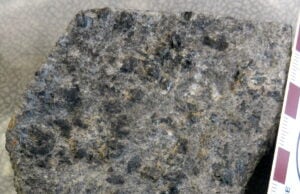
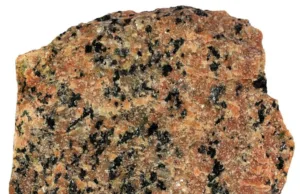
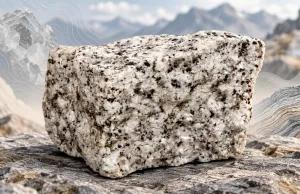
These rocks cool slowly beneath the surface, allowing large, visible crystals to form.
Characteristics:
Coarse-grained texture
Usually very strong and durable
Minerals easy to identify with the naked eye
Common intrusive rocks:
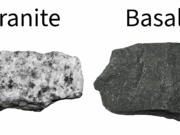
Granite — light-colored, rich in quartz & feldspar
Diorite — intermediate composition
Gabbro — dark, rich in pyroxene and plagioclase
Where they form:
Large plutons, batholiths, sills, dikes, and deep crustal chambers.
Why they matter:
Granite-dominated continental crust defines the structure of continents and mountain roots.
B. Extrusive (Volcanic) Igneous Rocks
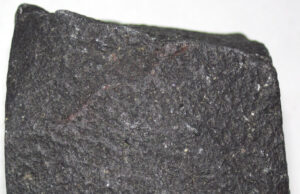
These rocks cool quickly at or near the surface, resulting in fine-grained or even glassy textures.
Characteristics:
Small or invisible crystals
Can contain vesicles (gas bubbles)
Sometimes glassy due to rapid cooling
Common extrusive rocks:
Basalt — the most common volcanic rock on Earth
Andesite — typical of stratovolcanoes
Rhyolite — silica-rich explosive lava
Obsidian — volcanic glass
Pumice & scoria — vesicular volcanic rocks
Where they form:
Lava flows, volcanic domes, ash deposits, and pyroclastic layers.
Why they matter:
Basaltic volcanism creates oceanic crust, while explosive volcanism is tied to subduction zones and hazards.
Textures of Igneous Rocks
Texture is one of the most important diagnostic tools. It tells the story of cooling history.
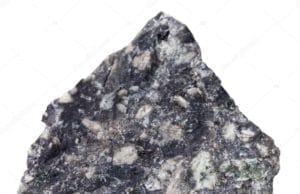
1. Phaneritic Texture (Coarse-Grained)
Large crystals → slow cooling underground
Example: granite, gabbro
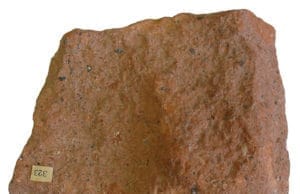
2. Aphanitic Texture (Fine-Grained)
Tiny crystals → rapid cooling at surface
Example: basalt, andesite
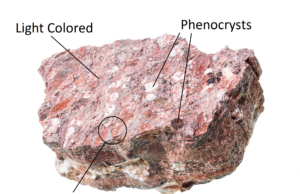
3. Porphyritic Texture
Large crystals (phenocrysts) in fine-grained groundmass
→ two-stage cooling
Example: porphyritic andesite
4. Glassy Texture
No crystals at all → extremely fast cooling
Example: obsidian
5. Vesicular Texture
Full of holes due to trapped gas
Example: pumice, scoria
6. Pyroclastic Texture
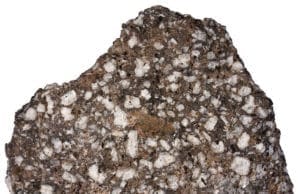
Fragments of volcanic material welded together
Example: tuff, volcanic breccia
Chemical Classification (Felsic, Intermediate, Mafic, Ultramafic)
A more advanced way to classify igneous rocks is by silica content (SiO₂) and mineral composition.
Felsic (Silica-rich)
Light-colored
High quartz & feldspar
Viscous, explosive magma
Examples: granite, rhyolite
Intermediate
Mix of light and dark minerals
Examples: diorite, andesite
Mafic (Silica-poor)
Dark-colored
Rich in pyroxene & olivine
Low-viscosity lava
Examples: gabbro, basalt
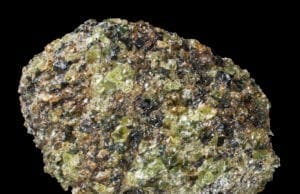
Ultramafic
Very high in olivine
Rare at the surface
Examples: peridotite, komatiite
Where Igneous Rocks Form on Earth (Tectonic Environments)
1. Mid-Ocean Ridges
Basalt forms as mantle material melts during seafloor spreading.
2. Subduction Zones
Andesite, dacite, rhyolite, and diorite form in volcanic arcs.
3. Hotspots
Hawaiian Islands: hot, fluid basaltic lava
Yellowstone: explosive rhyolitic volcanism
4. Continental Rifts
Basaltic dikes, volcanic plateaus, and bimodal volcanism.
5. Mountain Roots
Granite, tonalite, and other intrusive bodies accumulate deep beneath orogenic belts.
Short Summary
Igneous rocks form when magma/lava cools.
Intrusive rocks = slow cooling, large crystals (granite).
Extrusive rocks = fast cooling, fine crystals (basalt).
Texture reveals cooling history.
Chemistry ranges from felsic → mafic → ultramafic.
They form at ridges, subduction zones, hotspots, rifts, and mountain belts.
Scientifically and engineering-wise, igneous rocks are fundamental.
Classification of Igneous Rocks

Igneous rocks are classified based on their mineral composition, texture, and other characteristics. The classification system commonly used in geology categorizes igneous rocks into two main groups: intrusive (plutonic) and extrusive (volcanic) rocks. These groups are further subdivided based on mineral composition and texture. Here’s a basic overview of the classification:
1. Intrusive (Plutonic) Igneous Rocks: These rocks form from magma that cools and solidifies beneath the Earth’s surface. The slower cooling rate allows for the growth of visible mineral crystals. Intrusive rocks tend to have a coarse-grained texture.
1.1. Granite: Rich in quartz and feldspar, granite is a common intrusive rock. It is light-colored and often used in construction.
1.2. Diorite: Diorite is intermediate in composition between granite and gabbro. It contains plagioclase feldspar, pyroxene, and sometimes amphibole.
1.3. Gabbro: Gabbro is a mafic rock composed mainly of pyroxene and calcium-rich plagioclase feldspar. It’s the intrusive equivalent of basalt.
1.4. Peridotite: Peridotite is an ultramafic rock composed of minerals like olivine and pyroxene. It’s often found in the Earth’s mantle.
2. Extrusive (Volcanic) Igneous Rocks: These rocks form from lava that erupts onto the Earth’s surface. The rapid cooling rate results in fine-grained textures, but some extrusive rocks can also exhibit porphyritic texture, with larger crystals (phenocrysts) embedded in a finer matrix.
2.1. Basalt: Basalt is a common extrusive rock that’s dark-colored and rich in iron and magnesium. It often forms volcanic landscapes and oceanic crust.
2.2. Andesite: Andesite is intermediate in composition between basalt and dacite. It contains plagioclase feldspar, amphibole, and pyroxene.
2.3. Rhyolite: Rhyolite is a fine-grained volcanic rock rich in silica. It’s the extrusive equivalent of granite and often has a light color.
3. Pyroclastic Igneous Rocks: These rocks are formed from volcanic ash, dust, and debris that are ejected during explosive volcanic eruptions. They can have a wide range of compositions and textures.
3.1. Tuff: Tuff is a rock made up of consolidated volcanic ash. It can vary in composition and texture, depending on the size of ash particles.
3.2. Ignimbrite: Ignimbrite is a type of tuff formed from hot pyroclastic flows. It often has a welded texture due to the high temperatures during deposition.
It’s important to note that the classification of igneous rocks isn’t limited to just these examples. Within each category, there’s a range of rock types with varying compositions and textures. Additionally, modern geology also considers mineralogical and chemical analyses, along with the context of rock formation and geological history, to refine the classification of igneous rocks.
Igneous Rock Mineralogy

Igneous rocks are composed primarily of minerals that crystallize from molten material (magma or lava). The mineral composition of igneous rocks plays a significant role in determining the rock’s properties, appearance, and classification. Here are some common minerals found in igneous rocks:
1. Quartz: Quartz is a common mineral in igneous rocks, particularly in felsic rocks like granite and rhyolite. It’s composed of silicon and oxygen and often appears as clear, glassy crystals.
2. Feldspar: Feldspar is a group of minerals that are essential components of many igneous rocks. The two main types are:
- Orthoclase Feldspar: Common in both felsic and intermediate rocks, orthoclase feldspar can impart pink, reddish, or gray colors to the rocks.
- Plagioclase Feldspar: Plagioclase is more common in intermediate to mafic rocks. Its composition can vary from calcium-rich (calcic) to sodium-rich (sodic) varieties, resulting in a range of colors.
3. Olivine: Olivine is a green mineral found in ultramafic rocks like peridotite and basalt. It’s composed of magnesium, iron, and silica.
4. Pyroxene: Pyroxene minerals, like augite and hornblende, are common in mafic and intermediate rocks. They have dark colors and are rich in iron and magnesium.
5. Amphibole: Amphibole minerals, such as hornblende, are found in intermediate rocks and some mafic rocks. They’re darker in color and are often associated with the presence of water during magma formation.
6. Biotite and Muscovite: These are types of mica minerals often found in felsic rocks. Biotite is dark-colored and belongs to the mafic mineral group, while muscovite is light-colored and belongs to the felsic group.
7. Feldspathoids: These are minerals similar in composition to feldspar but with less silica. Examples include nepheline and leucite. They’re found in certain alkali-rich igneous rocks.
8. Magnetite and Ilmenite: These minerals are sources of iron and titanium in mafic and ultramafic rocks.
The specific combination of these minerals and their relative proportions determine the overall mineral composition of an igneous rock. This composition, along with the texture (grain size and arrangement of minerals), helps geologists classify and understand the rock’s origin and geological history. Additionally, accessory minerals, which are present in smaller amounts, can also provide important clues about the conditions under which the rock formed.
Bowen's Reaction Series

Bowen’s Reaction Series is a concept in geology that explains the sequence in which minerals crystallize from a cooling magma. It was developed by the Canadian geologist Norman L. Bowen in the early 20th century. The concept is crucial for understanding the mineralogical composition of igneous rocks and the relationship between different types of rocks.
Bowen’s Reaction Series is divided into two branches: the discontinuous series and the continuous series. These series represent the order in which minerals crystallize as the magma cools, with minerals higher on the series crystallizing at higher temperatures.
Discontinuous Series: This series involves minerals that have distinct compositional changes as they crystallize from the cooling magma. It includes:
- Ol/Pyx Series (Olivine-Pyroxene Series): Minerals in this series are olivine and pyroxene. Olivine crystallizes at higher temperatures, followed by pyroxene at lower temperatures.
- Ca Plagioclase Series: This series involves the crystallization of calcium-rich plagioclase feldspar, such as anorthite. It starts at higher temperatures and continues as the magma cools.
- Na Plagioclase Series: This series includes sodium-rich plagioclase feldspar, such as albite. It crystallizes at lower temperatures than the calcium-rich plagioclase.
Continuous Series: The minerals in the continuous series have compositions that vary gradually as they crystallize, forming a solid solution between two end-member minerals. The continuous series includes:
- Ca-Na Plagioclase Series: This series involves the solid solution between calcium-rich and sodium-rich plagioclase feldspar. As the magma cools, the composition of plagioclase gradually shifts from calcium-rich to sodium-rich.
- Amphibole-Biotite Series: Minerals in this series include amphibole (e.g., hornblende) and biotite mica. The composition of these minerals varies gradually with cooling.
- Na-K Feldspar Series: This series encompasses the solid solution between sodium-rich and potassium-rich feldspar. As the magma cools, the composition shifts from sodium-rich to potassium-rich.
The concept of Bowen’s Reaction Series helps explain why certain minerals are commonly found together in specific types of igneous rocks. As the magma cools, the minerals crystallize in a predictable order based on their melting points and chemical compositions. This has significant implications for understanding the mineralogical evolution of magmas, the formation of different rock types, and the processes occurring within the Earth’s crust and mantle.
Economic Importance of Igneous Rocks
Igneous rocks have significant economic importance due to their various mineral compositions, durability, and suitability for construction, as well as their role in the formation of valuable mineral deposits. Here are some ways in which igneous rocks contribute to the economy:
- Construction Materials: Many igneous rocks are used as construction materials due to their durability and aesthetic appeal. Granite and basalt, for example, are commonly used as dimension stones for buildings, monuments, countertops, and decorative purposes.
- Crushed Stone: Crushed igneous rocks, like basalt and granite, are used as aggregates in concrete, road construction, and railroad ballast. These materials provide strength and stability to structures and transportation networks.
- Mineral Deposits: Certain types of igneous rocks are associated with valuable mineral deposits. For instance, mafic and ultramafic rocks can host deposits of valuable minerals such as chromite, platinum, nickel, and copper.
- Precious and Base Metals: Igneous rocks play a role in the formation of ore deposits that contain precious metals like gold, silver, and platinum, as well as base metals like copper, lead, and zinc. These deposits can form through processes such as hydrothermal activity associated with igneous intrusions.
- Gemstones: Some igneous rocks contain gem-quality minerals such as garnet, zircon, and topaz. These minerals are used in jewelry and other decorative items.
- Volcanic Deposits: Volcanic rocks, including volcanic ash and tuff, can have economic importance as raw materials in industries such as ceramics, glass production, and as a soil amendment (volcanic ash) in agriculture.
- Geothermal Energy: Igneous activity contributes to geothermal energy resources. Magma heats underground water, creating geothermal reservoirs that can be tapped for clean and renewable energy production.
- Metal Production: Igneous rocks may serve as a source of elements used in metal production. For instance, felsic igneous rocks can contain rare elements like lithium and tantalum, which are essential for modern electronics.
- Quarrying Industry: The extraction of igneous rocks for various uses, such as gravel, sand, and crushed stone, contributes to the quarrying industry and provides materials for infrastructure development.
- Recreation and Tourism: Unique geological formations, such as volcanic landscapes, attract tourists and outdoor enthusiasts. Volcanic areas often offer opportunities for hiking, rock climbing, and geotourism.
In summary, igneous rocks have economic importance in construction, infrastructure development, mining, energy production, and various industries. Their mineralogical diversity and geological processes contribute to the formation of valuable resources that drive economic growth and development.
Notable Igneous Rock Formations
There are several notable igneous rock formations around the world that showcase the Earth’s geological diversity and history. Here are a few prominent examples:
- Giant’s Causeway (Northern Ireland): This UNESCO World Heritage Site is known for its unique hexagonal basalt columns that were formed by volcanic activity. The columns are the result of the cooling and contraction of basaltic lava flows millions of years ago.
- Devils Tower (Wyoming, USA): A striking monolith composed of phonolite porphyry, Devils Tower is a well-known example of an igneous intrusion. It’s believed to have formed when magma solidified underground and was later exposed through erosion.
- Mount Vesuvius (Italy): One of the most famous volcanoes in the world, Mount Vesuvius is known for its eruption in AD 79 that buried the ancient city of Pompeii. The volcanic products and ash from this eruption preserved the city’s structures and artifacts.
- Hawaii Volcanoes National Park (Hawaii, USA): Home to active volcanoes like Kilauea and Mauna Loa, this park showcases ongoing volcanic activity. The lava flows and volcanic landscapes provide insights into the Earth’s geological processes.
- Shiprock (New Mexico, USA): Shiprock is a volcanic neck, a remnant of an ancient volcano that has eroded away, leaving a towering volcanic plug behind. It’s considered a sacred site by the Navajo Nation.
- The Auvergne Volcanoes (France): This region is characterized by a chain of dormant volcanoes, some of which are over 6 million years old. The Puy de Dôme is one of the iconic peaks in this area.
- Uluru (Ayers Rock) and Kata Tjuta (Olgas) (Australia): While not volcanic, Uluru and Kata Tjuta are significant rock formations composed of arkosic sandstone. They have cultural and spiritual importance to the Indigenous Anangu people.
- Crater Lake (Oregon, USA): This deep blue lake fills the caldera of Mount Mazama, a volcano that collapsed during a massive eruption thousands of years ago. The caldera and the lake within it are the result of this volcanic event.
- Gullfoss Waterfall (Iceland): Formed by the Hvítá River, Gullfoss is an iconic waterfall located near the geothermal region of Geysir. The surrounding landscape showcases Iceland’s volcanic and geothermal activity.
- Ayers Rock (Uluru) and Kata Tjuta (Olgas) (Australia): While not volcanic, these massive sandstone formations are significant landmarks and hold cultural importance to the Indigenous Anangu people.
These formations highlight the diverse ways in which igneous processes and geological history have shaped the Earth’s surface, leaving behind awe-inspiring landscapes and landmarks.