



Minerals
A mineral is a naturally occurring chemical compound usually of crystalline form and not produced by life processes. A mineral has one specific chemical composition, whereas a rock can be an aggregate of different minerals or mineraloids. The study of minerals is called mineralogy. To meet the definition of “mineral” used by most geologists, a substance must meet five requirements:

Color Change Garnet
Color Change Garnet is a fascinating and relatively rare gemstone known for its unique ability to change color under different lighting conditions. It is...

Andesine
Andesine is a silicate mineral, a member of the plagioclase feldspar group. Plagioclase feldspars are a series of minerals that form a continuous series...

Green Zircon
Green zircon refers to a variety of the mineral zircon (ZrSiO4) that exhibits a green coloration. Zircon itself is a popular gemstone known for...
Anatase
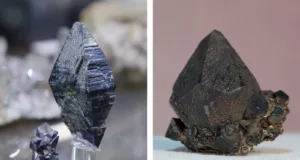
Anatase is one of the three primary mineral forms of titanium dioxide (TiO2), the other two being rutile and brookite. It is a tetragonal...

Golden or Yellow Labradorite
Golden Labradorite, also known as Yellow Labradorite or Golden Flash Labradorite, is a unique and captivating variety of labradorite, which is a feldspar mineral....
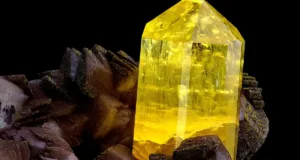
Yellow Apatite
Yellow Apatite is a variety of the mineral apatite, which belongs to the phosphate group. Apatite itself is a group of phosphate minerals that...

Allanite
Allanite is a complex mineral belonging to the epidote group, which consists of silicate minerals. The mineral was first identified by mineralogist Thomas Allan...

Kornerupine
Kornerupine is a mineral that belongs to the cyclosilicate group. It is composed of aluminum, boron, and magnesium, with the chemical formula (Mg,Fe)3Al6(Si,Al,B)5O21(OH). The...
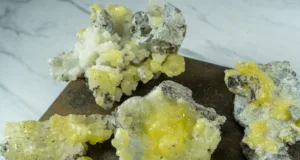
Brucite
Brucite is a mineral that is composed of magnesium hydroxide (Mg(OH)2). It belongs to the class of minerals known as hydroxides, which are compounds...

Dravite (Brown Tourmaline)
Dravite is a mineral that belongs to the tourmaline group, which is a group of complex borosilicate minerals. Tourmalines are well-known for their diverse...
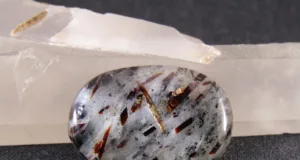
Astrophyllite
Astrophyllite is a rare and unique mineral that belongs to the group of complex silicate minerals. Its name is derived from the Greek words...
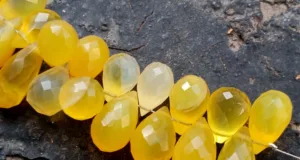
Yellow Chalcedony
Yellow chalcedony is a variety of chalcedony, which itself is a form of microcrystalline quartz. Chalcedony encompasses a broad range of cryptocrystalline quartz varieties...