
















Structural Geology
Understanding Earth’s Deformation, Faults, Folds, and Crustal Architecture
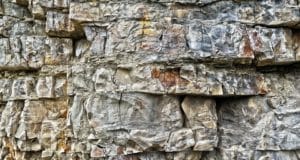
Structural geology is the branch of geoscience that studies how rocks deform, break, fold, fracture, tilt, rotate, or stretch under the forces acting on Earth’s crust. Every mountain range, every valley, every fault zone, and even the smallest fracture in bedrock is a physical record of stress, strain, and tectonic motion. To a structural geologist, rocks aren’t just materials — they’re stories written in layers, cracks, and shapes.
Structural geology answers key questions:
How do mountains form? Why do rocks bend in some places but break in others? What creates faults? How does the crust respond to compression, tension, and shear? How do tectonic plates leave signatures in the rocks?
By observing the geometry of deformed structures, geologists reconstruct millions of years of tectonic evolution.
1. What Is Structural Geology?
Structural geology focuses on rock deformation—from microscopic mineral alignment to continent-scale mountain belts. It explains:
- how rocks respond to stress
- why they fracture or fold
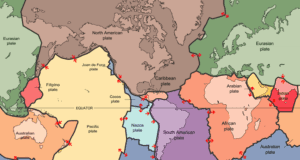
- how plate tectonics drives deformation
- how faults slip and generate earthquakes
- how strain accumulates in the crust
- how rock layers record tectonic forces
Structural geology is essential for:
- earthquake hazard assessment
- oil and gas exploration
- mining
- engineering geology
- geothermal projects
- tunneling
- slope stability
- regional tectonic studies
If geology were a language, structure would be its grammar.
2. Stress and Strain: The Foundation of Deformation
Understanding structural geology starts with two key concepts: stress (force applied) and strain (how rocks change shape).
Types of Stress
Compression – pushes rocks together
- Produces folds, reverse faults, mountain belts
- Example: Himalayas
Tension – pulls rocks apart
- Produces normal faults, rift valleys
- Example: East African Rift
Shear – slides rocks past each other
- Produces strike-slip faults
- Example: San Andreas Fault
Types of Strain
- Elastic strain – temporary; rocks return to original shape
- Plastic/ductile strain – permanent bending (folds)
- Brittle strain – breaking (faults, fractures)
Temperature, pressure, rock type, and deformation rate decide whether rocks bend or break.
- Deep crust → ductile
- Near surface → brittle
This is why fold belts form at depth but faults dominate near the surface.
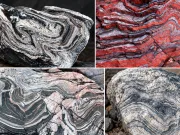
3. Folds: Rocks That Bend Instead of Break
Folds occur when rock layers deform plastically under compression.
Types of Folds
1. Anticline
Upward-arching fold, oldest layers in the center.
2. Syncline
Downward fold, youngest layers in the center.
3. Monocline
Step-like bend in otherwise horizontal layers.
4. Dome and Basin
- Dome → layers dip outward
- Basin → layers dip inward
Fold Geometry
- Axial plane – imaginary surface splitting the fold
- Hinge line – line of maximum curvature
- Limbs – sides of the fold
Fold Orientation
- Upright
- Inclined
- Recumbent
- Overturned
Mountain belts often show recumbent and overturned folds formed under intense compression.
Real-World Example
The Zagros Mountains (Iran) contain some of the world’s most spectacular salt-driven folds — visible even from satellite images.
4. Faults: Breaks in the Crust
Faults are fractures where rocks have slipped relative to each other. They store and release tectonic stress, causing earthquakes.
Major Fault Types
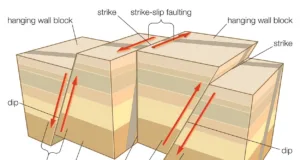
1. Normal Faults (Tension)
- Hanging wall moves downward
- Form in rift zones
- Example: East African Rift, Basin & Range (USA)
2. Reverse / Thrust Faults (Compression)
- Hanging wall moves upward
- Form in mountain belts
- Example: Himalayas, Rockies
3. Strike-Slip Faults (Shear)
- Lateral motion
- Example: San Andreas (right-lateral)
4. Oblique Faults
Combination of vertical + horizontal slip.
Fault Zones
Faults rarely occur alone — they form:
- fault networks
- flower structures
- horst and graben systems
- thrust belts
- transpressional and transtensional zones
Large faults accommodate plate-scale motion and generate major earthquakes (Mw 7+).
5. Fractures, Joints, and Veins
Not all cracks show displacement. Structural geology distinguishes:
Joints
- Fractures with no movement
- Form due to cooling, unloading, or stress release
- Basalt columns = joint systems
Veins
- Mineral-filled cracks
- Quartz, calcite, sulfides
- Important for ore deposits
Shear zones
- Ductile “faults” at depth
- High strain zones with mineral stretching
- Show shear direction + sense of movement
Fractures control fluid flow, groundwater, hydrothermal activity, and reservoir quality.
6. Tectonic Regimes and Structural Styles
Every tectonic setting produces its own structural geometry.
A) Compressional Regimes
- reverse faults
- thrust sheets
- nappes
- fold-thrust belts
- crustal thickening
Examples: - Himalayas
- Alps
- Andes
B) Extensional Regimes
- normal faults
- tilted fault blocks
- graben–horst systems
- metamorphic core complexes
Examples: - East African Rift
- Red Sea Rift
- Basin & Range Province
C) Strike-Slip Regimes
- flower structures
- releasing & restraining bends
- pull-apart basins
Examples: - San Andreas Fault
- North Anatolian Fault
Each regime leaves its own “structural fingerprint” in the crust.
7. Stereonets, Strike, Dip, and Field Measurements
Structural geology is very field-oriented. The basics include:
1. Strike
The orientation of a horizontal line on a plane.
2. Dip
The angle at which a plane is inclined from horizontal.
3. Dip Direction
The compass direction that the plane dips toward.
4. Stereonets
Used to plot orientations of:
- faults
- folds
- bedding planes
- foliation
- lineation
They help geologists analyze patterns, intersections, and 3D geometry.
Field notebooks often include hundreds of strike–dip measurements to map out structural domains.
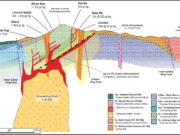
8. Structural Mapping and Cross-Sections
Understanding subsurface geometry requires:
- surface mapping
- remote sensing
- DEM analysis
- seismic profiles
- drill core logs
- balanced cross-sections
Cross-sections allow geologists to reconstruct what rock units look like underground — essential for mining, oil & gas, hydrogeology, and engineering.
9. Structural Geology and Earthquakes
Earthquakes happen when stress overcomes friction on a fault. Structural geology helps determine:
- which faults are active
- slip rates
- rupture lengths
- seismic hazard zones
- ground deformation
- recurrence intervals
For example:
- San Andreas = right-lateral strike-slip
- Himalayas = megathrust
- Turkey’s North Anatolian Fault = major earthquake hazard zone
Understanding structure = understanding earthquakes.
10. Structural Geology in the Real World
Structural geology has huge practical importance:
Engineering
- tunnel stability
- dam foundations
- slope stability
- rock mass classification
Energy & Resources
- locating oil traps
- mapping fractured reservoirs
- understanding ore-controlling structures
- geothermal systems
Environmental Geology
- contaminant migration pathways
- groundwater flow
- fault-controlled aquifers
Natural Hazards
- earthquake risk
- landslide initiation
- volcanic deformation
It is one of the most applied branches of geology.
Conclusion
Structural geology reveals the architecture of Earth’s crust — how it bends, breaks, shifts, and rebuilds itself over millions of years. Folds tell stories of compression, while faults record earthquakes that happened long before humans existed. Mountain belts are monuments to ancient collisions; rift valleys show continents tearing apart. Every fracture, every tilted layer, every shear zone is evidence of forces shaping our planet.
Understanding structural geology means understanding Earth’s dynamic engine — the tectonic power that never stops.