








Minerals
Home Minerals
A mineral is a naturally occurring chemical compound usually of crystalline form and not produced by life processes. A mineral has one specific chemical composition, whereas a rock can be an aggregate of different minerals or mineraloids. The study of minerals is called mineralogy. To meet the definition of “mineral” used by most geologists, a substance must meet five requirements:
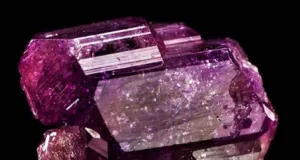
Vesuvianite
Vesuvianite, also known as idocrase, is a mineral that belongs to the silicate group. It is named after Mount Vesuvius in Italy, where it...
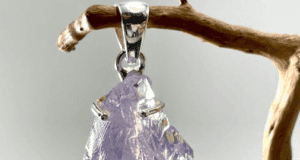
Lavender Quartz
Lavender Quartz, also known as lavender amethyst or lavender rose quartz, is a beautiful and relatively rare gemstone known for its soothing and calming...
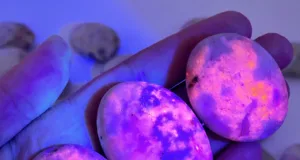
Hackmanite
Hackmanite is a rare and fascinating mineral that exhibits a unique phenomenon known as tenebrescence. Tenebrescence is the property of certain minerals to temporarily...
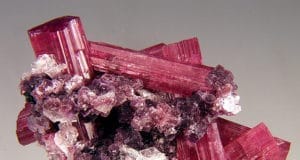
Tourmaline
Tourmaline is a fascinating gemstone that is known for its wide range of colors and unique properties. It is a crystalline mineral composed of...
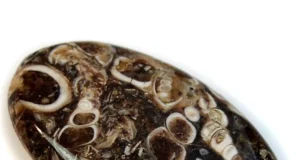
Turritella Agate
"Turritella Agate is a distinctive form of agate celebrated for its rich fossil inclusions and eye-catching banded patterns. Despite its name, it actually encases...
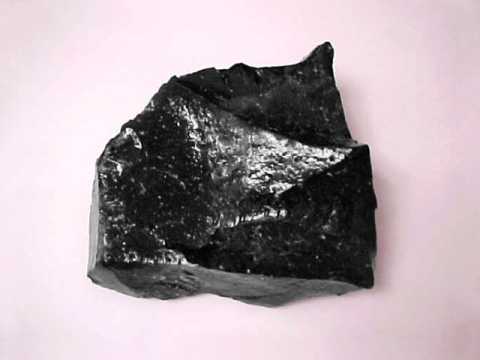
Obsidian
Obsidian is an igneous rock that forms when molten rock material cools so rapidly that atoms are unable to arrange themselves into a crystalline structure. It is an amorphous material known as a "mineraloid." The result is a volcanic glass with a smooth uniform texture that breaks with a conchoidal fracture .

Bastnäsite
Bastnäsite is a group of rare earth fluorocarbonate minerals that includes bastnäsite-(Ce), bastnäsite-(La), and bastnäsite-(Y), with each type named after the dominant rare earth...
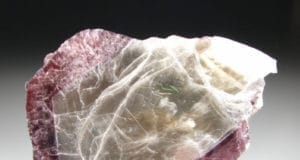
Lepidolite
A light mica, lepidolite is Earth’s most common lithium-bearing mineral. Its name is derived from two Greek words: lepidos, which means “scale,” and lithos, which means “stone.” Although typically pale lilac, specimens can also be colorless, violet, pale yellow, or gray. Lepidolite crystals may appear pseudohexagonal. The mineral is also found as botryoidal or kidneylike masses and fine- to coarse-grained, interlocking plates. Its perfect cleavage yields thin, flexible sheets. Lepidolite occurs in granitic pegmatites, where it is associated with other lithium minerals, such as beryl and topaz. The mineral is economically important as a major source of lithium, which is used to make glass and enamels. It is also a major source of the rare alkali metals rubidium and cesium.
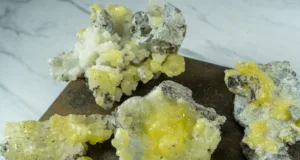
Brucite
Brucite is a mineral that is composed of magnesium hydroxide (Mg(OH)2). It belongs to the class of minerals known as hydroxides, which are compounds...
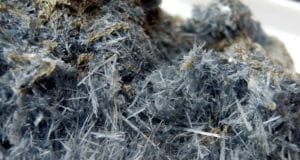
Glaucophane
The Glaucophane mineral is named after two Greek words: glaukos, which means “bluish green”; and phainesthai, which means “to appear.” Specimens can be gray, lavender blue, or bluish black. Crystals are slender, often lathlike prisms, with lengthwise striations. Twinning is common. Glaucophane can also be massive, fibrous, or granular. When iron replaces the magnesium in its structure, it is known as ferroglaucophane. Glaucophane occurs in schists formed by high-pressure metamorphism of sodium-rich sediments at low temperatures (up to 400°F/200°C) or by the introduction of sodium into the process. Glaucophane is often accompanied by jadeite, epidote, almandine, and chlorite. It is one of the minerals that are referred to as asbestos. Glaucophane and its associated minerals are known as the glaucophane metamorphic facies. The presence of these minerals indicates the range of temperatures and pressures under which metamorphism occurs.

Rose Quartz
Rose quartz is a pink-colored variety of the mineral quartz (SiO2), often considered one of the most popular and recognizable gemstones. It derives its...

Nephrite
Nephrite is a type of mineral that belongs to the jade family, which also includes jadeite. It is a metamorphic rock primarily composed of...