







Intrusive Igneous Rocks
Intrusive igneous rocks form deep beneath the Earth’s surface where magma cools slowly, surrounded and insulated by the surrounding crust, allowing large mineral crystals to grow and create coarse-grained textures that you can clearly see with the naked eye. These rocks—whether granite, diorite, gabbro or other plutonic varieties—capture a story of deep geological time: how magma migrated, paused in the crust, cooled gradually and solidified into massive bodies that later might be exposed by uplift and erosion. From a geological standpoint, they tell us about the thermal history, composition of the magma, and the tectonic environment in which they solidified. For engineers and site professionals, intrusive igneous rocks matter a lot: their mineral size, strength, fracturing and weathering behaviour each influence how a rock mass will handle excavation, tunnelling, drilling or foundation work. In this category you’ll explore how these rocks form, how to recognise key types in the field or core, how their textures and structures reflect their deep origin, and why when you’re assessing a rocky site, discovering coarse-grained plutonic rock means you’re dealing with something tough—but also something that requires careful handling of fractures, cooling joints and weathering zones.
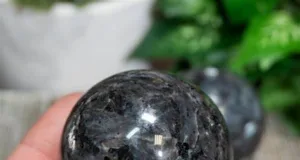
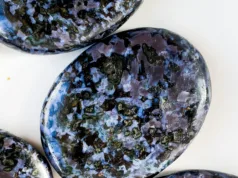
Larvikite
Larvikite is a unique and visually striking igneous rock that belongs to the family of feldspar-rich plutonic rocks known as syenites. It is primarily...

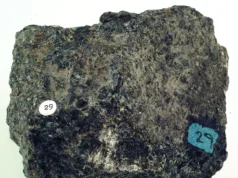
Diabase or Dolerite
Diabase, also known as dolerite, is a type of igneous rock that holds significance in the field of geology due to its unique characteristics...
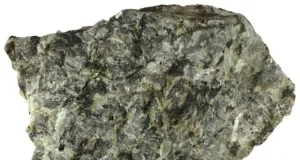
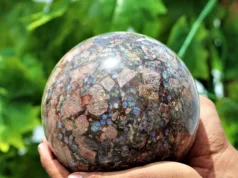
Monzonite
Monzonite is a type of igneous rock that falls within the category of intrusive or plutonic rocks. It is primarily composed of minerals such...
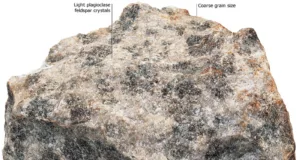
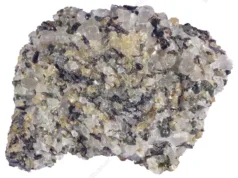
Anorthosite
Anorthosite is a type of igneous rock that is primarily composed of a mineral called plagioclase feldspar. It is known for its distinctive light-colored...
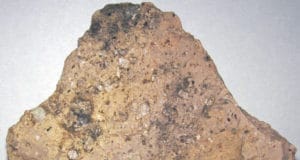
Tuff
Tuff rock, also simply known as "tuff," is a type of sedimentary rock that forms from the consolidation of volcanic ash and other volcanic...
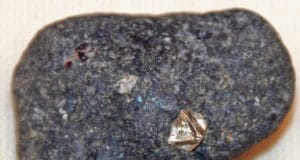
Kimberlite
Kimberlite is an igneous rock that major source of diamonds. Kimberlite is a variety of peridotite. It is rich in mica minerals content and...
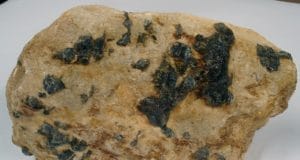
Pegmatite
Pegmatite is an igneous rock that form end of the stage a magma’s crystallization. Pegmatites contain exceptionally large crystals and they contain rarely minerals than other types of rocks. They have interlocking crystals usually larger than 2.5 cm in size. Generally most Pegmatites are found in sheets of rock that are dikes and veins Also near large masses of igneous rocks called batholiths.
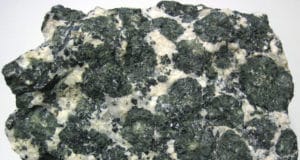
Diorite
Diorite is coarse – grained intrusive igneous rock that commonly mineralogy is plagioclase feldspar and dark colored minerals such as hornblende and biotite.It usually occurs dikes, sills and intrusions with continental crust . Diorite is usually grey to dark-grey in colour, but it can also be black or bluish-grey, and frequently has a greenish cast.

Granite
Granite: The Rock That Built ContinentsGranite is one of the most recognizable rocks on Earth, but very few people realize how extraordinary it actually...
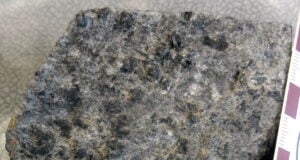
Gabbro
Gabbro is a type of intrusive igneous rock that is coarse-grained and dark-colored, typically composed of calcium-rich plagioclase feldspar, pyroxene, and sometimes olivine. It...