






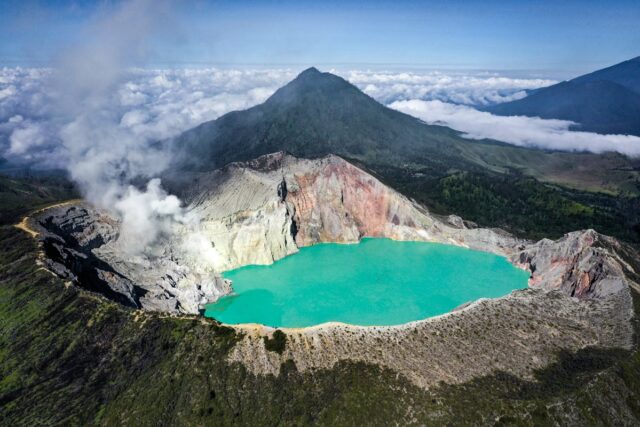
Volcanic lakes mean calm for most people. Still water, silent surroundings, unusual colors. When you look at them in photos, they feel peaceful. A person doesn’t search for danger in a place like that. And that is exactly where the problem begins.
Because some volcanic lakes are among the quietest but deadliest natural environments on Earth. There is no explosion, no fire, no warning that gives you time to escape. The danger accumulates beneath the water, waits, and when the moment comes, it reveals itself. Most of the time, when it is noticed, it is already too late.
These lakes are not just water. Beneath them, there is still a working, living, gas-producing geological system. And that system is not always controllable.
What Is a Volcanic Lake?
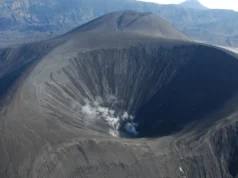
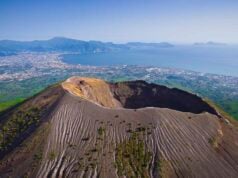
Volcanic lakes are lakes that form inside the craters, calderas, or volcanic depressions of active or extinct volcanoes. They are fed by rainwater, groundwater, and sometimes hydrothermal sources.
What separates them from ordinary lakes is their connection to what lies below the ground. The bottoms of these lakes are usually close to magma chambers, hot rock bodies, or deep fault systems that produce gas. This causes the lake water to be affected not only by meteorological processes, but also by geological ones.
Some volcanic lakes are completely harmless. But some can become deadly under certain conditions.
Why Are Volcanic Lakes So Dangerous?
The danger of volcanic lakes is often invisible. There are no classic “disaster” signs that the human eye can detect. The danger is silent and develops suddenly.
There are several main factors that create this threat.
Gas Accumulation
In volcanic regions, magma releases gas continuously, even if it never reaches the surface. The main gas involved is carbon dioxide (CO₂). Sulfur dioxide (SO₂) and hydrogen sulfide (H₂S) are also present.
These gases mix into the lake water from the bottom and accumulate in dissolved form in the deeper layers of the lake. As depth increases, pressure rises, and gases are held more easily in the water. This process can continue for years, even decades.
The problem begins the moment this balance is disturbed.
Limnic Eruptions
When gas accumulation reaches a critical level, even a small trigger can cause disaster. A landslide, a temperature change, heavy rainfall, or a sudden movement in water level can mix the lower layers of the lake with the upper layers.
This mixing causes the gases to be suddenly released. This event is called a limnic eruption.
The carbon dioxide cloud that forms is heavier than air. It sinks to the ground and spreads into surrounding areas. It replaces oxygen. People lose consciousness without even realizing they are suffocating.
Lake Nyos: A Silent Massacre
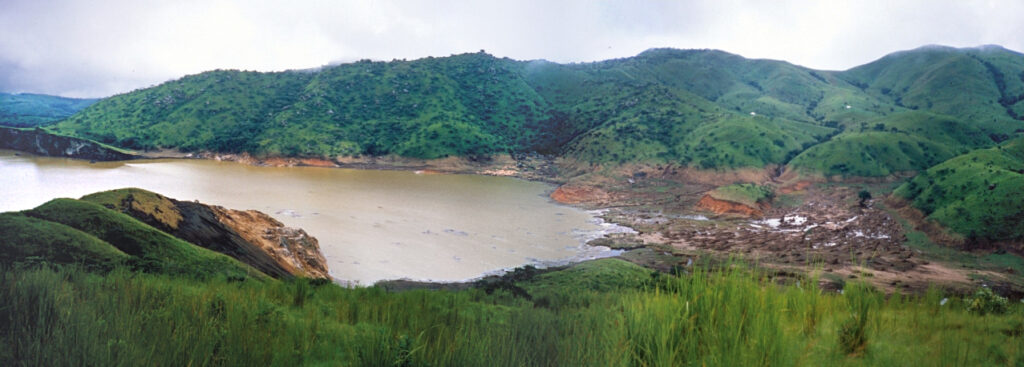
In 1986, Lake Nyos in Cameroon showed the world how deadly volcanic lakes can be. During the night, nearly one million tons of carbon dioxide that had accumulated in the lake’s depths were suddenly released into the atmosphere.
The gas sank to the ground and spread into nearby villages. People died in their sleep. Animals collapsed in their barns. There was no explosion and no sound. When morning came, the villages were silent.
This event was recorded as one of the deadliest geological disasters to occur without a direct volcanic eruption.
Stratification and Silent Balance
In most volcanic lakes, the water is not uniform. The upper layers are cooler and oxygen-rich. The lower layers are warmer, denser, and loaded with gas. This condition is called thermal and chemical stratification.
In normal lakes, wind and seasonal changes mix these layers. But volcanic lakes are often deep and located in areas sheltered from wind. This allows stratification to remain undisturbed for long periods.
This silent balance is actually the lake’s most dangerous feature. Because from the outside, everything looks normal.
Acidic Volcanic Lakes
Some volcanic lakes are deadly not only because of gases, but also because of extreme acidity. The pH of these lakes can drop to levels between 1 and 2. This is nearly the same as stomach acid.
Fish cannot live in such lakes. Plant life is almost nonexistent. For a living creature that falls into the water, the outcome is clear within seconds. When human skin comes into contact with this water, severe chemical burns can occur.
This acidity forms when volcanic gases react with water. Compounds such as sulfuric acid and hydrochloric acid turn the lake into something closer to a liquid acid pool.
Colorful but Deceptive Lakes
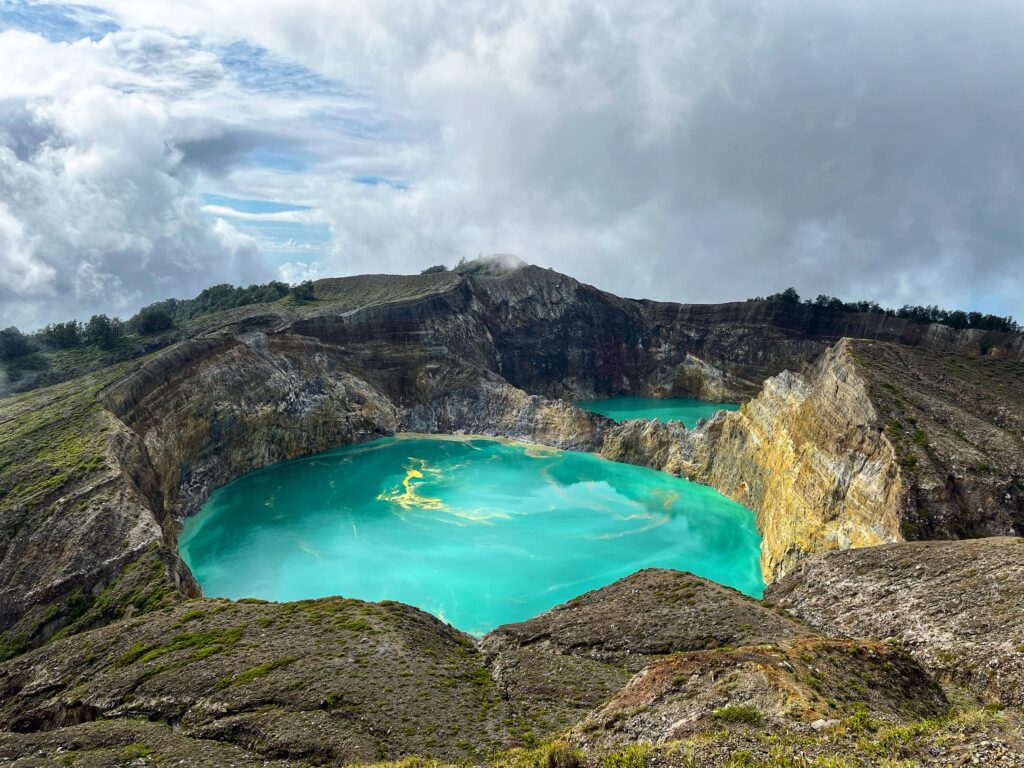
Some volcanic lakes are famous for their colors. Green, turquoise, yellow, and even red tones can appear. These colors are not just aesthetic; they are also signs of danger.
Color changes usually result from shifts in the lake’s chemical balance. As the concentration of iron, sulfur, and other minerals increases, the color of the water changes. This indicates that the system is active.
The Kelimutu Lakes in Indonesia are one of the most well-known examples. Although the area is touristic, it is constantly monitored.
Volcanic Lakes and Human Settlements
Throughout history, humans have preferred to live close to water sources. Volcanic regions are especially attractive due to fertile soils and abundant rainfall. This has led to settlements being built dangerously close to volcanic lakes.
Many disasters are described as “unexpected.” But in reality, the risk is often known and simply not taken seriously. Volcanic lakes are silent warnings in this sense.
How Are Volcanic Lakes Monitored Today?
After the Nyos disaster, many volcanic lakes were placed under observation. Gas measurement devices, temperature sensors, and water chemistry analyses are carried out regularly.
Some lakes have controlled gas-release systems installed. These systems slowly and safely release gas accumulated in the lake’s depths. However, even these systems do not provide absolute safety.
Nature is always one step ahead.
Why Are Volcanic Lakes Still Studied?
Despite all their risks, volcanic lakes are extremely valuable for science. They act as natural laboratories for understanding processes occurring deep within the Earth’s crust.
Magma movement, gas emissions, hydrothermal systems — all of these are better understood through these lakes. They also contribute to the development of early warning systems.
Conclusion: Silent but Unforgiving Waters
Volcanic lakes are one of nature’s most striking contradictions. On the surface, they are calm, even beautiful. But beneath them, there is a system that is constantly working, accumulating, and waiting.
These lakes remind us of one thing: nature does not always need to shout to warn us. Sometimes the greatest dangers are completely silent.
When you look at a volcanic lake, don’t see only water. Think about the system working below, the gases building up, and the energy waiting. Because these lakes are among the calmest-looking yet deadliest waters on Earth.