



Mineraloids
Mineraloids are fascinating geological materials: they look and behave somewhat like true minerals, yet they fall short of certain defining criteria—most notably a long-range ordered crystal structure or strictly fixed chemical composition. Unlike classic minerals which crystallize in a repeating atomic lattice, mineraloids solidify in a disordered fashion, often through rapid cooling of volcanic glass (for example obsidian), gel-like deposition at Earth’s surface, or accumulation of organic and inorganic wastes under unique conditions. Because their atomic structure is random or semi-ordered, mineraloids typically break with curved (conchoidal) fractures and lack the clean cleavage planes of crystalline minerals. Examples such as opal, volcanic glass, resinous amber, and even certain naturally-formed glasses like tektites reveal the diversity of environments where mineraloids arise—rapid cooling, high fluid flux, biological accumulation, or impact-induced melting. In this category you’ll dive into how mineraloids form, how to recognise them in the field or sample, how they differ from minerals, and why they matter to geologists, engineers and site-practitioners alike—for everything from material behaviour and heritage gems to geological processes and natural hazard indicators.
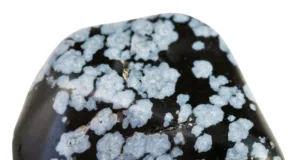
Snowflake Obsidian
Snowflake Obsidian is a type of volcanic glass that is primarily composed of silicon dioxide, with distinctive white or grayish "snowflake" patterns dispersed throughout...
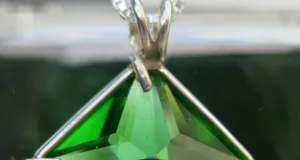
Green Obsidian
Green obsidian is a captivating natural gemstone with a striking emerald hue, known for its intriguing origins and unique characteristics. This volcanic glass, which...
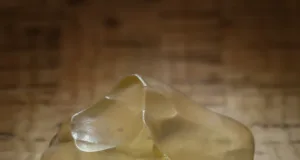
Libyan Desert Glass
Libyan Desert Glass is a rare and intriguing natural phenomenon with a history dating back thousands of years. It is a type of tektite,...
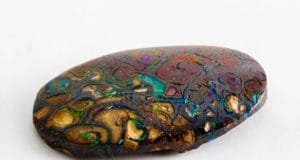
Opal
Opal is one of the most visually extraordinary gemstones on Earth. Some specimens flash with brilliant rainbow colors that appear to move and shift...
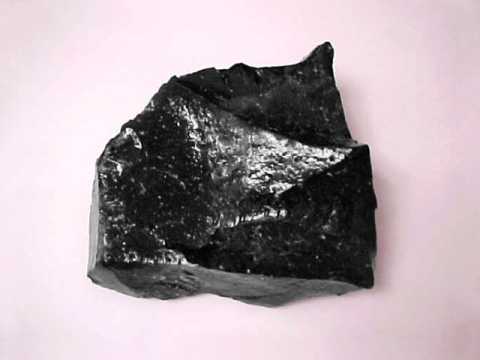
Obsidian
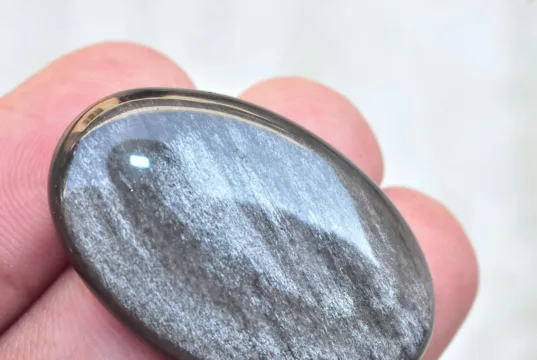
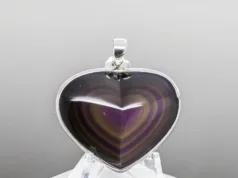
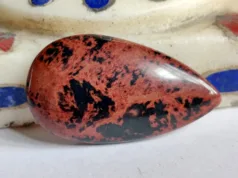
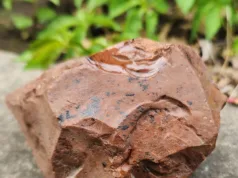
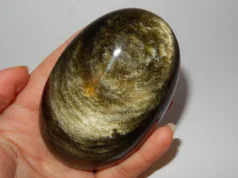
Obsidian is an igneous rock that forms when molten rock material cools so rapidly that atoms are unable to arrange themselves into a crystalline structure. It is an amorphous material known as a "mineraloid." The result is a volcanic glass with a smooth uniform texture that breaks with a conchoidal fracture .