






Borate Minerals
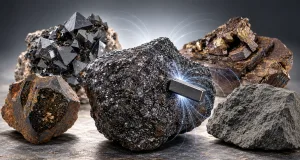
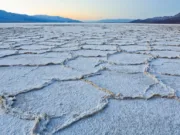
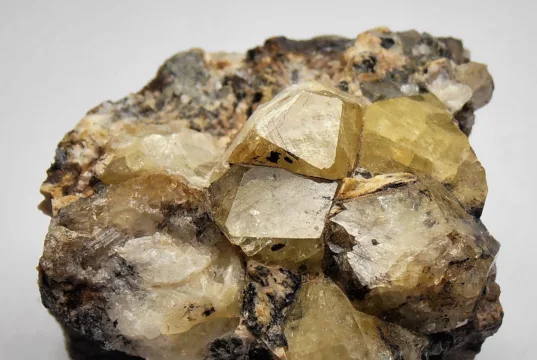
Borate minerals are a unique and economically important group of minerals in which boron combines with oxygen and other elements—often in evaporite basins, volcanic fumarole zones or rich sedimentary layers—to form crystalline compounds like borax (Na₂B₄O₇·10H₂O), colemanite (Ca₂B₆O₁₁·5H₂O) and ulexite (NaCaB₅O₆(OH)₆·5H₂O). These minerals don’t just sit quietly in the ground: they tell geological stories of arid lake-beds drying up, volcanic gases condensing, boron-rich fluids migrating and then crystallizing under specific conditions. For engineers, geologists and site practitioners they matter for several reasons: borate deposits can indicate unique climate and tectonic settings; the minerals themselves are used in glass and ceramics manufacture, agriculture (as fertilizers and micronutrients), even high-technology applications; and from a geotechnical perspective the presence of borate-bearing sediments might affect drilling, foundation behaviour or groundwater chemistry. In this category you’ll explore how borates form, how to recognise common species, what their chemical compositions reflect about their environment, where major deposits are located and why understanding these minerals can give you both geological insight and practical value.