



Minerals
A mineral is a naturally occurring chemical compound usually of crystalline form and not produced by life processes. A mineral has one specific chemical composition, whereas a rock can be an aggregate of different minerals or mineraloids. The study of minerals is called mineralogy. To meet the definition of “mineral” used by most geologists, a substance must meet five requirements:
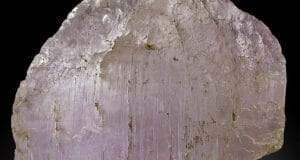
Spodumene
Spodumene is a pyroxene member of inosilicate mineral with chemical formula is LiAl(SiO3)2, lithium aluminium. It can also be pink, lilac, or green. Crystals are prismatic, flattened, and typically striated along their length. Gem varieties of the mineral usually exhibit strong pleochroism.
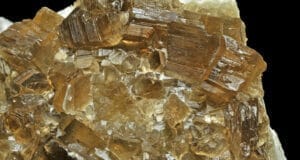
Phlogopite
Phlogopite is a member of mica group family of phyllosilicates mineral. Color is a yellow, greenish, or reddish-brown. It is the magnesium endmember of the biotite stable answer series, with the chemical formulation KMg3AlSi3O10 (F, OH) 2.

Beryl
Beryl is a member of cyclosilicate minerals with composed of beryllium aluminium. Chemical formula: Be3Al2Si6O18. Few people have ever heard of the mineral beryl but almost everyone has heard of its principal gemstone varieties emerald and aquamarine.
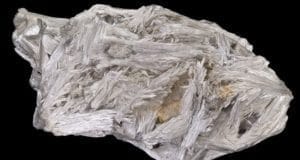
Tremolite
Tremolite is a silicate mineral and member of the amphibole group. Chemical formula is Ca2(Mg5.0-4.5Fe2+0.0-0.5)Si8O22(OH)2. A calcium magnesium silicate, tremolite forms a solid-solution series with ferroactinolite, where iron substitutes in increasing amounts for magnesium.

Acanthite
Acanthite is a form of silver sulfide with the chemical formula: Ag2S. It crystallizes inside the monoclinic gadget and is the solid form of silver sulfide under 173 °C (343 °F). A silver sulfide, it is the maximum important ore of silver. It additionally happens in huge form and has an opaque, grayish black color.
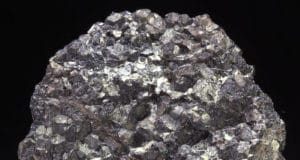
Chromite
Chromite is an oxide mineral that an iron chromium oxide with formula: FeCr2O4. It is belonging to the spinel group. Chromite is the most important ore of chromium. Crystals are uncommon, but when found they are octahedral. Chromite is usually massive or in the form of lenses and tabular bodies, or it may be disseminated as granules.
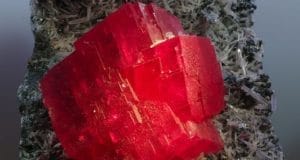
Rhodochrosite
Rhodochrosite is a carbonate mineral with formula: MnCO3. It has a classic rose-pink color, but specimens can also be brown or gray. It forms dogtooth or rhombohedral crystals like calcite, but it may also occur in stalactitic, granular, nodular, botryoidal, and massive habits. Rhodochrosite is found in hydrothermal ore veins with sphalerite, galena, fluorite, and manganese oxides.

Rutile
Rutile is oxide group mineral with formula: titanium dioxide (TiO2). It often appears as pale golden, needlelike crystals inside quartz. When not enclosed in quartz, it is usually yellowish or reddish brown, dark brown, or black.

Ilmenite
Ilmenite, otherwise called manaccanite, is a titanium-iron oxide mineral with formula: FeTiO3. It is a noteworthy wellspring of titanium. Typically thick and tabular, its crystals sometimes occur as thin lamellae (fine plates) or rhombohedra.. Ilmenite can also be massive, or occur as scattered grains. Intergrowths with hematite or magnetite are common
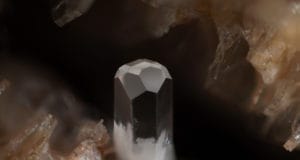
Nosean
Nosean, otherwise called Noselite, is a mineral of the feldspathoid type in tectosilicate with formula: Na8Al6Si6O24 (SO4). H2O. It frames isometric precious stones of...
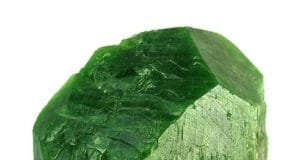
Diopside
Diopside is a member of pyroxene group mineral with formula is MgCaSi2O6. Specimens can be colorless but are more often bottle green, brownish green, or light green in color. It has two distinct prismatic cleavages at 87 and 93° typical of the pyroxene series. Diopside occurs in the form of equant to prismatic crystals that are usually nearly square in section.
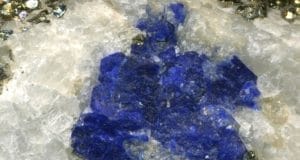
Lazurite
Lazurite is a member of sodalite group in feldspathoid mineral also it is tectosilicate with formula is (Na,Ca)8[(S,Cl,SO4,OH)2|(Al6Si6O24)]. A sodium calcium aluminosilicate, lazurite is the main component of the gemstone lapis lazuli and accounts for the stone’s intense blue color