







Minerals
A mineral is a naturally occurring chemical compound usually of crystalline form and not produced by life processes. A mineral has one specific chemical composition, whereas a rock can be an aggregate of different minerals or mineraloids. The study of minerals is called mineralogy. To meet the definition of “mineral” used by most geologists, a substance must meet five requirements:

Amethyst
A Gemstone Forged by Earth’s Hidden ForcesAmethyst is more than a beautiful purple gemstone — it is a geological story written in quartz crystals,...
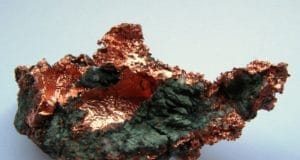
Most Common Copper Minerals: Formation, Properties, and Economic Importance
The Story of Copper Beneath the EarthCopper is one of humanity’s oldest and most essential metals. It conducts our electricity, shapes our technology, and...
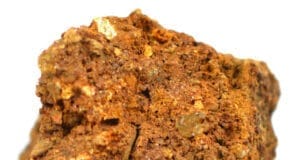
Limonite
Limonite is a mineral that is composed mainly of hydrated iron oxides, typically goethite and/or lepidocrocite, along with other minerals such as magnetite, hematite,...
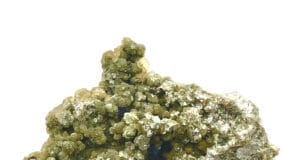
Sericite
Sericite is a type of mineral that belongs to the mica group. It is a fine-grained, muscovite mica with a silky luster and is...
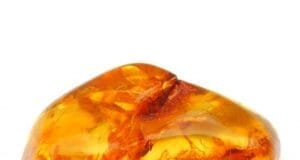
Amber
Amber is a fascinating organic gemstone that has captured human fascination for millennia. It's not a mineral, but rather a fossilized resin from ancient...
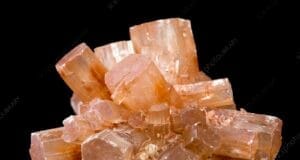
Aragonite
Aragonite is a carbonate mineral and its formula is calcium carbonate. It has the same formula as Calcite and Vaterite, but has a different...

Pearl
A pearl is a hard, shiny object produced in living tissue such as a crustacean mollusk or fossil conulariids. It is generally composed of calcium carbonate and mainly aragonite.
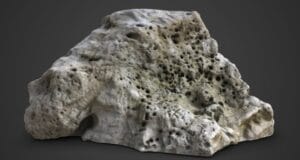
Coral
Coral is skeletal material produced by marine animals. Coral is organic and created by living organisms. When coral polyps die, the hardened skeleton remains and this material is used as a gemstone. Most corals are white, but nature can create coral in many other colors, including the popular orange to red forms. Usually its compound is calcium carbonate.
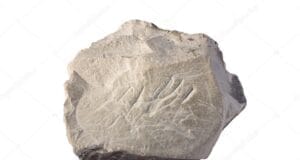
Kaolinite
Kaolinite is a clay mineral with chemical composition Al2Si2O5(OH)4. It is an important industrial mineral. Rocks rich in kaolinite are called kaolin. Kaolinite, common group of clay minerals that are hydrated aluminum silicates; they contain the main components of kaolin (china clay). The group includes kaolinite, which is chemically similar but amorphous to kaolinite, and its rarer forms, stalagmite and nacrite, halloysite and allophane.

Manganite
Manganite is a member of oxide minerals with composed of manganese oxide-hydroxide of formula: MnO(OH).A widespread and important ore of manganese. The mineral had been described by a number of different names since 1772, but was finally given its current name, which it owes to its manganese component, in 1827.

Turquoise
Turquoise is a
member of phosphate mineral with chemical the formula CuAl6 (PO4)4(OH) 8·4H2O.
Turquoise is an opaque, blue-to-green mineral that is a hydrated phosphate of
copper...

Chrysoberyl
Chrysoberyl is a member of oxide mineral or gemstone with the formula: BeAl2O4.In spite of the similarity in their names, chrysoberyl and beryl are absolutely extraordinary stones, despite the fact that both include beryllium. Chrysoberyl is the third most commonplace herbal stone and is found at 8.5 at the Mohs