



Minerals
A mineral is a naturally occurring chemical compound usually of crystalline form and not produced by life processes. A mineral has one specific chemical composition, whereas a rock can be an aggregate of different minerals or mineraloids. The study of minerals is called mineralogy. To meet the definition of “mineral” used by most geologists, a substance must meet five requirements:
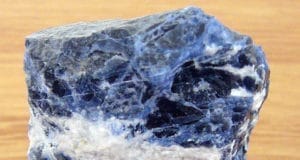
Sodalite
Sodalite is a feldspathoidal tectosilicate mineral that is rich royal blue widely used as an ornamental gemstone. Chemical formula is Na8 (Al6Si6O24) Cl2. Specimens can be blue, gray, pink, colorless, or other pale shades. They sometimes fluoresce bright orange under ultraviolet light. Sodalite nearly always forms massive aggregates or disseminated grains.
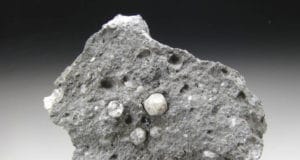
Leucite
Leucite is a feldspathoid mineral in group of tectosilicate. It is a rock forming mineral include potassium and aluminium tectosilicate, formula is K.Specimens can...
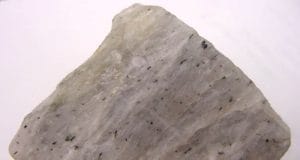
Nepheline
Nepheline is the most common feldspathoid mineral in the world, its name from the Greek word nephele, which means “cloud” a reference to the fact that the mineral becomes cloudy or milky in strong acids. Specimens are usually white in color, often with a yellowish or grayish tint.

Zeolites
Zeolite is a group of silicate minerals that a family of hydrated aluminosilicate minerals that contain alkali and alkaline-earth metals with unusual properties with importance industrial application. Zeolite form is usually well-formed crystals with pale colors and generally soft and can easily crushed.They are found in geologically young volcanic fields.
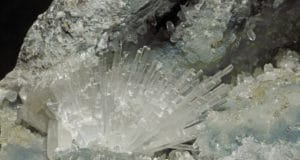
Natrolite
Natrolite is a tectosilicate mineral belong to zeolite group members.Its formula Na2Al2Si3O10 • 2H2O. A hydrated sodium aluminosilicate, natrolite takes its name from the Greek word natrium, which means “soda” a reference to the sodium content of this mineral. Natrolite can be pale pink, colorless, white, red, gray, yellow, or green.

Sphalerite
Sphalerite mineral is in group of Sulfide mineral that is formula ((Zn, Fe)S).It is the principal ore of zinc. Pure sphalerite is colorless and...

Autunite
Autunite is a phosphate mineral that formula is calcium uranium phosphate (Ca (UO2)2(PO4)2·10–12H2O) and It is harness of 2 - 2, 5.A popular collector’s...

Wollastonite
Wollastonite is a group of innosilicate mineral, formula is CaSiO3 that may inlude small amount of magnesium, manganese and iron substituting for calcium. A...
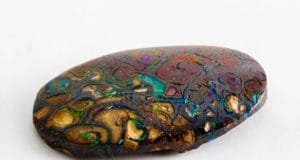
Opal
Opal is one of the most visually extraordinary gemstones on Earth. Some specimens flash with brilliant rainbow colors that appear to move and shift...

Graphite
Graphite is like diamond, graphite is a form of native carbon crystalline with its atoms arranged in a hexagonal structure. Graphite is opaque and dark gray to black. It occurs as hexagonal crystals, flexible sheets, scales, or large masses.
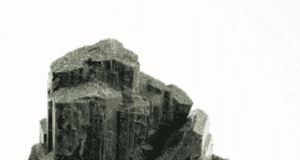
Hornblende
Hornblende is a inosilicate amphibole minerals, which are two type hornblende minerals. They are ferrohornblende and magnesiohornblende. They are an isomorphous mixture of three molecules; a calcium-iron-magnesium silicate, an aluminium-iron-magnesium silicate, and an iron-magnesium silicate.

Arsenic
Arsenic is a native element with the formula As and atomic number 33. Known since antiquity, arsenic is widely distributed in nature, although it is unusual in native form. It is classified as a semimetal, because it possesses some properties of metals and some of nonmetals. Crystals are rare, but when found they are rhombohedral.