



























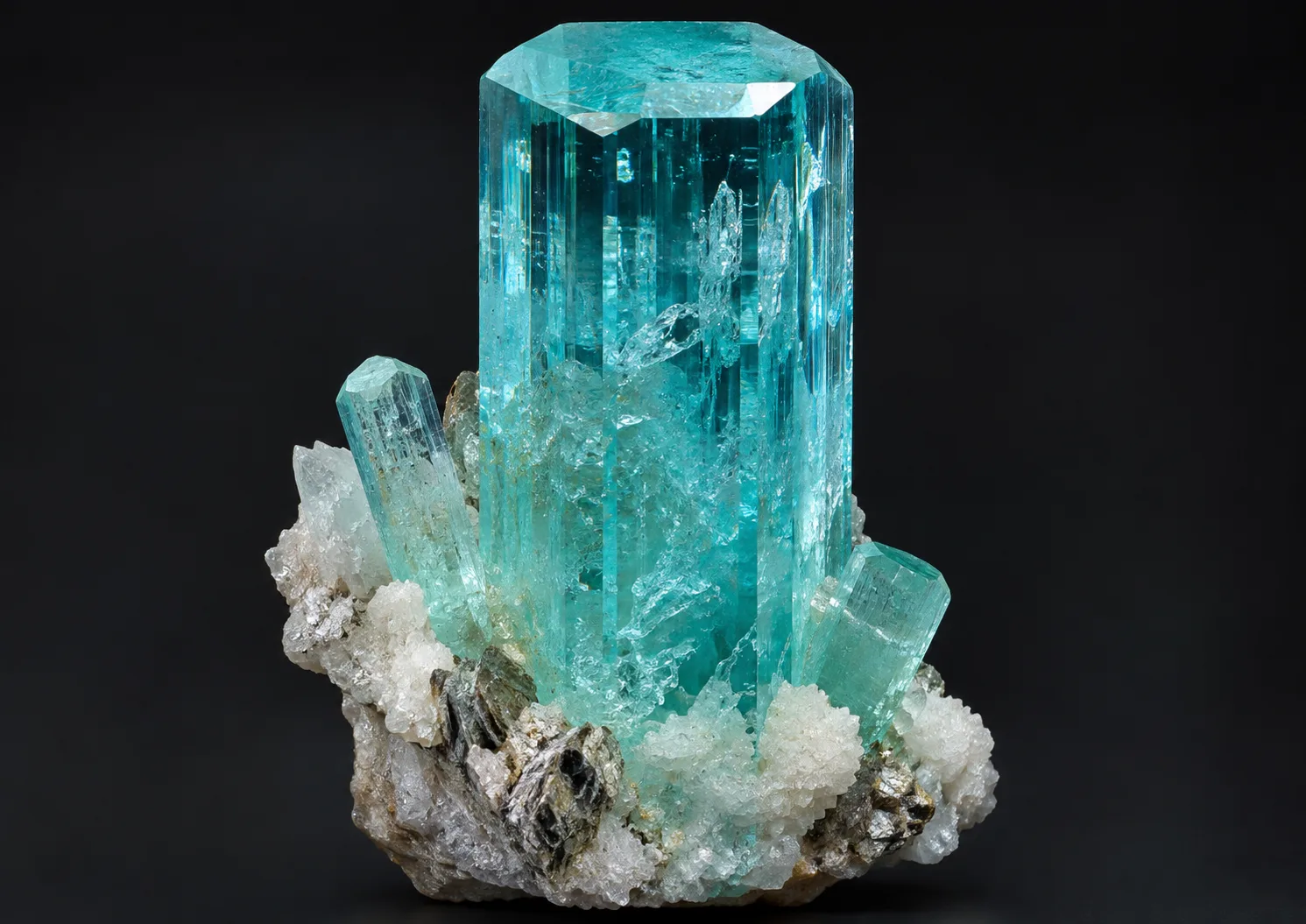
Aquamarine is the blue to greenish-blue variety of beryl (Be₃Al₂Si₆O₁₈), the mineral family that also includes emerald and morganite. Its color is mainly related to trace iron in the crystal structure. Aquamarine has a Mohs hardness of approximately 7.5–8, a typically glassy luster and an often transparent appearance, making it popular for gemstones and fine mineral specimens.
This guide explains aquamarine properties, color, formation, identification, quality factors and treatments. It also shows how gemologists distinguish aquamarine from blue topaz, glass and synthetic blue spinel, and why visual checks alone rarely prove whether a cut gemstone is natural.
What Is Aquamarine?
Aquamarine is a a variety of beryl, not a separate mineral species. Beryl is a beryllium aluminum cyclosilicate, and its hexagonal crystal structure can accommodate trace elements that create different colors. Green beryl colored primarily by chromium and/or vanadium is typically known as emerald, whereas blue to blue-green iron-bearing beryl is aquamarine. The name comes from Latin words associated with water and the sea, reflecting its ocean-blue color.
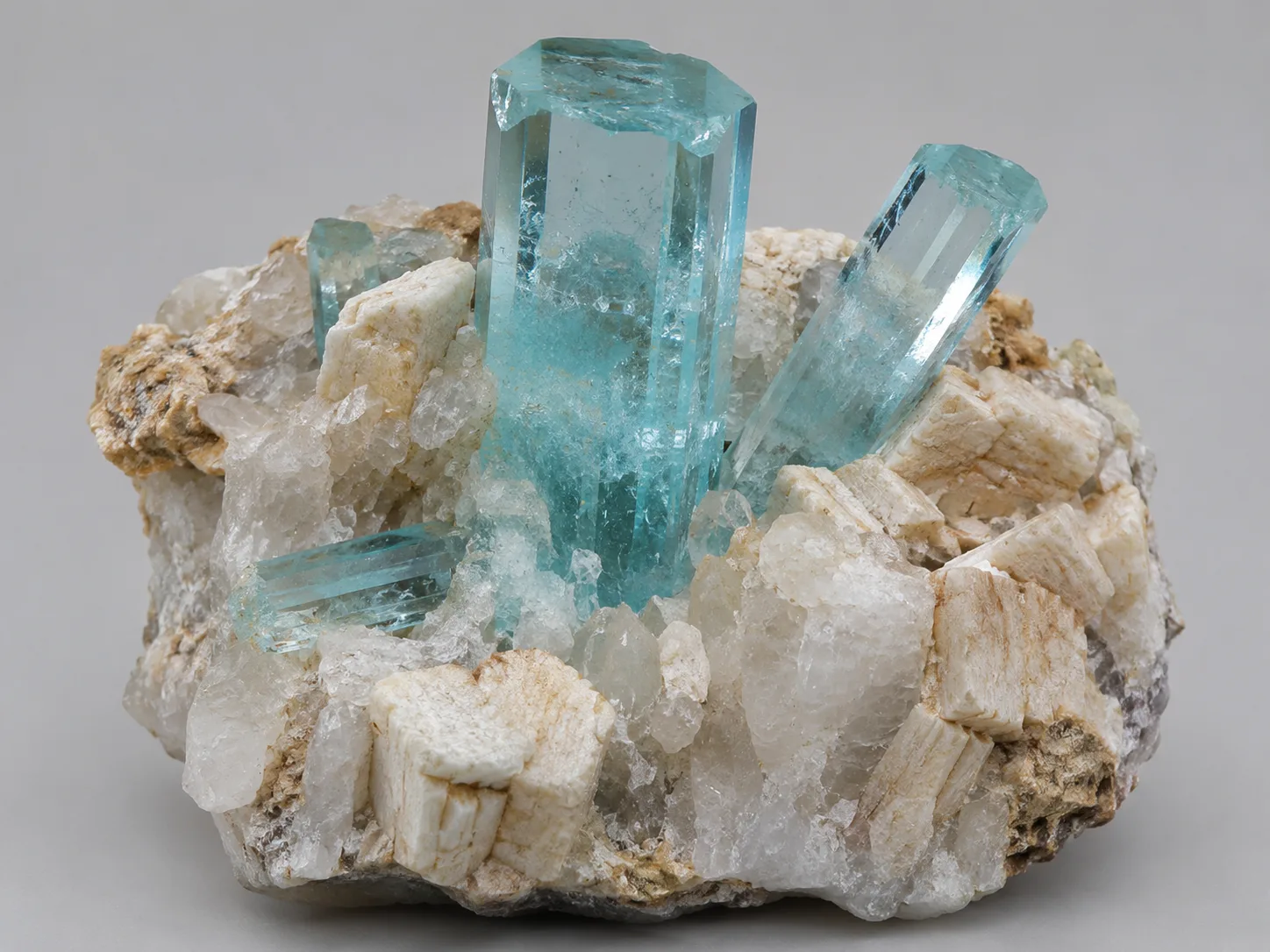
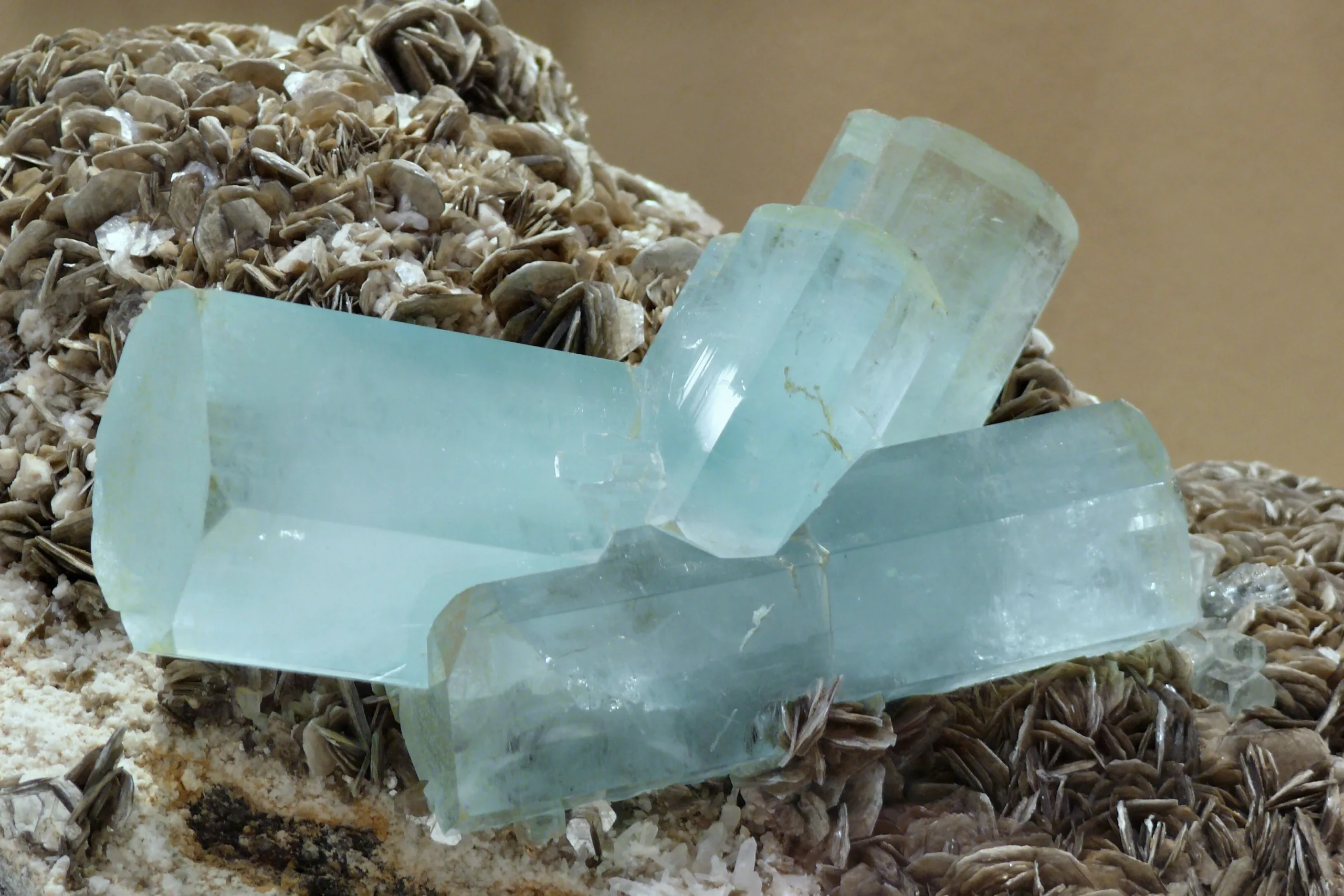
Natural aquamarine often grows as six-sided prismatic crystals, sometimes with flat or complex terminations and striated faces. Crystals can be colorless at one end and blue at the other or show subtle color zoning. Many collectible crystals retain visible inclusions or surface etching. Faceted jewelry stones, by contrast, are usually cut from transparent portions selected to show the best color.
Aquamarine Physical and Gemological Properties
| Property | Typical aquamarine characteristics |
| Mineral species | Beryl; aquamarine is its blue to greenish-blue variety |
| Chemical formula | Be₃Al₂Si₆O₁₈ (beryl) |
| Crystal system | Hexagonal |
| Color | Pale blue, blue, greenish-blue; intensity varies |
| Color cause | Primarily iron-related absorption in beryl |
| Mohs hardness | 7.5–8 |
| Luster | Vitreous (glassy) |
| Transparency | Often transparent to translucent |
| Streak | White; destructive streak tests are unsuitable for faceted gems |
| Cleavage | Poor/indistinct; brittle fracture possible |
| Refractive index (RI) | Typically about 1.577–1.583 (values vary) |
| Birefringence | Low, approximately 0.005–0.009 |
| Optic character | Uniaxial negative |
| Specific gravity | Commonly around 2.72 |
| Pleochroism | Variable, often weak; blue and paler greenish or near-colorless directions |
| Occurrence | Granitic pegmatites and related geological settings; some alluvial deposits |
The numerical ranges above are conventional gemological values, not a substitute for measuring an individual stone. The Gemological Institute of America (GIA), Geosciences LibreTexts and International Gem Society provide further property data.
Aquamarine Color: Why Is It Blue?
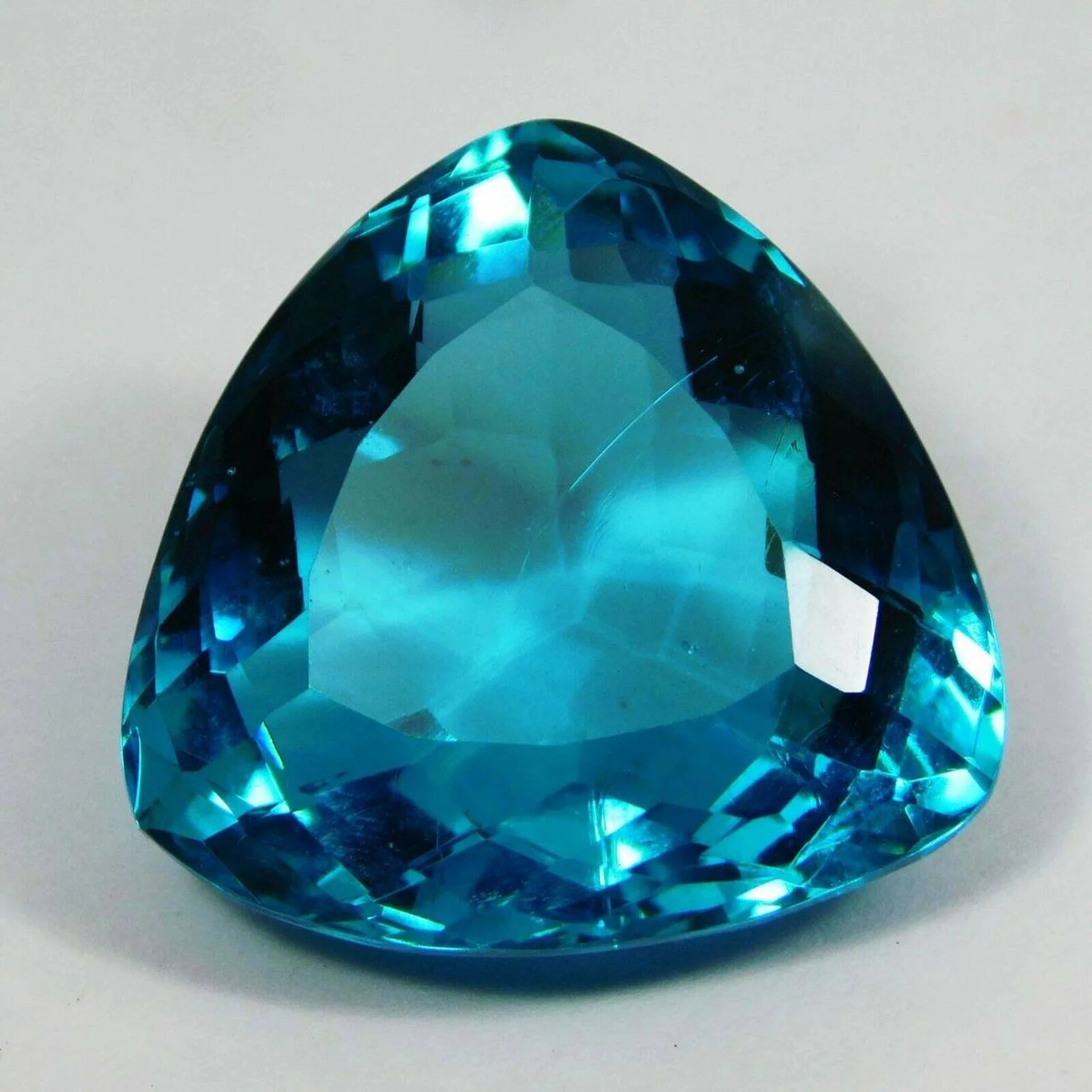
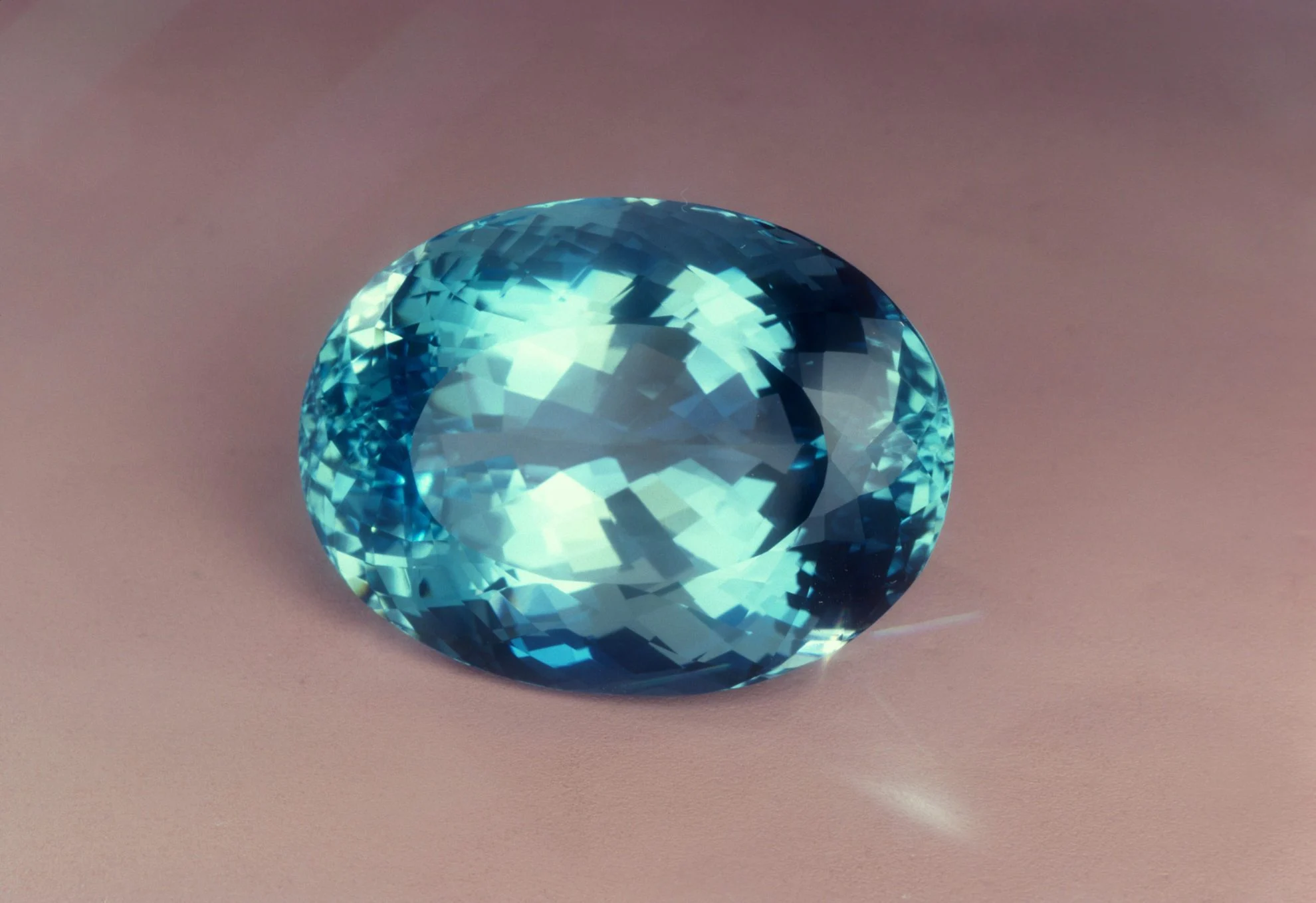
Aquamarine’s blue appearance results mainly from the optical effects of iron in the beryl crystal structure. Different oxidation states, site positions and concentrations influence the balance between blue and greenish tones. Natural specimens range from very pale blue to medium or moderately strong blue. The vivid color of a photograph can also depend on lighting, background and color processing; a photograph cannot reliably certify a gem’s color grade.
Compared with strongly saturated blue gems such as sapphire, aquamarine often has a lighter, more delicate appearance. Some material is more greenish before treatment. Natural color zoning and occasional green-to-blue differences across a crystal can reveal changes as the mineral grew, but they do not by themselves prove the stone is untreated.
How Does Aquamarine Form?
Granitic pegmatites and beryllium-rich fluids
Most gem-quality aquamarine develops in granitic pegmatites, extremely coarse-grained igneous bodies enriched in water and certain rare elements during the final stages of granitic magma crystallization. When beryllium-bearing melts and fluids encounter suitable aluminum, silicon and iron, beryl crystals can grow. Open spaces, sustained fluid movement and favorable chemistry can allow transparent prisms to form. The large crystal sizes characteristic of some pegmatites do not mean all aquamarines take the same amount of time to grow.
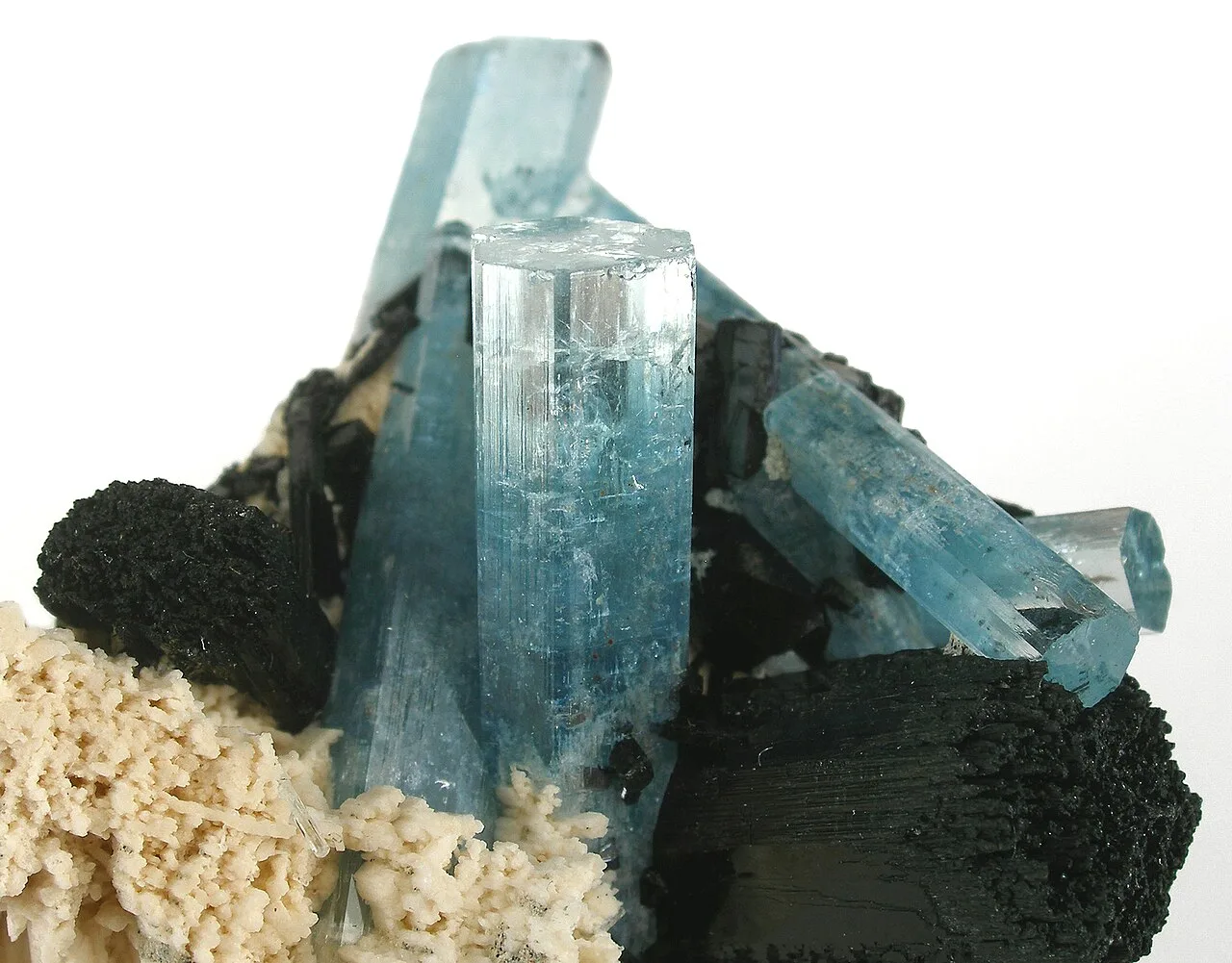
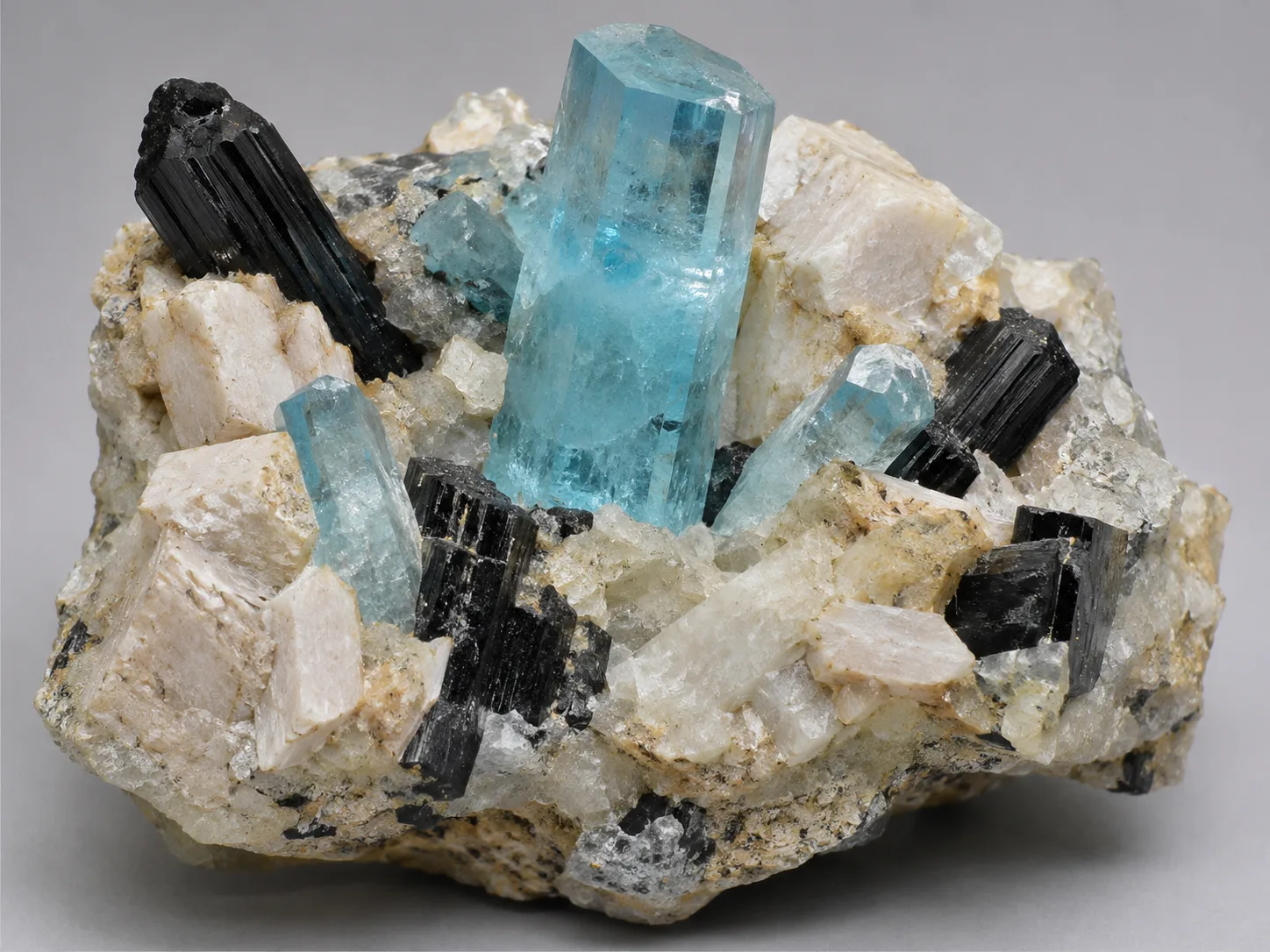
Aquamarine commonly occurs alongside quartz, feldspar, muscovite, tourmaline (schorl) and other pegmatite minerals. Some beryl occurs in hydrothermal or metamorphic settings as well. Weathering can free durable gem crystals and concentrate them in nearby alluvial gravels. IGS explains how aquamarines form in these settings.
Where is aquamarine found?
Important sources and historically notable occurrences include Brazil (especially Minas Gerais), Pakistan (including the Shigar region), Afghanistan, Nigeria, Mozambique, Madagascar, and Namibia. Distinctive high-altitude deposits occur at Mount Antero, Colorado, United States. A locality name can help describe a specimen’s geology but does not by itself prove authenticity or value.
Aquamarine Quality Factors: Color, Clarity, Cut and Carat Weight
Color is usually the leading quality factor
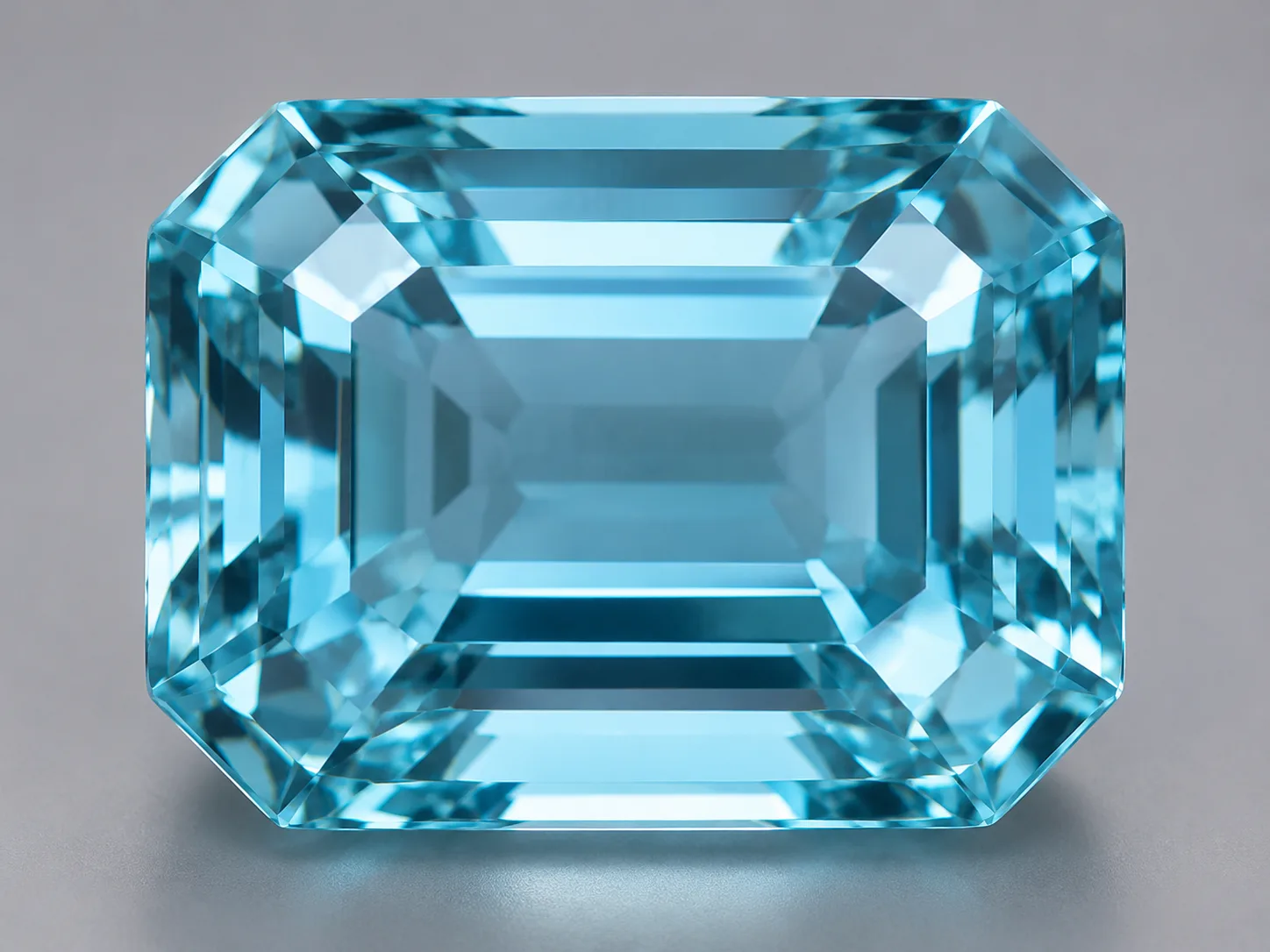
In the gemstone trade, attractive blue saturation with an even tone is particularly important. Pale stones can be beautiful but are generally more readily available than fine saturated blue aquamarine. Very strongly colored stones should be assessed carefully for accurate color, treatments and identity rather than assumed to be exceptionally valuable from photos alone. GIA’s Aquamarine Quality Factors describes color, clarity, cut and size considerations.
Clarity and inclusions
Many high-quality faceted aquamarines are eye-clean, meaning they have no inclusions readily visible without magnification when viewed face-up. Natural crystals may still contain growth tubes, liquid inclusions, healed fractures or mineral inclusions. Some inclusions are diagnostic or aesthetically interesting in a collector specimen, but fractures that reach the surface can affect durability or require disclosure of clarity enhancement.
Cut quality, shape and weight
The cut should display the gemstone’s best color, even brightness and attractive proportions rather than a large transparent “window” at the center. Oval, emerald, pear and other shapes are common, and designers often use step cuts that complement the material’s clarity. Carat weight describes mass, not quality. Larger transparent gems with fine color may be less common, but price is not determined by carat weight alone.
How to Identify Aquamarine: Practical Gemological Tests
Do not scratch a valuable aquamarine, try a streak test on jewelry or heat a specimen to “verify” it. Aquamarine is hard but can still chip or fracture. Start with non-destructive examination and use gemological instruments where available.
1. Examine color, transparency and crystal habit
In an uncut specimen, look for a six-sided prism, blue to greenish-blue color, and a vitreous luster. The presence of quartz, feldspar, mica and tourmaline in a pegmatite supports a beryl identification. However, a similar-looking blue crystal or polished stone could be another mineral, glass or a manufactured product; appearance is a preliminary clue only.
2. Use a refractometer on suitable polished facets
A gemologist can measure the refractive index with a refractometer. Aquamarine commonly falls near RI 1.577–1.583, whereas most commercial blue topaz has a distinctly higher RI, and synthetic blue spinel has a higher, singly refractive response. Actual values may vary, and obtaining accurate readings requires appropriate training and contact fluid.
3. Check pleochroism and optic character
A dichroscope may reveal weak to moderate color differences when the gem is viewed along different directions, reflecting beryl’s dichroism. A polariscope can help assess double refraction, and proper optic measurements can confirm the uniaxial-negative nature expected of aquamarine. A single casual look with a handheld viewer is not sufficient proof of origin.
4. Examine inclusions with magnification
A 10× loupe or gemological microscope can reveal growth features, inclusions, bubbles or possible treatment evidence. But “no bubbles” does not prove natural origin, and a glass imitation may show few obvious features. Substantial value or uncertain treatment status warrants an independent laboratory report.
Aquamarine vs Blue Topaz, Glass and Synthetic Spinel
| Material | Key distinction | Practical note |
| Aquamarine (beryl) | RI around 1.577–1.583; uniaxial negative; SG around 2.72 | Often pale blue and transparent, but color alone is inconclusive |
| Blue topaz | Typically higher RI, different optical character and higher SG | Can look very similar; blue topaz is often treated for color |
| Blue glass | Amorphous, usually singly refractive; RI and bubbles vary by glass type | A simple bubble check is not a definitive test |
| Synthetic blue spinel | Usually singly refractive and noticeably higher RI than aquamarine | Common laboratory-made look-alike for blue gemstones |
| Other blue beryl (Maxixe-type) | Beryl-related material with different color behavior and stability | Identification and treatment history can require specialist testing |
The International Gem Society guide to aquamarine imitations outlines instrument-based differences. Never rely on a home hardness test to separate aquamarine from topaz: both are hard enough to damage nearby objects or their own polished surfaces.
Optical Properties of Aquamarine: Thin Section and Gem Testing
Because aquamarine is beryl, its optical behavior is best described using refractive index, low birefringence and uniaxial-negative optic character. In a standard thin section under plane-polarized light (PPL), beryl is commonly colorless to very pale blue with relatively low relief and little or no cleavage visible. Under crossed polarizers (XPL), it typically displays low first-order interference colors, often gray to white. Pleochroism can be more evident in strongly colored crystals when viewed in different directions.
For a faceted gemstone, refractometer readings, a dichroscope, a polariscope and microscopic examination are usually more relevant than cutting a petrographic thin section. A thin-section image is not automatically a record of the exact quality of the gem in a jewelry setting. Unusual strongly dichroic aquamarine has been documented by GIA Gems & Gemology.
Aquamarine Treatments: Heating and Color Stability
Heat treatment is commonly used to reduce greenish tones and make an aquamarine appear bluer. When properly applied, this color adjustment is generally stable, and the stone remains aquamarine. Treatment is not necessarily visible to the naked eye, so an attractive blue color does not prove a gem is naturally untreated. Disclosures should distinguish natural material from laboratory-grown or imitated products.
A different issue is Maxixe-type blue beryl, whose intense color can be unstable in light or with heating. It should not automatically be described as ordinary aquamarine. A seller’s “deep ocean blue” marketing name alone does not establish treatment status, chemical identity or permanent color. For professional buying and care, see GIA’s Aquamarine Buyers Guide and IGS treatment information.
Aquamarine Meaning, History and March Birthstone
Aquamarine is the traditional March birthstone. Its name evokes sea water, and many cultural traditions associate the gemstone with sailors, calmness and protection during travel. These associations are part of cultural history and jewelry symbolism, not scientific evidence of healing or medical benefits. Aquamarine’s appeal in modern jewelry rests on its color, transparency, durability and distinctive mineral origin.
How to Care for Aquamarine Jewelry
- Clean ordinary aquamarine jewelry gently with lukewarm water, mild soap and a soft brush or cloth, after checking the setting and any known treatments.
- Avoid sudden temperature changes, rough impacts and abrasive cleaning even though aquamarine is relatively hard.
- If the stone has surface-reaching fractures or is fracture-filled, avoid ultrasonic or steam cleaning unless a qualified jeweler advises it is safe.
- Store separately from harder gems or rough metal edges to reduce scratches and chips.
GIA advises that fracture-filled gems require gentler cleaning than untreated durable stones. A jeweler can assess whether a specific mounted gemstone is suitable for mechanical cleaning. GIA care guidance.
Aquamarine Frequently Asked Questions
Is aquamarine a mineral or a gemstone?
Both terms are used: aquamarine is the blue or greenish-blue gem variety of the mineral beryl. Its mineral species is beryl.
What makes aquamarine blue?
Its color is mainly caused by iron-related absorption in the beryl structure. The shade depends on composition, crystal orientation and sometimes treatment.
How hard is aquamarine?
Approximately 7.5–8 on the Mohs hardness scale. Hardness measures scratch resistance, not freedom from chipping or breakage.
Is darker aquamarine always better?
No. Attractive blue saturation is important, but even color, transparency, cut, size, treatment status and buyer preference also matter. Very dark appearance may be a lighting or identification issue.
Is heated aquamarine fake?
No. Properly disclosed heat-treated natural aquamarine is still natural beryl; treatment changes its appearance. Imitations such as glass or synthetic spinel are different materials.
Can I identify real aquamarine from a photo?
A photo can suggest aquamarine, particularly if the specimen shows a blue hexagonal beryl crystal in a pegmatite, but it cannot reliably confirm mineral species, treatment or authenticity. Refractive-index and laboratory tests are more dependable.
Scientific References and Image Credits
- GIA — Aquamarine Gem Encyclopedia: key mineral and gemological properties.
- GIA — Aquamarine Quality Factors: color, clarity, cut and carat weight.
- GIA — Aquamarine Buyers Guide: gem care and treatment guidance.
- International Gem Society — How Aquamarines Form: geological occurrence and pegmatites.
- International Gem Society — Distinguishing Aquamarine Imitations: blue topaz, glass and synthetic spinel comparisons.
- Geosciences LibreTexts — Aquamarine: optical and physical characteristics.
- Eurico Zimbres / Wikimedia Commons — Beryl Aquamarine: featured image, CC BY-SA 2.5, resized.
- Rob Lavinsky / Wikimedia Commons — Pakistan Aquamarine: photo credited above.
- Rob Lavinsky / Wikimedia Commons — Aquamarine with Schorl: photo credited above.
- Steve Green / Wikimedia Commons — Faceted Aquamarine: photo credited above.
- Rob Lavinsky / Wikimedia Commons — Blue Aquamarine: photo credited above.
- GeoDIL / Wikimedia Commons — Faceted Aquamarine: photo credited above.