











Published November 21, 2026. New research has identified geological evidence for an ancient mountain-building system connected to the assembly of Gondwana, much of whose history is now concealed by Antarctica’s ice. The study offers a new perspective on the scale of early Paleozoic mountain building—and a possible connection between erosion, ocean chemistry, and the diversification of animal life.
What Did Scientists Discover?
Researchers from the Australian National University and Germany’s GFZ German Research Centre for Geosciences report evidence for immense mountain systems that formed as the Gondwana supercontinent assembled, roughly 650–450 million years ago. Their results suggest mountain-building episodes on a scale comparable with major modern orogenic systems, including the Himalayas.
Importantly, this is not a discovery of intact Himalayan-height peaks standing unseen beneath the ice. Ancient mountains have undergone hundreds of millions of years of erosion and tectonic change. What scientists have reconstructed is their former existence and geological significance using mineral records.
How Did Researchers Reconstruct the Lost Mountains?
The researchers examined detrital zircon—hardy mineral grains preserved in sediments recovered near Antarctica through scientific ocean drilling. Zircon can preserve the age of its original crystallization, even after the host rock is weathered, eroded and transported into a sedimentary basin.
By comparing zircon age patterns in Antarctic sediments with geological records elsewhere, scientists can infer when crust formed or was reworked during continental collisions. Such age distributions are indirect evidence: they reveal the history of source rocks and the large-scale tectonic processes that supplied sediments, rather than a direct measurement of the original mountain heights.
The study, published in Earth and Planetary Science Letters, considers the Antarctic data alongside wider global zircon records to evaluate the importance of the Gondwana mountain-building episode.
Why Gondwana’s Mountains Matter
When continents collide, the crust thickens and mountain belts rise. Over geological time, weathering and erosion carry sediment and dissolved nutrients into adjacent seas. In the case of the Gondwana mountain systems, the authors propose that extensive erosion may have influenced the chemistry of ancient oceans and atmosphere.
These processes are potentially relevant to the environmental changes surrounding the Cambrian explosion, a period of major diversification in animal life. Greater nutrient supply and long-term changes in carbon cycling and oxygen availability are plausible links—but the timing alone does not demonstrate that the mountains caused biological diversification. The hypothesis requires evaluation alongside independent geochemical and fossil evidence.
What Is Known—and What Remains Uncertain?
The zircon evidence strengthens the case for extensive mountain building associated with Gondwana’s assembly. However, the precise elevation, continuity and geography of these ancient ranges cannot be read directly from zircon ages. Researchers must combine the mineral record with geological mapping, structural reconstruction, geophysics and further sampling.
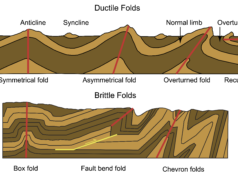
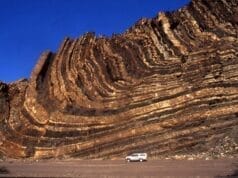
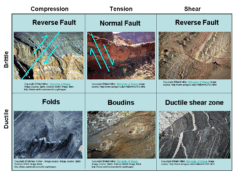
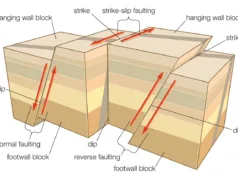
For readers interested in how such mountain chains form, see our guide to structural geology and our overview of geology.
Study and Sources
- Australian National University — Research announcement (November 19, 2026).
- Earth and Planetary Science Letters — “Do Himalayan-style mountains lie under the Antarctic ice?”.
- GFZ Data Services — Research dataset.
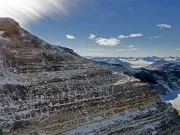
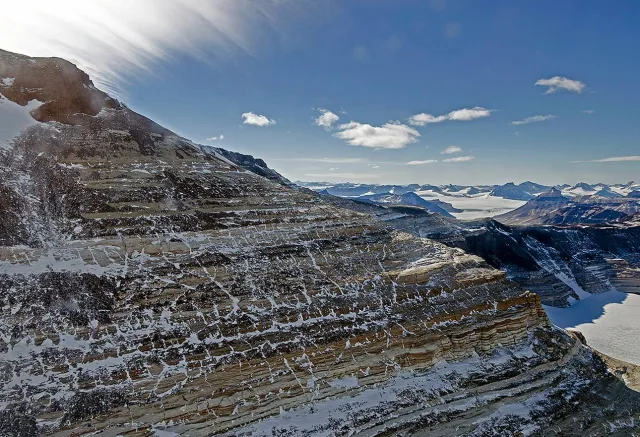
Featured image: A modern Antarctic landscape photographed during NASA’s Operation IceBridge; it illustrates the region and does not show the ancient mountain ranges reconstructed by the study. Credit: NASA/Michael Studinger.