






Geology Branches
Geology is divided into several fields that can be grouped under the main headings of physical and historical geology.
Applied Geology
Applied Geology is geologic knowledge to solving geologic problem. In other words, application of various fields of geology to economic, engineering, water-supply, or environmental problems; geology related to the human activity.
METHODS OF GEOLOGY
Geologists use primary data associated with petrology (the study of rocks), stratigraphy (the observe of sedimentary layers), and structural geology (the have a look at of positions of rock devices and their deformation). In many cases, geologists additionally take a look at contemporary soils, rivers, landscapes, and glaciers; inspect past and contemporary life and biogeochemical pathways, and use geophysical techniques to investigate the subsurface.
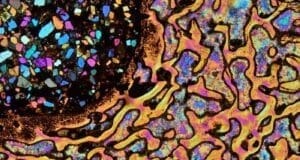
Petrology Petrology Overview: Igneous, Sedimentary & Metamorphic Rocks Explained
The word petrology comes from the Greek petra (rock) and logos (study or knowledge).In geology, petrology focuses specifically on rocks as aggregates of minerals,...

Paleontology | Fossils, Ancient Ecosystems & Earth’s Long Story
Paleontology is the science that turns rocks into history books. Every fossil—whether it’s a crushed ammonite, a fern leaf flattened between mud layers, a...

Magmatic deposits
Magmatic deposits are mineral deposits that are associated with igneous rocks, such as granite, gabbro, and basalt. They are formed by the cooling and...
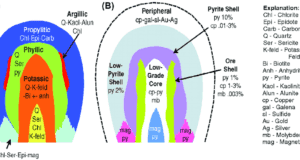
Hydrothermal Alteration
What is alteration?Alteration refers to a change in the physical or chemical properties of rocks and minerals. In geology, alteration is a common...

Ore Bearing Hydrothermal Fluids
Ore-bearing hydrothermal fluids are fluids that are enriched in minerals and metals, and play an important role in the formation of many types of...
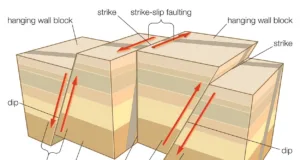
Fault and Types of Faults
Fault is a fracture or crack where two rock blocks slide past one to another. If this movement may occur rapidly, it can be causes earthquike or slowly, in the form of creep.Types of faults include strike-slip faults, normal faults, reverse faults, thrust faults, and oblique-slip faults.

The Rock Cycle
The rock cycle basic definiton is transitions among the three main rock types, which are metamorphic, igneous and sedimentary rocks. Each of the rocks can be altered when they are force out equilibrium conditions.The rock cycle describes how the three rock types are interrelated and how processes change from one to another over time.The rock cycle
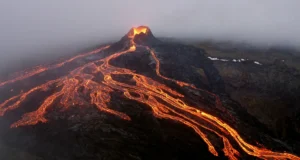
World’s Most Active Volcanoes
The World's Most Active Volcanoes: Places Where Earth Never Truly Falls SilentEarth isn't a static planet. We know this, but most of the time...

Age of the Earth and Earth’s Oldest Rock
How old is the Earth?Thanks to meteorites from space, rocks brought back by the Apollo astronauts from the Moon, and sundry other...
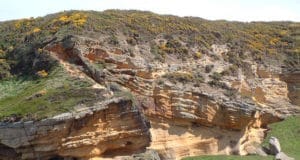
Stratigraphy
Stratigraphy is a branch of geology to description of rock or interpretation geologic time scale.It provides of geologic history of strata. Stratigraphic studies primarily...
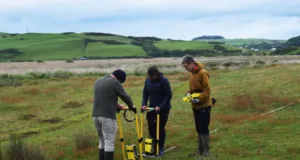
Geophysical Methods
Geophysics is a branch of Earth science that utilizes principles and techniques from physics to study the physical properties and processes of the Earth....
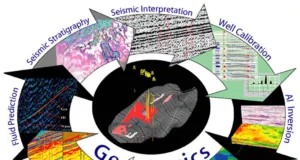
Geophysics
The rocks does not differ only by their macroscopic or microscopic properties studied field geologists or petrologists. They also differ by their chemical and...