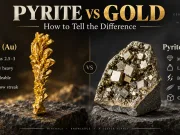






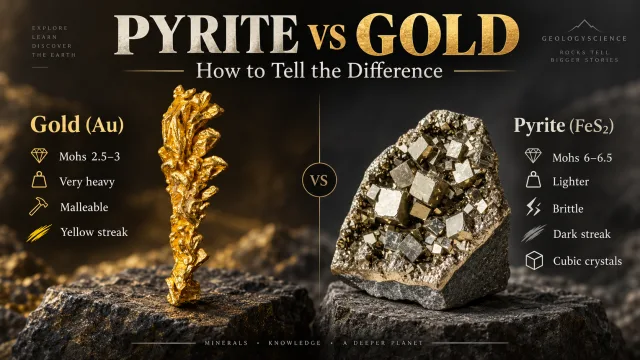
Gold and pyrite are often confused because both can display a bright metallic yellow appearance.
That resemblance gave pyrite its famous nickname:
“Fool’s gold.”
But despite looking similar at first glance, gold and pyrite are completely different materials.
Gold is a naturally occurring metallic element with the chemical symbol Au. Pyrite is an iron sulfide mineral with the chemical formula FeS₂.
They differ strongly in:
- Hardness
- Density
- Streak
- Crystal form
- Malleability
- Brittleness
- Weathering behavior
Once you know what to look for, distinguishing pyrite from real gold is usually straightforward.
There is, however, an important geological complication:
Pyrite can sometimes contain real gold.
In certain ore deposits, gold occurs as microscopic inclusions, nanoparticles, or structurally bound “invisible gold” within pyrite.
This makes pyrite much more interesting than its nickname suggests.
Pyrite vs Gold at a Glance
| Property | Gold | Pyrite |
|---|---|---|
| Composition | Au | FeS₂ |
| Color | Rich golden yellow | Pale brass-yellow to brass-yellow |
| Streak | Yellow to golden yellow | Greenish-black to brownish-black |
| Mohs hardness | 2.5–3 | 6–6.5 |
| Specific gravity | About 15–19.3; 19.3 when pure | About 4.8–5.2 |
| Luster | Metallic | Metallic |
| Malleability | Highly malleable | Brittle |
| Crystal system | Cubic | Cubic |
| Typical appearance | Irregular grains, flakes, wires, nuggets | Cubes, pyritohedra, crystalline masses |
| Weathering | Highly resistant | Can oxidize and form rusty alteration products |
The most useful field differences are usually:
weight, hardness, streak, crystal form, and malleability.
What Is Gold?
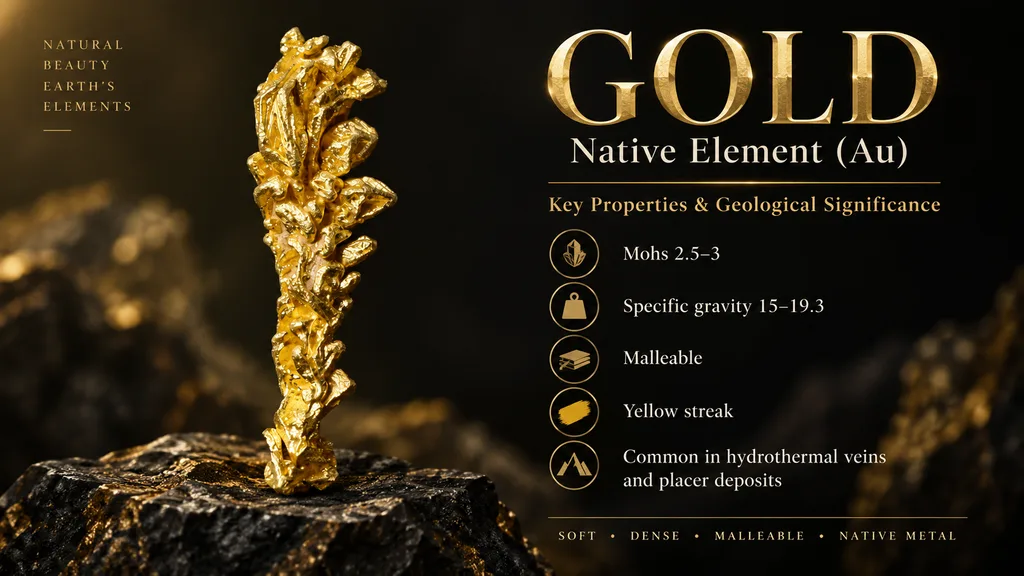
Gold is a naturally occurring chemical element with the symbol Au and atomic number 79.
It commonly occurs in nature as native gold or gold-rich alloys, particularly alloys containing silver.
Natural gold is therefore not always chemically pure.
It may contain varying amounts of:
- Silver
- Copper
- Iron
- Other trace elements
A naturally occurring gold-silver alloy containing substantially more silver than typical native gold is commonly known as electrum.
Gold can also occur in gold-bearing minerals such as tellurides or at microscopic scales within sulfide minerals.
How Does Gold Form?
Many important gold deposits are associated with hydrothermal systems.
Hot fluids circulate through faults, fractures, shear zones, and permeable rocks deep within Earth’s crust.
Under suitable chemical conditions, those fluids can transport dissolved gold.
When temperature, pressure, fluid chemistry, oxidation state, or wall-rock conditions change, gold may precipitate.
Gold commonly occurs in geological settings such as:
- Quartz veins
- Quartz-carbonate veins
- Shear zones
- Fault systems
- Hydrothermal alteration zones
- Disseminated sulfide deposits
Gold deposits can form under many different geological conditions, so no single type of quartz vein or sulfide assemblage guarantees that gold will be present.
Placer Gold
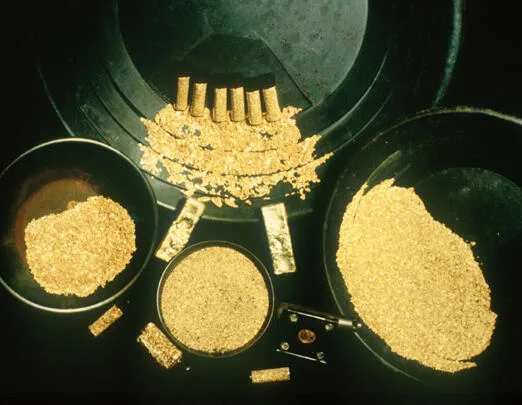
Once gold-bearing rock reaches Earth’s surface, weathering and erosion can release gold grains.
Gold is extremely dense and chemically resistant.
Streams and rivers can transport smaller particles, but because gold is so heavy, it tends to become concentrated in places where water velocity decreases.
Typical traps include:
- Cracks in bedrock
- Gravel bars
- Behind large boulders
- Natural riffles
- Dense sediment layers
These accumulations are known as placer deposits.
They are the classic source of gold recovered by panning.
What Is Pyrite?
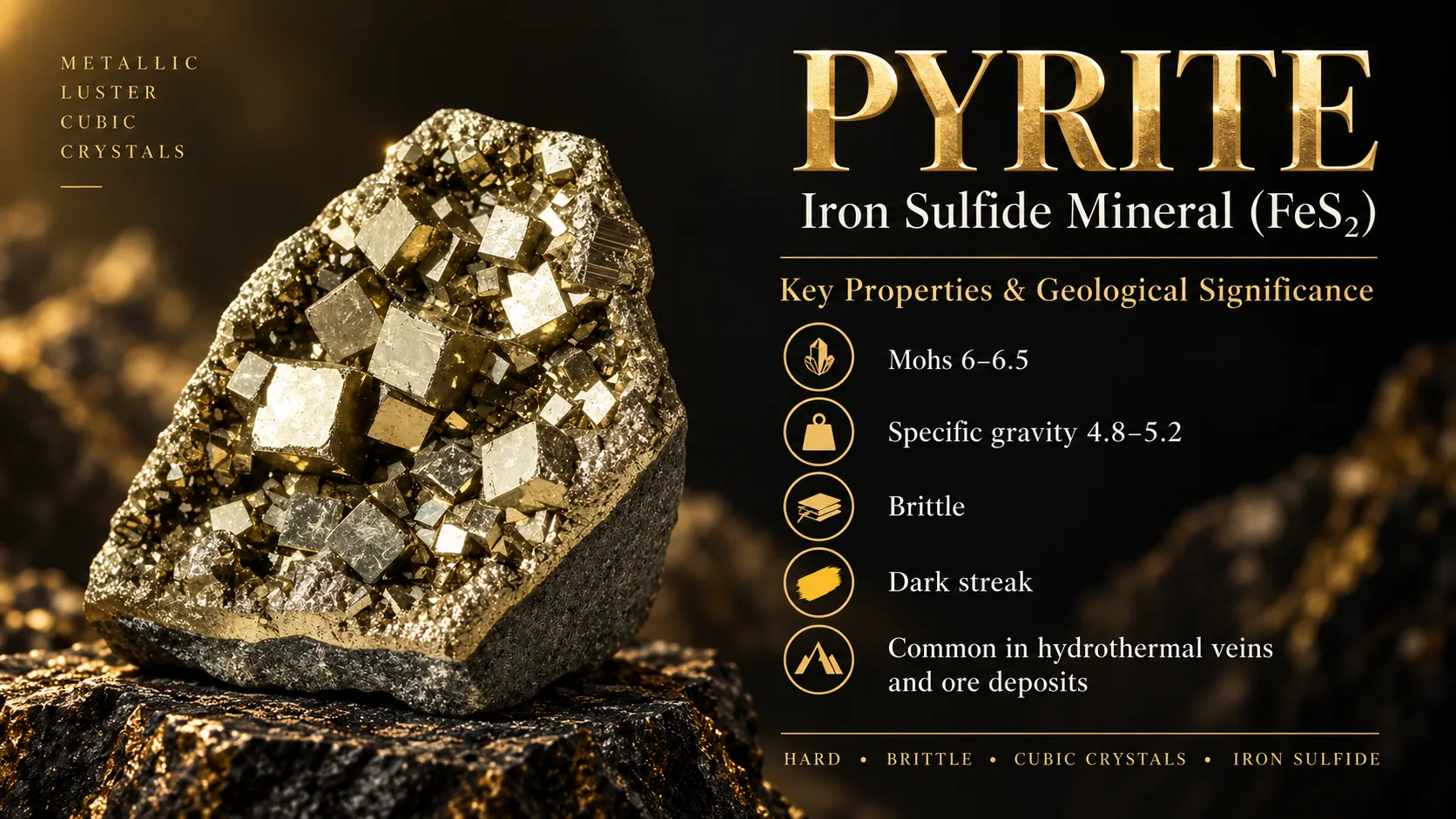
Pyrite is an iron sulfide mineral with the chemical formula:
FeS₂
It is one of the most widespread sulfide minerals in Earth’s crust.
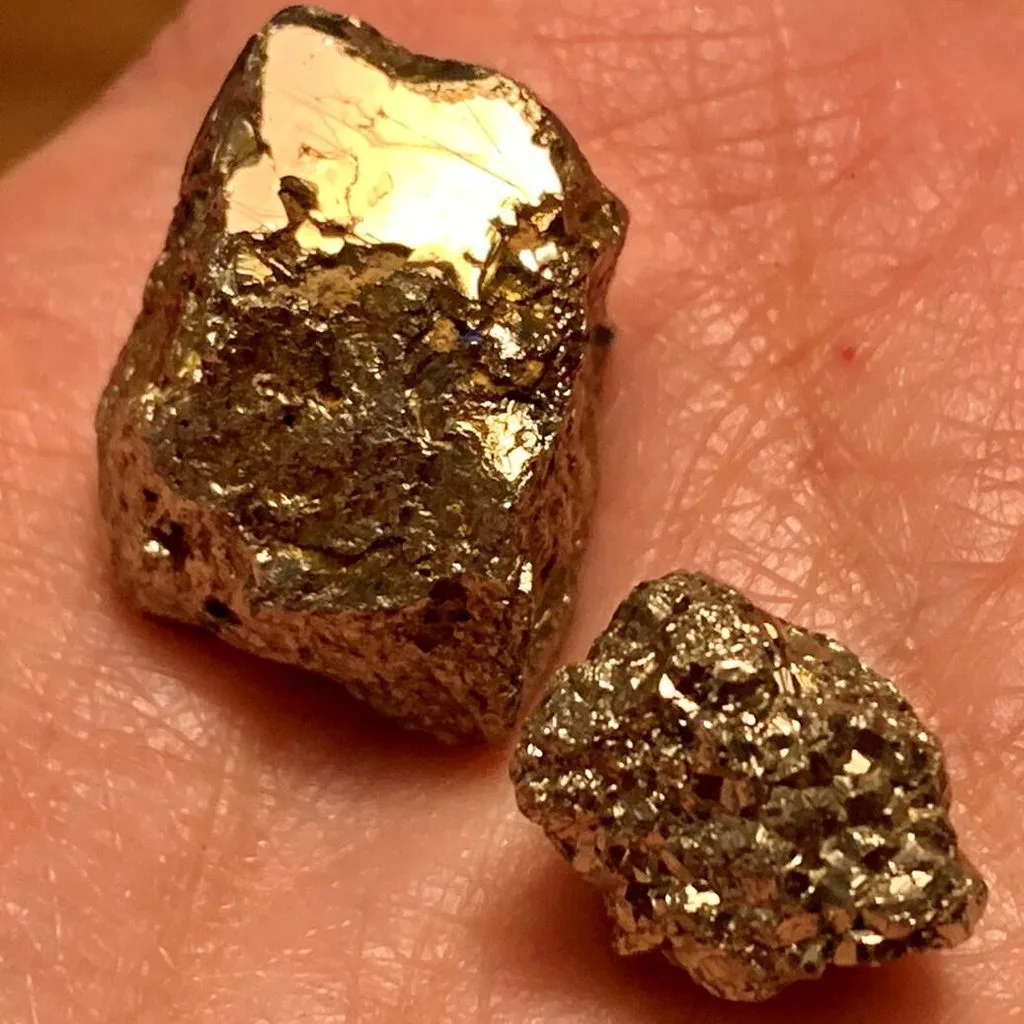
Pyrite typically has a pale brass-yellow to brass-yellow color and a bright metallic luster.
Fresh pyrite can look surprisingly similar to gold, especially when it occurs as irregular grains rather than well-formed crystals.
Its physical properties, however, are very different.
Where Does Pyrite Form?
Pyrite forms in a remarkably broad range of geological environments.
It occurs in:
- Hydrothermal veins
- Sedimentary rocks
- Metamorphic rocks
- Igneous rocks
- Coal-bearing sediments
- Marine sediments
- Ore deposits
It commonly occurs with sulfide minerals such as:
- Chalcopyrite
- Galena
- Sphalerite
- Arsenopyrite
Because pyrite forms in so many geological settings, finding pyrite alone does not mean that gold is present.
1. Color: Gold Is Usually Richer Yellow
Color is the first reason people confuse gold with pyrite.
But side by side, the two often look noticeably different.
Gold
Native gold typically has a:
rich, warm, golden-yellow color
Its metallic color tends to remain relatively consistent across fresh surfaces.
Pyrite
Pyrite usually has a:
pale brass-yellow to brass-yellow color
It is often paler and less richly yellow than native gold.
Weathered pyrite may develop:
- Brown coatings
- Rust-colored alteration
- Dark surfaces
- Iridescent tarnish
Color alone should never be used as the only identification test.
Fresh pyrite can look extremely convincing.
2. Streak Test
The streak test examines the color of a mineral in powdered form.
A specimen is rubbed across an unglazed porcelain streak plate.
Gold and pyrite produce very different streak colors.
Gold Streak
Gold produces a:
yellow to golden-yellow streak
Pyrite Streak
Pyrite produces a:
greenish-black to brownish-black streak
This difference can be very useful.
However, pyrite is relatively hard.
With a Mohs hardness of about 6–6.5, it may strongly scratch some streak plates instead of leaving a thick powder mark.
When a usable streak is produced, it is dark rather than yellow.
3. Hardness: Pyrite Is Much Harder
Gold and pyrite have dramatically different hardness values.
Gold
Mohs hardness: 2.5–3
Pyrite
Mohs hardness: 6–6.5
Gold is relatively soft.
Pyrite is much harder.
Can Pyrite Scratch Glass?
Usually, yes.
Common window glass has a hardness of around 5.5.
Fresh pyrite, with a hardness of roughly 6–6.5, can normally scratch glass.
Gold cannot.
So if a yellow metallic mineral easily scratches glass, it is very unlikely to be native gold.
4. Density: Gold Is Extremely Heavy
Weight is one of the strongest clues when distinguishing gold from pyrite.
Pure gold has a specific gravity of approximately:
19.3
Natural gold commonly contains silver or other elements, so its actual specific gravity may be lower, often roughly:
15–19.3
Pyrite has a specific gravity of only about:
4.8–5.2
That is an enormous difference.
A piece of gold can therefore feel several times heavier than a similar-sized piece of pyrite.
Why Is Gold So Dense?
Gold atoms are extremely heavy and are packed efficiently within the crystal structure.
This exceptional density is one reason gold becomes concentrated in placer environments.
Flowing water can transport lighter minerals more easily, while dense gold particles tend to settle and accumulate.
Pyrite is denser than quartz and many common rock-forming minerals, but compared with gold it feels relatively light.
5. Malleability: Gold Bends, Pyrite Breaks
This is one of the most reliable simple tests.
Gold is extremely malleable.
If a small gold grain is pressed or carefully struck, it tends to:
- Flatten
- Bend
- Smear
- Deform
rather than shatter.
Pyrite behaves very differently.
Pyrite is brittle.
When struck, it tends to:
- Crack
- Chip
- Break
- Produce angular fragments
A yellow metallic grain that flattens under pressure may be gold.
A grain that shatters is almost certainly not native gold.
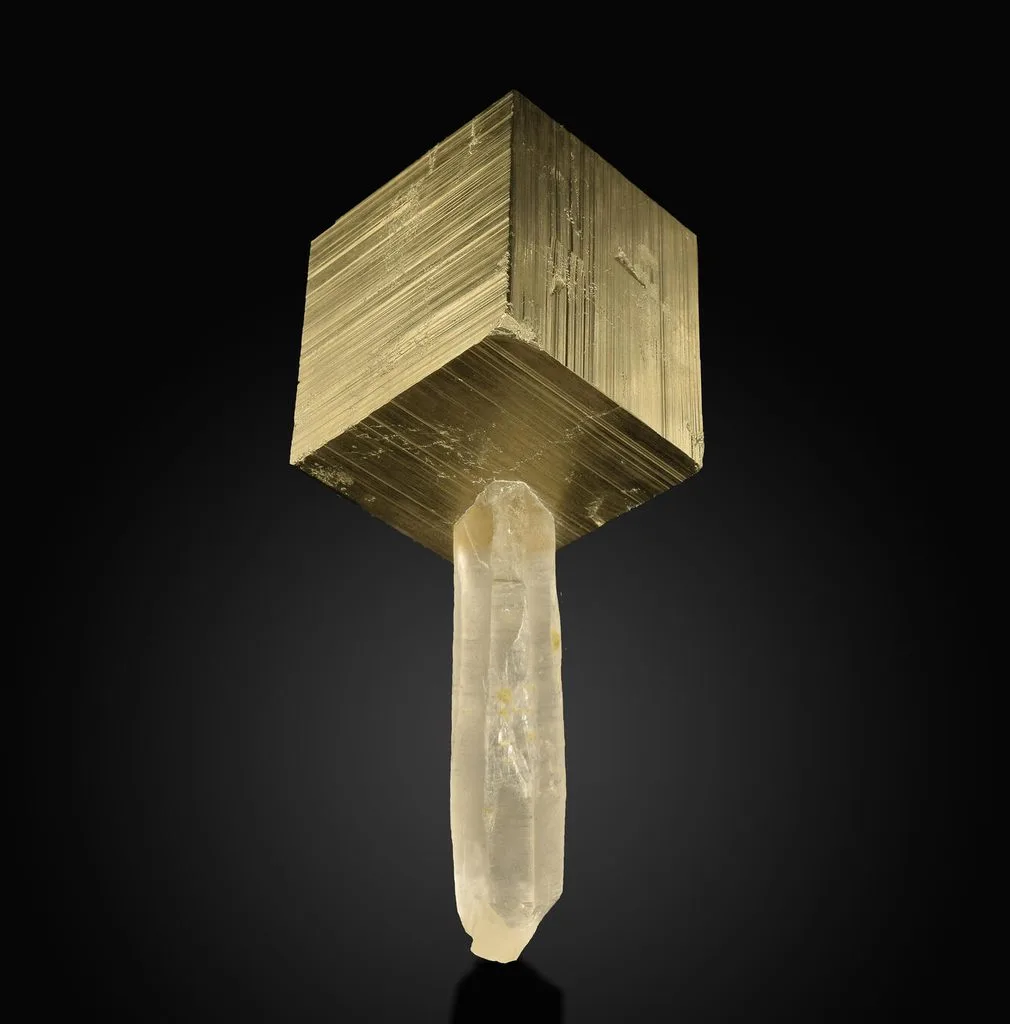
6. Crystal Shape: Pyrite Commonly Forms Cubes
Both gold and pyrite belong to the cubic crystal system.
But their typical field appearances are very different.
Pyrite commonly forms highly recognizable geometric crystals.
Typical pyrite forms include:
- Cubes
- Pyritohedra
- Octahedra
- Combinations of these forms
Pyrite cube faces may also show fine parallel striations.
Gold can form well-developed crystals, including cubic and octahedral forms, but these are much less common in ordinary field specimens.
Native gold is more commonly found as:
- Irregular grains
- Flakes
- Wires
- Dendritic masses
- Fracture fillings
- Nuggets
So a metallic yellow mineral forming sharp, repeated cubes is much more likely to be pyrite.
7. Gold Is Highly Resistant to Tarnish
One of gold’s most important properties is its chemical stability.
Pure gold is extremely resistant to oxidation and tarnishing under ordinary surface conditions.
This is why ancient gold artifacts can remain bright for thousands of years.
Natural gold containing significant silver or copper may show some surface alteration, but it remains far more chemically resistant than pyrite.
How Does Pyrite Weather?
When pyrite is exposed to oxygen and water, it can oxidize.
This process may produce:
- Iron oxides
- Iron oxyhydroxides
- Sulfate minerals
- Acidic solutions
Weathered pyrite can therefore develop rusty brown or yellow-orange alteration products.
Iron minerals such as:
- Goethite
- Hematite
may occur in weathered zones where sulfide minerals once existed.
Pyrite and Acid Mine Drainage
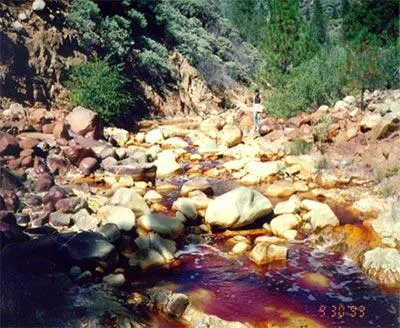
Pyrite oxidation is also environmentally important.
When large amounts of exposed pyrite react with oxygen and water in mines or waste-rock piles, sulfuric acid can be generated.
This acidic water may dissolve metals from surrounding rocks.
The resulting process is known as:
acid mine drainage
So pyrite is not only important for mineral identification.
Its weathering can strongly influence environmental chemistry.
Why Is Pyrite Called Fool’s Gold?
The nickname “fool’s gold” comes from pyrite’s metallic yellow appearance.
An inexperienced prospector may initially mistake bright pyrite for gold.
But simple physical tests quickly reveal the difference.
Pyrite is:
- Hard
- Brittle
- Relatively light
- Commonly cubic
- Dark-streaked
Gold is:
- Soft
- Malleable
- Extremely dense
- Commonly irregular
- Yellow-streaked
The nickname therefore reflects visual similarity rather than geological similarity.
And calling pyrite worthless is itself misleading.
Pyrite can play an important role in understanding gold deposits.
Can Pyrite Contain Real Gold?
Yes.
Some pyrite contains real gold.
The gold may occur as:
- Visible microscopic inclusions
- Tiny particles
- Nanometer-scale inclusions
- Structurally bound invisible gold
When the gold occurs at scales too small to be recognized by normal visual examination, geologists commonly use the term:
invisible gold
This type of gold is important in several major classes of ore deposits.
What Is Invisible Gold?
Invisible gold refers to gold that is present within minerals such as pyrite or arsenopyrite but cannot be seen as ordinary visible gold grains.
It may occur as extremely small particles or be incorporated within the sulfide at very small structural scales.
This creates an important distinction.
A piece of pyrite may look completely ordinary and still contain measurable gold.
But that does not mean that all pyrite contains economically important gold.
Most pyrite is not gold ore.
What Is Arsenian Pyrite?
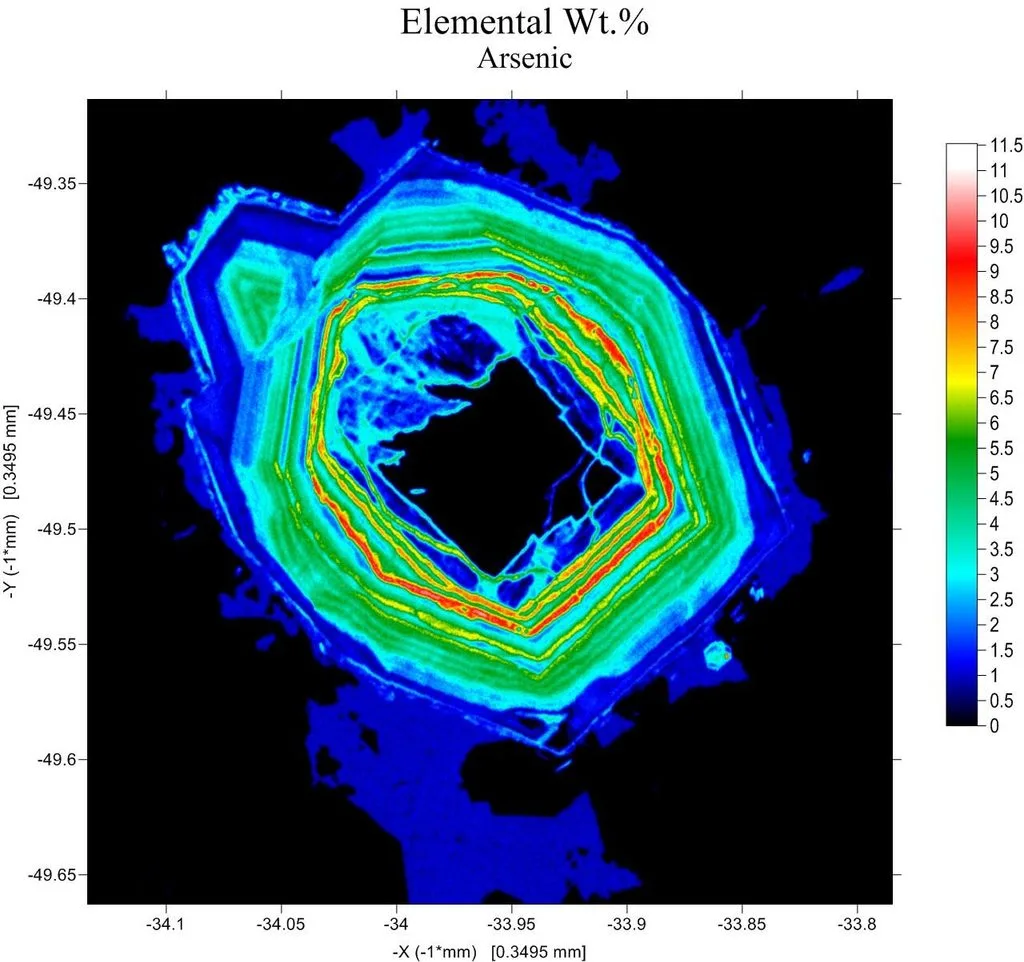
Pyrite can incorporate arsenic into its crystal structure, producing arsenic-bearing or arsenian pyrite.
In some gold deposits, arsenian pyrite is an important host for invisible gold.
This association is particularly well known in certain sediment-hosted and hydrothermal gold systems.
But the relationship should not be oversimplified.
Arsenian pyrite does not automatically contain economically valuable gold.
Gold concentration varies enormously from one geological system to another.
How Do Scientists Detect Invisible Gold?
Invisible gold cannot normally be identified with a hand lens.
Researchers therefore use advanced analytical techniques.
Depending on the concentration and particle size, these may include:
- Electron microscopy
- Electron microprobe analysis
- Laser ablation ICP-MS
- Synchrotron-based methods
- Other microanalytical techniques
These methods can reveal chemical zoning and extremely small concentrations of gold that cannot be detected visually.
They can also show where gold occurs within individual pyrite crystals.
Why Do Gold and Pyrite Occur Together?
Gold and pyrite are often found together because both can form in hydrothermal mineral systems.
Hot fluids circulate through fractures and faults.
These fluids may carry:
- Sulfur
- Iron
- Silica
- Gold
- Other metals
Gold can be transported in hydrothermal fluids by sulfur-bearing complexes, especially under suitable temperature, pressure, and chemical conditions.
One important transport mechanism involves bisulfide complexes.
Sulfidation and Gold Precipitation
When a hydrothermal fluid reacts with iron-bearing wall rock, sulfur in the fluid may react with iron.
This process can produce pyrite.
The reaction is commonly described as:
sulfidation
At the same time, removal or redistribution of sulfur-bearing species can destabilize the chemical complexes that were transporting dissolved gold.
Gold may then precipitate.
This helps explain why pyrite and gold are closely associated in many hydrothermal gold deposits.
But the relationship is not universal.
A pyrite-rich rock can contain almost no gold.
Does Every Quartz Vein With Pyrite Contain Gold?
No.
This is one of the most important misconceptions to avoid.
Quartz veins are extremely common.
Pyrite is also extremely common.
A quartz vein containing pyrite can be:
- Completely barren
- Weakly mineralized
- Gold bearing
- Rich in another metal
- Part of a complex hydrothermal system
Gold mineralization depends on many factors.
These include:
- Source of the fluid
- Gold concentration in the fluid
- Temperature
- Pressure
- Sulfur chemistry
- Fluid-rock interaction
- Oxidation state
- Structural pathways
- Timing of mineral precipitation
Therefore:
Quartz + pyrite does not automatically equal gold.
What Minerals Commonly Occur With Gold?
Gold can occur with many minerals depending on the type of deposit.
Common associates include:
- Quartz
- Pyrite
- Arsenopyrite
- Chalcopyrite
- Galena
- Sphalerite
- Carbonate minerals
- Telluride minerals
These associations can help geologists determine what type of hydrothermal system they are examining.
Orogenic Gold Deposits
Orogenic gold deposits commonly develop in deformed metamorphic belts associated with major tectonic structures.
Gold mineralization may occur in:
- Shear zones
- Faults
- Quartz veins
- Quartz-carbonate veins
Common associated sulfides include pyrite and arsenopyrite.
The interaction between hydrothermal fluids and reactive wall rocks can be especially important in precipitating gold.
Epithermal Gold Deposits
Epithermal systems form at relatively shallow crustal levels.
They are commonly associated with volcanic environments.
Gold and silver mineralization can occur with:
- Quartz
- Chalcedony
- Adularia
- Calcite
- Sulfide minerals
Boiling, fluid mixing, cooling, and changes in fluid chemistry can all trigger mineral precipitation.
Gold-pyrite relationships therefore vary considerably depending on deposit type.
Pyrite vs Chalcopyrite vs Gold
Chalcopyrite is another yellow metallic mineral that can be mistaken for gold.
Its chemical formula is:
CuFeS₂
It is one of the world’s most important copper ore minerals.
| Property | Gold | Pyrite | Chalcopyrite |
|---|---|---|---|
| Composition | Au | FeS₂ | CuFeS₂ |
| Color | Rich golden yellow | Pale brass-yellow | Brassy yellow |
| Mohs hardness | 2.5–3 | 6–6.5 | 3.5–4 |
| Streak | Yellow | Greenish-black to brownish-black | Greenish-black |
| Specific gravity | ~15–19.3 | ~4.8–5.2 | ~4.1–4.3 |
| Behavior | Malleable | Brittle | Brittle |
| Common form | Irregular grains, flakes | Cubes, pyritohedra | Commonly massive or irregular |
| Tarnish | Highly resistant | Can weather brown or rusty | Often develops iridescent tarnish |
Chalcopyrite is considerably softer than pyrite.
It also frequently develops colorful:
- Purple
- Blue
- Bronze
tarnish.
This can sometimes produce what is informally called a “peacock” appearance.
Can You Identify Gold With a Magnet?
A magnet is not a reliable gold-versus-pyrite test.
Gold is not strongly magnetic.
Pyrite is also generally not strongly attracted to an ordinary magnet.
Therefore:
Not being attracted to a magnet does not prove that a specimen is gold.
If a yellow metallic specimen is strongly magnetic, it may contain magnetite or another magnetic mineral.
Hardness, density, streak, and malleability are much more useful tests.
Should You Use Acid to Test Gold?
Acid testing is widely used for jewelry and refined metal testing, but it is usually unnecessary for basic geological field identification.
Strong acids are hazardous.
Results may also be complicated by:
- Surface coatings
- Mineral mixtures
- Gold alloys
- Weathering products
For most field specimens, safer physical tests should be used first.
A useful sequence is:
- Examine crystal form
- Check hardness
- Test streak
- Compare density or weight
- Check malleability
Laboratory analysis is preferable when accurate chemical identification is required.
Quick Field Test: Gold or Pyrite?
Step 1 — Examine the Shape
Sharp cubes or pyritohedral crystals?
Pyrite is likely.
Irregular flakes, wires, flattened grains, or nuggets?
Gold is possible.
Step 2 — Test Hardness
Does it scratch glass?
Pyrite is likely.
Can it be scratched relatively easily with steel?
Gold becomes more likely.
Step 3 — Check the Streak
Greenish-black or brownish-black?
Pyrite.
Yellow or golden yellow?
Gold.
Step 4 — Test Malleability
Does it crack or shatter?
Pyrite.
Does it flatten, bend, or smear?
Gold.
Step 5 — Compare Weight
Does a small piece feel unusually heavy for its size?
That is a strong indication of gold.
Gold’s exceptional density is difficult to imitate with common metallic-looking minerals.
Gold vs Pyrite: The Five Fastest Differences
1. Gold Is Soft
Gold has a Mohs hardness of 2.5–3.
Pyrite is 6–6.5.
2. Gold Is Extremely Heavy
Natural gold commonly has a specific gravity of roughly 15–19.3.
Pyrite is approximately 5.
3. Gold Bends
Gold is malleable.
Pyrite is brittle.
4. Gold Has a Yellow Streak
Pyrite has a dark streak.
5. Pyrite Commonly Forms Cubes
Gold commonly occurs as irregular grains, flakes, wires, and nuggets.
Together, these properties make the two minerals relatively easy to distinguish.
Which Is More Valuable: Gold or Pyrite?
As a commodity, gold is enormously more valuable.
Its rarity, chemical stability, electrical conductivity, workability, and cultural importance have made it one of humanity’s most valuable metals for thousands of years.
Pyrite is much more common.
Individual pyrite specimens generally have limited commercial value unless they form exceptional crystals or attractive collector specimens.
But geologically, pyrite can be extremely valuable.
Pyrite can record information about:
- Hydrothermal fluid chemistry
- Sulfur sources
- Ore-forming conditions
- Fluid-rock interaction
- Gold mineralization
- Environmental oxidation
In some ore deposits, pyrite itself can even host economically recoverable gold.
So “fool’s gold” is not geologically useless at all.
Frequently Asked Questions
Is pyrite real gold?
No. Pyrite is an iron sulfide mineral with the formula FeS₂, while gold is the chemical element Au.
Can pyrite contain real gold?
Yes. Some pyrite can contain microscopic, nanoscale, or structurally bound gold. When the gold cannot be seen directly, it is often called invisible gold.
Does all pyrite contain gold?
No. Most pyrite does not contain economically significant quantities of gold.
Can gold occur inside pyrite?
Yes. Gold can occur as tiny inclusions, nanoparticles, or structurally bound gold within pyrite.
Is pyrite harder than gold?
Yes. Pyrite has a Mohs hardness of approximately 6–6.5, while gold is only 2.5–3.
Which is heavier, gold or pyrite?
Gold by a very large margin. Natural gold commonly has a specific gravity of approximately 15–19.3, depending on composition, while pyrite is about 4.8–5.2.
Can pyrite scratch glass?
Yes. Fresh pyrite commonly can scratch ordinary glass because pyrite is harder than glass. Gold cannot.
Is every quartz vein with pyrite gold-bearing?
No. Quartz and pyrite are both common in hydrothermal systems. Their presence alone does not prove that gold is present.
What is the easiest way to tell pyrite from gold?
Use several properties together: hardness, weight, streak, malleability, and crystal form. Gold is soft, extremely heavy, yellow-streaked, and malleable. Pyrite is hard, much lighter, dark-streaked, and brittle.
Conclusion
Gold and pyrite can look remarkably similar, but their physical properties reveal two very different materials.
Gold is a dense, soft, highly malleable native metal.
Pyrite is a harder, brittle iron sulfide mineral that frequently forms geometric crystals.
The easiest differences to remember are:
Gold is soft, extremely heavy, and bendable.
Pyrite is hard, much lighter, and brittle.
Gold produces a yellow streak.
Pyrite produces a greenish-black to brownish-black streak.
Pyrite also commonly forms cubes and pyritohedral crystals, while native gold is more often found as irregular grains, flakes, wires, fracture fillings, and nuggets.
But the relationship between gold and pyrite goes far beyond visual similarity.
In many hydrothermal ore systems, both minerals can form during related stages of fluid-rock interaction.
Pyrite can even host microscopic or structurally bound invisible gold.
This is why geologists do not simply dismiss pyrite as “fool’s gold.”
Most pyrite is not gold ore.
But in the right geological setting, pyrite can be an important clue to understanding how gold moved, where it precipitated, and how an ore deposit formed.
The real skill is not simply recognizing something that looks like gold.
It is learning to read the geological story preserved in the minerals around it.