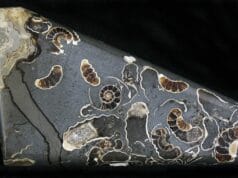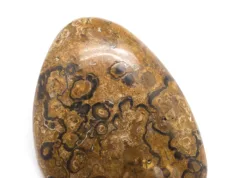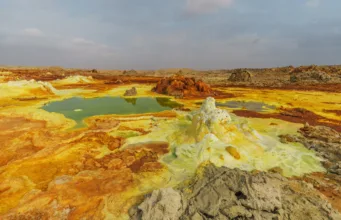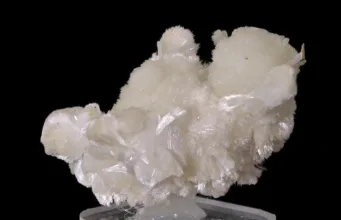
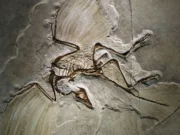
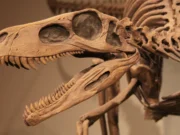




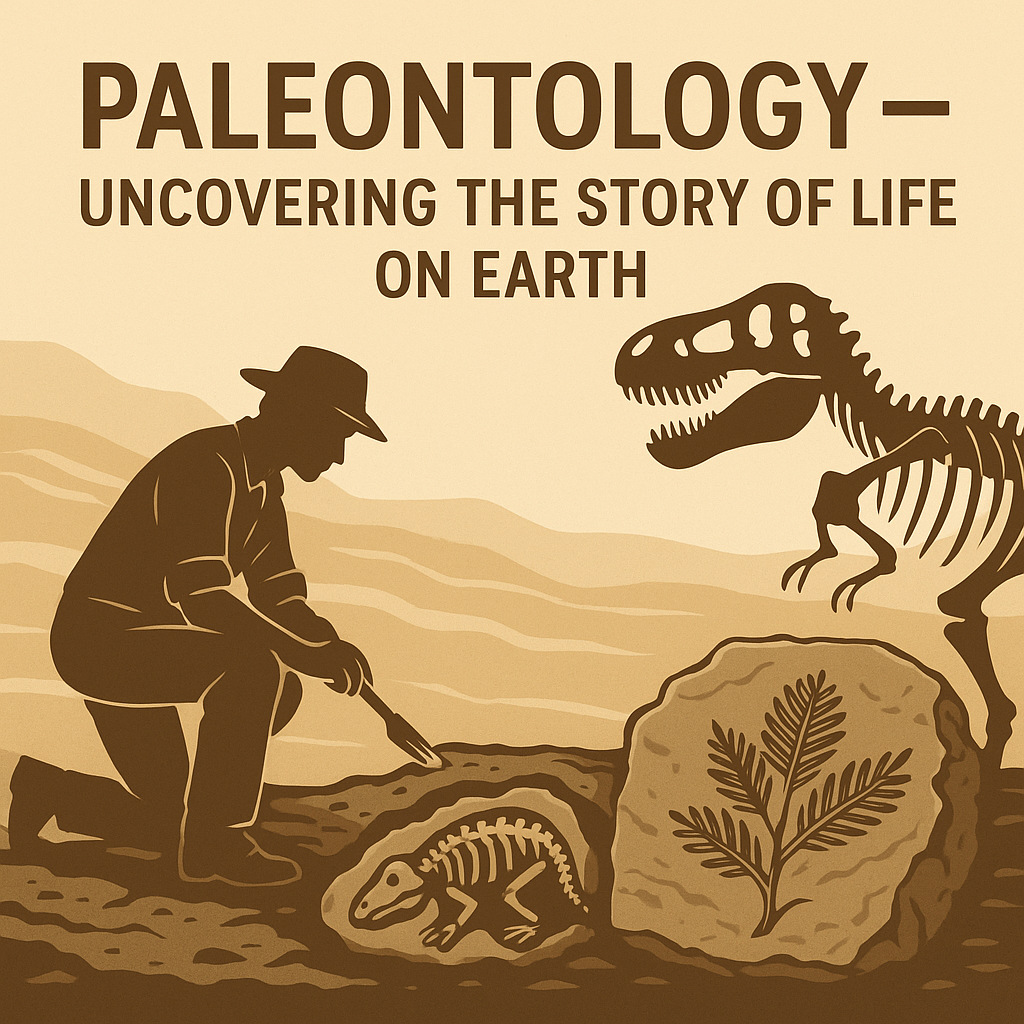
Paleontology is the science that turns rocks into history books. Every fossil—whether it’s a crushed ammonite, a fern leaf flattened between mud layers, a trail left by a creature crawling across a tidal flat, or a microscopic shell buried in deep-sea sediments—captures a single moment from a world that no longer exists. When these moments are pieced together, they reveal the long and unpredictable story of life on Earth.
What makes paleontology unique is its ability to connect multiple sciences. A fossil cannot be understood without geology to explain the rock around it, biology to identify the organism, chemistry to reveal the minerals that replaced the tissues, and physics to scan and reconstruct structures hidden inside. It’s a field where every detail matters: the grain size of a sandstone bed, the color change on a shale surface, the angle of a ripple mark, the curvature of a shell fragment.
What Paleontology Focuses On
Paleontology investigates everything related to past life:
- How organisms evolved through time
- How climate shifts shaped ecosystems
- How continents moved and affected biodiversity
- How catastrophic extinctions reset life
- How fossils help establish the geologic time scale
It does not limit itself to spectacular skeletons. A single pollen grain can tell as much about the past as a giant dinosaur bone. A small burrow in mudstone might reveal more behavior than a complete skull.
Fossilization: How Life Becomes Stone
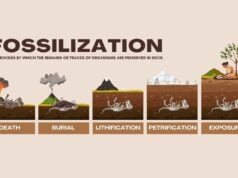
Most organisms disappear completely after death. Scavengers, microbes, chemical decay, and oxygen break everything down. Only in exceptional conditions does preservation occur. Fossilization usually requires:
- Quick burial by mud, sand, ash, or sediments
- Very limited oxygen
- Stable water chemistry rich in minerals
- Long-term geological stability
The main fossilization pathways include:
Mineral Replacement & Permineralization
Minerals fill empty pores or take the place of original tissues, strengthening and preserving fine details.
Compression & Carbon Films
Plant fragments and delicate organisms flatten into thin layers of carbon under heat and pressure.
Natural Molds and Mineral Casts
Where the organism dissolves but its shape remains as a cavity, later filled with new minerals.
Amber Encapsulation
Sticky resin traps insects, feathers, and small plant parts, preserving them with extraordinary clarity.
Behavioral Traces
Footprints, feeding marks, resting impressions, tunnels, and coprolites—records of activity rather than bodies.
Main Fossil Categories
Body Fossils
Bones, shells, wood, leaves, corals, teeth.
Ichnofossils (Trace Fossils)
Tracks, trails, resting marks, burrows, feeding traces, fecal pellets.
Chemical Fossils
Organic molecules, pigments, and biomarker residues.
Microfossils
Foraminifera, pollen, spores, diatoms—critical for dating strata and reconstructing ancient climates.
Why Fossils Matter for Earth Science
Fossils serve as direct evidence of:
- How evolution proceeds through long timescales
- How ecosystems collapse and recover
- How sea levels rise and fall
- How ice ages and warm periods shaped environments
- Where energy resources originate
- How global chemical cycles changed through time
They are the only biological record that spans billions of years.
Life Through Time: Evolutionary Shifts & Major Extinctions
Life has never been constant. It expands, shrinks, adapts, and sometimes nearly vanishes.
The Cambrian Expansion
An explosion of body plans, predators, shells, and complex organisms appeared rapidly.
The Permian Crisis
A near-total biological collapse—volcanism, warming oceans, and chemical disruptions eliminated most species.
The End-Cretaceous Impact
A meteorite reshaped Earth’s ecosystems, allowing mammals to rise while non-avian dinosaurs vanished.
Paleontology reveals not only these events but also how life rebounded afterward.
The Importance of Fossils

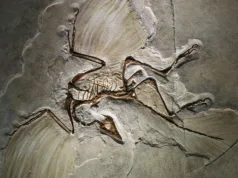
Fossils are the primary evidence paleontologists rely on. They serve as time capsules that preserve details about the morphology, environment, and even behavior of ancient organisms.
Different types of fossils tell different stories:
- Body fossils – physical remains like bones, shells, or teeth.
- Trace fossils – footprints, burrows, nests, or feces indicating behavior.
- Molecular fossils – organic residues, DNA fragments, or chemical markers preserved in rock.
The process of fossilization is rare and requires specific conditions — rapid burial, lack of oxygen, and mineral-rich waters that replace organic material with stone. This is why the fossil record is incomplete, but still immensely valuable.
How Paleontologists Work
A paleontologist’s work blends outdoor exploration with advanced laboratory analysis.
In the Field
- Recording sediment layers
- Documenting fossil positions
- Excavating sites carefully
- Collecting rock and fossil samples
- Mapping out ancient environments
In the Lab
- Preparing specimens under microscopes
- Scanning fossils with CT or micro-CT
- Running isotopic tests
- Creating 3D reconstructions
- Comparing specimens with global databases
A seemingly simple rock section may capture millions of years of environmental change.
Reconstructing Ancient Environments
To understand where a fossil lived, scientists evaluate:
- Sedimentary structures (ripples, mud cracks, cross-beds)
- Fossil assemblages (marine/terrestrial indicators)
- Mineral composition
- Carbon–oxygen isotope patterns
- Grain size, color, and bedding features
- Trace fossils showing behaviors
Using these clues, paleontologists rebuild prehistoric landscapes: reefs, deltas, lagoons, deserts, floodplains, deep oceans.
A Glimpse Into Earth’s Deep Time

Fossils tell us that Earth is about 4.6 billion years old, and life began roughly 3.5 billion years ago. Through the fossil record, paleontologists have identified five major mass extinctions — catastrophic events that reshaped life on Earth.
From the rise of trilobites in the Paleozoic, to the dominance of dinosaurs in the Mesozoic, and the mammalian expansion in the Cenozoic, each era represents a unique chapter in the planet’s biological saga.
Modern dating techniques like radiometric dating and isotope analysis now allow scientists to determine fossil ages with remarkable precision — sometimes to within a few thousand years.
Famous Paleontologists and Their Legacy
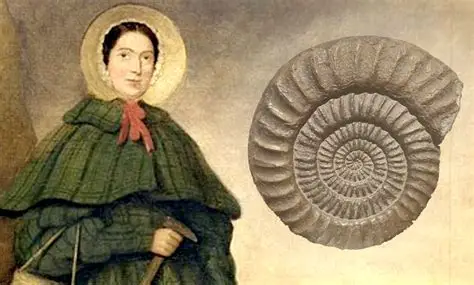
Paleontology has been shaped by visionary scientists whose discoveries redefined our understanding of life’s history.
- Mary Anning (1799–1847) – Discovered the first complete ichthyosaur and plesiosaur fossils, paving the way for marine paleontology.
- Charles Darwin (1809–1882) – Integrated fossil evidence into his groundbreaking theory of evolution by natural selection.
- Othniel C. Marsh & Edward D. Cope – Their 19th-century “Bone Wars” led to the discovery of dozens of new dinosaur species.
- Roy Chapman Andrews (1884–1960) – Conducted legendary expeditions in Mongolia, unearthing the first known dinosaur eggs.
- Stephen Jay Gould (1941–2002) – Introduced concepts like “punctuated equilibrium,” showing that evolution can proceed in sudden bursts.
Subfields Within Paleontology
Vertebrate Paleontology
Fish, amphibians, reptiles, birds, mammals, dinosaurs.
Invertebrate Paleontology
Mollusks, trilobites, ammonites, corals, brachiopods.
Paleobotany
Leaves, wood, seeds, pollen—records of ancient climate and vegetation.
Micropaleontology
Minute fossils used to track ocean circulation and climate patterns.
Palynology
Pollen and spores that capture ecological history.
Taphonomy
The study of decay, burial, preservation, and fossil formation processes.
The Geology–Paleontology Connection
The two fields depend on each other:
- Fossils help date rocks (biostratigraphy).
- Rocks provide context for fossil interpretation.
- Climate patterns are reconstructed through combined sediment + fossil data.
- Tectonic events appear directly in fossil distribution.
One without the other provides only half of the story.
Why Dinosaurs Remain Iconic
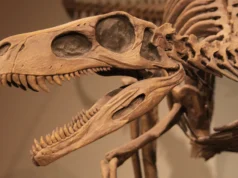
Dinosaurs capture imagination because they’re both familiar and alien. Immense plant-eaters, agile predators, horned and crested species—they represent a world that feels mythical yet is fully real. They are paleontology’s most dramatic ambassadors, introducing many people to Earth science.
Technology Transforming Paleontology
Modern research uses methods that reveal details once impossible to see:
- Micro-CT and synchrotron imaging
- Laser scanning and digital reconstruction
- Stable isotope chemistry
- Cathodoluminescence for mineral mapping
- High-precision radiometric dating
Paleontology has become a blend of field science and high-tech analysis.
Conclusion
Paleontology transforms stones into stories. Fossils document vanished ecosystems, ancient climates, lost species, and global disasters. They trace the rise and fall of entire worlds. From microbial mats to massive dinosaurs, every fossil is a chapter in Earth’s long narrative. Together, they allow us to recreate the landscapes, climates, and life forms that shaped our planet long before humans appeared.