







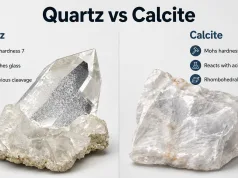
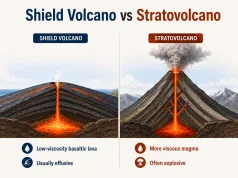
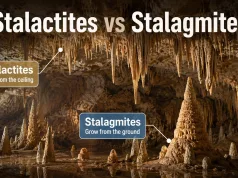
Geology Branches
Geology is divided into several fields that can be grouped under the main headings of physical and historical geology.
Applied Geology
Applied Geology is geologic knowledge to solving geologic problem. In other words, application of various fields of geology to economic, engineering, water-supply, or environmental problems; geology related to the human activity.
METHODS OF GEOLOGY
Geologists use primary data associated with petrology (the study of rocks), stratigraphy (the observe of sedimentary layers), and structural geology (the have a look at of positions of rock devices and their deformation). In many cases, geologists additionally take a look at contemporary soils, rivers, landscapes, and glaciers; inspect past and contemporary life and biogeochemical pathways, and use geophysical techniques to investigate the subsurface.

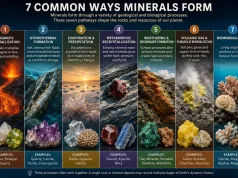
Mineral Deposits
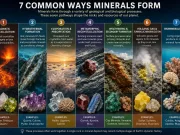
Mineral deposits are accumulations of valuable minerals that are of economic interest to humans. These deposits can be found in a variety of geological...
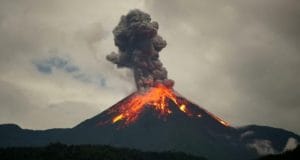
Volcanoes: Types, Formation and Eruption Styles
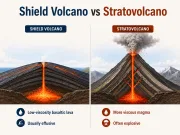
Volcanology is the scientific discipline that focuses on the study of volcanoes, volcanic processes, and the related phenomena that occur within the Earth's crust....
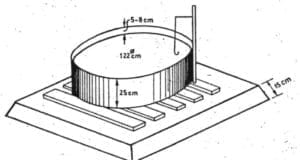
Evaporation and Transpiration
The process through which water is transferred from the surface of the Earth (land surface, free water surfaces, soil water, etc.) to the atmosphere is called evaporation.During evaporation process the latent heat of evaporation is taken from the surface of evaporation.Therefore evaporation is considered as a cooling process. Evaporation from land surface, free water surfaces, soil water, etc. are of great importance in hydrological and meterological studies,
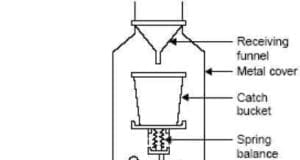
Elements of The Hydrologic Cycle
PrecipitationPrecipitation is the release of water from the atmosphere to reach the surface
of the earth.The term ‘precipitation’ covers all forms of water
being released by...
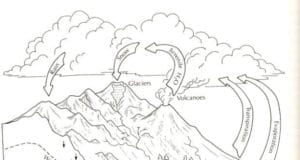
Hydrogeology
Hydrogeology is a branch of geology that deals with the study of the distribution, movement, and quality of water in the subsurface. Hydrogeology is...
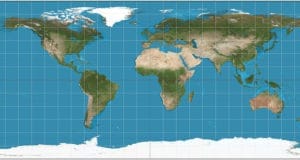
Types of Maps
ProjectionsBecause the shape of the world is spherical, it is difficult to represent it on a plain paper. Cartographers use projections to make...

Latitude and Longitude
Geographic coordinate systemThe representation of each place on the Earth by numbers and symbols is called the geographical coordinate system.The science of mapmaking...

Physical Properties of Minerals
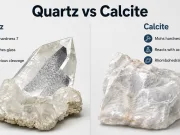
(How Geologists Identify and Classify Minerals in the Field)Understanding the physical properties of minerals is one of the most fundamental skills in geology. Every...

Engineering Geology
Engineering geology is a branch of geology that focuses on the study of the geological processes, materials, and natural hazards that may affect the...
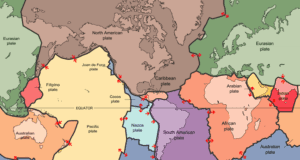
Plate Tectonics: How Earth’s Moving Plates Shape Continents, Mountains, and Oceans
The theory of plate tectonics is the unifying framework of modern geology.It explains how the Earth’s rigid outer shell — the lithosphere — is...
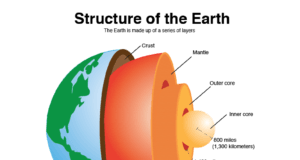
Structure of Earth
Our planet may look peaceful from space, but beneath its surface lies a restless interior filled with heat, motion, and complexity. The structure of...

Optical Properties of Minerals
Study of how light passes through thin sections – rock cut and polished to about 0.3 mm thickness
Use properties of light absorption and propogation through a mineral à affected by atomic arrangement and composition
Learn the properties of light associated with techniques governing the use of a petrographic microscope