



Silicate Minerals
Silicate minerals are by far the most abundant minerals on our planet, forming in effect the vast bulk of Earth’s crust and mantle thanks to their fundamental silicon-oxygen tetrahedral unit (SiO₄) and its countless ways of linking, sharing oxygens and accommodating various metal cations—whether magnesium, iron, aluminium, sodium or potassium. In simpler terms: you have tiny SiO₄ tetrahedra that may float alone (as in olivine), link into chains (pyroxenes), double-chains (amphiboles), sheets (micas and clays) or full 3-D frameworks (feldspars and quartz), and every structural variation changes how the mineral behaves, where it forms and how it breaks apart or weathers. Because silicates are so versatile, they show up in igneous, metamorphic and sedimentary rocks, drive engineering and geotechnical issues (think: clay swelling, feldspar weathering), and carry stories of tectonics, temperature, pressure and fluid flows. In this category you'll explore not just the chemistry and crystal architectures of silicates, but also how recognizing groups like olivine, pyroxene, mica or feldspar in the field or core can tell you about geological history, site behaviour or material performance—and why as a geologist, engineer or site-practitioner this matters deeply.

Muscovite
Muscovite is the most common mineral of the mica own family. It is an essential rock-forming mineral present in igneous, metamorphic, and sedimentary rocks. Like other micas it with no trouble cleaves into skinny transparent sheets.

Biotite
Biotite is the most common mica mineral and also known as black mica, a silicate mineral in the common mica group. Approximate chemical formula K (Mg, Fe). Biotite can be found in massive crystal layers weighing several hundred pounds. It is abundant in metamorphic rocks (both regional and contact), pegmatites, and also in granites and other invasive magmatic rocks. Biotite usually occurs in brown to black, dark green variety.
Mica Group Minerals
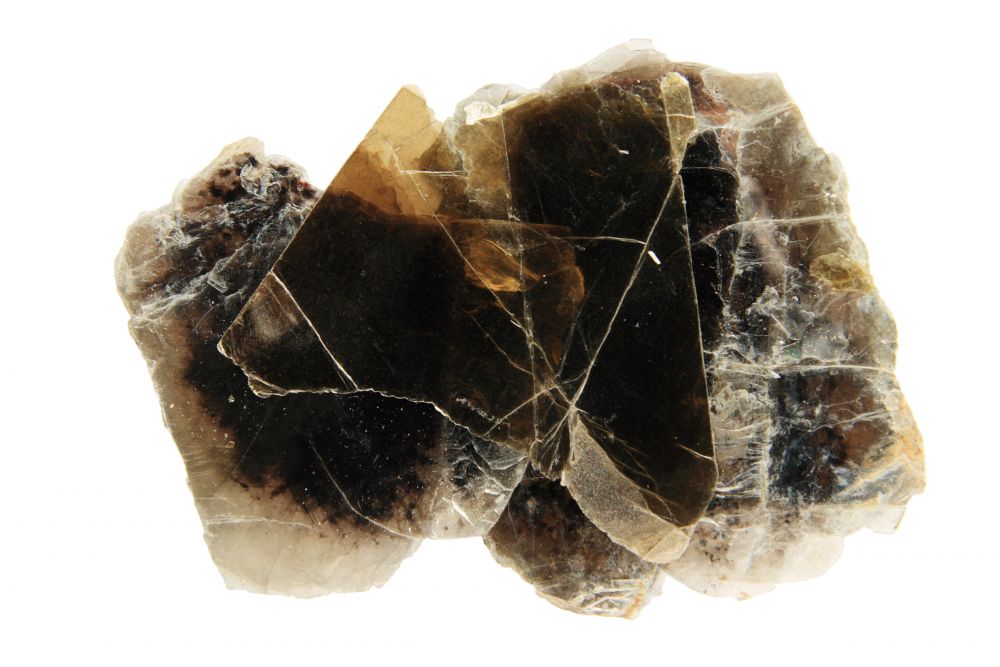
Mica, any of a collection of hydrous potassium, aluminum silicate minerals. It is a kind of phyllosilicate, showing a -dimensional sheet or layer structure. Among the most important rock-forming minerals, micas are located in all 3 foremost rock types—igneous, sedimentary, and metamorphic.

Clay Minerals
Clay minerals are the function minerals of the earths close to floor environments. They shape in soils and sediments, and through diagenetic and hydrothermal alteration of rocks. Water is essential for clay mineral formation and most clay minerals are defined as hydrous alumino silicates.
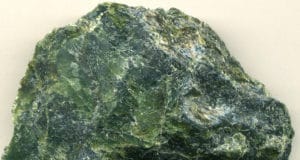
Serpentine
Serpentine is not a single mineral instead a group of related minerals. Also for the primary contributors of Antigorite and Chrysotile, a difference is not commonly made between the character participants besides underneath medical study and type.

Amphibole
Amphibole is an crucial institution of usually darkish-colored, inosilicate minerals, forming prism or needlelike crystals,composed of double chain SiO 4 tetrahedra, connected at the vertices and normally containing ions of iron and/or magnesium in their systems.

Pyroxene
The pyroxenes are a set of essential rock-forming inosilicate minerals discovered in many igneous and metamorphic rocks. Pyroxenes have the general components is XY(Si,Al)2O6.Although aluminium substitutes extensively for silicon in silicates consisting of feldspars and amphiboles,

Epidote
Well developed crystals of epidote, Ca2Al2(Fe3+;Al)(SiO4)(Si2O7)O(OH), crystallizing inside the monoclinic system, are of frequent prevalence: they're normally prismatic in dependancy, the course of elongation being perpendicular to the single plane of symmetry.
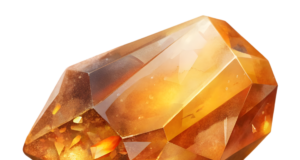
Topaz
Topaz is a silicate mineral of aluminium and fluorine with the chemical formula Al2SiO4(F, OH)2. Topaz crystallizes in the orthorhombic system, and its crystals are mostly prismatic terminated by pyramidal and other faces.

Kyanite
Kyanite is commonly found in aluminum-rich metamorphic pegmatites and / or sedimentary rocks and is commonly a blue silicate mineral. Cyanide in metamorphic rocks show better pressures than four kilobars. Although it is undoubtedly strong at stress and low temperature, it is generally sufficiently high under these conditions where water hobbyist, muscovite, pyrophyllite or kaolinite-containing aqueous aluminosilicates are replaced. Kyanite is also called disten, ranetite and cyanide.

Garnet
Garnet, any member of a group of not unusual silicate minerals that have comparable crystal structures and chemical compositions. They may be colourless, black, and lots of sun shades of red and inexperienced.
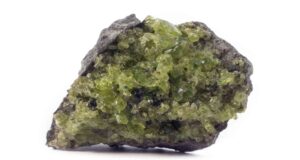
Olivine
Olivine: Green Mineral Coming from Earth's DepthsOlivine is one of minerals that most people see without noticing in their lives but don't know name...