




Silicate Minerals
Silicate minerals are by far the most abundant minerals on our planet, forming in effect the vast bulk of Earth’s crust and mantle thanks to their fundamental silicon-oxygen tetrahedral unit (SiO₄) and its countless ways of linking, sharing oxygens and accommodating various metal cations—whether magnesium, iron, aluminium, sodium or potassium. In simpler terms: you have tiny SiO₄ tetrahedra that may float alone (as in olivine), link into chains (pyroxenes), double-chains (amphiboles), sheets (micas and clays) or full 3-D frameworks (feldspars and quartz), and every structural variation changes how the mineral behaves, where it forms and how it breaks apart or weathers. Because silicates are so versatile, they show up in igneous, metamorphic and sedimentary rocks, drive engineering and geotechnical issues (think: clay swelling, feldspar weathering), and carry stories of tectonics, temperature, pressure and fluid flows. In this category you'll explore not just the chemistry and crystal architectures of silicates, but also how recognizing groups like olivine, pyroxene, mica or feldspar in the field or core can tell you about geological history, site behaviour or material performance—and why as a geologist, engineer or site-practitioner this matters deeply.
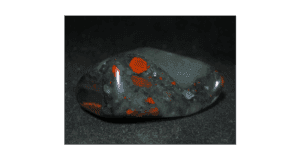
Bloodstone or Heliotrope
Bloodstone, also known as heliotrope, is a unique and distinctive gemstone that has captivated people for centuries. It is a form of chalcedony, a...
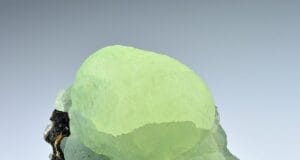
Prehnite
Prehnite is a mineral that belongs to the phyllosilicate group and is known for its distinctive green color. It was first discovered in South...
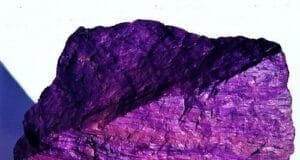
Sugilite
Sugilite is a rare and captivating gemstone known for its vivid purple color and metaphysical properties. It is also sometimes referred to as "Luvulite"...
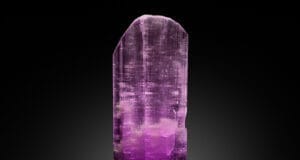
Kunzite
Kunzite is a beautiful and captivating gemstone known for its delicate pink to lavender color. It belongs to the spodumene mineral family and is...
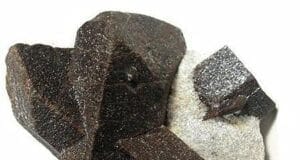
Staurolite
Staurolite is a mineral that is known for its unique crystal shape and its association with metamorphic rocks. The name "staurolite" comes from the...
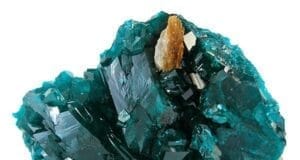
Dioptase
Dioptase is a vibrant and captivating mineral that belongs to the cyclosilicate family. Its name is derived from the Greek words "dia" and "optima,"...
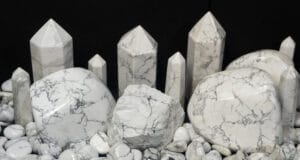
Howlite
Howlite is a mineral that is primarily composed of calcium borosilicate hydroxide. It is named after Henry How, a Canadian chemist and geologist who...
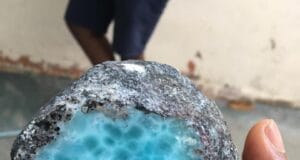
Larimar
Larimar is a rare and unique gemstone known for its stunning blue hues and captivating patterns. It is often referred to as the "Atlantis...
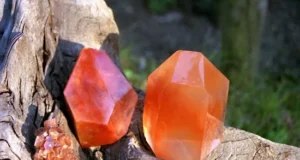
Carnelian
Carnelian is a captivating gemstone renowned for its warm and vibrant colors, ranging from light orange to deep reddish-brown. It belongs to the chalcedony...
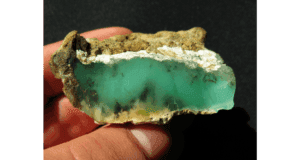
Chrysoprase
Chrysoprase is a gemstone variety of chalcedony, which is a form of quartz. It is known for its apple-green color, which comes from the...
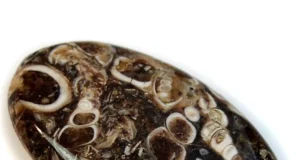
Turritella Agate
"Turritella Agate is a distinctive form of agate celebrated for its rich fossil inclusions and eye-catching banded patterns. Despite its name, it actually encases...
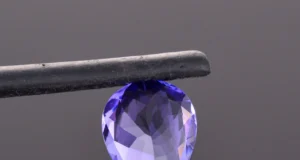
Tanzanite
Tanzanite is one of the most captivating gemstones ever discovered — admired for its rich blue-violet color and remarkable rarity. Scientifically known as the...