








Carbonate Minerals
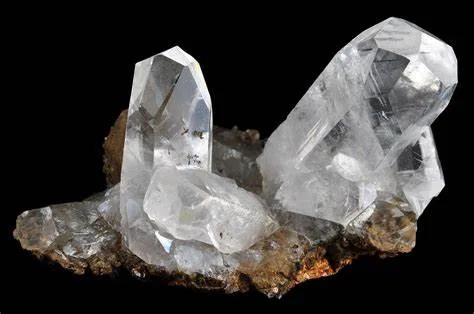
Carbonate minerals are a fascinating and widely occurring family built around the carbonate anion (CO₃²⁻), and they hold a special place in both Earth’s geology and human industry. From the marble and limestone that form majestic mountain ranges to the tiny shells of marine organisms that accumulate into thick sedimentary sequences, minerals like Calcite (CaCO₃), Dolomite (CaMg(CO₃)₂) and Magnesite (MgCO₃) tell stories of ancient seas, shifting chemical conditions and evolving life. These minerals form in diverse settings: shallow warm oceans, evaporitic lagoons, caves, hydrothermal veins and even in weathering zones. Their crystal structure, chemistry and textures record fluid chemistry, temperature, pressure and biological activity. In the field of engineering and construction, carbonate minerals matter greatly — crushed limestone is foundational for concrete and road aggregate, while dolomite serves as a refractory material and magnesite as a high-temperature brick. For geologists and site professionals, recognising carbonate minerals means understanding facies, diagenetic processes, rock stability, dissolution/precipitation behaviour and how ‘soft’ carbonate rock might behave differently from silicate rock in excavation or foundation work. In this category you’ll dive into how carbonate minerals form, how their chemistry adapts (e.g., substitution of Ca by Mg or Fe), how to spot them in hand sample or core, and why they remain vital both for reading Earth’s history and for practical engineering in the present day.
Rhodochrosite
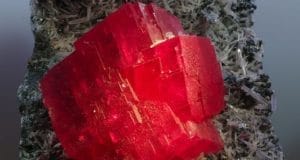
Rhodochrosite is a carbonate mineral with formula: MnCO3. It has a classic rose-pink color, but specimens can also be brown or gray. It forms dogtooth or rhombohedral crystals like calcite, but it may also occur in stalactitic, granular, nodular, botryoidal, and massive habits. Rhodochrosite is found in hydrothermal ore veins with sphalerite, galena, fluorite, and manganese oxides.
Chrysanthemum Stone
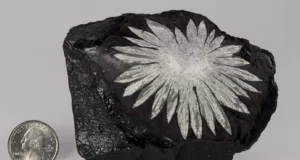
Chrysanthemum stone is a unique and captivating mineral with a rich history, valued for its striking appearance and intricate patterns. This stone is not...
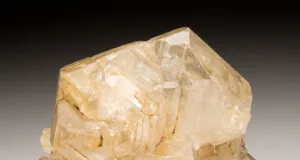
Cerussite
Cerussite is a mineral that belongs to the carbonate group. It is composed of lead carbonate (PbCO3) and has a relatively high lead content....
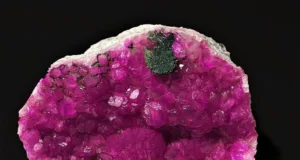
Cobaltocalcite
Cobaltocalcite is a captivating and visually distinctive mineral that belongs to the calcite group of minerals. It is renowned for its remarkable pink to...
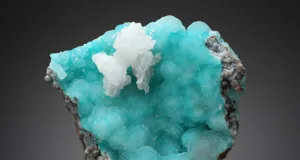
Smithsonite
Smithsonite is a mineral that belongs to the carbonate group. It is named after James Smithson, an English scientist and mineralogist who was the...

Stichtite
Stichtite is a mineral that is known for its striking violet to pinkish-purple color. It is a relatively rare mineral and is often found...

Azurmalachite
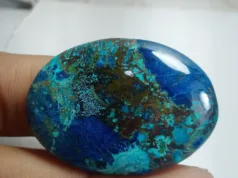
Azurmalachite is a semi-precious gemstone that is often used in jewelry and ornamental objects. It is known for its striking blue and green coloration,...

Gaspeite
Gaspeite is a relatively rare and vibrant green mineral that belongs to the carbonate mineral group. It is named after the Gaspé Peninsula in...

Bastnäsite
Bastnäsite is a group of rare earth fluorocarbonate minerals that includes bastnäsite-(Ce), bastnäsite-(La), and bastnäsite-(Y), with each type named after the dominant rare earth...