








Carbonate Minerals
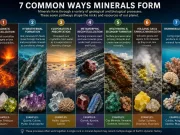
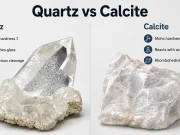
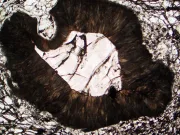
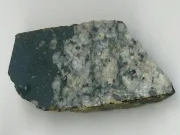
Carbonate minerals are a fascinating and widely occurring family built around the carbonate anion (CO₃²⁻), and they hold a special place in both Earth’s geology and human industry. From the marble and limestone that form majestic mountain ranges to the tiny shells of marine organisms that accumulate into thick sedimentary sequences, minerals like Calcite (CaCO₃), Dolomite (CaMg(CO₃)₂) and Magnesite (MgCO₃) tell stories of ancient seas, shifting chemical conditions and evolving life. These minerals form in diverse settings: shallow warm oceans, evaporitic lagoons, caves, hydrothermal veins and even in weathering zones. Their crystal structure, chemistry and textures record fluid chemistry, temperature, pressure and biological activity. In the field of engineering and construction, carbonate minerals matter greatly — crushed limestone is foundational for concrete and road aggregate, while dolomite serves as a refractory material and magnesite as a high-temperature brick. For geologists and site professionals, recognising carbonate minerals means understanding facies, diagenetic processes, rock stability, dissolution/precipitation behaviour and how ‘soft’ carbonate rock might behave differently from silicate rock in excavation or foundation work. In this category you’ll dive into how carbonate minerals form, how their chemistry adapts (e.g., substitution of Ca by Mg or Fe), how to spot them in hand sample or core, and why they remain vital both for reading Earth’s history and for practical engineering in the present day.