






Minerals
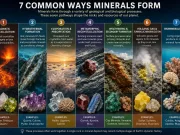
A mineral is a naturally occurring chemical compound usually of crystalline form and not produced by life processes. A mineral has one specific chemical composition, whereas a rock can be an aggregate of different minerals or mineraloids. The study of minerals is called mineralogy. To meet the definition of “mineral” used by most geologists, a substance must meet five requirements:

Scheelite
Scheelite is a calcium tungstate mineral that is commonly found in various geological environments. It is an important ore of tungsten, which is a...

Celestine
Celestine, also known as celestite, is a mineral that belongs to the sulfate mineral group. It is named after the Latin word "caelestis," which...
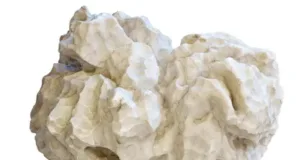
Alabaster
Alabaster is a mineral that has been used for centuries in art and architecture due to its unique qualities and aesthetic appeal. It is...

Brazilianite
Brazilianite is a rare and highly valued gemstone named after its country of origin, Brazil. It is a phosphate mineral that belongs to the...
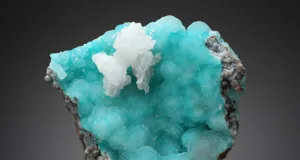
Smithsonite
Smithsonite is a mineral that belongs to the carbonate group. It is named after James Smithson, an English scientist and mineralogist who was the...

Variscite
Variscite is a term used to describe a type of mineral that belongs to the group of aluminum phosphate minerals. It is characterized by...
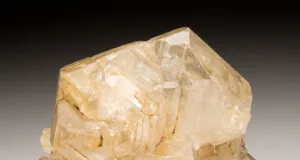
Cerussite
Cerussite is a mineral that belongs to the carbonate group. It is composed of lead carbonate (PbCO3) and has a relatively high lead content....

Cuprite
Cuprite is a mineral that belongs to the oxide mineral group. It is composed of copper(I) oxide, with the chemical formula Cu2O. The name...

Cassiterite
Cassiterite is a mineral composed of tin oxide (SnO2) and is the primary ore of tin. It has a high density and a hardness...
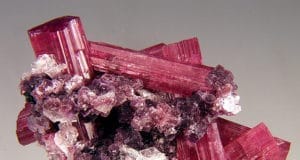
Tourmaline
Tourmaline is a fascinating gemstone that is known for its wide range of colors and unique properties. It is a crystalline mineral composed of...
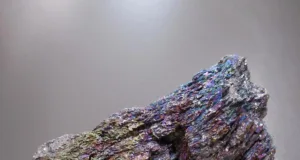
Carborundite
Carborundum, also known as silicon carbide (SiC), is a crystalline compound composed of silicon and carbon. It was first discovered in the late 19th...

Selenite
Selenite is a beautiful and versatile mineral that belongs to the gypsum mineral family. It is composed of hydrous calcium sulfate and is known...