




Minerals
A mineral is a naturally occurring chemical compound usually of crystalline form and not produced by life processes. A mineral has one specific chemical composition, whereas a rock can be an aggregate of different minerals or mineraloids. The study of minerals is called mineralogy. To meet the definition of “mineral” used by most geologists, a substance must meet five requirements:
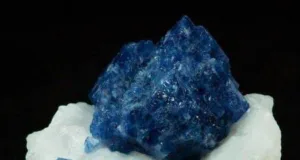
Gahnospinel
Gahnospinel is a mineral belonging to the spinel group, which is a class of minerals with the general formula AB₂O₄. In gahnospinel, A represents...
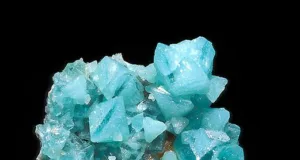
Boracite
Boracite is a mineral that belongs to the borate group and is known for its unique crystal structure and a variety of interesting properties....

Adamite
Adamite is a mineral that belongs to the arsenate class of minerals. Its chemical formula is usually written as Zn<sub>2</sub>(AsO<sub>4</sub>)(OH), indicating its composition of...
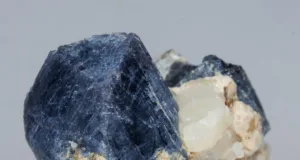
Sapphirine
Sapphirine is a relatively rare mineral known for its captivating blue color and distinctive crystal structure. It belongs to the family of silicate minerals...

Powellite
Powellite is a mineral that belongs to the broader group of minerals known as molybdates and tungstates. It is specifically classified as a calcium...
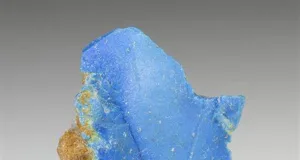
Ceruleite
Ceruleite is a beautiful and relatively rare mineral that belongs to the secondary copper mineral group. It is known for its stunning blue color...
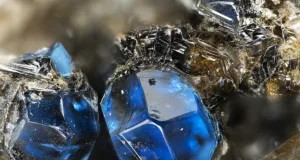
Haüyne
Haüyne is a rare and visually striking mineral that belongs to the group of minerals known as sodalite group feldspathoids. It is characterized by...
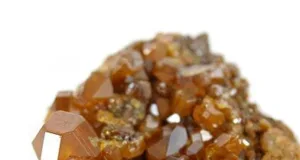
Stolzite
Stolzite is a mineral that belongs to the tungstate mineral group. Its chemical formula is PbWO4, which indicates that it is composed of lead...
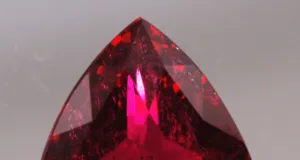
Rubellite
Rubellite is a captivating and highly prized gemstone that belongs to the tourmaline family. Renowned for its vibrant shades of pink to red, rubellite's...
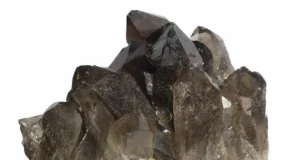
Smoky Quartz
Smoky quartz is a captivating variety of the mineral quartz, celebrated for its enchanting smoky-gray to brown coloration. This gemstone derives its name from...
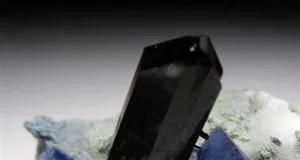
Neptunite
Neptunite is a rare mineral that belongs to the silicate mineral group. Its chemical formula is KNa2Li(Fe2+,Mn2+)2Ti2(Si4O12)2O2(OH)4, which highlights its complex composition. Neptunite is...
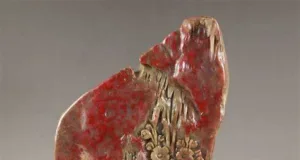
Chicken-Blood Stone
Chicken-Blood Stone, also known as "Ji Xue Shi" in Chinese, is a unique and highly prized gemstone that holds cultural and aesthetic significance, particularly...