





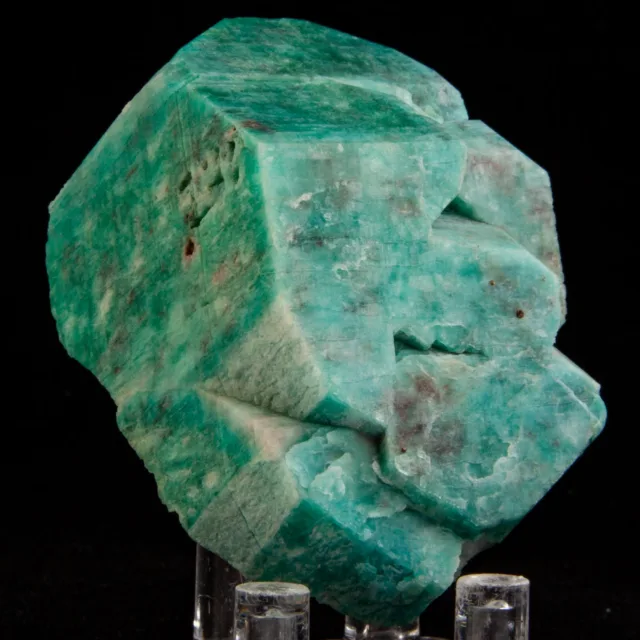
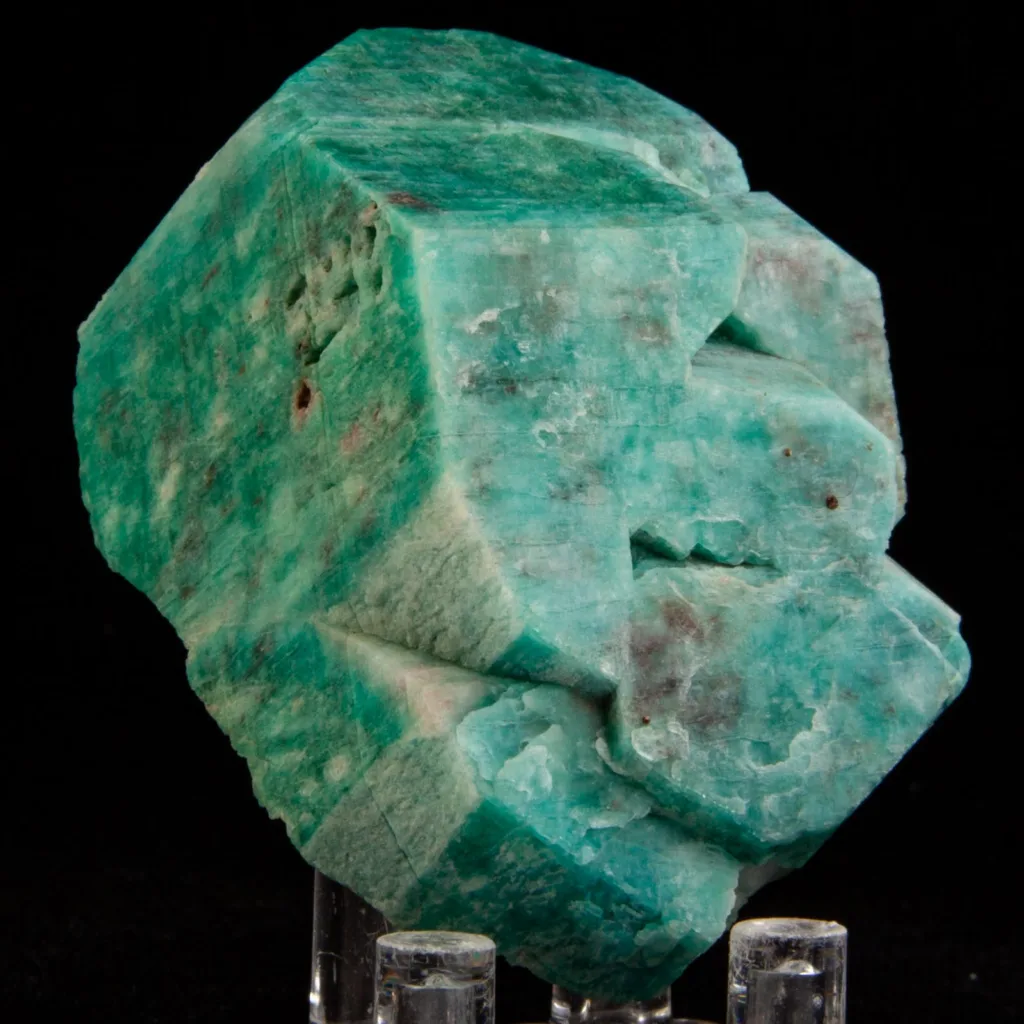
Amazonite is one of the most captivating green minerals in the world — a gemstone that bridges the worlds of geology, art, and human culture. Known for its soothing turquoise-green color and its connection to the ancient civilizations, Amazonite belongs to the feldspar mineral group, specifically the microcline variety of potassium aluminum silicate (KAlSi₃O₈).
In this article, we’ll explore what Amazonite is, its physical and chemical properties, how it forms, where it occurs, and the many uses and meanings that make it a favorite among both geologists and collectors.
What Is Amazonite?
Amazonite is a green to blue-green tectosilicate mineral, a potassium feldspar that owes its distinctive color to trace amounts of lead and water in its crystal structure. Despite its name, Amazonite is not found in the Amazon River region — the name likely originated from early explorers who discovered green stones near the Amazon basin and associated them with this beautiful mineral.
Its attractive color and natural polish make Amazonite a popular semi-precious gemstone used in jewelry, carvings, and decorative objects. Scientifically, it provides insight into feldspar mineralogy, crystal chemistry, and the geological processes that shape continental crusts.
Chemical Composition and Physical Properties

Amazonite is a variety of microcline feldspar, a member of the tectosilicate group that forms a major component of igneous rocks like granite and pegmatite.
Chemical Formula: KAlSi₃O₈ (Potassium Aluminum Silicate)
| Property | Description |
|---|---|
| Color | Green, blue-green, turquoise, occasionally yellow-green |
| Luster | Vitreous to pearly |
| Transparency | Translucent to opaque |
| Crystal System | Triclinic |
| Hardness (Mohs) | 6.0–6.5 |
| Cleavage | Perfect in two directions at 90° |
| Streak | White |
| Specific Gravity | 2.56–2.58 |
| Fracture | Uneven to conchoidal |
The unique green hue of Amazonite is caused by Pb²⁺ ions and sometimes Cu²⁺ impurities. When exposed to natural or UV light, these ions absorb certain wavelengths, giving the stone its signature blue-green appearance.
Formation of Amazonite
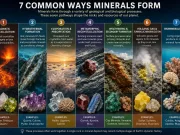
Amazonite forms in igneous rocks, particularly in granitic pegmatites — coarse-grained rocks that crystallize during the final stages of magma cooling.
As magma cools, minerals rich in silica and alkali metals (like potassium) crystallize first, producing feldspar minerals. Under specific conditions — where trace lead ions are present and the crystallization temperature remains stable — microcline feldspar develops its characteristic green color, becoming Amazonite.
Geochemically, Amazonite indicates slow cooling and chemical stability in the late magmatic phase, often associated with quartz, albite, muscovite, and smoky quartz.
Geological Occurrence and Localities

Although the name suggests a South American origin, Amazonite is not found in the Amazon basin. Instead, it occurs in several well-known localities around the world:
- ?? Russia (Ilmen Mountains, Ural Region): One of the oldest and most famous sources; known for vivid blue-green crystals.
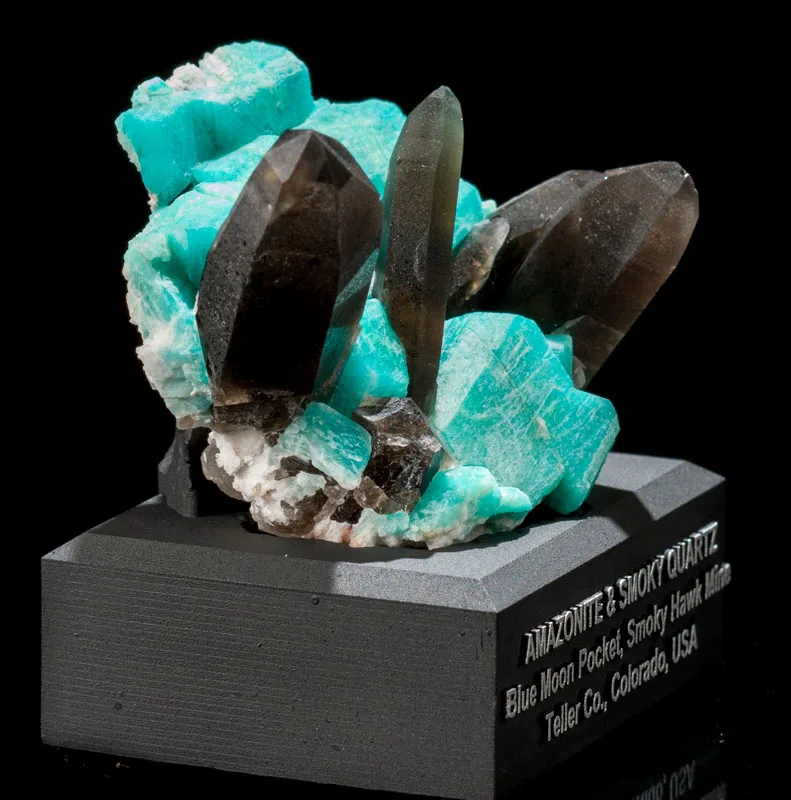
- ?? United States (Colorado, Virginia): Colorado’s Pikes Peak granite is one of the most productive Amazonite fields, yielding spectacular specimens with smoky quartz.
- ?? Brazil: Produces gem-quality material in pegmatite veins.
- ?? India: Small deposits with lighter hues.
- ?? Madagascar: Known for fine-grained and bright turquoise varieties.
- ?? Canada & Namibia: Secondary sources of commercial-grade Amazonite.
These occurrences demonstrate Amazonite’s global geological footprint — always linked to granitic pegmatites and felsic rock environments rich in alkali metals.
Uses and Applications
Amazonite’s versatility makes it valuable in several domains:
1. Gemstone and Jewelry
Polished Amazonite gemstones are popular in necklaces, pendants, and beads. Its calming green tones pair beautifully with sterling silver or gold. Although it’s relatively soft compared to quartz, it’s highly valued for its color and smooth polish.
2. Decorative and Ornamental Stone
For thousands of years, Amazonite has been used for carving amulets, statues, and inlay work. Ancient Egyptians crafted amulets and scarabs from Amazonite, associating it with prosperity and protection.
3. Metaphysical and Healing Uses
In crystal healing traditions, Amazonite is often called the “Stone of Courage and Truth.” It is believed to balance emotions, enhance communication, and calm the nervous system. While these claims are not scientifically proven, they contribute to its strong market demand.
4. Geological and Educational Use
In geology, Amazonite is studied as a mineralogical indicator of pegmatitic environments. It helps researchers understand geochemical evolution during the final stages of granite crystallization.
Identification and Color Characteristics
Distinguishing Amazonite from similar green minerals like jade, aventurine, or chrysoprase requires examining its cleavage, luster, and structure. Under a microscope, its cross-hatched twinning pattern (grid-like lines) — typical of microcline — is a key diagnostic feature.
When viewed in polarized light, this twinning produces a shimmering effect known as “Schiller”, which enhances the gem’s beauty.
- Amazonite vs Jade: Jade is tougher and denser.
- Amazonite vs Aventurine: Aventurine’s sparkle comes from mica inclusions, while Amazonite is smooth and opaque.
- Amazonite vs Chrysoprase: Chrysoprase has a brighter apple-green color and is a variety of chalcedony, not feldspar.
Cultural and Historical Significance
Amazonite has been admired since antiquity. In Mesopotamia and ancient Egypt, it symbolized fertility, harmony, and hope. Amazonite jewelry was discovered in King Tutankhamun’s tomb, highlighting its historical prestige.
Its name is linked to the legendary Amazon warrior women of Greek mythology, believed to have adorned themselves with green stones symbolizing strength and independence.
Today, Amazonite continues to bridge ancient symbolism with modern aesthetics, cherished both for its natural beauty and cultural depth.
Interesting Facts About Amazonite
- Amazonite’s name has no direct link to the Amazon River — a common misconception.
- The mineral can fade if exposed to intense sunlight for extended periods.
- Under UV light, Amazonite may fluoresce a faint yellow or orange.
- It is commonly found associated with smoky quartz and albite in mineral clusters.
- Amazonite is considered a birthstone alternative for those born in December.
Conclusion
Amazonite stands out among feldspar minerals for its elegance, rarity, and deep cultural connections. Scientifically, it represents a fascinating product of magmatic crystallization; artistically, it captures the essence of tranquility and balance.
From the granite cores of mountains to jewelry showcases across the world, Amazonite tells a story that spans geology, art, and human history. Its green glow continues to fascinate geologists, collectors, and admirers alike — a perfect example of nature’s harmony between chemistry and beauty.