





Oxide Minerals
Oxide minerals form a distinctive and essential class of minerals in which oxygen (O²⁻) bonds directly with one or more metal (or semi-metal) cations, producing compounds that often crystallize in igneous environments, during metamorphism or as weathering products at Earth’s surface. These include well-known species such as hematite (Fe₂O₃), magnetite (Fe₃O₄), corundum (Al₂O₃) and chromite (FeCr₂O₄). Because of their relatively simple chemistry compared to silicates and their varied formation settings, oxide minerals provide crucial clues about temperature, oxidation state, fluid history and tectonic processes. They are also directly tied to major ore deposits — for example iron ores, chromium ores and aluminium ores often occur as oxides. In this category you’ll explore how oxide minerals form, how their crystal structures and physical properties reflect those formation conditions, where they occur in the field (or in the subsurface) and why as a geologist, engineer or site-practitioner you should pay attention to them for everything from exploration to material behaviour and geotechnical risk.
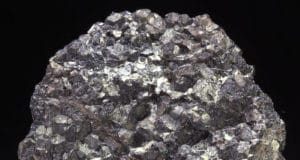
Chromite
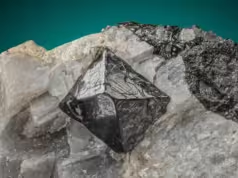
Chromite is an oxide mineral that an iron chromium oxide with formula: FeCr2O4. It is belonging to the spinel group. Chromite is the most important ore of chromium. Crystals are uncommon, but when found they are octahedral. Chromite is usually massive or in the form of lenses and tabular bodies, or it may be disseminated as granules.

Rutile
Rutile is oxide group mineral with formula: titanium dioxide (TiO2). It often appears as pale golden, needlelike crystals inside quartz. When not enclosed in quartz, it is usually yellowish or reddish brown, dark brown, or black.

Ilmenite
Ilmenite, otherwise called manaccanite, is a titanium-iron oxide mineral with formula: FeTiO3. It is a noteworthy wellspring of titanium. Typically thick and tabular, its crystals sometimes occur as thin lamellae (fine plates) or rhombohedra.. Ilmenite can also be massive, or occur as scattered grains. Intergrowths with hematite or magnetite are common

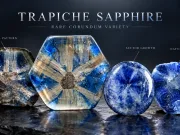
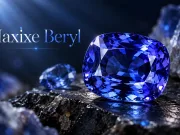
Corundum
Corundum is a mineral that is primarily composed of aluminum oxide (Al2O3) and is one of the naturally occurring crystalline forms of aluminum oxide....

Spinel
Spinel is the name of both an individual mineral and of a group of metal-oxide minerals that share the same crystal structure. Minerals in this group include gahnite, franklinite, and chromite. Spinel is found as glassy, hard octahedra, or as grains or masses.

Goethite
Named after the German mineralogist Johann Wolfgang von Goethe in 1806, goethite is a common mineral. It can be brownish yellow, reddish brown, or dark brown in color, depending on the size of the crystal in the specimen—small crystals appear lighter, and larger ones darker.

Magnetite
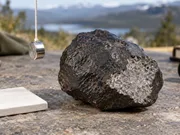
Magnetite is rock mineral and one of the most importan iron ore minerals with chemical formula is iron(II,III) oxide, Fe2+Fe3+2O4 .It also Magnetite is as the name magnetic minerals to attracted to a magnet. It is the most magnetic natural occuring minerals in the World. Small grains of magnetite occur in almost all igneous and metamorphic rocks.

Hematite
Hematite is one of the most defining minerals in Earth’s geological and industrial history. Known for its striking metallic luster, its surprising weight, and...