





Gemstones
Home Gemstones
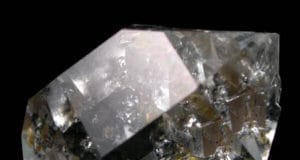
Diamond
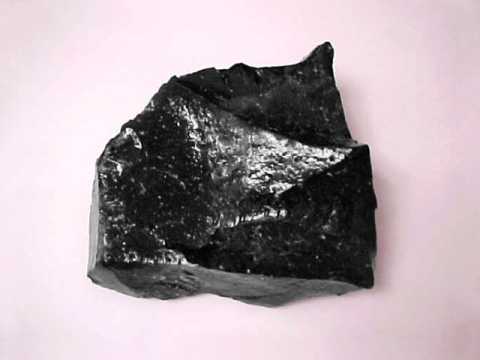
The hardest known mineral, diamond is pure carbon. Its crystals typically occur as octahedrons and cubes with rounded edges and slightly convex faces. Crystals may be transparent, translucent, or opaque. They range from colorless to black, with brown and yellow being the most common colors. Other forms include bort or boart (irregular or granular black diamond) and carbonado (microcrystalline masses).
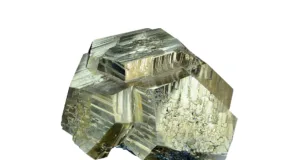
Pyrite (Fool’s Gold)
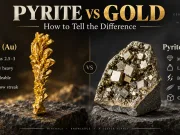
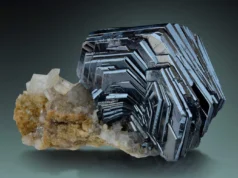
Known since antiquity, pyrite is commonly referred to as “fool’s gold.” Although much lighter than gold, its brassy color and relatively high density misled many novice prospectors. Its name is derived from the Greek word pyr, meaning “fire,” because it emits sparks when struck by iron.
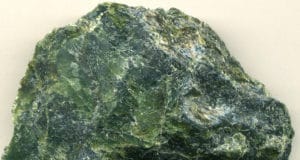
Serpentine
Serpentine is not a single mineral instead a group of related minerals. Also for the primary contributors of Antigorite and Chrysotile, a difference is not commonly made between the character participants besides underneath medical study and type.
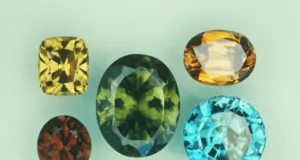
Zircon
Zircon is a zirconium silicate mineral with a chemical composition of ZrSiO4. It is common at some point of the world as a minor constituent of igneous, metamorphic, and sedimentary rocks.Zircon is a popular gemstone that has been used for almost 2000 years.

Corundum
Corundum is a mineral that is primarily composed of aluminum oxide (Al2O3) and is one of the naturally occurring crystalline forms of aluminum oxide....
Opal
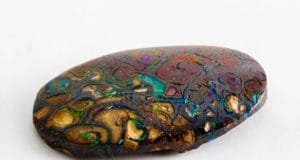
Opal is one of the most visually extraordinary gemstones on Earth. Some specimens flash with brilliant rainbow colors that appear to move and shift...

Amethyst
A Gemstone Forged by Earth’s Hidden ForcesAmethyst is more than a beautiful purple gemstone — it is a geological story written in quartz crystals,...
Malachite
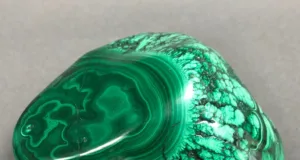
Possibly the earliest ore of copper, malachite is believed to have been mined in the Sinai and eastern deserts of ancient Egypt from as early as 3000 BCE. Single crystals are uncommon; when found, they are short to long prisms.

Fire Agate
Formation, Colors, Structure, Localities & Geological StoryIf you pick up an ordinary agate, you expect soft bands, swirling colors, maybe a little translucency. Fire...

Beryl
Beryl is a member of cyclosilicate minerals with composed of beryllium aluminium. Chemical formula: Be3Al2Si6O18. Few people have ever heard of the mineral beryl but almost everyone has heard of its principal gemstone varieties emerald and aquamarine.

Azurite
Azurite is not a common or abundant mineral, but it is beautiful and its blue color attracts attention. It has been used by people in many parts of the world for thousands of years. Ancient people used it as an ore of copper, as a pigment, as a gemstone, and as an ornamental stone. It is still used for all of these purposes today

Epidote
Well developed crystals of epidote, Ca2Al2(Fe3+;Al)(SiO4)(Si2O7)O(OH), crystallizing inside the monoclinic system, are of frequent prevalence: they're normally prismatic in dependancy, the course of elongation being perpendicular to the single plane of symmetry.