























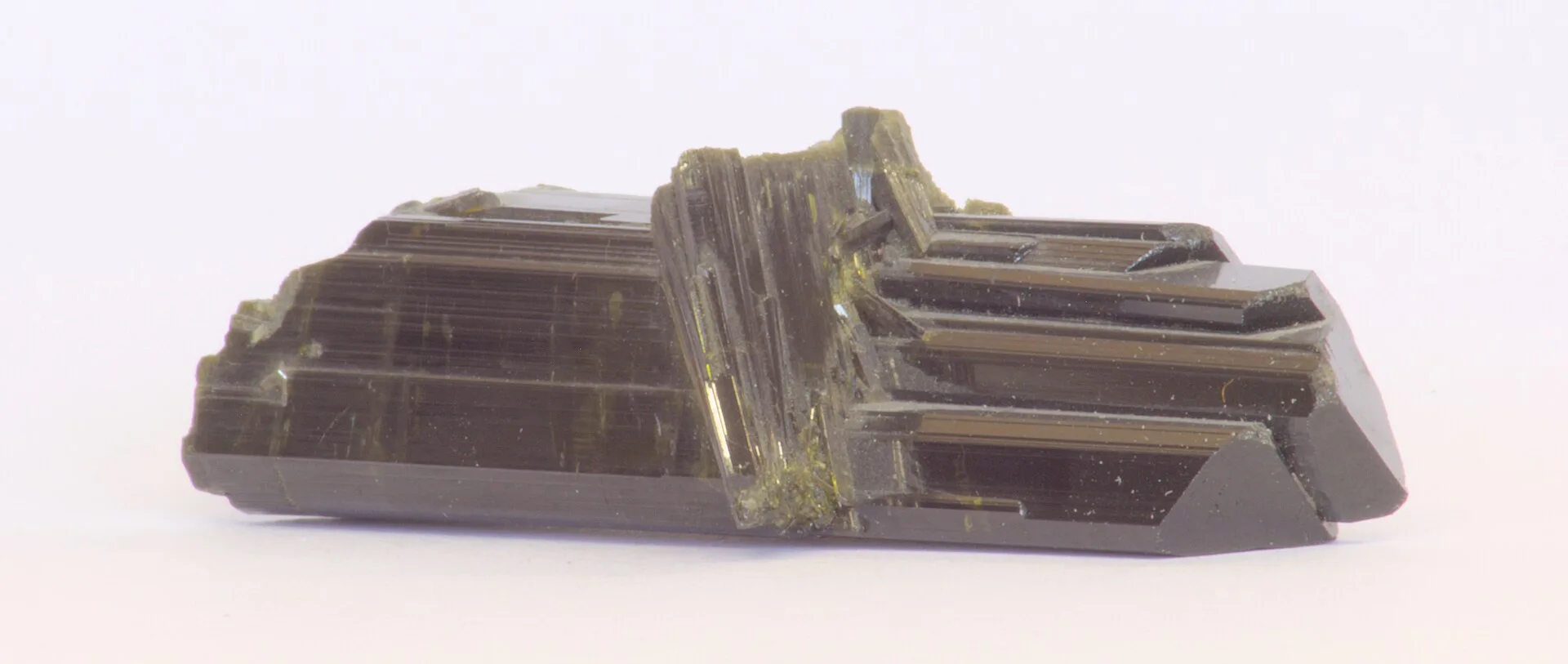
Epidote is a calcium–aluminium–iron sorosilicate mineral, typically pistachio-green to yellowish green, that occurs in metamorphic rocks and hydrothermally altered igneous rocks. It forms monoclinic crystals, commonly with elongated or striated prismatic faces, and has a Mohs hardness of about 6–7. Its characteristic color and association with chlorite, amphibole, quartz and feldspar help geologists recognize epidote-bearing rocks.
Epidote is also the name of a mineral group. The species epidote is an iron-bearing member of the epidote–clinozoisite compositional series; the group includes other structurally related minerals. Mineral identification requires more than green color alone: cleavage, crystal habit, density, host rock and, when needed, optical or chemical tests are important.
Epidote Mineral: Chemical Formula and Crystal Structure
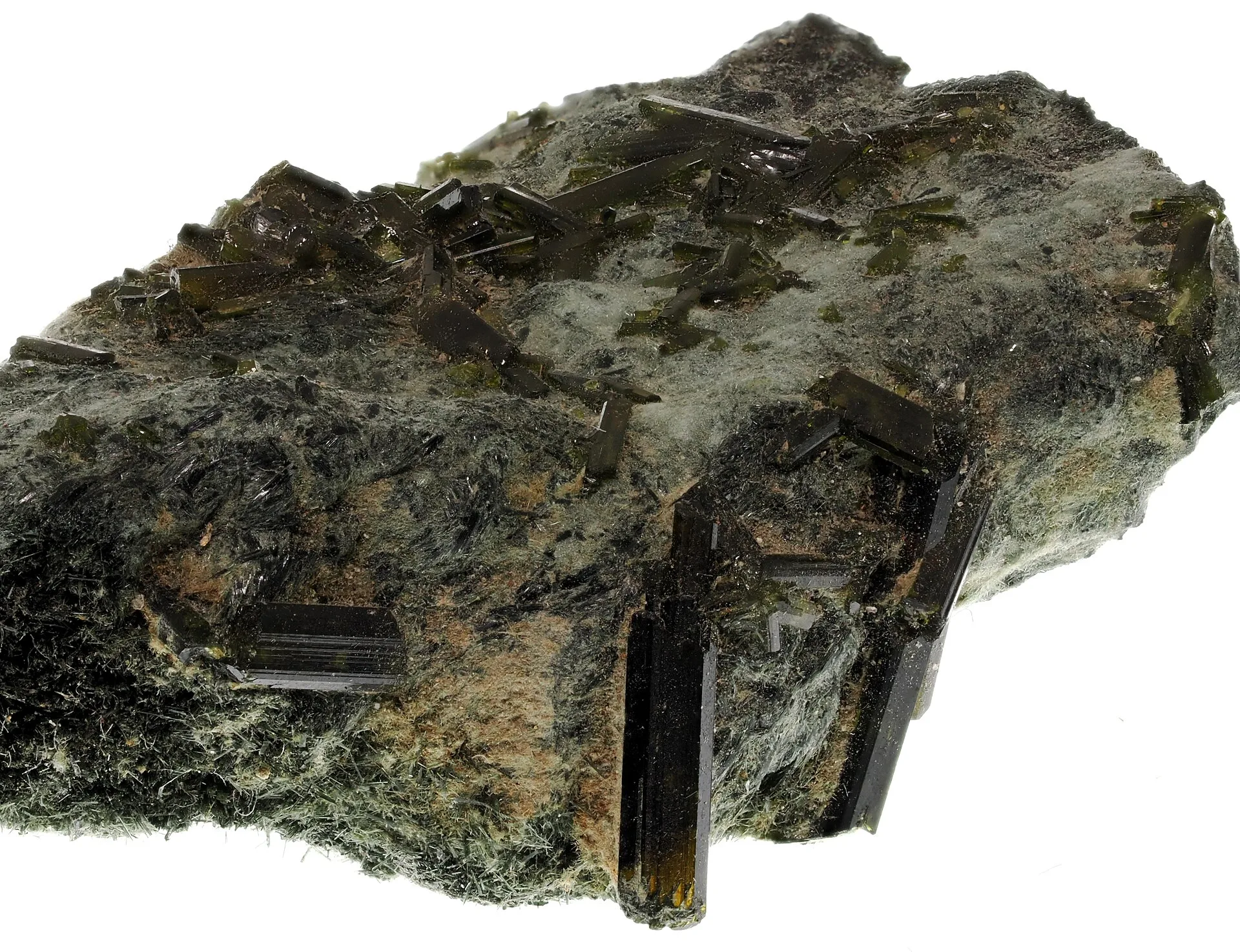
The idealized formula is Ca₂Al₂Fe³⁺(SiO₄)(Si₂O₇)O(OH), with aluminium substituting for ferric iron in the natural solid-solution series. The silicate structure contains both isolated SiO₄ tetrahedra and linked Si₂O₇ groups, which is why epidote is classified as a sorosilicate. Epidote belongs to the monoclinic crystal system; crystals are often elongated, flattened or deeply striated. Common habits include prisms, blades, radiating aggregates and granular masses.
Ferric iron is important for the familiar green-to-brown coloration. Increasing Al relative to Fe³⁺ leads toward clinozoisite, although individual specimens can be compositionally zoned. The mineral group is broader than this binary series: allanite, piemontite and other species may incorporate rare earths, manganese or other cations. The distinction between the species and the group matters when interpreting thin sections or rock chemistry.
Physical Properties and Identification Table
| Property | Typical epidote |
|---|---|
| Chemical class | Calcium aluminium iron sorosilicate |
| Crystal system | Monoclinic |
| Color | Pistachio-green, yellow-green, dark green, brown-green, sometimes nearly black |
| Streak | White to colorless |
| Luster | Vitreous; sometimes resinous |
| Hardness | Approximately 6–7 Mohs |
| Specific gravity | Approximately 3.3–3.5, composition-dependent |
| Cleavage | Perfect on {001}; another less distinct cleavage may be observed |
| Transparency | Transparent to translucent; massive specimens can appear opaque |
| Common habit | Elongated prisms, striated crystals, granular and radiating aggregates |
| Optical character | Biaxial negative or positive depending on composition; often high relief and noticeable pleochroism |
Hardness and density are ranges, not fixed values for every crystal. Apparent color may change with crystal thickness, illumination, inclusions and weathering. Scratch testing damages specimens, so a hand lens, visual inspection and geological context are better first steps for collectible material.
Color, Crystal Habit and Appearance
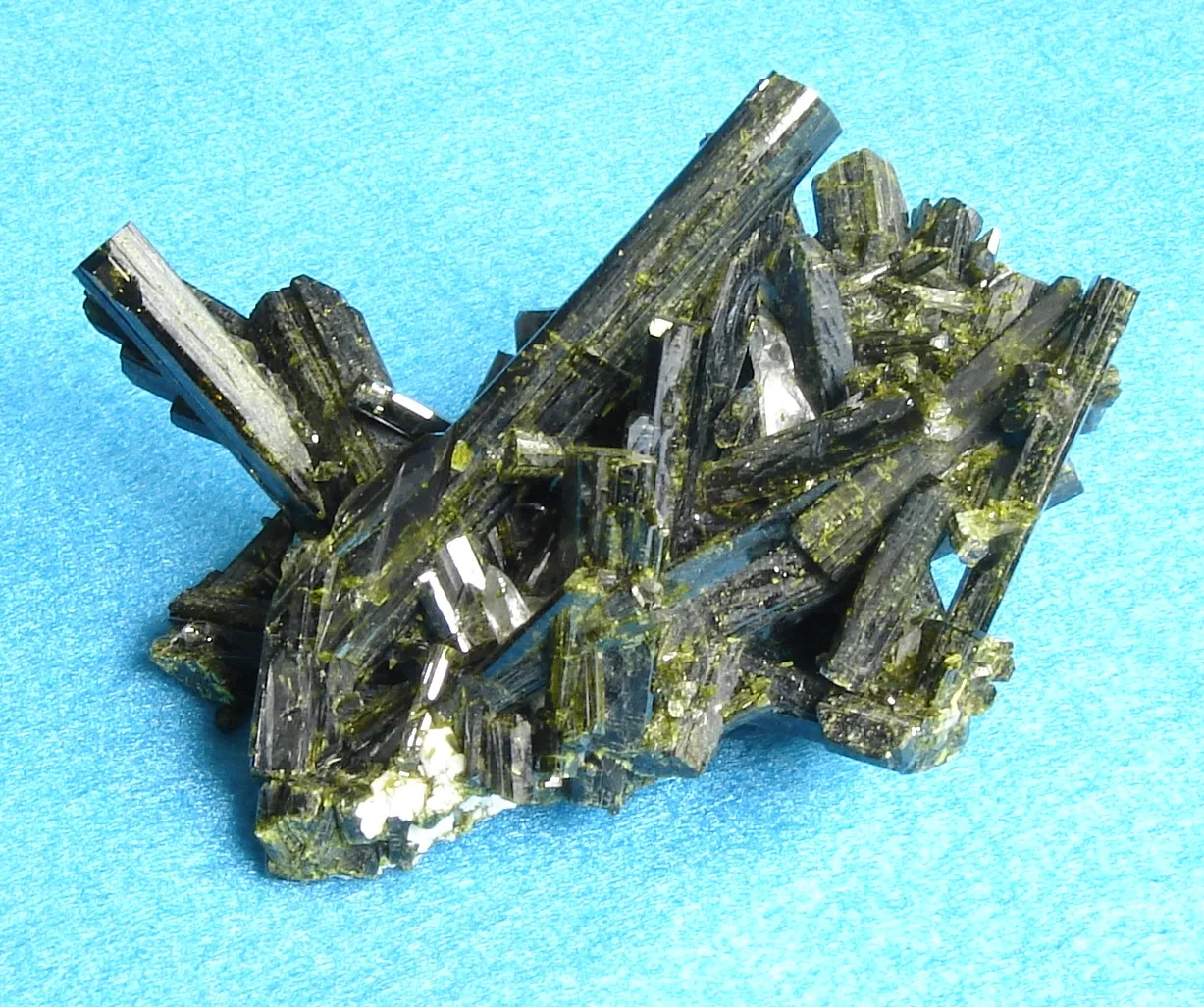
Pistachio green is the best-known color, but epidote may be yellowish, olive, dark bottle-green or brownish. Transparent crystals can be strongly lustrous, while massive aggregates may look duller. Parallel striations on prismatic faces and wedge-like terminations are useful clues. Color intensity alone does not establish an exact iron concentration or distinguish every epidote-group species.
Dark green epidote may resemble actinolite, tourmaline, diopside or other green silicates. Check whether crystals show characteristic cleavage and cross-sectional shape rather than relying on hue. In weathered outcrops, epidote-rich alteration can create green patches or veinlets that differ from fresh rock.
Formation: Metamorphism, Skarn and Hydrothermal Alteration
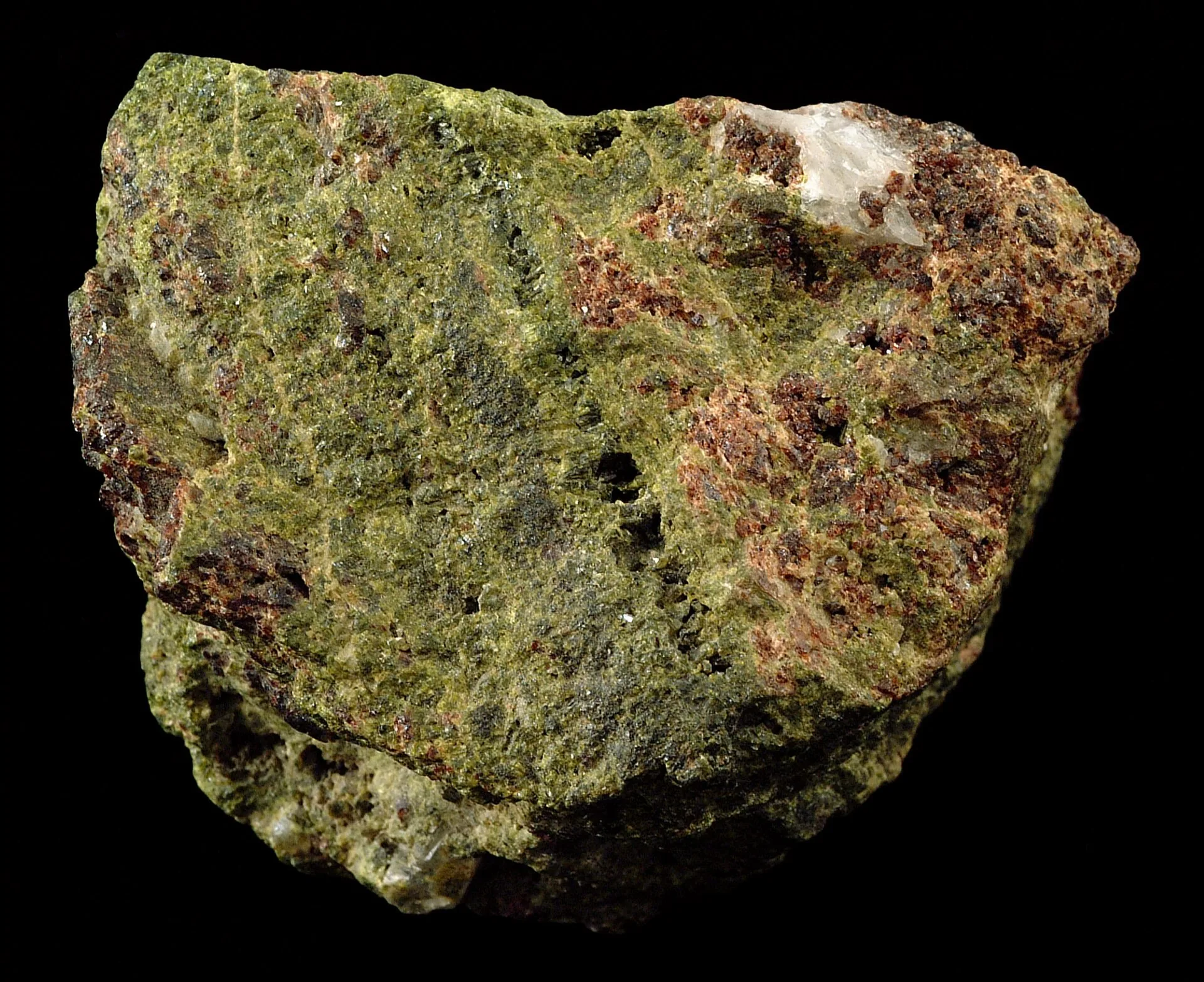
Epidote commonly forms during low- to medium-grade regional metamorphism and during hydrothermal alteration of calcium-bearing silicate rocks. In metamorphic rocks it may grow through reactions involving plagioclase, amphibole, chlorite and other phases. Epidote-bearing assemblages are particularly characteristic of many greenschist-facies rocks, but the presence of epidote alone does not uniquely determine metamorphic grade, pressure or temperature.
In skarns, fluids interacting with carbonate and igneous rocks may produce epidote together with garnet, pyroxene, quartz and calcite. In altered basalts, epidote can replace plagioclase or fill fractures and vesicles. Veins in granitic rocks may host well-developed crystals. Fluid composition, oxygen fugacity, bulk-rock chemistry and reaction history influence whether epidote grows or disappears.
Epidote-Bearing Rocks: Epidosite and Unakite
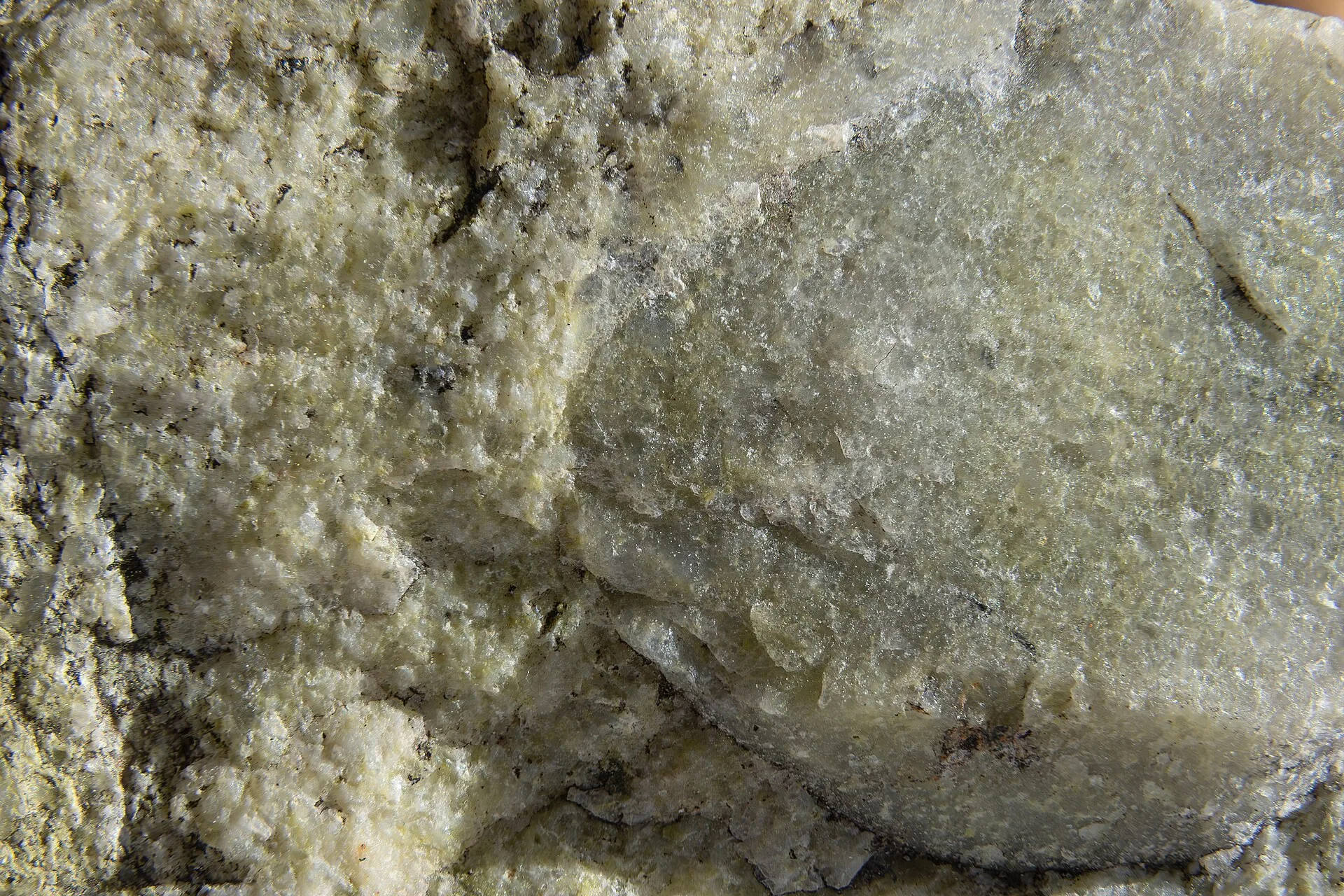
Epidosite is an epidote-rich rock, often containing quartz, produced through substantial hydrothermal alteration or metasomatism, particularly in mafic crust. Its formation can involve removal or redistribution of sodium and other elements as calcium-rich mineral assemblages develop. Epidosite is not simply any green rock; petrographic or mineralogical evidence is needed to establish its mineral proportions.
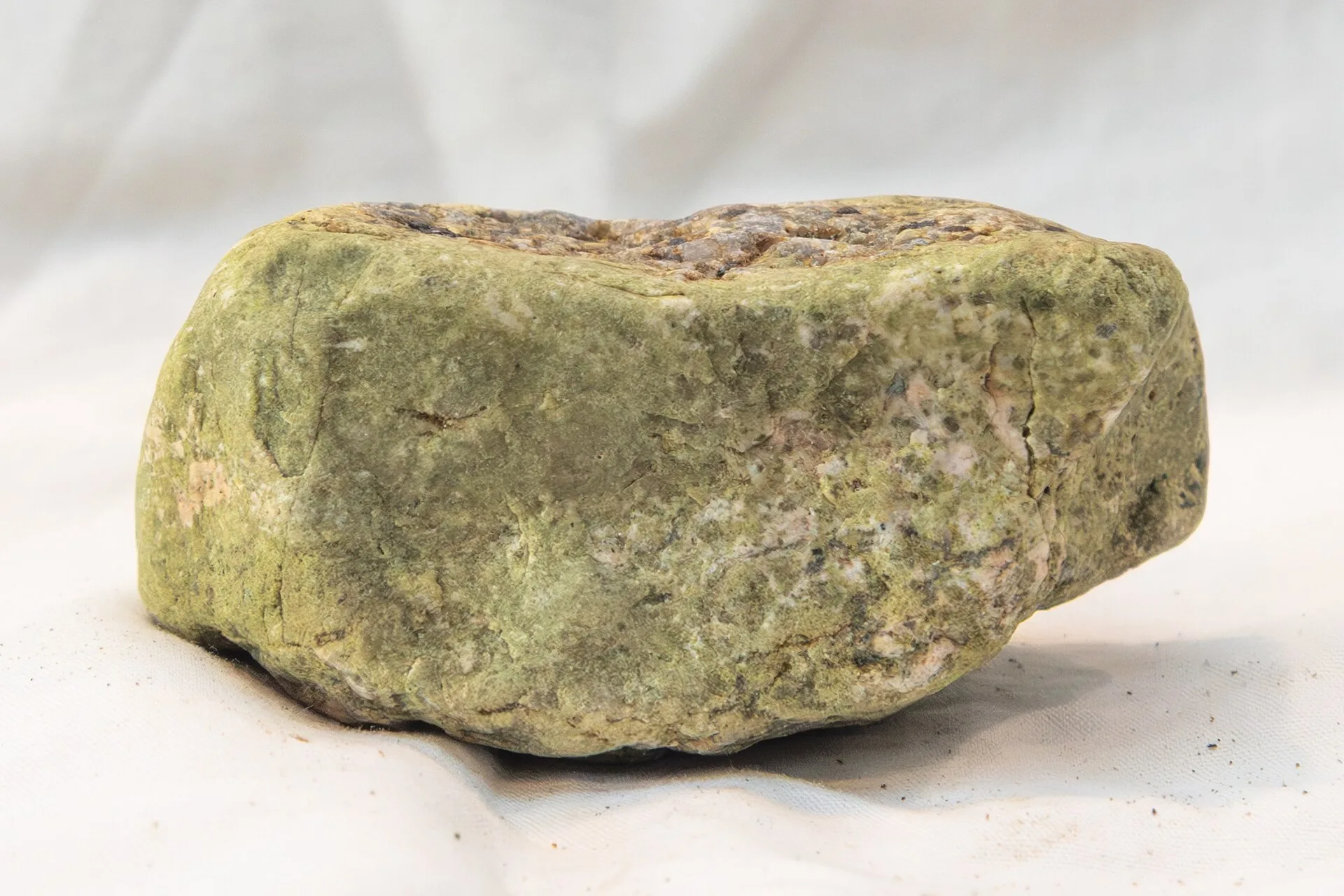
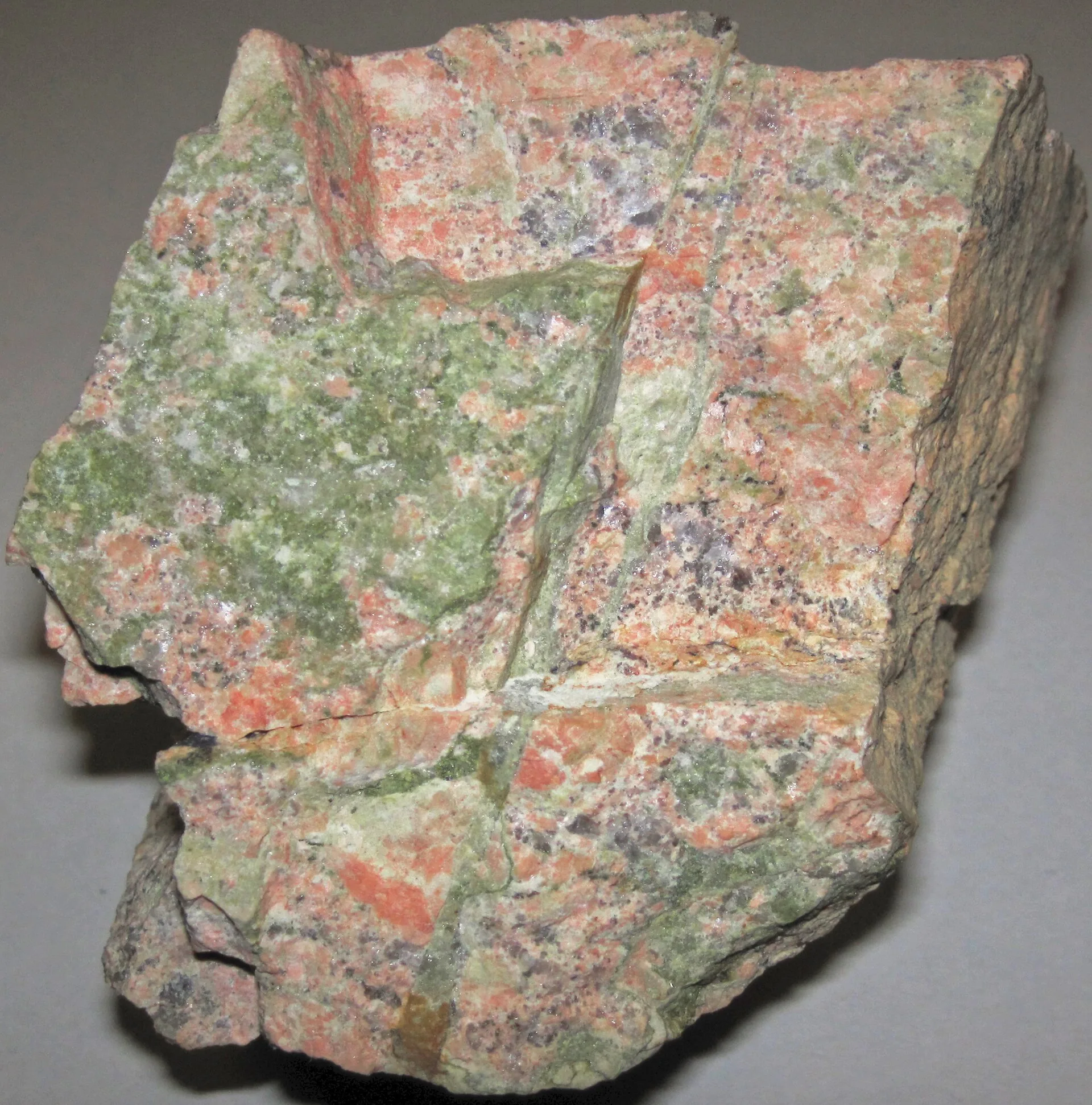
Unakite is a pink-and-green altered granitic rock containing green epidote, pink potassium feldspar and commonly quartz. Epidote-rich alteration of feldspar-bearing granitoids can generate the characteristic color combination. Unakite is a rock name, not a synonym for pure epidote. Related reading: granite and quartz.
Epidote Under the Microscope: PPL and XPL
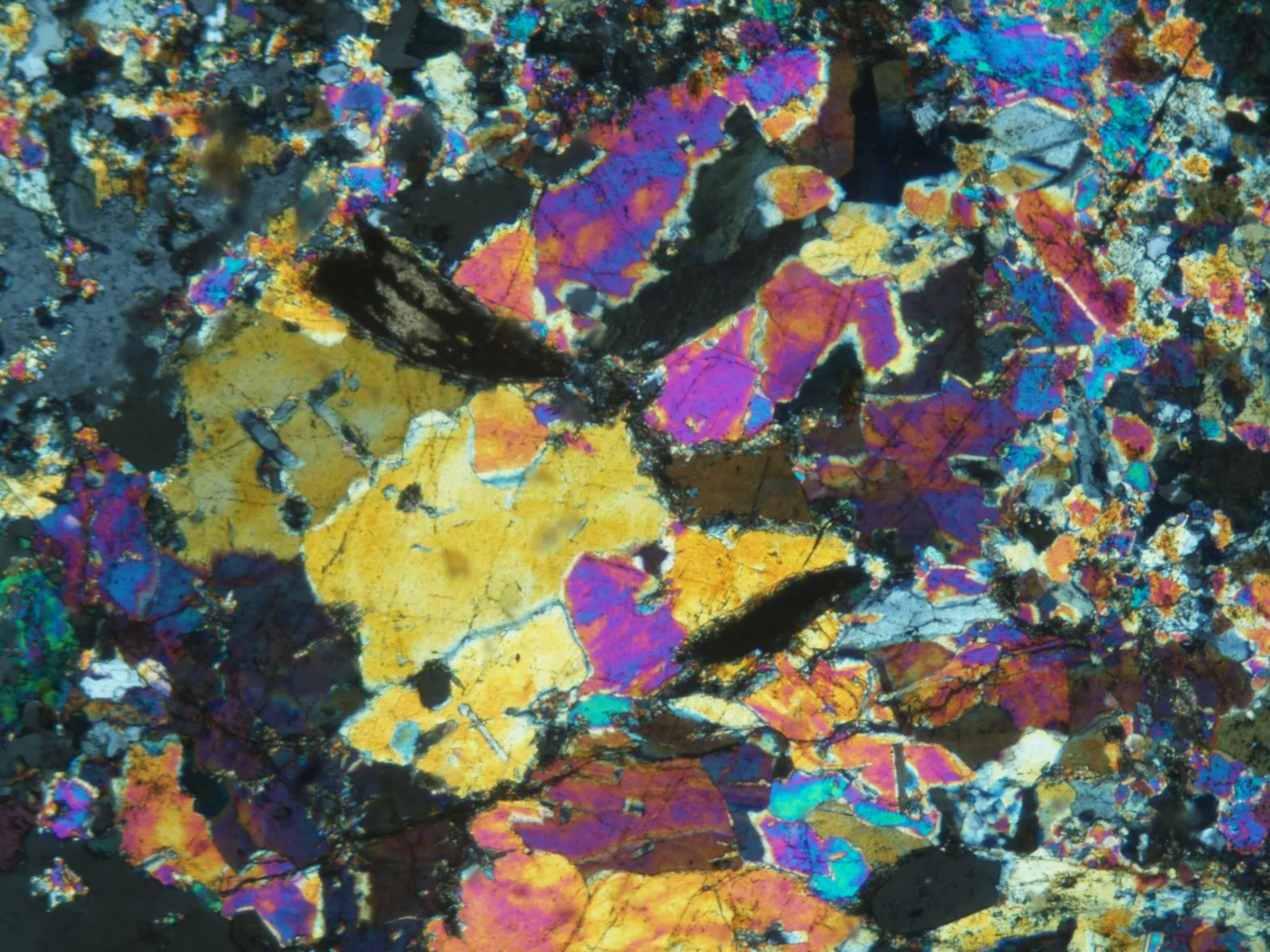
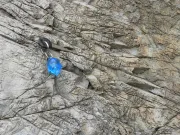
In plane-polarized light (PPL), epidote commonly has relatively high relief and may show yellow, pale green or brownish pleochroism; the strength of pleochroism varies with composition. Cleavage traces and irregular grain shapes may be visible. In crossed polarized light (XPL), epidote often shows relatively high birefringence and bright interference colors, although anomalous blue or yellow interference colors can occur in some compositions. The accompanying documented image is a granite thin section photographed with crossed polarizers; it is not presented as a paired PPL/XPL comparison.
Optical orientation, extinction behavior and refractive indices can help distinguish epidote from chlorite, amphibole and clinozoisite. Fine intergrowths or compositional zoning may complicate identification. For research-grade determination, combine petrography with electron microprobe or SEM–EDS chemistry, and X-ray diffraction when necessary. Avoid assigning exact mineral species from a single thin-section color.
Where Epidote Occurs: Notable Localities
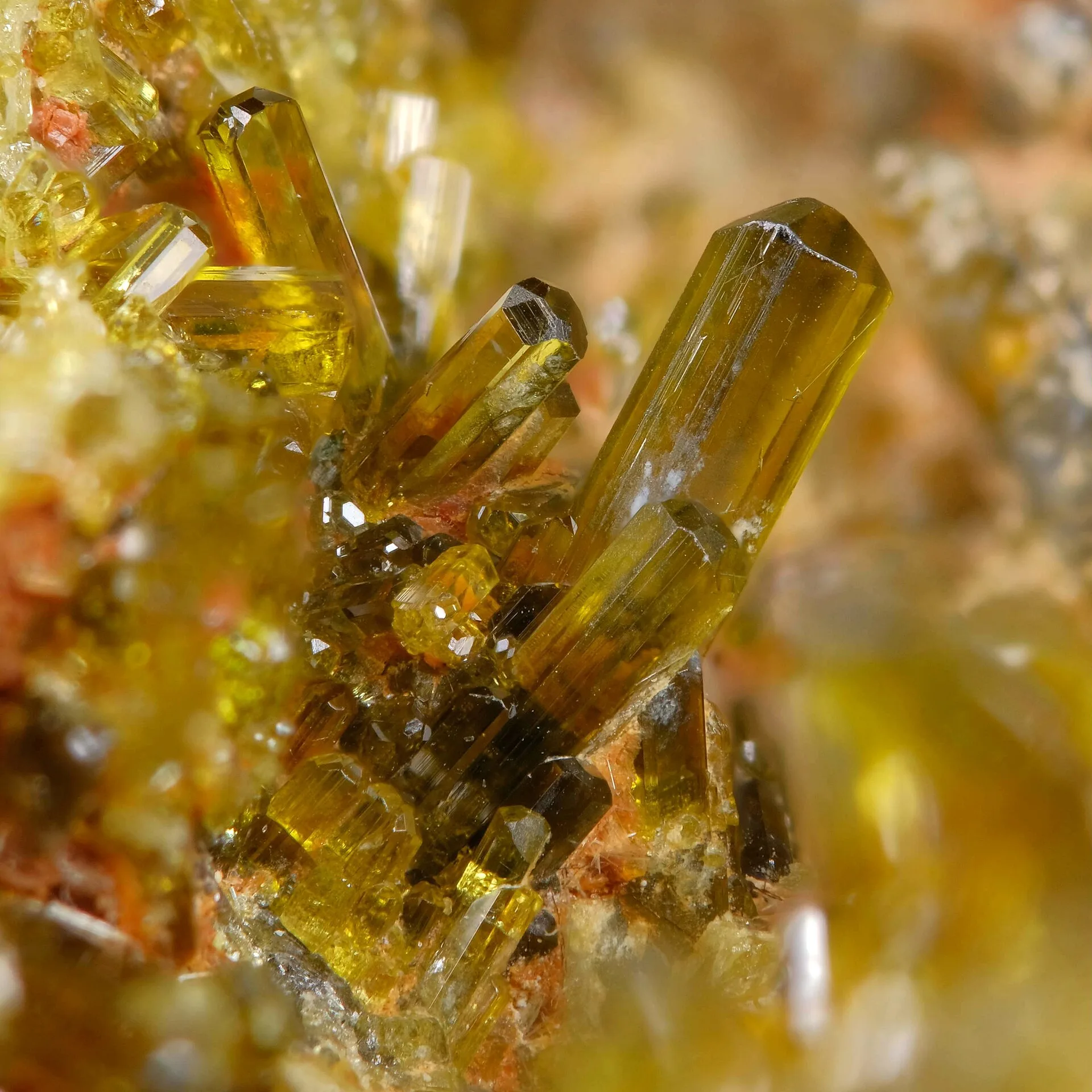
Well-known collectible epidote comes from Knappenwand in the Austrian Alps, the Bourg d’Oisans area of France, northern Pakistan, and several sites in Alaska and the western United States. Epidote also occurs in the Middle Urals, Brazil, Peru, Mali and other regions. Exceptional crystals may form in Alpine-type fissures, skarns and hydrothermal veins. Occurrence records and locality names should be checked against current mineralogical databases because historical labels and mine names can change.
A specimen’s stated locality can provide useful context, but appearance does not authenticate provenance. Collectors should preserve labels and avoid destructive testing of well-formed crystals. For general locality and species data consult Mindat’s epidote entry and Minerals.net.
Epidote vs. Clinozoisite, Actinolite and Other Green Minerals
| Mineral | Distinguishing characteristics |
|---|---|
| Epidote | Pistachio-green sorosilicate, monoclinic, hardness 6–7; high relief in thin section |
| Clinozoisite | Aluminium-rich related species, often paler; chemistry and optics may be required |
| Actinolite | Green amphibole; commonly fibrous to bladed with amphibole cleavage angles |
| Diopside | Green clinopyroxene; different cleavage geometry and crystal habit |
| Chlorite | Commonly softer, flaky or micaceous, with low birefringence in thin section |
| Tourmaline | Typically harder, with characteristic triangular cross sections and no prominent cleavage |
A safe identification sequence is to observe color and habit, examine cleavage on an existing fracture, inspect host-rock associations and then use optical microscopy or non-destructive instrumental methods if the specimen is valuable. Do not scratch polished gemstones or expose unknown mineral samples to acids merely to distinguish epidote.
Uses, Collecting and Frequently Asked Questions
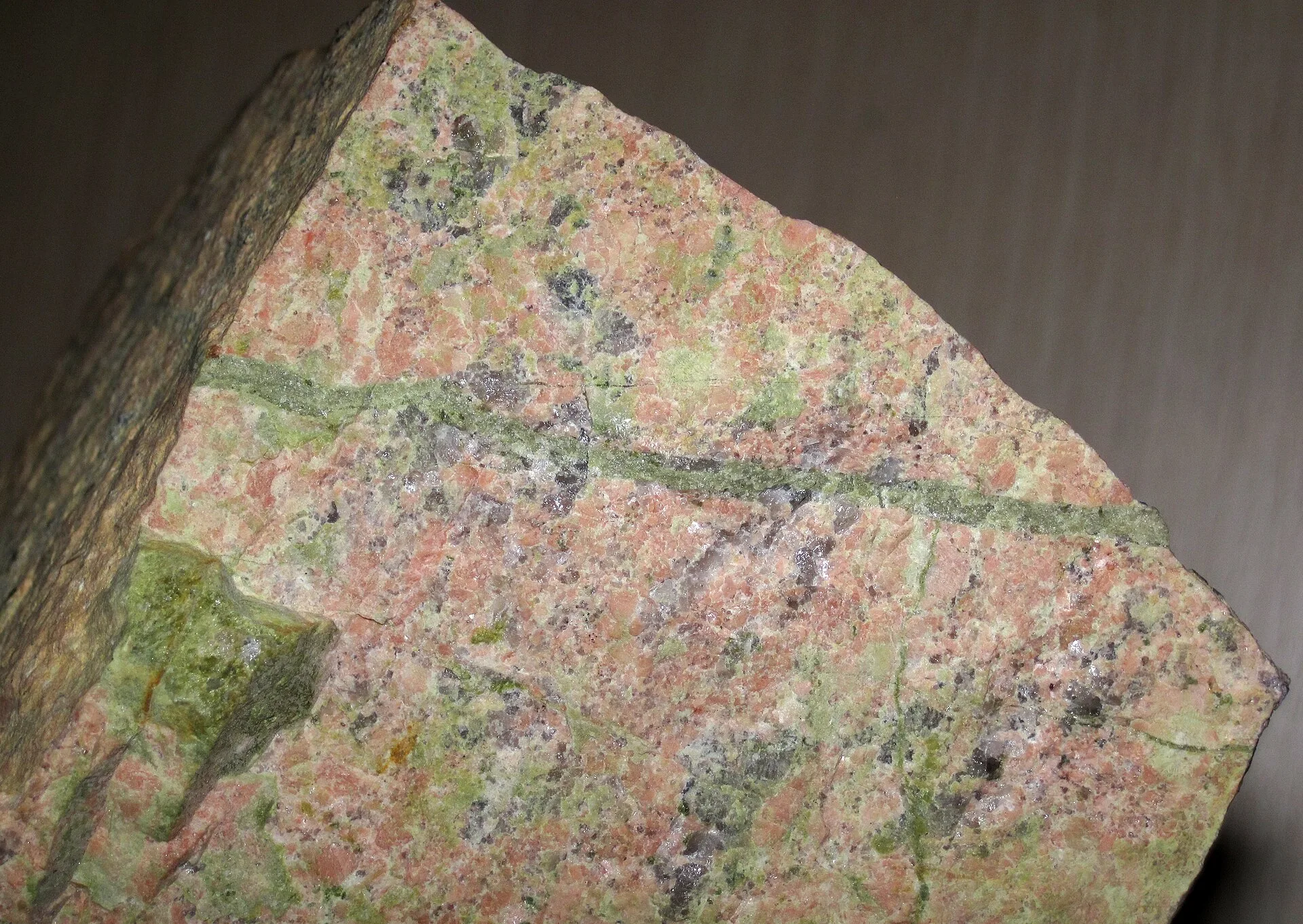
Epidote is valued primarily as a mineral specimen and, less commonly, as a collector gemstone. Transparent crystals can be faceted, but epidote is not a major commercial gemstone or industrial ore. Epidote-bearing unakite is widely cut into cabochons, beads and decorative objects. In geology, epidote is important as a record of fluid–rock reactions and metamorphic mineral assemblages. It can help reconstruct alteration pathways when considered alongside other minerals and textures.
Is epidote a gemstone?
Transparent, well-formed epidote crystals are occasionally faceted for collectors, but much of the material is too dark, fractured or included for conventional jewelry.
Why is epidote green?
Ferric iron in its crystal structure is a major contributor to the characteristic yellow-green to dark-green appearance.
Is epidote the same as clinozoisite?
No. They are closely related minerals in a compositional series; clinozoisite is aluminium-rich relative to iron-bearing epidote.
What rocks contain epidote?
Greenschists, altered basalts, skarns, hydrothermal veins and some altered granitoids can contain epidote. Epidosite and unakite are two distinctive epidote-bearing rock types.
Can epidote identify metamorphic grade by itself?
No. Epidote occurs across multiple geological settings. Interpretation requires the complete mineral assemblage, textures and bulk-rock composition.
How can epidote be identified without damaging it?
Examine crystal shape, striations, luster, color, host-rock associations and existing cleavage surfaces. Optical or spectroscopic analysis may be appropriate for valuable samples.
Scientific sources: Geology.com — Epidote; Minerals.net — Epidote; Mindat — Epidote. Image attributions and license links are supplied beneath each figure. Featured image: Slashme, Epidote crystal from Knappenwand, CC BY 4.0; resized and converted to WebP.