
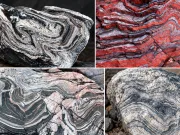
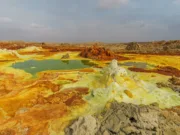
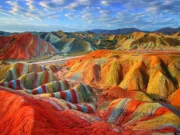




The Earth may look as if it does not change from the outside, but the truth is the exact opposite. Deep within the crust, everything is constantly in motion: magma rises, minerals separate from each other, cooling begins, crystals slowly grow… None of these processes can be noticed within a time span as short as our lifetime. Nature is almost like a patient craftsman measured by our sense of time; it does not rush, it waits, it builds, it reshapes.
That is why some minerals look ordinary at first sight but, when examined closely, carry traces of a completely different world inside them. Sunstone is one of these stones. From the outside it looks like a simple feldspar, but the moment light touches it, it gives the impression that a small flame is burning inside the stone. This warm and moving glow is called aventurescence, and it is the most defining feature that separates sunstone from all other stones.
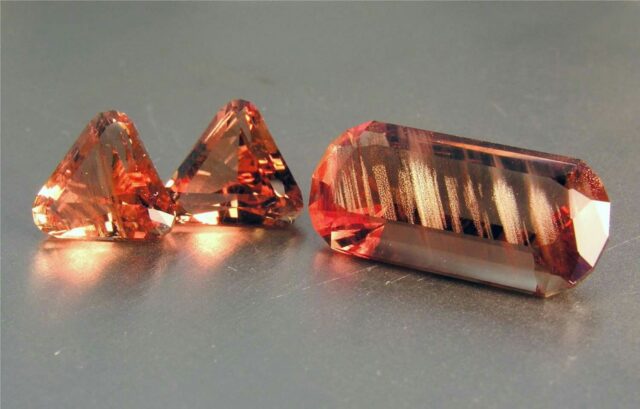
Behind this glow lies a geological story that is extremely calm but at the same time quite complex. While magma cools deep underground, tiny particles of copper or iron oxide settle into the growing feldspar crystal. When these metallic plates catch the light at the right angle, we see the sparks that seem to jump outward from within the stone. In a sense, sunstone is a small geological record that carries the thousands-year evolution of the volcanic system in which it formed.
In this article we will examine step by step how sunstone forms, why it captures light in this way, why it has very different appearances in various parts of the world, and how scientists extract information about volcanic processes from this stone.
Both in a scientific way and without losing that sense of “story” hidden inside every stone.
Sunstone’s Mineralogical Foundation
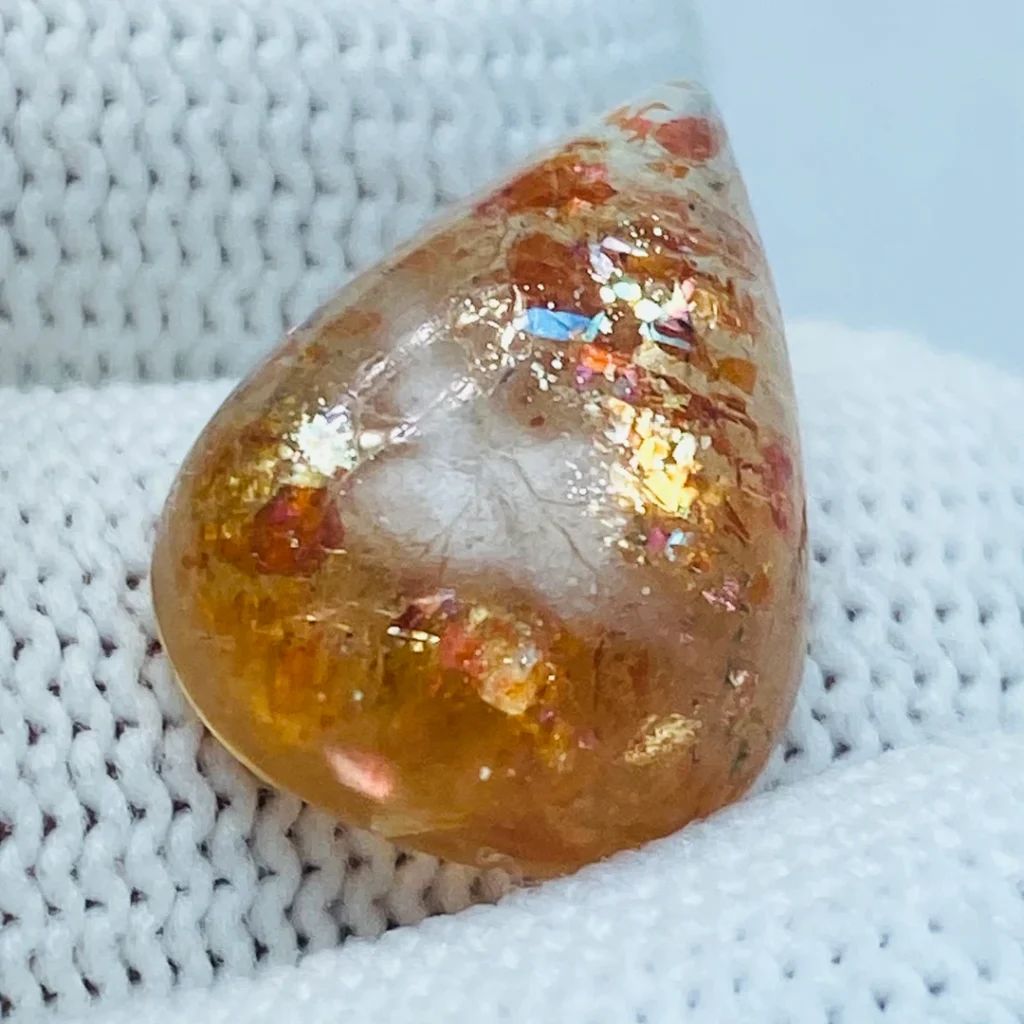
Sunstone is basically a feldspar mineral. Since feldspars are the most abundant mineral group in the Earth’s crust, this information alone may not seem very striking. But what makes sunstone different is the metallic inclusions trapped inside the crystal.
The composition of these inclusions is usually:
- native copper,
- hematite,
- iron oxides such as goethite.
Because the surfaces of these particles can reflect light at a specific angle, the unique aventurescence of sunstone appears. As the stone is moved, this reflected light creates an impression similar to “a spark moving inside.”
The absorption of these metallic particles during feldspar crystal growth is a completely natural process. As magma cools, the metal particles of suitable size attach to the growing crystal’s surface. In this way, the stone almost records its own formation process with metallic mirrors inside it.
How Does Aventurescence Work?
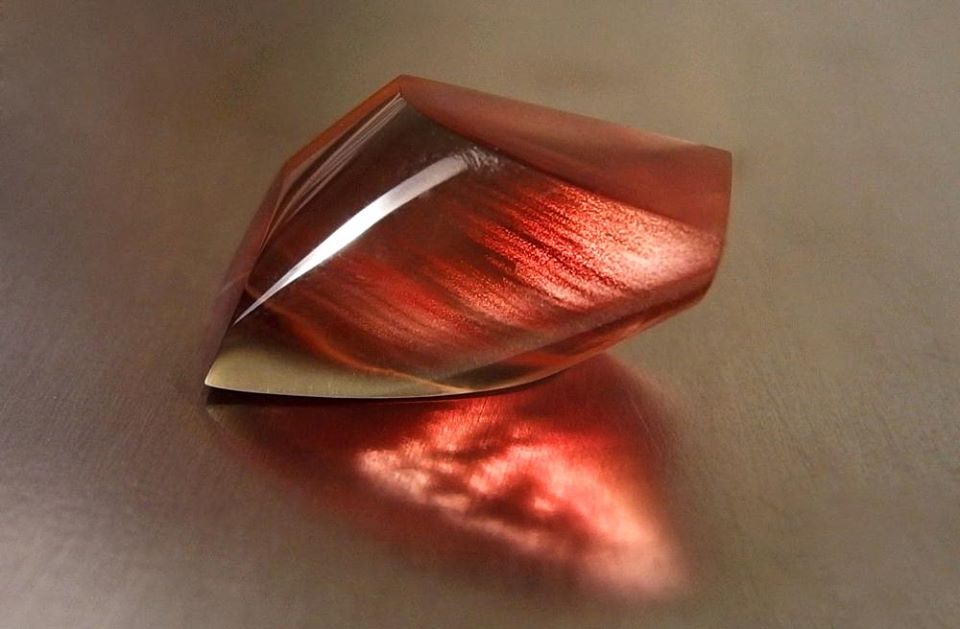
Aventurescence looks like a charming optical play from the outside; but behind it is a very clear physical mechanism.
1. Light enters the crystal.
Sunstone is a translucent mineral. For this reason, light does not bounce off the surface immediately; it moves inside the crystal. The ability of light to enter this way is the basic requirement of its shine.
2. Light reaches the metallic plates.
The surface of the copper or iron oxide plates inside the crystal is reflective. When light hits these surfaces, it reflects strongly. This is similar to the way sunlight sparkles on the surface of water.
3. Reflected light combines and creates the glow.
Each metallic surface has a different direction and angle. When light bouncing from these surfaces comes together, an effect appears that looks like moving sparks.
4. The arrangement of inclusions strengthens or weakens the effect.
If the metal plates are aligned parallel or in an orderly way, light reflects at a wider angle, creating a “flame-like” appearance. Irregular arrangements produce a softer glow.
One of the most important factors determining the brightness of sunstone is copper. Sunstones that contain copper — especially those from Oregon — are the brightest and most sought-after examples in the world.
How Does Sunstone Form? The Cooling Diary of Magma
The formation of sunstone is more than an ordinary cooling process. It requires the right chemical composition, the right temperature, the right cooling rate, and the right mineral relationships.
Magma Composition
For feldspars to crystallize, the proportions of sodium, potassium, and calcium inside the magma must be within certain limits. These proportions determine whether the feldspar crystal will form as orthoclase or oligoclase.
The Metal Source
The metallic plates that shine inside sunstone form when copper or iron oxides attach to the crystal surface while it is growing. Therefore, volcanic regions rich in copper are the sources of high-quality sunstone.
Cooling Rate
- Very fast cooling → irregular inclusions → weak glow
- Very slow cooling → metal plates grow too large → the effect weakens
- Medium cooling → ideal aventurescence
If the correct cooling rate does not occur, the distinctive glow of sunstone will not appear. Nature establishes a very delicate balance here.
Types of Sunstone and Their Visual Differences
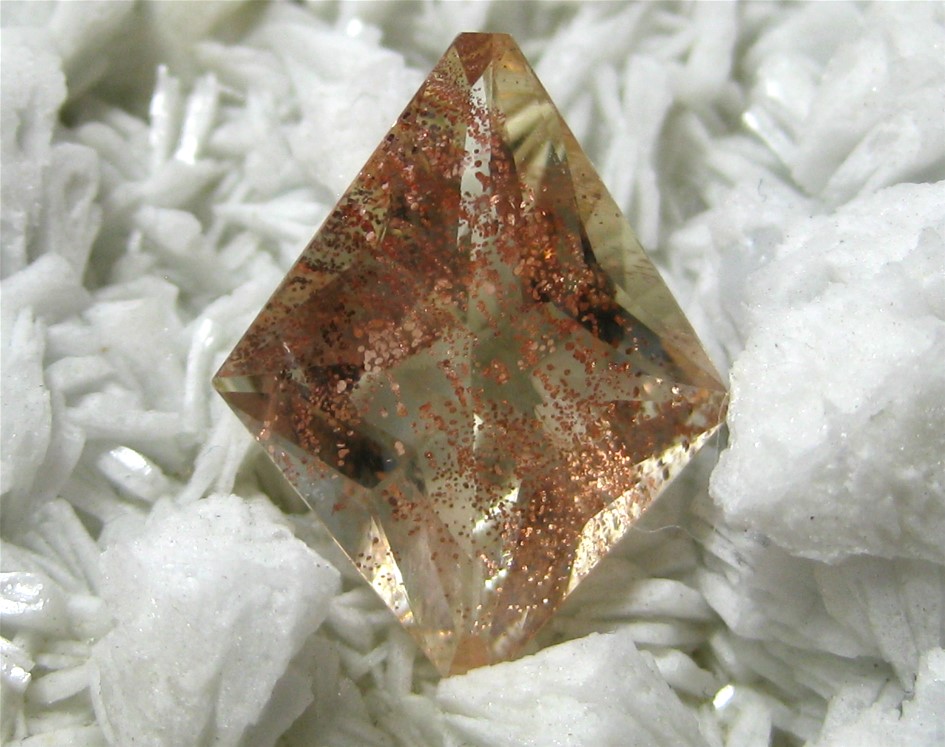
Sunstones can be found in various parts of the world, but each region leaves a different signature on the appearance of the stone.
Oregon Sunstone (USA)
The brightest and most valuable sunstones in the world come from Oregon. Because the volcanic systems in this region are very rich in native copper. Oregon sunstone shows a wide color range from red to green, from golden yellow to copper tones.
India Sunstone
This is the most widely used sunstone in the global jewelry market. Its glow is softer, and the inclusions are mostly hematite. It is economical but visually very satisfying.
Tanzania & Madagascar Sunstone
Sunstones from these regions are known for their warm yellow, honey, and golden tones. Their shimmer offers a silky and calm appearance.
Norway Sunstone
It has a darker body and a less intense glow but has a characteristic look. It is associated with areas historically linked to the Viking navigation stone.
Factors That Determine the Value of a Sunstone
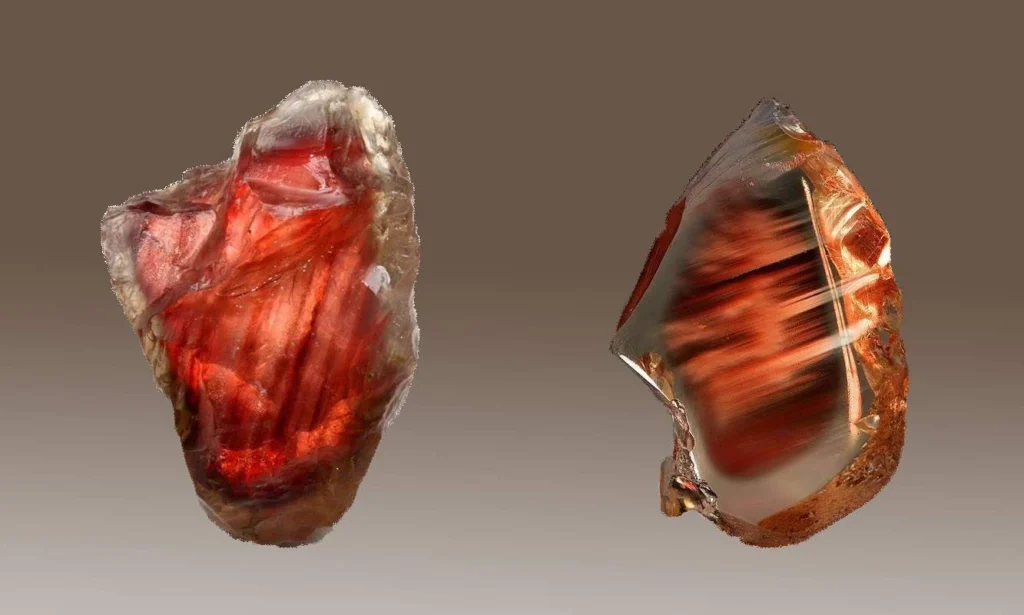
Several main criteria determine the value of a sunstone:
Strength of Aventurescence
The brightest, wide-angle sparks that move as the stone rotates carry the highest value.
Type of Inclusions
Copper-bearing sunstones are the most valuable. Because the glow is much stronger.
Color
Two-colored or multi-toned sunstones carry collector-level value.
Cut
Cabochon cut is the most preferred method because it allows light to enter the stone more easily. A wrongly oriented cut can almost completely eliminate the glow.
Transparency
Stones with a clean and clear body look brighter.
Geological Importance of Sunstone
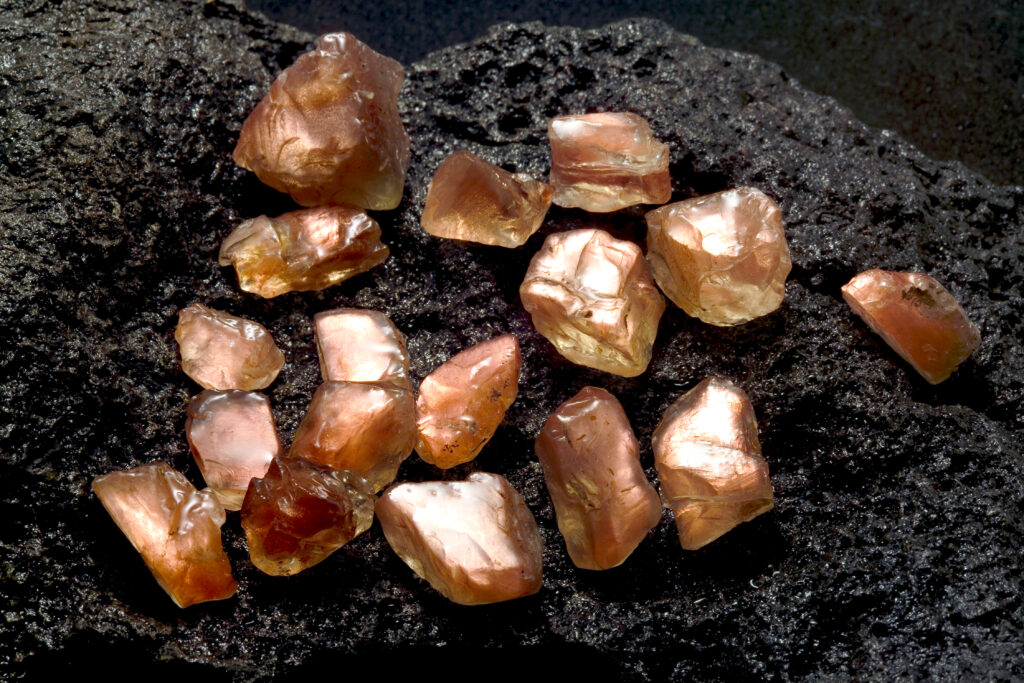
Sunstone is not only an aesthetic stone. It is an important key for understanding the internal structure of volcanic systems.
It Shows Metal Circulation
The way copper settles into the crystal shows how metal circulated inside the volcanic system.
It Reveals Crystal Orientation
The alignment of inclusions helps determine the growth direction of the crystal.
It Records the Cooling Speed
The size of the plates shows how fast or slow the magma cooled.
It Explains Volcanic Rock Evolution
Sunstone is used to understand how plagioclase crystallization developed in basaltic systems.
Conclusion
Sunstone presents a unique glow created by light reflecting from metallic surfaces. Its appearance is warm, energetic, and lively. But it is also a record that carries the patience and complexity of geological processes. What makes it special is this dual identity — both aesthetically and scientifically.