










Agate has fascinated humans for thousands of years. This captivating variety of chalcedony—one of the many forms of quartz—has long been admired for its remarkable range of colors, intricate banding, and natural artistry. From ancient Egypt to modern gem collections, agate remains one of the most beloved decorative stones on Earth.
Each piece of agate tells a silent story about geological time. Inside every layer of color lies evidence of volcanic activity, mineral-rich waters, and millions of years of slow crystallization. Let’s take a closer look at some of the most beautiful agate types found around the world and discover what makes each of them so special.
1. Laguna Agate (Mexico)

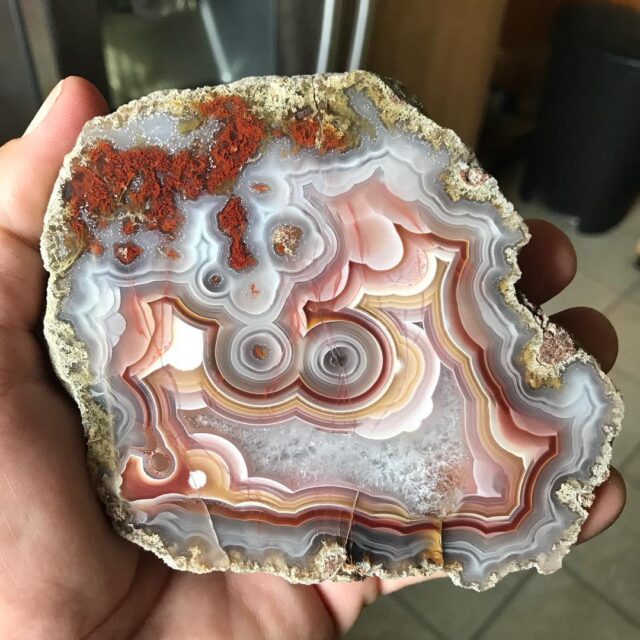
Among collectors, Laguna Agate from Chihuahua, Mexico, is often considered the finest agate in existence. Its rich, saturated reds, oranges, and pinks form sharply defined concentric bands that seem almost painted by hand. The precision of these layers is so delicate that high-quality specimens can appear photographic when sliced and polished.
Laguna Agate forms in cavities within volcanic rocks where silica-rich fluids gradually solidified. Over time, alternating layers of iron, manganese, and silica built up to create the striking patterns visible today. Because of its exceptional quality, Laguna Agate is used not only in jewelry but also in museum-grade decorative displays.
2. Blue Lace Agate (Namibia)
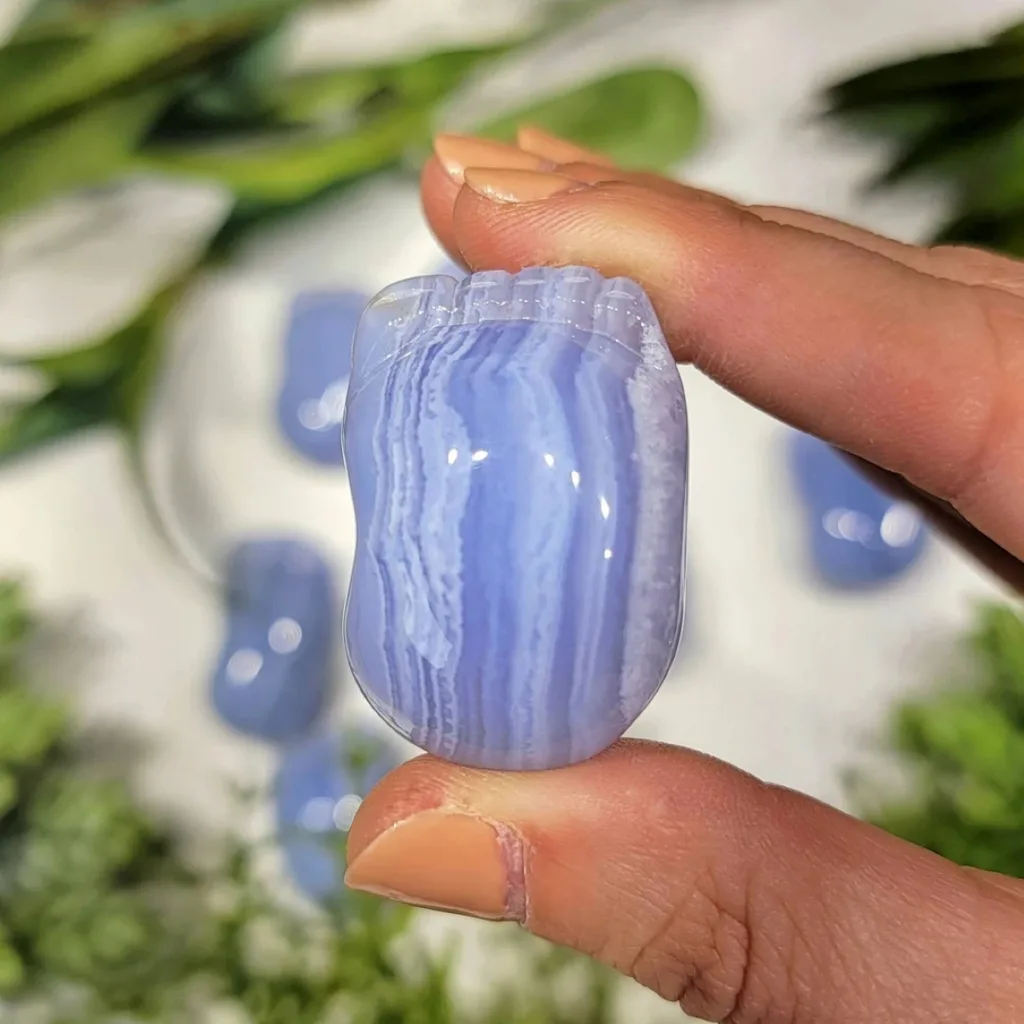
Few gemstones convey calmness as effectively as Blue Lace Agate. Originating primarily from Namibia, this stone displays gentle waves of pale blue and white that ripple through its translucent body. Its patterns resemble soft clouds moving across a summer sky.
In the gem trade, Blue Lace Agate is often associated with serenity and communication. Jewelers appreciate its soft tones and subtle elegance, while collectors prize pieces with clean, undisturbed banding. Its naturally soothing color makes it a favorite for cabochons, beads, and statement pendants.
3. Botswana Agate (Botswana)
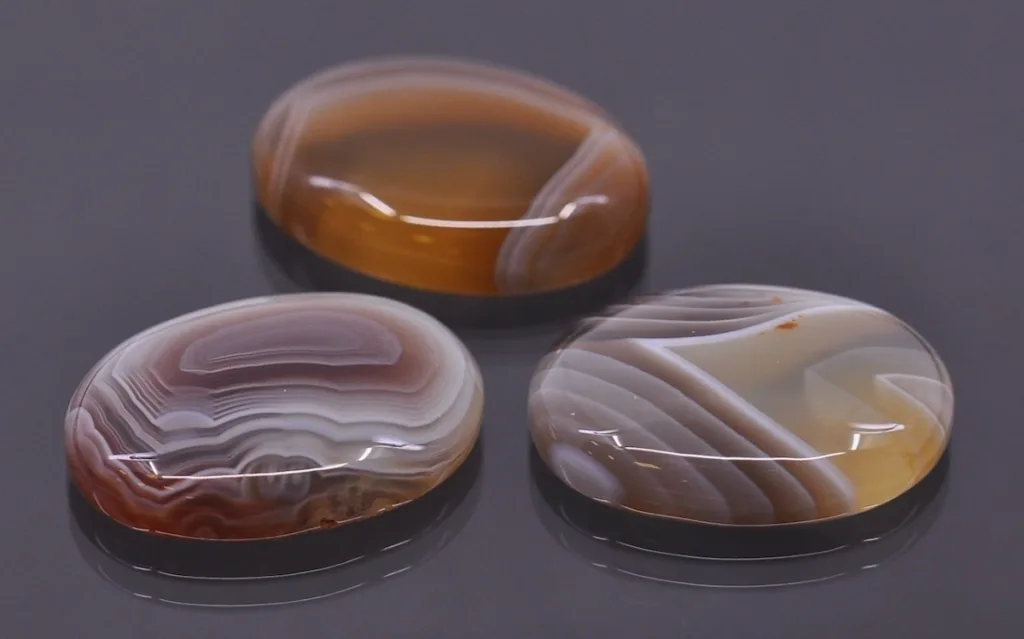
The Botswana Agate, sometimes called the “Sunset Stone,” is one of Africa’s geological treasures. It features layered tones of brown, gray, pink, and apricot arranged in rhythmic, circular bands. The hues seem to mirror the warm palette of an African sunset.
This agate was formed millions of years ago within volcanic lava flows. The slow cooling process allowed distinct mineral layers to settle and solidify, creating its signature patterns. Beyond its beauty, Botswana Agate is appreciated for its durability and is often used in fine carvings and high-polish jewelry.
4. Moss Agate (India, USA, Brazil)
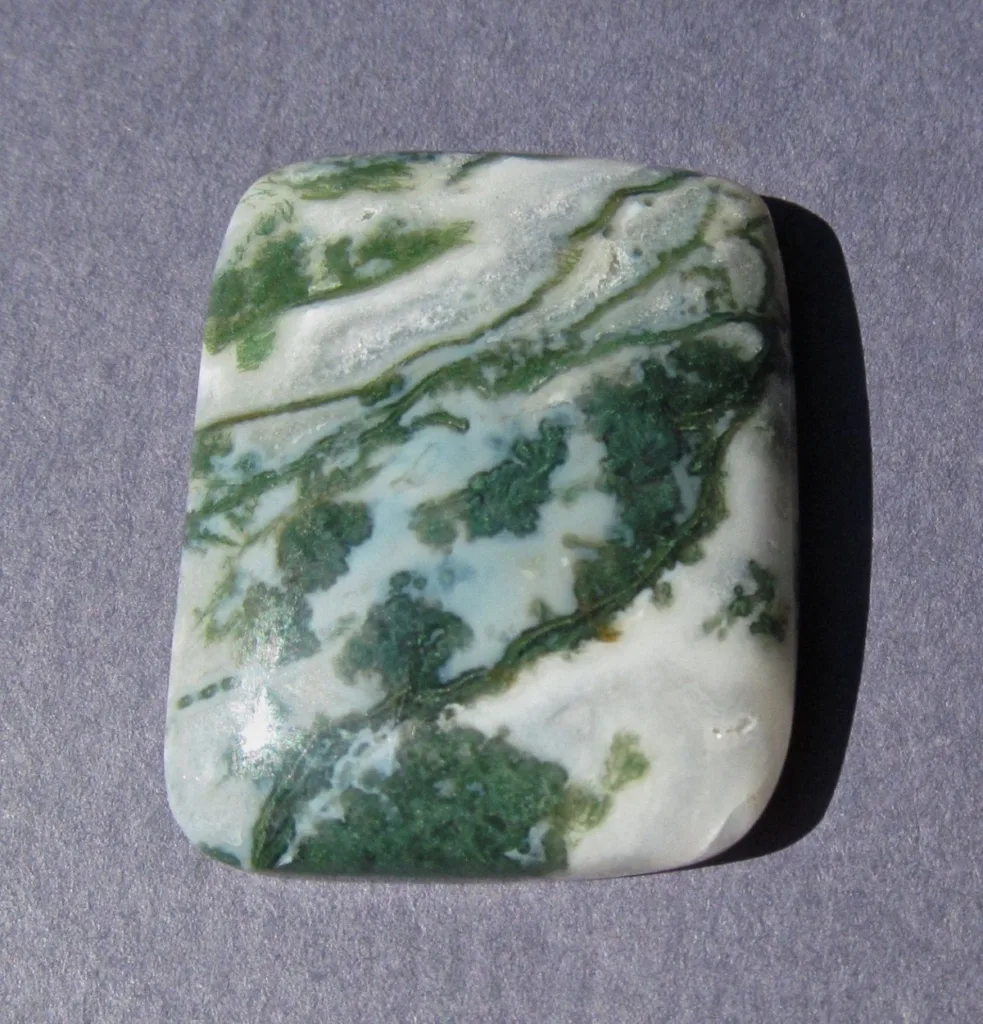
Unlike most agates, Moss Agate does not display traditional banding. Instead, it contains beautiful green, brown, or black inclusions that look like delicate moss or fern leaves suspended inside a translucent background. These dendritic inclusions are usually formed by minerals such as manganese or iron oxides.
Moss Agate can be found in India, Brazil, and several U.S. states including Oregon and Montana. Its organic appearance makes it a favorite among nature enthusiasts. In metaphysical traditions, it is said to symbolize growth, renewal, and connection with the Earth. Each specimen is one-of-a-kind, resembling miniature landscapes captured in stone.
5. Fire Agate (Mexico, USA)
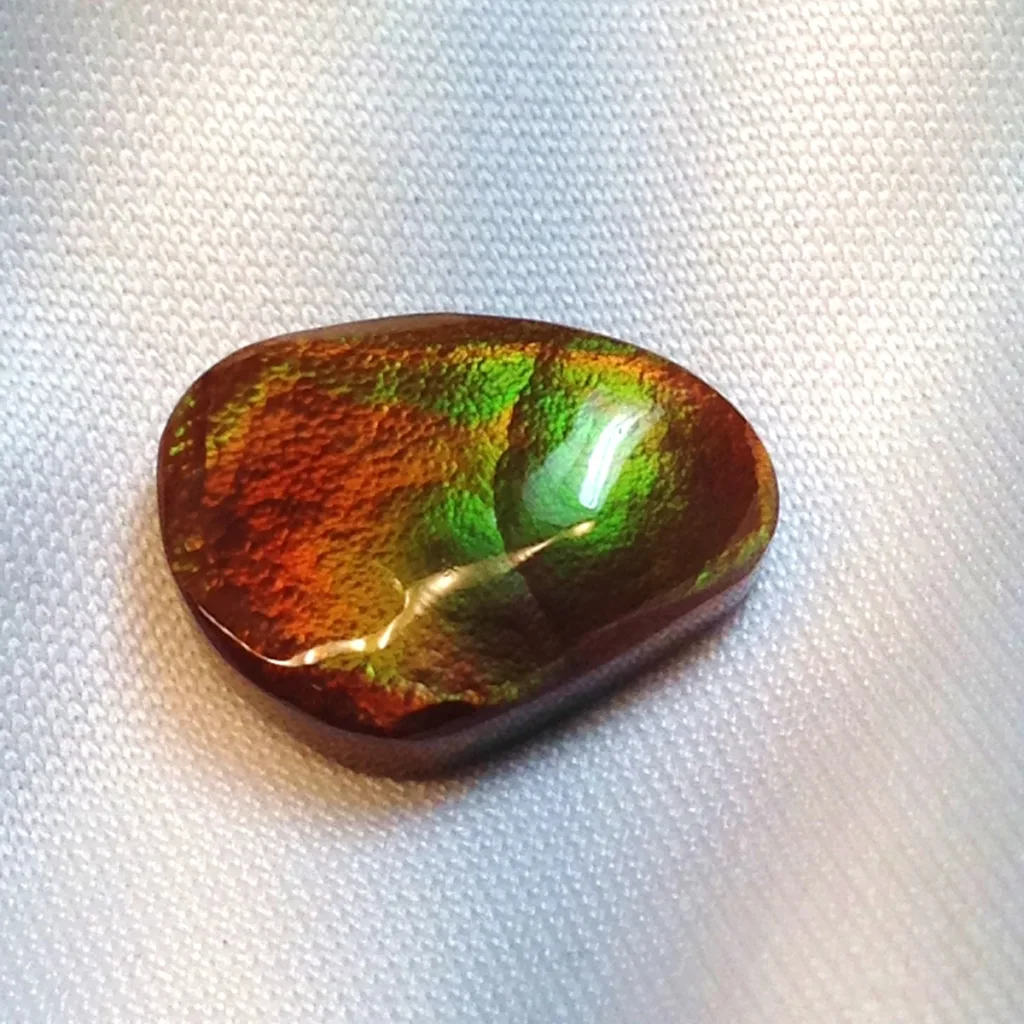
One of the most visually dramatic gemstones in the world, Fire Agate captures light in a way that few minerals can. Found in northern Mexico and the southwestern United States, this variety exhibits an iridescent display of fiery reds, golds, and greens that shimmer when the stone is moved.
The phenomenon is caused by interference between thin layers of silica and iron oxide. When properly cut and polished, these layers produce a “living flame” effect, similar to an opal but with greater hardness and durability. Fire Agate is rare, highly sought after, and a favorite among lapidaries who specialize in freeform cabochons.
6. Crazy Lace Agate (Mexico)
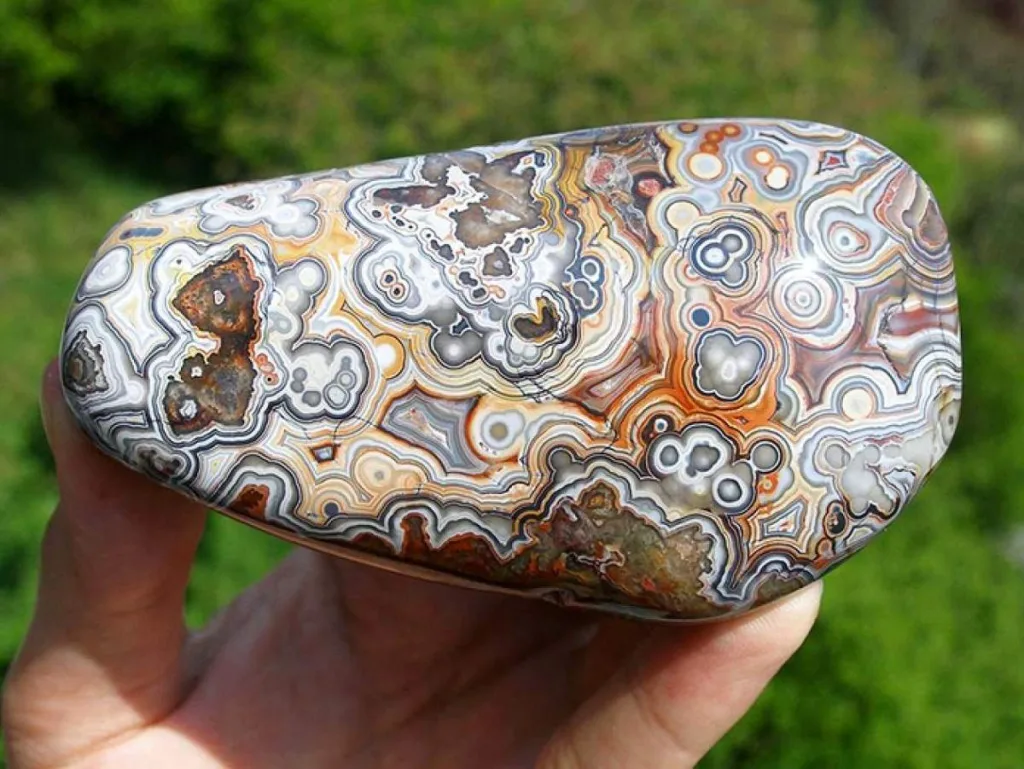
Nicknamed the “Laughter Stone,” Crazy Lace Agate is another Mexican variety admired for its swirling lace-like designs. Its patterns are a whirlwind of reds, yellows, creams, and browns that twist and loop in complex, unpredictable formations.
Unlike the calm symmetry of Blue Lace Agate, this stone’s beauty lies in its energy and movement. Crazy Lace Agate is often associated with joy and vitality, and its vivid colors make it especially popular for bohemian jewelry and artistic carvings.
7. Condor Agate (Argentina)
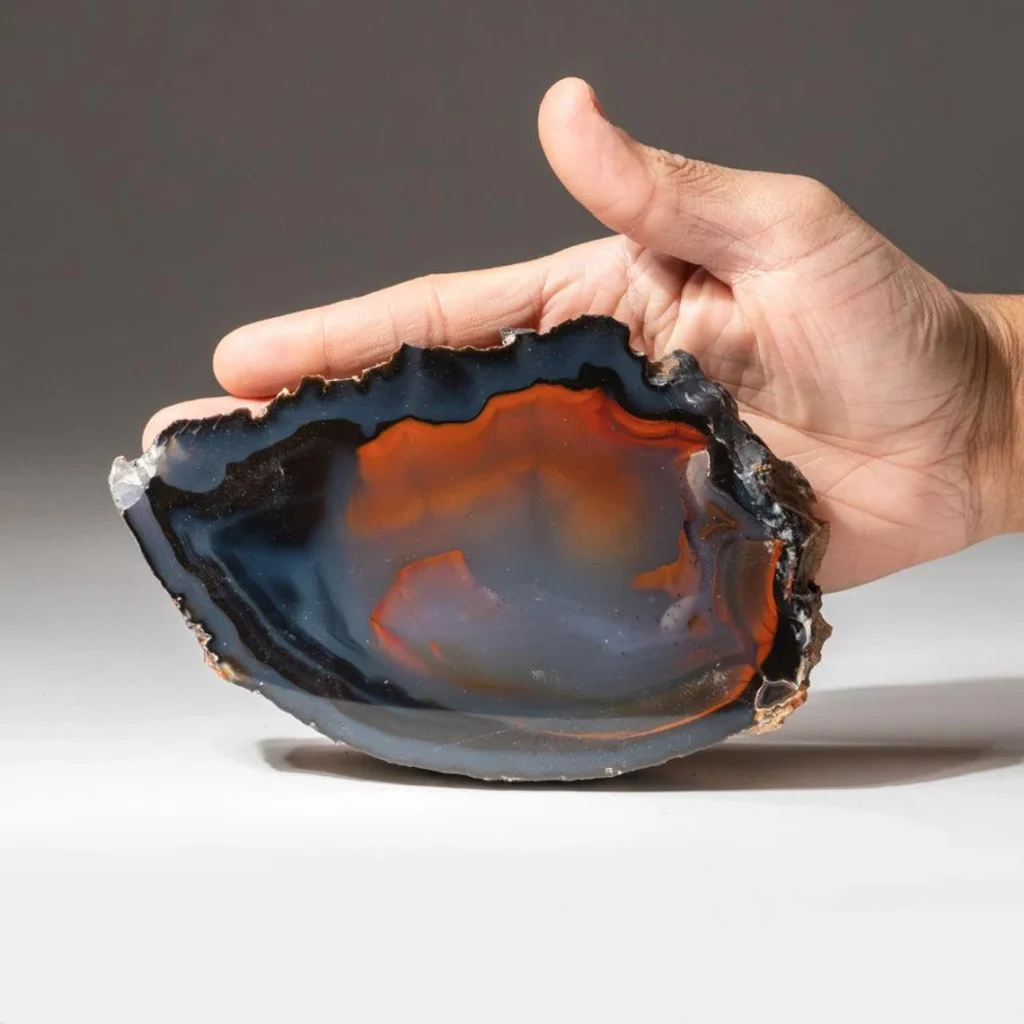
Discovered in Patagonia in the 1990s, Condor Agate quickly earned recognition among collectors for its vivid color contrasts. It displays deep reds, purples, oranges, and greens in concentric patterns, often surrounded by translucent layers that glow under light.
When backlit, Condor Agate reveals astonishing depth and complexity—almost as if the stone were illuminated from within. Because of this optical effect, it’s frequently photographed and displayed in lighted showcases. No two pieces are alike, which only adds to its desirability.
8. Turritella Agate (Wyoming, USA)

A remarkable fusion of geology and paleontology, Turritella Agate from Wyoming contains fossilized snail shells embedded within a brown chalcedony matrix. Each polished slice reveals countless spiraling shells that have been preserved for tens of millions of years.
Unlike other agates formed purely by mineral deposition, Turritella Agate is a fossiliferous variety, capturing the remains of ancient freshwater snails. It’s a favorite among both gem collectors and fossil enthusiasts for its unique glimpse into prehistoric life.
9. Banded Agate (Global)
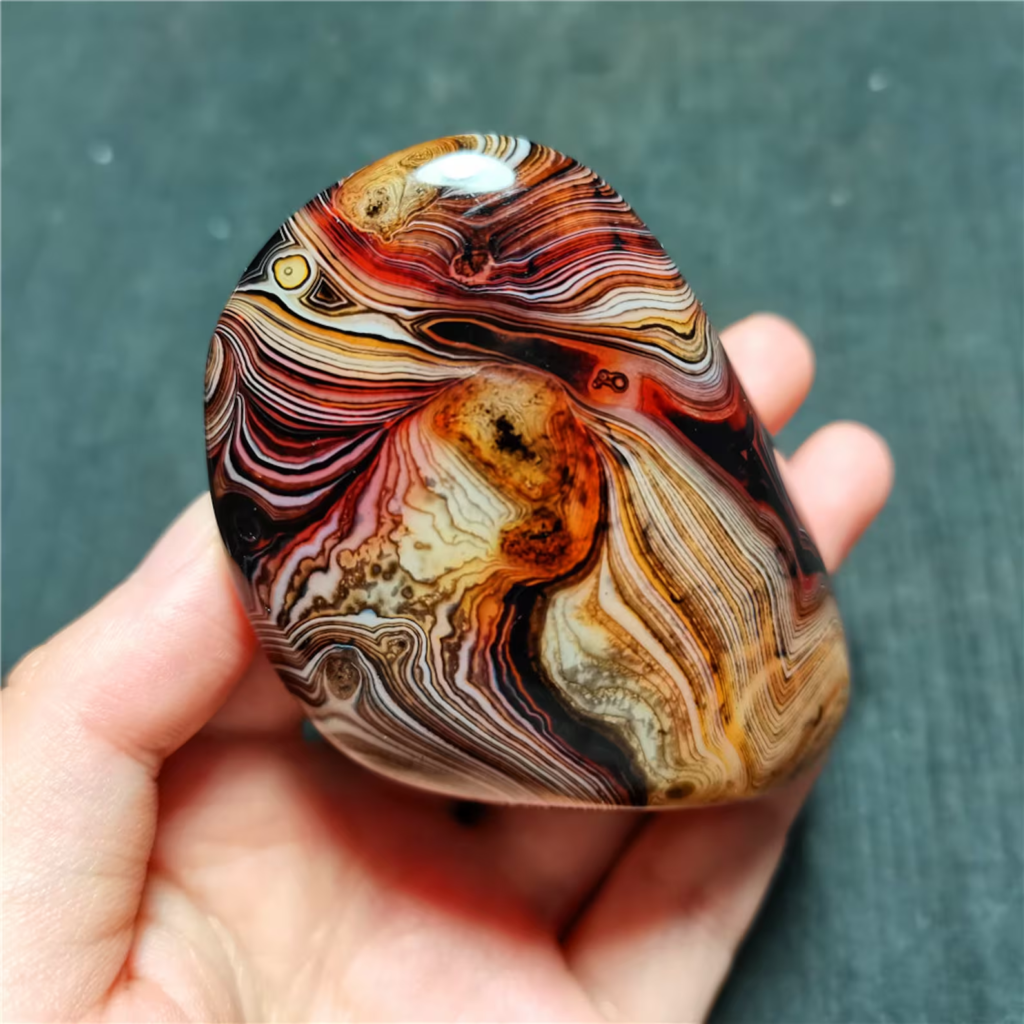
Banded Agate is perhaps the most classic and recognizable form of agate. It occurs in countless locations worldwide—from Brazil to India to Madagascar—and displays repeating layers of contrasting light and dark colors.
For thousands of years, humans have carved Banded Agate into amulets, seals, and cameos. Ancient cultures believed the stone offered protection and courage. Today, its timeless appeal continues, not only for its symmetry but also for the endless variety that nature produces.
10. Dendritic Agate (Madagascar, Brazil, Russia)
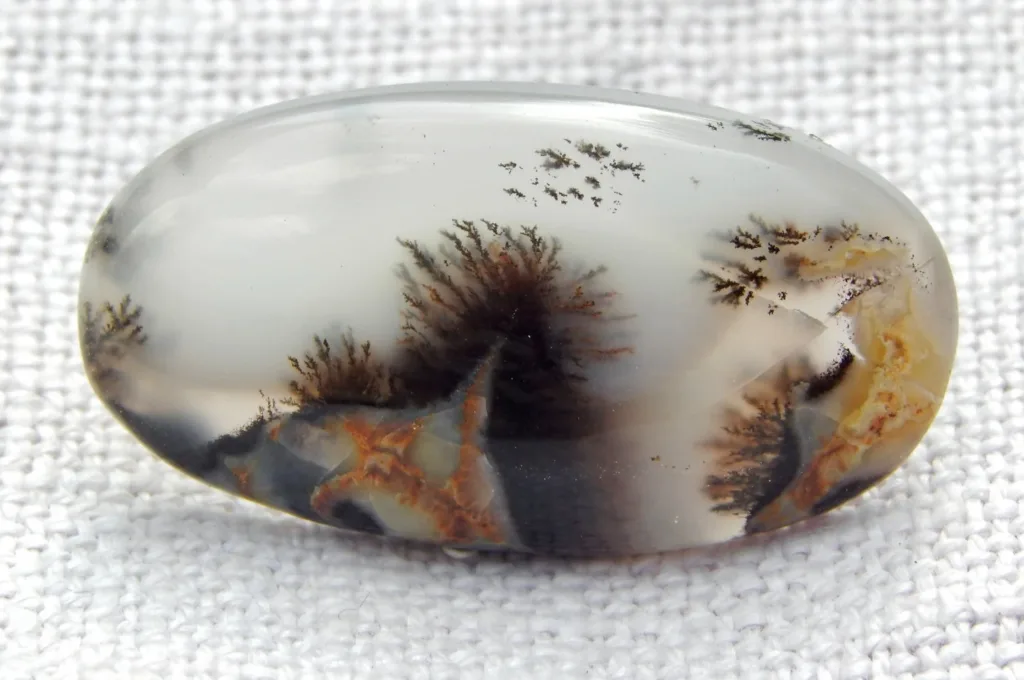
Dendritic Agate, sometimes referred to as “Tree Agate,” contains delicate, fern-like inclusions that spread across its translucent surface. These branch-like patterns result from manganese and iron oxides that infiltrated the stone during its formation.
Every Dendritic Agate is like a natural painting—some resemble forests, others frozen rivers or mountain silhouettes. These stones are prized by jewelers and collectors alike for their elegance and natural artistry.
Agate Around the World
Agates are found on every continent, often forming in volcanic regions where silica-rich water fills cavities in rock. Over millions of years, the silica crystallizes into chalcedony, creating the signature bands and colors we recognize today.
Some of the most notable sources include:
- Brazil – the world’s largest producer of agate geodes
- Mexico – home to Laguna, Crazy Lace, and Fire Agates
- Namibia – source of the famous Blue Lace Agate
- India – known for Moss and Dendritic Agates
- United States – rich deposits in Oregon, Arizona, and Wyoming
Each region produces agates with distinct colors and textures, influenced by local geology and mineral composition.
Why Agate Continues to Captivate
What makes agate so universally admired is its diversity. No two pieces are the same; each one represents a small miracle of chemistry and time. Collectors often describe agate as “Earth’s abstract art,” and with good reason. Its complex layers and unpredictable designs feel deliberate—yet entirely natural.
Beyond its beauty, agate is also a symbol of endurance. It forms slowly, often in harsh conditions, but the result is something both strong and delicate. Perhaps that’s why it has inspired artisans and scientists for centuries alike.
Final Thoughts
From the fiery brilliance of Laguna Agate to the calm serenity of Blue Lace Agate, each type offers a glimpse into the geological artistry hidden beneath the Earth’s surface. Whether used in fine jewelry, studied under a microscope, or displayed in a collector’s cabinet, agate continues to embody nature’s balance between order and chaos.
Every band tells a story, every hue records a moment in time — together they remind us that even stone can hold beauty shaped by patience.