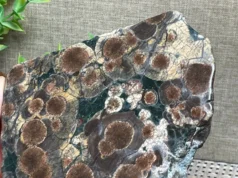








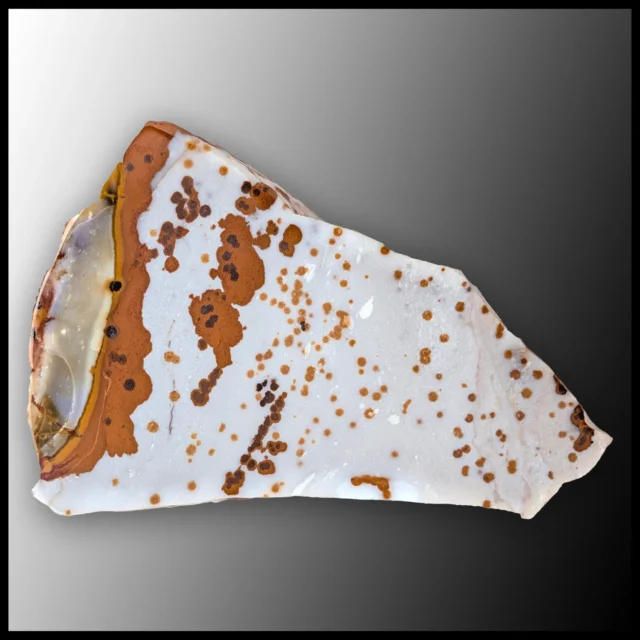
Question that comes to person’s mind when they see it for first time is generally same: “Is this stone painted?”
Most people looking at Polka Dot Agate, when they see individual circles, round spots and repeating patterns on it, think this cannot be natural. Patterns are too regular, colors are too clear, image is too “conscious” like. As if someone sat down, put dots with brush on stone.
But strange part of matter is this: None of patterns on this stone were made by human hand. There’s no paint, no cutting, no addition. Everything you see is result of natural processes lasting millions of years.
And what makes Polka Dot Agate interesting is exactly this: Nature sometimes produces works that resemble human design too much.
What Is Polka Dot Agate?
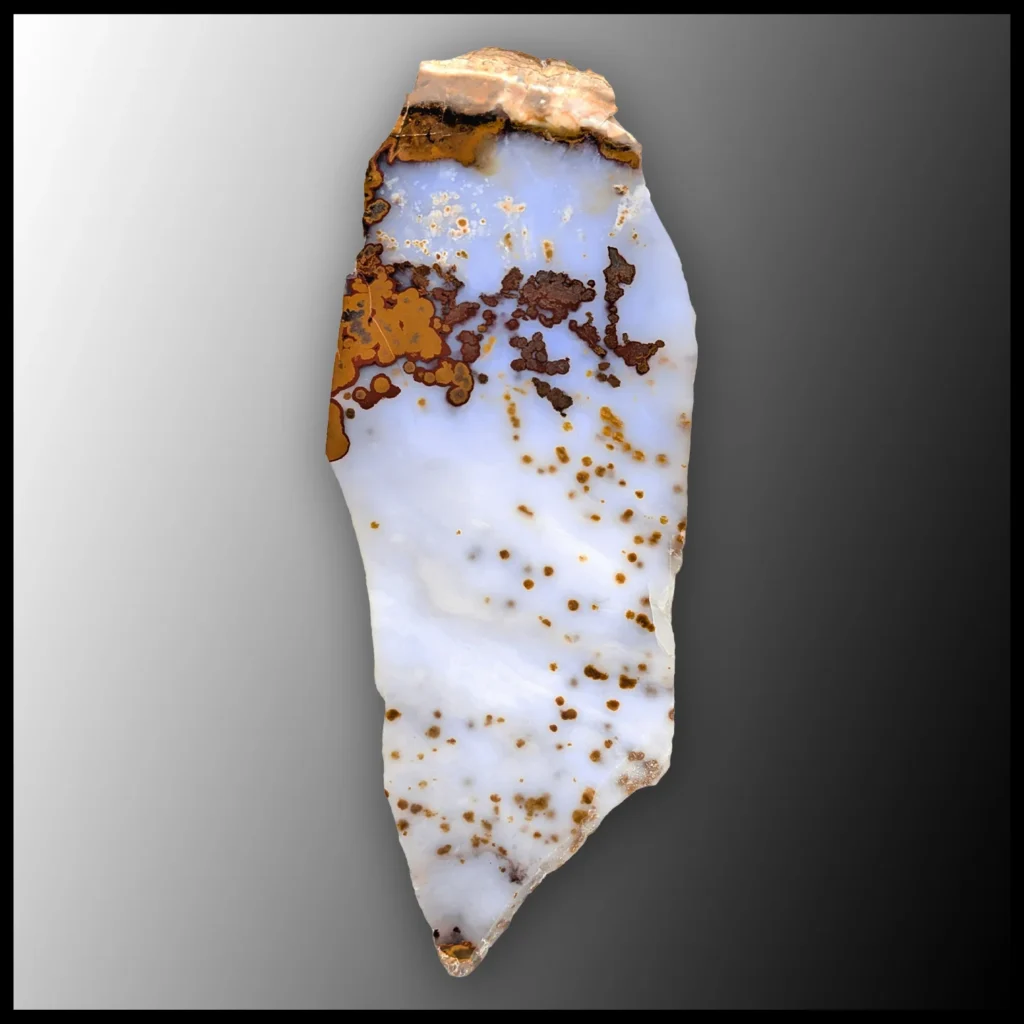
Polka Dot Agate takes its name from distinct round patterns on it. “Polka dot” expression evokes dot patterns we see in fabrics or designs. This comparison is not coincidence; because stone really has similar appearance.
This stone is member of agate family. So basically it’s silica origin and has microcrystalline quartz structure. However what separates it from ordinary agate is round, concentric or semi-concentric patterns developing in its internal structure.
These patterns sometimes are separated with clear boundaries, sometimes mix into each other with soft transitions. None are exactly same but at first glance gives feeling of “repeating”. Human eye immediately notices this order and starts looking for natural explanation.
How Do These Round Patterns Form?
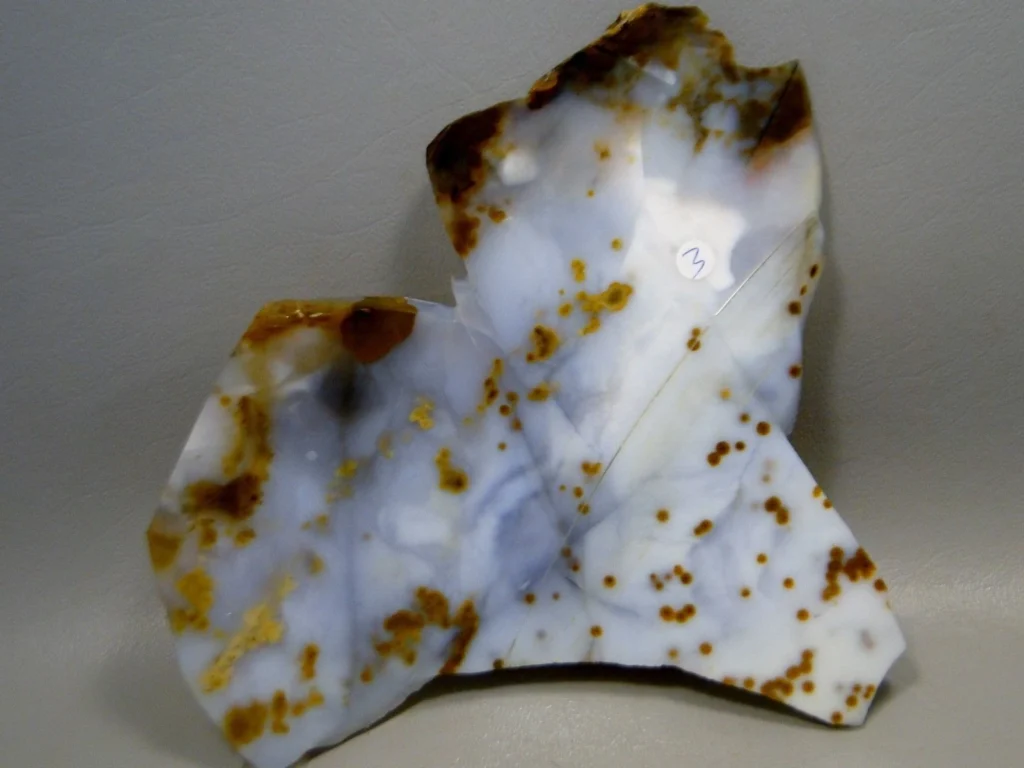
This is most wondered part of Polka Dot Agate. Because patterns are not random but not as regular as mathematical either.
During formation of this stone, liquids rich in silica seep into cavities and cracks inside rock. However this seeping doesn’t happen same way at every point. Some small areas have different chemical or physical conditions compared to their surroundings. These micro differences create round structures over time.
These structures sometimes grow around small nuclei. Silica accumulates layer by layer around these nuclei. Each layer reflects conditions of different period. Temperature, pressure, content of solution… All affect tone and boundaries of these patterns.
What emerges in end looks like dots placed consciously. But actually these dots are traces of nature’s patient repetitions.
Why Does Human Eye Think This Stone Is “Artificial”?
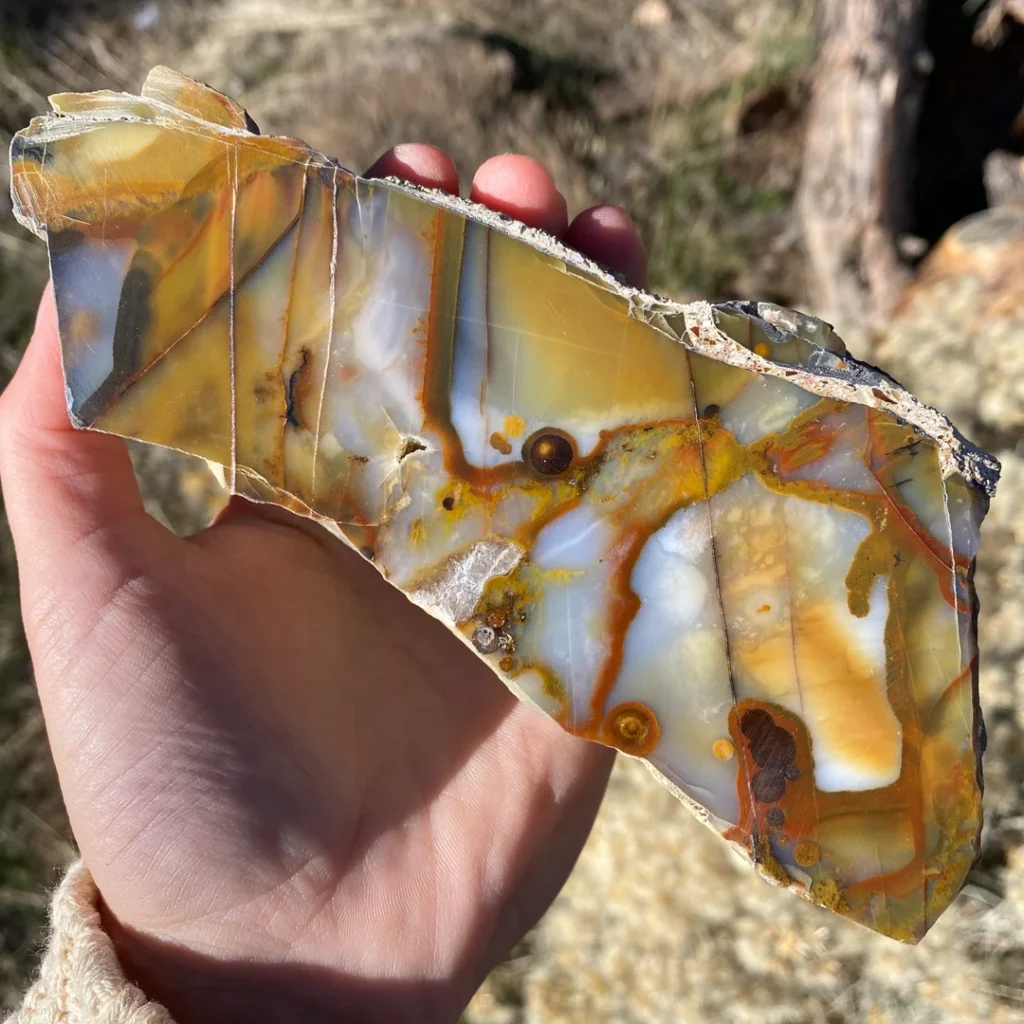
Reason for this is more related to psychology than geology.
Human brain:
Circles
Repeating shapes
Similar-sized patterns
generally associates with conscious design. Because in daily life these kind of orders are mostly man-made. Fabrics, wall patterns, graphic designs… All contain controlled repetitions.
Polka Dot Agate breaks this expectation. Because it gives feeling of control but there’s no control. At no point of stone is there “perfect symmetry”. When you get closer, you notice how irregular patterns actually are. These small irregularities are biggest proof that it’s natural.
Is Every Polka Dot Agate Same?
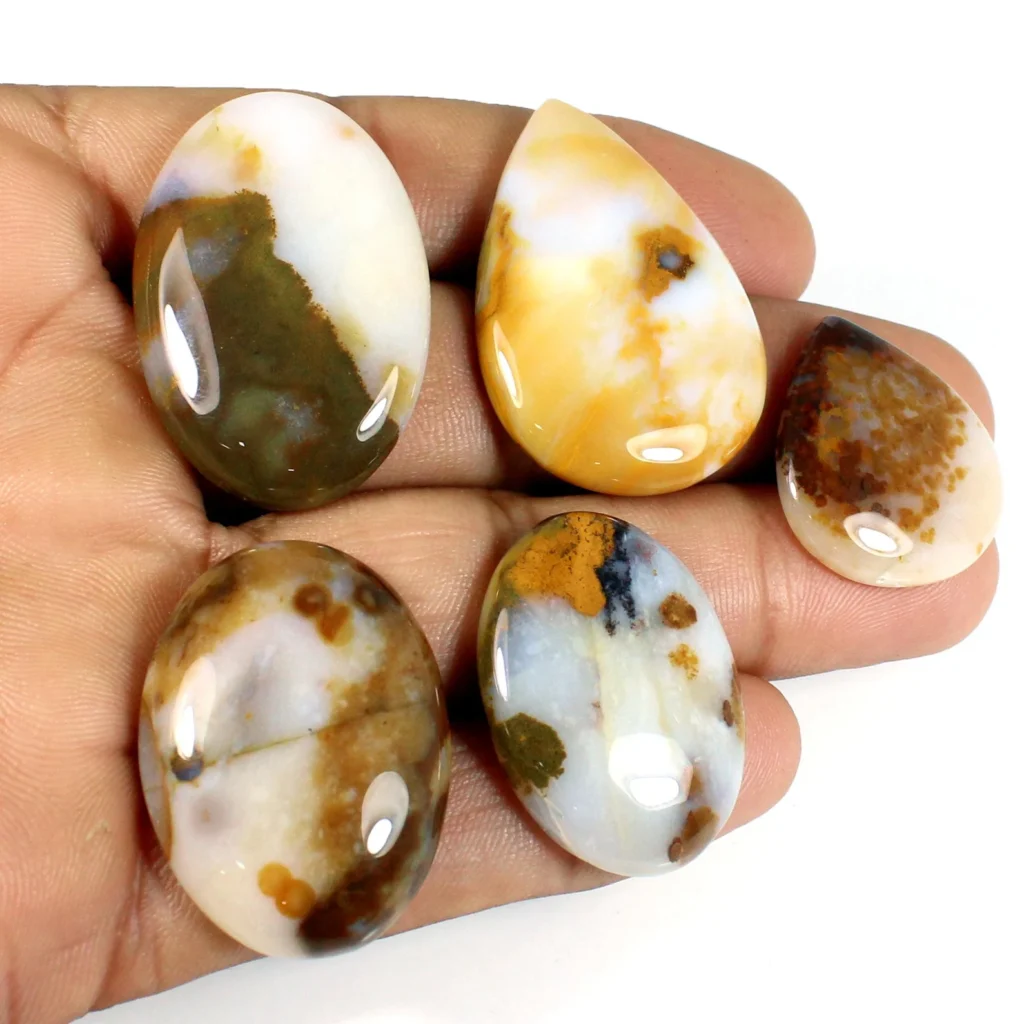
No. In fact this is one of most beautiful aspects of this stone.
In some examples dots are:
Large and sparse
Appear dark on light-colored background
In some others:
Small but numerous
Approach each other, even merge
Color palette is also variable. Cream, beige, brown, gray, yellow tones are frequently seen. Sometimes contrast is high, sometimes there are softer transitions. This diversity shows that stone doesn’t have single “correct appearance”.
Where Is Polka Dot Agate Found?
This stone is identified with certain regions and generally emerges in areas with volcanic or semi-volcanic past. In such environments, fluids rich in silica find more opportunity to circulate inside rock.
This also explains why Polka Dot Agate is not found everywhere. Necessary conditions are rare and coming together takes time. That’s why examples in market are limited and generally evaluated for collection purposes.
Jewelry or Collection?
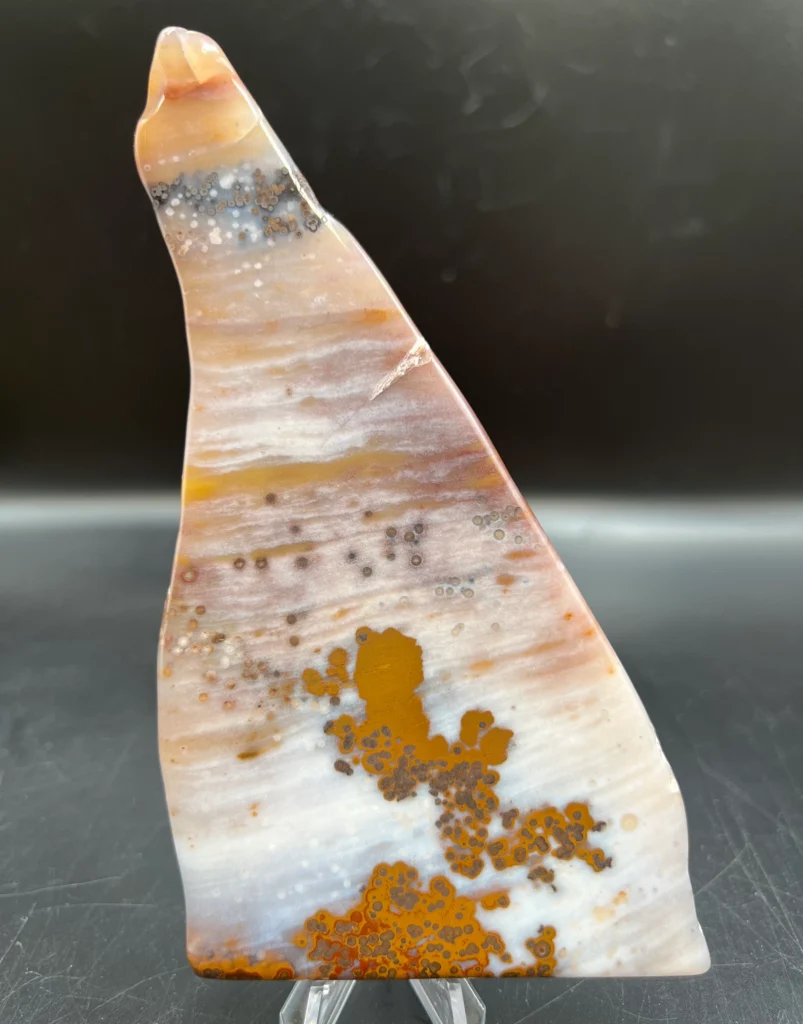
Polka Dot Agate finds place both in jewelry and in collections. However most people when they see this stone for first time perceive it as “visual object” rather than jewelry. Patterns are so eye-catching that they can attract more attention than even person wearing it.
That’s why most examples are:
Cabochon cut
Surface as wide as possible
Form that doesn’t disturb pattern
prepared. But some stones are so characteristic that they’re displayed without even being cut.
Why Does Polka Dot Agate Arouse So Much Curiosity?
Because this stone is one of points where nature walks on border. Neither completely chaotic nor completely ordered. Neither completely random nor completely controlled.
Human eye loves this in-betweenness. Brain cannot help asking question “how did this happen?”
And Polka Dot Agate does exactly this: Makes you ask questions.
Why Do People Wear Polka Dot Agate?
Most people wearing Polka Dot Agate actually don’t even know stone’s name when wearing it. Saying “agate” is often in background. Real matter is this: This stone draws gazes on itself.
When people wear this stone they generally get these reactions: “Is this real?” “Looks like it’s painted.” “How are patterns so regular?”
So Polka Dot Agate is more of conversation starter than jewelry. Person wearing it often displays something without realizing: Strange play of nature.
Reason for wearing this stone is perceptual effect rather than value. Doesn’t look “expensive” like diamond, doesn’t seem “classic” like ruby. But strangely doesn’t go unnoticed from eye either. Brain tries to solve these patterns and without realizing looks at stone repeatedly.
Why Does This Stone Look So “Satisfying”?
Reason for this is related to human brain’s relationship with patterns.
Human eye:
Finds perfect symmetry boring
Finds complete chaos also disturbing
But Polka Dot Agate is right in middle. Dots exist but not exactly same. There’s feeling of order but not perfect.
These kind of patterns are what brain perceives as “incomplete order”. Meaning while looking mind fills small gaps itself. That’s why this stone doesn’t become boring even when looked at for long time.
Some people find this stone “relaxing”, some find it “energetic”. Actually stone doesn’t change; what changes is perception of person looking.
Meaning of Polka Dot Agate for Collectors
In collection world Polka Dot Agate has separate place. Because this stone looks beautiful in photograph but is much more impressive in reality.
Under light:
Boundaries of dots change
Some patterns disappear in background
Some come forward
This gives feeling of different stone from every angle. For collectors these type of stones are valuable because there’s no single “correct face”. As you turn stone you catch new detail.
Also Polka Dot Agate is not stone that ends with “one good example”. Collectors generally don’t settle with one. Because each new piece offers different pattern language.
Why Is This Stone So Claimed Spiritually?
Although scientific explanations are clear, Polka Dot Agate often is among stones that are loaded with spiritual meanings. Reason for this, again, is patterns.
Dots are interpreted as:
Eye in some cultures
Focus in some
Balance in some
People can say they “feel more balanced” when wearing this stone. But here rather than stone’s physical effect, visual connection established with stone comes into play. When human brain sees pattern it likes, it relaxes. This relaxation over time is interpreted as “effect”.
Is Polka Dot Agate Really Rare?
This stone is not found everywhere but is not “unreachable” either. Its rarity depends on conditions rather than quantity. It’s not easy for necessary geological processes to occur simultaneously. That’s why examples coming to market are limited and often quickly distributed to collections.
However important thing is this: Value of Polka Dot Agate is in its character rather than its number. Good example gets much more attention than ordinary stone. Because in this stone quality is measured not by clarity but by power of pattern.
Conclusion: Where Is Real Power of This Stone?
Power of Polka Dot Agate is not in its rarity. Not in its hardness. Not in its shine either.
Real power of this stone is in making person stop.
You look for moment. Then you look again. And without realizing you ask this question: “Is this really natural?”
This is exactly what Polka Dot Agate does.