



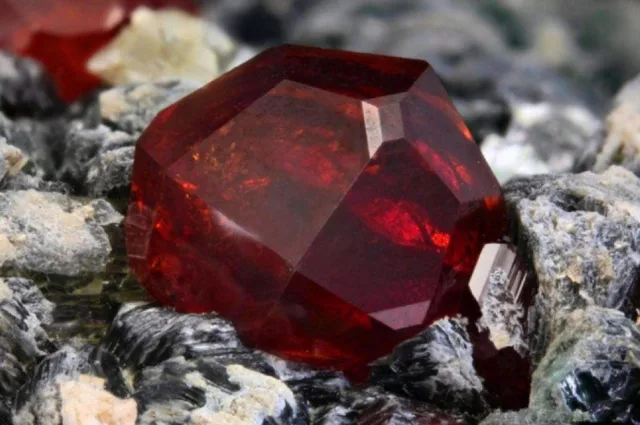
A Hidden World Beneath the Surface
Deep within the Earth’s crust, where intense pressure and heat shape the minerals of our planet, nature hides some of its most extraordinary treasures. These rare gemstones are not only breathtakingly beautiful but also tell the story of Earth’s dynamic geological evolution — from volcanic eruptions to continental shifts and ancient metamorphic transformations.
While diamonds and sapphires are well-known, there exists another category of gems so scarce that many people will never encounter them in their lifetime. Let’s explore the rarest gemstones ever discovered and the remarkable geological processes that gave birth to them.
1. Painite – Once the Rarest Mineral on Earth
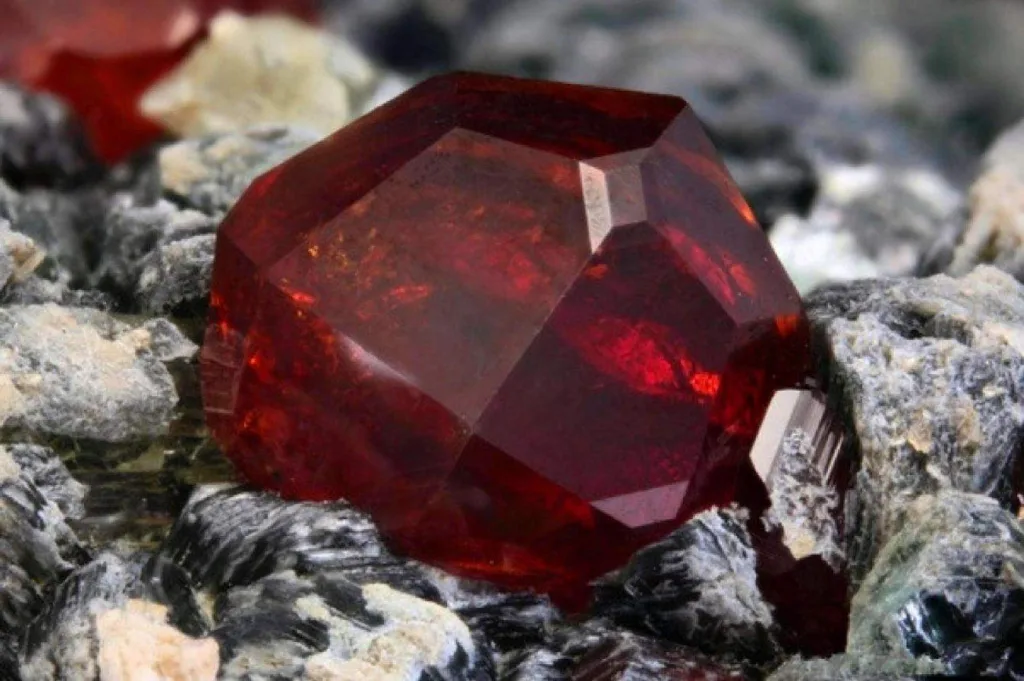
When Painite was first discovered in Myanmar in the 1950s, only three crystals were known to exist. For decades, it held the Guinness World Record as the rarest gemstone on Earth.
Formed in boron-rich metamorphic rocks, Painite contains elements like zirconium, calcium, and boron — a combination that occurs under extremely unusual conditions. Modern discoveries have found a few additional deposits, but gem-quality stones remain extraordinarily rare.
Geological origin: High-temperature metamorphism in aluminum-boron-rich environments.
Color: Brownish-red to deep orange-red.
Rarity level: Fewer than a few hundred gem-quality stones exist.
2. Musgravite – A Gem Born from Geological Extremes
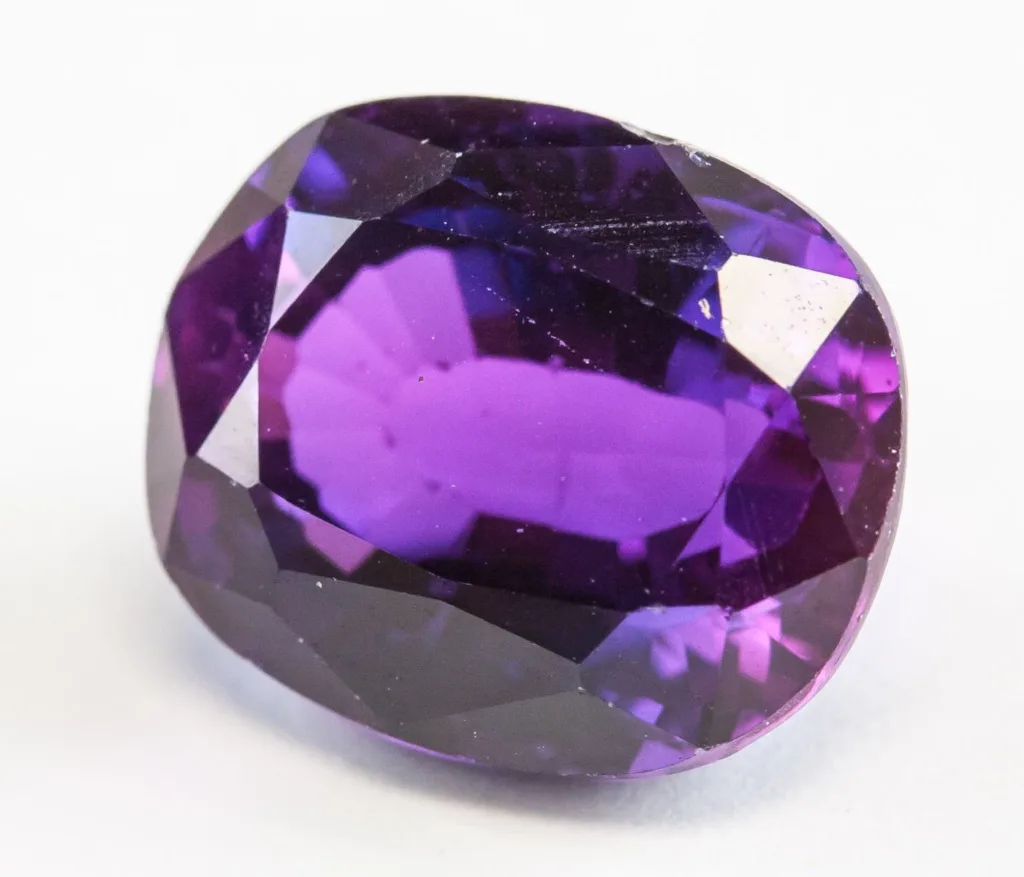
Discovered in 1967 in South Australia’s Musgrave Ranges, Musgravite is part of the taaffeite family, yet far rarer. Formed under intense heat and pressure during high-grade metamorphic events, this gemstone represents one of Earth’s most extreme geological creations.
Geological origin: High-pressure metamorphic rocks with beryllium and magnesium.
Color: From olive green to grayish purple.
Rarity level: Only a few dozen carats exist in private collections.
3. Grandidierite – The Ocean Hidden in Stone
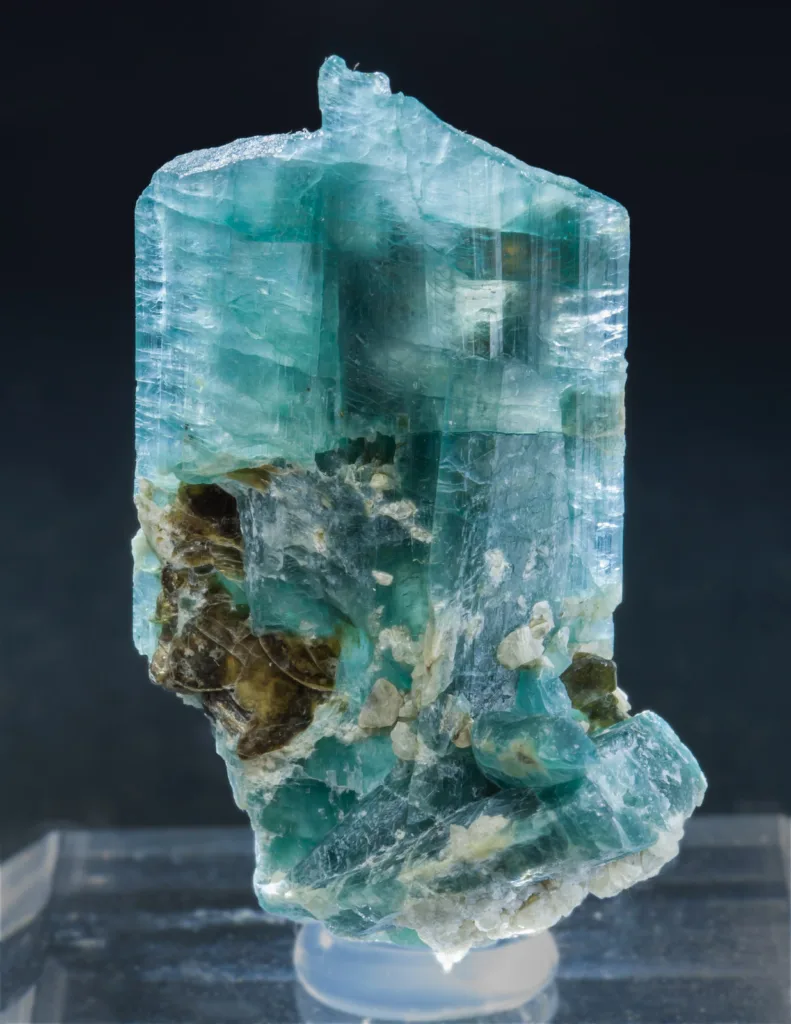
Named after the French explorer Alfred Grandidier, this mesmerizing blue-green gemstone was first found in Madagascar. Its color comes from the presence of iron, and its pleochroism (changing color from blue to green depending on the angle) makes it a collector’s dream.
Grandidierite forms in pegmatites and metamorphic rocks that underwent intense alteration due to tectonic heat.
Geological origin: Metamorphic rocks enriched in boron and aluminum.
Color: Sea-blue to greenish-blue.
Rarity level: Mostly under 5 carats; fine transparent stones are extremely limited.
4. Serendibite – The Sri Lankan Mystery
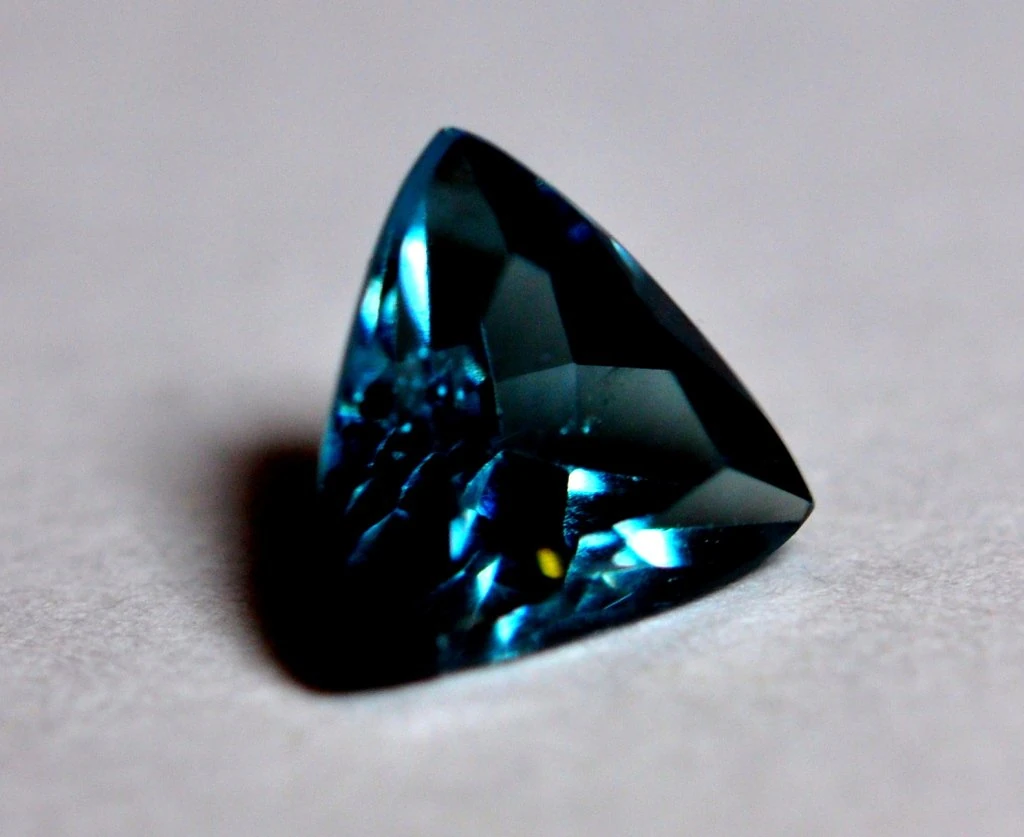
First identified in Sri Lanka and later in Myanmar, Serendibite is one of the rarest borosilicate minerals on Earth. Its mesmerizing deep blue to violet hue results from trace amounts of titanium and iron.
This gemstone forms in contact metamorphic zones, where igneous intrusions meet limestone layers — a geological intersection that produces incredibly rare mineral assemblages.
Geological origin: Contact metamorphism between granite and limestone.
Color: Blue-green to deep indigo.
Rarity level: Only a few known cut stones worldwide.
5. Red Beryl (Bixbite) – The Scarlet Sister of Emerald
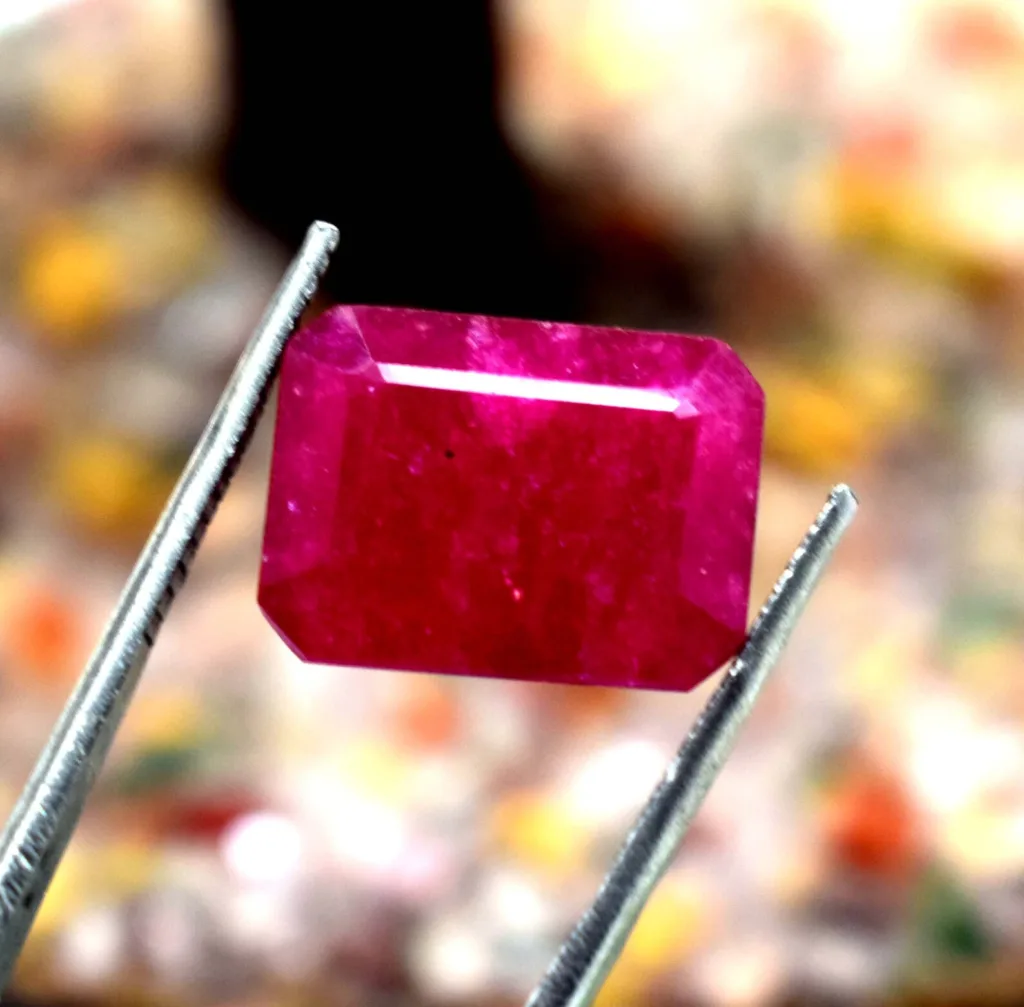
Found almost exclusively in the Wah Wah Mountains of Utah (USA), Red Beryl owes its color to manganese. It forms in rhyolitic volcanic rocks, where beryllium-rich gases interact with minerals under precise temperature conditions.
To form just one crystal, nature requires a nearly impossible balance of chemistry and timing — making Red Beryl over 1,000 times rarer than diamond.
Geological origin: Gas cavities in volcanic rhyolite flows.
Color: Vibrant raspberry red.
Rarity level: Estimated one gem-quality crystal for every 150,000 diamonds mined.
6. Taaffeite – The Gem Found by Accident
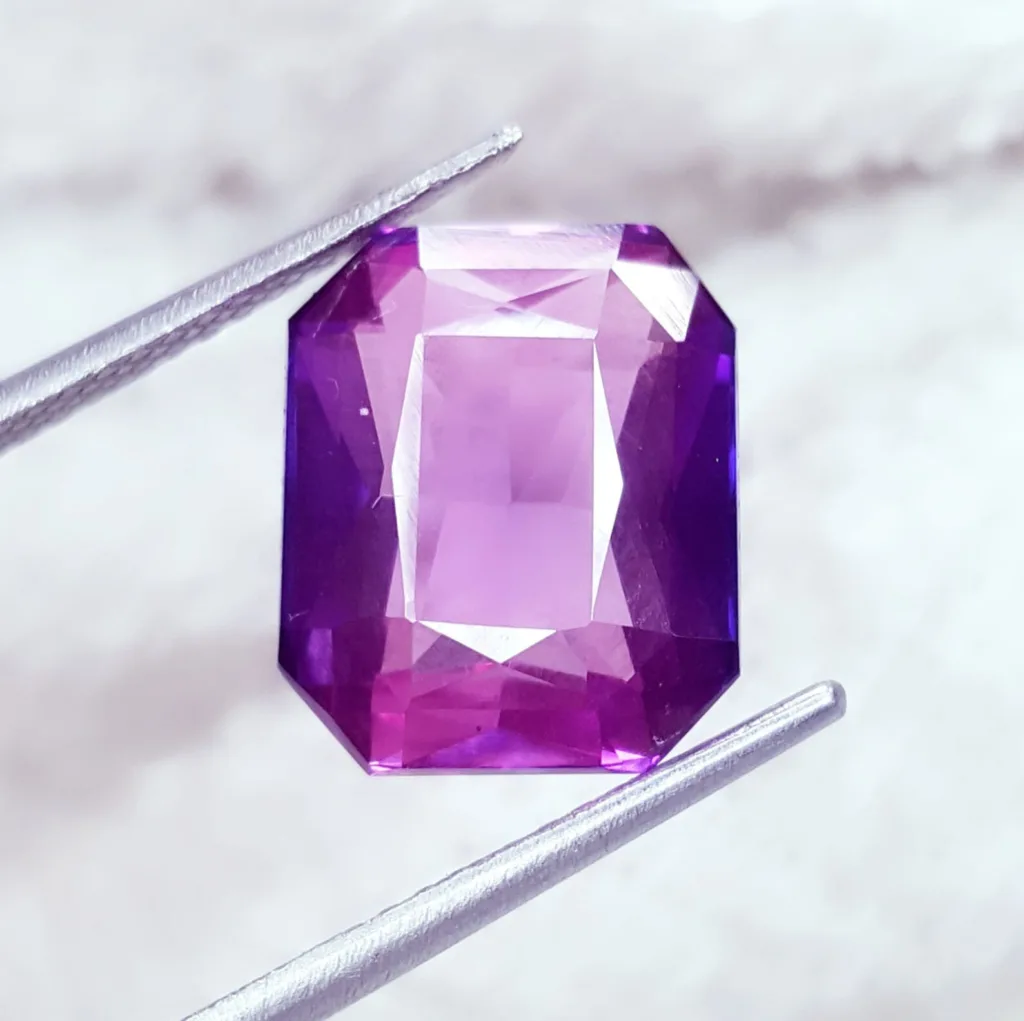
In 1945, gemologist Richard Taaffe purchased a spinel that turned out to be something entirely new — now known as Taaffeite. This gemstone crystallizes under unusually high magnesium and beryllium conditions rarely replicated in nature.
Geological origin: Metamorphic rocks rich in beryllium and magnesium.
Color: Lilac, mauve, or violet.
Rarity level: Fewer than 50 known specimens in jewelry-quality grade.
7. Jeremejevite – The Desert Crystal
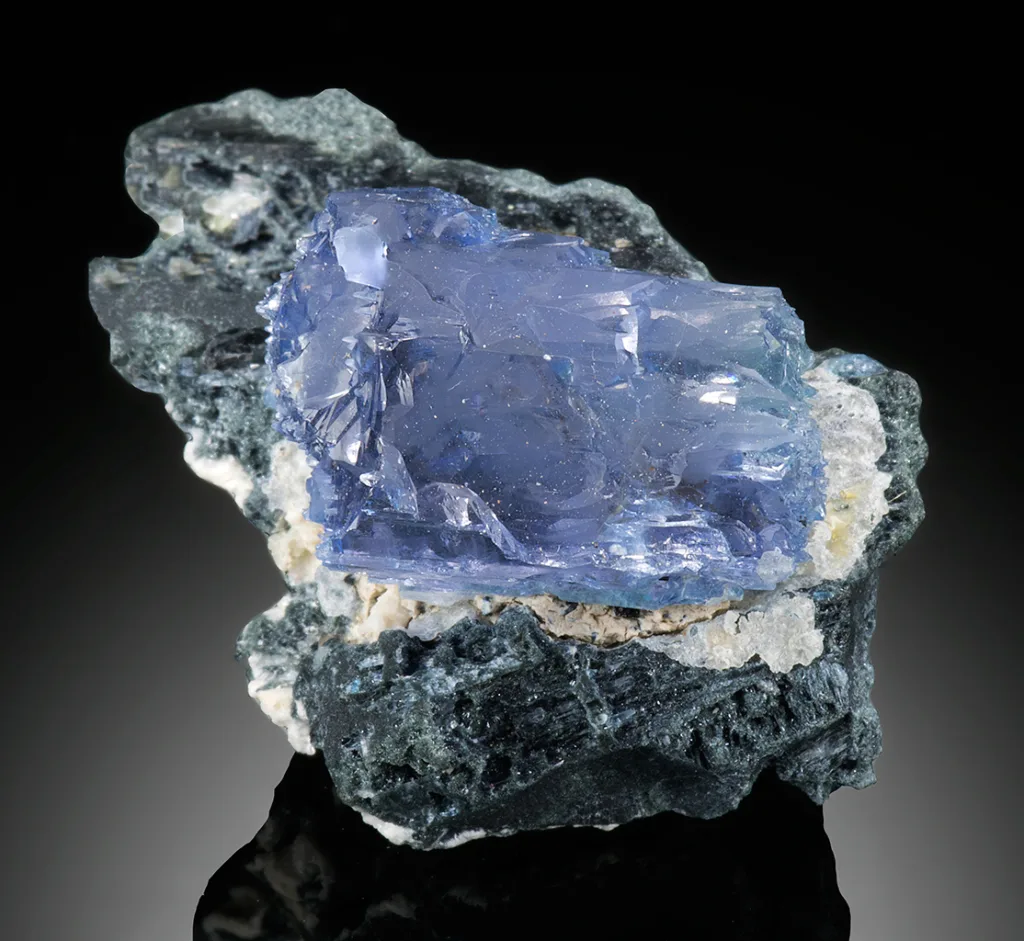
Jeremejevite, first discovered in Siberia and later in Namibia, forms in granite pegmatites through slow crystallization processes. Its transparent to sky-blue color and perfect prismatic crystals make it a favorite among mineral collectors.
Geological origin: Pegmatites in arid desert environments.
Color: Colorless to light blue.
Rarity level: Very few facetable stones worldwide.
8. Alexandrite – The Color-Changing Wonder
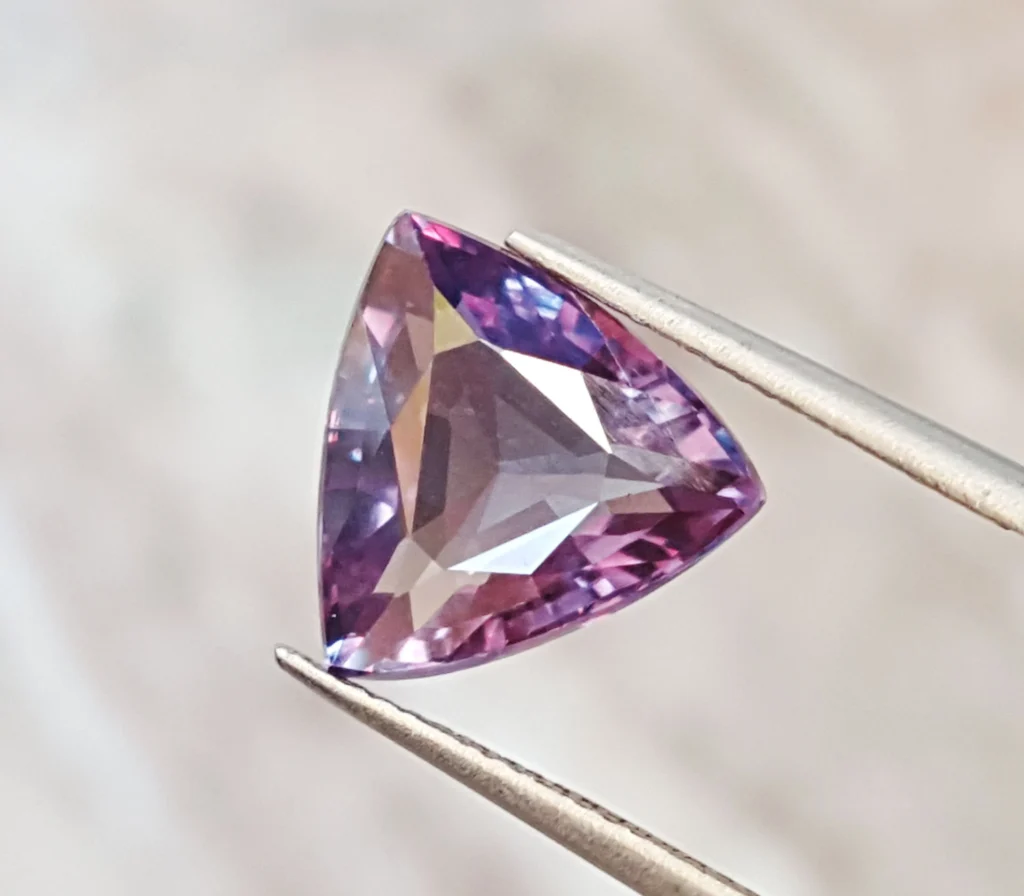
Though not as rare as Painite or Musgravite, fine-quality Alexandrite remains highly prized. Its ability to shift from green in daylight to red under incandescent light makes it one of the most fascinating gemstones ever formed.
Geological origin: Mica schists in metamorphic zones where beryllium meets chromium.
Color: Green to red color change.
Rarity level: Gem-quality stones above 5 carats are extremely rare.
9. Poudretteite – A Crystal Born from Pegmatite Magic
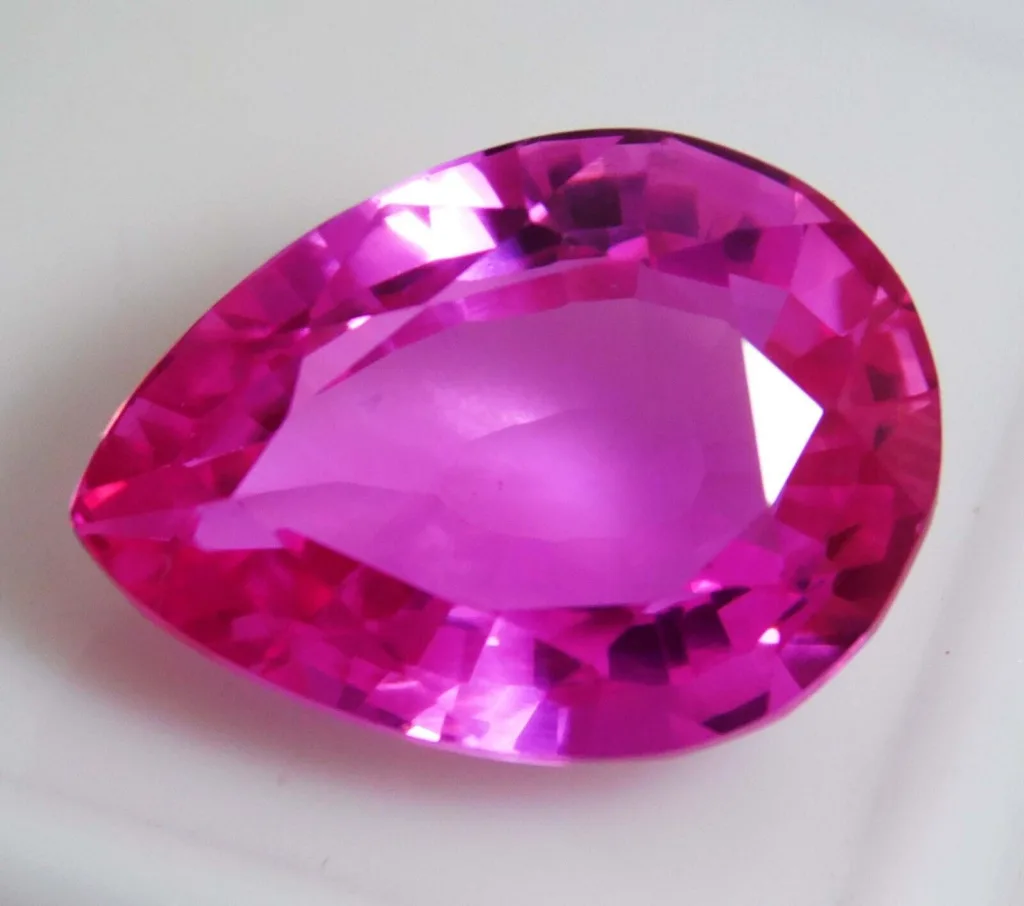
Discovered in Mont Saint-Hilaire, Canada, and later in Myanmar, Poudretteite forms in alkaline pegmatites, a geological environment rich in sodium and potassium. It’s transparent, soft pink, and extremely scarce.
Geological origin: Alkaline pegmatite pockets.
Color: Pale pink to colorless.
Rarity level: Only a few known faceted stones exist.
10. Black Opal – The Fire of Lightning Ridge
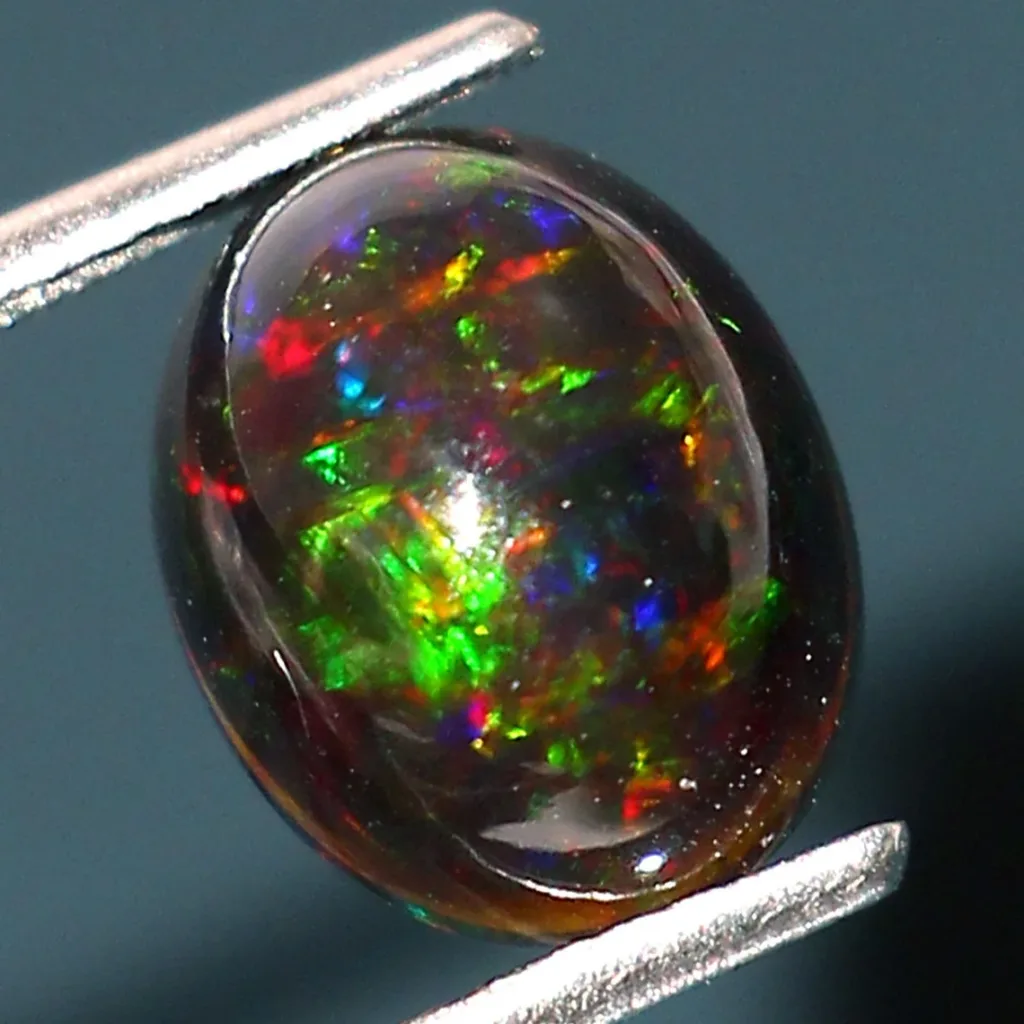
Among opals, none is more valuable than Black Opal from Lightning Ridge, Australia. Its dark body tone makes its play-of-color appear electric — a visual masterpiece shaped by ancient silica gel that filled cracks in sandstone over millions of years.
Geological origin: Sedimentary rock formations rich in silica.
Color: Multicolor flashes on a black base.
Rarity level: Limited to one primary mining location on Earth.
The Geological Symphony Behind Rarity
What makes a gemstone rare is not only how few exist, but also how improbable their creation is. Each of these stones requires an exact alignment of geological forces — temperature, pressure, chemistry, and time.
From the volcanic heat that forms Red Beryl to the tectonic metamorphism that shapes Painite, every gemstone is a geological fingerprint of the Earth’s most extreme conditions.
Conclusion: Nature’s Ultimate Artistry
The rarest gemstones on Earth are not simply luxury items; they are natural records of our planet’s evolution. Each crystal holds within it millions of years of geological history — a moment frozen in time, born from chaos and pressure deep beneath the crust.
To hold one is to hold a fragment of Earth’s untold story — a reminder that beauty, like all things in nature, is shaped by time, transformation, and the forces that move beneath our feet.