








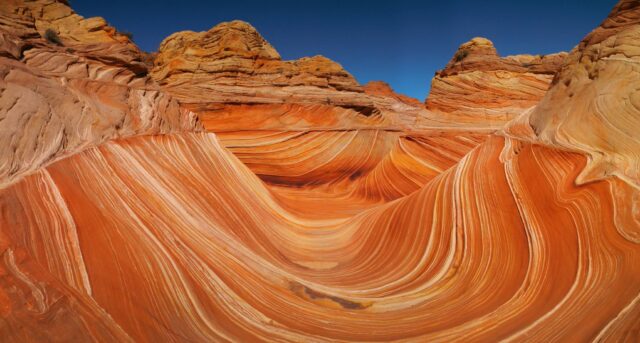
The world is actually a system that is constantly breaking, falling apart, moving, and being carried away. A human lifespan is so short that we can’t see rocks move, change shape, or erode. But nature is never in a hurry. It waits a hundred thousand years, it carves a million years, and one day you look and suddenly: The Wave appeared, Bryce Canyon appeared, Cappadocia appeared…
The interesting thing is this: Erosion is actually destruction, but what appears looks like creation.
This list is exactly about that. Every piece taken from the rock left a story behind.
Now let’s look one by one at the 10 most unbelievable natural wonders shaped by erosion, with a mix of science and storytelling.
1. The Wave – Arizona, USA
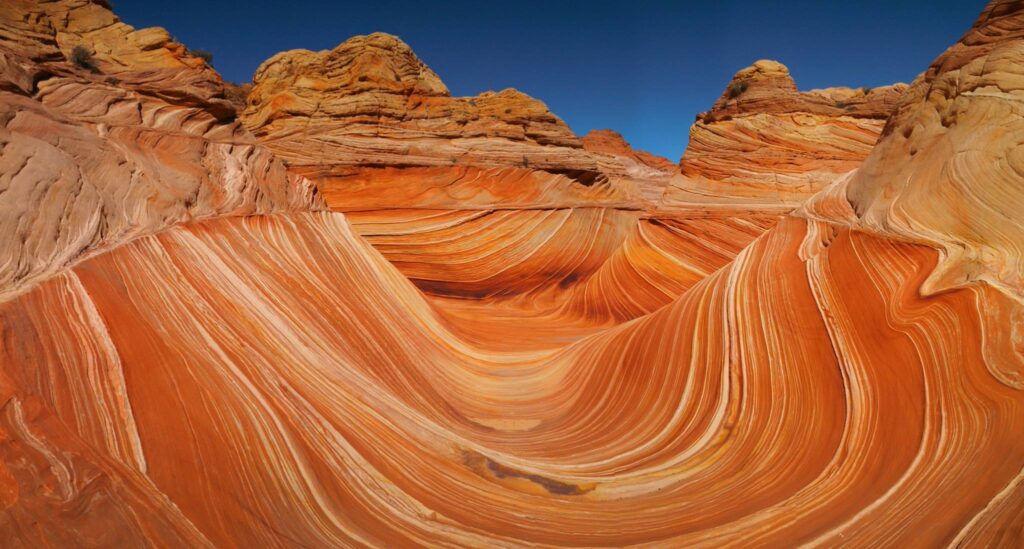
This place looks too unreal even in photos. It’s like sand patterns suddenly turned into stone and froze.
The formation of The Wave is basically this: wind keeps shaving the sandstone… keeps shaving… and leaves behind these curved, wavy surfaces. Sand grains work like a rotating sandpaper.
The sandstone here is called “Navajo Sandstone,” and long ago it was part of a giant dune desert.
Erosion mechanism:
- friction from the wind
- weak lines on the surface opening
- fine sand grains scratching the rock
- the same cycle lasting for centuries
The Wave is so delicate that only a limited number of visitors are allowed every year. Even a small scratch can damage layers that took hundreds of years to form.
2. Bryce Canyon Hoodoos – Utah, USA
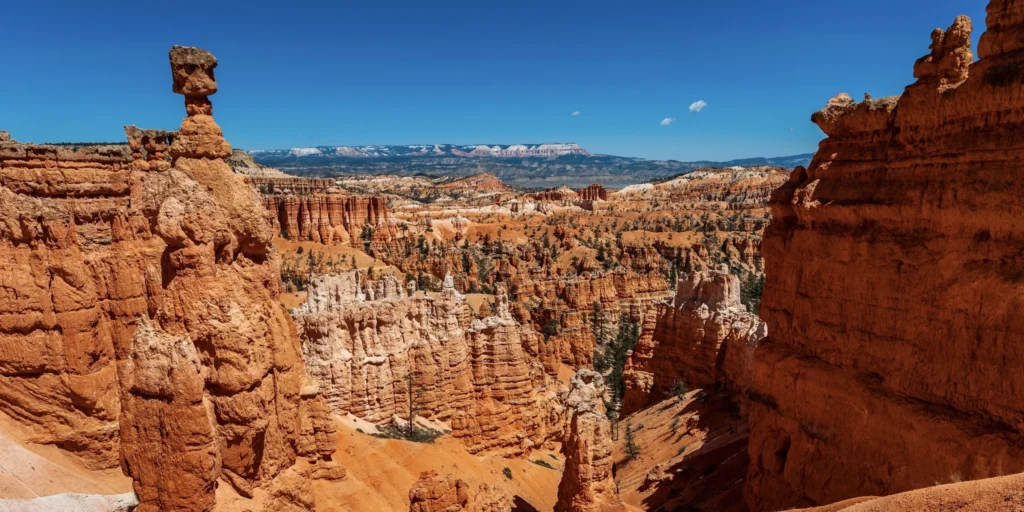
Bryce Canyon isn’t even a canyon; it’s a giant natural amphitheater. Inside, thousands of thin rock columns stand in orange, pink, and red tones. These are called “hoodoos.”
The reason behind these formations is the freeze–thaw cycle.
The process goes like this:
- During the day the temperature rises → the rock expands.
- At night it cools → the rock contracts.
- Water enters cracks and freezes → cracks widen.
- After many years → thin rock pillars appear.
The most fascinating part of Bryce Canyon is this: every hoodoo is basically collapsing. Every year some fall, some change form. This landscape is a constantly living sculpture.
3. Étretat Cliffs – Normandy, France
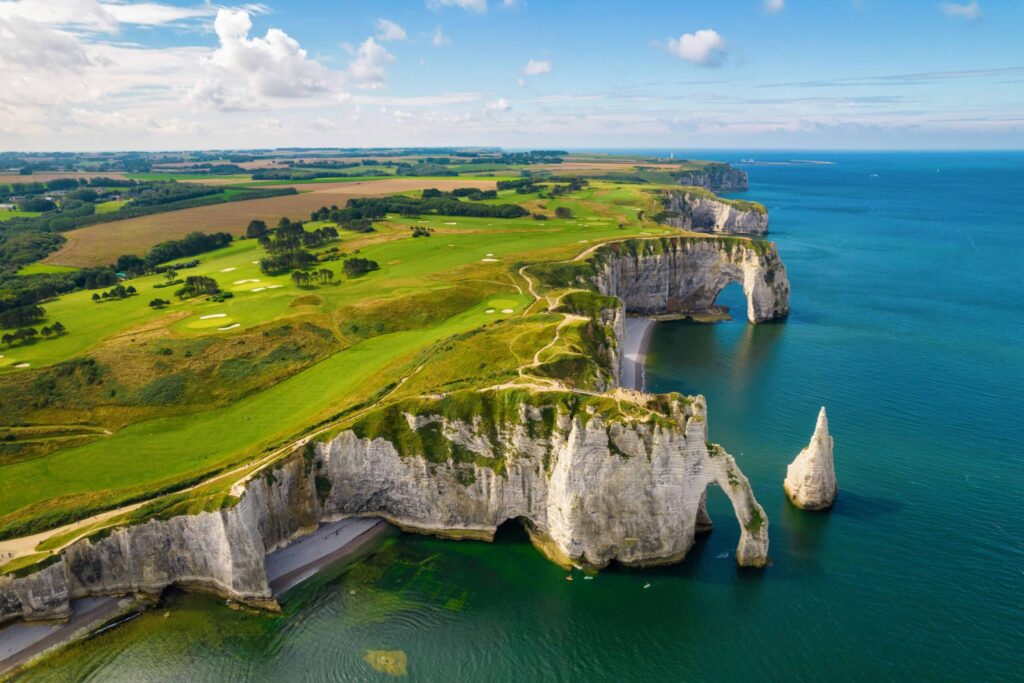
These chalk cliffs on the northern French coast look like a painter created them. Waves constantly hit the rocks, carving them from the bottom and forming giant arches.
Coastal erosion is the main actor here.
How it forms:
- tides keep wetting the rock
- salt crystals break the surface
- wave impacts enlarge weak points
- the arch appears
- when the arch collapses, a tall “stack” remains
Étretat is one of the most photogenic coastal erosion landscapes in Europe because of its size and geometry.
4. Bungle Bungle Range – Australia
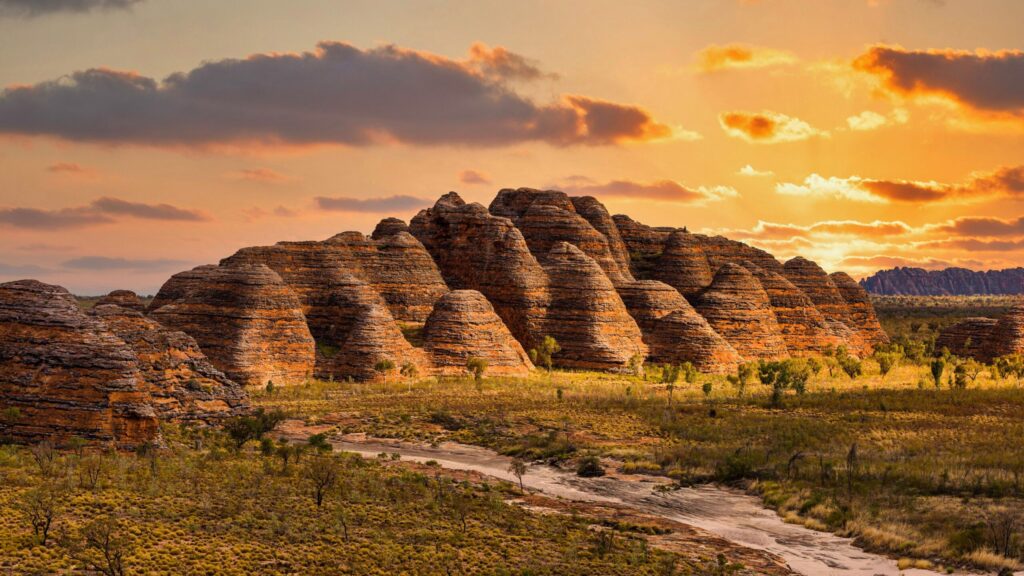
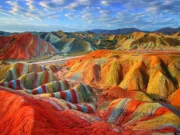
A mountain range that looks like giant beehives with orange and black stripes.
The reason behind these stripes is one word: time.
The rock surface cracks due to temperature differences, rain deepens the cracks, wind shaves the surface.
The result: a peeled surface, exposed layers, and a pattern that doesn’t exist anywhere else on Earth.
The rock here is a sandstone–conglomerate mix. Because the temperature changes are extreme, thermal erosion is very strong.
5. Moeraki Boulders – New Zealand
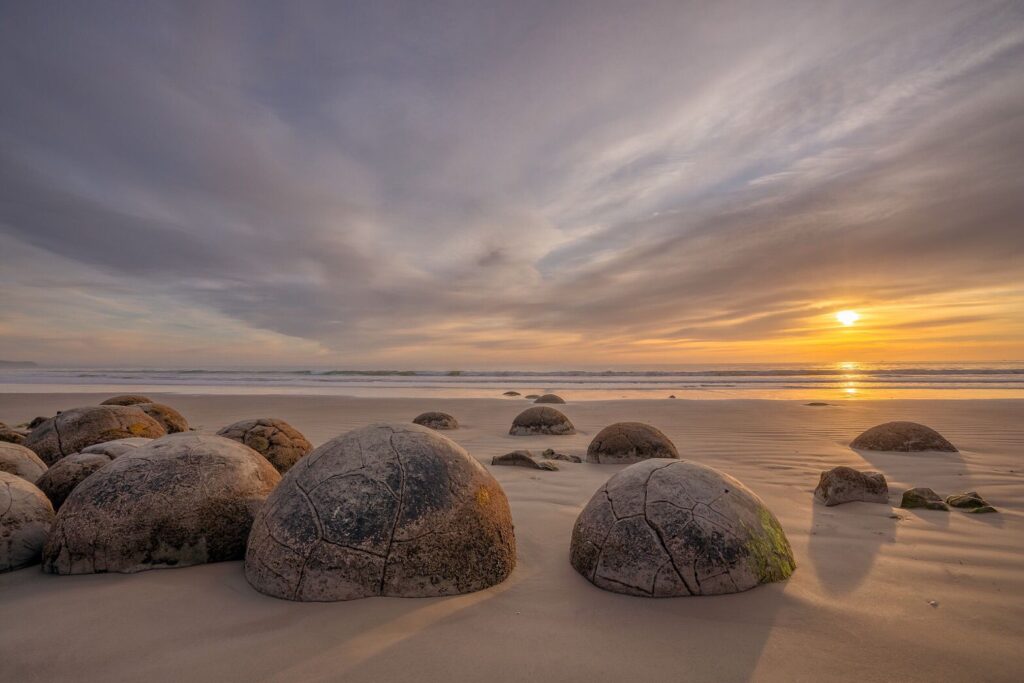
When you see the giant stone eggs standing on the beach, your first thought is “someone must have made these on purpose.”
But no: completely natural.
These are actually “concretions,” meaning mud and minerals gather around a core and harden over time. When erosion carries away the softer sands and muds, only these round boulders remain.
Scientifically, Moeraki boulders are:
- about 60 million years old
- filled with calcite veins inside
- their perfect shape comes from mineral deposition
- wave erosion gives their final appearance
6. White Desert Formations – Egypt
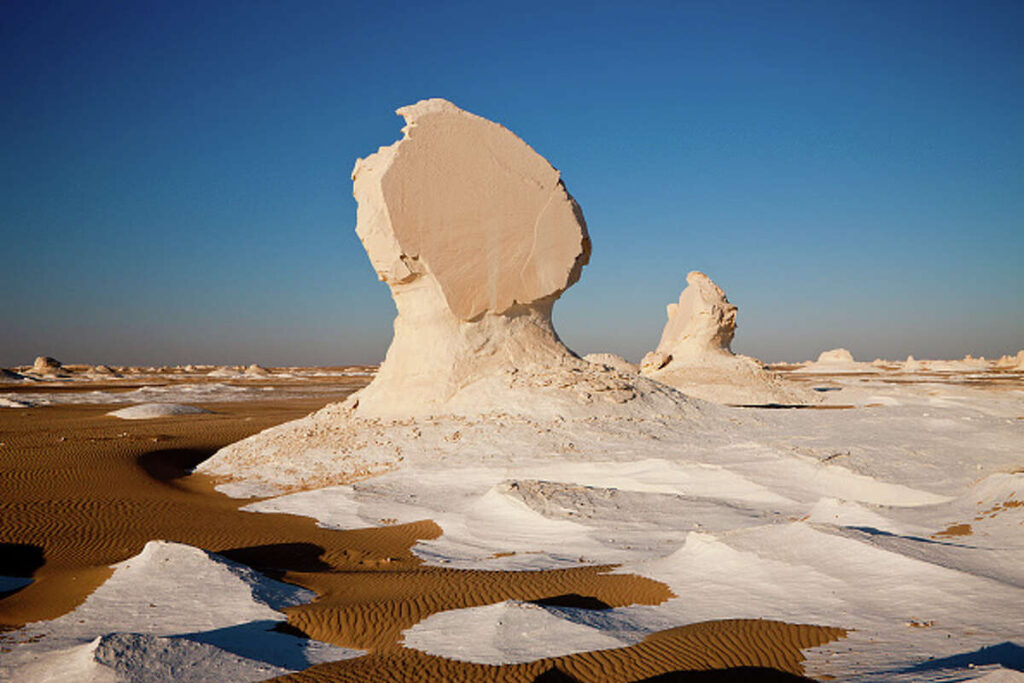
The White Desert in Egypt looks like a stage performance of wind erosion.
Limestone is soft → wind acts like sandpaper → giant mushroom rocks appear.
During the day they look cream-white; under moonlight they almost look like snow.
This place formed through “differential erosion,” meaning different layers with different hardness erode at different speeds.
7. Arches National Park – Utah, USA
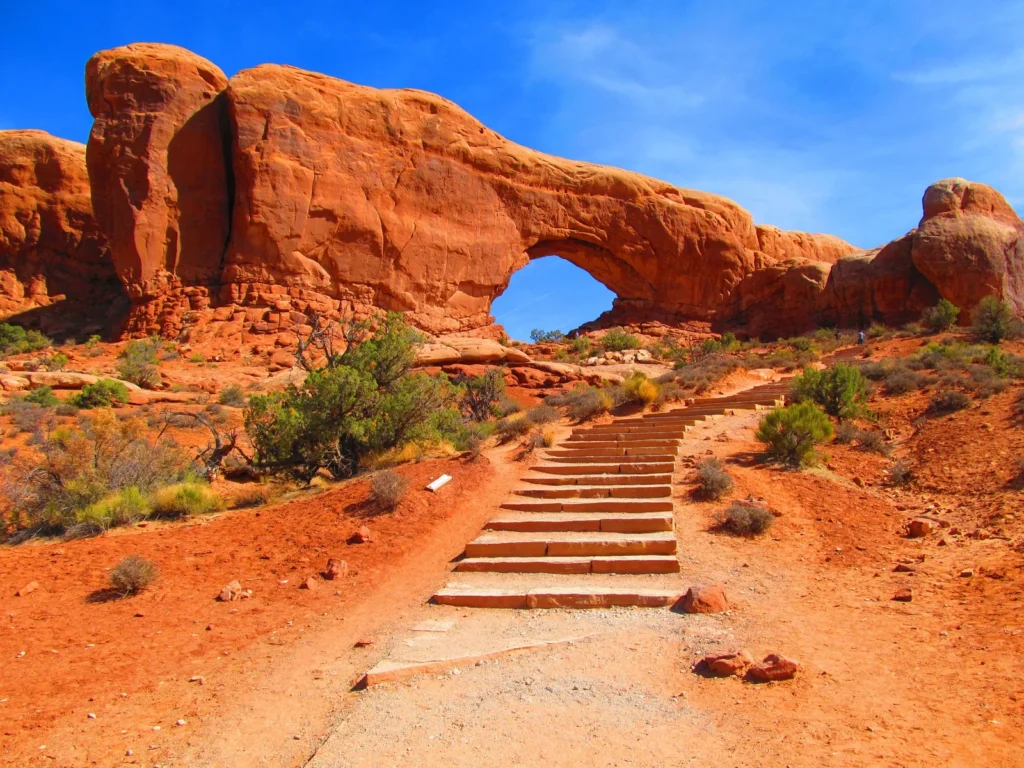
There are more than 2,000 natural stone arches here.
The largest natural arch collection in the world.
Erosion types involved:
- freeze–thaw
- gravitational collapse
- separation of rock joints
- wind abrasion
The formation of an arch is simple:
Hard rock on top, weaker rock below → erosion removes the weak part → a hollow opens → the arch appears.
Landscape Arch is almost 90 meters long. It’s a miracle that such a thin stone still stands.
8. Zhangjiajie Pillars – China
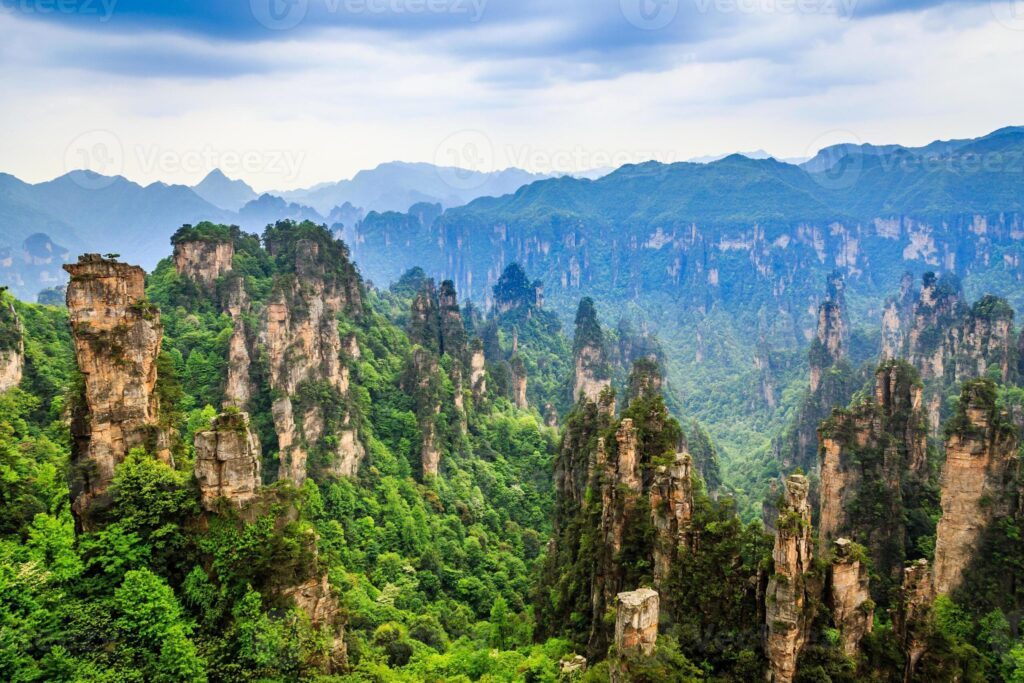
Tall sandstone pillars rising through the mist…
These are the inspiration behind the floating mountains in the movie Avatar.
What accelerates erosion here:
- high humidity
- constant mist
- chemical weathering similar to karst
- plant roots splitting the rock
Zhangjiajie is not only erosion; it is also a landscape shaped by biological effects.
9. Cappadocia Fairy Chimneys – Turkey
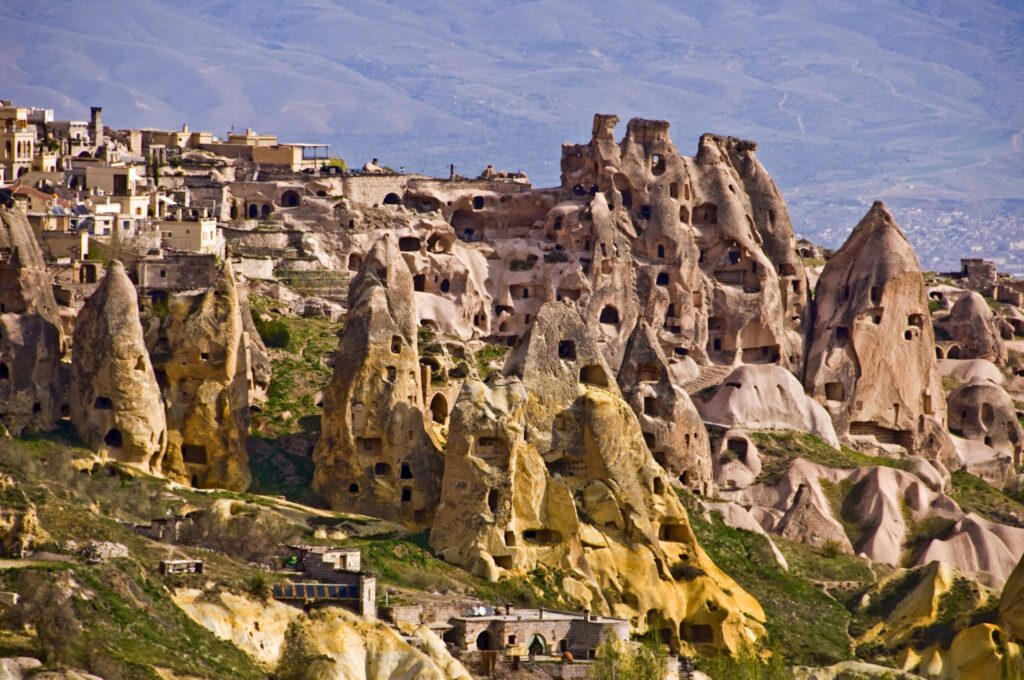
A masterpiece from your homeland.
Cappadocia’s fairy chimneys are one of the best examples of “differential erosion.”
The lower part is tuff (soft volcanic rock), the upper part is a hard caprock like basalt or andesite.
Process:
- rain easily carves the tuff
- wind abrades the sides
- the hard cap protects the lower part
- when the cap breaks, the chimney collapses
Some chimneys disappear over time, and new ones form.
10. Antelope Canyon – USA
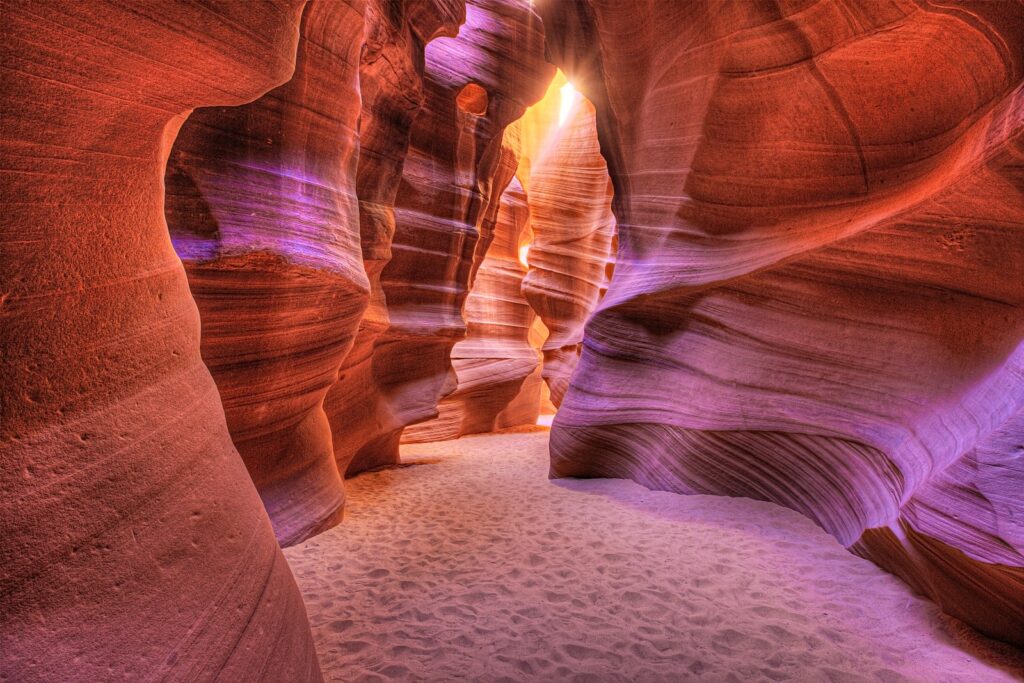
One of the most photographed slot canyons in the world.
Flash floods polish the sandstone from the inside.
Here, the main force is not wind, but aggressive flood erosion.
Narrow walls, beams of light, curved surfaces…
The canyon looks alive because water is incredibly powerful at carving.
Main Types of Erosion
1. Wind erosion
In deserts, sand grains act like sandpaper.
2. Water erosion
Rivers, floods, rainfall → carving and shaping.
3. Coastal erosion
Continuous wave impacts → arches, caves, stacks.
4. Freeze–thaw erosion
The strongest sculptor in cold regions.
5. Chemical erosion
Acidic rain + minerals → karst landforms.
Conclusion: Why Does Erosion Create the Most Beautiful Landscapes?
Because erosion works slowly.
Because it’s patient.
Because it takes a crack first, then a small piece, then another piece…
And millions of years later, places like The Wave, Bryce Canyon, and Cappadocia appear.
Nature creates art while destroying.