











We may easily think that rocks are hard and difficult to change, because when we hold them in our hands or see them on the road, they seem that way. But on a geological scale, they are never like that. Because geology extends over very long periods of time, and water is one of the most patient workers of time. Water flows, freezes, dissolves, and over time, it shapes the rock.
For this reason, structures formed by water are not the result of sudden events, but of much longer processes. Raindrops and groundwater that seeps underground carry out continuous work. Each time, very little changes, but after thousands or hundreds of years, they leave behind a completely different landscape.
1. Tsingy de Bemaraha, Madagascar
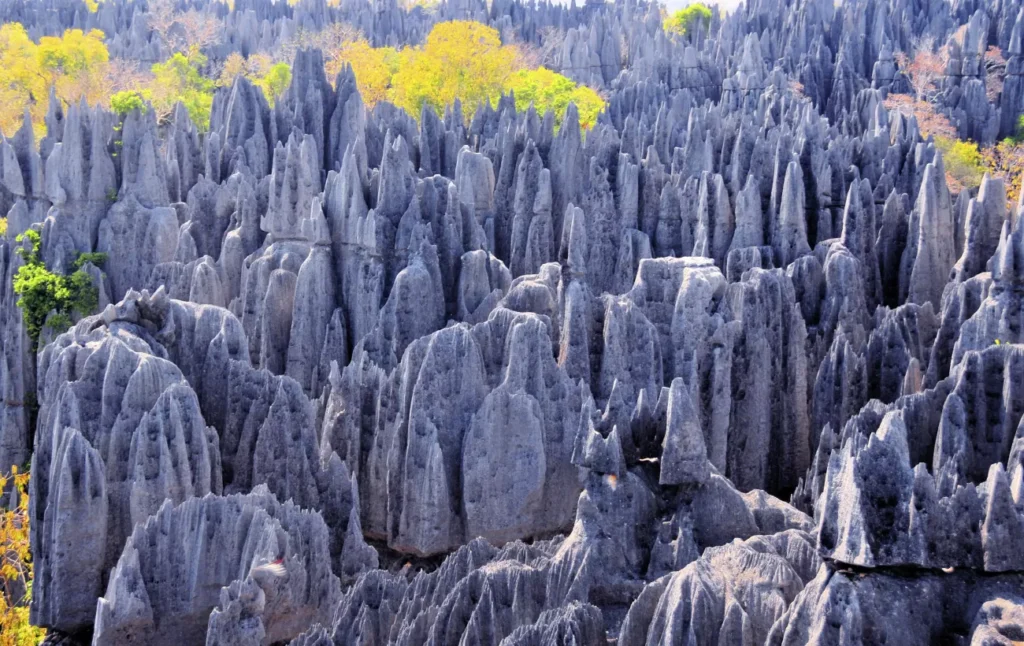
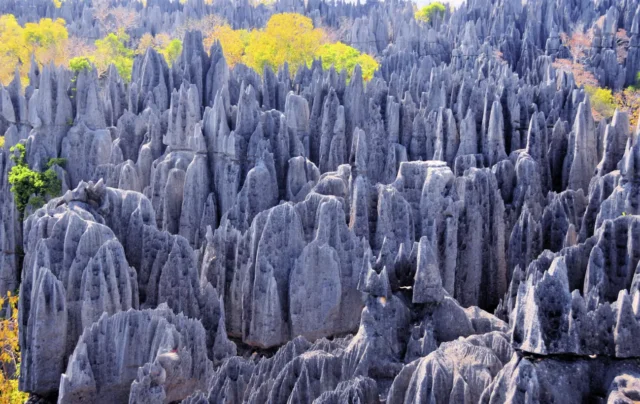
When seen from a distance, Tsingy does not look like a rock plateau, but like a shattered sea of stone. Sharp, pointed, blade-like surfaces. Too irregular to be made by human hands, but not random either.
At the base of these structures lies limestone. Rainfall in a tropical climate becomes slightly acidic after absorbing carbon dioxide from the atmosphere. This water seeps downward through microscopic fractures inside the limestone. At first invisible, these fractures slowly widen over time. The rock dissolves, but it does not disappear completely. Weak sections are removed, resistant ones remain.
Over hundreds of thousands of years, this process repeats. Eventually, no flat surface remains. Only the most resistant rock ridges survive. That is why Tsingy is nearly impossible to walk through. Here, water did not only erode. It also selected.
What remains is not a mountain, but something like a skeleton. The final standing form of a rock mass.
2. Mulu Pinnacles, Borneo
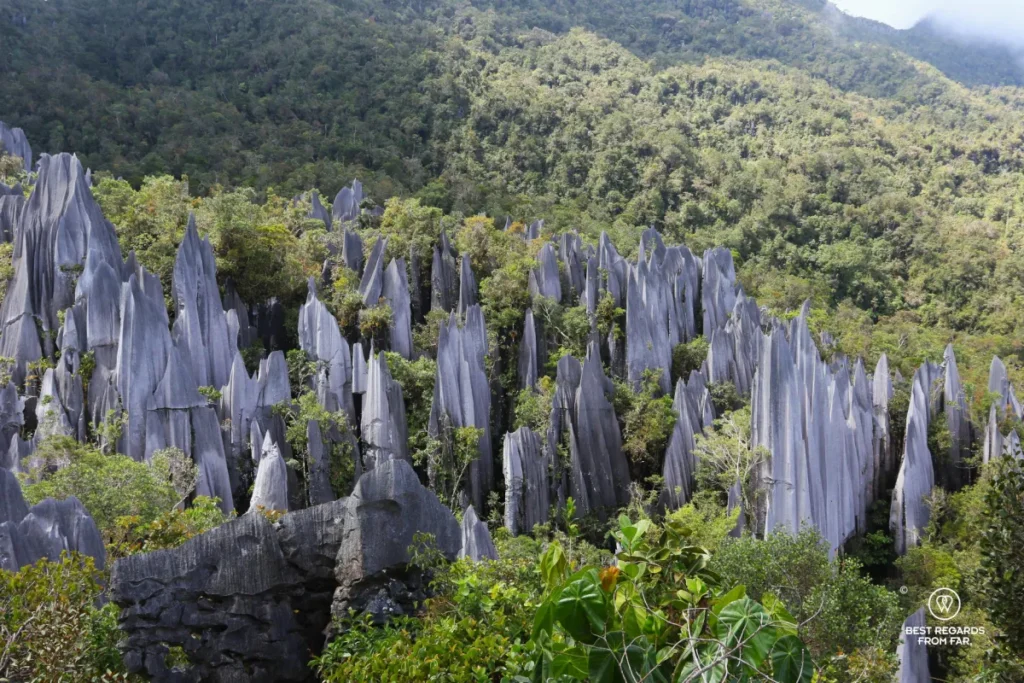
Hidden within the dense forests of Borneo, the Mulu Pinnacles do not resemble classic karst towers. They are thinner, more fragile, and more irregular. The reason is that water here works not only from above, but from every direction.
Rainfall in this region is almost constant. But the real impact comes from mist, humidity, and vegetation. Tree roots penetrate rock fractures. Water dripping from leaves spreads as a thin film across rock surfaces. Moisture rising from underground continues to dissolve the limestone from below.
As a result, the rock is eroded not from a single direction, but from all sides. This produces sharp, uneven, and fragile pinnacles. At Mulu, water does not flow like a river. It creeps. Slowly, silently, and from everywhere.
3. Lençóis Maranhenses Lagoons, Brazil
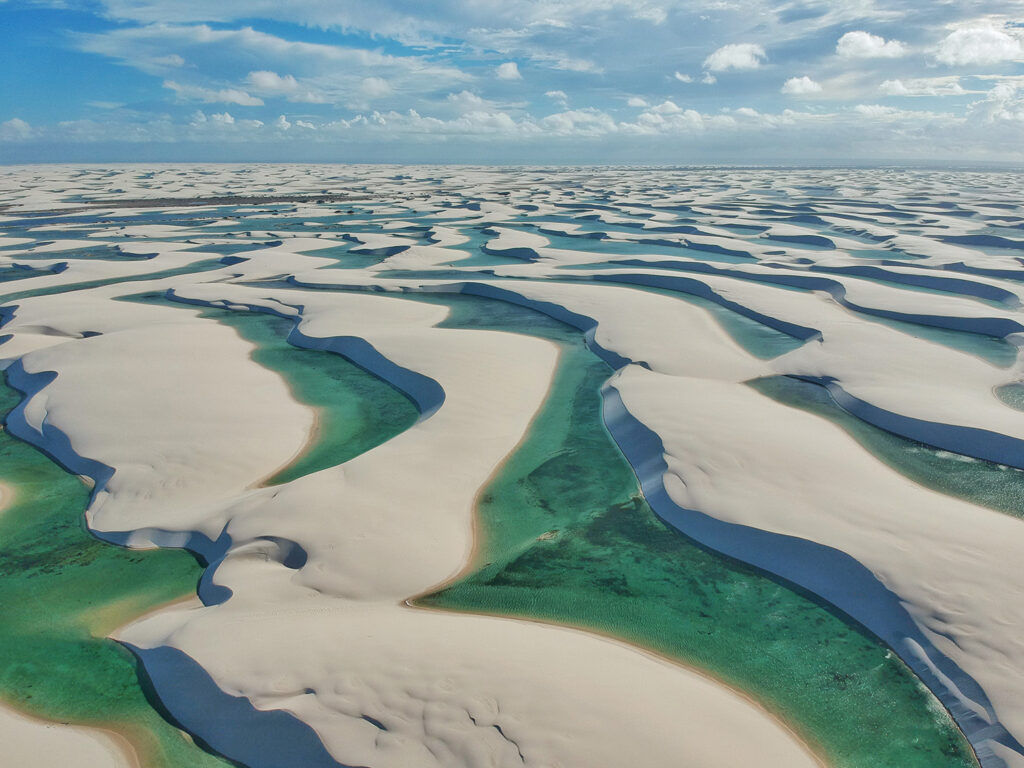
At first glance, this place looks like a desert. White sand dunes create a feeling of endless emptiness. But it is not a desert. Because beneath the sand, there is water.
At Lençóis Maranhenses, an impermeable layer lies beneath the dunes. During the rainy season, intense rainfall accumulates on top of this layer. Hundreds of temporary lagoons form between the dunes. These lagoons contain fresh water and last for several months.
Then the rain stops.
The sun rises.
The water evaporates.
The lagoons disappear.
The geology here is not a shape, but a cycle. A process that begins every year and ends every year. Sand defines the form, water gives life.
This landscape is not permanent. But it returns in the same way every year.
4. Shilin Stone Forest, China
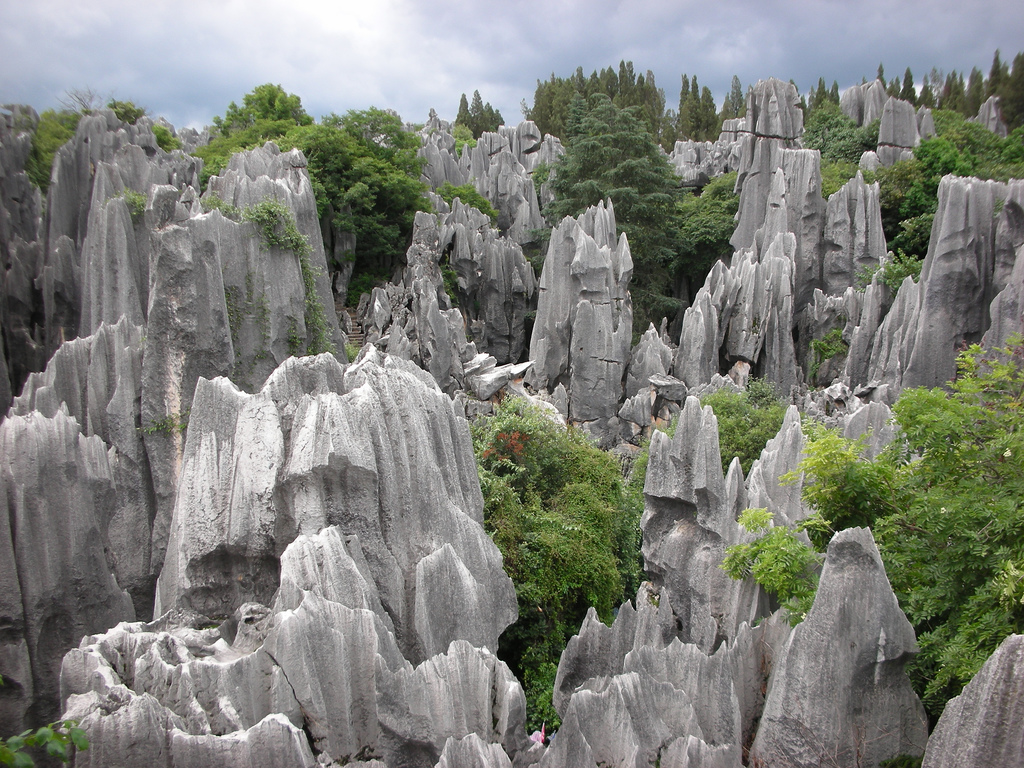
Shilin literally means “stone forest.” Hundreds of rock pillars rise from the ground, arranged like trees. But these pillars did not rise upward. Instead, their surroundings disappeared.
This area was once covered by limestone. Rainwater infiltrated surface fractures. Underground, it created voids. But not all rock dissolved at the same rate. Denser sections with fewer fractures remained standing.
Over time, the surrounding rock mass lowered. Only the pillars remained. At Shilin, water is not destruction. It is a filtering mechanism. The weak disappears, the strong stays.
5. Wave Rock Pools, Western Australia
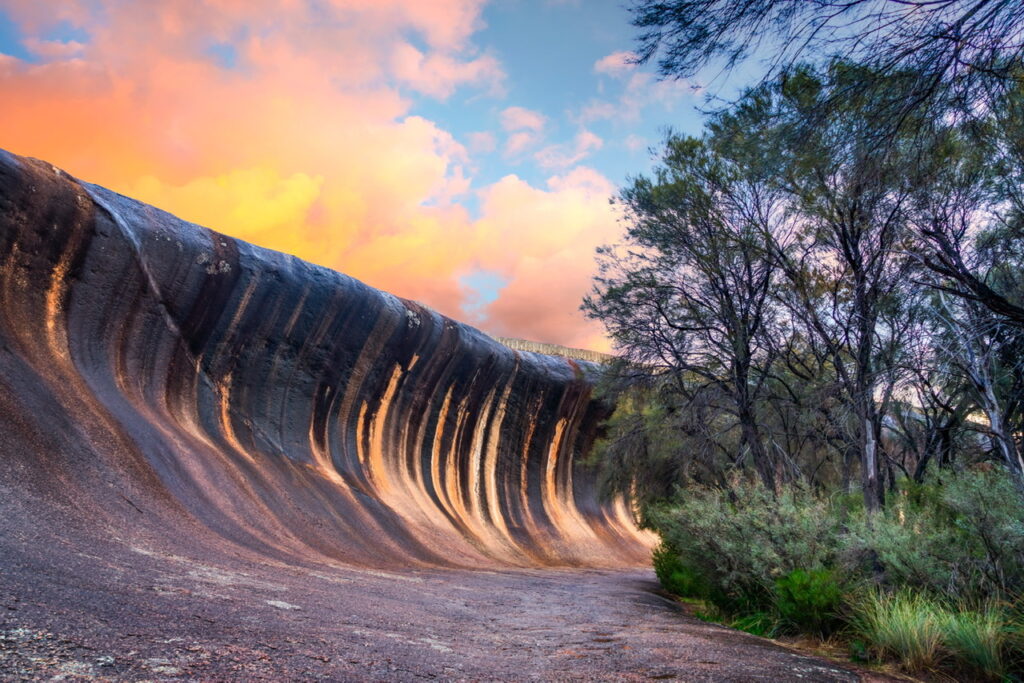
Granite is usually taught as a “hard rock.” But granite also has weak points. Microscopic fractures, mineral boundaries, crystal interfaces.
The natural rock pools formed on Wave Rock in Western Australia show how these weaknesses interact with water. Rainwater fills cracks. It heats during the day and cools at night. Salt crystals expand. The rock dissolves extremely slowly.
Over time, rounded depressions form on the surface. These depressions hold water. As water remains, dissolution increases. Eventually, natural pools form on top of the granite.
These structures are not sudden. They form very slowly. But even granite eventually gives way.
6. Eisriesenwelt Ice Cave, Austria
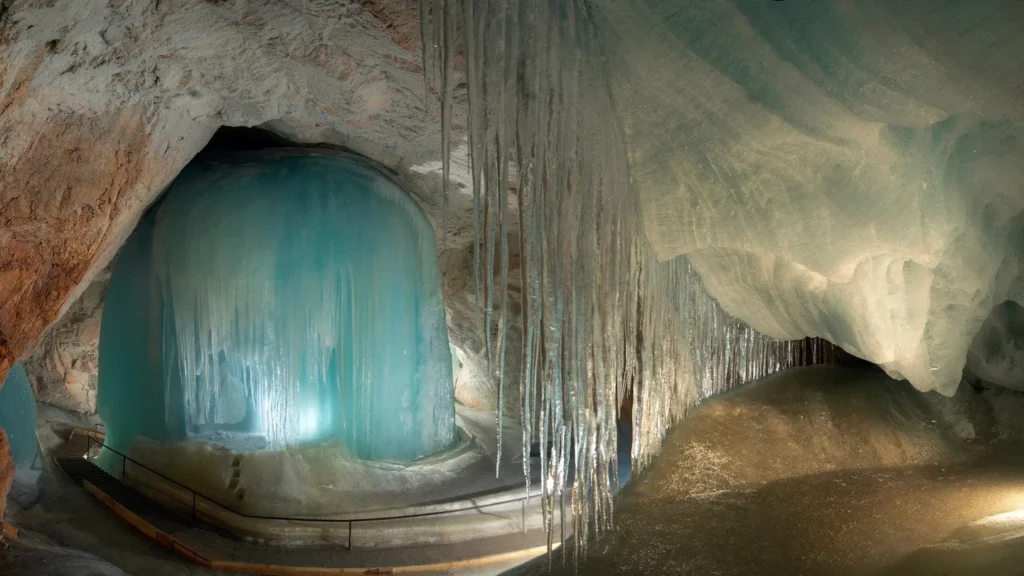
Eisriesenwelt is the largest ice cave in the world. But what makes it special is not the ice. The main structure is a void created by water dissolving limestone.
First, groundwater formed the cave. Fractures widened, tunnels opened. Later, meltwater from surrounding mountains entered the cave. Air circulation inside allowed this water to freeze.
So the ice is secondary. Water is still the primary architect. Without the cave, there would be no ice. Here, water both created the space and filled it.
7. Dallol Salt Sculptures, Ethiopia
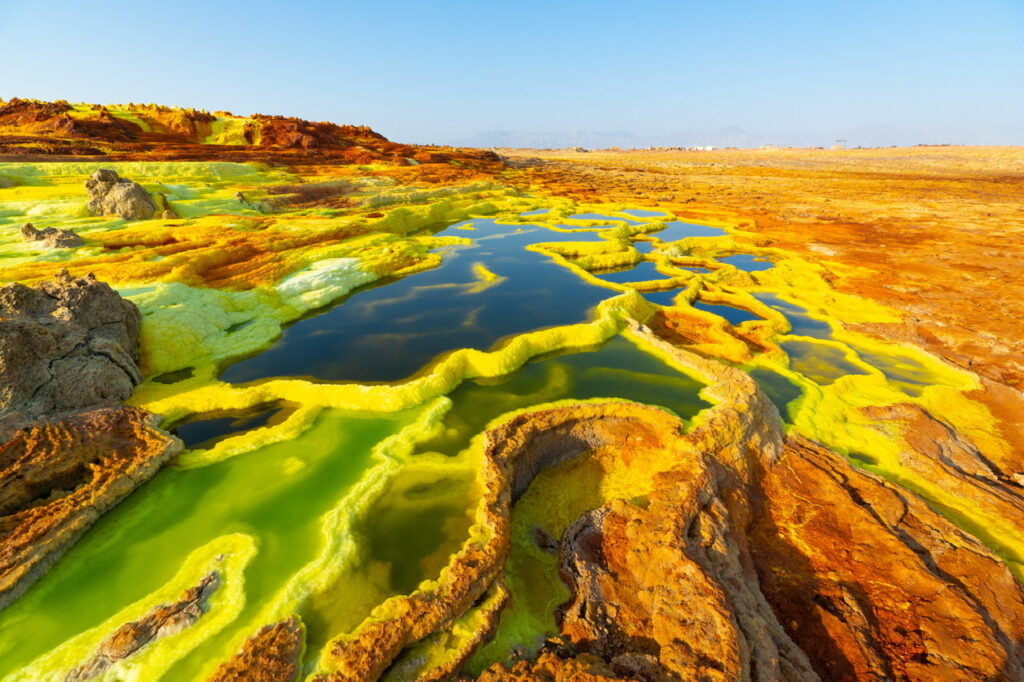
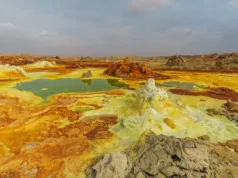
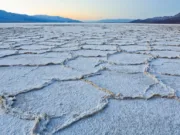
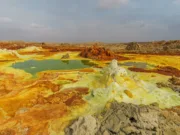
At Dallol, you do not see a flowing river. But water is everywhere. Extremely saline groundwater rises to the surface. It spreads out. Under the sun, it evaporates rapidly. Salt and minerals remain behind.
These deposits are not stable. They constantly change with wind, new water flow, and temperature variations. Colors, shapes, and surface textures are continuously reformed.
Dallol is one of the rare geological settings where water shapes the land by disappearing. Here, water leaves marks as it vanishes.
8. Hidden Sinkholes of Danakil
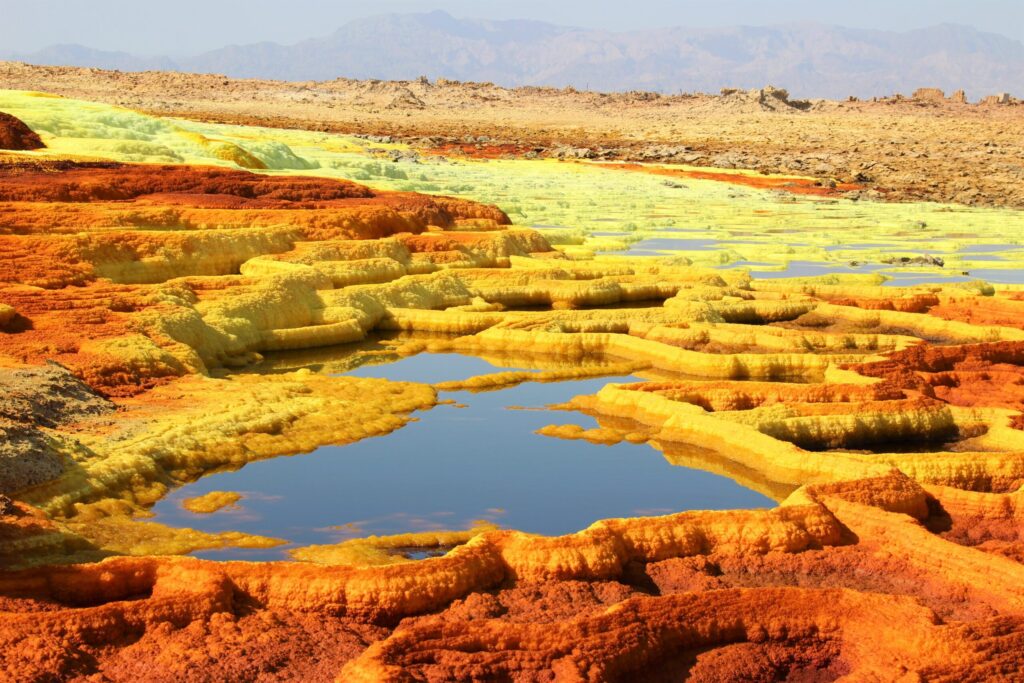
Sinkholes are often known for sudden collapses. But in Danakil, some collapses remain incomplete. Groundwater creates voids. The roof thins, but does not fully collapse.
Semi-open, deep, dangerous structures emerge. These features seem frozen in the middle of a process. Neither fully caves, nor fully collapsed sinkholes.
They are temporary. One day, they will collapse completely. But for now, they are momentary snapshots of underground water at work.
9. Luray Caverns Flowstone, USA
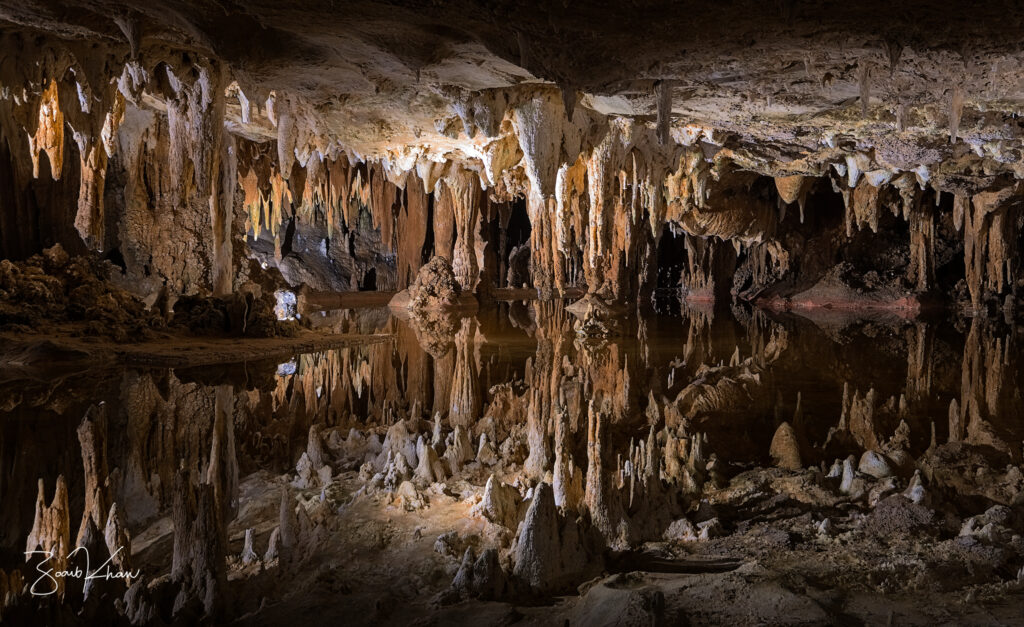
When caves are mentioned, stalactites and stalagmites usually come to mind. Flowstone is different. Water does not drip. It flows as a thin sheet along the cave wall.
This water deposits calcium it carries onto the wall. Layer upon layer accumulates. Over time, the walls resemble frozen stone waterfalls.
Flowstone proves that water can shape rock without dripping. It is a silent, continuous, and orderly process.
10. Ischigualasto Toadstool Rocks, Argentina
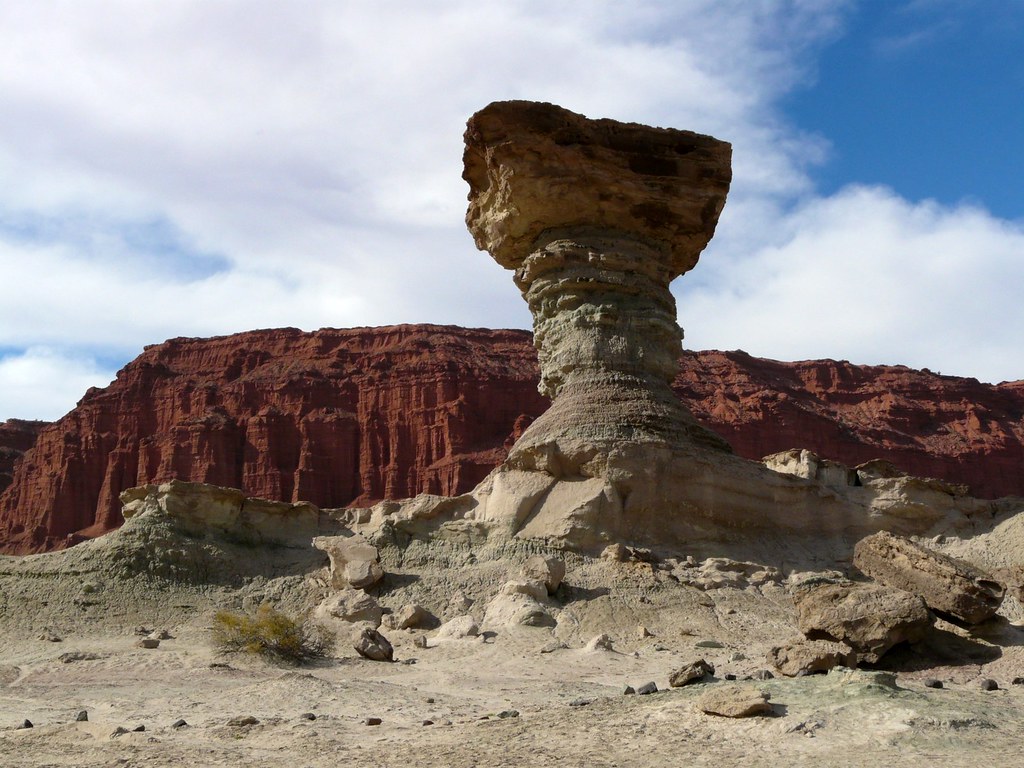
In this region, a hard layer lies above softer sediments. Rainwater erodes the softer layer below. The harder rock above remains like a cap.
Over time, the lower column thins. The upper rock still stands. Mushroom-like shapes emerge.
These are not sudden formations. They are the result of hundreds of thousands of years of fluvial erosion. They look unstable, but exist in a precise natural balance.
Conclusion
These formations share one thing in common:
None of them are dramatic.
But all of them are persistent.
Water seems to leave no trace on rock.
But given enough time, it completely changes the form.
These structures show that water is not only erosive, but selective, constructive, and sometimes simply a force that leaves quiet marks behind.
In geology, the most permanent traces often come from the quietest processes.