



The Red Sandstone Labyrinth of the Mojave Desert
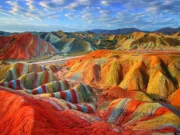
There is a place in the middle of the Mojave Desert; while driving, the color of the landscape suddenly changes. The yellow-brown desert tones turn instantly into burning red. As if the rocks were held to a flame, burned, but did not collapse… This is what Valley of Fire in Nevada feels like. One of the oldest preserved geological scenes of the American Southwest, and a place that truly deserves the name “valley of fire.”
What makes this valley special?
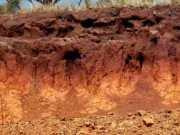
The color that hits you first. This redness comes from iron oxide staining the sand grains. It doesn’t fade in the rain or lighten in the sun; on the contrary, when the light hits, it becomes even brighter. That’s why during sunrise or late-afternoon orange light, Valley of Fire looks like it is literally burning.
1. The Story of 150 Million Years of Red Sandstone

The red sandstones of Valley of Fire are the fossilized remains of a giant dune sea known as the Aztec Sandstone. About 150–200 million years ago, today’s Nevada was a huge desert. Endless dunes, constant winds, stacked sand waves… exactly the scenes we see today in the Sahara.
Over time the sands compacted, cemented by minerals, and turned into a solid rock. The cross-bedding inside this sandstone still carries the signature of ancient wind patterns: inclined layers, curved lines, rippling structures… like an open book for a geologist.
2. The Real Reason Why the Valley Looks So Red

Explaining the color of Valley of Fire is not just “there is iron.” Three processes intensify the redness:
- High concentration of iron oxide → Coating the sand grains with a rust-like red.
- Oxidation by air and rare rainfall → Deepening the red tones on exposed rock.
- Low-angle desert sunlight → Making the red glow almost like neon at sunrise and sunset.
That’s why the overly saturated look you see in photos is not a filter; the color truly is like this.
3. Why the Rock Shapes Look So Strange (Arch Rock, Fire Wave, Elephant Rock…)

Valley of Fire is not only about color; the shapes are unbelievable. The surfaces look like carved soap, wavy, curled, sometimes even organic.
The reason:
- Differential erosion → Sandstone is not uniform; some parts are harder, some softer. Wind and water remove the soft parts and leave the hard ones.
- Dominant wind directions → Repetitive wind abrasion creates repeating patterns.
- Short but intense desert storms → Rainwater opens small channels that later grow into pockets and cavities.
These combined processes give Valley of Fire its iconic sculptural geology.
4. Fire Wave: A Wave Frozen in Rock
The most photographed spot in the park is Fire Wave. It really looks like a frozen wave. The color bands follow each other: red, pink, beige, white… This striping formed because the sands carried different minerals in different periods. As ancient dunes dried and stacked, they left thin lines. Today these lines appear like a horizontal painting.
For a geologist these bands are not only aesthetic; they record wind direction, grain size, moisture conditions of the ancient dune system.
5. Elephant Rock and Natural Arches
One of the most famous formations is Elephant Rock, a natural arch resembling an elephant’s head. The lower part of the sandstone here is weaker, so wind hollows it out and leaves behind a thin bridge. These arches don’t live forever; eventually they collapse. So Valley of Fire will have different shapes in the future — geology is a living process.
6. Paleoclimate Evidence: A Desert from Long Ago
Aztec Sandstone is also evidence of major climate shifts in Earth’s history. Cross-bedded structures on upper layers show dune height and direction. You can even estimate the wind speed and dominant wind direction of the ancient desert.
Some surfaces show small rounded cavities (tafoni structures), which prove how harsh the desert conditions have been for millions of years.
7. Overlooked Details Hidden in the Red Rocks

Visitors usually focus on the big formations, but the small details are incredible:
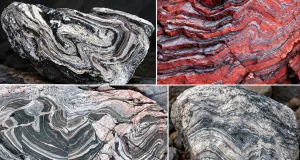
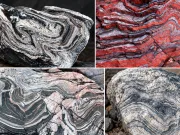
- Curled patterns called jelly roll textures.
- Black glossy coatings formed by iron-oxide films, known as desert varnish.
- Round chemical weathering pockets influenced by water, not biological activity.
- Thin calcium carbonate coatings deposited on some surfaces.
These micro-geological features show that Valley of Fire is rich not only in large shapes but also in microscopic history.
8. Geological Timeline
Most exposed rocks belong to the Mesozoic era.
- Triassic–Jurassic boundary: age of the giant dune sea.
- Kimmeridgian–Early Cretaceous: some thin carbonate and mudstone layers appear.
- Cenozoic: faulting and uplift create today’s topography.
So the modern landscape is the combination of 150 million years of deposition and millions of years of erosion.
9. Desert Conditions: The Architects of Erosion

Desert doesn’t only mean heat; it means extreme temperature contrast.
In Valley of Fire:
- 45°C during the day, dropping to 10°C at night.
- These rapid changes crack the rocks.
- Wind widens the cavities.
- Rain carves the surfaces rapidly.
This dynamic balance preserves the sculptural appearance of the valley.
10. Why This Place Became So Famous
Valley of Fire’s fame didn’t start with social media; it grew through Hollywood for decades. Star Trek, Total Recall, Transformers — many scenes were filmed here. Because with the right light, this red glow looks otherworldly.
But for a geologist, the real value is the story behind the red: the record of wind, the memory of an ancient desert, the long timeline of erosion shaping something that looks almost unreal.