














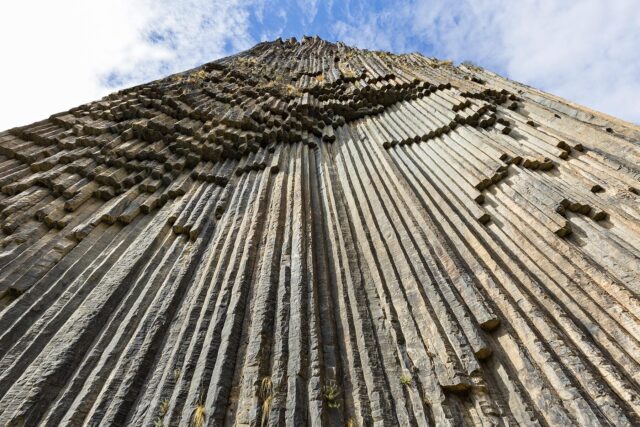
Columnar basalt formations are one of those natural things that make even a geologist like me stop for a moment and think, “did nature really make this by itself?” Because these hexagonal columns standing side by side look like something made by human hands.
Straight.
Symmetrical.
Hexagonal.
Standing tall without caring about anything.
Who would think lava could make something like this?
But that’s nature… sometimes it pulls a trick that turns people into idiots.
How Does Lava Become Hexagonal? (An explanation so simple it’s annoying)

Look, actually the situation is very simple.
Yes, very simple, but when you first hear it, you say “Are you kidding me?”
Hot basalt lava flows.
Then it cools.
While cooling it contracts.
When it contracts it cracks.
That’s it.
But the real bomb part is this:
The cracks are not random → they are HEXAGONAL!
Why?
Because the hexagon is the shape that “uses the least energy” in nature.
Just like a honeycomb.
Just like the cracks in dried mud.
Nature looks at the situation and chooses the hexagon because it’s the easiest way to break.
When you explain it like this it sounds simple, but when you stand in front of hexagonal stone columns that are a hundred meters tall, it’s very normal to say “hold on, something weird is going on here.”
Why Do These Formations Look Like Something Crazy?
Because normally there is no order in nature.
But here, there is order.
And not just any order — an order that looks like it came out of a math book.
- Straight lines
- Columns with the same diameter
- Rows lined up like a wall
- Flat surfaces stacked like Lego
The most striking thing for me is this:
This structure is both perfect… and not perfect.
Some columns are bent, some are broken, some snapped halfway.
But the overall look still seems like “a machine made this.”
This contradiction… I really like it.
The World’s Most Legendary Columnar Basalt Spots (Traveler mode ON)
1. Giant’s Causeway – Northern Ireland
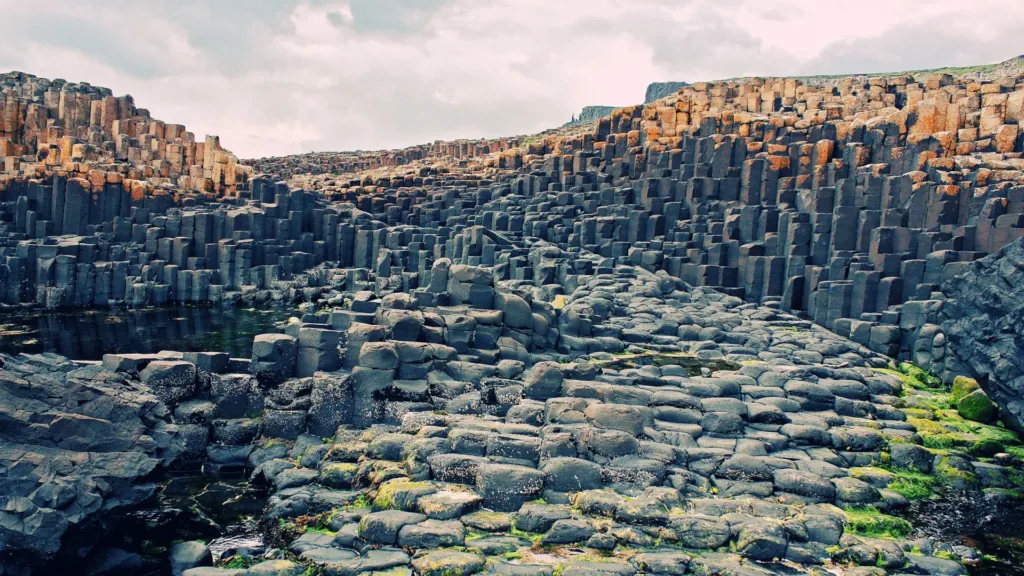
Man, what kind of place is this…
More than 40,000 basalt columns lined up.
Some go into the sea, some rise toward the sky.
It really looks like a fairy tale.
2. Svartifoss – Iceland
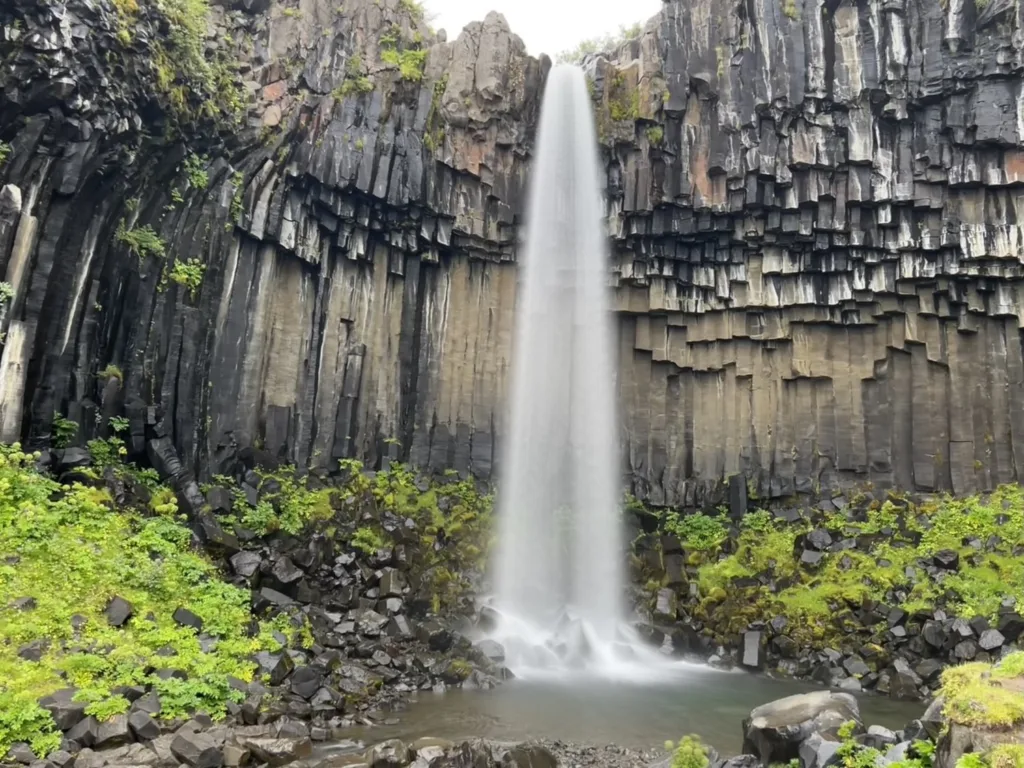
Imagine a waterfall…
But behind it there is a giant basalt curtain.
As if God said “we need a background” and covered the back.
It looks crazy even in photos.
3. Fingal’s Cave – Scotland
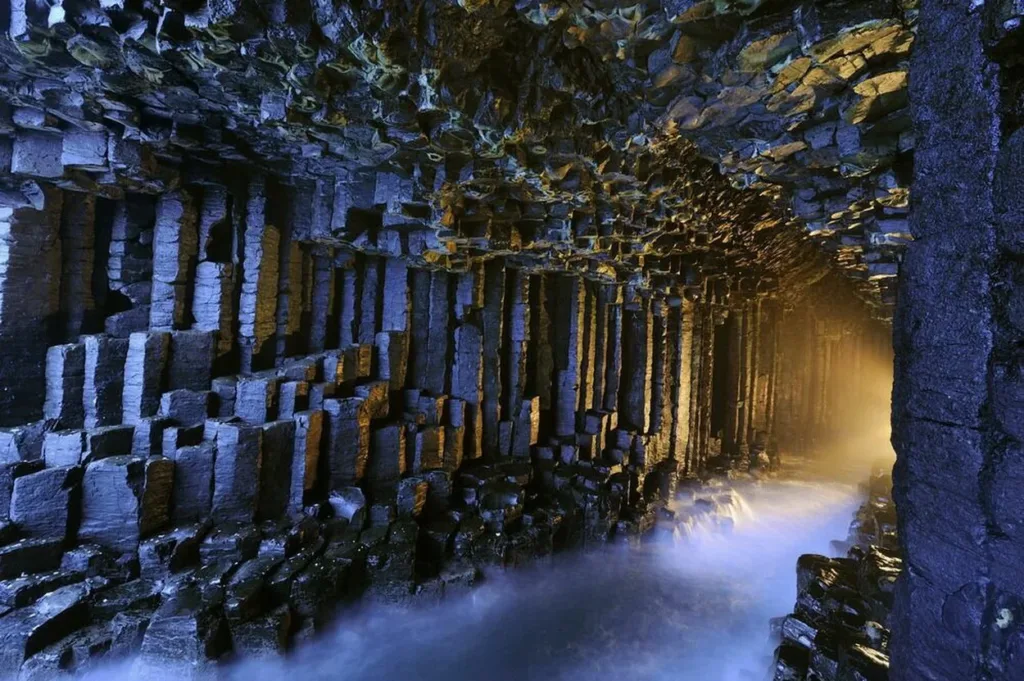
The sound of the waves echoes between the columns.
It feels like the cave is breathing.
Walking inside, you feel like you’re in a movie scene.
4. Devil’s Tower – USA
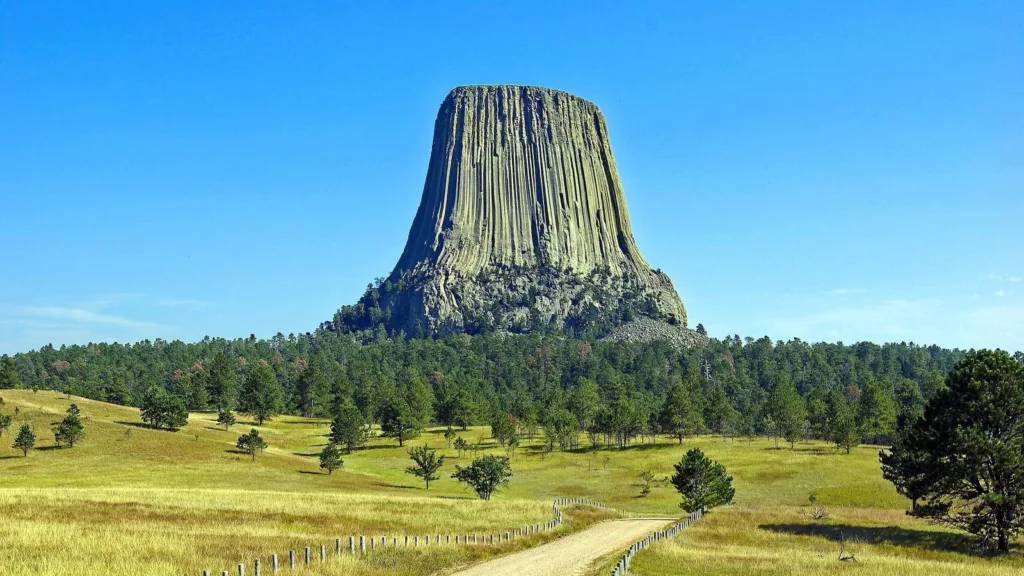
A giant basalt pillar standing alone.
Like a landing pad for aliens.
The columns are so long that your neck hurts when you look up.
5. Garni Gorge – Armenia
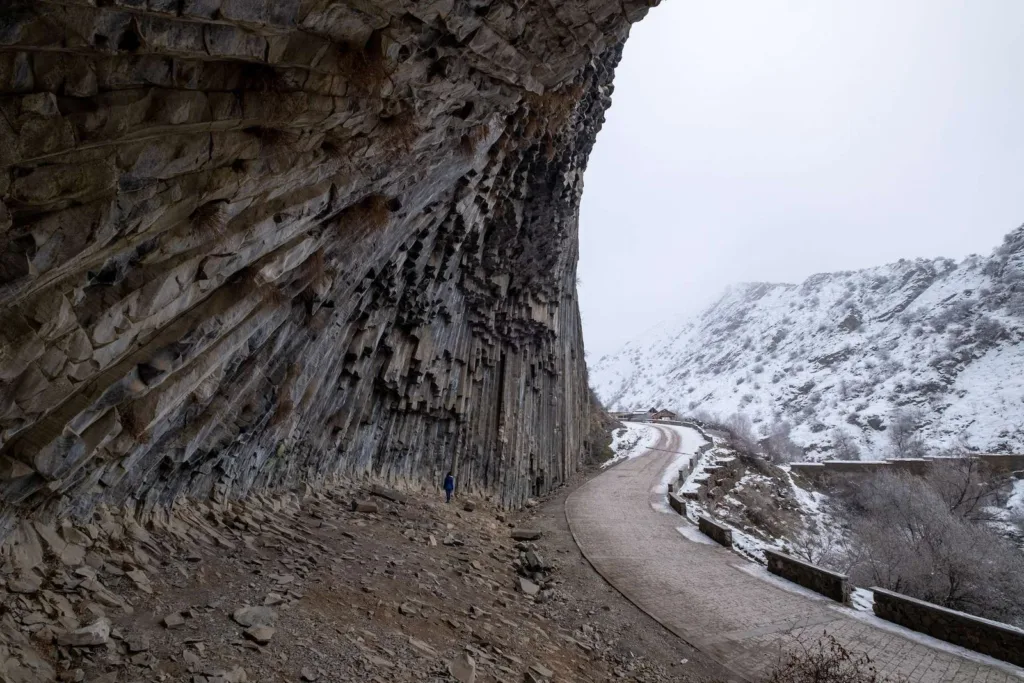
They didn’t call it the “Symphony of Stones” for nothing.
Vertical organ pipes.
The fact that it’s this regular is annoyingly beautiful.
How I Read These Rocks as a Geologist
Yes, they are not only beautiful.
They are also like a “volcano diary.”
- Column thickness → tells how fast the lava cooled
- Column tilt → shows where the lava flowed
- Horizontal cracks → tell where the lava stopped
- Texture changes → reveal later magma movements
Looking at a sea of stone columns and saying “oh how nice” is easy.
But for us geologists, that place is an open-air laboratory.
Each column is a piece of information.
Why Do These Formations Go So Viral on Social Media?
Because the human eye loves surprising order.
And these columns give exactly that:
- symmetry normally not found in nature
- surfaces so regular they look machine-made
- not square, hexagonal (the brain gets confused)
- insane photo/video value
- images that make you ask “is this real or photoshop?”
My Most Honest Feeling About These Formations
Nature sometimes acts too smart.
Sometimes it even feels like it’s mocking humans.
Knowing that lava, while cooling, basically “hmm… hexagon is the best choice, the least stress is here, the proper crack line is this” is funny but true.
Columnar basalts remind me:
The world is not chaotic.
The world is not random.
The world does calculations.
And sometimes the result of those calculations is:
Giant’s Causeway.
Svartifoss.
Fingal’s Cave.
Garni Gorge.
Devil’s Tower.
Literally art.
CONCLUSION
Columnar basalt formations are where the cooling rhythm of lava meets mathematics.
Order appearing on top of disorder.
Silence that comes after violence.
Stone stories that happened millions of years ago but still stand today.
As a geologist I say:
I’ve seen many miracles in this world, but basalt columns… that’s another level.