







When magma cools, it doesn’t solidify all at once. Instead, minerals form in a precise and predictable order, depending on temperature, composition, and chemical stability. This process — known as Bowen’s Reaction Series — is one of the most fundamental concepts in igneous petrology.
First proposed by Norman L. Bowen in the early 20th century, the series describes how different minerals crystallize as molten rock cools, explaining why igneous rocks vary in texture and composition. Bowen’s experiments helped geologists understand the connection between temperature, mineral stability, and the types of rocks found on Earth’s surface.
What Is Bowen’s Reaction Series?
Bowen’s Reaction Series illustrates the sequence of mineral formation from magma during cooling. As temperature decreases, minerals crystallize in a specific order — each one stable only within a certain temperature range. When a mineral becomes unstable, it either reacts with the remaining melt to form a new mineral or separates from the melt entirely.
The series is divided into two main branches:
- The Discontinuous Series
- The Continuous Series
Together, they explain how a single magma body can produce a wide variety of igneous rocks — from basalt to granite.

The Discontinuous Reaction Series
In the discontinuous branch, each mineral forms and then reacts with the melt to produce a new mineral of different composition. The term “discontinuous” means the structure and chemistry of each successive mineral changes abruptly.
The sequence typically proceeds as follows:
- Olivine (Mg,Fe)₂SiO₄ – Crystallizes at the highest temperatures (~1200°C).
- Pyroxene (Augite) – Forms next as the melt cools further (~1000°C).
- Amphibole (Hornblende) – Appears around ~800°C.
- Biotite (Mica) – Develops at even lower temperatures (~700°C).
Each stage represents a reaction between existing minerals and the remaining magma, resulting in new mineral structures.
For example, olivine reacts with silica-rich melt to produce pyroxene, and pyroxene can react further to form amphibole. This process continues until the melt composition becomes rich in silica, sodium, and potassium.
The Continuous Reaction Series
The continuous branch involves minerals that remain structurally similar but vary in chemical composition.
Here, plagioclase feldspar evolves continuously from calcium-rich (high-temperature) to sodium-rich (low-temperature) forms.
- Calcium-rich plagioclase (Anorthite) forms first at high temperatures (~1200°C).
- As cooling continues, the calcium content decreases while sodium increases, leading to Labradorite → Andesine → Oligoclase → Albite, which crystallizes around ~600°C.
This gradual chemical evolution explains why many igneous rocks show a zoned texture, where early-formed plagioclase crystals are calcium-rich in the core and sodium-rich near the rim.
The Bottom of the Series: Final Minerals
At the lowest temperatures, several minerals crystallize from the residual melt, forming the light-colored silicate minerals typical of felsic rocks:
- Potassium Feldspar (Orthoclase)
- Muscovite Mica
- Quartz (SiO₂)
These minerals dominate rocks like granite and rhyolite, which are rich in silica and low in iron and magnesium.
The late-stage minerals form from magmas that have undergone extensive differentiation — meaning the early-forming minerals have already been removed, leaving a melt enriched in silica and volatile components like water and gas.
The Complete Bowen’s Reaction Series Chart
Bowen’s findings are often summarized in a simple but powerful chart that divides the crystallization pathway into two converging branches:
  DISCONTINUOUS SERIES          CONTINUOUS SERIES
  (Ferromagnesian Minerals)     (Plagioclase Feldspars)

  Olivine                       Ca-rich Plagioclase
       ↓                              ↓
  Pyroxene                     →  Na-rich Plagioclase
       ↓
  Amphibole
       ↓
  Biotite
       ↓
  ------------------------------
        K-feldspar + Muscovite + Quartz
At the base, both branches merge — representing the final formation of quartz, feldspar, and mica, the main components of granite.
This simple diagram reveals how mineral composition shifts from mafic (dark, Fe–Mg rich) minerals at high temperatures to felsic (light, Si–Al rich) minerals at lower temperatures.
Relation to Igneous Rock Types
The mineral sequence in Bowen’s Reaction Series directly determines the types of igneous rocks that form.
| Temperature Range | Dominant Minerals | Typical Rock Type |
|---|---|---|
| 1200–1000°C | Olivine, Pyroxene, Ca-Plagioclase | Basalt, Gabbro |
| 1000–800°C | Pyroxene, Amphibole, Intermediate Plagioclase | Andesite, Diorite |
| 800–600°C | Amphibole, Biotite, Na-Plagioclase | Dacite, Granodiorite |
| <600°C | K-Feldspar, Muscovite, Quartz | Granite, Rhyolite |
This progression from mafic → intermediate → felsic corresponds to increasing silica content and lighter color.
It also explains why basaltic rocks dominate oceanic crust (high-temperature crystallization), while granitic rocks dominate continental crust (low-temperature crystallization).
The Significance of Bowen’s Reaction Series
Bowen’s work fundamentally changed how geologists understood the formation of igneous rocks. Before his experiments, the variety of igneous minerals seemed random. His series showed that mineral diversity follows predictable physical and chemical laws.
Key insights include:
- Magma Differentiation: As minerals form and separate, the composition of the remaining melt evolves.
- Partial Melting and Crystallization: Bowen’s principles also work in reverse — minerals melt at different temperatures, producing magmas of varying composition.
- Rock Texture: The cooling rate affects crystal size — slow cooling forms coarse-grained rocks (plutonic), while rapid cooling produces fine-grained volcanic rocks.
Essentially, Bowen’s Reaction Series connects the chemistry of magma with the textures and mineralogy of igneous rocks, forming the foundation of modern petrology.
Modern Research and Revisions
Over a century later, Bowen’s model remains highly influential, though refinements have been made through new experimental studies and computer simulations.
Geochemists now know that volatile components (H₂O, CO₂), pressure, and oxygen fugacity can alter the exact crystallization order. For example:
- Water lowers the crystallization temperature of amphibole and biotite.
- Pressure changes the stability field of feldspars and pyroxenes.
- Oxidation state affects the formation of magnetite and other iron oxides.
While the classic series simplifies real magmatic processes, it still accurately describes the idealized crystallization pathway for basaltic magma under dry conditions — a benchmark for all subsequent igneous models.
Real-World Examples
- Hawaiian Basalts: Olivine and pyroxene crystallize early, consistent with the upper part of Bowen’s series.
- Andesitic Volcanoes (Chile, Japan): Intermediate magmas produce amphibole and plagioclase as dominant minerals.
- Granite Bodies (Sierra Nevada, California): Represent the final stage, dominated by quartz and feldspar.
These examples show how one theoretical model can explain the mineral diversity of the entire planet’s igneous formations.
Conclusion
Bowen’s Reaction Series elegantly demonstrates how temperature, chemistry, and time work together to create the vast diversity of igneous rocks on Earth. From the deep-seated gabbros of the ocean floor to the granites of continental crust, this model reveals the predictable order hidden in nature’s complexity.
Even after a century, Bowen’s discoveries continue to guide students, scientists, and explorers who seek to understand the story written in every crystal of rock.
Each mineral, from olivine to quartz, is a frozen moment in Earth’s fiery past — a reminder that geology is not just about rocks, but about time, transformation, and the art of cooling magma.
Who is Norman L. Bowen ?
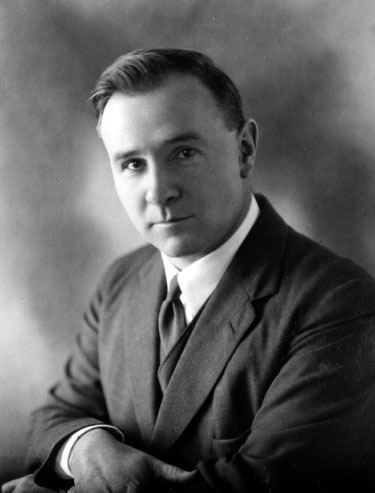
Norman Levi Bowen (1887-1956) was a Canadian geologist renowned for his significant contributions to the field of petrology and the study of igneous rocks. He is best known for developing Bowen’s Reaction Series, a fundamental concept in geology that describes the sequence in which minerals crystallize from a cooling magma. This concept revolutionized the understanding of the formation of igneous rocks and the processes occurring within the Earth’s crust.
Bowen conducted his groundbreaking research during the early 20th century, primarily while working at the Geophysical Laboratory of the Carnegie Institution for Science in Washington, D.C. His work, published in various scientific papers and his book “The Evolution of the Igneous Rocks,” laid the foundation for modern petrology and greatly influenced the study of rock formation, mineralogy, and geological processes.
Bowen’s Reaction Series, named in his honor, remains a fundamental framework in geology and is used extensively to classify and interpret igneous rocks, understand their cooling histories, and gain insights into geological processes, such as plate tectonics and volcanism.
Norman L. Bowen’s contributions to the field of geology have had a lasting impact on the way geologists and scientists understand the Earth’s crust, igneous rock formation, and the mineralogical processes that shape our planet.