

















Sulfide Minerals
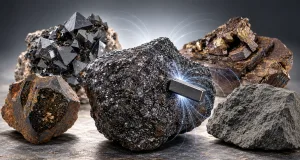
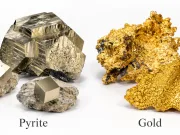
Sulfide minerals form when metal-rich fluids interact with sulfur under reducing conditions, creating dense, metallic compounds that play a major role in Earth’s ore-forming systems. From the bright metallic gold of chalcopyrite (CuFeS₂) to the perfect cubic cleavage of galena (PbS) and the resinous brown tones of sphalerite (ZnS), each mineral reflects the temperature, chemistry and pressure changes that shaped it deep underground. These minerals typically develop in hydrothermal veins, volcanic-related environments, intrusive margins or even ancient seafloor vents, where hot fluids cool and precipitate metal sulfides in fractures and porous rocks. Because they are the primary sources of metals like copper, lead, zinc, nickel and silver, sulfide minerals lie at the heart of global mining, metallurgy and modern industry. In this category, you’ll explore how sulfides form, how their structures and textures help geologists interpret geological processes, and why recognising minerals such as pyrite (FeS₂), pentlandite ((Fe,Ni)₉S₈) or bornite (Cu₅FeS₄) can reveal the deeper story of an ore deposit’s evolution and economic potential.